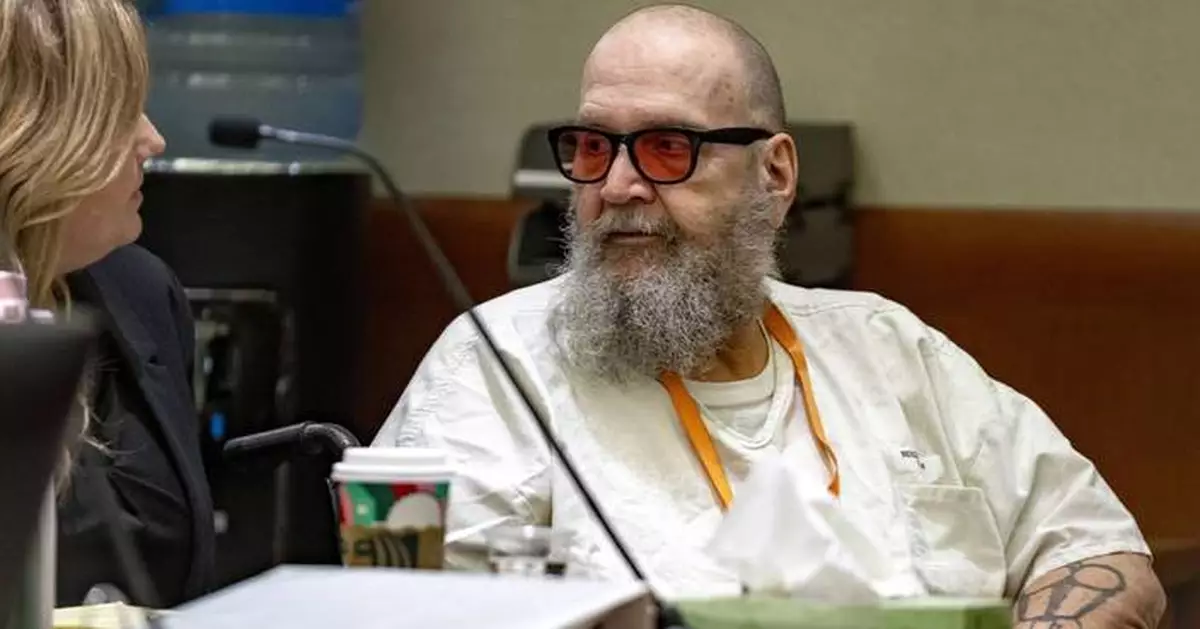
SALT LAKE CITY (AP) — A Utah judge on Wednesday set an execution date for a man with dementia who has been on death row for 37 years, even as his lawyers file appeals and argue his condition is worsening.
Ralph Leroy Menzies, 67, is set to be executed Sept. 5 for abducting and killing Utah mother of three Maurine Hunsaker in 1986. When given a choice decades ago, Menzies selected a firing squad as his method of execution. He would become only the sixth U.S. prisoner executed by firing squad since 1977.
Judge Matthew Bates signed the death warrant a month after he ruled Menzies “consistently and rationally” understands why he is facing execution despite recent cognitive decline. Attorneys for Menzies have petitioned the court for a reassessment, but Bates said Wednesday that the pending appeal was not a basis to stop him from setting a date.
Bates did, however, schedule a July 23 hearing to evaluate the new competency petition. Menzies' attorneys say his dementia has gotten so severe that he uses a wheelchair, is dependent on oxygen and cannot understand his legal case.
“We remain hopeful that the courts or the clemency board will recognize the profound inhumanity of executing a man who is experiencing steep cognitive decline and significant memory loss,” said Lindsey Layer, an attorney for Menzies. “Taking the life of someone with a terminal illness who is no longer a threat to anyone and whose mind and identity have been overtaken by dementia serves neither justice nor human decency.”
The Utah Attorney General’s Office has “full confidence” in the judge's decision, Assistant Attorney General Daniel Boyer said.
The U.S. Supreme Court has at times spared prisoners with dementia from execution, including an Alabama man in 2019 who had killed a police officer. If a defendant cannot understand why they are being put to death, the high court said, then an execution is not carrying out the retribution that society is seeking.
For Hunsaker's son Matt, who was 10 years old when his mother was killed, it has been “hard to swallow that it’s taken this long” to get justice.
“You issue the warrant today, you start a process for our family,” he told the judge Wednesday. “It puts everybody on the clock. We’ve now introduced another generation of my mom, and we still don’t have justice served.”
Hunsaker, 26, was abducted by Menzies from a convenience store where she worked in the Salt Lake City suburb of Kearns. She was later found strangled and her throat cut about 16 miles (25 kilometers) away at a picnic area in Big Cottonwood Canyon. Menzies had Hunsaker’s wallet and several other belongings when he was jailed on unrelated matters. He was convicted of first-degree murder and other crimes in 1988.
Over nearly four decades, attorneys for Menzies filed multiple appeals that delayed his death sentence, which had been scheduled at least twice before it was pushed back. He and other Utah death row inmates sentenced before May 2004 were given a choice between firing squad and lethal injection. For inmates sentenced in the state after that date, lethal injection is the default method unless the drugs are unavailable.
Utah last executed prisoners by firing squad in 2010, and South Carolina used the method on two men this year. Only three other states — Idaho, Mississippi and Oklahoma — allow firing squad executions.
Menzies is among 10 people scheduled to be put to death in seven states during the remainder of 2025. Twenty-five men in the U.S. have died by court-ordered execution so far this year.
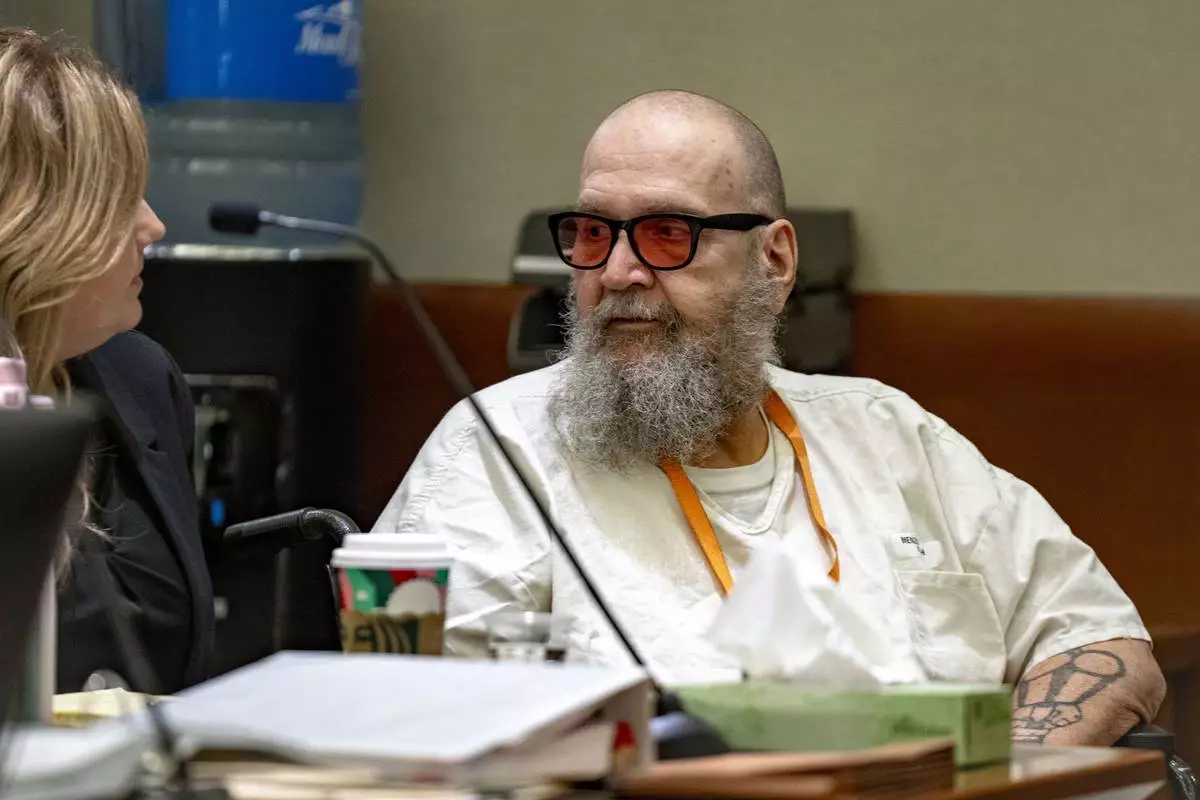
FILE - Jasmine North, federal public defender mitigation investigator, speaks with Ralph Leroy Menzies during his competency hearing in Third District Court in West Jordan, Utah, Nov. 18, 2024. (Rick Egan/The Salt Lake Tribune via AP, Pool, File)
SURIN, Thailand (AP) — Fighting raged Saturday morning along the border of Thailand and Cambodia, even after U.S. President Donald Trump, acting as a mediator, declared that he had won agreement from both countries for a new ceasefire.
Thai officials said they did not agree to a ceasefire. Cambodia has not commented directly on Trump’s claim, but its defense ministry said Thai jets carried out airstrikes Saturday morning.
Thai Foreign Minister Sihasak Phuangketkeow said Saturday that some of Trump's remarks didn't “reflect an accurate understanding of the situation.”
He said Trump’s characterization of a land mine explosion that wounded Thai soldiers as a “roadside accident” was inaccurate, and did not reflect Thailand's position that it was a deliberate act of aggression.
Sihasak said that Trump’s willingness to credit what may be “information from sources that deliberately distorted the facts” instead of believing Thailand hurt the feelings of the Thai people “because we consider ourselves — we are proud, in fact — to be the oldest treaty ally of the United States in the region.”
The latest large-scale fighting was set off by a skirmish on Dec. 7 that wounded two Thai soldiers and derailed a ceasefire promoted by Trump that ended five days of earlier combat in July over longstanding territorial disputes.
The July ceasefire was brokered by Malaysia and pushed through by pressure from Trump, who threatened to withhold trade privileges unless Thailand and Cambodia agreed. It was formalized in more detail in October at a regional meeting in Malaysia that Trump attended.
More than two dozen people on both sides of the border have officially been reported killed in this past week’s fighting, while more than half a million have been displaced.
The Thai military acknowledged 15 of its troops died during the fighting, and estimated earlier this week that there have been 165 fatalities among Cambodian soldiers. Cambodia has not announced military casualties, but has said at least 11 civilians have been killed and more than six dozen wounded.
Trump, after speaking to Thai Prime Minister Anutin Charnvirakul and Cambodian Prime Minister Hun Manet, announced on Friday an agreement to restart the ceasefire.
“They have agreed to CEASE all shooting effective this evening, and go back to the original Peace Accord made with me, and them, with the help of the Great Prime Minister of Malaysia, Anwar Ibrahim,” Trump wrote in his Truth Social post.
Trump’s claim came after midnight in Bangkok. Thai Prime Minister Anutin had, after his call with Trump, said he had explained Thailand’s reasons for fighting and said peace would depend on Cambodia ceasing its attacks first.
The Thai foreign ministry later explicitly disputed Trump’s claim that a ceasefire had been reached. Anutin's busy day on Friday included dissolving Parliament, so new elections could be held early next year.
Cambodian Prime Minister Hun Manet, in comments posted early Saturday morning, also made no mention of a ceasefire.
Hun Manet said he held phone conversations on Friday night with Trump, and a night earlier with Malaysia’s Prime Minister Anwar Ibrahim, and thanked both “for their continuous efforts to achieve a long-lasting peace between Cambodia and Thailand.”
“Cambodia is ready to cooperate in any way that is needed," Hun Manet wrote.
Anwar later posted on social media that he was urging the two sides to implement a ceasefire on Saturday night. Cambodia's prime minister, also posting online, endorsed the initiative, which included having Malaysia and the United States help monitor it. However, Thai Prime Minister Anutin denied that his country was even in negotiations over the proposal.
Thailand has been carrying out airstrikes on what it says are strictly military targets, while Cambodia has been firing thousands of medium-range BM-21 rockets that have caused havoc but relatively few casualties.
BM-21 rocket launchers can fire up to 40 rockets at a time with a range of 30-40 kilometers (19-25 miles). These rockets cannot be precisely targeted and have landed largely in areas from where most people have already been evacuated.
However, the Thai army announced Saturday that BM-21 rockets had hit a civilian area in Sisaket province, seriously injuring two civilians who had heard warning sirens and had been running toward a bunker for safety.
Thailand's navy was also reported by both sides' militaries to have joined the fighting on Saturday morning, with a warship in the Gulf of Thailand shelling Cambodia's southwestern province of Koh Kong. Each side said the other opened fire first.
——
Peck reported from Bangkok. Sopheng Cheang in Serei Saophoan, Cambodia, and Matthew Lee in Washington contributed to this report.
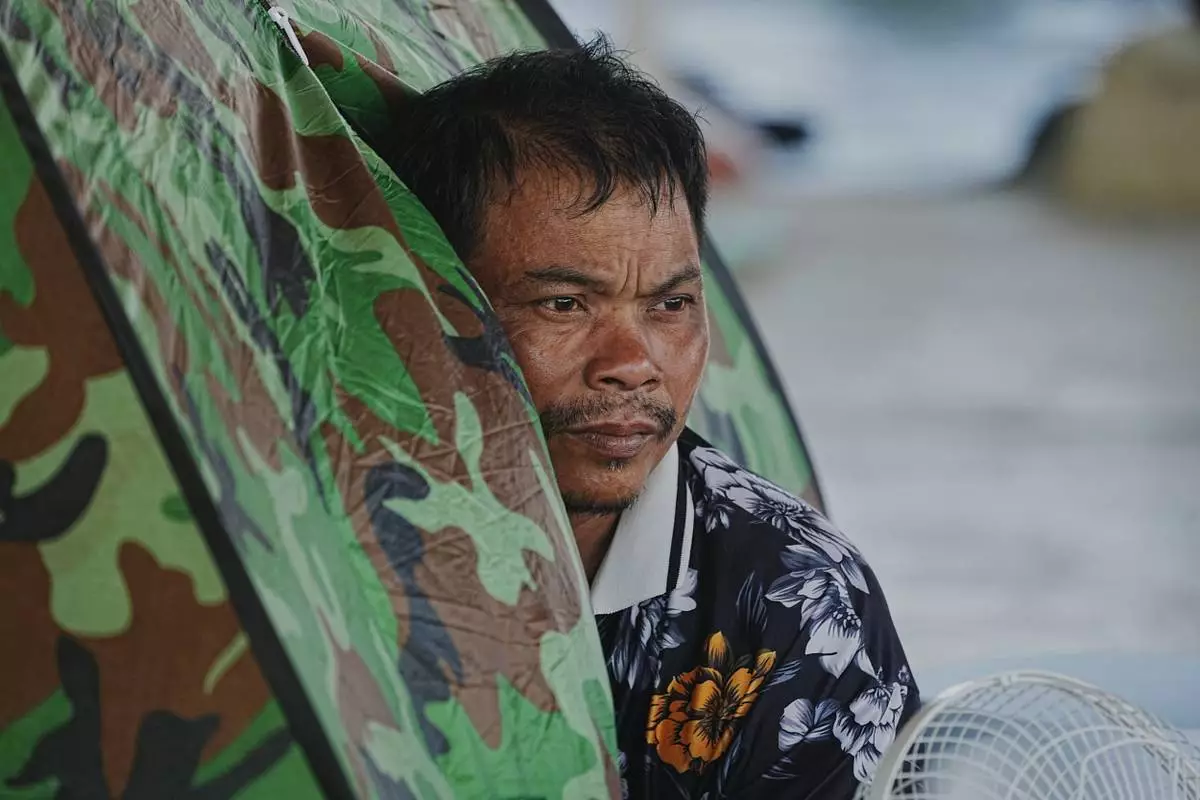
A man sits in a tent as he takes refuge in Banteay Menchey provincial town, Cambodia, Saturday, Dec. 13, 2025, after fleeing home following fighting between Thailand and Cambodia. (AP Photo/Heng Sinith)

An evacuee cooks soup as she takes refuge in Banteay Menchey provincial town, Cambodia, Saturday, Dec. 13, 2025, after fleeing home following fighting between Thailand and Cambodia. (AP Photo/Heng Sinith)
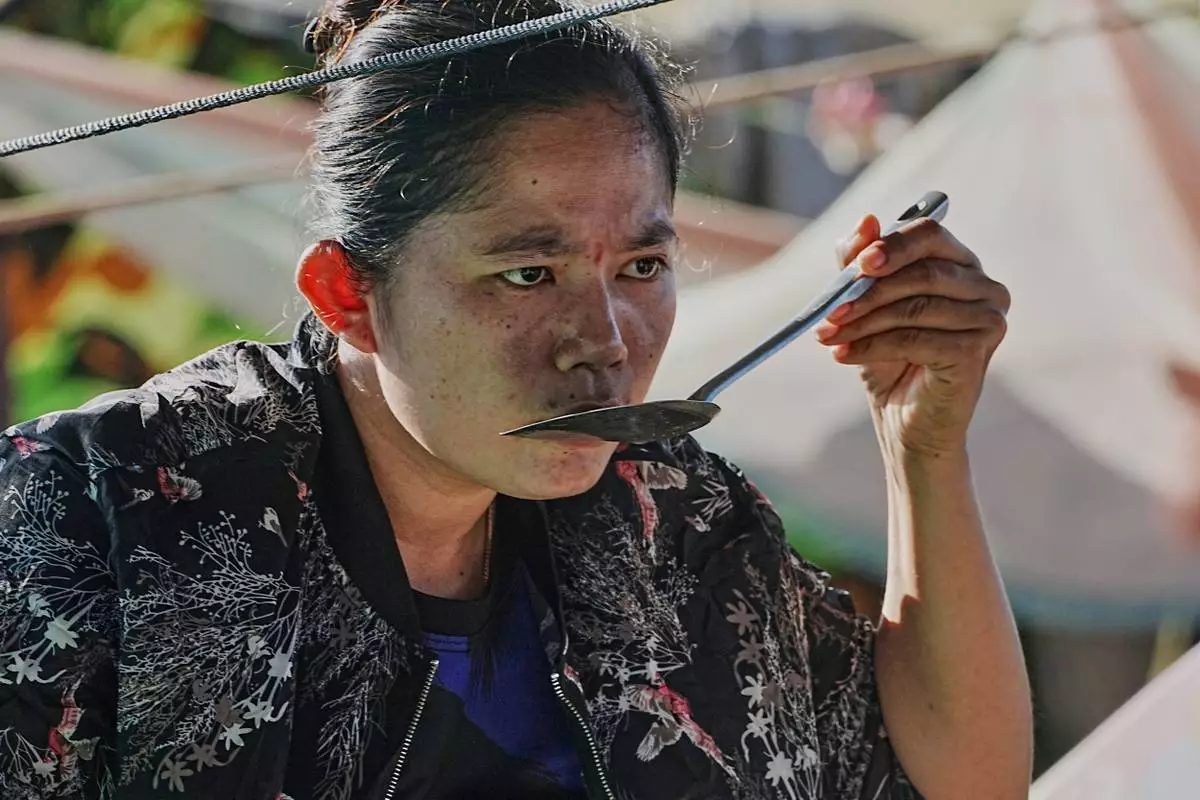
An evacuee tastes soup as she takes refuge in Banteay Menchey provincial town, Cambodia, Saturday, Dec. 13, 2025, after fleeing from home following fighting between Thailand and Cambodia. (AP Photo/Heng Sinith)
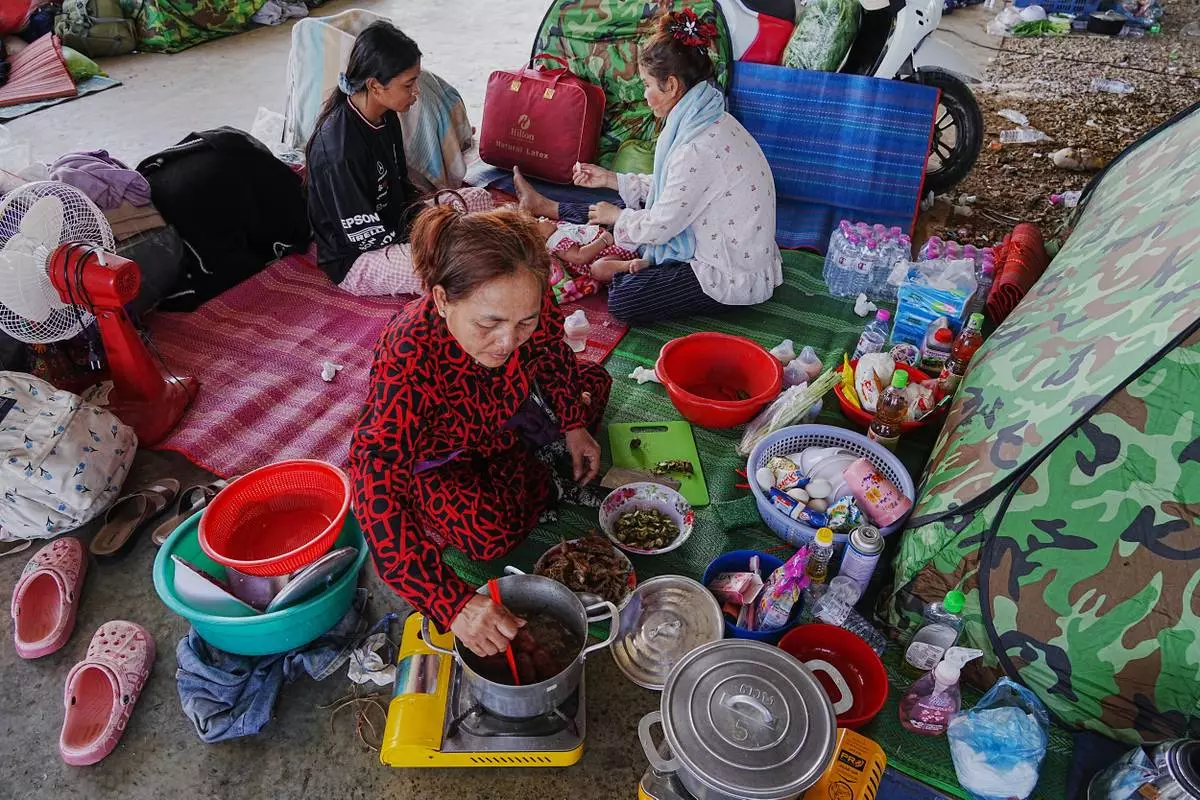
Evacuees cook food as they take refuge in Banteay Menchey provincial town, Cambodia, Saturday, Dec. 13, 2025, after fleeing homes following fighting between Thailand and Cambodia. (AP Photo/Heng Sinith)

Children raise their hands while receiving donation from charity as they take refuge in Banteay Menchey provincial town, Cambodia, Saturday, Dec. 13, 2025, after fleeing homes following fighting between Thailand and Cambodia. (AP Photo/Heng Sinith)
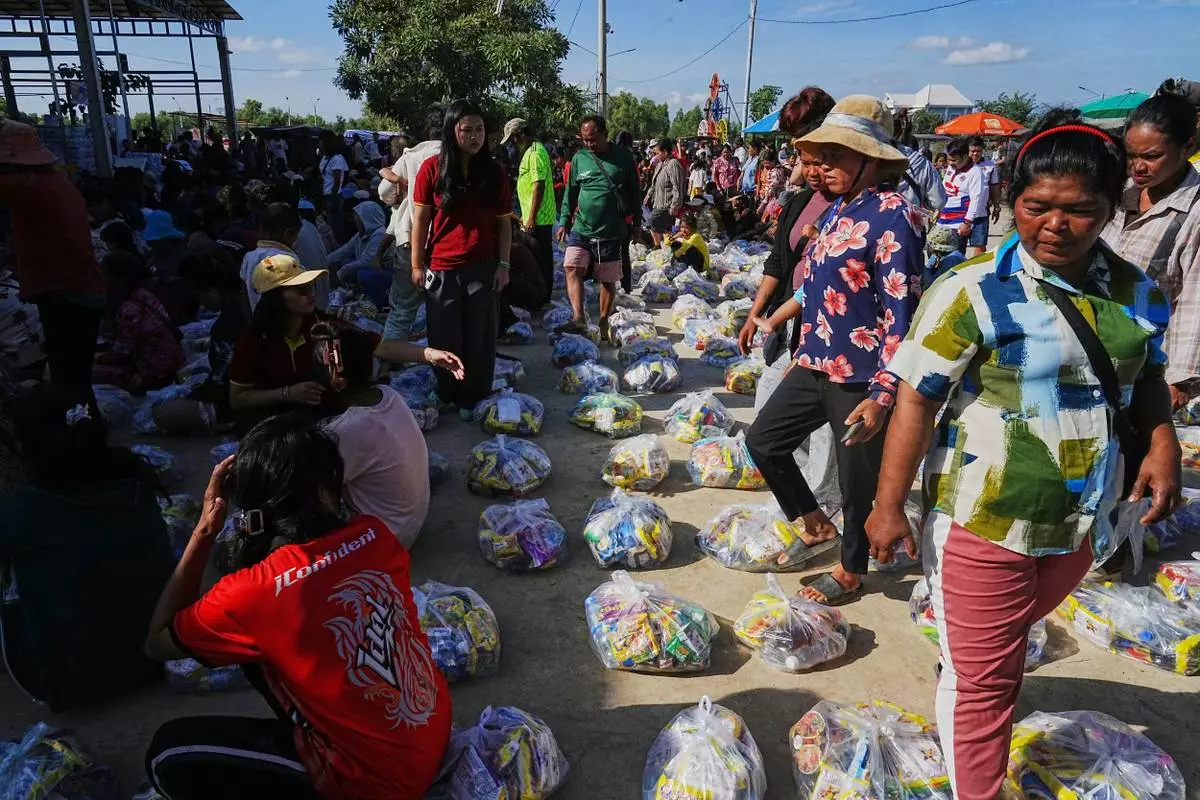
Evacuees wait to receive donation from local charity as they take refuge in Banteay Menchey provincial town, Cambodia, Saturday, Dec. 13, 2025, after fleeing homes following fighting between Thailand and Cambodia. (AP Photo/Heng Sinith)
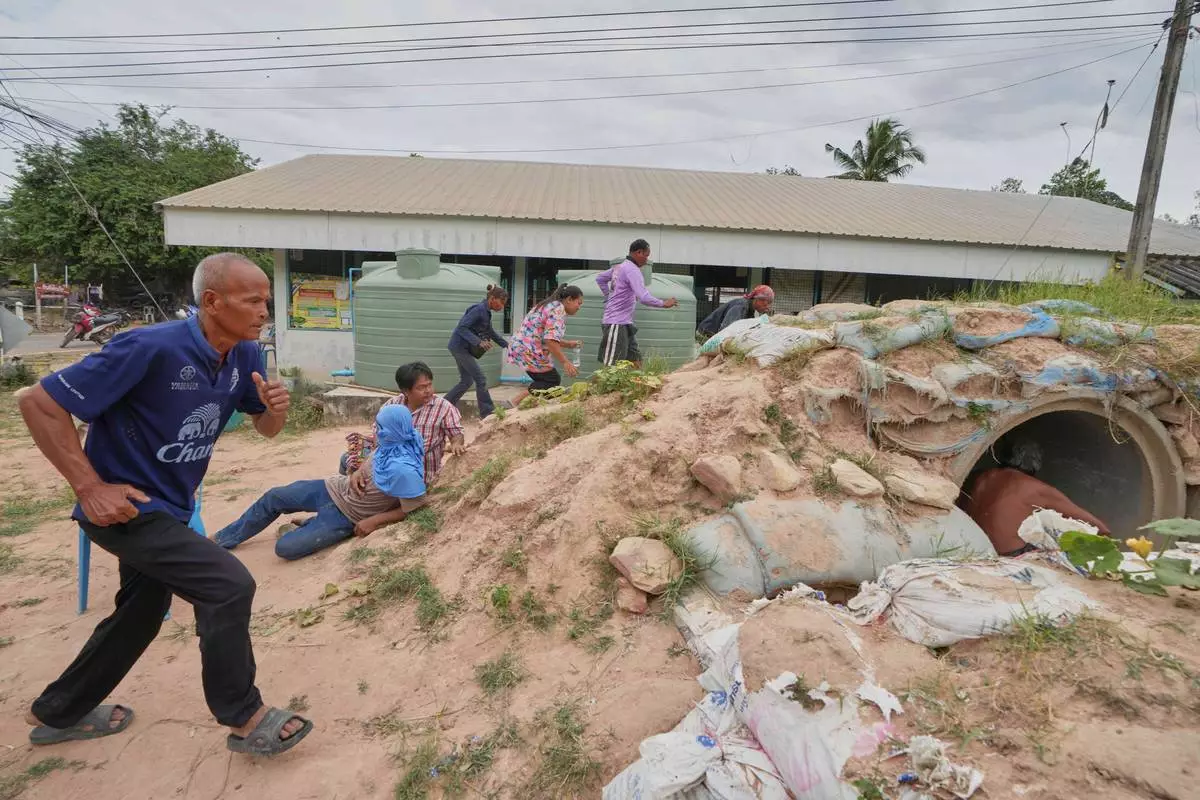
Village security volunteers and resident run into shelter while the blasts sounded too close in Buriram province, Thailand, Friday, Dec. 12, 2025, following renewed border conflict between Thailand and Cambodia. (AP Photo/Sakchai Lalit)