BOSTON (AP) — The Trump administration's campaign of arresting and deporting college faculty and students who participated in pro-Palestinian demonstrations violates their First Amendment rights, lawyers for an association representing university professors argued in federal court.
The lawsuit, filed by several university associations, is one of the first against President Donald Trump and members of his administration to go to trial. U.S. District Judge William Young heard closing arguments Monday in Boston.
Click to Gallery
FILE - Tufts University student from Turkey, Rumeysa Ozturk, who was arrested by immigration agents while walking along a street in a Boston suburb, talks to reporters on arriving back in Boston, May 10, 2025, a day after she was released from a Louisiana immigration detention center on the orders of a federal judge. (AP Photo/Rodrique Ngowi, File)
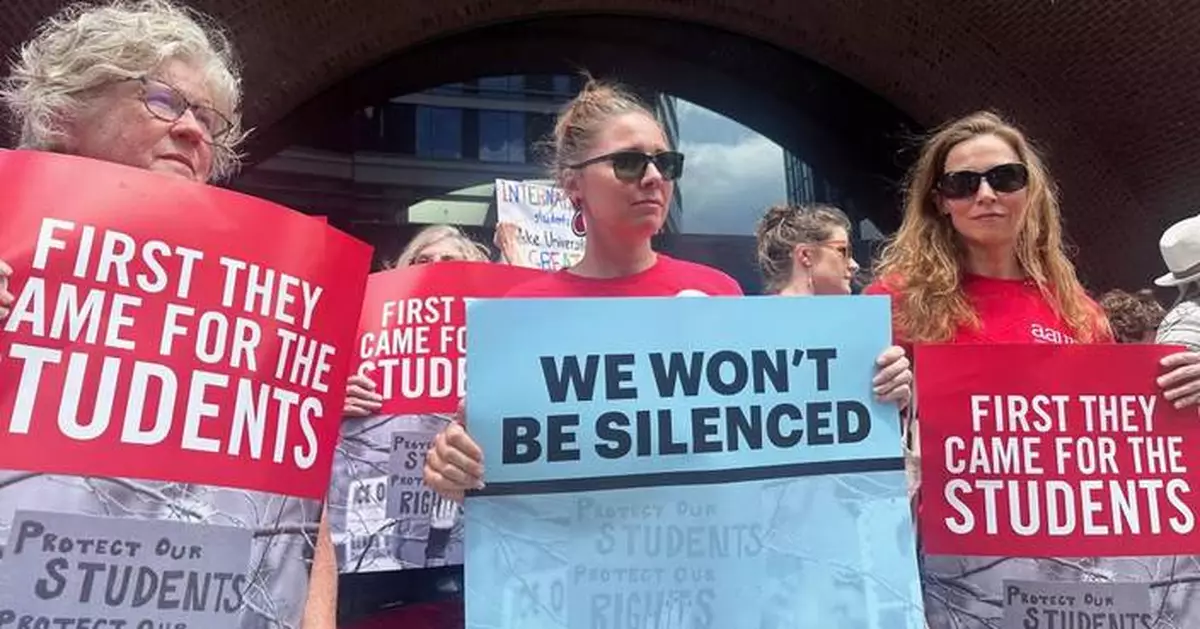
People show their support for a lawsuit challenging the Trump administration's policy of targeting students for deportation who took part in pro-Palestinian demonstrations on Monday, July 7, 2025, at the federal courthouse in Boston. (AP Photo/Michael Casey)
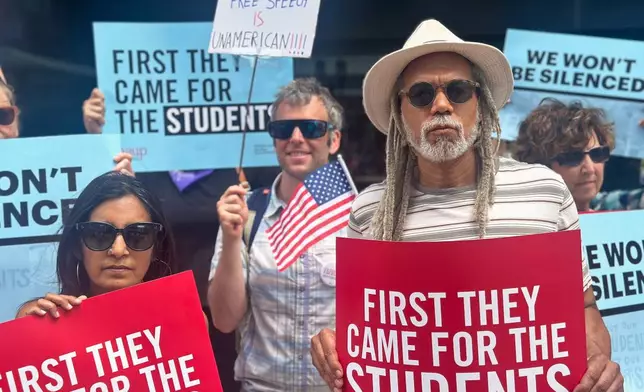
People show their support for a lawsuit challenging the Trump administration's policy of targeting students for deportation who took part in pro-Palestinian demonstrations on Monday, July 7, 2025, at the federal courthouse in Boston. (AP Photo/Michael Casey)
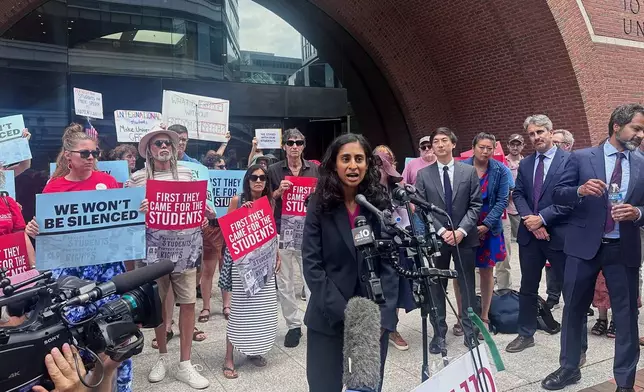
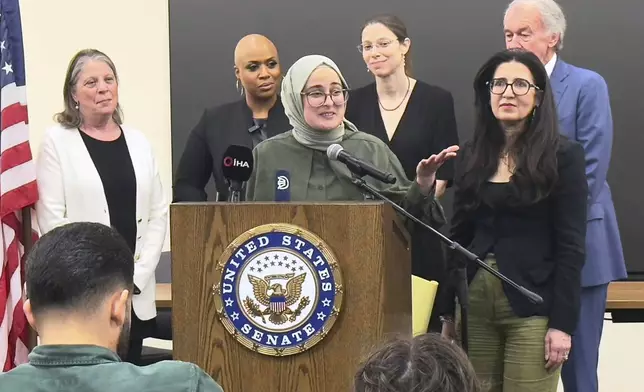
Ramya Krishnan, senior staff attorney at the Knight First Amendment Institute, speaks about a lawsuit challenging the Trump administration over deporting students and faculty who took part in pro-Palestinian demonstrations on Monday, July 7, 2025, at the federal courthouse in Boston. (AP Photo/Michael Casey)
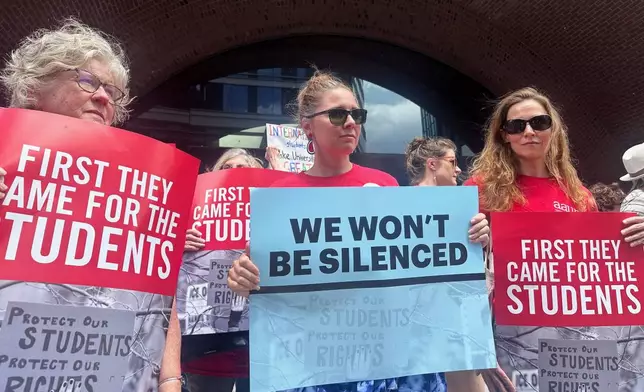
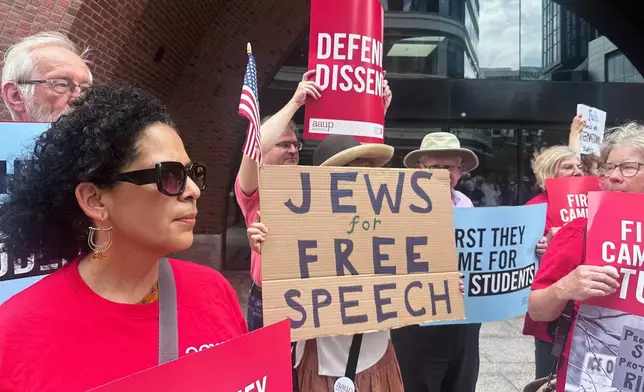
People show their support for a lawsuit challenging the Trump administration's policy of targeting students for deportation who took part in pro-Palestinian demonstrations on Monday, July 7, 2025, at the federal courthouse in Boston. (AP Photo/Michael Casey)
He did not say or indicate when or how he would rule. But he had some sharp words when talking about Trump.
“The president is a master of speech and he certainly brilliantly uses his right to free speech," Young told federal lawyers. But whether Trump "recognizes whether other people have any right to free speech is questionable,” he added.
Plaintiffs are asking Young to rule that the policy violates the First Amendment and the Administrative Procedure Act, a law governing how federal agencies develop and issue regulations.
Over the course of the trial, plaintiffs argued that the crackdown has silenced scholars and targeted more than 5,000 pro-Palestinian protesters.
“The goal is to chill speech. The goal is to silence students and scholars who wish to express pro-Palestinian views,” said Alexandra Conlan, a lawyer for the plaintiffs.
She went on to say that this chilling effect caused by “intimidating and scaring students and scholars" is “exactly what the First Amendment was meant to prevent.”
But federal lawyers and a top State Department official testifying for the government insisted there was no ideological deportation policy as the plaintiffs contend.
John Armstrong, the senior bureau official in Bureau of Consular Affairs, testified that visa revocations were based on longstanding immigration law. Armstrong acknowledged he played a role in the visa revocation of several high-profile activists, including Rumeysa Ozturk and Mahmoud Khalil, and was shown memos endorsing their removal.
Armstrong also insisted that visa revocations were not based on protected speech and rejected accusations that there was a policy of targeting someone for their ideology.
“It’s silly to suggest there is a policy,” he said.
U.S. lawyer William Kanellis said that out of about 5,000 pro-Palestinian protesters investigated by the federal government, only 18 were arrested. He said not only is targeting such protesters not a policy of the U.S. government, he said, it’s “not even a statistical anomaly.”
Out of the 5,000 names reviewed, investigators wrote reports on about 200 who had potentially violated U.S. law, Peter Hatch of ICE's Homeland Security Investigations Unit testified. Until this year, Hatch said, he could not recall a student protester being referred for a visa revocation.
Among the report subjects was Palestinian activist and Columbia University graduate Khalil, who was released last month after 104 days in federal immigration detention. Khalil has become a symbol of Trump’s clampdown on the protests.
Another was the Tufts University student Ozturk, who was released in May from six weeks in detention after being arrested on a suburban Boston street. She said she was illegally detained following an op-ed she co-wrote last year criticizing her school’s response to the war in Gaza.
Hatch said most leads were dropped when investigators could not find ties to protests and the investigations were not inspired by a new policy but rather by existing procedures in place at least since he took the job in 2019.
Patrick Cunningham, an assistant special Agent in charge with Homeland Security investigations in Boston and who was involved in Ozturk’s arrest, said he was only told the Tuft University student was being arrested because her visa was revoked.
But he also acknowledged being provided a memo from the State Department about Ozturk as well as a copy of an op-ed she co-wrote last year criticizing her university’s response to Israel and the war in Gaza. He also admitted that he has focused more on immigration cases since Trump’s inauguration, compared to the drugs smuggling and money laundering cases he handled in the past.
During the trial, several green card-holding professors described scaling back activism, public criticism and international travel following Khalil's and Ozturk's arrests.
Nadje Al-Ali, a green card holder from Germany and professor at Brown University, said she canceled a planned research trip and a fellowship to Iraq and Lebanon, fearing that “stamps from those two countries would raise red flags” upon her return. She also declined to participate in anti-Trump protests and abandoned plans to write an article that was to be a feminist critique of Hamas.
“I felt it was too risky,” Al-Ali said.
Kanellis, a U.S. government attorney, said “feelings” and “anxiety” about possible deportation do not equate to imminent harm from a legal standpoint, which he argued plaintiffs failed to establish in their arguments.
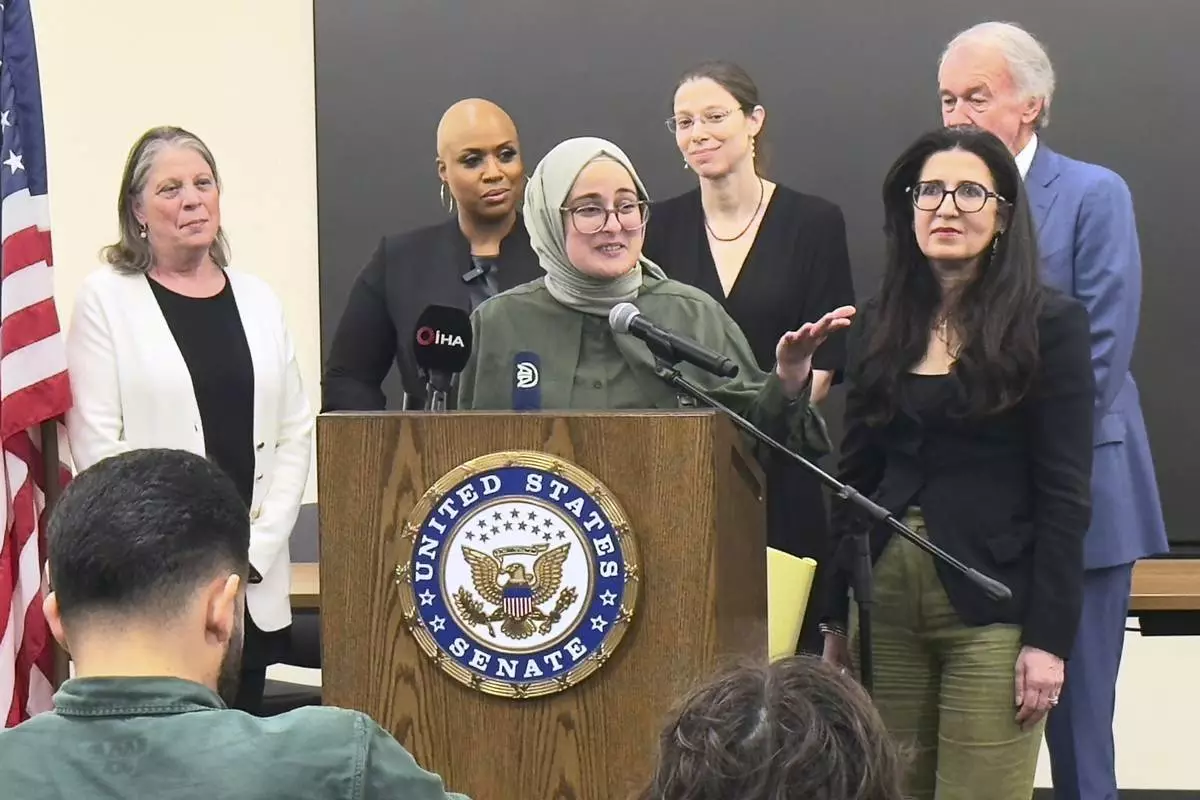
FILE - Tufts University student from Turkey, Rumeysa Ozturk, who was arrested by immigration agents while walking along a street in a Boston suburb, talks to reporters on arriving back in Boston, May 10, 2025, a day after she was released from a Louisiana immigration detention center on the orders of a federal judge. (AP Photo/Rodrique Ngowi, File)
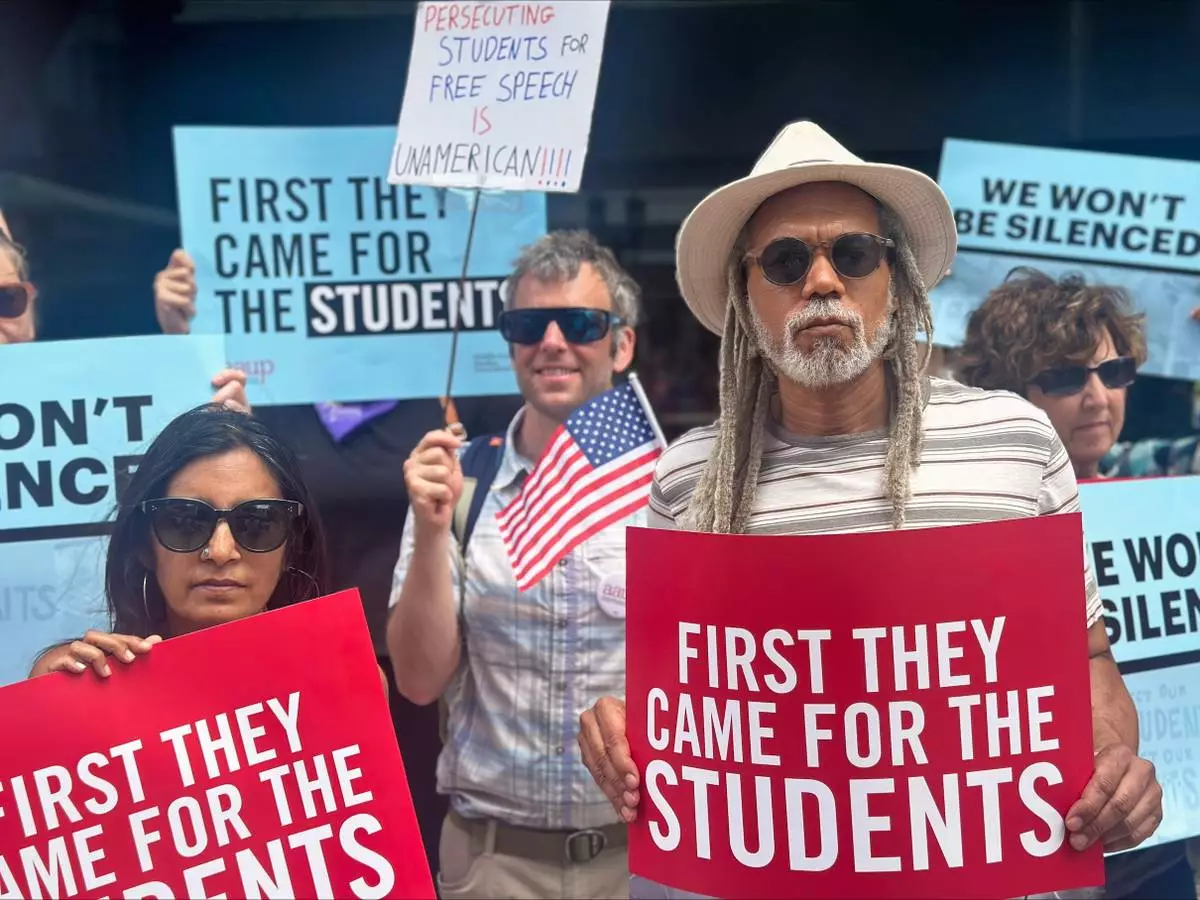
People show their support for a lawsuit challenging the Trump administration's policy of targeting students for deportation who took part in pro-Palestinian demonstrations on Monday, July 7, 2025, at the federal courthouse in Boston. (AP Photo/Michael Casey)
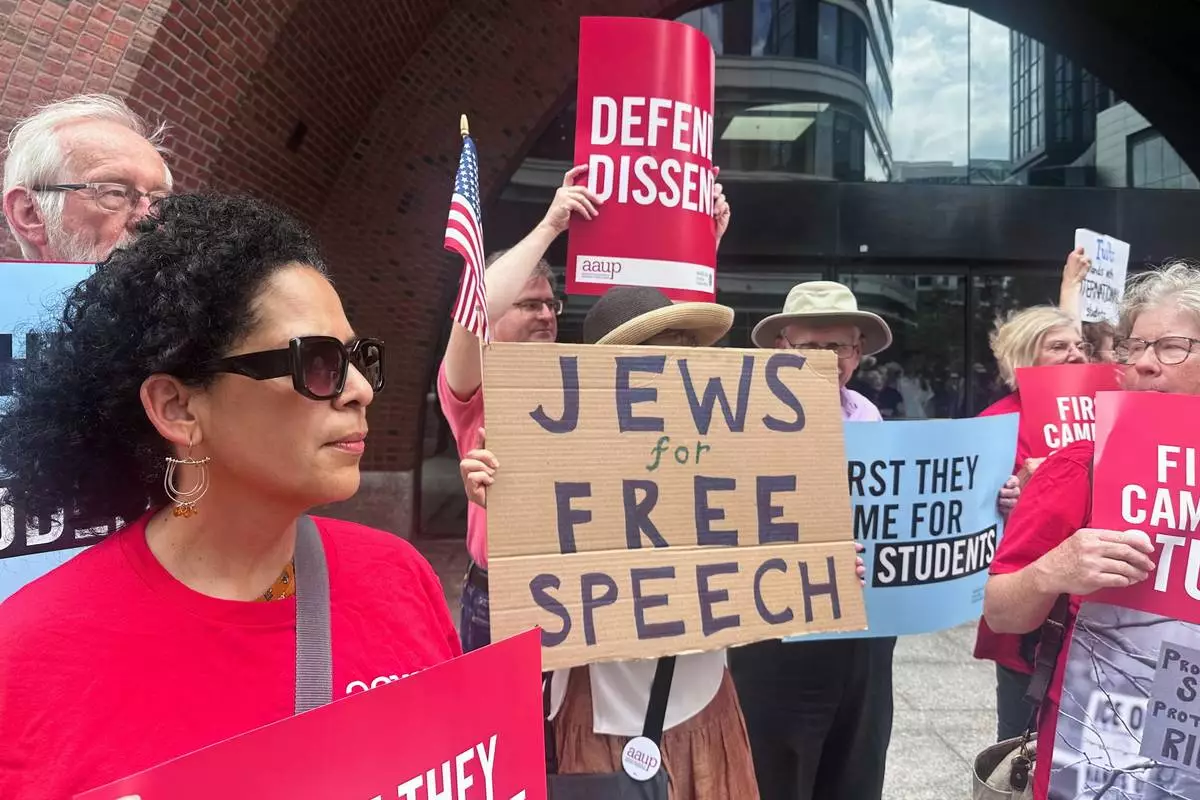
People show their support for a lawsuit challenging the Trump administration's policy of targeting students for deportation who took part in pro-Palestinian demonstrations on Monday, July 7, 2025, at the federal courthouse in Boston. (AP Photo/Michael Casey)
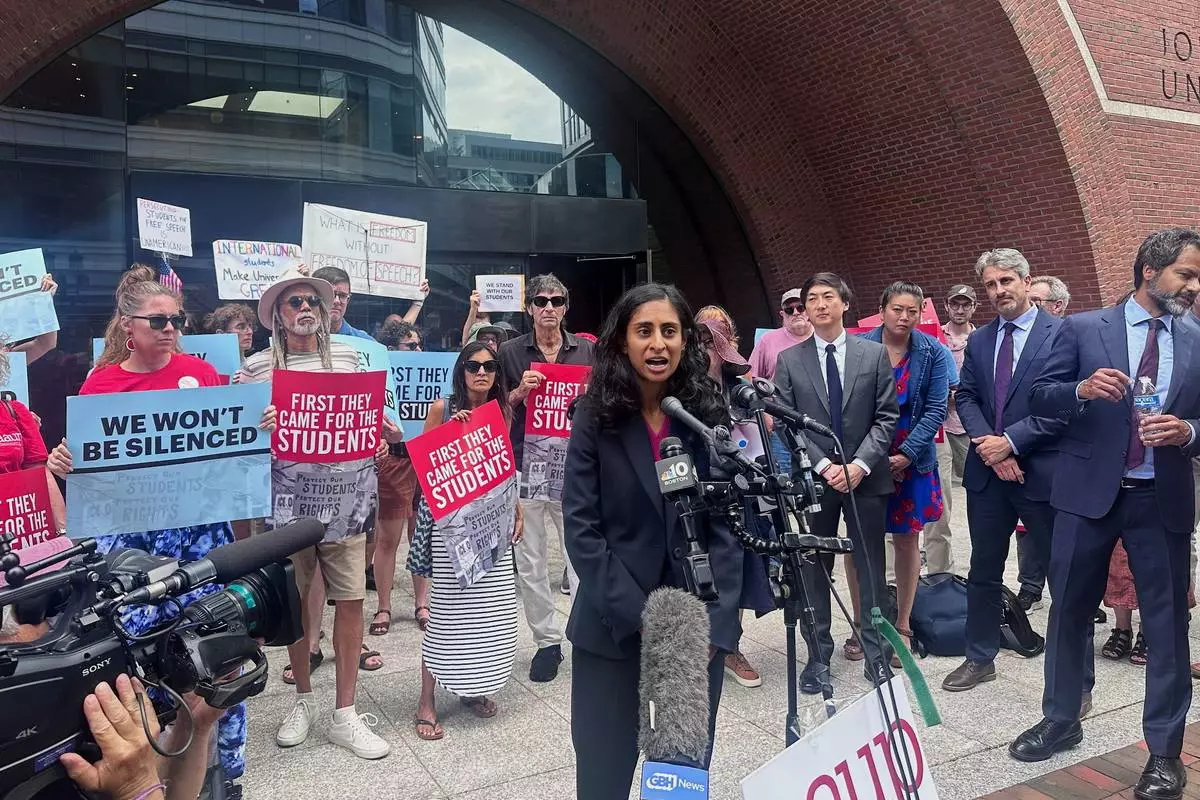
Ramya Krishnan, senior staff attorney at the Knight First Amendment Institute, speaks about a lawsuit challenging the Trump administration over deporting students and faculty who took part in pro-Palestinian demonstrations on Monday, July 7, 2025, at the federal courthouse in Boston. (AP Photo/Michael Casey)
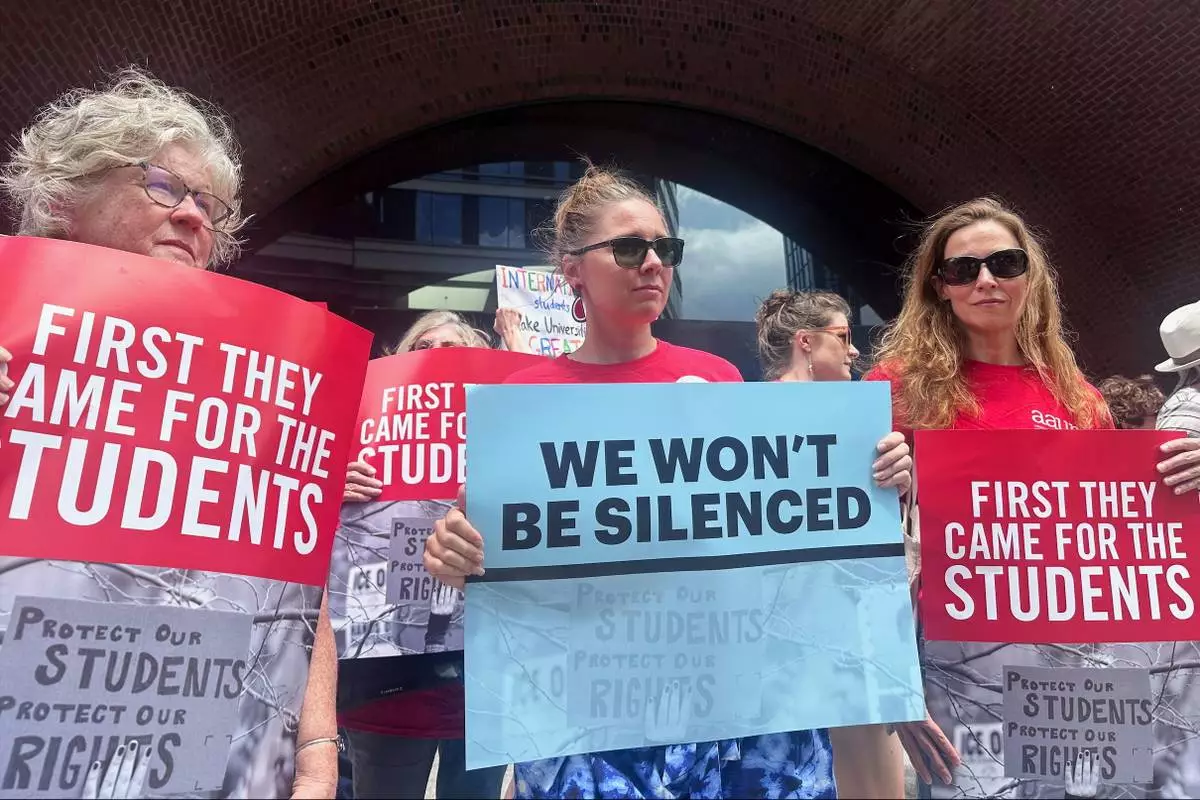
People show their support for a lawsuit challenging the Trump administration's policy of targeting students for deportation who took part in pro-Palestinian demonstrations on Monday, July 7, 2025, at the federal courthouse in Boston. (AP Photo/Michael Casey)