China's Xixia Imperial Tombs were inscribed on the World Heritage List on Friday during UNESCO's 47th session of the World Heritage Committee, held in Paris, France.
With this addition, the total number of World Heritage sites in China has reached 60.
Xixia Imperial Tombs is a group of imperial burial sites from the Xixia Dynasty (Western Xia, 1038-1227), founded by the Tangut people in northwestern China during the 11th to 13th centuries.
Covering an area of nearly 40 square km, the site comprises four types of architectural remains: 9 imperial mausoleums, 271 subordinate tombs, a northern architectural complex covering 0.05 square km, and 32 flood control works.
"The ruins of the Xixia Imperial Tombs include both natural and human-made elements, which shape the landscape of these tombs together. This application for World Heritage status reflects a fresh perspective on the Xixia Dynasty, which, though not documented in the Twenty-Four Histories of China, coexisted with the Song, Liao, and Jin dynasties," said Chen Tongbin, honorary president of Architectural History Institute under the China Architecture Design and Research Group.
The Xixia Imperial Tombs are the largest, highest-ranked, and most intact archaeological site from the Xixia period that has survived to the present day.
According to the World Heritage Committee, the site is a testament to the cultural fusion and interactions of diverse traditions. It also bears witness to the unique role of the Xixia Dynasty in cultural and commercial exchanges along the Silk Roads during the 11th to 13th centuries.
The Committee commended the efforts and achievements made by the Chinese government in the protection and management of the cultural heritage of the Xixia Imperial Tombs.
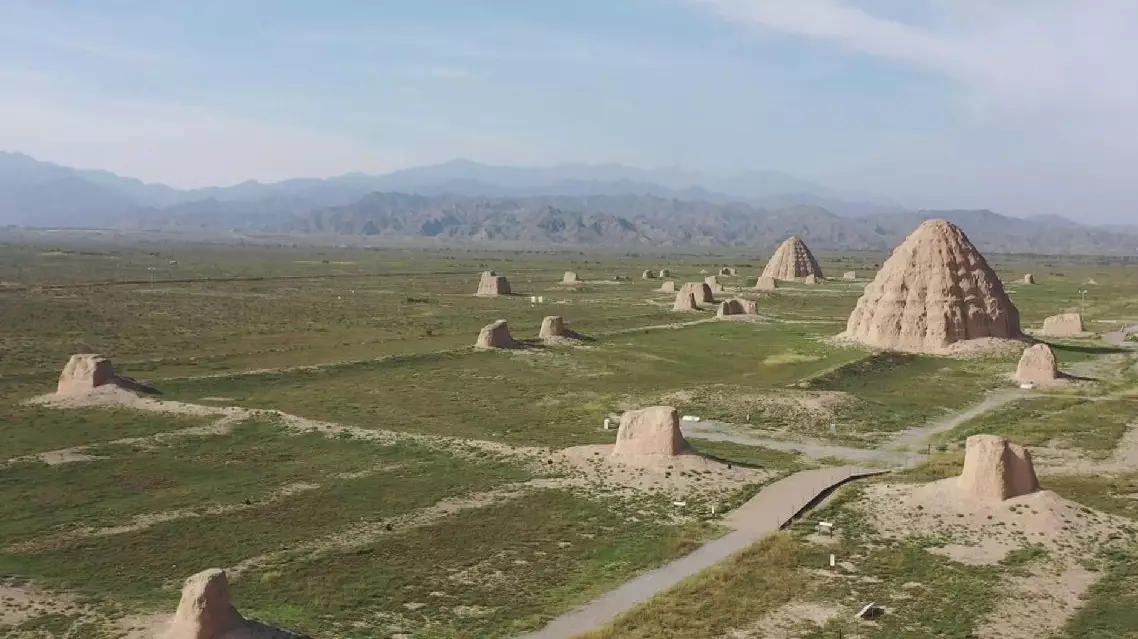
China's Xixia Imperial Tombs inscribed as UNESCO World Heritage Site
An increasing number of German consumers are considering buying electric vehicles (EVs) in the face of high fuel prices, according to a recent survey by the largest German online car trading platform, mobile.de.
As the Middle East tensions continue to drive up international oil and gas prices, the cost of automotive fuel has been rising steadily in many European countries.
According to fuel price data compiled by the German Association of the Automotive Industry, since the United States and Israel launched military strikes against Iran on February 28, gasoline prices in Germany have risen by nearly 20 percent, while diesel prices have shot up by more than 30 percent.
Results from a recent survey by mobile.de show that if gasoline prices remain at current high levels, 43 percent of respondents said they would switch to EVs, and 36 percent cited long-term cost savings as the most important reason for considering an EV purchase.
Additionally, the platform's data show that inquiries about used EVs surged by 66 percent in the first half of March.
"We are absolutely seeing much more interest on mobile.de for electric cars. What the German energy transition couldn't do, this current geopolitical situation has done in terms of transition to electric cars," said Ajay Bhatia, CEO of mobile.de.
In addition to high oil prices, government subsidies are also a key factor driving German consumers to consider purchasing EVs.
The German government announced the resumption of subsidies in January of this year, planning to invest 3 billion euros over the next few years to provide purchase subsidies for some 800,000 EVs.
Driven by the combined effects of high oil prices and subsidy policies, German consumers' interest in EVs has grown clearly. However, it remains to be seen whether this shift will evolve into a more sustained market trend.
"How long it will stay is anyone's guess, but at the moment we're absolutely seeing an increase, and sometimes these transitions need a catalyst. And this is definitely a catalyst that is seeing the transition to electric cars speed up," said Bhatia.
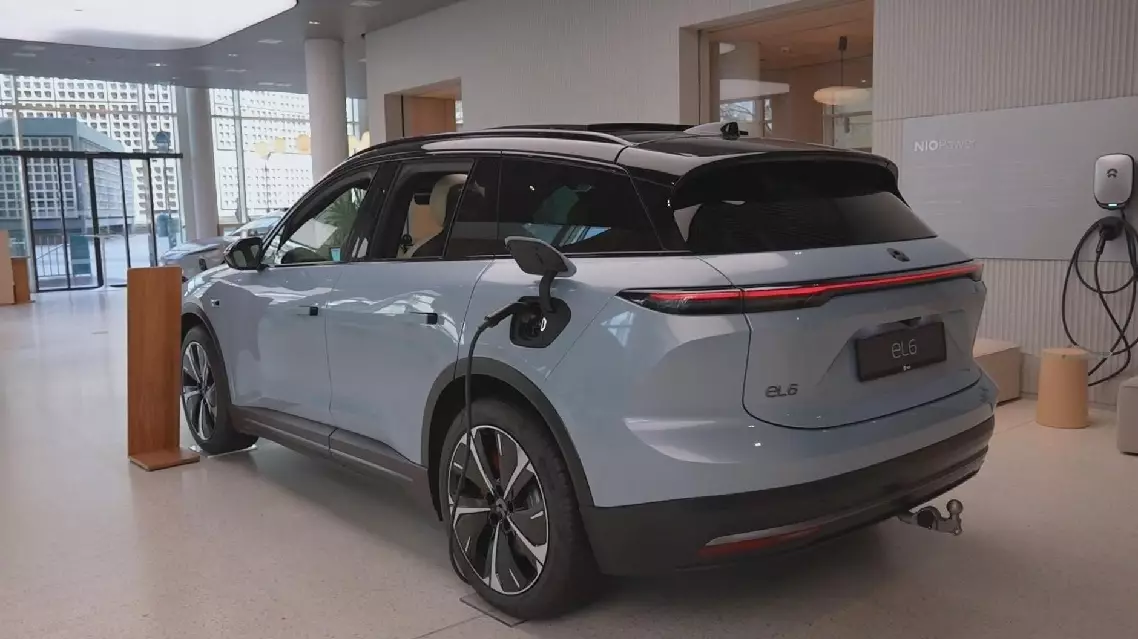
More Germans interested in buying EVs due to high oil prices: survey