Skip to Content Facebook Feature Image

Trump's sudden shifts make his policies baffling to countries trying to negotiate lower tariffs

News

Trump's sudden shifts make his policies baffling to countries trying to negotiate lower tariffs
News

News

Trump's sudden shifts make his policies baffling to countries trying to negotiate lower tariffs

2025-07-12 21:53 Last Updated At:22:01

WASHINGTON (AP) — In the past week, President Donald Trump has managed to make his erratic trade policies even more baffling to countries desperate to negotiate an escape from his wrath.

Doubling down on his trade wars, Trump is threatening to raise taxes on many goods from Canada, hike his universal tariff on imports from around the world and punish Brazil for prosecuting his friend, the country’s former president.

On Saturday, Trump announced more tariffs still, this time on two of the United States’ biggest trade partners: the European Union and Mexico, at 30% each.

Former U.S. trade negotiator Wendy Cutler said that Trump’s recent moves “underscore the growing unpredictability, incoherence and assertiveness’’ of his trade policies.

“It’s hard for trading partners to know where they stand with Trump on any given day and what more may be coming their way when least expected,’’ said Cutler, now vice president at the Asia Society Policy Institute.

On Thursday, the president escalated a conflict he started with America’s second-biggest trading partner and longstanding ally, raising the tariff -- effectively a tax — on many Canadian imports to 35% effective Aug. 1.

The sudden announcement, revealed in a letter to Canadian Prime Minister Mark Carney, came despite Carney’s push to reach a trade deal with the United States by July 21. And it followed a big concession by Canada: On June 29, it had agreed to drop a digital services tax that Trump considered unfair to U.S. tech giants.

Canada is far from the only target. In an interview Thursday with NBC News Trump suggested that he plans to raise his “baseline’’ tariff on most imports from an already-high 10% to as much as 20%. Trump sees the baseline tariffs as a way to finance the budget-busting tax cuts in the "One Big Beautiful Bill'' he signed into law July 4.

Those tariff threats came after his extraordinary decision Wednesday to impose a 50% import tax on Brazil mainly because he didn’t like the way it was treating former Brazilian president Jair Bolsonaro, who is facing trial for trying to overturn his electoral defeat in 2022.

In his letter to current Brazilian President Luiz Inácio Lula da Silva, Trump also incorrectly claimed that Brazilian trade barriers had caused “unsustainable Trade Deficits against the United States.’’ In fact, U.S. exports to Brazil have exceeded imports for 18 straight years, including a $29 billion surplus last year.

For some, Trump's action against Brazil indicates he's trying to exert influence over more than trade.

“Trump seems to view tariffs as an instrument to influence not just other countries’ trade and economic policies but even their domestic legal and political matters," said Eswar Prasad, professor of trade policy at Cornell University.

Trump’s faith in the economic superpowers of tariffs is unshaken even though they so far have proven largely ineffective in bullying other countries to cut deals.

On April 2, Trump announced the 10% baseline tariffs and larger “reciprocal’’ tariffs – up to 50% -- on dozens of countries with which the United States runs trade deficits. But responding to a rout in global financial markets, he quickly suspended the reciprocal tariffs for 90 days to give countries a chance to negotiate.

The administration promised “90 deals in 90 days’’ but got only two – with the United Kingdom and Vietnam -- before the deadline ran out Wednesday.

Rather than reinstituting the reciprocal tariffs, Trump sent letters to 23 countries saying he’ll impose levies ranging from 20% on the Philippines to the 50% on Brazil Aug. 1 if they couldn’t reach an agreement.

Chad Bown, senior fellow at the Peterson Institute for International Economics, was not surprised that Trump needed more time to press U.S. trading partners to do more to open their markets to U.S. exports — though another three weeks is unlikely to be enough time to reach substantive agreements.

“For each of these countries, they have their own domestic challenges about what they can and can’t offer,’’ he said. “There’s a reason why that market access hasn’t been granted before ... they have domestic political constituencies that argue to keep protection in place. And those just aren’t problems that can easily be solved in a matter of weeks.’’

Malaysia, for instance, has “specific red lines’’ it will not cross, Trade Minister Zafrul Aziz said Wednesday, including U.S. demands involving government contracts, halal certification, medical standards and a digital tax.

But Malaysia has pledged to buy 30 Boeing planes and offered other concessions involving semiconductors and technology. “It has to be fair,” he said. “If the deal does not benefit Malaysia, we should not have a deal.’’

Still, the United States’ $30 trillion economy and free-spending consumers give Trump considerable leverage, especially over countries that depend on trade. “These countries need the United States,’’ said Matthew Goodman, director of the Council on Foreign Relations’ Center for Geoeconomic Studies. "They need our market.’’

Thailand, facing the threat of a 36% Trump tariff Aug. 1, is continuing to push for a deal and has offered to open its market to more U.S. farm, energy and industrial products.

Trump said Vietnam gave U.S. companies duty-free access to its market while agreeing to a 20% U.S. tariff on its exports — though details of the deal have not been released. “The Vietnam deal was fantastic,’’ Stephen Miran, chair of Trump’s Council of Economic Advisers, crowed last Sunday on ABC News’ “This Week with George Stephanopoulos.’’ “It’s extremely one-sided.’’

Other countries “can’t afford to walk away,'’ said Goodman, former director for international economics on the National Security Council. “But they’re going to be increasingly unhappy and resistant to the most over-the-top requests.’’

Sometimes there’s a backlash against U.S. bullying. Carney’s Liberal party, for example, won a come-from-behind election victory in April because he stood up to Trump’s pressure.

And countries are beginning to look for alternatives to economic reliance on the United States. Canada is negotiating a trade pact with Southeast Asian countries, some of which are also moving closer to China.

Foreign governments might also simply hope to outlast Trump, who has shown a willingness to declare victory after signing “framework’’ agreements such as one with China that leave the toughest issues for future negotiations.

“For Trump, the squeeze is more important than the juice,” said William Reinsch, a former U.S. trade official now at the Center of Strategic and International Studies. “What’s important to him is winning – the public, visible appearance of winning. And what he wins is less important.

“So the trick for these countries becomes: ‘How do we let him win in a way that allows us to make the least damaging concessions?’”

Eileen Ng in Kuala Lumpur, Malaysia, contributed to this story.
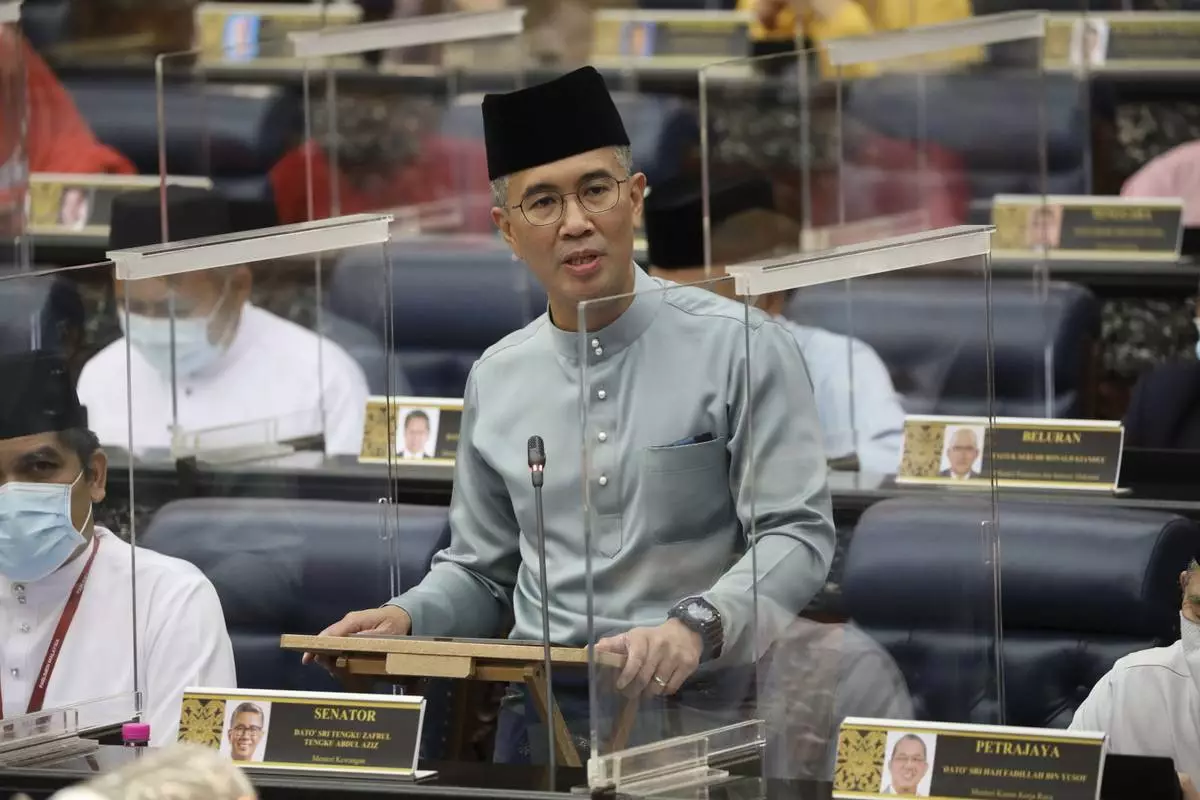
FILE - Malaysia's Finance Minister Zafrul Aziz delivers the 2021 budget speech at parliament in Kuala Lumpur, Malaysia, Nov. 6, 2020. (AP Photo/Vincent Thian, File)
FILE - Malaysia's Finance Minister Zafrul Aziz delivers the 2021 budget speech at parliament in Kuala Lumpur, Malaysia, Nov. 6, 2020. (AP Photo/Vincent Thian, File)

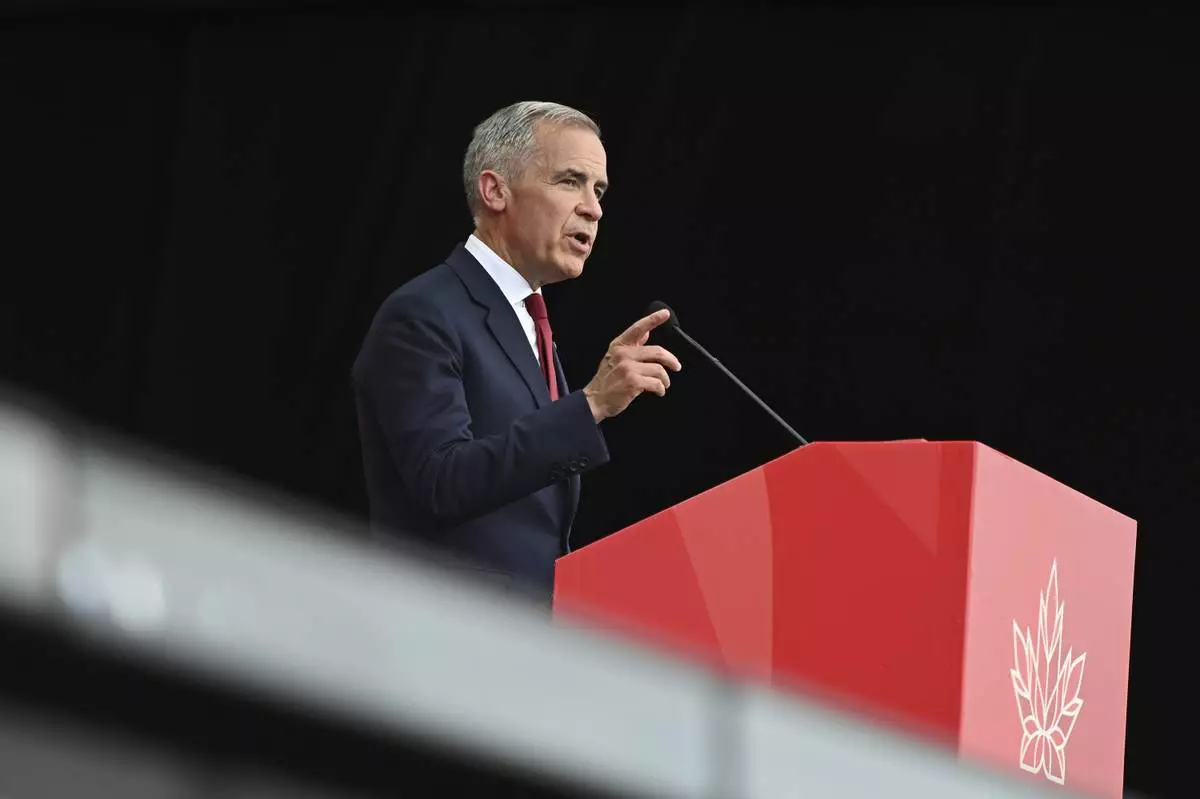
Canada Prime Minister Mark Carney speaks during Canada Day celebrations at LeBreton Flats in Ottawa, Ontario, Canada, on Tuesday, July 1, 2025. (Spencer Colby/The Canadian Press via AP)
Canada Prime Minister Mark Carney speaks during Canada Day celebrations at LeBreton Flats in Ottawa, Ontario, Canada, on Tuesday, July 1, 2025. (Spencer Colby/The Canadian Press via AP)

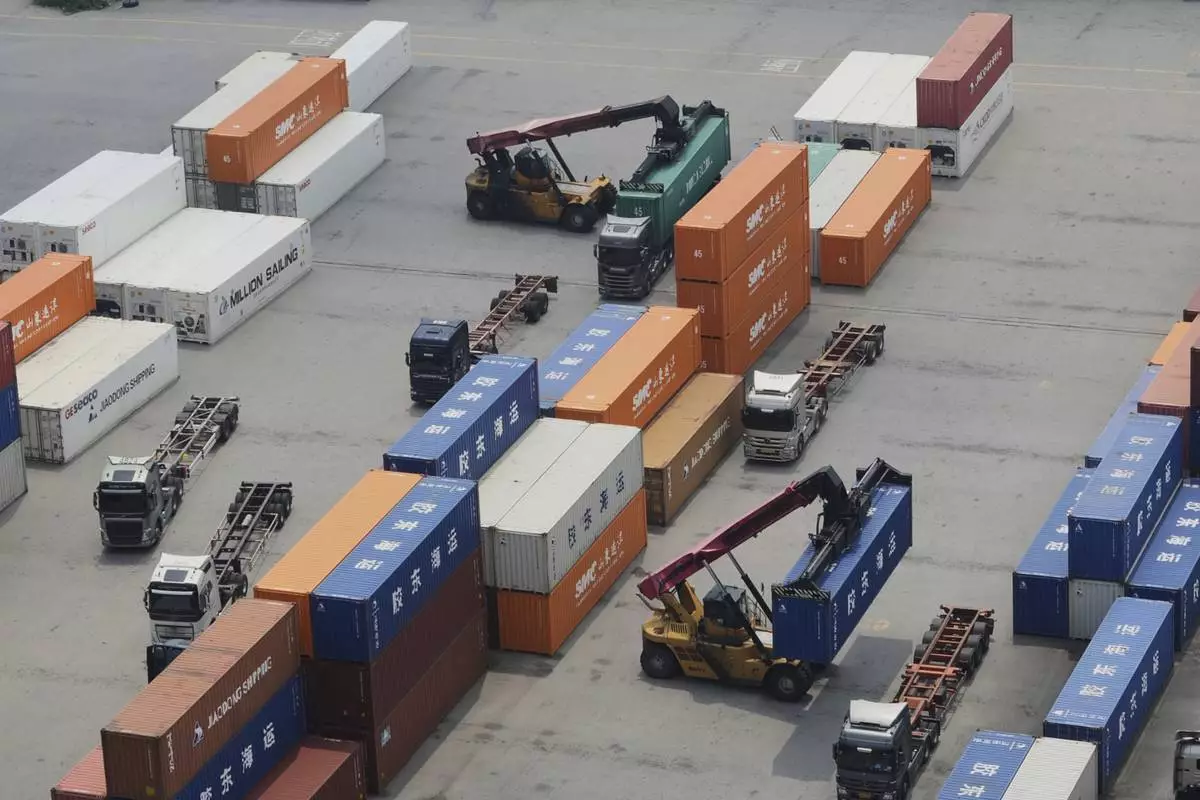
Cranes and shipping containers are seen at a port in Pyeongtaek, South Korea, Tuesday, July 8, 2025. (AP Photo/Ahn Young-joon)
Cranes and shipping containers are seen at a port in Pyeongtaek, South Korea, Tuesday, July 8, 2025. (AP Photo/Ahn Young-joon)
HAVANA (AP) — Cuban soldiers wearing white gloves marched out of a plane on Thursday carrying urns with the remains of the 32 Cuban officers killed during a stunning U.S. attack on Venezuela as trumpets and drums played solemnly at Havana's airport.

Nearby, thousands of Cubans lined one of the Havana’s most iconic streets to await the bodies of colonels, lieutenants, majors and captains as the island remained under threat by the administration of U.S. President Donald Trump.

The shoes of Cuban soldiers clacked as they marched stiff-legged into the headquarters of the Ministry of the Armed Forces, next to Revolution Square, with the urns and placed them on a long table next to the pictures of those slain so people could pay their respects.

Thursday’s mass funeral was only one of a handful that the Cuban government has organized in almost half a century.

Hours earlier, state television showed images of more than a dozen wounded people accompanied by Cuban Foreign Minister Bruno Rodríguez arriving Wednesday night from Venezuela. Some were in wheelchairs.

The official announcer indicated that they were “combatants” who had been “wounded” in Venezuela. They were greeted by the Minister of the Interior, Lázaro Alberto Álvarez, and the Minister of the Revolutionary Armed Forces, Álvaro López Miera.

Those injured and the bodies of those killed arrived as tensions grow between Cuba and U.S., with President Donald Trump recently demanding that the Caribbean country make a deal with him before it is “too late.” He did not explain what kind of deal.

Trump also has said that Cuba will no longer live off Venezuela's money and oil. Experts warn that the abrupt end of oil shipments could be catastrophic for Cuba, which is already struggling with serious blackouts and a crumbling power grid.

Officials unfurled a massive flag at Havana's airport as President Miguel Díaz-Canel, clad in military garb as commander of Cuba's Armed Forces, stood silent next to former President Raúl Castro, with what appeared to be the relatives of those slain looking on nearby.

Cuban Interior Minister Lázaro Alberto Álvarez Casa said Venezuela was not a distant land for those killed, but a “natural extension of their homeland.”

“The enemy speaks to an audience of high-precision operations, of troops, of elites, of supremacy,” Álvarez said in apparent reference to the U.S. “We, on the other hand, speak of faces, of families who have lost a father, a son, a husband, a brother.”

Álvarez called those slain “heroes,” saying that they were example of honor and “a lesson for those who waver.”

“We reaffirm that if this painful chapter of history has demonstrated anything, it is that imperialism may possess more sophisticated weapons; it may have immense material wealth; it may buy the minds of the wavering; but there is one thing it will never be able to buy: the dignity of the Cuban people,” he said.

Thousands of Cubans lined a street where motorcycles and military vehicles thundered by with the remains of those killed.

“They are people willing to defend their principles and values, and we must pay tribute to them,” said Carmen Gómez, a 58-year-old industrial designer, adding that she hopes no one invades given the ongoing threats.

When asked why she showed up despite the difficulties Cubans face, Gómez replied, "It’s because of the sense of patriotism that Cubans have, and that will always unite us.”

Cuba recently released the names and ranks of 32 military personnel — ranging in age from 26 to 60 — who were part of the security detail of Venezuelan President Nicolás Maduro during the raid on his residence on January 3. They included members of the Revolutionary Armed Forces and the Ministry of the Interior, the island’s two security agencies.

Cuban and Venezuelan authorities have said that the uniformed personnel were part of protection agreements between the two countries.

Meanwhile, a demonstration was planned for Friday across from the U.S. Embassy in an open-air forum known as the Anti-Imperialist Tribune. Officials have said they expect the demonstration to be massive.

“People are upset and hurt. There’s a lot of talk on social media; but many do believe that the dead are martyrs” of a historic struggle against the United States, analyst and former diplomat Carlos Alzugaray told The Associated Press.

In October 1976, then-President Fidel Castro led a massive demonstration to bid farewell to the 73 people killed in the bombing of a Cubana de Aviación civilian flight financed by anti-revolutionary leaders living in the U.S. Most of the victims were Cuban athletes returning to their island.

In December 1989, officials organized “Operation Tribute” to honor the remains of more than 2,000 Cuban combatants who died in Angola during Cuba’s participation in the war that defeated the South African army and ended the apartheid system. In October 1997, memorial services were held following the arrival of the remains of guerrilla commander Ernesto “Che” Guevara and six of his comrades, who died in 1967.

A day before the remains of those slain arrived in Cuba, U.S. Secretary of State Marco Rubio announced $3 million in relief aid to help the island recover from the catastrophic Hurricane Melissa, which struck in late October.

The first flight took off from Florida on Wednesday, and a second flight was scheduled for Friday. A commercial vessel also will deliver food and other supplies.

“We have taken extraordinary measures to ensure that this assistance reaches the Cuban people directly, without interference or diversion by the illegitimate regime,” Rubio said, adding that the U.S. government was working with Cuba's Catholic Church.

The announcement riled Cuban Foreign Minister Bruno Rodríguez.

“The U.S. government is exploiting what appears to be a humanitarian gesture for opportunistic and politically manipulative purposes,” he said in a statement. “As a matter of principle, Cuba does not oppose assistance from governments or organizations, provided it benefits the people and the needs of those affected are not used for political gain under the guise of humanitarian aid.”

Coto contributed from San Juan, Puerto Rico.

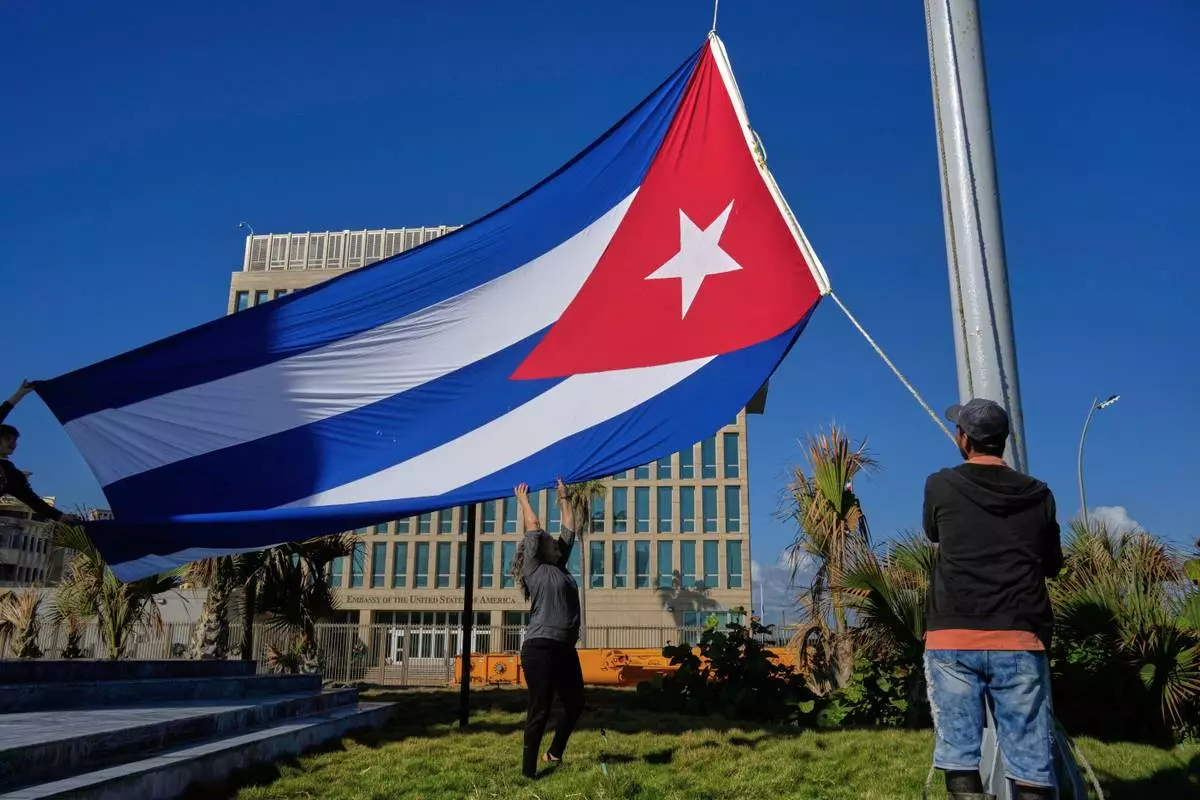
Workers fly the Cuban flag at half-staff at the Anti-Imperialist Tribune near the U.S. Embassy in Havana, Cuba, Monday, Jan. 5, 2026, in memory of Cubans who died two days before in Caracas, Venezuela during the capture of Venezuelan President Nicolas Maduro by U.S. forces. (AP Photo/Ramon Espinosa)

Workers fly the Cuban flag at half-staff at the Anti-Imperialist Tribune near the U.S. Embassy in Havana, Cuba, Monday, Jan. 5, 2026, in memory of Cubans who died two days before in Caracas, Venezuela during the capture of Venezuelan President Nicolas Maduro by U.S. forces. (AP Photo/Ramon Espinosa)

Recommended Articles