BRIDGEWATER, N.J. (AP) — President Donald Trump on Saturday announced he's levying tariffs of 30% against the European Union and Mexico starting Aug. 1, a move that could cause massive upheaval between the United States and two of its biggest trade partners.
Trump detailed the planned tariffs in letters posted to his social media account. They are part of an announcement blitz by Trump of new tariffs aimed at allies and foes alike, a bedrock of his 2024 campaign that he said would set the foundation for reviving a U.S. economy that he claims has been ripped off by other nations for decades.
Click to Gallery
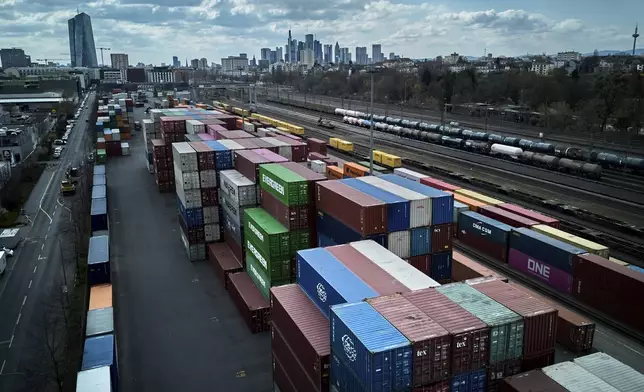
FILE - Containers are piled up at a cargo terminal in Frankfurt, Germany, April 1, 2025. (AP Photo/Michael Probst, File)
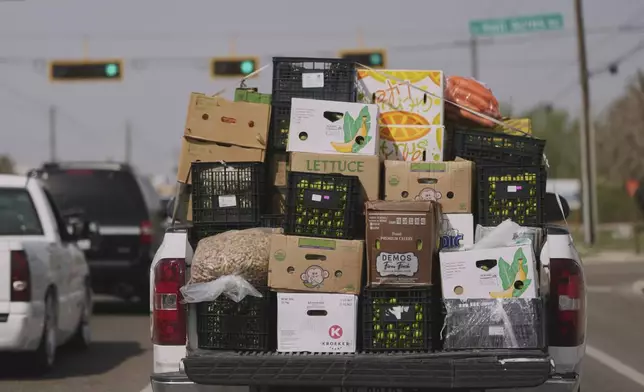
FILE - A truck loaded with produce from Mexico and Canada passes through Pharr, Texas, March 4, 2025. (AP Photo/Eric Gay, File)
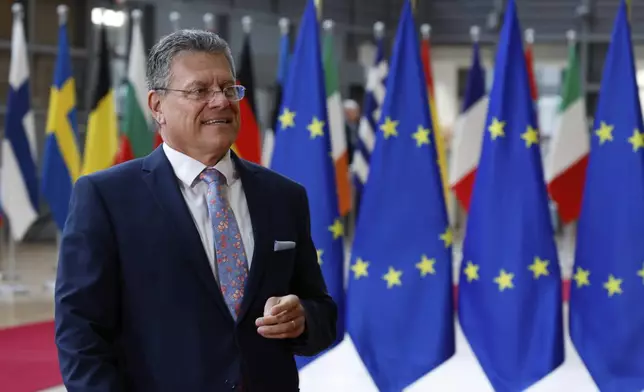
FILE - European Commissioner for Trade and Economic Security Maros Sefcovic arrives for a meeting of EU trade ministers at the European Council building in Brussels, May 15, 2025. (AP Photo/Omar Havana, File)
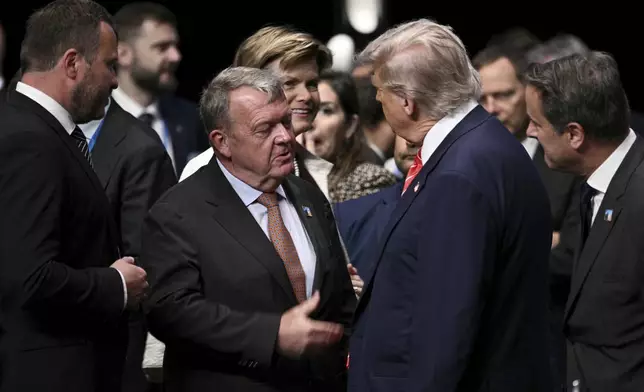
FILE - U.S. President Donald Trump greets Denmark's Foreign Minister Lars Lokke Rasmussen, center left, before the start of a plenary session of the NATO Heads of State and Government summit in The Hague, Netherlands, June 25, 2025.(Brendan Smialowski/Pool Photo via AP File)
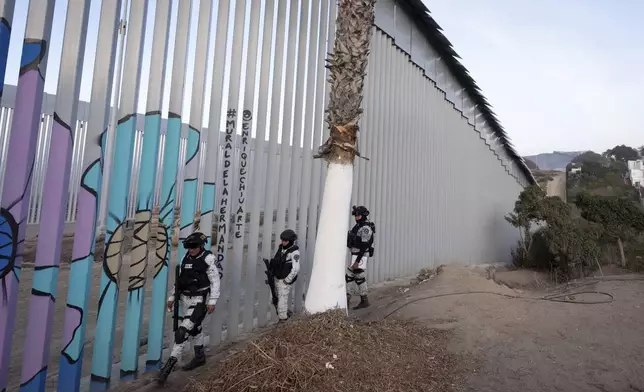
FILE - Members of the Mexican National Guard patrol along the border wall separating Mexico and the United States, in Tijuana, Jan. 20, 2025. (AP Photo/Gregory Bull, File)
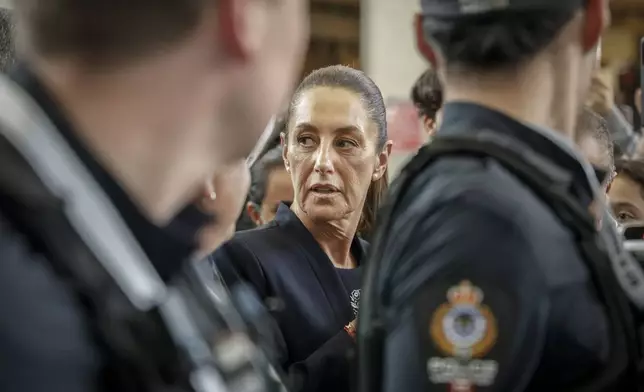
FILE - Mexican President Claudia Sheinbaum arrives in Calgary, Alberta, June 16, 2025, to attend the G7 Leaders meeting, taking place in Kananaskis, Alberta. (Jeff McIntosh/The Canadian Press via AP File)
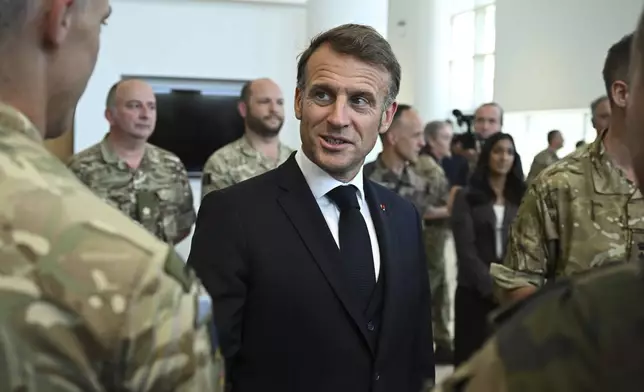
French President Emmanuel Macron and British Prime Minister Keir Starmer, not pictured, take part in a a joint military visit to the MARCOM centre, maritime command centre in Northwood, London, Thursday July 10, 2025. (Leon Neal/Pool Photo via AP)

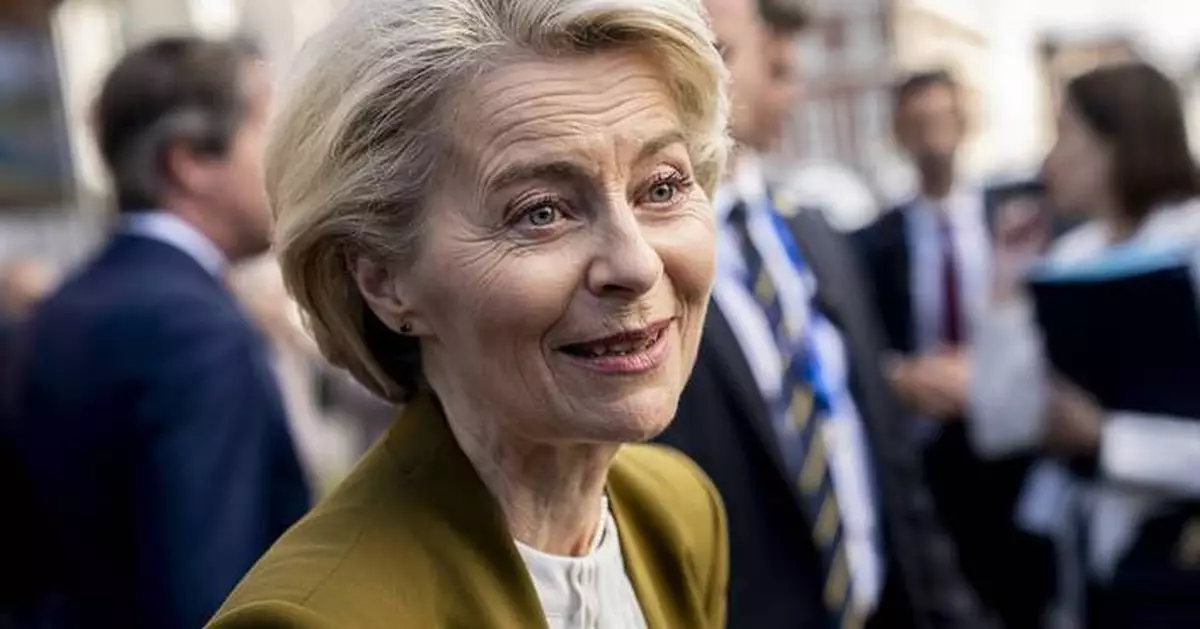
EU Commission President Ursula von der Leyen walks in the Town Hall Garden at Aarhus Town Hall, Aarhus, Denmark, Thursday, July 3, 2025. (Ida Marie Odgaard/Ritzau Scanpix via AP)
In his letter to Mexico's leader, President Claudia Sheinbaum, Trump acknowledged that the country has been helpful in stemming the flow of undocumented migrants and fentanyl into the United States. But he said the country has not done enough to stop North America from turning into a “Narco-Trafficking Playground.”
“Mexico has been helping me secure the border, BUT, what Mexico has done, is not enough,” Trump added.
Trump in his letter to the European Union said the U.S. trade deficit was a national security threat.
“We have had years to discuss our Trading Relationship with The European Union, and we have concluded we must move away from these long-term, large, and persistent, Trade Deficits, engendered by your Tariff, and Non-Tariff, Policies, and Trade Barriers,” Trump wrote in the letter to the EU. “Our relationship has been, unfortunately, far from Reciprocal.”
The letters come in the midst of an on-and-off Trump threat to impose tariffs on countries and right an imbalance in trade. Trump in April imposed tariffs on dozens of countries, before pausing them for 90 days to negotiate individual deals. As the three-month grace period ended this week, Trump began sending his tariff letters to leaders but again has pushed back the implementation day for what he says will be just a few more weeks.
If he moves forward with the tariffs, it could have ramifications for nearly every aspect of the global economy.
European Union Commission President Ursula von der Leyen responded by noting the bloc's “commitment to dialogue, stability, and a constructive transatlantic partnership.”
“At the same time, we will take all necessary steps to safeguard EU interests, including the adoption of proportionate countermeasures if required,” von der Leyen said in a statement.
Von der Leyen added that the EU remains committed to continuing negotiations with the U.S. and coming to an agreement before Aug. 1. Trade ministers from EU countries are scheduled to meet Monday to discuss trade relations with the U.S., as well as with China.
European leaders joined von der Leyen in urging Trump to give negotiations more time and warnings of possible new tariffs on Washington.
“With European unity, it is more than ever up to the Commission to assert the Union’s determination to resolutely defend European interests,” French President Emmanuel Macron said in a statement posted on X.
Italian Premier Giorgia Meloni’s office said "it would make no sense to trigger a trade war between the two sides of the Atlantic."
Danish Foreign Minister Lars Løkke Rasmussen told broadcaster DR that Trump was taking a “pointless and a very shortsighted approach." Swedish Prime Minister Ulf Kristersson warned in an interview with SVT that “everyone loses out from an escalated trade conflict, and it will be U.S. consumers who pay the highest price.”
Trump, as he has in previous letters, warned that his administration would further raise tariffs if the EU attempts to hike its own tariffs on the United States.
The Mexican government said it was informed during high-level talks with U.S. State Department officials Friday that the Trump letter was coming. The delegation told Trump officials at the meeting it disagreed with the decision and considered it “unfair treatment,” according to a Mexican government statement.
Sheinbaum, who has sought to avoid directly criticizing Trump in the early going of her presidency, expressed a measure of confidence during a public appearance on Saturday that the U.S. and Mexico will reach “better terms.”
“I’ve always said that in these cases, you need a cool head to face any problem,” Sheinbaum said.
With the reciprocal tariffs, Trump is effectively blowing up the rules governing world trade. For decades, the United States and most other countries abided by tariff rates set through a series of complex negotiations known as the Uruguay round. Countries could set their own tariffs, but under the “most favored nation’’ approach, they couldn’t charge one country more than they charged another.
The Mexico tariff, if it goes into effect, could replace the 25% tariffs on Mexican goods that do not comply with the existing U.S.-Mexico-Canada free trade agreement.
Trump’s letter did not address if USMCA-compliant goods would still be exempt from the Mexico tariffs after Aug. 1, as the White House said would be the case with Canada. Trump sent a letter to Canada earlier this week threatening a 35% tariff hike.
With Saturday's letters, Trump has now issued tariff conditions on 24 countries and the 27-member European Union.
So far, the tally of trade deals struck by Trump stands at two — one with the United Kingdom and one with Vietnam. Trump has also announced the framework for a deal with China, the details of which remain fuzzy.
Treasury Secretary Scott Bessent on Saturday said the U.K. “smartly” acted early.
“Let this be a lesson to other countries - earnest, good faith negotiations can produce powerful results that benefit both sides of the table, while correcting the imbalances that plague global trade,” Bessent said in a posting on X.
Douglas Holtz-Eakin, a former Congressional Budget Office director and president of the center-right American Action Forum, said the letters were evidence that serious trade talks were not taking place over the past three months. He stressed that nations were instead talking amongst themselves about how to minimize their own exposure to the U.S. economy and Trump.
“They’re spending time talking to each other about what the future is going to look like, and we’re left out,” Holtz-Eakin said.
If the tariffs do indeed take effect, the potential impact on Europe could be vast.
The value of EU-U.S. trade in goods and services amounted to 1.7 trillion euros ($2 trillion) in 2024, or an average of 4.6 billion euros a day, according to EU statistics agency Eurostat.
Europe’s biggest exports to the U.S. were pharmaceuticals, cars, aircraft, chemicals, medical instruments and wine and spirits.
Lamberto Frescobaldi, president of the Union of Italian Wines trade association, said Trump's move could lead to “a virtual embargo” of his country's wine.
“A single letter was enough to write the darkest chapter in relations between two historic Western allies,” Frescobaldi said.
Trump has complained about the EU’s 198 billion-euro trade surplus in goods, which shows Americans buy more goods from European businesses than the other way around.
However, American companies fill some of the gap by outselling the EU when it comes to services such as cloud computing, travel bookings, and legal and financial services.
The U.S. services surplus took the nation’s trade deficit with the EU down to 50 billion euros ($59 billion), which represents less than 3% of overall U.S.-EU trade.
Associated Press writers Josh Boak in Washington, Angela Charlton in Paris, Regina Garcia Cano in Caracas, Venezuela, Kirsten Grieshaber in Berlin, Dave McHugh in Frankfurt, Germany, and Giada Zampano in Rome contributed to this report.
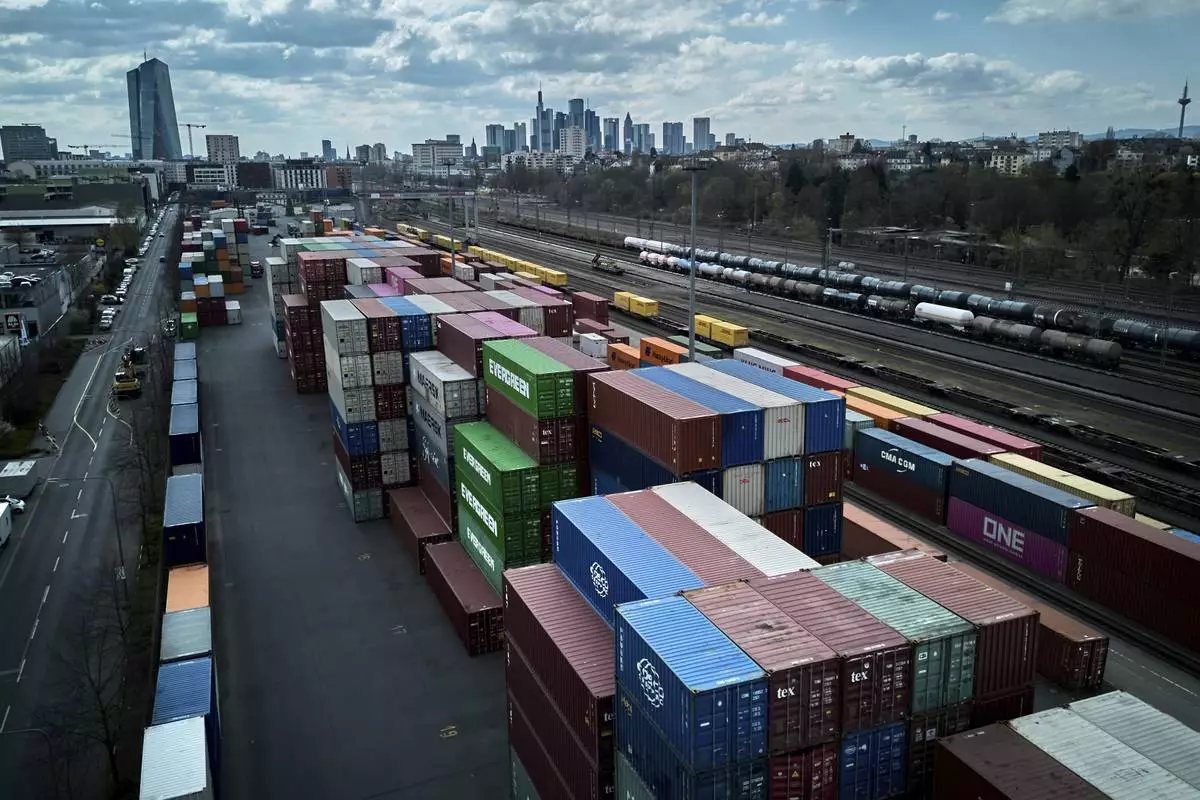
FILE - Containers are piled up at a cargo terminal in Frankfurt, Germany, April 1, 2025. (AP Photo/Michael Probst, File)
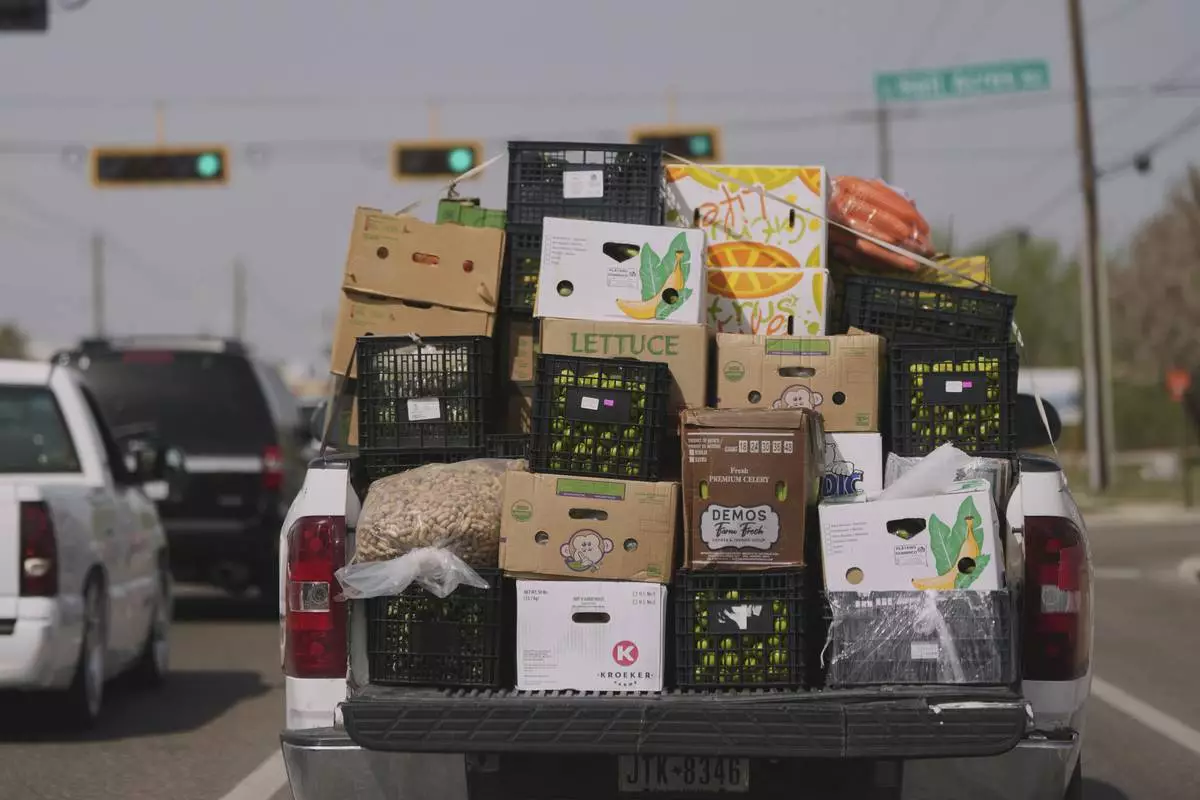
FILE - A truck loaded with produce from Mexico and Canada passes through Pharr, Texas, March 4, 2025. (AP Photo/Eric Gay, File)
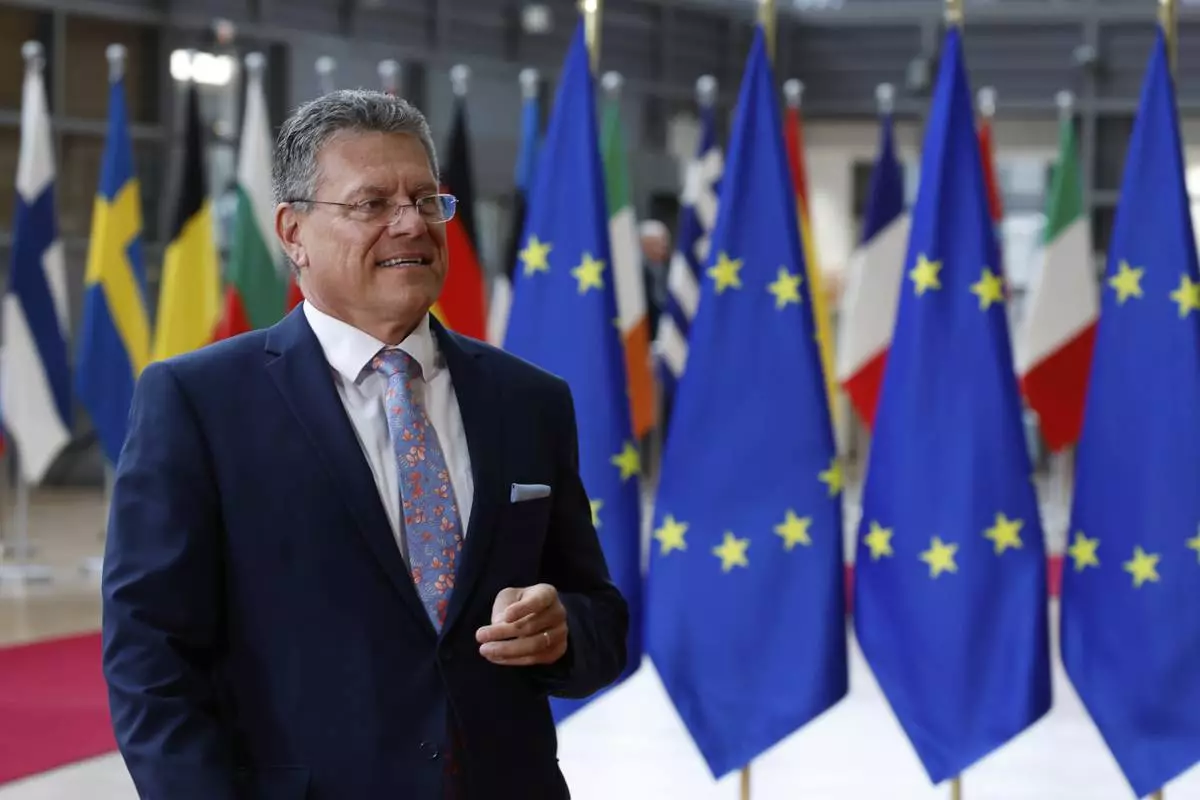
FILE - European Commissioner for Trade and Economic Security Maros Sefcovic arrives for a meeting of EU trade ministers at the European Council building in Brussels, May 15, 2025. (AP Photo/Omar Havana, File)
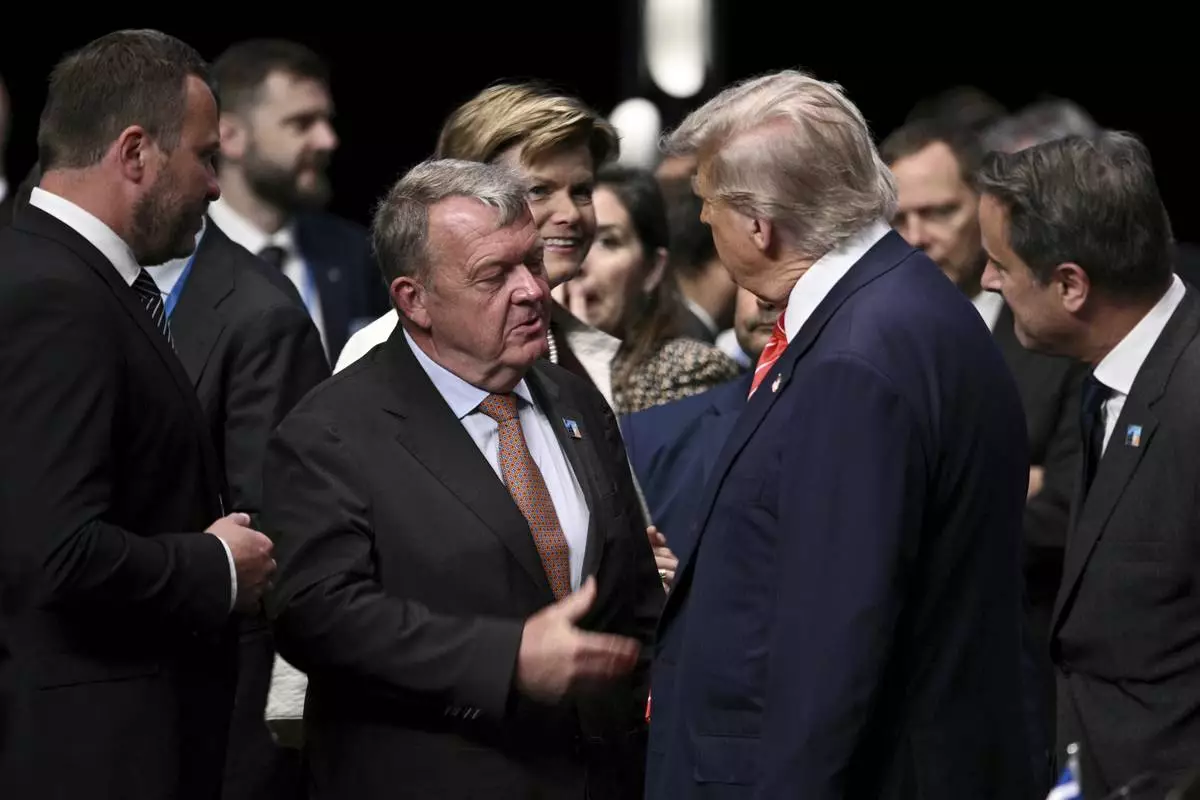
FILE - U.S. President Donald Trump greets Denmark's Foreign Minister Lars Lokke Rasmussen, center left, before the start of a plenary session of the NATO Heads of State and Government summit in The Hague, Netherlands, June 25, 2025.(Brendan Smialowski/Pool Photo via AP File)
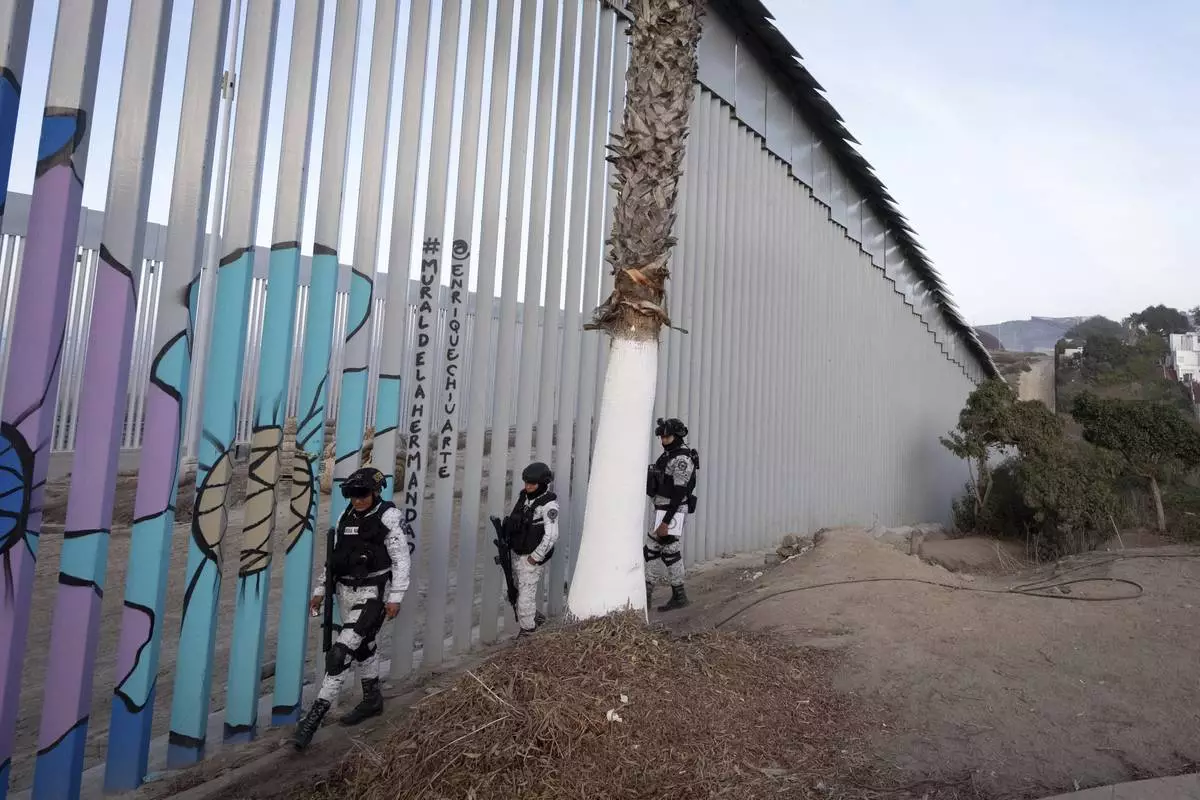
FILE - Members of the Mexican National Guard patrol along the border wall separating Mexico and the United States, in Tijuana, Jan. 20, 2025. (AP Photo/Gregory Bull, File)
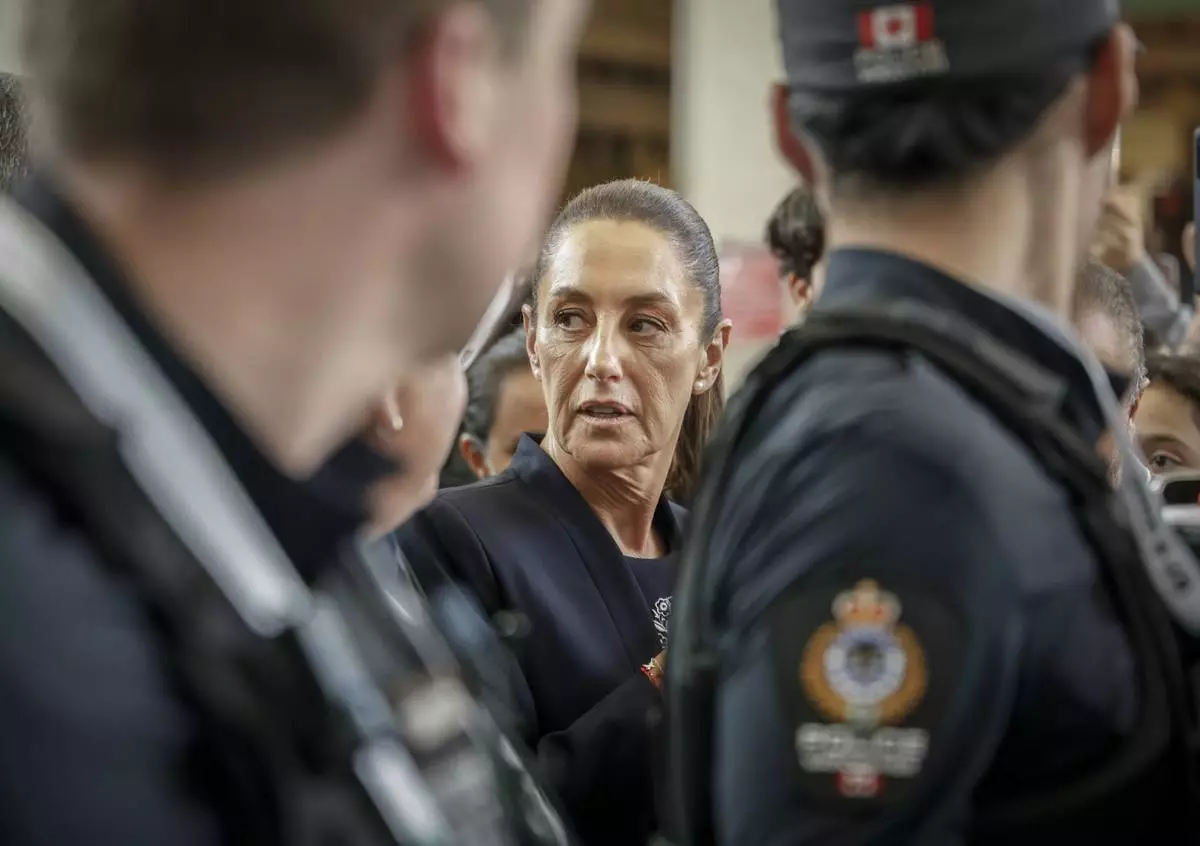
FILE - Mexican President Claudia Sheinbaum arrives in Calgary, Alberta, June 16, 2025, to attend the G7 Leaders meeting, taking place in Kananaskis, Alberta. (Jeff McIntosh/The Canadian Press via AP File)
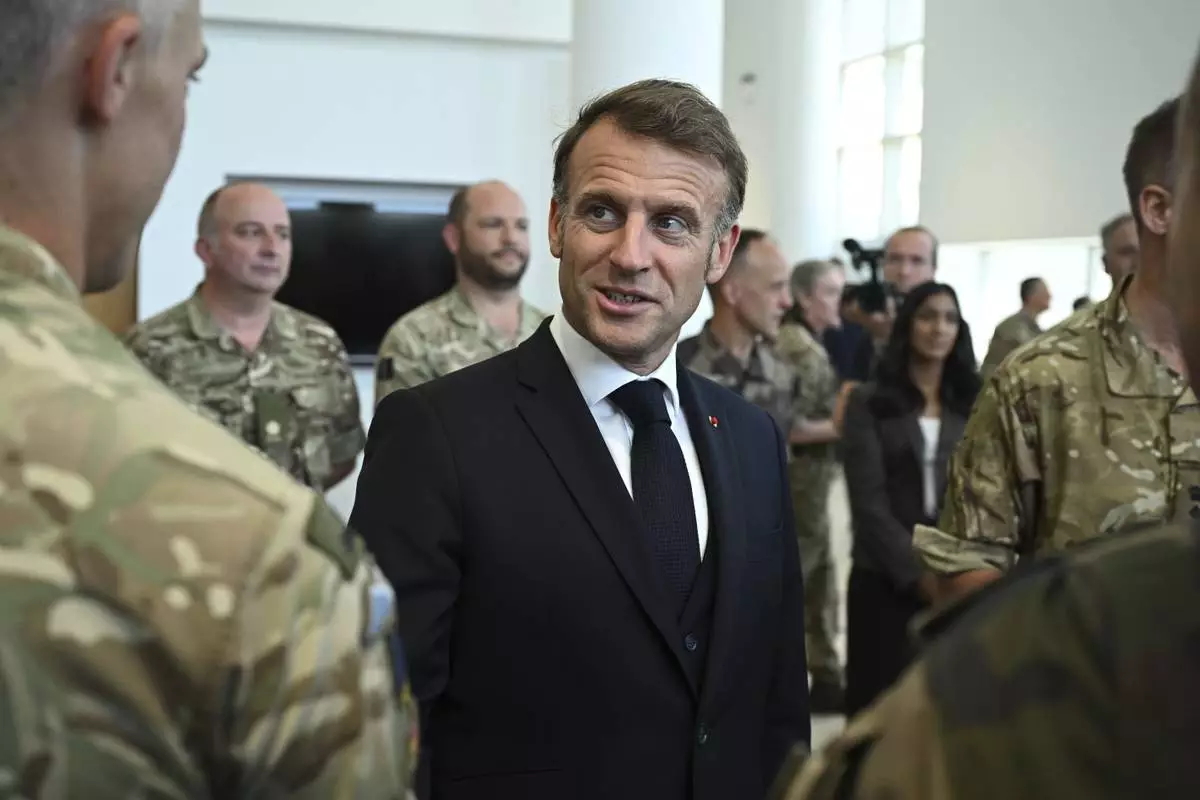
French President Emmanuel Macron and British Prime Minister Keir Starmer, not pictured, take part in a a joint military visit to the MARCOM centre, maritime command centre in Northwood, London, Thursday July 10, 2025. (Leon Neal/Pool Photo via AP)
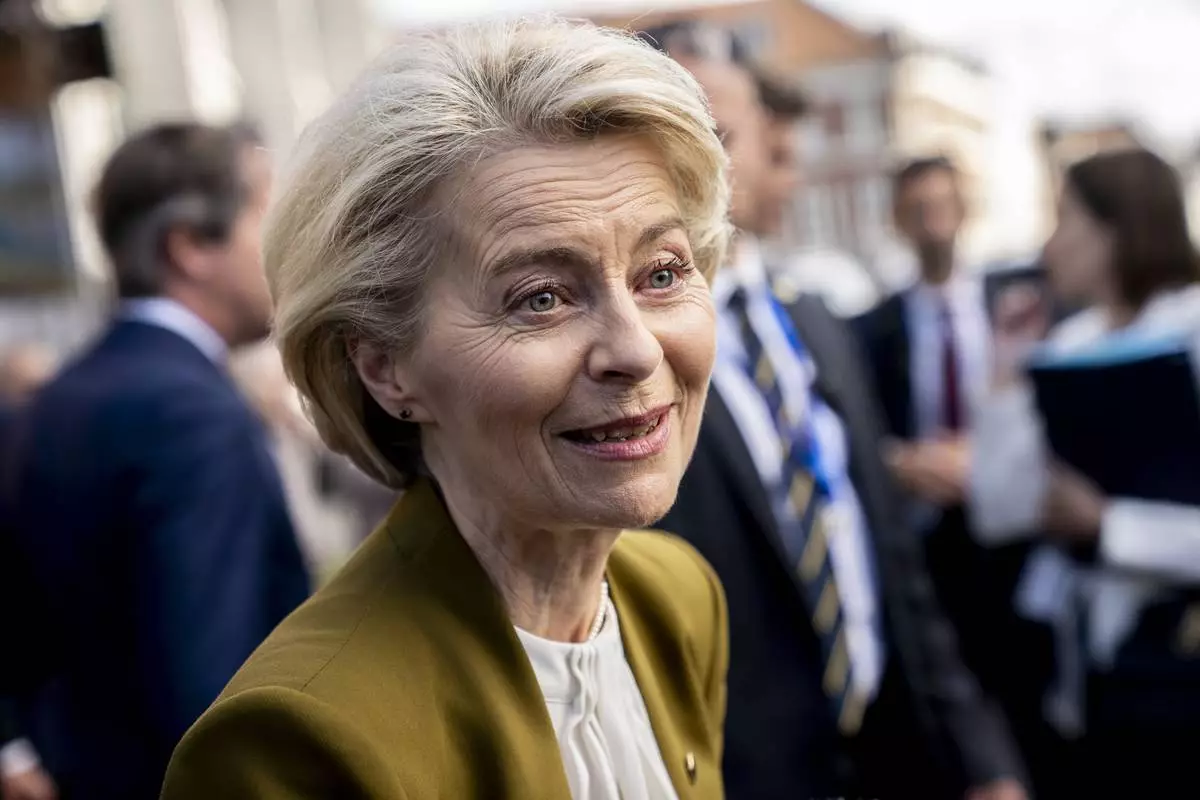
EU Commission President Ursula von der Leyen walks in the Town Hall Garden at Aarhus Town Hall, Aarhus, Denmark, Thursday, July 3, 2025. (Ida Marie Odgaard/Ritzau Scanpix via AP)