PARIS (AP) — France announced a sweeping, hard-fought agreement Saturday aimed at granting more autonomy to the restive South Pacific territory of New Caledonia, but stopping short of the independence sought by many Indigenous Kanaks.
The agreement — hailed by President Emmanuel Macron as ″historic'' — still needs final approval in New Caledonia, a nickel-rich archipelago east of Australia and 10 time zones away from Paris. The accord may face a vote by New Caledonians in February.
The accord proposes the creation of a ″state of Caledonia″ within the French republic and inscribed in the French constitution, and the creation of a ’’Caledonian nationality″ alongside French nationality, according to excerpts viewed by The Associated Press.
It was reached after 10 days of negotiations — including a final overnight marathon — with representatives of the central government and those on both sides of the independence question. The talks stemmed from deadly rioting last year prompted by proposed changes to electoral rules that pro-independence groups said would marginalize Indigenous voters.
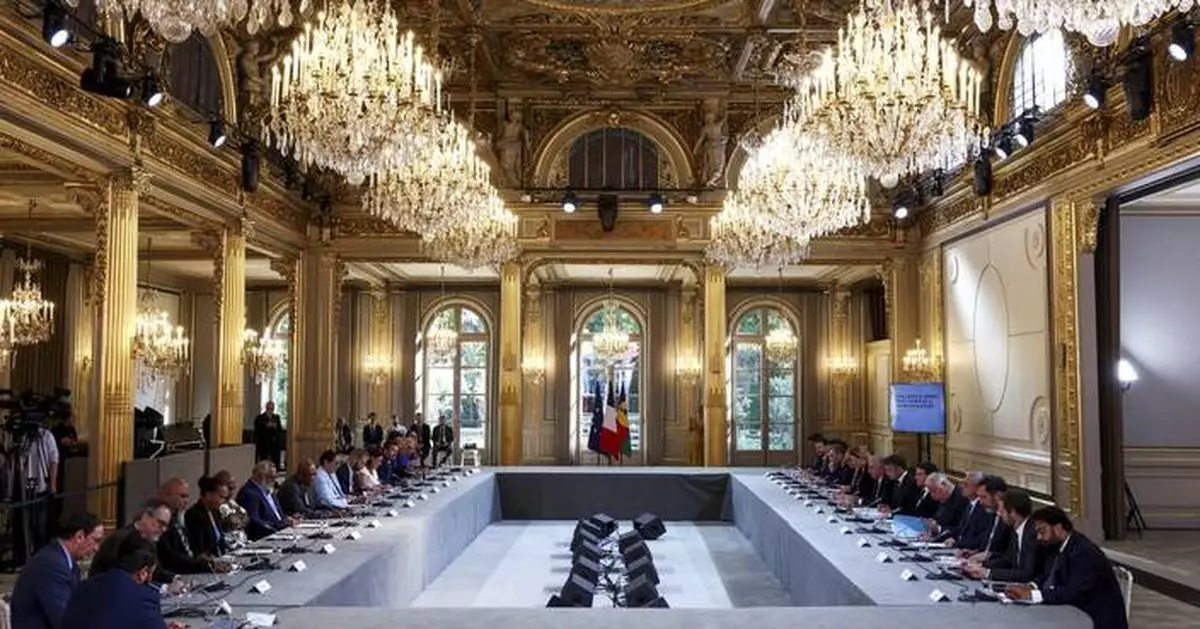
The accord will help "us get out of the spiral of violence,'' said Emmanuel Tjibaou, a Kanak lawmaker who took part in the talks, as he and other sleepless negotiators announced the accord in a gilded hall Saturday evening in the Elysee presidential palace in Paris.
He described a ‘’difficult path'' ahead but one that would allow Kanaks and other Caledonians to move forward together as ‘’us'' instead of divided.
Those seeking to keep New Caledonia firmly in the French fold hailed the accord. Lawmaker Nicolas Metzdorf called it a compromise born of ’’demanding dialogue,'' and described the Caledonian nationality as a ″real concession.''
A special congress will be held to finalize next steps, which could include more sovereignty for New Caledonia over issues of international affairs, security and justice, according to excerpts published by New Caledonia's public broadcaster. The accord could also eventually allow New Caledonians to change the territory’s name, flag and hymn.
Participants stressed the importance of rehabilitating and diversifying New Caledonia’s indebted economy, which depends heavily on nickel mining, and making it less reliant on the French mainland.
France colonized the Pacific archipelago in the 1850s, and it became an overseas territory after World War II, with French citizenship granted to all Kanaks in 1957.
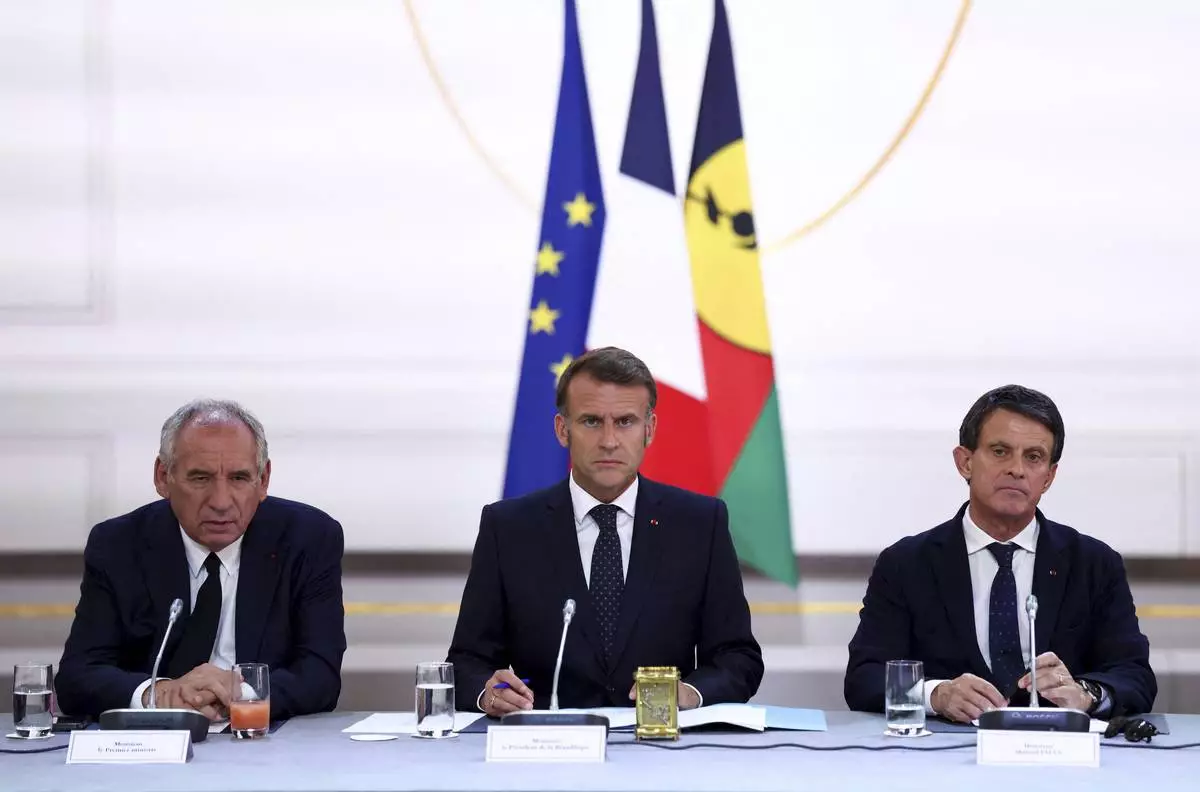
President Emmanuel Macron, center, Prime Minister Francois Bayrou, left, and Minister for Overseas Territories Manuel Valls attend a meeting with New Caledonia's elected officials and state representatives for an agreement aimed at granting more autonomy to the South Pacific territory, at the Elysee Palace in Paris, France, Saturday, July 12, 2025. (Tom Nicholson/Pool Photo via AP)
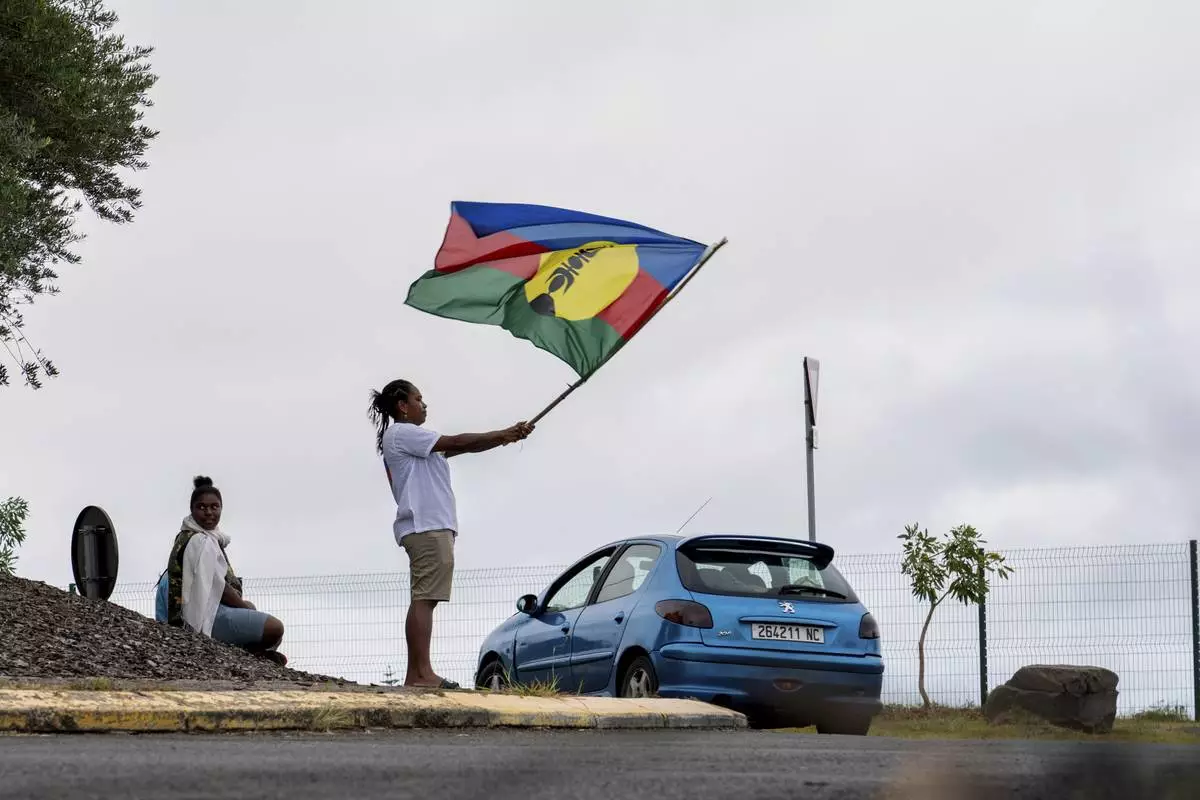
FILE - A woman waves a Kanak and Socialist National Liberation Front (FLNKS) flag in Noumea, New Caledonia, Wednesday May 15, 2024. (AP Photo/Nicolas Job, File)
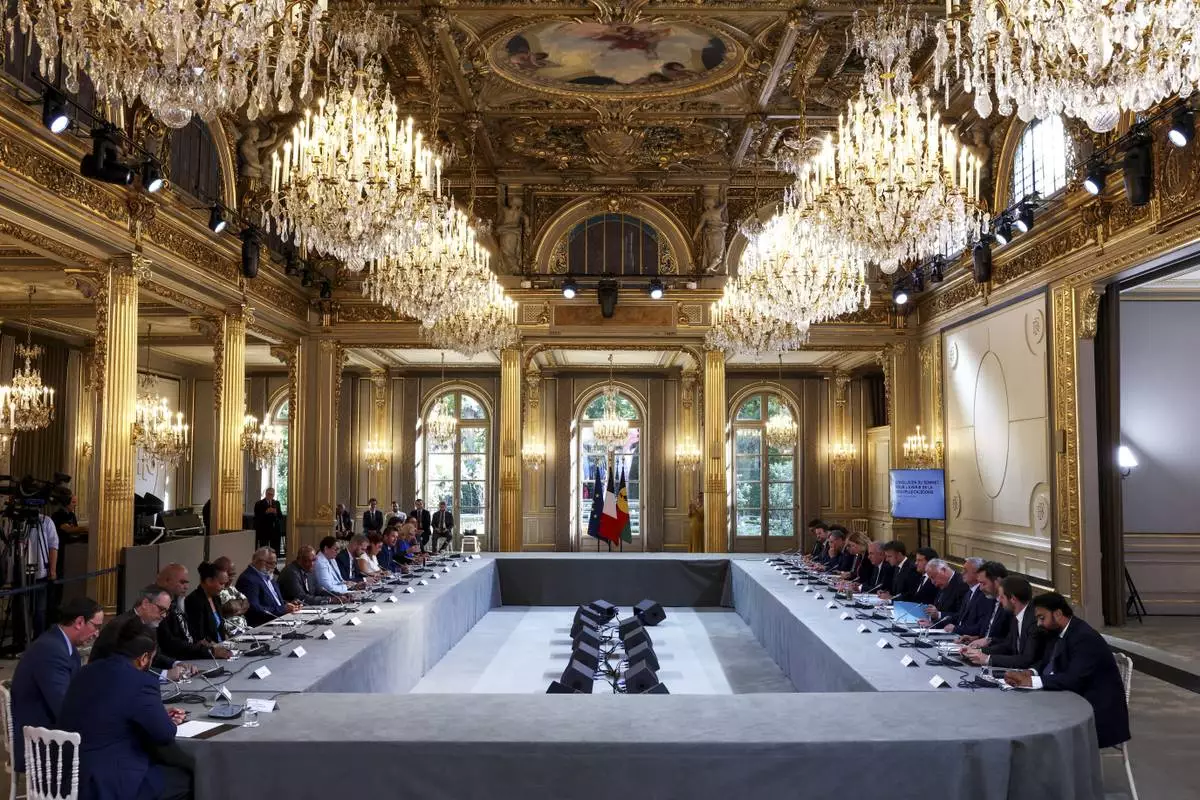
President Emmanuel Macron attends a meeting with New Caledonia's elected officials and state representatives for an agreement aimed at granting more autonomy to the South Pacific territory, at the Elysee Palace in Paris, France, Saturday, July 12, 2025. (Tom Nicholson/Pool Photo via AP)
JOHANNESBURG (AP) — South Africa on Tuesday marks the 50th anniversary of the Soweto uprising when over 200 young people protesting against the apartheid education system were shot and killed by the police.
The events of June 16, 1976 — now commemorated annually as Youth Day — are considered a turning point in South Africa's liberation struggle against white minority rule.
They ignited more demonstrations in various parts of the country, fueled more resistance against the apartheid and brought international attention to the racial oppression faced by Black people in South Africa.
Fifty years after the uprising, however, there are still concerns about the plight of young people in the country.
Survivors of the violent protests, experts and young South Africans have lamented the challenges facing the country's youth including inequality, high unemployment, poverty and social problems such as drug and alcohol abuse.
Soweto, one of the oldest townships in South Africa, bears symbols of the historic day which are frequently visited by local and international tourists.
These include a memorial named after Hector Pieterson, the 13-year-old whose lifeless body appears being carried away by another student in an iconic photograph that came to symbolize the 1976 uprising after it was published around the world.
Murals and billboards depicting protesting students can be found throughout the township, which is also home to the June 16 Memorial commemorating the uprising.
But for those who survived the protests, the symbols are a painful remembrance of the day that changed their lives forever.
Seth Mazibuko, a survivor of the deadly protests, remembers vividly how students fought back against the police, who were using tear gas to try and disperse the defiant demonstrators.
“They struggled with the tear gas because when they threw it our way, the wind would blow the gas back to them, so it was also affecting them,” said Mazibuko. “They then started sending the police dogs to us, we used stones to chase the dogs back to them.”
Mazibuko was detained for 18 months after his arrest and later imprisoned in Robben Island, where he served 7 years alongside other political prisoners.
Fifty years after the uprising, South Africa has undergone significant changes but inequality, unemployment and poverty are among the most pressing challenges facing its “born free” generation — those born after the end of apartheid.
“I would say the issues of poverty and crime are the most pressing ones,” said Sima Poto, a 19-year-old visiting the June 16 Memorial. “It is poverty that is leading many of them into crime.”
Zola Mguli, a 29-year-old who works with the Southern African Alcohol Policy Alliance, an organization campaigning against alcohol and substance abuse, said he is grateful to belong to a generation that has grown up in freedom, even as significant challenges remain. "Things are not going as well as our forefathers hoped, there is still racism, alcoholism and other things we are battling with,” he said. “But if we, the youth, rise up, we can do better.”
Historian Noor Nieftagodien said the 1976 student protest movement was a traumatic and transformative moment that reshaped the anti-apartheid struggle, placing young people at the forefront of liberation politics.
“This was a generation that was young, gifted, and Black,” he said. “They wanted education.”
“The idea of Black power resonated with this new generation of young people,” Nieftagodien said. “Black consciousness was kind of electrifying; it inspired university students and then increasingly also students in high schools.”
He said that since June 16 was declared a public holiday after the end of apartheid, the significance of the historic event has diminished, overshadowed by celebratory events that, in his view, water down its political meaning.
“It has lost its meaning,” he said. “What has happened is that we’ve had the day marked with concerts, etc. I’m all for concerts. But, in fact, in so doing, the kind of celebrations that have been organized have been disinvested from politics, from a critical understanding of what happened.”
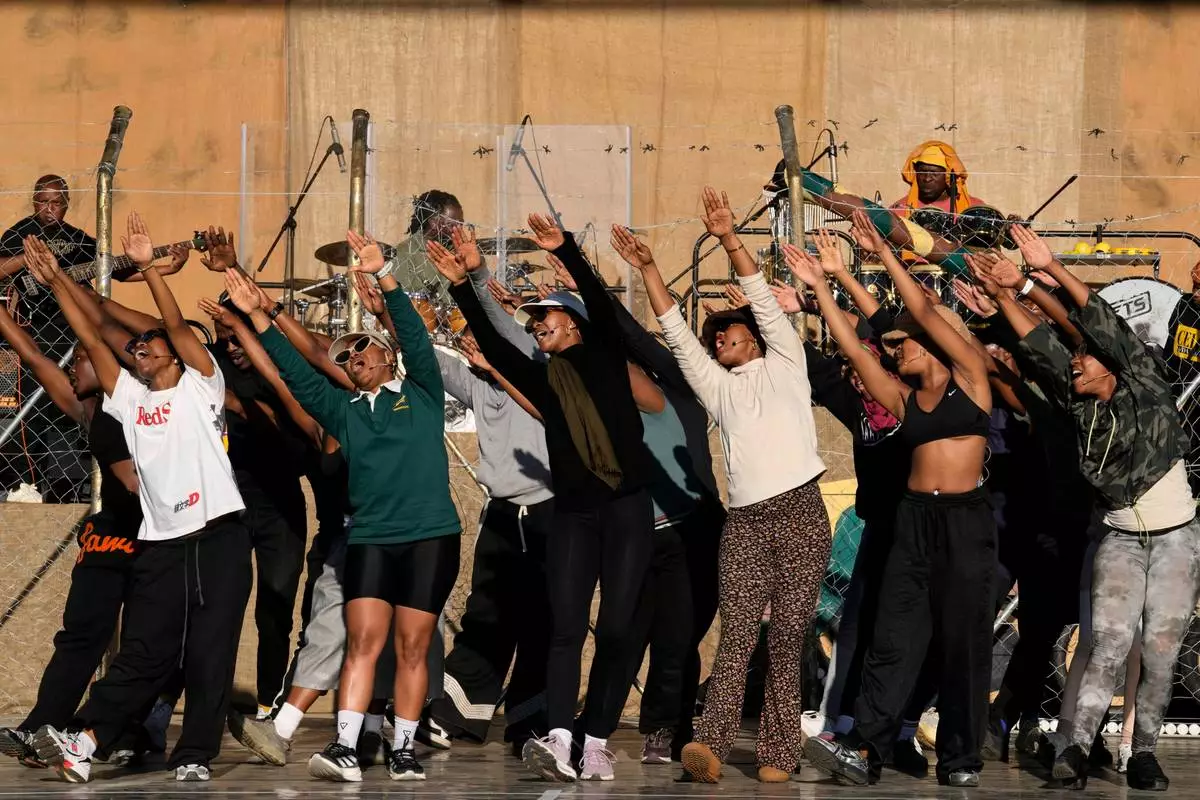
Sarafina cast members performs during rehearsal at Jabulani Amphitheatre, in Soweto, South Africa, Monday, June 15, 2026. (AP Photo/Themba Hadebe)
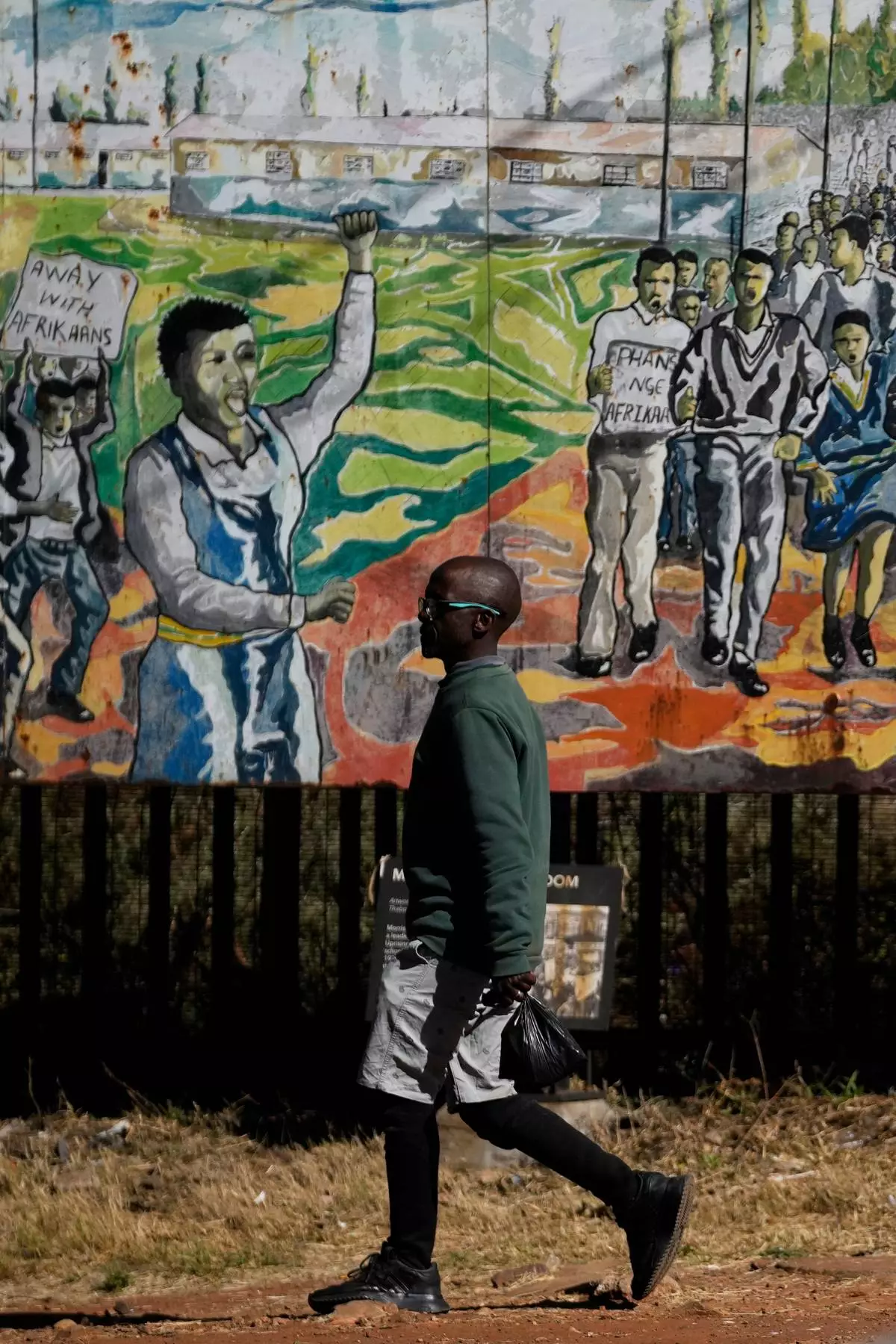
A man walks past a June 16 mural, in Soweto, South Africa, Monday, June 15, 2026. (AP Photo/Themba Hadebe)
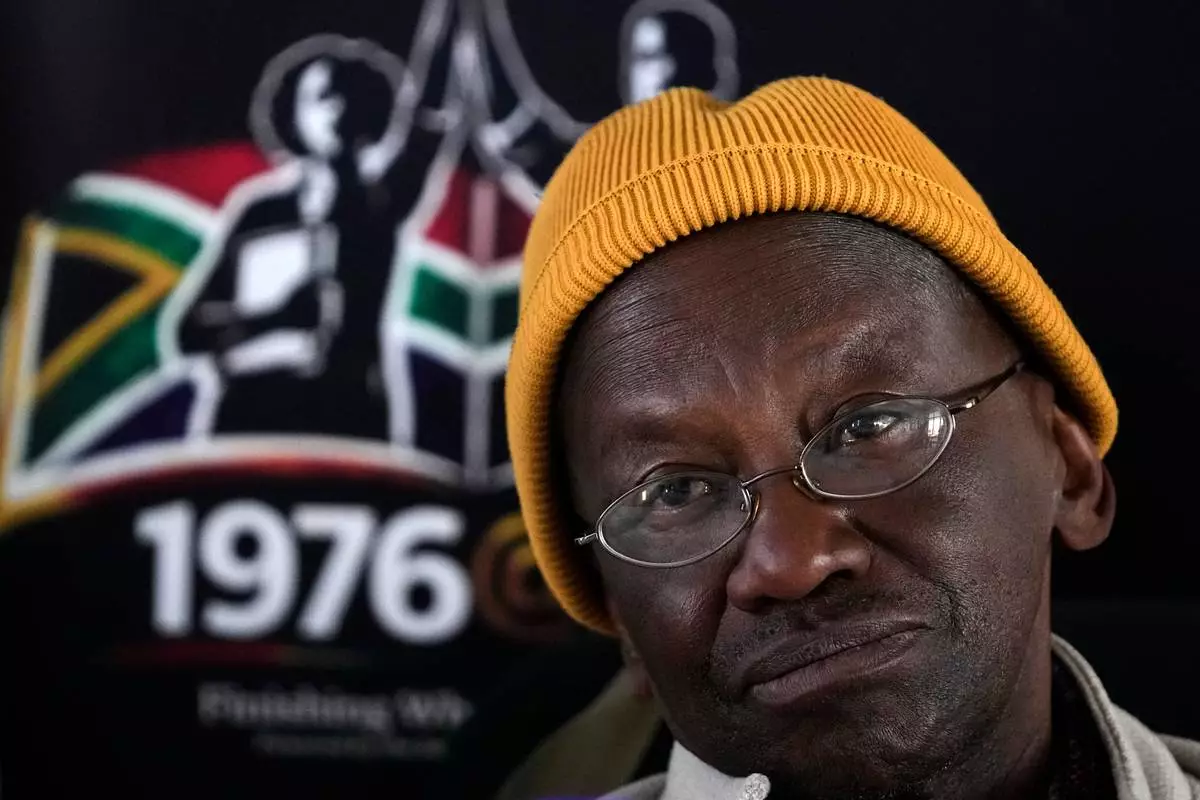
Seth Mazibuko, a former student leader involved in the 1976 Soweto student movement, takes a question during a media briefing at the June 16 Memorial Acre, in Soweto, South Africa, Monday, June 15, 2026. (AP Photo/Themba Hadebe)
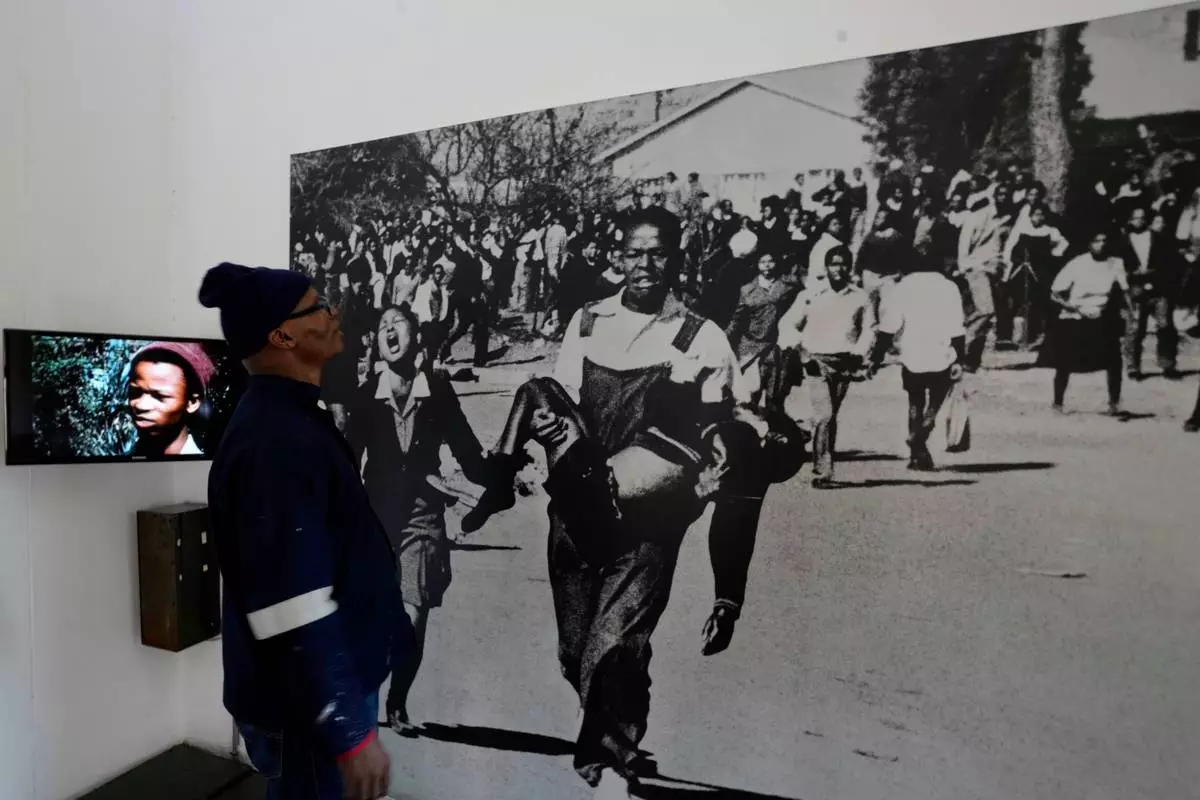
A man looks at June 16 iconic image taken by the late Sam Nzima displayed at The Hector Pieterson Memorial and Museum, in Soweto, South Africa, Monday, June 15, 2026. (AP Photo/Themba Hadebe)
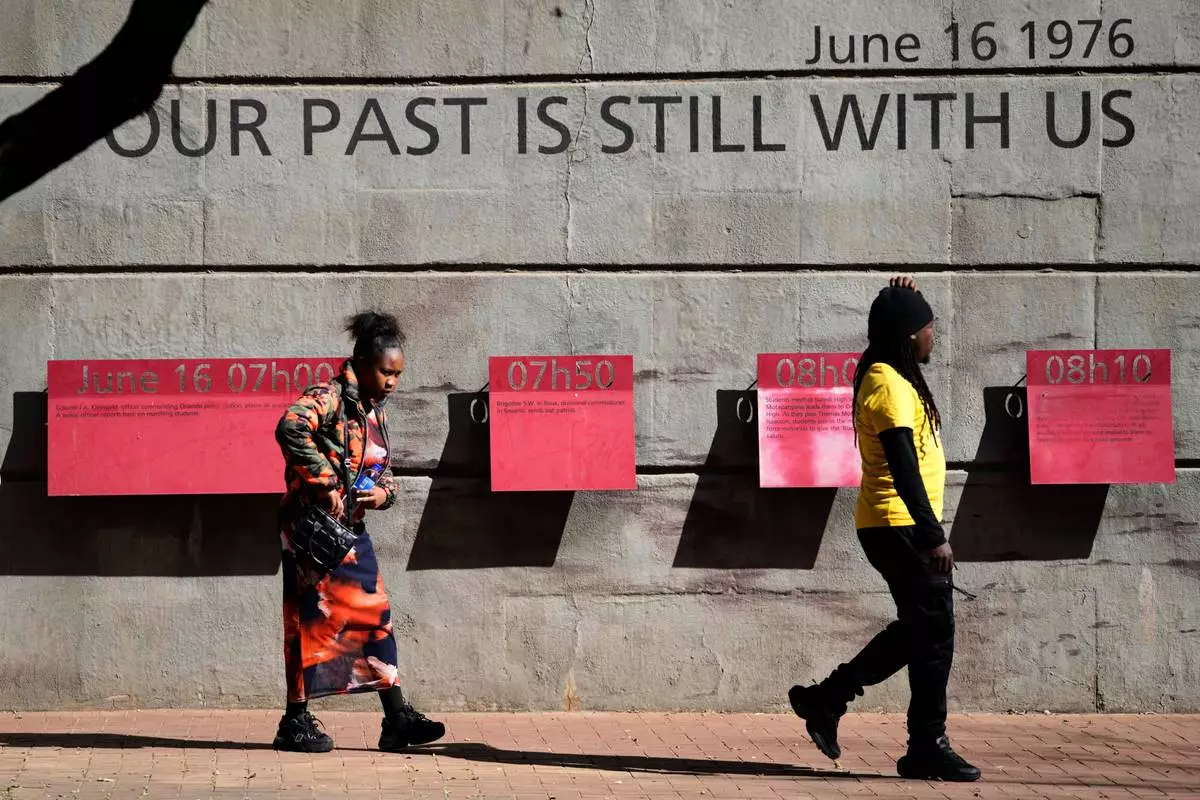
Youth visit the June 16 Memorial Acre, in Soweto, South Africa, Monday, June 15, 2026. (AP Photo/Themba Hadebe)