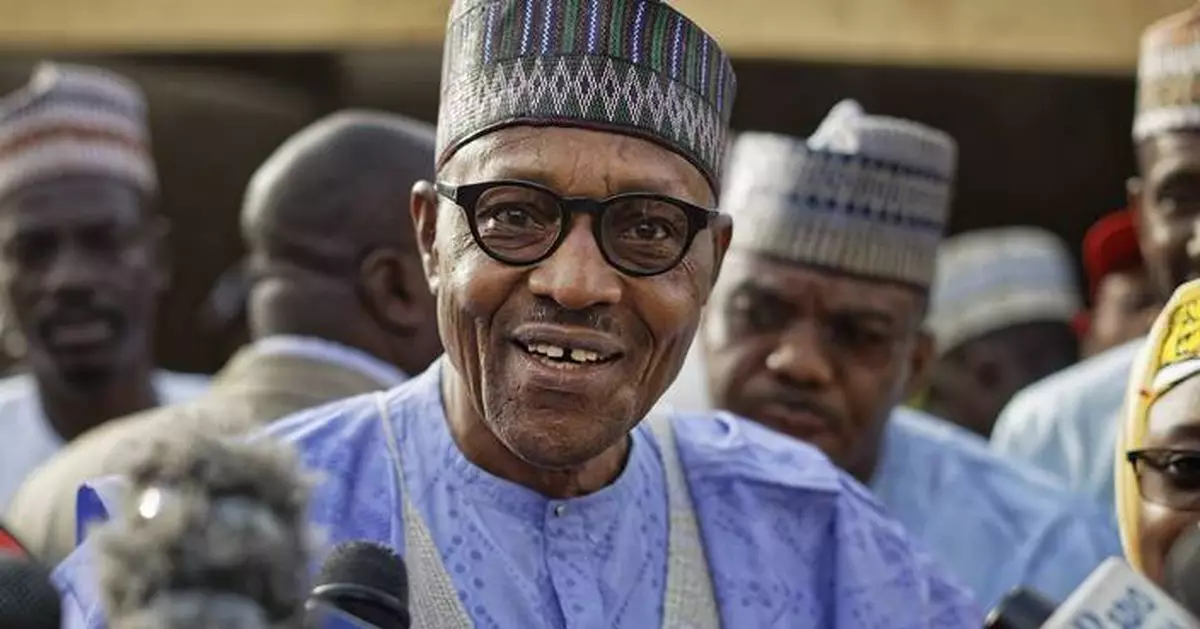
LAGOS, Nigeria (AP) — Former Nigerian President Muhammadu Buhari, who led the country twice as a military head of state and a democratic president, has died aged 82, his press secretary said Sunday.
Buhari died Sunday in London, where he had been receiving medical treatment.
He first took power in Africa’s most populous nation in 1983, after a military coup, running an authoritarian regime until fellow soldiers ousted him less than 20 months later. When he was elected in 2015 on his fourth attempt, he became the first opposition candidate to win a presidential election there.
Buhari rode into power in that election on a wave of goodwill after promising to rid Nigeria of chronic corruption and a deadly security crisis. He led until 2023, during a period marked by Boko Haram's extremist violence in the northeast and a plunging economy.
Current President Bola Tinubu in a statement described Buhari as “a patriot, a soldier, a statesman ... to the very core.” Tinubu dispatched the vice president to bring Buhari's body home from London.
Others across Nigeria remembered Buhari as a president who left the country of more than 200 million people — divided between a largely Muslim north and Christian south — more at odds than before.
For many, Buhari will be linked with memories of the 2020 youth protests against a police unit accused by rights groups and others of extrajudicial killings, torture and extortion — and the deadly shootings of demonstrators by soldiers.
“The uneven response to Buhari’s death, with muted disillusionment in some quarters and sadness in others, is a reflection of how difficult it is to unite a country and his inability to do so after decades in the public eye,” said Afolabi Adekaiyaoja, an Abuja-based political scientist.
Coming from Nigeria’s north, the lanky, austere Buhari had vowed to end extremist killings and clean up rampant corruption in one of Africa's largest economies and oil producers.
By the end of his eight-year tenure, however, goodwill toward him had faded into discontent. Insecurity had only grown, and corruption was more widespread.
Nigeria also fell into a recession amid slumping global oil prices and attacks by militants in the sprawling oil-rich Niger Delta region. The currency faltered as Buhari pursued unorthodox monetary policies to defend its fixed price to the dollar, and a massive foreign currency shortage worsened. Inflation was in the double digits.
Civil society accused him of authoritarian tendencies after protesters were killed during a protest against police brutality and over his decision to restrict access to social media, as young people vented their frustrations against economic and security problems.
Buhari’s attempts at managing the problems were complicated by prolonged medical stays abroad. His absences, with few details, created anxiety among Nigerians and some calls for him to be replaced. There also was anger over his seeking taxpayer-funded health care abroad while millions suffered from poor health facilities at home.
“I need a longer time to rest,” the president once said in a rare comment during his time away.
His presidency saw a rare bright moment in Nigeria’s fight against Boko Haram — the safe return of dozens of Chibok schoolgirls seized in a mass abduction in 2014 that drew global attention.
But others among the thousands of people abducted by Boko Haram over the years remain missing — a powerful symbol of the government’s failure to protect civilians.
At the end of 2016, Buhari announced that the extremist group had been crushed, driven by the military from its remote strongholds.
“The terrorists are on the run, and no longer have a place to hide,” he boasted.
But suicide bombings and other attacks remained a threat, and the military’s fight against Boko Haram continued to be hurt by allegations of abuses by troops against civilians. In early 2017, the accidental military bombing of a displaced persons camp in the northeast killed more than 100 people, including aid workers. The U.N. refugee chief called the killings “truly catastrophic.”
As Nigeria’s military reclaimed more area from Boko Haram’s control, a vast humanitarian crisis was revealed. Aid groups began alerting the world to people dying from malnutrition, even as government officials denied the crisis and accused aid groups of exaggerating the situation to attract donations.
The extremist threat and humanitarian crisis in the northeast — now exacerbated by Trump administration aid cuts — continues today.
Years earlier, as Nigeria's military ruler, Buhari oversaw a regime that executed drug dealers, returned looted state assets and sent soldiers to the streets with whips to enforce traffic laws. With oil prices slumping and Nigerians saying foreigners were depriving them of work, the regime also ordered an estimated 700,000 illegal immigrants to leave the country.
Meanwhile, government workers arriving late to their offices were forced to perform squats in a “war against indiscipline” that won many followers. Buhari's administration, however, was also criticized by rights groups and others for detaining journalists critical of the government and for passing laws that allowed indefinite detention without trial.
As he pursued the presidency decades later, Buhari said he had undergone radical changes and that he now championed democracy. But some of his past stances haunted him, including statements in the 1980s that he would introduce Islamic law across Nigeria.
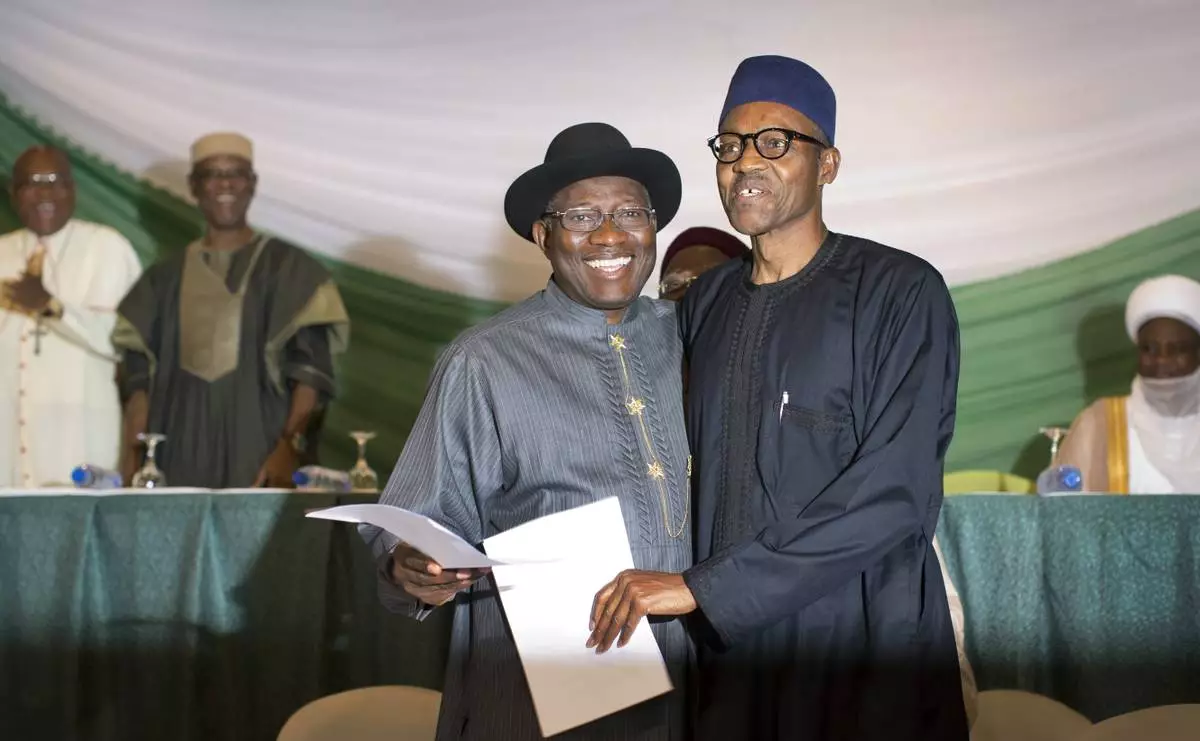
FILE - Nigeria's President Goodluck Jonathan, left, and opposition candidate Gen. Muhammadu Buhari, hug after signing a renewal of their pledge to hold peaceful elections, at a hotel in the capital Abuja, Nigeria Thursday, March 26, 2015. (AP Photo/Ben Curtis, File)
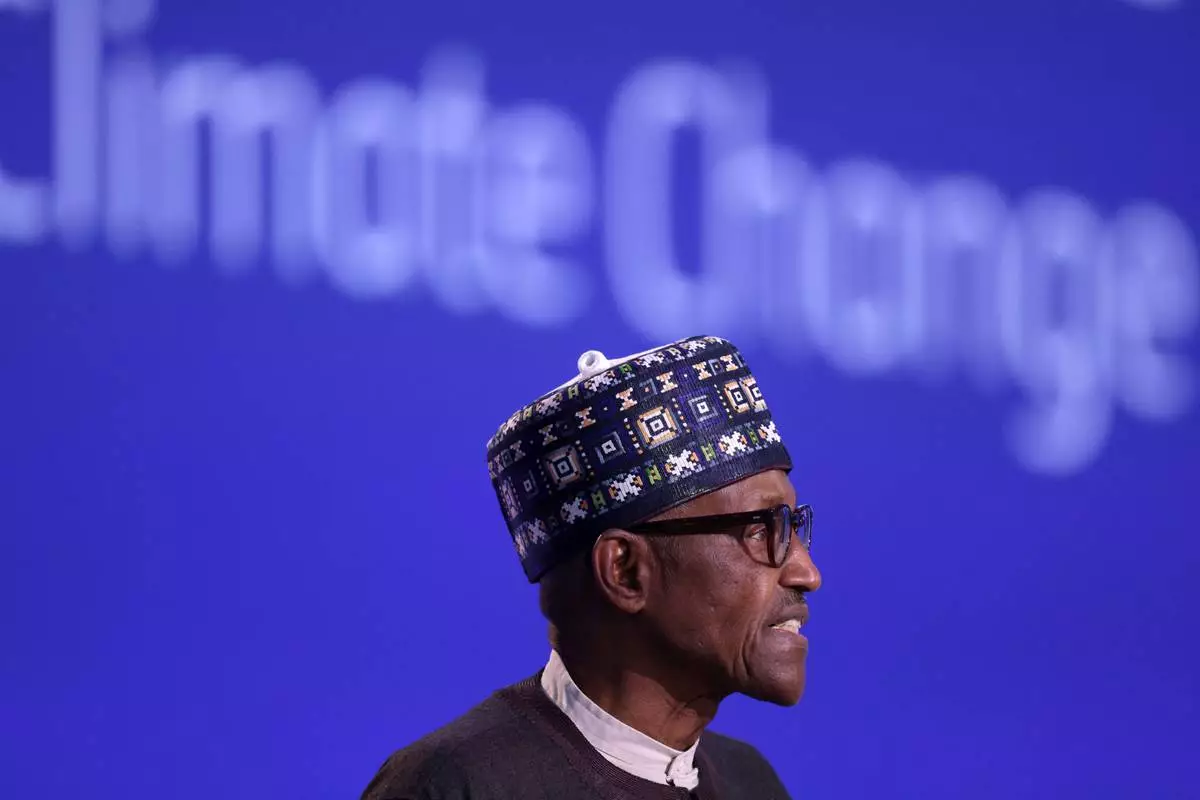
FILE - Nigeria's President Muhammadu Buhari speaks during the UN Climate Change Conference COP26 in Glasgow, Scotland, Tuesday, Nov. 2, 2021. (Adrian Dennis/Pool Photo via AP, File)
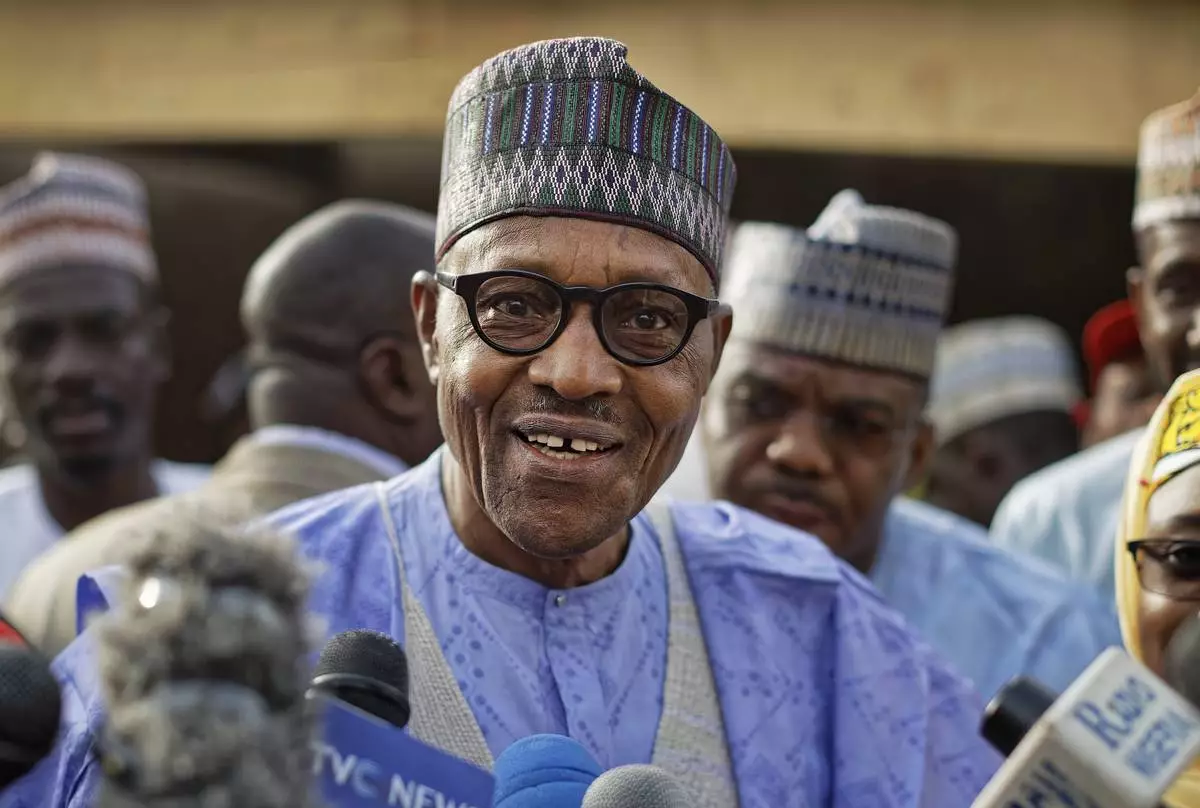
FILE - Nigeria's President Muhammadu Buhari speaks to the media after casting his vote in his hometown of Daura, in northern Nigeria, Saturday, Feb. 23, 2019. (AP Photo/Ben Curtis, File)
Iran eased some restrictions on its people and, for the first time in days, allowed them to make phone calls abroad via their mobile phones on Tuesday. It did not ease restrictions on the internet or permit texting services to be restored as the death toll from days of bloody protests against the state rose to at least 2,000 people, according to activists.
Although Iranians were able to call abroad, people outside the country could not call them, several people in the capital told The Associated Press.
The witnesses, who spoke on condition of anonymity for fear of reprisal, said SMS text messaging still was down and internet users inside Iran could not access anything abroad, although there were local connections to government-approved websites.
It was unclear if restrictions would ease further after authorities cut off all communications inside the country and to the outside world late Thursday.
Here is the latest:
A senior Iranian official responded Tuesday to Trump’s latest threat to intervene in deadly protests, saying that the U.S. and Israel will be the ones responsible for the death of Iranian civilians.
Shortly after Trump’s social media post urging Iranians to “take over” government institutions, Ali Larijani, a former parliament speaker who serves as the secretary of Iran’s Supreme National Security Council, posted on X: “We declare the names of the real killers of the people of Iran: 1- Trump 2- Netanyahu.”
Russia’s Foreign Ministry called on Tuesday the threats “categorically unacceptable.”
The ministry warned in a statement that any such strikes would have “disastrous consequences” for the situation in the Middle East and global security. It also criticized what it called “brazen attempts to blackmail Iran’s foreign partners by raising trade tariffs.”
The statement noted that the protests in Iran had been triggered by social and economic problems resulting from Western sanctions. It also denounced “hostile external forces” for trying to “exploit the resulting growing social tension to destabilize and destroy the Iranian state” and charged that “specially trained and armed provocateurs acting on instructions from abroad” sought to provoke violence.
The ministry voiced hope that the situation in Iran will gradually stabilize and advised Russian citizens in the Islamic Republic not to visit crowded places.
The TV report said the country had ‘a lot of martyrs’ in the nationwide protests and quoted Ahmad Mousavi, the head of the Martyrs Foundation.
The anchor read a statement that laid blame on “armed and terrorist groups, which led the country to present a lot of martyrs to God.”
The acknowledgment came after activists put the death toll at at least 2,003 people killed.
Germany’s Foreign Ministry says it summoned the Iranian ambassador in Berlin on Tuesday to protest the crackdown against demonstrators.
The ministry wrote in a social media post that “the Iranian regime’s brutal action against its own population is shocking.” It called on Iran to end the use of violence against its own people and “respect their rights.”
French Foreign Minister Jean-Noel Barrot summoned the Iranian ambassador Tuesday to denounce Iran’s repression of protesters, which Barrot called “intolerable, unbearable, and inhumane.″
Addressing lawmakers at France’s National Assembly, Barrot said that France “condemned the repression in the strongest possible terms, denouncing this state violence that was unleashed blindly upon peaceful protesters.”
“I have conveyed this condemnation to the Iranian foreign minister and it will be reiterated to the Iranian ambassador to France, whom I summoned today to the Foreign Ministry,” he added.
U.K. Foreign Secretary Yvette Cooper has announced plans for “full and further sanctions” against Iran that target finance, energy, transport and other significant industries after the Foreign Office summoned the Islamic Republic’s ambassador to explain the nation’s response to recent protests.
Cooper told the House of Commons on Tuesday that a “desperate regime,’’ must not be allowed to undermine a “genuine grassroots movement’’ which has spread through many regions and all parts of society.
“And that is why we and other governments across the world are determined not to play into the hands of the regime or to allow our words or actions to be twisted to support their lies and propaganda,’’ she said.
“The world is watching Iran, and the UK will continue to confront the regime’s lies, to call out its repression and to take the steps necessary to protect the UK’s interests.”
The American president said he canceled meetings with Iranian officials, telling protesters, ‘help is on its way,’ without giving details.
Trump did not offer any details about what the help would entail, but it came after he said earlier this week Iran wants to negotiate with Washington after a threat to strike the Islamic Republic.
Trump’s latest message on social media appeared to make an abrupt shift in his willingness to engage with the Iranian government.
“Iranian Patriots, KEEP PROTESTING - TAKE OVER YOUR INSTITUTIONS!!!” Trump wrote in on Truth Social. “Save the names of the killers and abusers. They will pay a big price. I have cancelled all meetings with Iranian Officials until the senseless killing of protesters STOPS. HELP IS ON ITS WAY.”
European Commission President Ursula von der Leyen says the new sanctions will be imposed on Iranian officials over the crackdown on protestors.
“The rising number of casualties in Iran is horrifying. I unequivocally condemn the excessive use of force and continued restriction of freedom,” von der Leyen said in a post on social media.
She said that in cooperation with EU foreign policy chief Kaja Kallas “further sanctions on those responsible for the repression will be swiftly proposed. We stand with the people of Iran who are bravely marching for their liberty.”
The EU has already imposed sanctions on members of the Revolutionary Guard Corps and others over past concerns about human rights abuses in Iran.
Kaja Kallas said in Berlin Tuesday that the Iranian government might go the way of former President Bashar Assad’s government in Syria, which fell swiftly in late 2024 in a “surprise for everybody.” But she added that “very often these regimes are very, very resilient.”
Kallas said that “right now … it is not clear whether the regime is going to fall or not.” She said it would ultimately have to be up to the Iranian people to make decisions.
The U.S.-based Human Rights Activists News Agency, which has been accurate in previous unrest in recent years, gave the latest death toll on Tuesday.
It said 1,847 of the dead were protesters and 135 were government-affiliated.
This came a day after the European Parliament announced it would ban Iranian diplomats and representatives.
“Iran does not seek enmity with the EU, but will reciprocate any restriction,” Foreign Minister Abbas Araghchi wrote Tuesday on X.
He also criticized the European Parliament for not taking any significant action against Israel for the more than two-year war in Gaza that has killed more than 71,400 Palestinians, while banning Iranian diplomats after just “a few days of violent riots.”
Dutch Foreign Minister David van Weel said he summoned Iran’s ambassador to the Netherlands “to formally protest the excessive violence against peaceful protesters, large-scale arbitrary arrests, and internet shutdowns, calling for immediate restoration of internet access inside the Islamic Republic.
In a post on X, Weel also said the Dutch government supports EU sanctions against “human rights violators in Iran.”
The United Nations human rights chief is calling on Iranian authorities to immediately halt violence and repression against peaceful protesters, citing reports of hundreds killed and thousands arrested in a wave of demonstrations in recent weeks.
“The killing of peaceful demonstrators must stop, and the labelling of protesters as ‘terrorists’ to justify violence against them is unacceptable,” U.N. High Commissioner for Human Rights Volker Türk said in a statement Tuesday.
Alluding to a wave of protests in Iran in 2022, Türk said demonstrators have sought “fundamental changes” to governance in the country, “and once again, the authorities’ reaction is to inflict brutal force to repress legitimate demands for change.”
“This cycle of horrific violence cannot continue,” he added.
It was also “extremely worrying” to hear some public statements from judicial officials mentioning the prospect of the use of the death penalty against protesters through expedited judicial proceedings, Türk said.
“Iranians have the right to demonstrate peacefully. Their grievances need to be heard and addressed, and not instrumentalized by anyone,” Türk said.
Finland’s foreign minister says she is summoning the Iranian ambassador after authorities in Tehran restricted internet access.
“Iran’s regime has shut down the internet to be able to kill and oppress in silence," Elina Valtonen wrote in a social media post Tuesday, adding, “this will not be tolerated. We stand with the people of Iran — women and men alike.”
Finland is “exploring measures to help restore freedom to the Iranian people” together with the European Union, Valtonen said.
Separately, Finnish police said they believe at least two people entered the courtyard of the Iranian embassy in Helsinki without permission Monday afternoon and tore down the Iranian flag. The embassy’s outer wall was also daubed with paint.
Iranian security forces arrested what a state television report described as “terrorist groups” linked to Israel in the southeastern city of Zahedan.
The report, without providing additional details, said the group entered through Iran’s eastern borders and carried U.S.-made guns and explosives that the group had planned to use in assassinations and acts of sabotage.
The Israeli military did not immediately comment on the allegations.
The Nobel Peace Prize laureate hailed people who have “long warned about this repression, at great personal risk.”
“The protests in Iran cannot be separated from the long-standing, state-imposed restrictions on girls’ and women’s autonomy, in all aspects of public life including education. Iranian girls, like girls everywhere, demand a life with dignity,” Yousafzai wrote on X.
“(Iran’s) future must be driven by the Iranian people, and include the leadership of Iranian women and girls — not external forces or oppressive regimes,” she added.
Yousafzai was awarded the peace prize in 2014 at the age of 17 for her fight for girls’ education in her home country, Pakistan. She is the youngest Nobel laureate.
The French Foreign Ministry said it has “reconfigured” its embassy in Tehran after reports that the facility's nonessential staff left Iran earlier this week.
The embassy's nonessential staff left the country Sunday and Monday, French news agency Agence France-Presse reported.
The ambassador remained on site and the embassy continued to function, the ministry said late Monday night.
Associated Press writer Angela Charlton contributed from Paris.
German Chancellor Friedrich Merz said he believes the Iranian government is in its “final days and weeks,” as he renewed a call for Iranian authorities to end violence against demonstrators immediately.
“If a regime can only keep itself in power by force, then it’s effectively at the end,” Merz said Tuesday during a visit to Bengaluru, India. “I believe we are now seeing the final days and weeks of this regime. In any case, it has no legitimacy through elections in the population. The population is now rising up against this regime.”
Merz said he hoped there is “a possibility to end this conflict peacefully," adding that Germany is in close contact with the U.S. and European governments.
The Israeli military said it continues to be “on alert for surprise scenarios” due to the ongoing protests in Iran, but has not made any changes to guidelines for civilians, as it does prior to a concrete threat.
“The protests in Iran are an internal matter,” Israeli military spokesperson Brig. Gen. Effie Defrin wrote on X.
Israel attacked Iran’s nuclear program over the summer, resulting in a 12-day war that killed nearly 1,200 Iranians and almost 30 Israelis. Over the past week, Iran has threatened to attack Israel if Israel or the U.S. attacks.
Mobile phones in Iran were able to call abroad Tuesday after a crackdown on nationwide protests in which the internet and international calls were cut. Several people in Tehran were able to call The Associated Press.
The AP bureau in Dubai, United Arab Emirates, was unable to call those numbers back.
Witnesses said the internet remained cut off from the outside world. Iran cut off the internet and calls on Thursday as protests intensified.
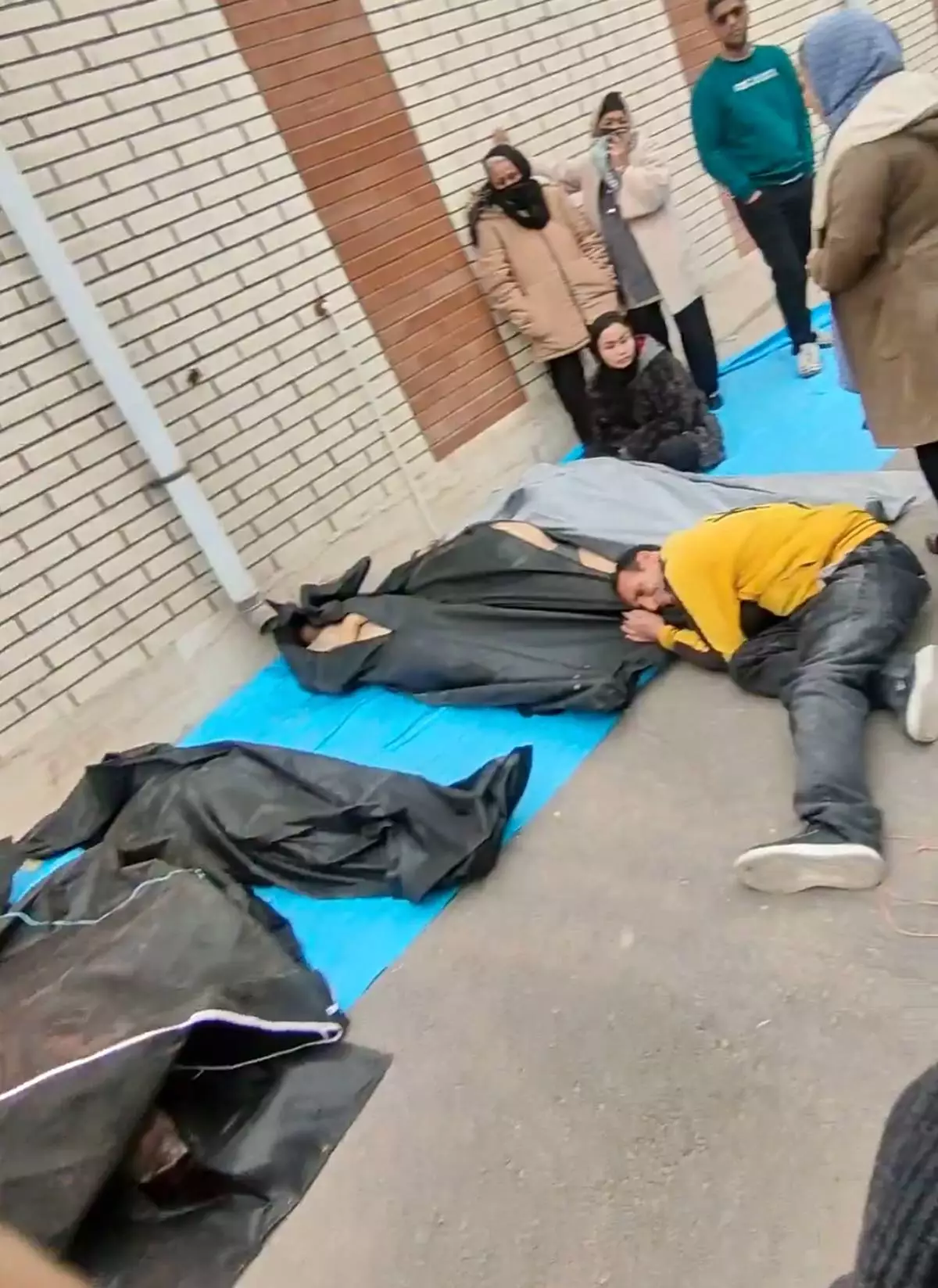
This frame grab from videos taken between Jan. 9 and Jan. 11, 2026, and circulating on social media purportedly shows images from a morgue with dozens of bodies and mourners after crackdownon the outskirts of Iran's capital, in Kahrizak, Tehran Province. (UGC via AP)
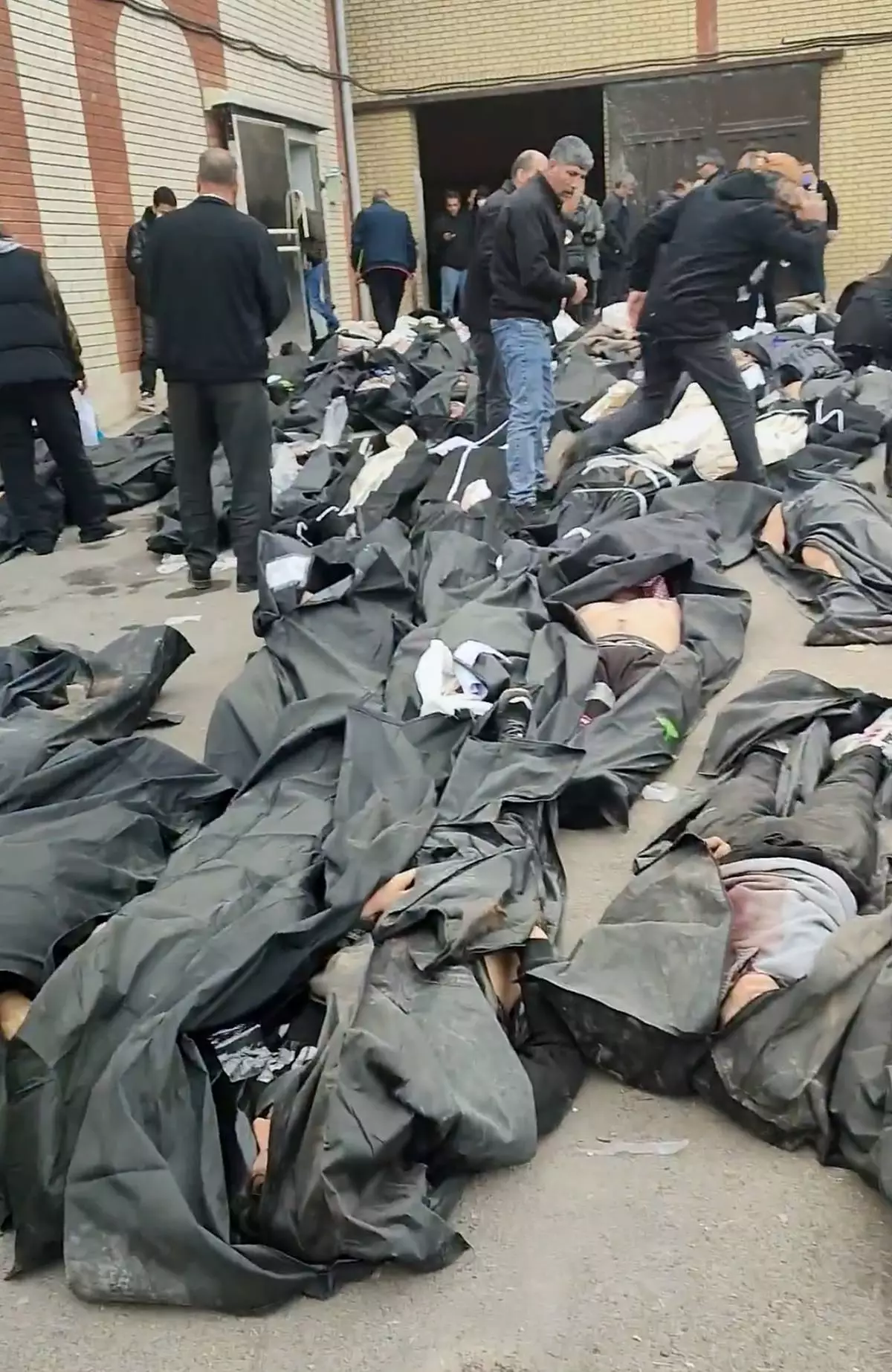
This frame grab from videos taken between Jan. 9 and Jan. 11, 2026, and circulating on social media purportedly shows images from a morgue with dozens of bodies and mourners after crackdown on the outskirts of Iran's capital, in Kahrizak, Tehran Province. (UGC via AP)
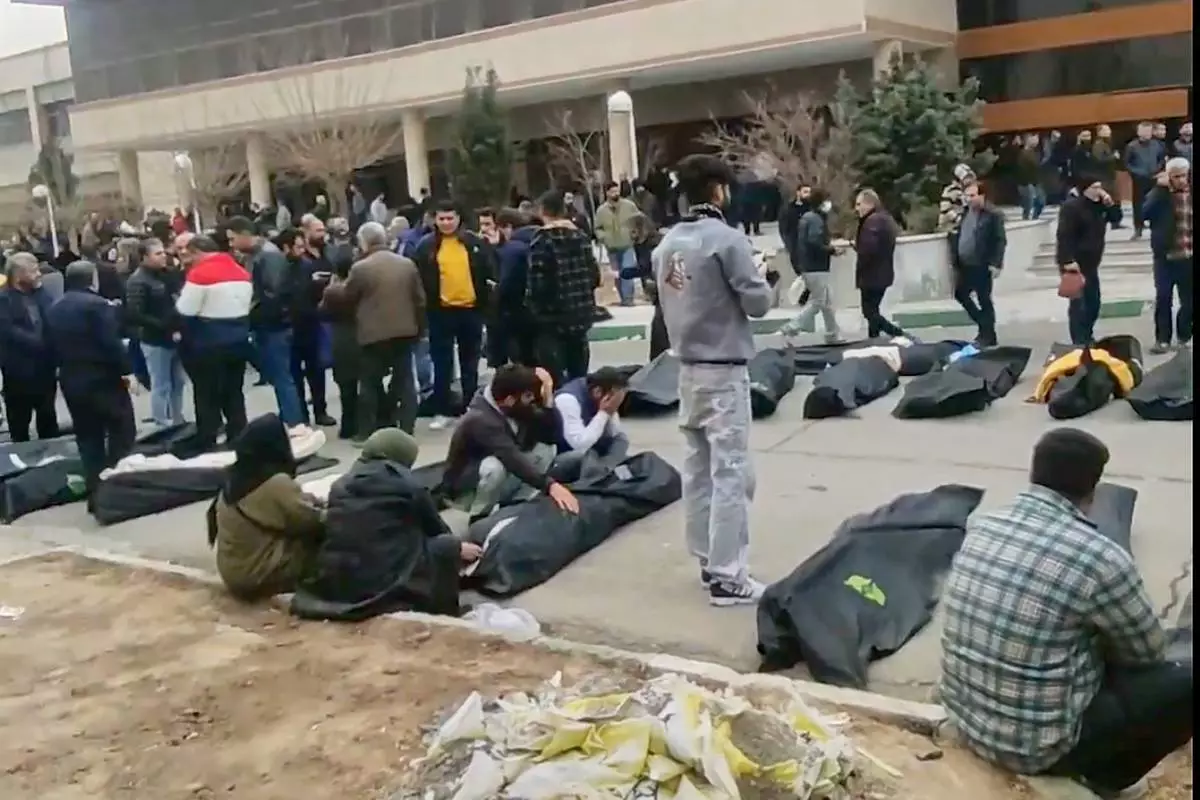
This frame grab from videos taken between Jan. 9 and Jan. 11, 2026, and circulating on social media purportedly shows images from a morgue with dozens of bodies and mourners after crackdown on the outskirts of Iran's capital, in Kahrizak, Tehran Province. (UGC via AP)
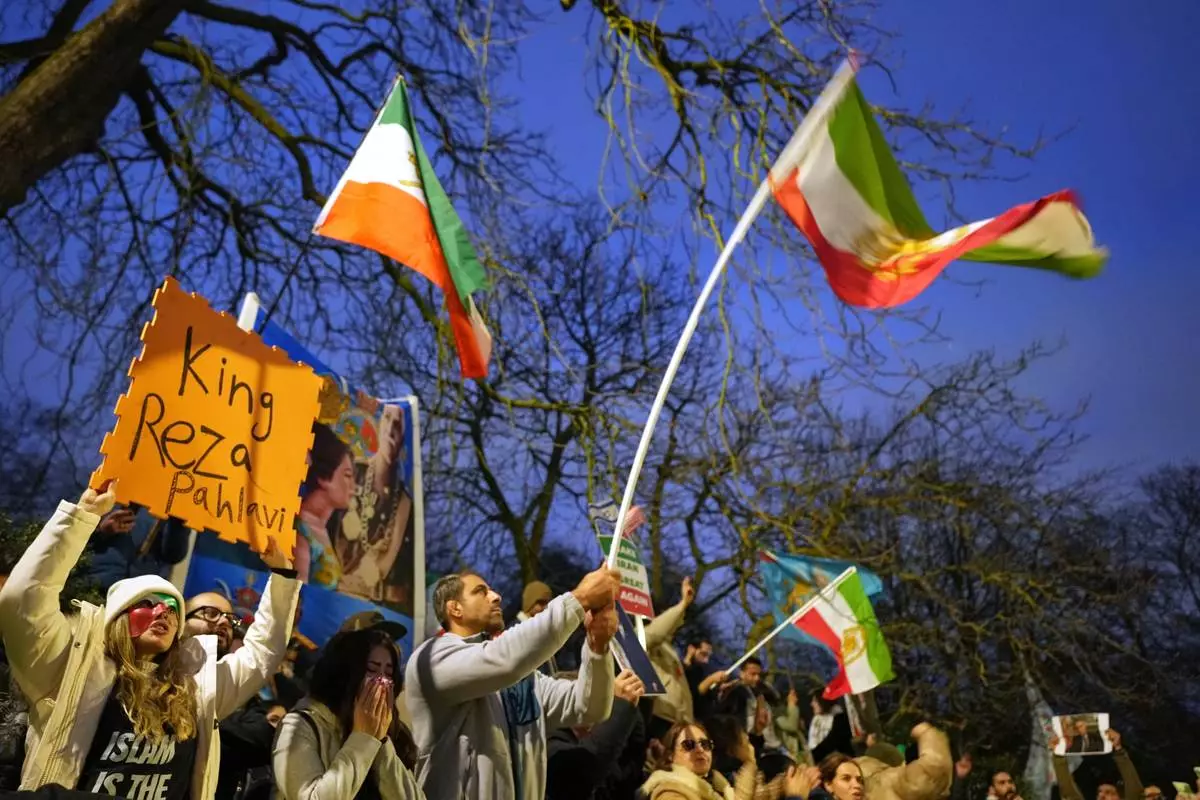
Protesters hold up placards and flags as they demonstrate outside the Iranian Embassy in London, Monday, Jan. 12, 2026. (AP Photo/Alastair Grant)
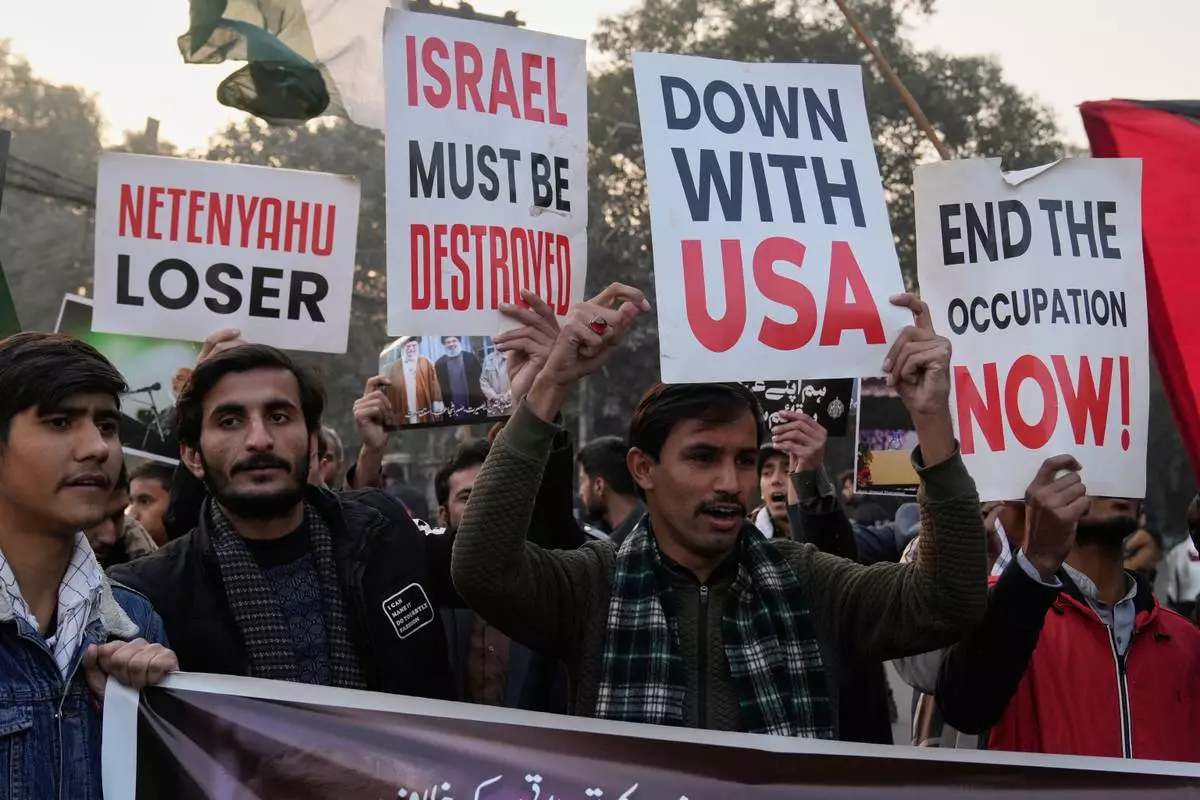
Shiite Muslims hold placards and chant slogans during a protest against the U.S. and show solidarity with Iran in Lahore, Pakistan, Sunday, Jan. 11, 2026. (AP Photo/K.M. Chaudary)
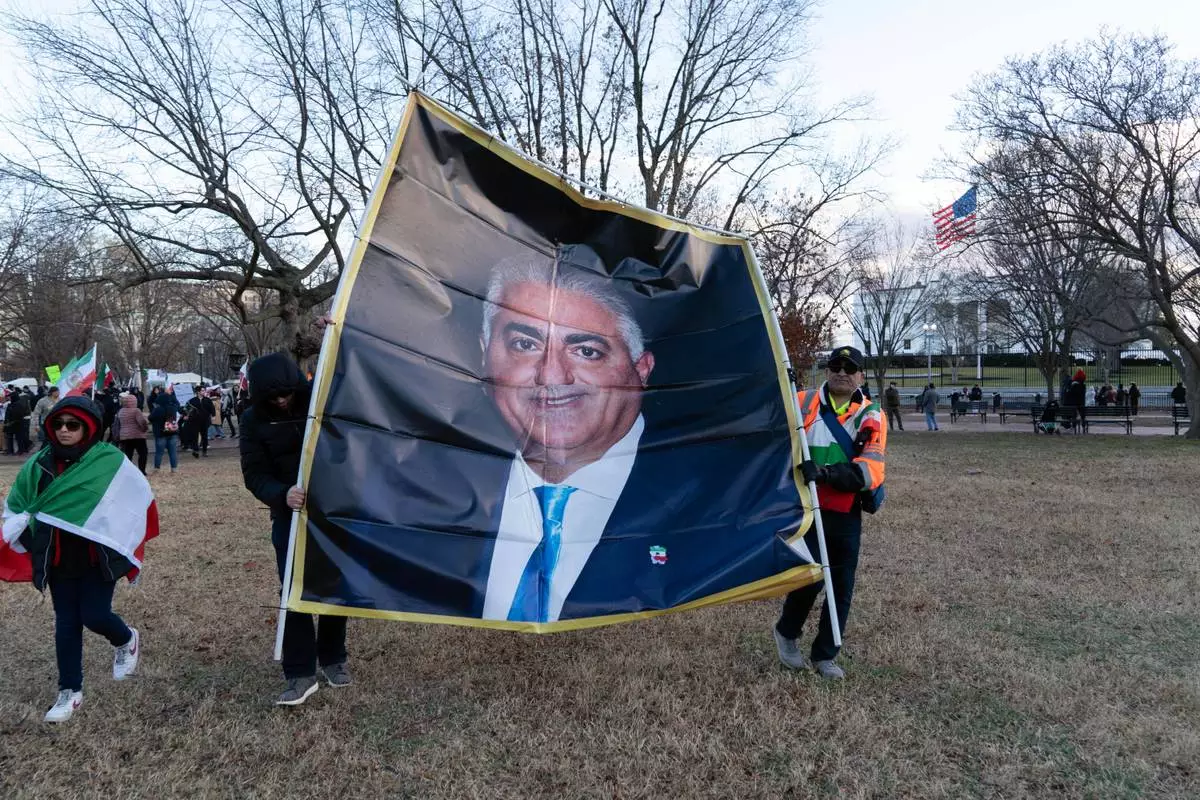
Activists carrying a photograph of Reza Pahlavi take part in a rally supporting protesters in Iran at Lafayette Park, across from the White House, in Washington, Sunday, Jan. 11, 2026. (AP Photo/Jose Luis Magana)
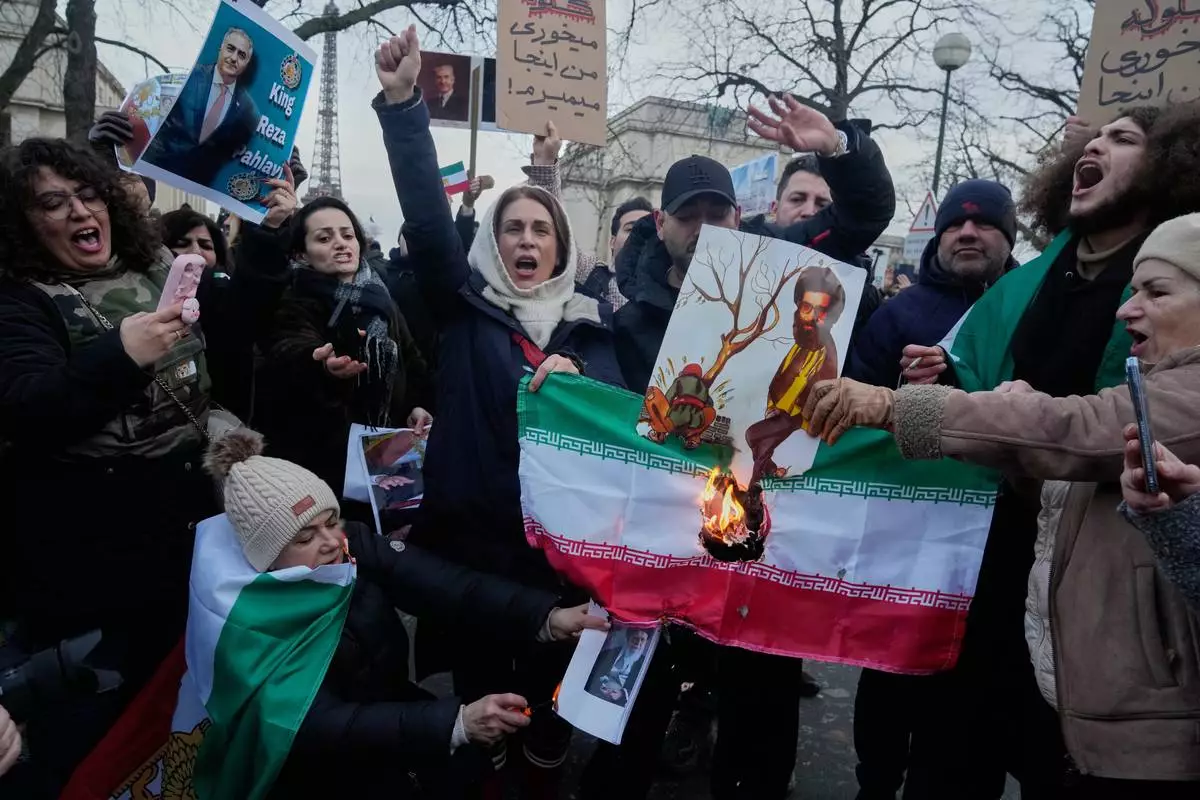
Protesters burn the Iranian national flag during a rally in support of the nationwide mass demonstrations in Iran against the government in Paris, Sunday, Jan. 11, 2026. (AP Photo/Michel Euler)
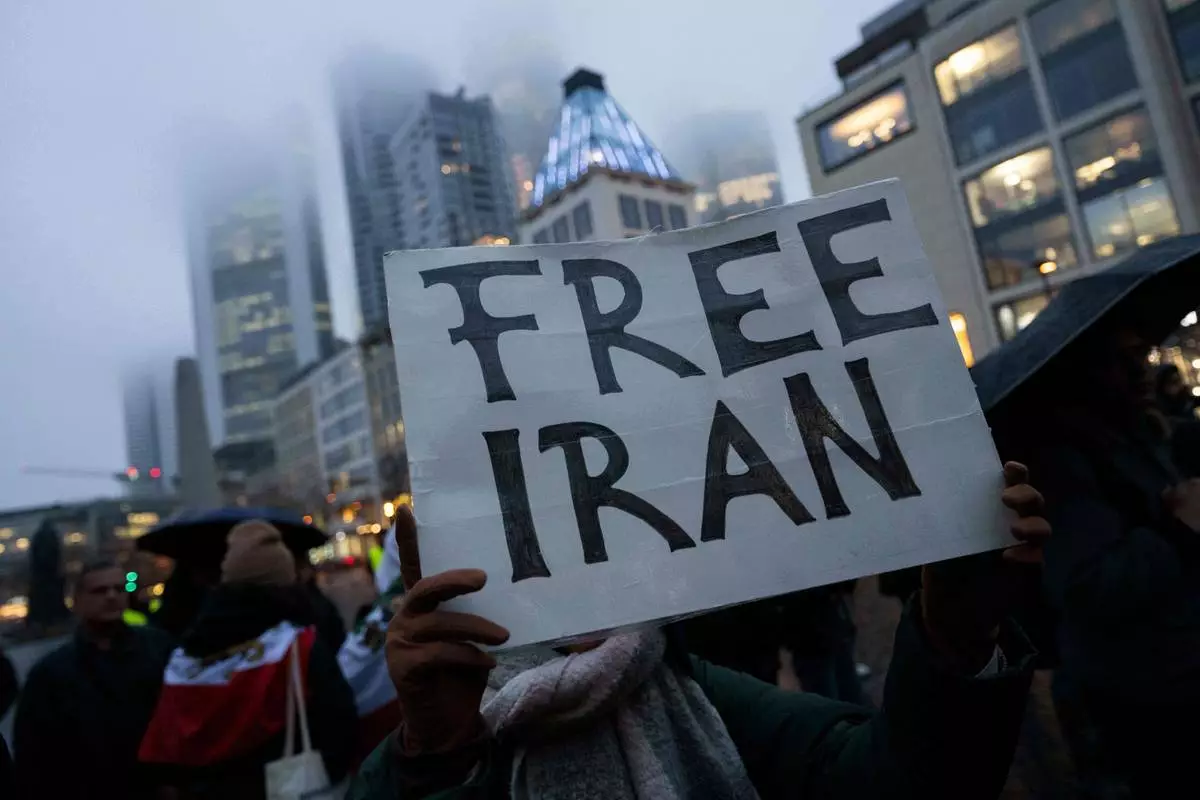
People attend a rally in Frankfurt, Germany, Monday, Jan. 12, 2026. (Boris Roessler/dpa via AP)
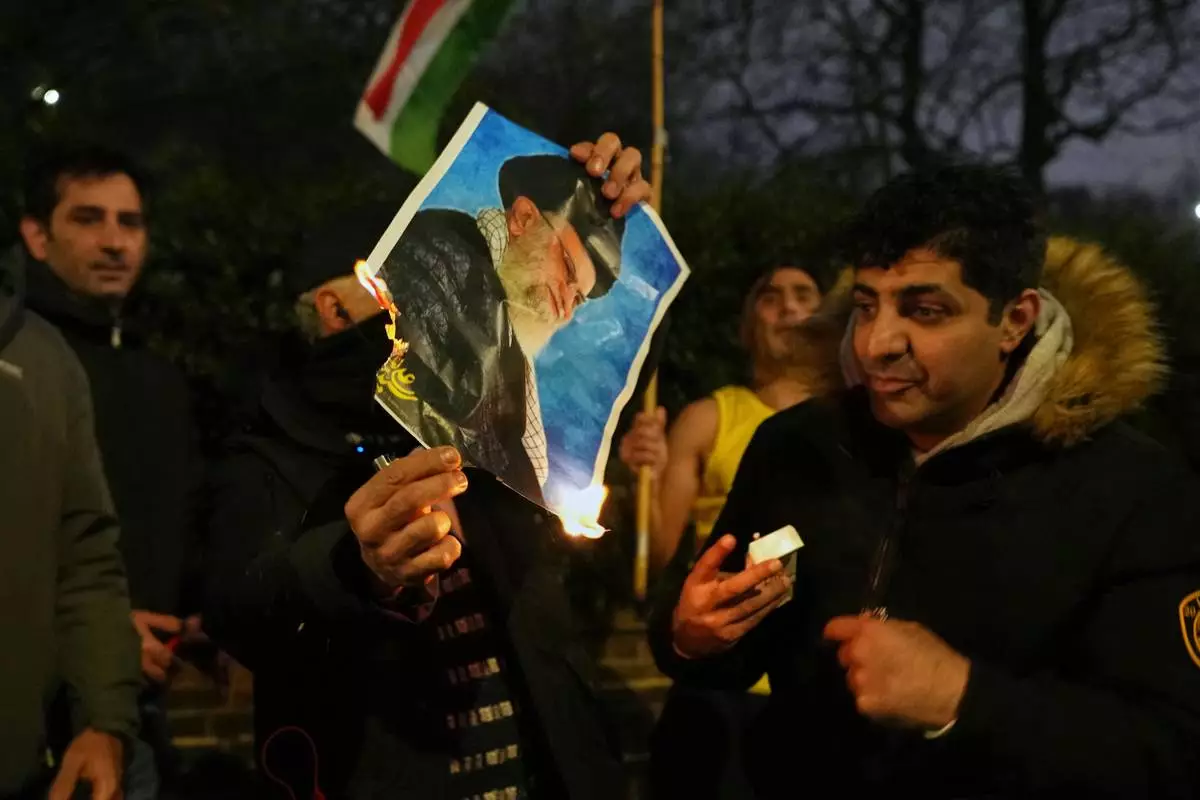
A picture of Ayatollah Ali Khamenei is set alight by protesters outside the Iranian Embassy in London, Monday, Jan. 12, 2026. (AP Photo/Alastair Grant)