BEIRUT (AP) — Clashes between government forces and members of a minority sect in Syria have drawn intervention by Israel and once again raised fears of a breakdown in the country's fragile postwar order.
Syria is deeply divided as it tries to emerge from decades of dictatorship and nearly 14 years of civil war.
Click to Gallery
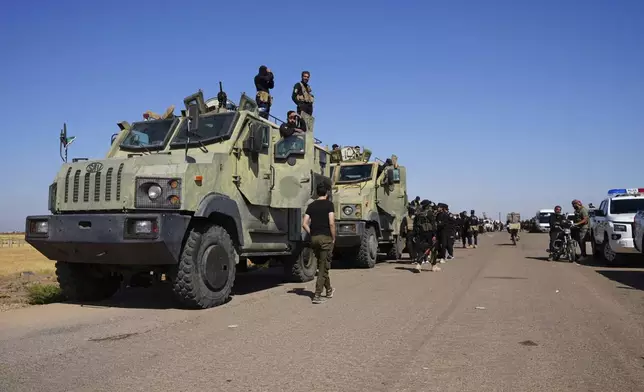
Syrian government security forces gather on the outskirts of Sweida province where clashes erupted between Druze militias and Sunni Bedouin clans, southern Syria, Monday, July 14, 2025. (AP Photo/Malek Khattab)
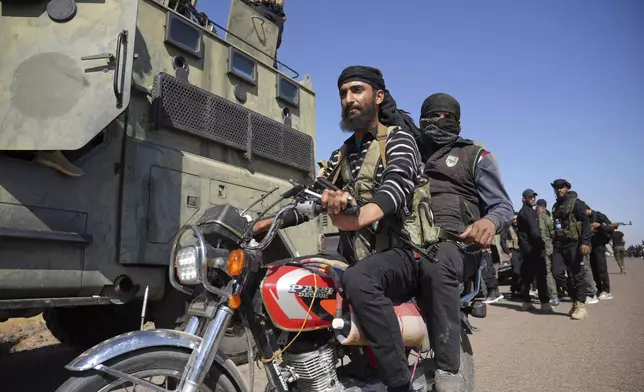
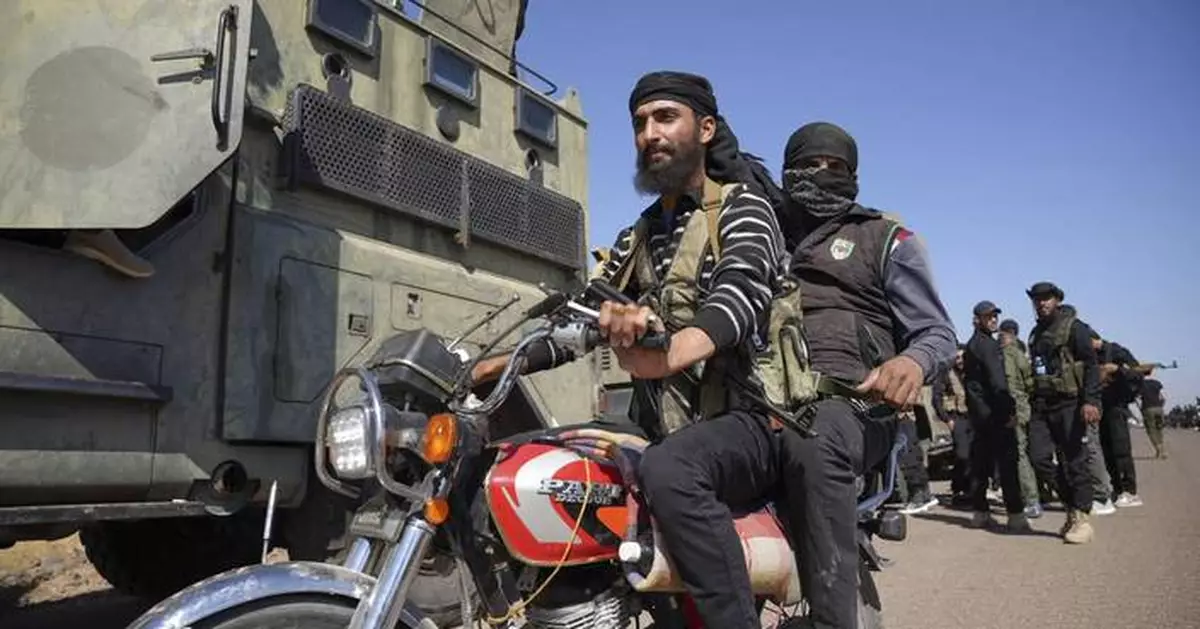
Two fighters from the Sunni Bedouin clans, ride their motorcycle as they pass by Syrian government security forces deployed on the outskirts of the Sweida province where clashes erupted between Druze militias and Sunni Bedouin clans, southern Syria, Monday, July 14, 2025. (AP Photo/Malek Khattab)
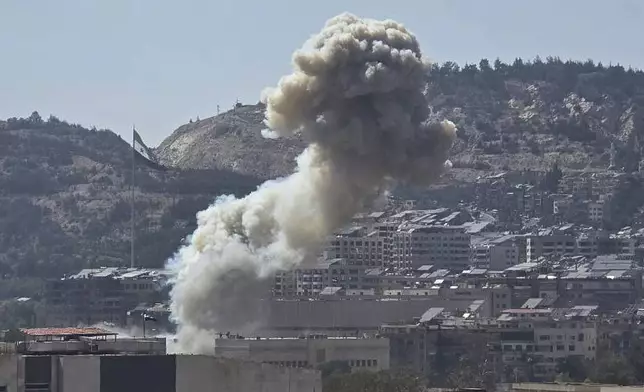
In this photo released by the Syrian official news agency SANA, smoke rises from an Israeli airstrike that hit the Syrian Defence Ministry, in Damascus, Syria, Wednesday, July 16, 2025. (SANA via AP)
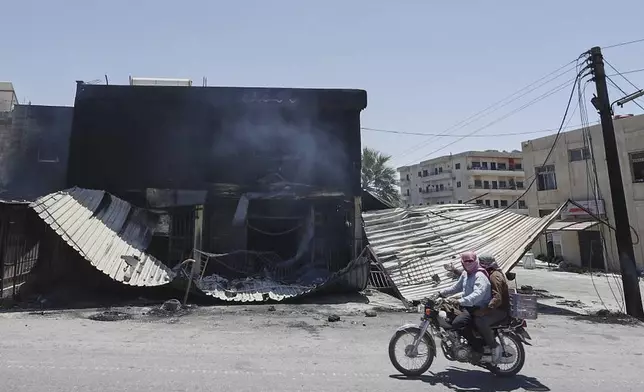
Syrian citizens ride in front of a shop that was burned during clashes between Syrian government forces and Druze militias on the outskirts of Sweida city, southern Syria, Wednesday, July 16, 2025. (AP Photo/Omar Sanadiki)
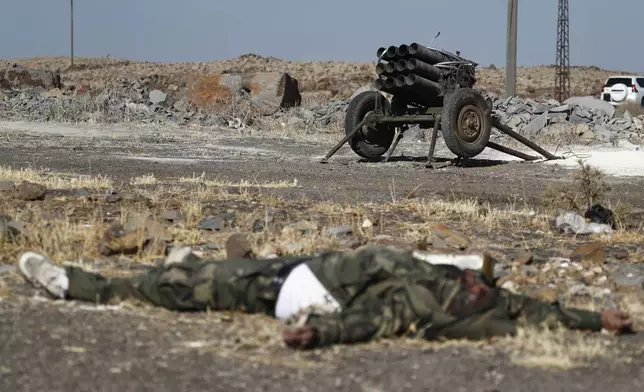
A dead fighter of the Druze militias lies on the ground in front of a rocket launcher on the outskirts of Sweida city, where clashes erupted between Sunni Bedouin clans and Druze militias, southern Syria, Monday, July 14, 2025. (AP Photo/Omar Sanadiki)
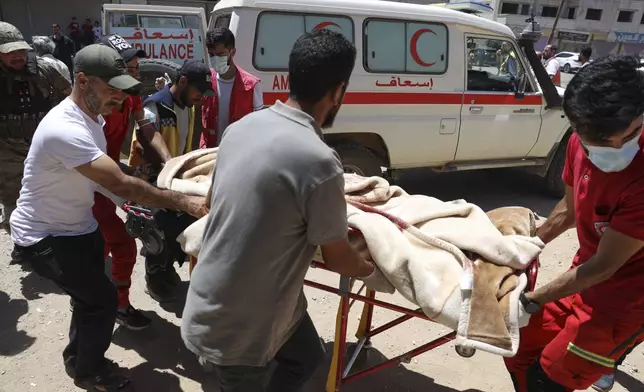
Red Crescent volunteers carry a government soldier injured in Sweida city during clashes between the government forces and Druze militias at a clinic in Busra al-Harir village, southern Syria, Tuesday, July 15, 2025. (AP Photo/Omar Albam)
Syrian government security forces gather on the outskirts of Sweida province where clashes erupted between Druze militias and Sunni Bedouin clans, southern Syria, Monday, July 14, 2025. (AP Photo/Malek Khattab)
Two fighters from the Sunni Bedouin clans, ride their motorcycle as they pass by Syrian government security forces deployed on the outskirts of the Sweida province where clashes erupted between Druze militias and Sunni Bedouin clans, southern Syria, Monday, July 14, 2025. (AP Photo/Malek Khattab)
Clashes have on several occasions broken out between forces loyal to the government and Druze fighters since the fall of President Bashar Assad in early December in a lightning rebel offensive led by Sunni Islamist insurgent groups, but this week's fighting has escalated to new levels of violence.
Here are the main reasons the clashes expanded in recent days and background on the two sides:
The Druze religious sect is a minority group that began as a 10th-century offshoot of Ismailism, a branch of Shiite Islam. More than half the roughly 1 million Druze worldwide live in Syria. Most of the other Druze live in Lebanon and Israel, including in the Golan Heights, which Israel captured from Syria in the 1967 Mideast War and annexed in 1981. In Syria, they largely live in southern Sweida province and some suburbs of Damascus, mainly in Jaramana and Ashrafiyat Sahnaya to the south.
The transitional government has promised to include minorities, including the Druze, but the new 23-member government in Syria announced in late March only has one Druze member, Minister of Agriculture Amjad Badr.
Under the Assad family’s tight rule, religious freedom was guaranteed as Syria then boasted about its secular and Arab nationalist system.
The Druze had been divided over how to deal with their issues with the new status quo in Syria. Many Druze supported a dialogue with the government while others wanted a more confrontational approach. Reports of attacks on Druze civilians by government-affiliated forces since the latest round of fighting broke out have further alienated many Druze from the new authorities.
Syria’s religious and ethnic communities are worried about their place in Syria’s new system that is mostly run by Islamists, including some who have links to extremist groups.
The country’s new president, Ahmad al-Sharaa, himself is a former militant who once was a member of al-Qaida. Although al-Sharaa had said that the right of ethnic and religious minorities will be protected, there have been several rounds of sectarian killings since Assad’s fall.
The Assad family rule that was dominated by members of the Alawite sect had oppressed much of the country’s Sunni majority while giving minorities some powers.
During Syria’s 14-year conflict, the Druze had their own militias, in part to defend against Muslim militants who consider them heretics. Members of the Islamic State group in 2018 attacked the Druze in Sweida province, killing more than 200 people and taking more than two dozen hostage.
The Syrian Observatory for Human Rights, a U.K.-based war monitor, said the clashes started after members of a Bedouin tribe in Sweida province set up a checkpoint where they attacked and robbed a Druze man, leading to tit-for-tat attacks and kidnappings between the tribes and Druze armed groups.
Government security forces deployed to restore order, but were seen as taking the side of the Bedouin tribes against Druze factions. By Wednesday, the Syrian observatory reported that some 300 people had been killed, including 27 who were “summarily executed.”
Videos and reports surfaced of government-affiliated forces burning and looting civilian houses and humiliating Druze men by forcibly shaving their mustaches.
Israel, which has periodically intervened or threatened to intervene in support of the Druze in Syria, launched dozens of strikes on convoys of government forces in southern Syria and on government facilities in Damascus. It has threatened further escalation. In Israel, the Druze are seen as a loyal minority and often serve in the military.
Israel does not want Islamic militants near the country’s northern border. Since Assad’s fall, Israeli forces have seized control of a U.N.patrolled buffer zone in Syria near the border with the Israel-annexed Golan and have carried out hundreds of airstrikes on military sites.
The clashes raise fears of a worsening spiral of sectarian violence. In March, an ambush on government security forces by fighters loyal to Assad triggered days of sectarian and revenge attacks. Hundreds of civilians were killed, most of them members of the minority Alawite sect that Assad belongs to. A commission was formed to investigate the attacks but has not made its findings public.
There have also been rising tensions between authorities in Damascus and Kurdish-led authorities controlling the country's northeast. Despite having reached an agreement in March to merge their forces, the two sides have since come to an impasse and the deal has not been implemented.
The ongoing instability threatens to derail Syria's fragile recovery after more than a decade of war that devastated its infrastructure and displaced half the prewar population of 23 million. In 2017, the United Nations estimated that rebuilding Syria would cost about $250 billion. Since Assad was overthrown, some experts say that number could be as high as $400 billion.
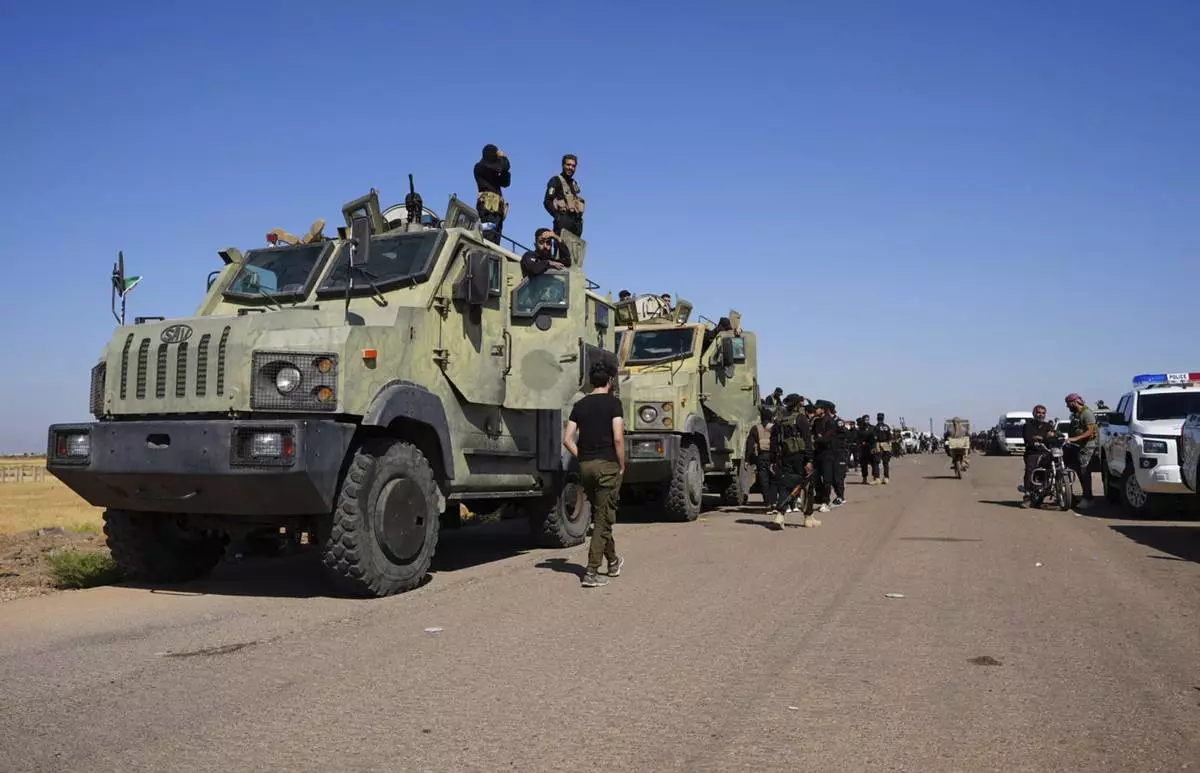
Syrian government security forces gather on the outskirts of Sweida province where clashes erupted between Druze militias and Sunni Bedouin clans, southern Syria, Monday, July 14, 2025. (AP Photo/Malek Khattab)
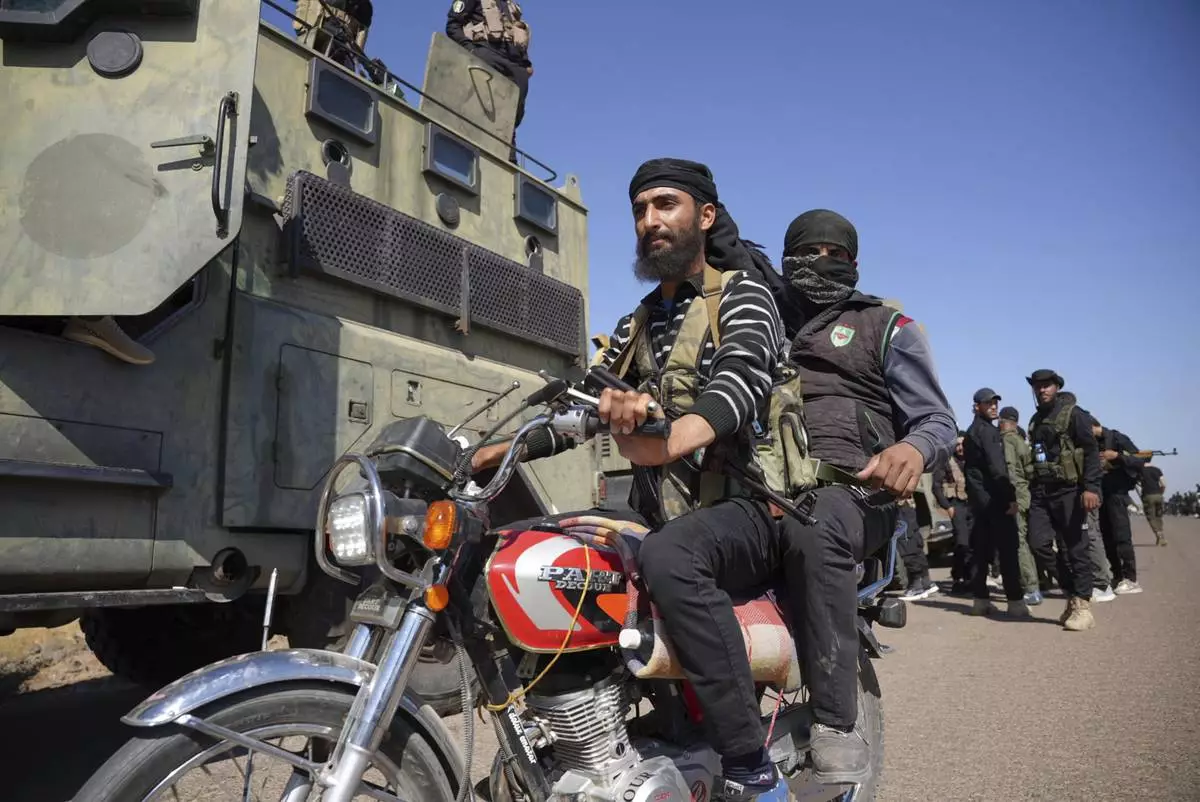
Two fighters from the Sunni Bedouin clans, ride their motorcycle as they pass by Syrian government security forces deployed on the outskirts of the Sweida province where clashes erupted between Druze militias and Sunni Bedouin clans, southern Syria, Monday, July 14, 2025. (AP Photo/Malek Khattab)

In this photo released by the Syrian official news agency SANA, smoke rises from an Israeli airstrike that hit the Syrian Defence Ministry, in Damascus, Syria, Wednesday, July 16, 2025. (SANA via AP)
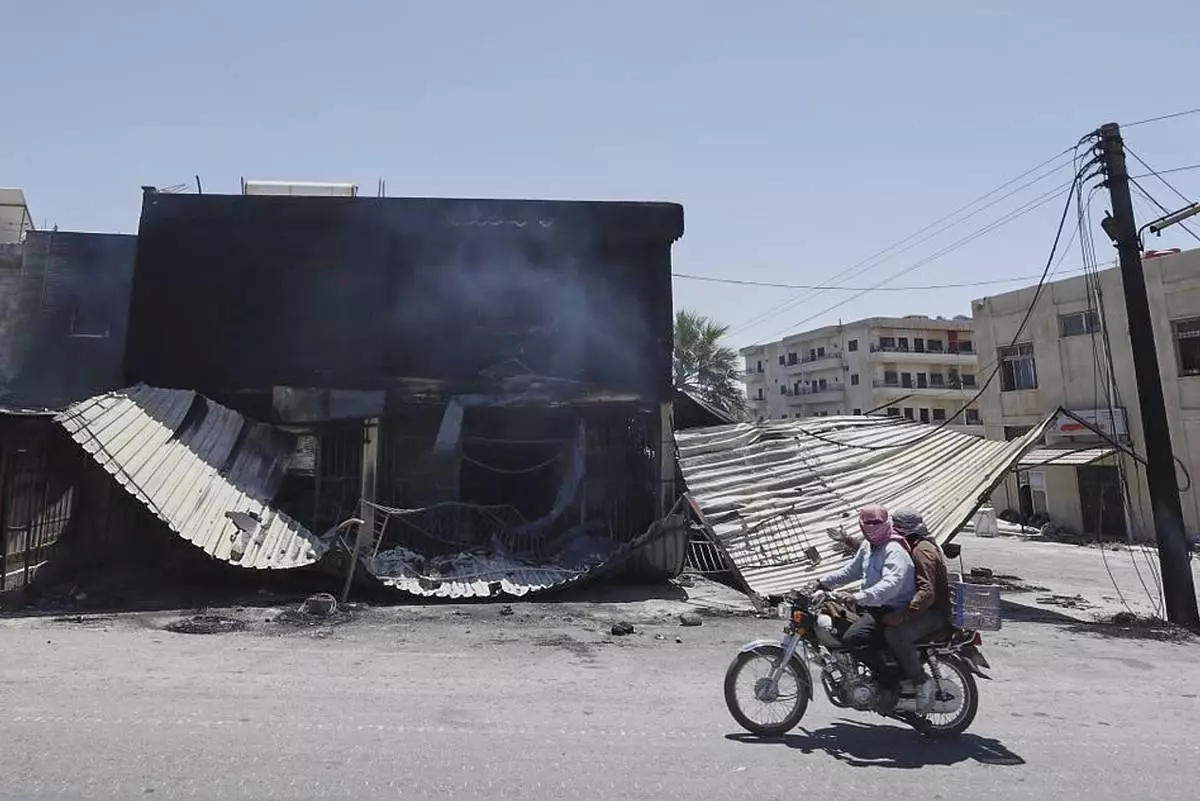
Syrian citizens ride in front of a shop that was burned during clashes between Syrian government forces and Druze militias on the outskirts of Sweida city, southern Syria, Wednesday, July 16, 2025. (AP Photo/Omar Sanadiki)
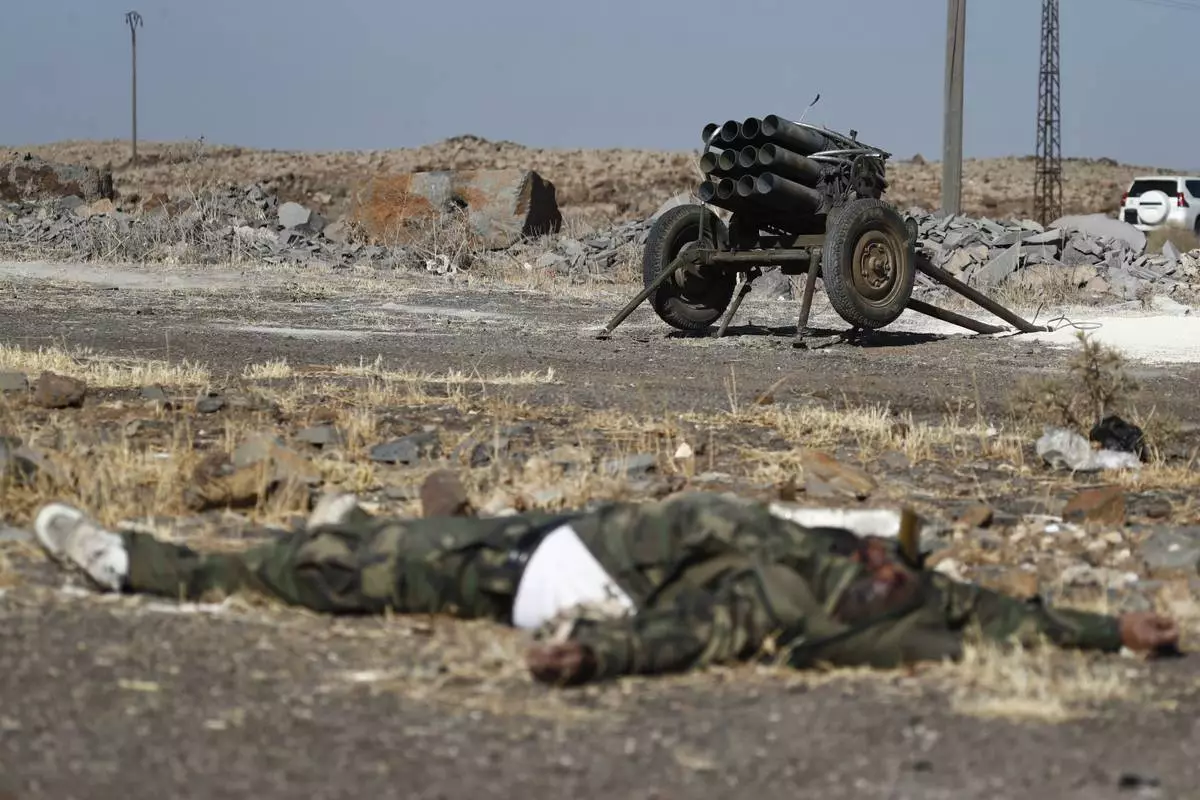
A dead fighter of the Druze militias lies on the ground in front of a rocket launcher on the outskirts of Sweida city, where clashes erupted between Sunni Bedouin clans and Druze militias, southern Syria, Monday, July 14, 2025. (AP Photo/Omar Sanadiki)
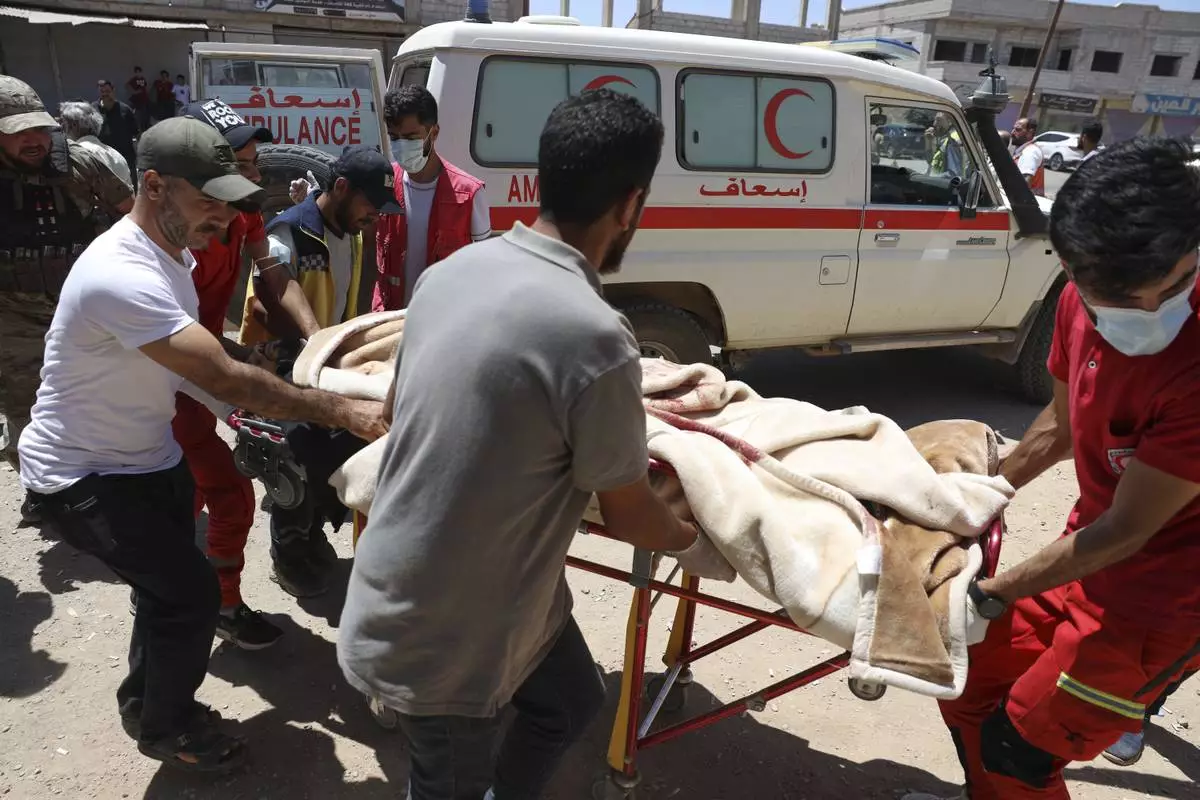
Red Crescent volunteers carry a government soldier injured in Sweida city during clashes between the government forces and Druze militias at a clinic in Busra al-Harir village, southern Syria, Tuesday, July 15, 2025. (AP Photo/Omar Albam)
Syrian government security forces gather on the outskirts of Sweida province where clashes erupted between Druze militias and Sunni Bedouin clans, southern Syria, Monday, July 14, 2025. (AP Photo/Malek Khattab)
Two fighters from the Sunni Bedouin clans, ride their motorcycle as they pass by Syrian government security forces deployed on the outskirts of the Sweida province where clashes erupted between Druze militias and Sunni Bedouin clans, southern Syria, Monday, July 14, 2025. (AP Photo/Malek Khattab)