A spokesperson for the Taiwan Affairs Office of China's State Council on Wednesday hit back at the Democratic Progressive Party (DPP) authorities for smearing the mainland's invitation of Chinese Kuomintang (KMT) party veterans to attend the September 3 military parade in Beijing.
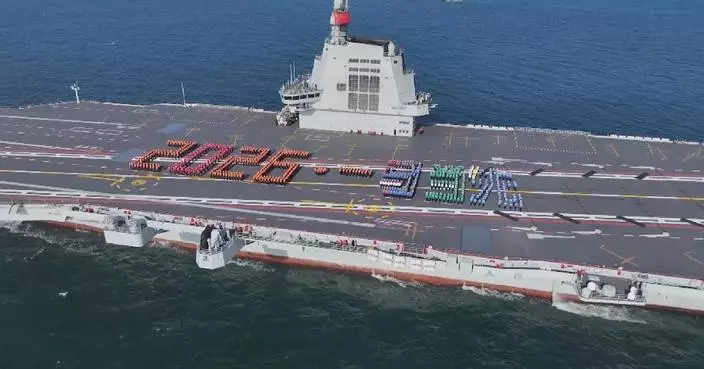
The military parade, to be held in Beijing's Tian'anmen Square, is part of a series of commemorative events marking the 80th anniversary of the victory of the Chinese People's War of Resistance Against Japanese Aggression and the World Anti-Fascist War.
KMT veterans who fought in the war of resistance against Japanese aggression have been invited to observe the parade.
However, the DPP authorities had distorted the mainland's intention and threatened and intimidated these veterans in an attempt to keep them from attending the parade.
Chen Binhua, the Taiwan Affairs Office spokesman, exposed the DPP's motive at a press conference in Beijing.
"This year marks the 80th anniversary of the victory of the Chinese People's War of Resistance Against Japanese Aggression and the World Anti-Fascist War, and it also marks the 80th anniversary of the restoration of Taiwan. The Chinese people's war against Japanese aggression - a decisive battle between justice and evil, between light and darkness, and between progress and reaction - was an important part of the World Anti-Fascist War. The DPP authorities falsely framed the commemoration of the victory of this war as what they call 'a united front tactic and cognitive warfare,' fully revealing their abominable nature of going against the trend of history and the values shared by all humanity," Chen said.
"The War of Resistance Against Japanese Aggression was a just fight in which all the sons and daughters of the Chinese nation united against a common enemy in defiance of the aggression of Japanese militarism. Over 80 years ago, the Communist Party of China led the resistance efforts behind enemy lines and worked in concert with the KMT party which commanded the frontal battlefields, forming a united front in the war against the Japanese aggressors. We have invited the KMT veterans to participate in the commemorative activities as a way to show respect to the historical facts and pay tribute to their heroic deeds of fighting bravely in defense of our country," he said.
"The DPP authorities not only refused to hold any commemorative activities on the occasion, but also threatened and intimidated these war veterans. How execrable their motive is and how shameful the way they act! This will surely meet the firm opposition from the vast majority of compatriots in Taiwan," said the spokesman.
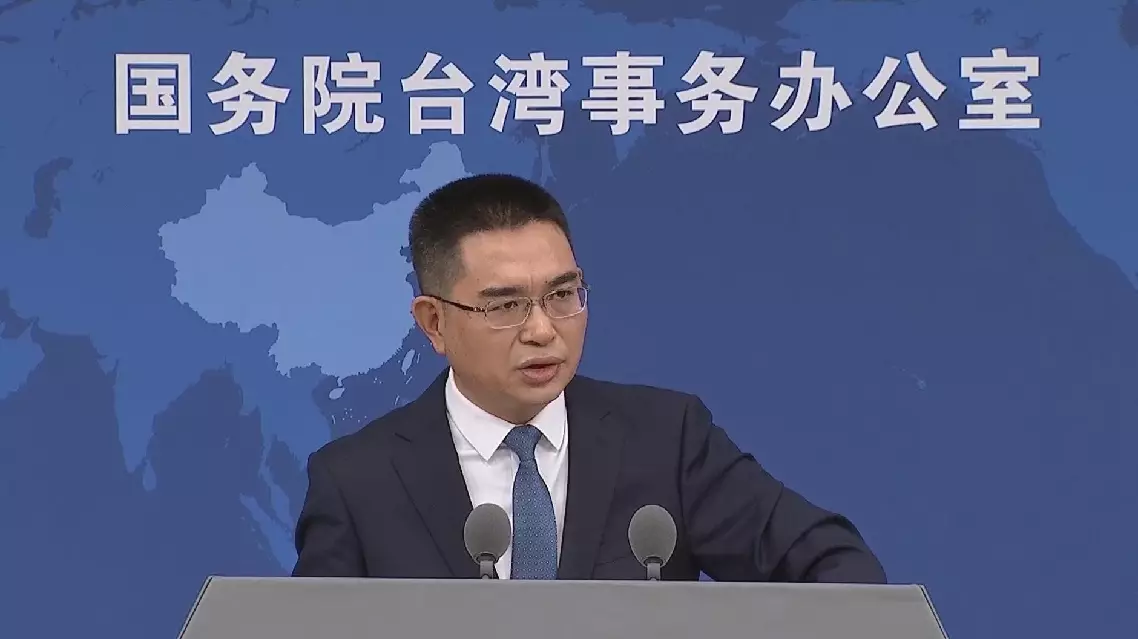
Spokesman slams DPP for attempting to keep KMT veterans from attending Sept 3 military parade
Spokesman slams DPP for attempting to keep KMT veterans from attending Sept 3 military parade
Spokesman slams DPP for attempting to keep KMT veterans from attending Sept 3 military parade
Chinese President Xi Jinping's New Year message delivered on the New Year Eve has drawn positive responses from scholars and former officials from several countries, who say that the series of global initiatives proposed by Xi have provided fresh momentum for multilateralism and shared development at a time of growing uncertainty.
While the reactions touched on the broader vision outlined in Xi's New Year message, they also focused on the initiatives Xi has put forward over recent years, particularly the Global Development Initiative, the Global Security Initiative, the Global Civilization Initiative and the newly proposed Global Governance Initiative.
Highlighting the significant importance of these initiatives, they have emphasized the need for equality, inclusiveness and a fairer international order.
"We need a more just international order and a truly multilateral system. China stands almost alone today as a global force actively advancing genuine multilateralism. Therefore, these initiatives are most welcome," said Michael Schumann, chairman of the German Federal Association for Economic Development and Foreign Trade.
Former Lebanese Prime Minister Hassan Diab has placed the emphasis on dialogue and trust-building between civilizations.
"It is essential now more than ever to promote communication and understanding between China and the world to enhance cultural exchanges and build mutual trust. As President Xi has repeatedly emphasized, China supports principles of unity, inclusiveness and peacefulness. These values should guide our collective efforts to build bridges rather than walls," he said.
From a governance perspective, Russian scholar Ekaterina Zaklyazminskaya, head of the Center for World Politics and Strategic Analysis at the Institute of China and Modern Asia under the Russian Academy of Sciences, has viewed the Global Governance Initiative as a structured response to global challenges.
"The recently proposed Global Governance Initiative presents a comprehensive framework of ideas. It prioritizes establishing a more just international order, champions multilateralism, and upholds the principle of 'people first.' Through its concrete practices, financial assistance, and tangible support for multilateral bodies like the U.N., China has demonstrated that its commitments are substantive. China is taking tangible steps toward a fairer and more reasonable global governance system," she said.
Scholars from the Global South also have seen historical echoes in the initiatives.
"Some of the developed and developing countries have highly welcomed the Global Development Initiative, because this initiative emphasizes the need for partnerships -- partnerships that commit resources to end global poverty and pursue common and shared development. The Global Governance Initiative, in my view, echoes again the call that was made by Asian [and] African countries at the Bandung Conference in 1955 for equality, for mutual respect, for respect of territorial integrity, [and] for respect of sovereignty," said Bongani Maimele, director of international relations at South Africa's National School of Government.
"These initiatives are revolutionary in nature. They are reshaping the political philosophy of global governance. Today's world is far more complex than it was 80 years ago, and interdependence among nations has deepened. Therefore, we need new philosophical perspectives to examine our world and new models of engagement to foster a new type of international relations," said Sheradil Baktygulov, director of Kyrgyzstan's Institute of World Policy.
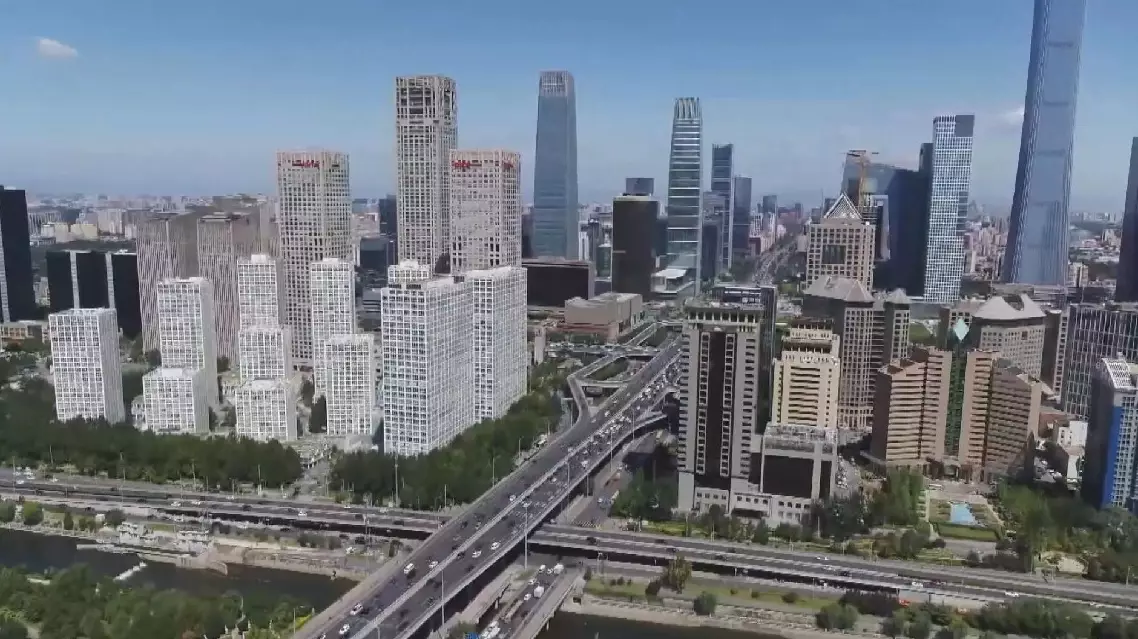
Int'l scholars praise Xi's initiatives, call for stronger multilateralism