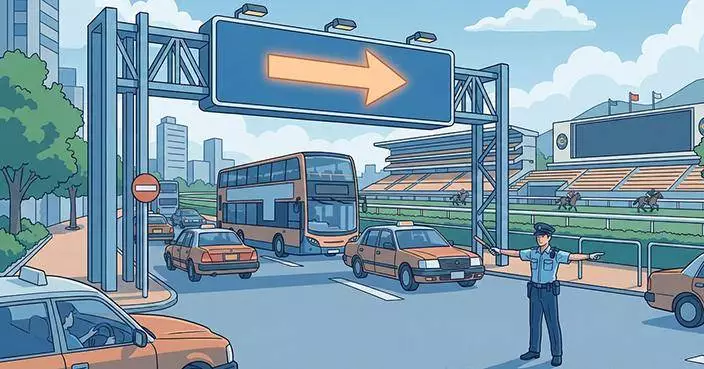
Legislative amendments on mandatory installation of Journey Recording Systems and provision of electronic payment means on taxis to be gazetted on Friday
The Government will gazette the Road Traffic (Construction and Maintenance of Vehicles) (Amendment) Regulation 2025 and the Road Traffic (Public Service Vehicles) (Amendment) Regulation 2025 this Friday (July 18). The Amendment Regulations seek to mandate the installation of Journey Recording Systems (JRS) on all taxis and require all taxi drivers to allow taxi fares to be paid by electronic payment means (e-payment means), with a view to enhancing the overall taxi service quality with technology and meeting public's demand.
A spokesperson for the Transport and Logistics Bureau said, "The JRS should be capable of making video recordings with audio inside a taxi compartment (in-vehicle recordings) as well as making video recordings of the clear front and rear views outside the taxi. It should also capture data concerning the location of the taxi via a global navigation satellite system and be properly sealed and examined. We believe that these functions will help deter taxi drivers' malpractices, enhance driving safety of taxis and safeguard the interest of drivers and passengers in the event of disputes."
To assist the trade in preparing for the new requirements relating to the JRS, the Transport Department (TD) will inform the trade of the relevant requirements through various channels, such as the TD's website, the regular publication of the Taxi Newsletter, publicity leaflets and regular meetings with the taxi trade, in the second half of this year. The TD will also carry out works relating to the authorisation of suppliers starting fromthe fourth quarterof this year, so that the trade may start installing the JRSs inside taxi compartments in 2026. Upon completion of such installation on all taxis, the JRSs will be ready to come into operation and will have to be connected to the centralised Information System of the TD.
To protect the privacy of passengers and drivers, the recordings and data captured by the JRS should be encrypted. Only under specified purpose(s) (e.g. investigating any conduct that may constitute a traffic-related contravention under any law of Hong Kong), law enforcement agencies, the Commissioner for Transport and authorised persons can retrieve or access the in-vehicle recordings.
"In addition, since many taxis now still accept cash only which has caused great inconvenience to passengers (especially tourists), our Amendment Regulation will require all taxi drivers to allow fares to be paid by e-payment means. To help drivers to prepare for the new requirement before it comes into effect, the TD will actively co-ordinate with various e-payment platforms in arranging workshops or briefings to assist drivers in learning how to collect fares through e-payment means. This requirement will come into operation on April 1, 2026," the spokesperson added.
The Legislative Council (LegCo) Panel on Transport and the Transport Advisory Committee were briefed respectively on the proposals in December 2024 and Members were supportive of the proposals. The Amendment Regulations will be tabled at the LegCo on July 23, 2025 for negative vetting.
Details of the proposals and the commencement of the provisions relating to the JRS and e-payment means are set out in the LegCo brief issued by the Government today (July 16).
New requirements for mandatory fitting and wearing of seat belts and placing of mobile telecommunications devices while driving to be implemented from January 25
The Government today (January 8) reminded members of the public that, starting from January 25, all public transport and commercial vehicles' seated passengers must wear seat belts, and all drivers must not place more than two mobile telecommunications devices (MTDs) in front of them during driving, further enhancing road, passenger and driving safety.
All passenger's seats in public and private buses, rear passenger's seats in private light buses and goods vehicles (GVs), and driver's seats and all passenger's seats of special purpose vehicles (SPVs) must be equipped with seat belts in these vehicles first registered on or after January 25. Drivers and passengers occupying the seats of these vehicles (whether newly registered or not), where seat belts are fitted, are required to wear them. Studies show that wearing seat belts will reduce the risk of death and serious injury of drivers and passengers in head-on collisions by about 40 per cent and 70 per cent respectively.
Offending vehicle owners, drivers or passengers will be liable to a maximum fine of $5,000 and imprisonment for up to three months. All passengers occupying seats shall be responsible for wearing seat belts. Among them, any driver who still drives with a passenger aged under 15 seated in the rear seat of a GV or the passenger's seat of an SPV without wearing a seat belt will be subject to a maximum fine of $2,000.
The Government noted that the transport trades are ready for the new requirements. In franchised buses, all seats in newly procured buses have been equipped with seat belts. Together with existing double-deck buses retrofitted with seat belts on the upper-deck seats by operators under government subsidy, to date, around 3500 buses are now equipped with seat belts, representing about 60 per cent of the entire fleet in Hong Kong.
In addition, from the same day onwards, any driver must not place more than two MTDs (i.e. mobile phones, tablet computers or laptop computers) in front of them during driving. The diagonal length of each screen must not exceed 19 centimetres. The MTDs must not obstruct the driver's view of the road and traffic, as well as any mirror, device or camera-monitor fitted for viewing the roads. Offenders will be liable to a maximum fine of $2,000.
The Government has stepped up publicity and public education since November 2025. The Transport Department (TD) has strengthened collaboration with the Police, the Education Bureau, the Information Services Department, the Road Safety Council and the transport trades including public transport operators to introduce the legal requirements through websites, videos, media, social media, the "e-Bulletin for Parents" and publicity posters on traffic signal controllers across various districts. Franchised bus operators have also strengthened publicity and broadcast inside compartments and at bus stops to alert passengers to the new requirement of wearing seat belts.
Members of the public may refer to the TD's webpage on the new requirements on seat belts (www.td.gov.hk/en/road_safety/sb) and placing MTDs during driving (www.td.gov.hk/en/road_safety/mtd) or the Agent T Facebook page (www.facebook.com/AgentT.hk), or call the hotline 28042600 for details.
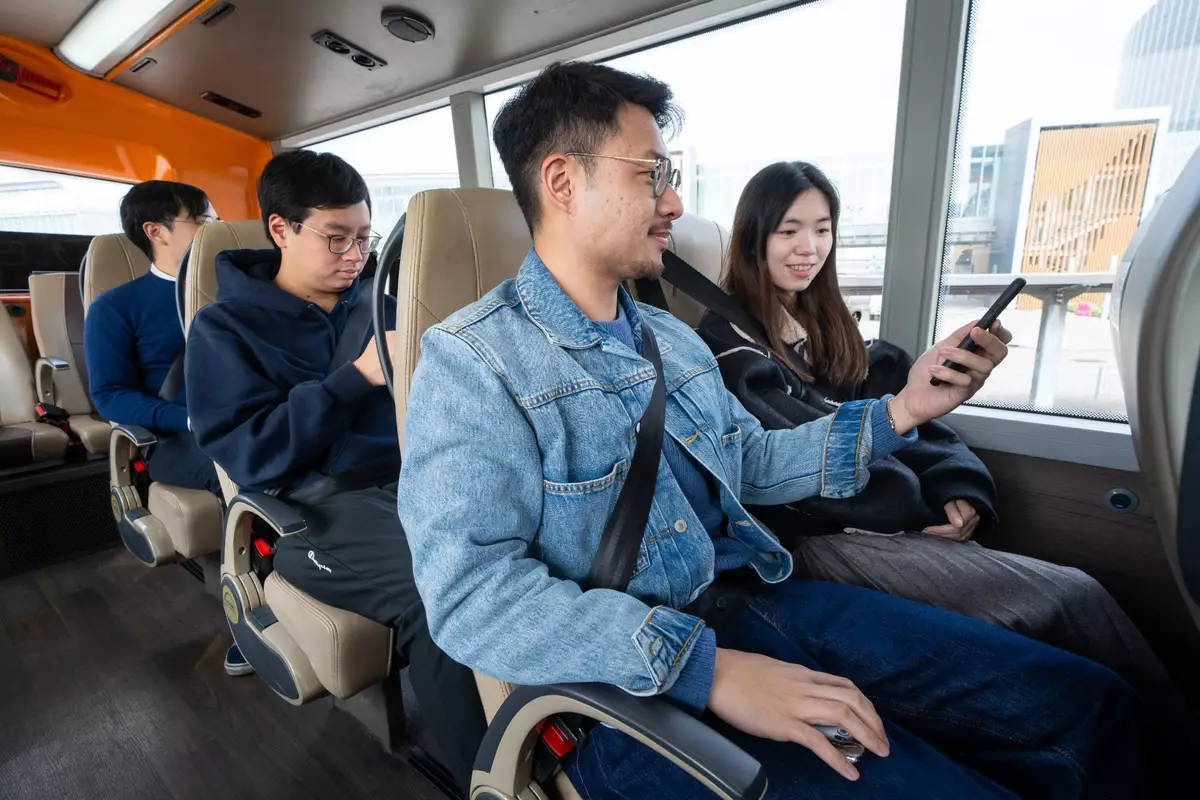
New requirements for mandatory fitting and wearing of seat belts and placing of mobile telecommunications devices while driving to be implemented from January 25 Source: HKSAR Government Press Releases
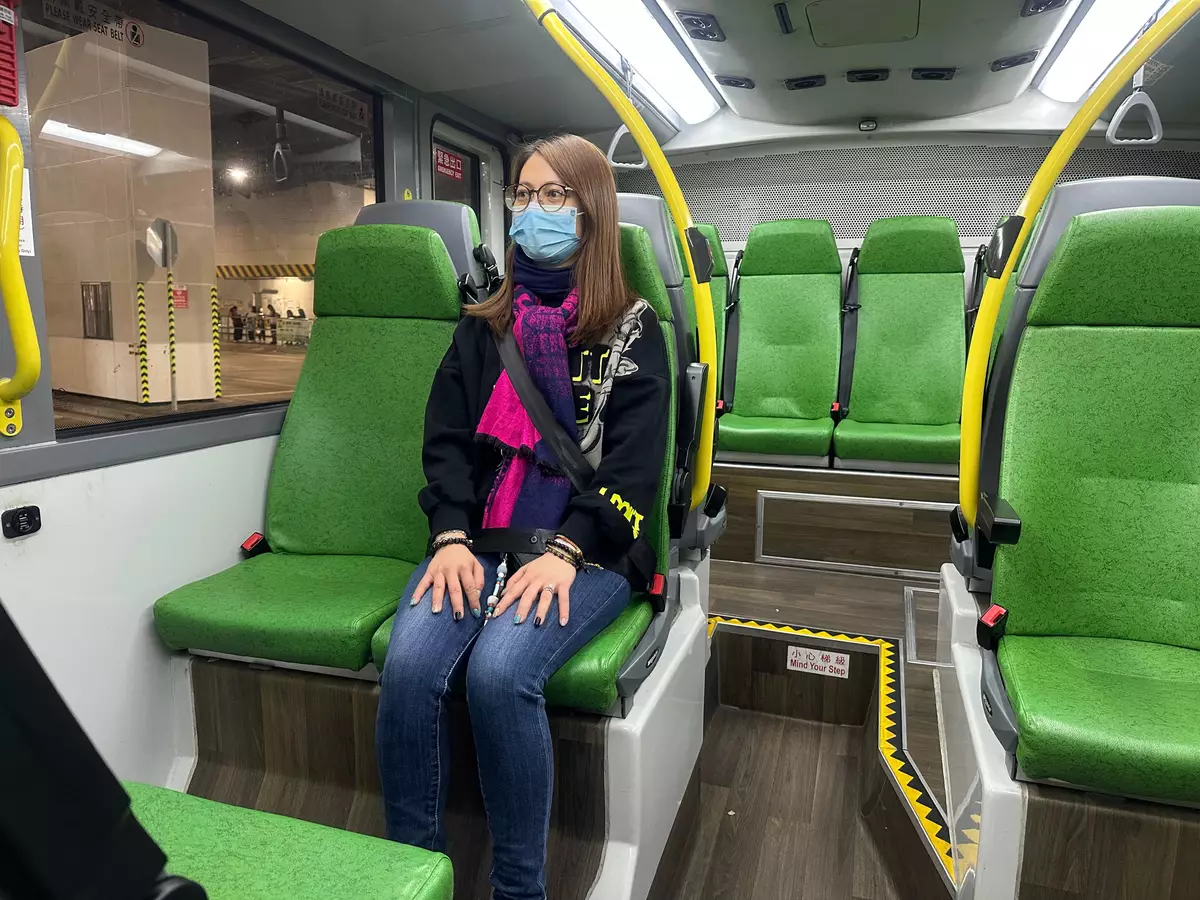
New requirements for mandatory fitting and wearing of seat belts and placing of mobile telecommunications devices while driving to be implemented from January 25 Source: HKSAR Government Press Releases
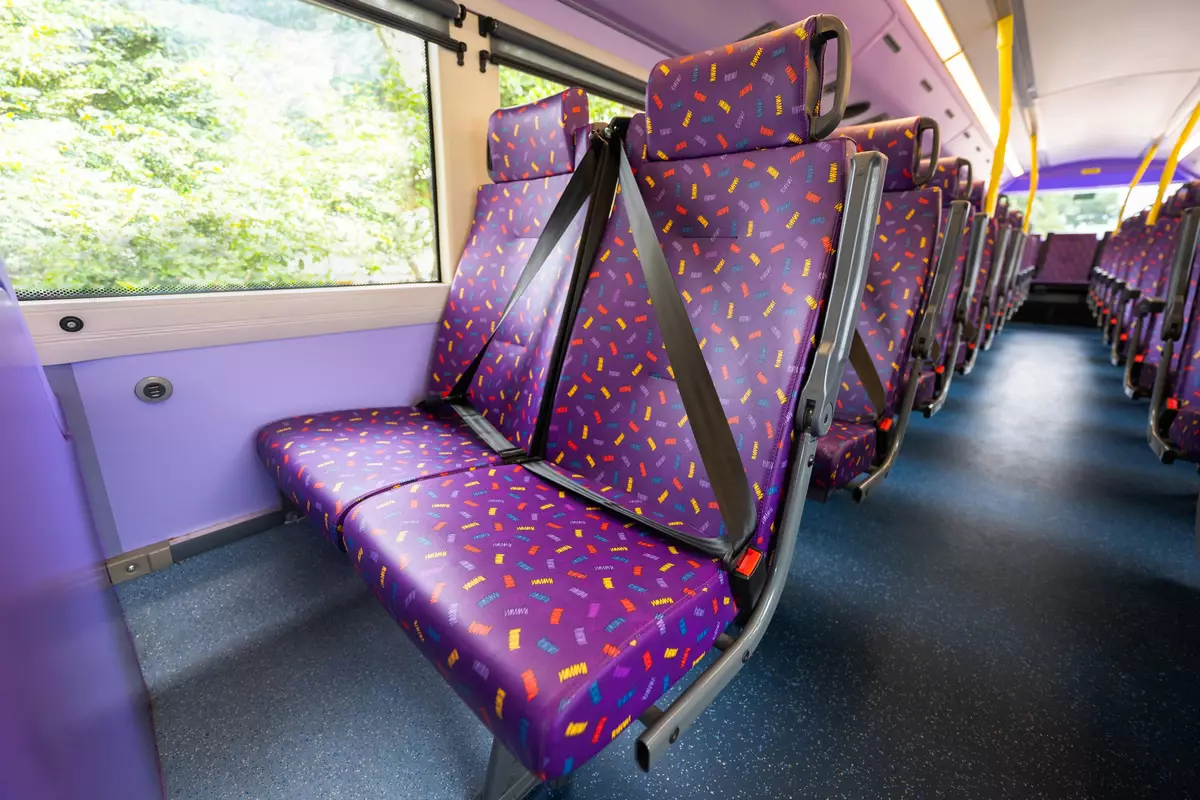
New requirements for mandatory fitting and wearing of seat belts and placing of mobile telecommunications devices while driving to be implemented from January 25 Source: HKSAR Government Press Releases
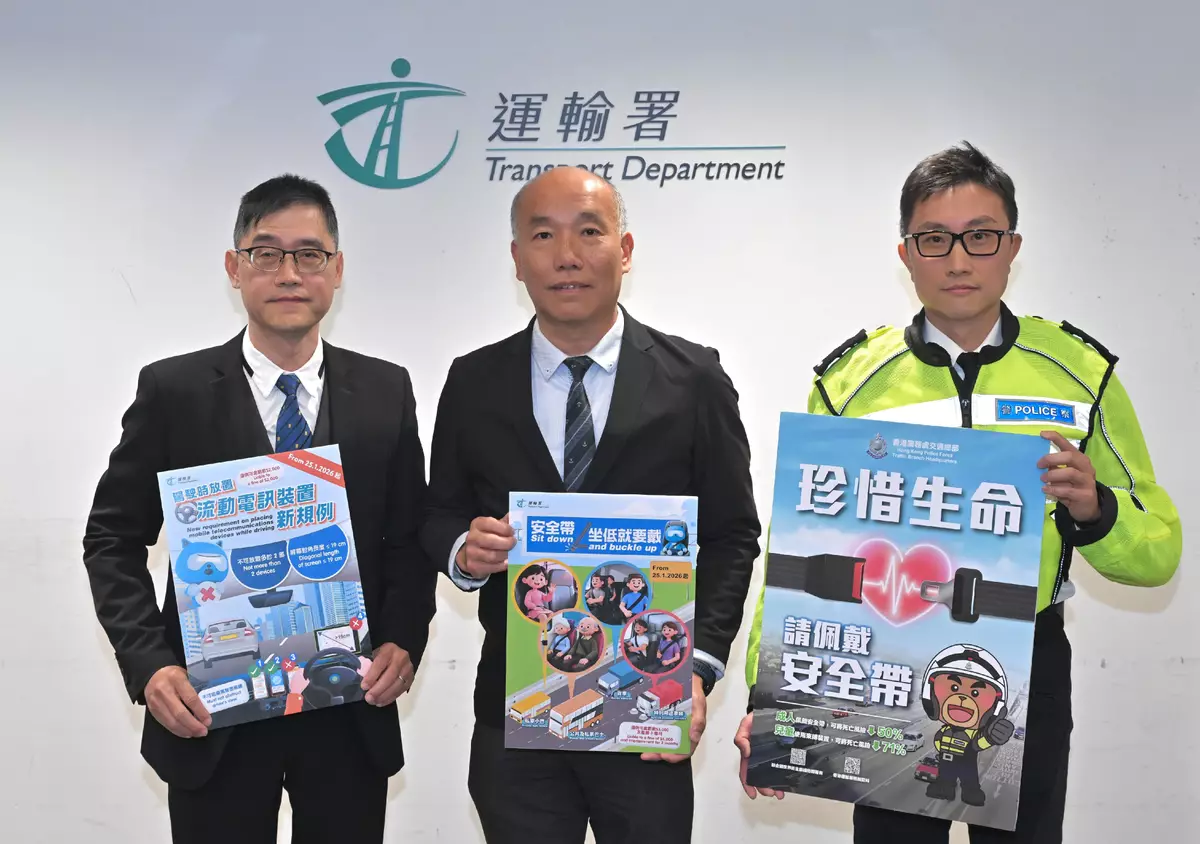
New requirements for mandatory fitting and wearing of seat belts and placing of mobile telecommunications devices while driving to be implemented from January 25 Source: HKSAR Government Press Releases