Skip to Content Facebook Feature Image

Paige Releases PRISM2: A Whole-Slide Foundation Model for Multimodal AI in Pathology and Cancer Care

News

Paige Releases PRISM2: A Whole-Slide Foundation Model for Multimodal AI in Pathology and Cancer Care
News

News

Paige Releases PRISM2: A Whole-Slide Foundation Model for Multimodal AI in Pathology and Cancer Care

2025-07-16 22:00 Last Updated At:22:10

NEW YORK--(BUSINESS WIRE)--Jul 16, 2025--

Paige, a leader in next-generation AI technology, today announced the release of PRISM2, its most advanced slide-level foundation model to date. PRISM2 is designed to advance large language models (LLM) by enabling them to understand pathology images, connecting visual patterns with the clinical language used by clinicians to unlock novel capabilities. Built for versatility across diverse settings, PRISM2 acts as a building block that supports a wide range of applications in both clinical practice and pharmaceutical research, including diagnostics, biomarker prediction, and multi-modal patient outcome modeling.

This press release features multimedia. View the full release here: https://www.businesswire.com/news/home/20250716906798/en/

Developed in collaboration with Microsoft Research and expanding on the original PRISM model, PRISM2 was developed by building on Virchow2, the company’s state-of-the-art pathology foundation model, PRISM2 is trained on more than 2.3 million H&E-stained whole-slide images spanning hundreds of thousands of patient cases. Each slide is paired with its corresponding clinical report, grounding the model in the language of real-world diagnosis and enhancing its ability to generate clinically relevant insights across diverse populations, tissue types, and cancers. The result is a multimodal AI model capable of capturing both fine-grained cellular detail and whole-slide context.

PRISM2 was built with direct compatibility for modern language models, including a version integrated with Microsoft Phi-3, enabling more efficient multimodal deployment. This unique design bridges vision and text, powering natural language responses in pathology and delivering performance that surpasses previous models, particularly in rare cancer types and low-sample-size scenarios.

“PRISM2 represents a defining moment in digital pathology and AI. By combining the versatility of Virchow2 with rich clinical ground truths and seamless LLM integration, we’ve created a model that doesn’t just analyze tissue, it contextualizes morphological patterns with diagnostic cues,” said Siqi Liu, VP of AI Science at Paige. “This unlocks new capabilities in reporting, screening, and outcome prediction, allowing AI to become a true partner in diagnosis, research, and treatment.”

Benchmarks demonstrate that PRISM2 outperforms its predecessor and other slide-level foundation models across a wide range of diagnostic and biomarker prediction tasks. It delivers strong zero-shot performance on tasks such as tumor detection and can instantly generate concise, clinician-aligned reports, streamlining workloads, reducing turnaround times, and improving consistency in diagnosis.

For pharmaceutical and life sciences partners, PRISM2 offers a flexible tool to identify patient cohorts, predict outcomes, and accelerate biomarker discovery, even in low-data environments where traditional AI approaches often fall short.

PRISM2 is now available for licensing and enterprise integration, offering access to general-purpose slide-level embeddings and the ability to adapt the model for specialized applications.

It is also integrated into Alba™*, Paige’s clinical co-pilot, where it enables agentic workflows including AI-assisted triage, case review, and multimodal decision support.

“Our mission is to transform how cancer is diagnosed and treated by building intelligent, adaptable systems that integrate seamlessly into clinical and research environments,” said Razik Yousfi, CEO and CTO of Paige. “With PRISM2, we are setting a new industry standard, not only in performance, but in usability and flexibility. This is the model that will drive a wave of innovation in pathology and oncology.”

---

*Alba™ leverages next-generation generative AI to automate routine tasks, analyze pathology images, and provide prompt clinical insights, all within an intuitive, interactive interface. The content generated by Alba is for informational purposes only and is not intended to be a substitute for professional medical advice, diagnosis, or treatment. Alba is currently a Beta release and has not yet been made commercially available by Paige.

About Paige
Paige is pushing the boundaries of AI to solve cancer’s most critical issues, revolutionizing cancer care with next-generation technology. By leveraging exclusive access to millions of digitized pathology slides, clinical reports, and genomic data, Paige gains a holistic understanding of cancer, encompassing diverse factors such as gender, race, ethnicity, and geographical regions. This comprehensive data enables Paige to create advanced AI solutions that redefine cancer detection, diagnosis, and treatment. With a unique, intricate understanding of tissue, Paige sets new standards in precision diagnostics, earning the distinction of being the first FDA-cleared AI application in pathology. Paige has also developed the first million-slide foundation model for cancer, continuing to lead the way in uncovering novel insights and transforming them into life-changing products. For more information, visit www.paige.ai.
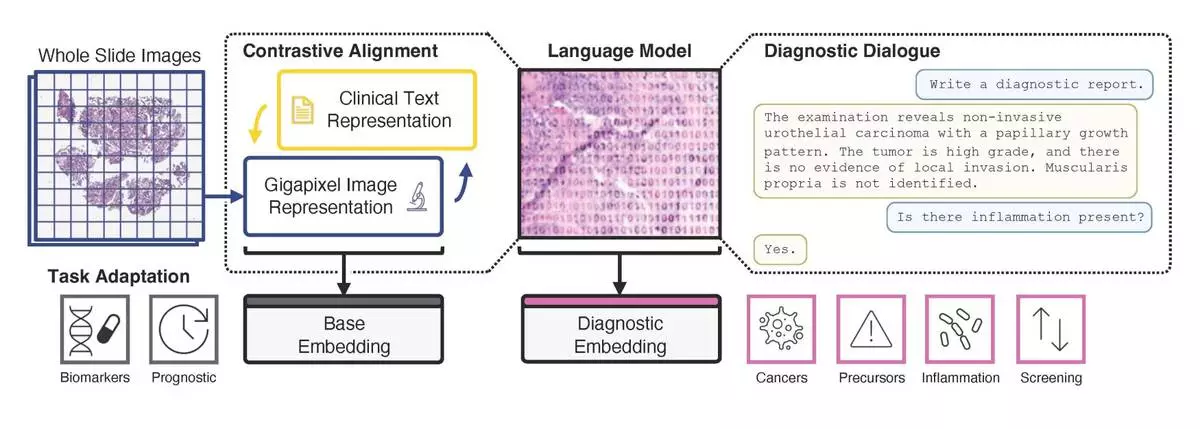
PRISM2 combines whole-slide images and clinical language using a large language model to generate diagnostic insights, summaries, and answer both simple and complex diagnostic questions.
PRISM2 combines whole-slide images and clinical language using a large language model to generate diagnostic insights, summaries, and answer both simple and complex diagnostic questions.
LOS ANGELES (AP) — The U.S. attorney's office in Los Angeles said Friday it had opened “multiple election fraud investigations” related to California's elections and sent a prosecutor to the county's vote-counting center.

The developments came a day after President Donald Trump made baseless claims of mass fraud in California's drawn-out vote count from Tuesday's primary. Late-tallied Democratic-leaning mail ballots were continuing to eat into the vote totals for the president's preferred candidates for governor and Los Angeles mayor.

The announcement by U.S. Attorney Bill Essayli, Trump's appointee as the top federal prosecutor in Los Angeles, and the visit to Los Angeles County's ballot tabulation center marked an escalation in the president's campaign against the Democratic-dominated state, whose notoriously prolonged vote count has been a magnet for election conspiracy theories. Trump weighed in again Friday while participating in a roundtable discussion in Chippewa Falls, Wisconsin, claiming without evidence that Democrats were rigging the election.

“You look at what’s happening — it’s getting tighter and tighter and tighter,” he said. “And the people who were supposed to win, bad things are happening. It’s a crooked state.”

Trump has often said that changes to vote totals as late ballots are counted are a sign of fraud, when they're merely a reflection of more ballots being counted.

On Thursday, Trump said his Department of Justice was investigating the California count. By Friday morning, Essayli posted on X about ongoing investigations without providing details, saying only that California’s elections have “serious structural vulnerabilities.”

An assistant U.S. attorney came to the main ballot processing center Friday morning, according to a statement from Mike Sanchez, a spokesman for Los Angeles County's Registrar-Recorder. The prosecutor “was provided an overview of the public observation program, and participated in a walkthrough of the ballot processing operations,” Sanchez said.

He added that “election officials routinely host observers representing a wide range of interests.”

It was not the first time Trump's Justice Department has taken an interest in California's elections. Last fall, it sent observers to monitor polling sites in five counties, including Los Angeles, during the special election asking voters to change California's congressional map.

Also on Friday, Republican Steve Hilton, who is Trump's favored candidate for governor, called for a sweeping overhaul in California's election laws to limit mail ballots to only those who request them, rather than being sent to all registered voters. He also called for an Election Day deadline to accept them rather than the seven-day grace period the state currently allows as long as they are postmarked by the final day of voting.

Hilton said in an interview that the U.S. attorney's office might know more than his campaign does, but noted his team has been monitoring the count and has seen nothing that seems illegal.

“We certainly haven’t seen anything of that nature that would warrant legal action,” Hilton said.

Still, Hilton said the sluggish count has made California “a national and international laughingstock.” He proposed the state government send an emergency detachment of state workers to California's 58 counties to speed up the vote count.

Jesse Salinas, president of the California Association of Clerks and Election Officers, said he welcomed Hilton's eagerness to help but the proposal would do no good.

“It'd be more disruptive than helpful at this point,” said Salinas, who's also the clerk and registrar for Yolo County.

Anyone who handles a ballot or machine used in the vote-counting process would have to be trained by the very people working feverishly to tally mail ballots that poured in Tuesday. And, added Salinas, his own vote-counting facility is already full, with no more room for any additional staff.

Hilton, who has been endorsed by Trump, is battling two Democrats for one of the two slots on the November ballot. Reality television star Spencer Pratt, another candidate backed by Trump, is likewise competing with City Councilwoman Nithya Raman for the chance to face Mayor Karen Bass in the November election.

Because Democrats usually vote by mail, and held onto their ballots unusually late in the crowded primary, their votes are often tallied after those of more Republican-leaning voters who might have cast ballots early. The net effect is that Republican candidates appear at their high water marks in the first batch of returns on election night, only to see their leads whittled away in the days or weeks that follow, when election workers complete the lengthy process of tallying late-arriving mail ballots.

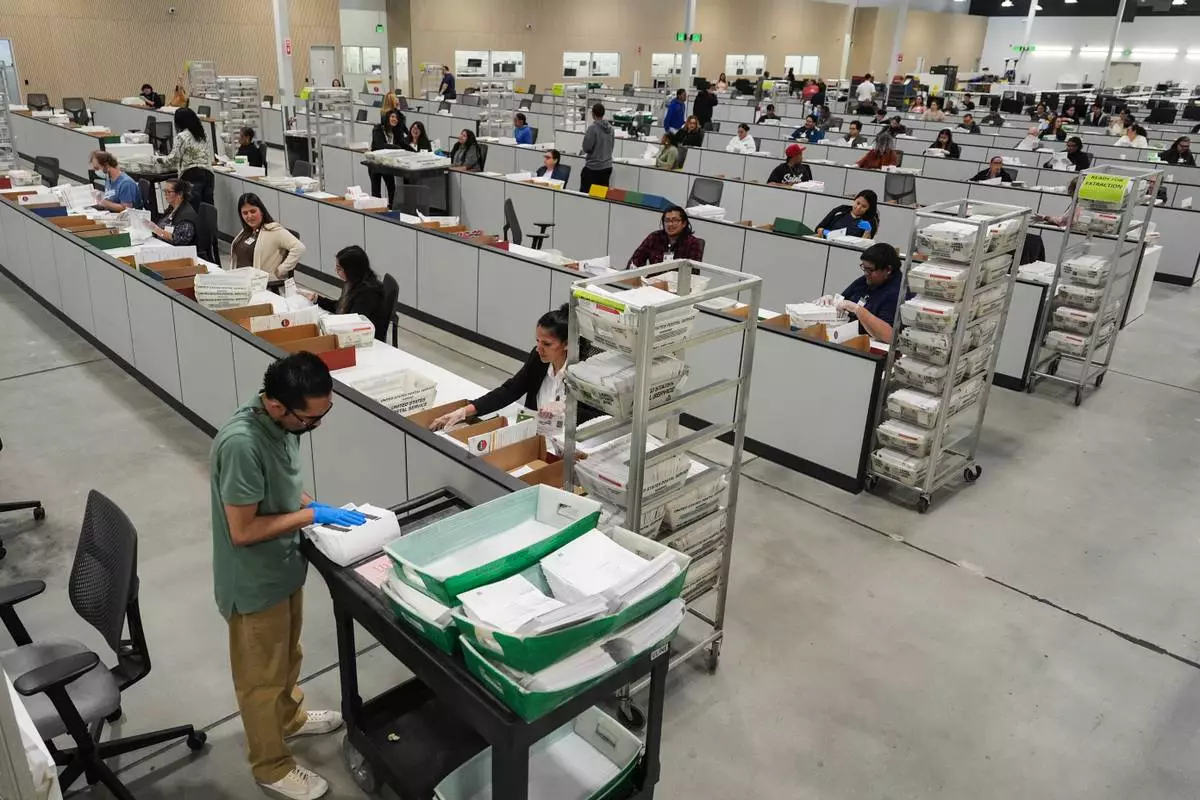
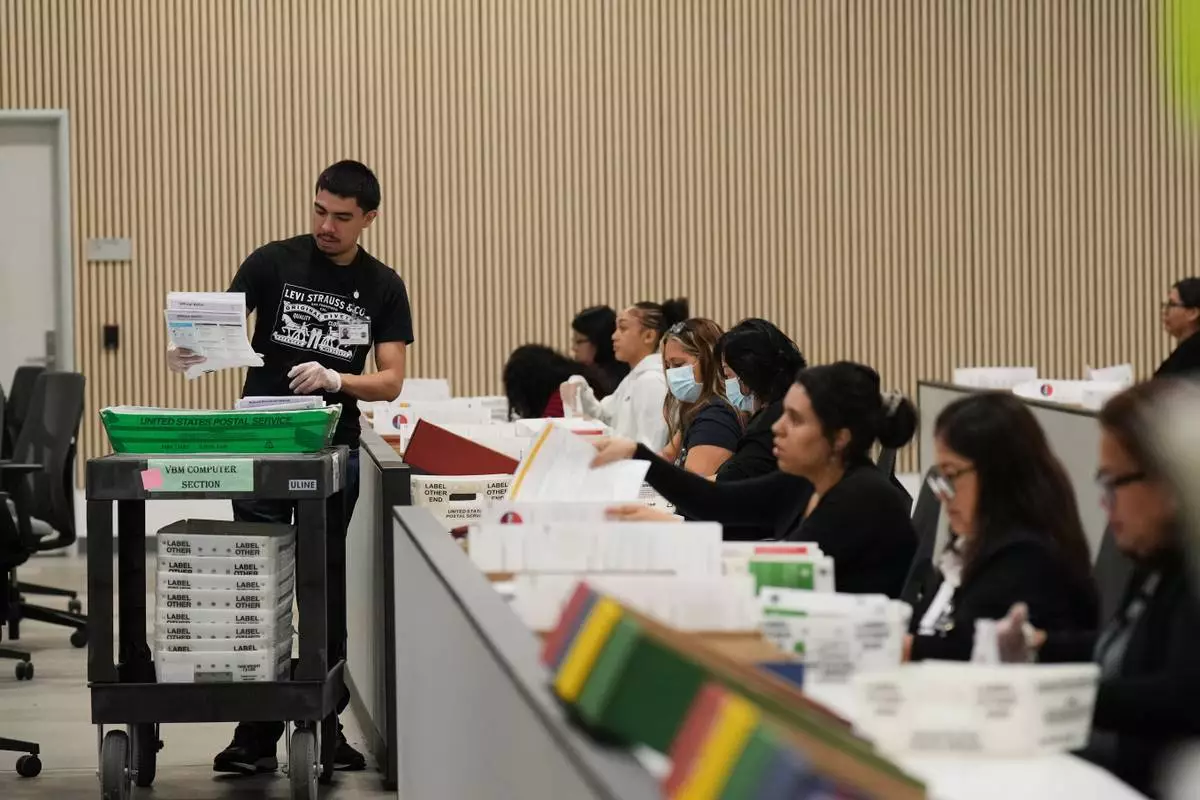
Ballots are inspected the day after California's primary election at the Los Angeles County Ballot Processing Center Wednesday, June 3, 2026, in City of Industry, Calif. (AP Photo/Jae C. Hong)

Ballots are inspected the day after California's primary election at the Los Angeles County Ballot Processing Center Wednesday, June 3, 2026, in City of Industry, Calif. (AP Photo/Jae C. Hong)

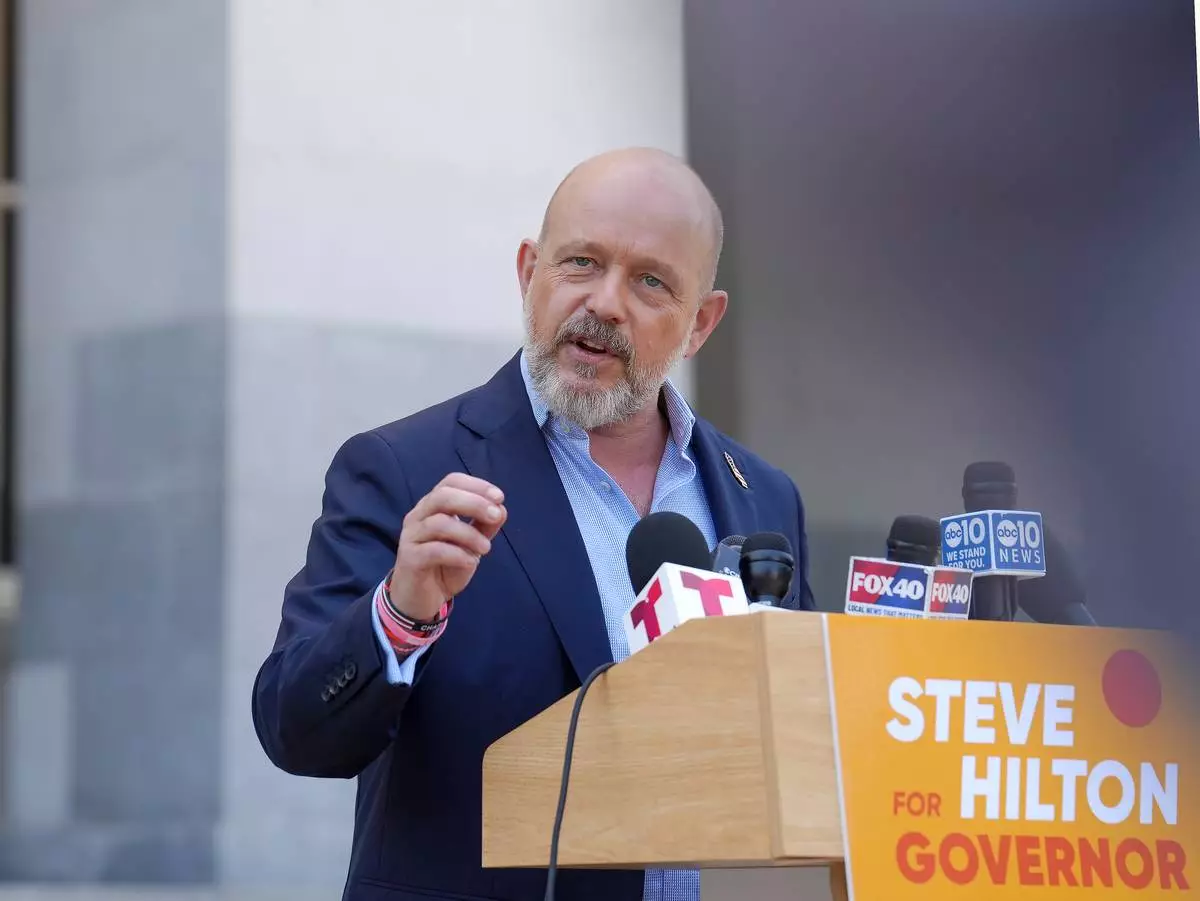
California Republican gubernatorial candidate Steve Hilton speaks to reporters outside the Capitol in Sacramento, Calif., Wednesday, June 3, 2026. (AP Photo/Rich Pedroncelli)

California Republican gubernatorial candidate Steve Hilton speaks to reporters outside the Capitol in Sacramento, Calif., Wednesday, June 3, 2026. (AP Photo/Rich Pedroncelli)

Ballots are inspected the day after California's primary election at the LA County Ballot Processing Center Wednesday, June 3, 2026, in City of Industry, Calif. (AP Photo/Jae C. Hong)

Ballots are inspected the day after California's primary election at the LA County Ballot Processing Center Wednesday, June 3, 2026, in City of Industry, Calif. (AP Photo/Jae C. Hong)

Recommended Articles