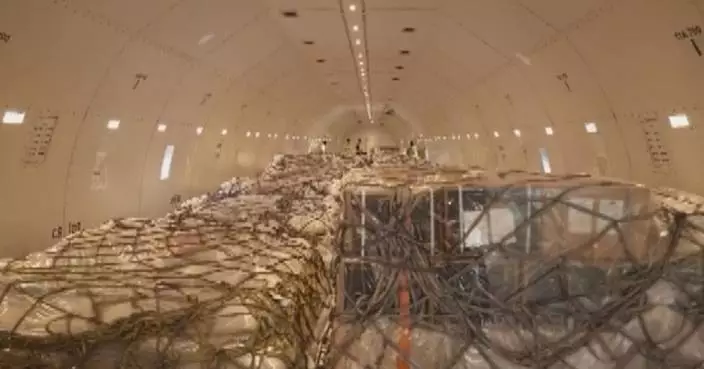
A Brazilian livestock industry insider warned on Thursday that U.S. President Donald Trump's decision to impose a 50 percent tariff on all Brazilian exports starting August 1 would have a greater impact on American consumers, considering that Brazilian beef is indispensable in the American market.
Mauricio Velloso, president of the Brazilian National Confined Livestock Association, stated that the current cattle population in the United States is insufficient to meet domestic beef demand, thus making Brazilian beef an indispensable part of the American market.
The United States is the second largest export market for Brazilian beef.
"Brazilian beef exported to the U.S. is typically used in making hamburgers and meatballs, which are the basis of the daily diet of the American people. A 50-percent tariff would cause greater harm to American consumers than to the people and livestock industry in Brazil," Velloso said.
As a preventive measure against U.S. tariffs, Brazil has been actively diversifying into other markets, noted Velloso.
Additionally, Brazilian Agriculture Minister Carlos Favaro said the country would neither yield to nor accept U.S. pressure, vowing to expand trade with Global South countries and open new export channels instead.

US tariffs on Brazilian beef to harm American consumers more

US tariffs on Brazilian beef to harm American consumers more
US tariffs on Brazilian beef to harm American consumers more
People in Yemen are struggling for survival as the country continues to grapple with a deepening labor crisis after more than a decade of war, with many lamenting the lack of opportunities which are leaving the livelihoods of many hanging in the balance.
As the world marks International Workers' Day on Friday, the situation in Yemen seems all the more poignant as millions of people are finding it increasingly hard to find any work at all.
In the crowded streets of the capital Sana'a, workers gather on street corners, waiting for jobs that may never come. Ahmed Muawadah is one of the many who are sitting here, watching passing cars, desperately hoping that one will stop and offer work.
"Our suffering is that we sit here without work. Sometimes we spend a whole month without working, except for one day, or just one day every two weeks. Work is very limited, almost non-existent. I have nine children, and I only work one day a month. I cannot support them. Jobs have completely disappeared. If opportunities were opened for us, I and all the workers would work," said Muawadah.
This individual story reflects a broader reality affecting an estimated eight million workers across Yemen. Many of them are hoping to receive a daily wage, but the challenges are mounting in an increasingly strained labor market.
Activity in key sectors such as construction and services has dropped sharply, largely due to the suspension of several international initiatives, including those backed by the World Bank. As a result, income opportunities have narrowed for those who rely primarily on daily wages.
Meanwhile, the widening impact of the U.S.-Israeli war on Iran and the disruption caused along the key Strait of Hormuz -- a key shipping route for global trade -- has brought more misery in recent weeks.
"There has been a significant decline in business activity as a result of the war, the blockade, and the disruption of work. Foreign capital has also left the country, and large companies have moved out of Yemen and stopped their operations. This is one of the main reasons," said Abdul Karim Al, secretary general of the General Federation of Trade Unions in Sana'a.
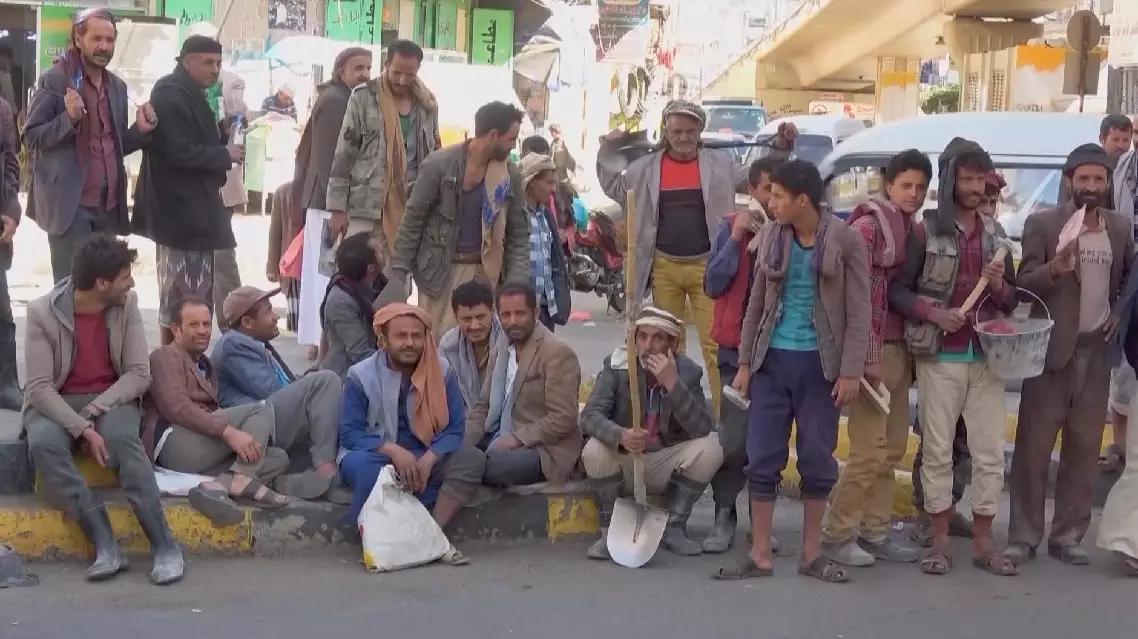
Yemen residents struggling to survive as work dries up amid deepening labor crisis