Skip to Content Facebook Feature Image

Water tanks replace springs on a Serbian mountain as drought endangers some 1,000 cows and horses

News

Water tanks replace springs on a Serbian mountain as drought endangers some 1,000 cows and horses
News

News

Water tanks replace springs on a Serbian mountain as drought endangers some 1,000 cows and horses

2025-07-20 14:49 Last Updated At:14:50

SUVA PLANINA, Serbia (AP) — A severe drought this summer has left over 1,000 cows and horses without water on a mountain in southeast Serbia, forcing the authorities to bring up emergency supplies.

The early drought that started in May has affected people, animals and crops throughout the Western Balkans, causing water and power restrictions, disruptions in river traffic and problems in agriculture in this part of southeast Europe.

More Images
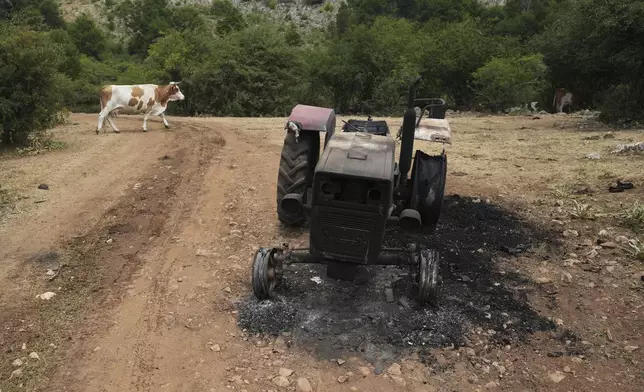
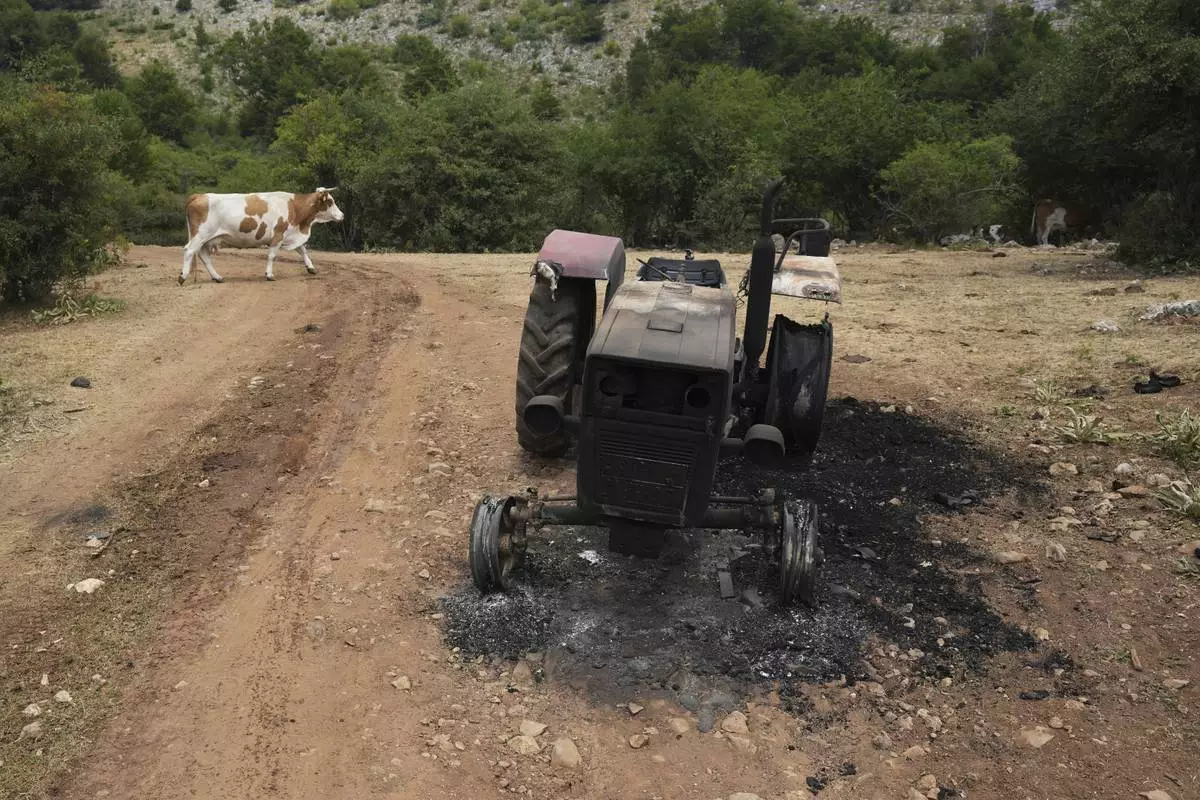
A cow heads down the mountain to seek water during a severe drought on a mountain Suva Planina, in southeast Serbia, Thursday, July 17, 2025. (AP Photo/Darko Vojinovic)
A cow heads down the mountain to seek water during a severe drought on a mountain Suva Planina, in southeast Serbia, Thursday, July 17, 2025. (AP Photo/Darko Vojinovic)
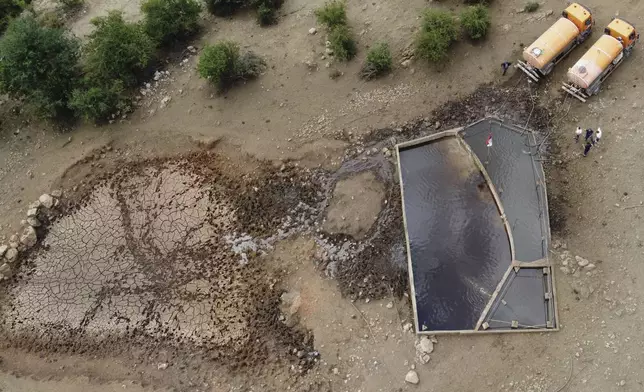
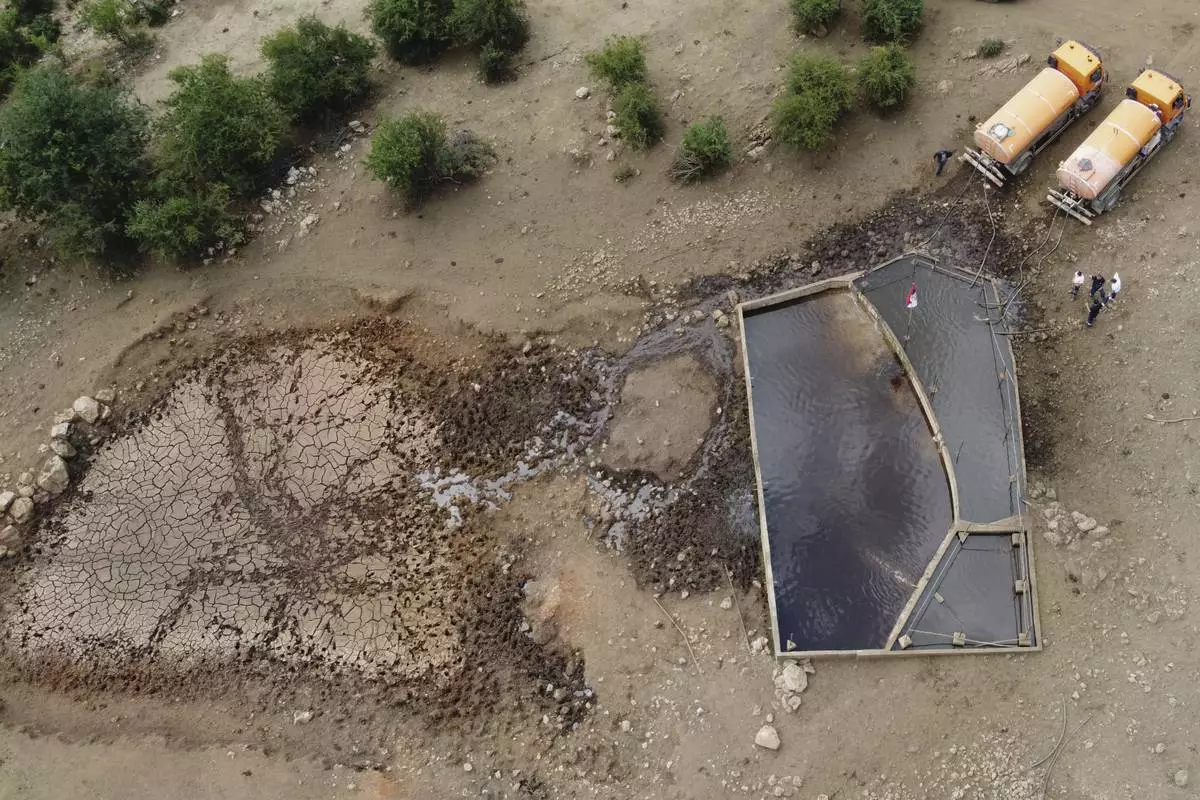
Workers used hoses to fill up the pond with water for hundreds of cows and horses during a severe drought on a mountain Suva Planina, in southeast Serbia, Thursday, July 17, 2025. (AP Photo/Darko Vojinovic)
Workers used hoses to fill up the pond with water for hundreds of cows and horses during a severe drought on a mountain Suva Planina, in southeast Serbia, Thursday, July 17, 2025. (AP Photo/Darko Vojinovic)
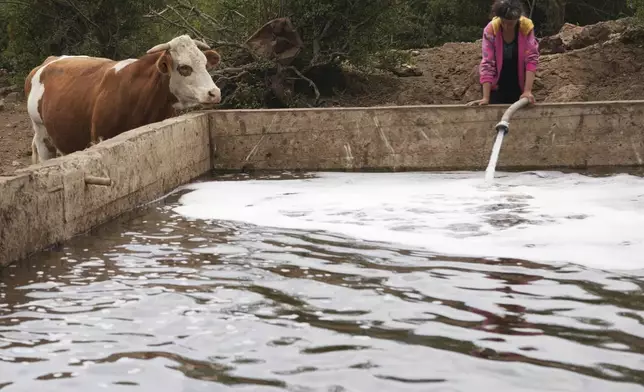
A cow came to drink as cowherd fill up the pond with water during a severe drought on a mountain Suva Planina, in southeast Serbia, Thursday, July 17, 2025. (AP Photo/Darko Vojinovic)

A cow came to drink as cowherd fill up the pond with water during a severe drought on a mountain Suva Planina, in southeast Serbia, Thursday, July 17, 2025. (AP Photo/Darko Vojinovic)

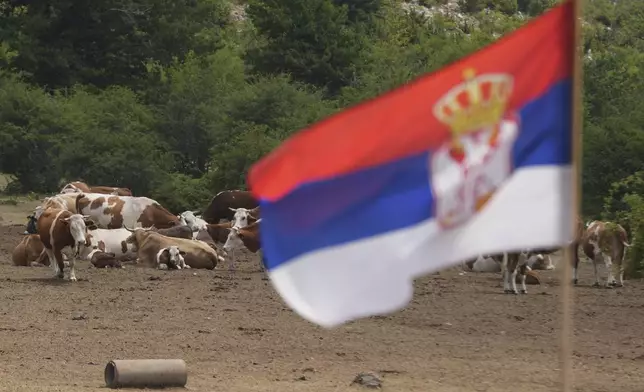
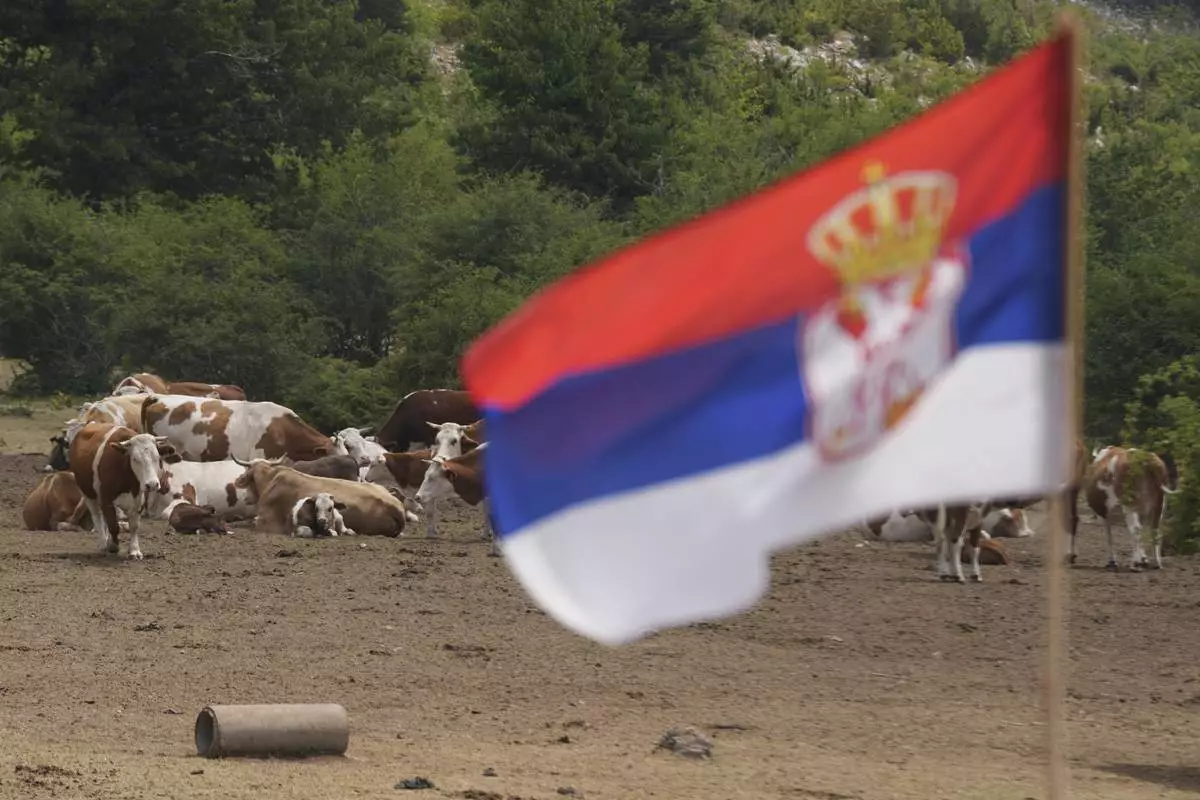
Hundreds of cows and horses rest on a cracked dry land during a severe drought on a mountain Suva Planina, in southeast Serbia, Thursday, July 17, 2025. (AP Photo/Darko Vojinovic)

Hundreds of cows and horses rest on a cracked dry land during a severe drought on a mountain Suva Planina, in southeast Serbia, Thursday, July 17, 2025. (AP Photo/Darko Vojinovic)

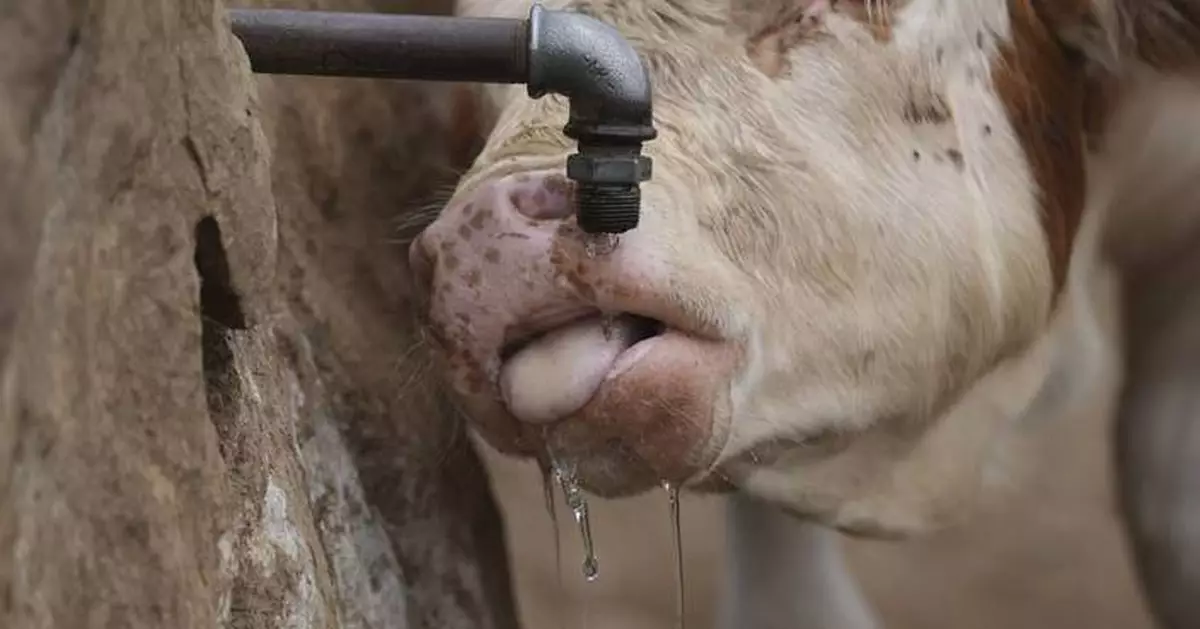
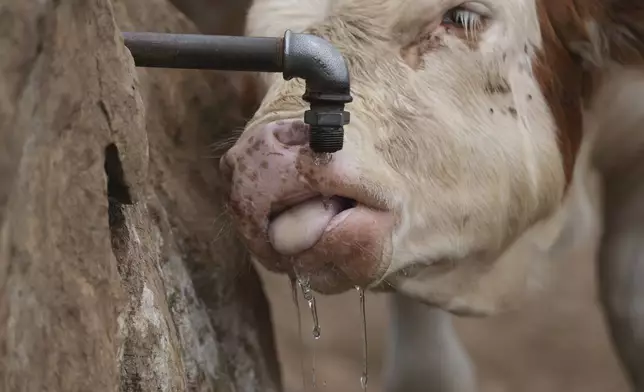
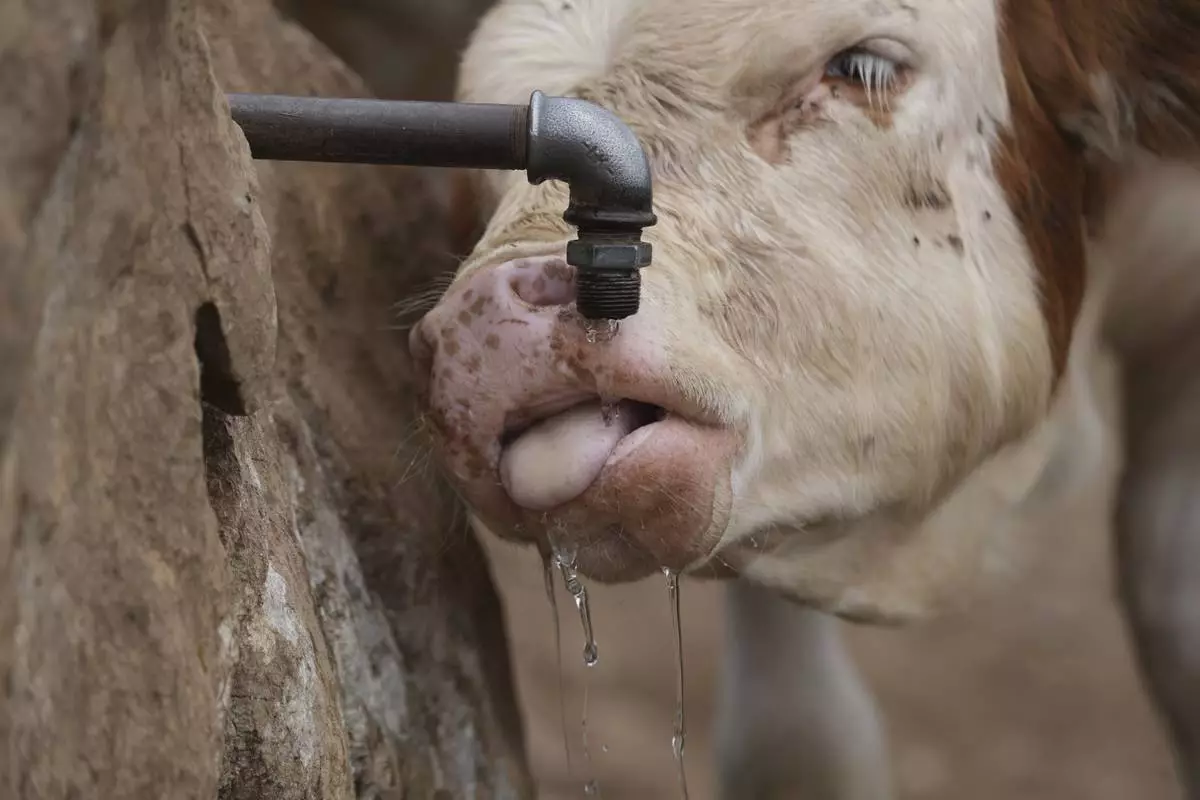
A cow drinks water from drying mountain spring during a severe drought on a mountain Suva Planina, in southeast Serbia, Thursday, July 17, 2025. (AP Photo/Darko Vojinovic)

A cow drinks water from drying mountain spring during a severe drought on a mountain Suva Planina, in southeast Serbia, Thursday, July 17, 2025. (AP Photo/Darko Vojinovic)

At Suva Planina, Serbian for Dry Mountain, cattle owners said they can't remember the springs ever drying up before mid-August. Lack of water has sent the cattle roaming down the mountain in panic, they said.

“We haven't had any rain on the mountain since May 27,” lamented Nikola Manojlovic, from the nearby village of Mali Krcimir.

Suva Planina is located about 250 kilometers (155 miles) from Serbia's capital, Belgrade.

The drought has left visible consequences on a plateau at the altitude of some 1,200 meters (nearly 4,000 feet) — cracked ground has replaced the main water spring, along with dry, yellow grass and dust.

“We tried to dig new wells but everything has dried up,” he said. “It was horrible, our cattle had no water for three days, they were screaming."

Alarmed, authorities drove up water trucks on Thursday, and workers used hoses to fill up a pond from the tanks for the thirsty animals. The Ministry of Agriculture said it will keep sending supplies in the coming weeks.

“We are out of imminent danger,” local municipal chief Milisav Filipovic said after the water trucks drove up the mountain. He warned that the situation remains just as bad down the mountain, in villages that have faced restrictions in water supplies for weeks now.

“Our farmers don't recall such a bad and hard year,” Filipovic said. “People here mostly do farming and use products for own needs, for their existence. This year has brought unseen hardship for them."

While a spell of rainy weather in July brought some relief, farmers say that the land is too dry deep below the surface to recover easily. Scores of small rivers, lakes and creeks that are normally used in Serbia's rural areas have dried up.

In neighboring Bosnia, meteorologists have said that June this year could end up being the driest in recent history, causing huge damage in agriculture.

In eastern Croatia, authorities declared emergency measures in several municipalities along the border with Hungary to deal with the effects of the drought. The country's vegetable growers have warned many could go out of business.

Earlier in July, both Albania and Kosovo reported water shortages that affected also electricity production in Albania.

Serbia's farmers have asked for financial help from the government, fearing poor yield, which could spike prices. Irrigation systems in the country are underdeveloped, leaving many farmers dependent on the weather.

Jovica Jaksic, of the Independent Farmers’ Association told the state RTS television that the damage to the corn is so big already that even if it rained for the rest of the summer, it wouldn't help.

Scientists warn that climate change is exacerbating the frequency and intensity of heat and dryness in parts of Europe, making the region more vulnerable to health impacts and wildfires.

The EU monitoring agency found that, in Europe and globally, 2024 was the hottest year on record and the continent experienced its second-highest number of “heat stress” days.

In Serbia’s northern neighbor Hungary, weather-damaged crops have dealt significant blows to the country’s overall GDP. This has prompted Prime Minister Viktor Orbán to announce the creation of a “drought task force” to deal with the problem.

Persistent droughts in the Great Hungarian Plain, in the country’s southeast, have threatened desertification, a process where vegetation recedes due to high heat and low rainfall. The soil remains “critically dry,” the country’s meteorological service said on Thursday, warning of the negative effects on the crops.

A new heat wave is expected in the Western Balkans in the coming days.

Associated Press writer Justin Spike in Budapest, Hungary, contributed to this report.
A cow heads down the mountain to seek water during a severe drought on a mountain Suva Planina, in southeast Serbia, Thursday, July 17, 2025. (AP Photo/Darko Vojinovic)
A cow heads down the mountain to seek water during a severe drought on a mountain Suva Planina, in southeast Serbia, Thursday, July 17, 2025. (AP Photo/Darko Vojinovic)
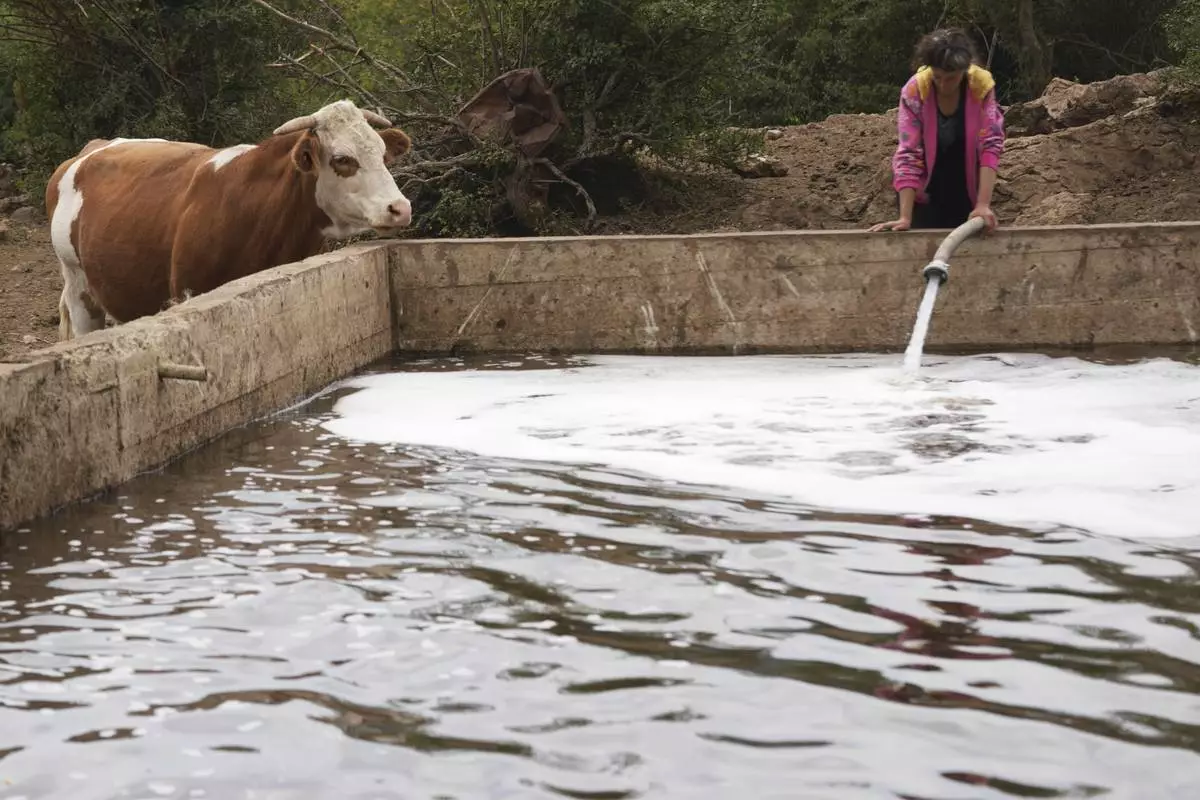
Workers used hoses to fill up the pond with water for hundreds of cows and horses during a severe drought on a mountain Suva Planina, in southeast Serbia, Thursday, July 17, 2025. (AP Photo/Darko Vojinovic)
Workers used hoses to fill up the pond with water for hundreds of cows and horses during a severe drought on a mountain Suva Planina, in southeast Serbia, Thursday, July 17, 2025. (AP Photo/Darko Vojinovic)
A cow came to drink as cowherd fill up the pond with water during a severe drought on a mountain Suva Planina, in southeast Serbia, Thursday, July 17, 2025. (AP Photo/Darko Vojinovic)

A cow came to drink as cowherd fill up the pond with water during a severe drought on a mountain Suva Planina, in southeast Serbia, Thursday, July 17, 2025. (AP Photo/Darko Vojinovic)

Hundreds of cows and horses rest on a cracked dry land during a severe drought on a mountain Suva Planina, in southeast Serbia, Thursday, July 17, 2025. (AP Photo/Darko Vojinovic)

Hundreds of cows and horses rest on a cracked dry land during a severe drought on a mountain Suva Planina, in southeast Serbia, Thursday, July 17, 2025. (AP Photo/Darko Vojinovic)

A cow drinks water from drying mountain spring during a severe drought on a mountain Suva Planina, in southeast Serbia, Thursday, July 17, 2025. (AP Photo/Darko Vojinovic)

A cow drinks water from drying mountain spring during a severe drought on a mountain Suva Planina, in southeast Serbia, Thursday, July 17, 2025. (AP Photo/Darko Vojinovic)

Glenn Hall, a Hockey Hall of Famer whose ironman streak of 502 starts as a goaltender remains an NHL record, has died. He was 94.

Nicknamed “Mr. Goalie,” Hall worked to stop pucks at a time when players at his position were bare-faced, before masks of any kind became commonplace. He did it as well as just about anyone of his generation, which stretched from the days of the Original Six into the expansion era.

A spokesperson for the Chicago Blackhawks confirmed the team received word of Hall’s death from his family. A league historian in touch with Hall’s son, Pat, said Hall died at a hospital in Stony Plain, Alberta, on Wednesday.

A pioneer of the butterfly style of goaltending of dropping to his knees, Hall backstopped Chicago to the Stanley Cup in 1961. He won the Conn Smythe Trophy as most valuable player of the playoffs in 1968 with St. Louis when the Blues reached the final before losing to Montreal. He was the second of just six Conn Smythe winners from a team that did not hoist the Cup.

His run of more than 500 games in net is one of the most untouchable records in sports, given how the position has changed in the decades since. Second in history is Alec Connell with 257 from 1924-30.

“Glenn was sturdy, dependable and a spectacular talent in net,” Commissioner Gary Bettman said. “That record, set from 1955-56 to 1962-63, still stands, probably always will, and is almost unfathomable — especially when you consider he did it all without a mask.”

Counting the postseason, Hall started 552 games in a row.

Hall won the Calder Trophy as rookie of the year in 1956 when playing for the Detroit Red Wings. After two seasons, he was sent to the Black Hawks along with legendary forward Ted Lindsay.

Hall earned two of his three Vezina Trophy honors as the league's top goalie with Chicago, in 1963 and '67. The Blues took him in the expansion draft when the NHL doubled from six teams to 12, and he helped them reach the final in each of their first three years of existence, while winning the Vezina again at age 37.

Hall was in net when Boston's Bobby Orr scored in overtime to win the Cup for the Bruins in 1970, a goal that's among the most famous in hockey history because of the flying through the air celebration that followed. He played one more season with St. Louis before retiring in 1971.

“His influence extended far beyond the crease," Blues chairman Tom Stillman said. “From the very beginning, he brought credibility, excellence, and heart to a new team and a new NHL market.”

A native of Humboldt, Saskatchewan, Hall was a seven-time first-team NHL All-Star who had 407 wins and 84 shutouts in 906 regular-season games. He was inducted into the Hall of Fame in 1975, and his No. 1 was retired by Chicago in 1988.

Hall was chosen as one of the top 100 players in the league's first 100 years.

Blackhawks chairman and CEO Danny Wirtz called Hall an innovator and “one of the greatest and most influential goaltenders in the history of our sport and a cornerstone of our franchise.”

“We are grateful for his extraordinary contributions to hockey and to our club, and we will honor his memory today and always,” Wirtz said.

The Blackhawks paid tribute to Hall and former coach and general manager Bob Pulford with a moment of silence before Wednesday night’s game against St. Louis. Pulford died Monday.

A Hall highlight video was shown on the center-ice videoboard. The lights were turned off for the moment of silence, except for a spotlight on the No. 1 banner for Hall that hangs in the rafters at the United Center.

Fellow Hall of Famer Martin Brodeur, the league's leader in wins with 691 and games played with 1,266, posted a photo of the last time he saw Hall along with a remembrance of him.

“Glenn Hall was a legend, and I was a big fan of his,” Brodeur said on social media. “He set the standard for every goaltender who followed. His toughness and consistency defined what it meant to play.”

AP Sports Writer Jay Cohen in Chicago contributed to this report.

AP NHL: https://apnews.com/hub/nhl

FILE - Glenn Hall, second from left, stands with fellow former Chicago Blackhawks players Stan Mikita, former general manager Tommy Ivan, Bobby Hull, Bill Wirtz and Tony Esposito during a pre-game ceremony at the Chicago Stadium in Chicago, Ill., April 14, 1994. (AP Photo/Fred Jewell, File)

FILE - Glenn Hall, second from left, stands with fellow former Chicago Blackhawks players Stan Mikita, former general manager Tommy Ivan, Bobby Hull, Bill Wirtz and Tony Esposito during a pre-game ceremony at the Chicago Stadium in Chicago, Ill., April 14, 1994. (AP Photo/Fred Jewell, File)

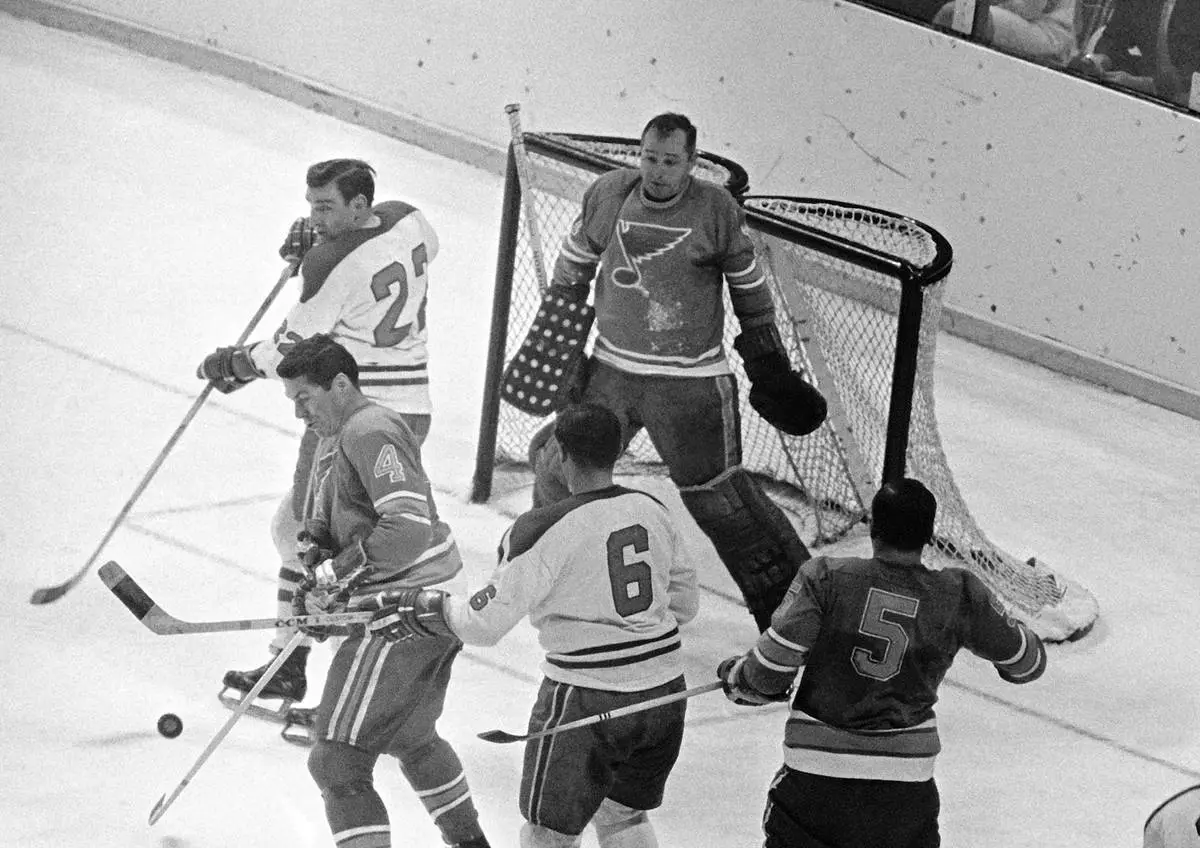
FILE - St. Louis Blues goalie Glenn Hall, top right, is pinned to his net waiting to make a save on a Montreal Canadians shot as Blues' Noel Picard (4) tries to block the puck while Canadiens' John Ferguson (22) and Ralph Backstorm wait for a rebound in the third period of their NHL hockey Stanley Cup game, May 5, 1968. (AP Photo/Fred Waters, File)

FILE - St. Louis Blues goalie Glenn Hall, top right, is pinned to his net waiting to make a save on a Montreal Canadians shot as Blues' Noel Picard (4) tries to block the puck while Canadiens' John Ferguson (22) and Ralph Backstorm wait for a rebound in the third period of their NHL hockey Stanley Cup game, May 5, 1968. (AP Photo/Fred Waters, File)

Recommended Articles