Skip to Content Facebook Feature Image

Volunteers flock to immigration courts to support migrants arrested in the hallways

News

Volunteers flock to immigration courts to support migrants arrested in the hallways
News

News

Volunteers flock to immigration courts to support migrants arrested in the hallways

2025-07-20 20:38 Last Updated At:20:41

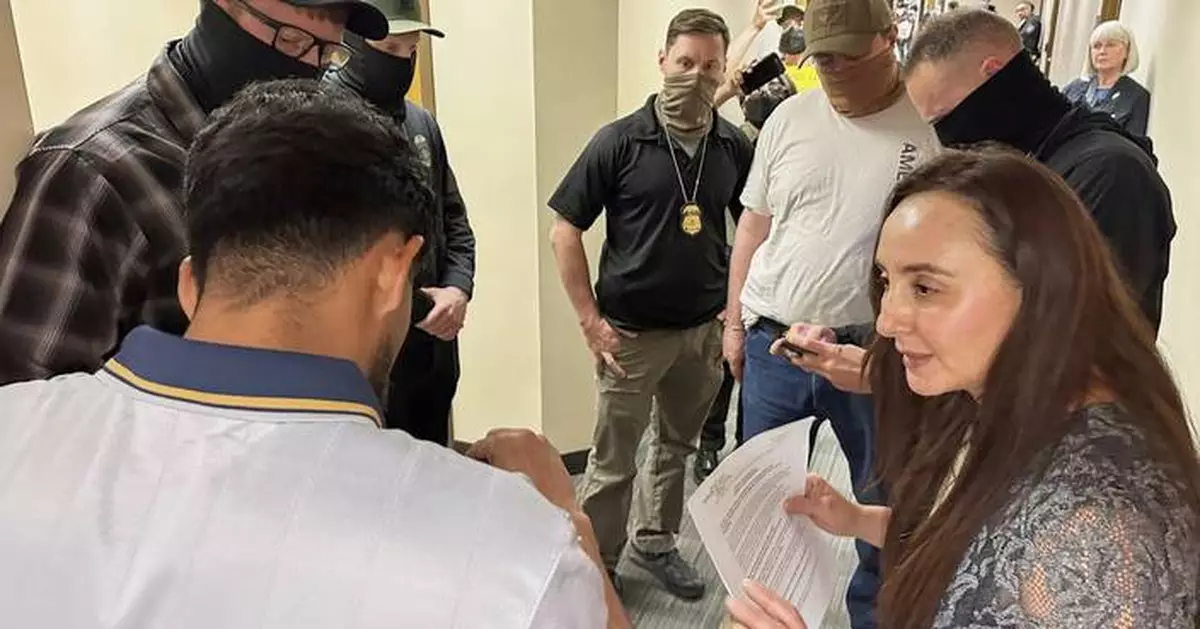
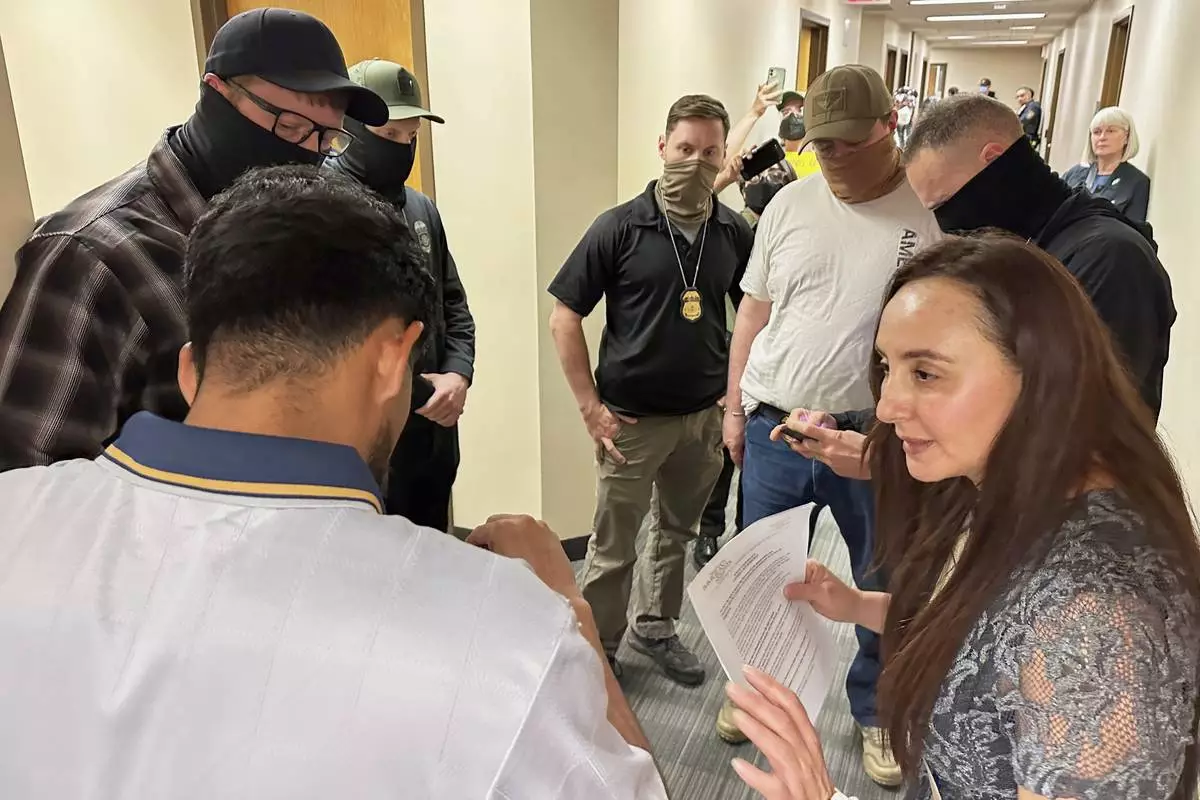
SEATTLE (AP) — After a Seattle immigration judge dismissed the deportation case against a Colombian man — exposing him to expedited removal — three people sat with him in the back of the courtroom, taking his car keys for safe-keeping, helping him memorize phone numbers and gathering the names of family members who needed to be notified.

When Judge Brett Parchert asked why they were doing that in court, the volunteers said Immigration and Custom Enforcement officers were outside the door, waiting to take the man into custody, so this was their only chance to help him get his things in order. "ICE is in the waiting room?" the judge asked.

More Images
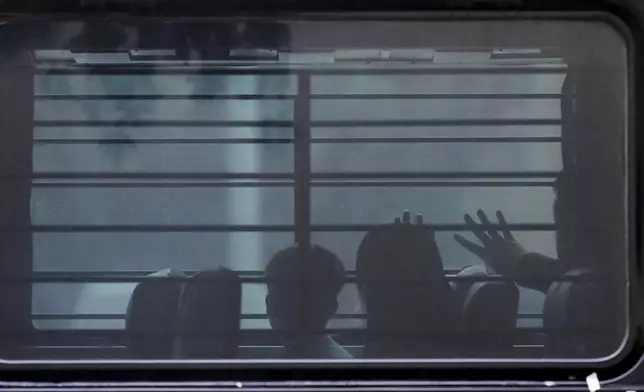
FILE - A family from Cuba is detained and loaded on to a bus with tinted windows and bars following an appearance at immigration court, June 11, 2025, in San Antonio. (AP Photo/Eric Gay, File)
FILE - A family from Cuba is detained and loaded on to a bus with tinted windows and bars following an appearance at immigration court, June 11, 2025, in San Antonio. (AP Photo/Eric Gay, File)

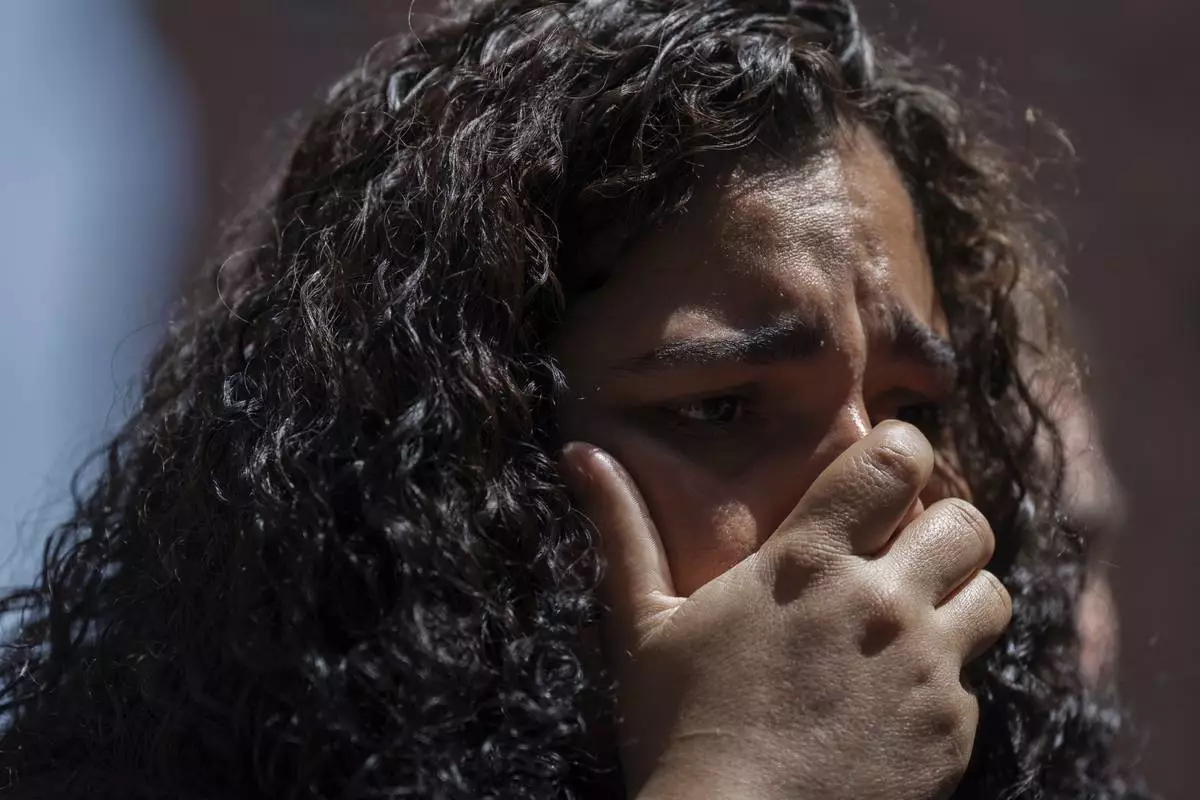
An immigrant woman whose partner was detained in immigration court cries during a press conference on Tuesday, July 8, 2025, in New York. (AP Photo/Olga Fedorova)
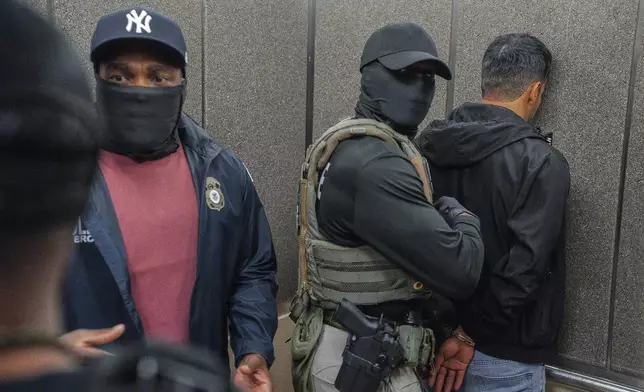
An immigrant woman whose partner was detained in immigration court cries during a press conference on Tuesday, July 8, 2025, in New York. (AP Photo/Olga Fedorova)

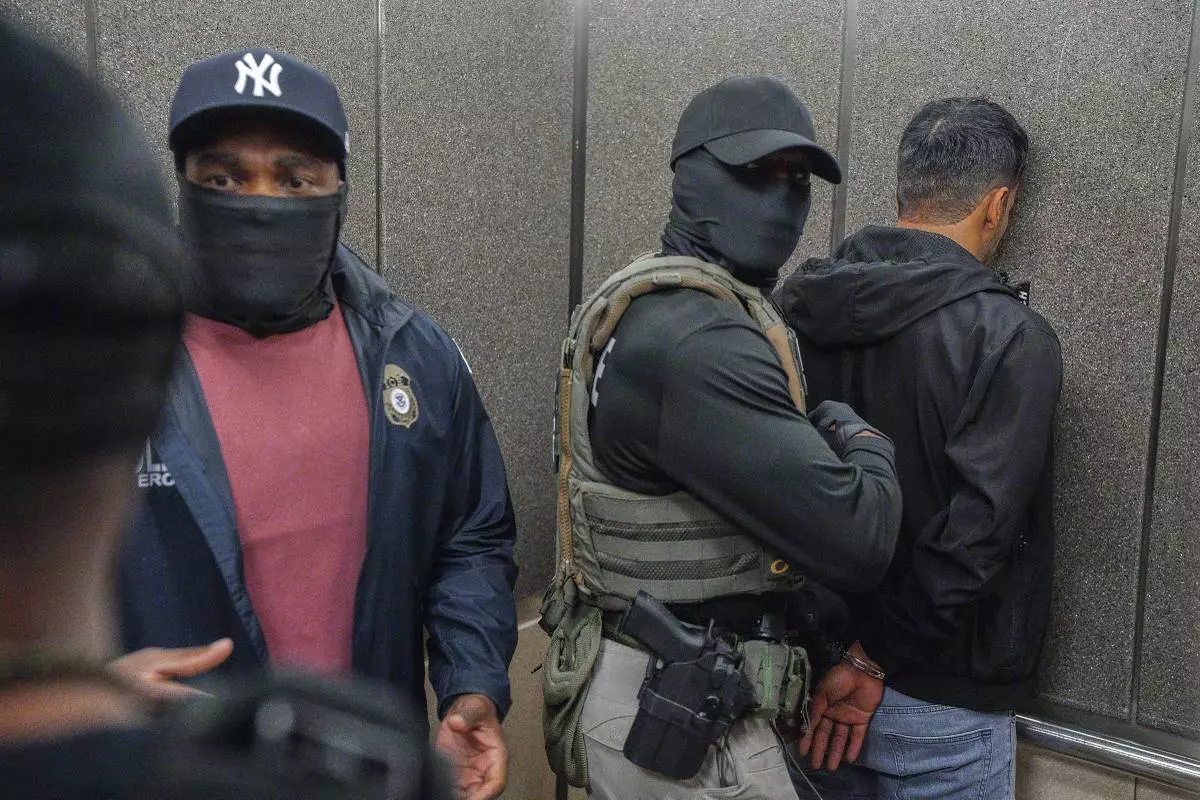
FILE - Immigration and Customs Enforcement agents escort a detained immigrant into an elevator after he exited an immigration courtroom, Tuesday, June 17, 2025, in New York. (AP Photo/Olga Fedorova, file)
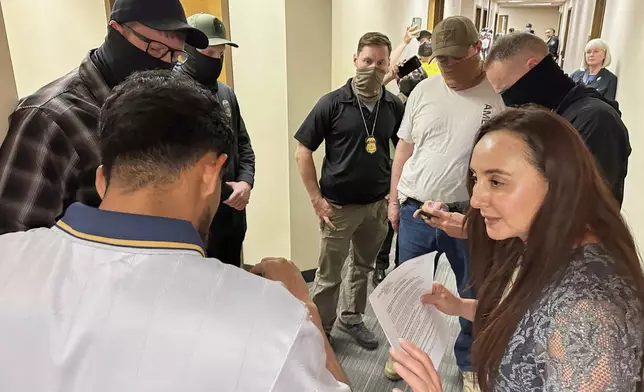
FILE - Immigration and Customs Enforcement agents escort a detained immigrant into an elevator after he exited an immigration courtroom, Tuesday, June 17, 2025, in New York. (AP Photo/Olga Fedorova, file)

Immigration court volunteer Marjorie Miller gives guidance and support to a Colombian man who was about to be taken into custody by Immigration and Custom Enforcement officers in the hallway after his hearing with an immigration judge in Seattle, June 3, 2025. (AP Photo/Martha Bellisle)

Immigration court volunteer Marjorie Miller gives guidance and support to a Colombian man who was about to be taken into custody by Immigration and Custom Enforcement officers in the hallway after his hearing with an immigration judge in Seattle, June 3, 2025. (AP Photo/Martha Bellisle)

As the mass deportation campaign of President Donald Trump focuses on cities and states led by Democrats and unleashes fear among asylum-seekers and immigrants, their legal defenders sued this week, seeking class-action protections against the arrests outside immigration court hearings. Meanwhile, these volunteers are taking action.

A diverse group — faith leaders, college students, grandmothers, retired lawyers and professors — has been showing up at immigration courts across the nation to escort immigrants at risk of being detained for deportation by masked ICE officials. They're giving families moral and logistical support, and bearing witness as the people are taken away.

The Northwest Immigrant Rights Project was inundated by so many community members wanting to help that they made a volunteer training video, created “Know Your Rights” sheets in several languages and started a Google sheet where people sign up for shifts, said Stephanie Gai, a staff attorney with the Seattle-based legal services non-profit.

“We could not do it without them," Gai said. “Some volunteers request time off work so they can come in and help.”

Robby Rohr, a retired non-profit director said she volunteers regularly.

“Being here makes people feel they are remembered and recognized,” she said “It’s such a bureaucratic and confusing process. We try to help them through it.”

Volunteers and legal aid groups have long provided free legal orientation in immigration court but the arrests have posed new challenges. Since May, the government has been asking judges to dismiss deportation cases.

Once the judge agrees, ICE officials arrest them in the hallways and put them in fast-track deportation proceedings, no matter which legal immigration pathway they may have been pursuing. Once in custody, it's often harder to find or afford a lawyer. Immigration judges are executive branch employees, and while some have resisted Homeland Security lawyers' dismissal orders in some cases, many are granted.

Masked ICE agents grabbed the Colombian man and led him into the hallway. A volunteer took his backpack to give to his family as he was taken away. Other cases on the day's docket involved immigrants who didn't show up. Parchert granted “removal in absentia” orders, enabling ICE to arrest them later.

When asked about these arrests and the volunteers at immigration courts, a senior spokesperson with the Department of Homeland Security said ICE is once again implementing the rule of law by reversing “Biden's catch and release policy that allowed millions of unvetted illegal aliens to be let loose on American streets."

Some volunteers have recorded arrests in courtroom hallways, traumatic scenes that are proliferating online. How many similar scenes are happening nationwide remains unclear. The Executive Office for Immigration Review has not released numbers of cases dismissed or arrests made at or near immigration courts.

While most volunteers have done this work without incident, some have been arrested for interfering with ICE agents. New York City Comptroller and Democratic mayoral candidate Brad Lander was arrested after locking arms with a person in a failed attempt to prevent his detention. Lander’s wife, attorney Meg Barnette, had just joined him in walking migrants from a courtroom to the elevator.

The volunteers' act of witnessing has proven to be important as people disappear into a detention system that can seem chaotic, leaving families without any information about their whereabouts for days on end.

In a waiting room serving New York City immigration courtrooms, a Spanish-speaking woman with long dark curly hair was sitting anxiously with her daughter after she and her husband had separate hearings. Now he was nowhere to be found.

The Rev. Fabián Arias, a volunteer court observer, said the woman whose first name is Alva approached him asking “Where is my husband?” She showed him his photo.

“ICE detained him,” Arias told her, and tried to comfort her as she trembled, later welling up with tears. A judge had not dismissed the husband’s case, giving him until October to find a lawyer. But that didn’t stop ICE agents from handcuffing him and taking him away as soon as he stepped out of court. The news sparked an outcry by immigration advocates, city officials and a congressman. At a news conference, she gave only her first name and asked that her daughter’s be withheld.

Brianna Garcia, a college student in El Paso, Texas, said she’s been attending immigration court hearings for weeks where she informs people of their rights and then records ICE agents taking people into custody.

“We escort people so they’re not harassed and help people memorize important phone numbers, since their belongings are confiscated by ICE," she said.

Paris Thomas began volunteering at the Denver immigration court after hearing about the effort through a network of churches. Wearing a straw hat, he recently waited in the midday heat for people to arrive for afternoon hearings.

Thomas handed people a small paper flyer listing their rights in Spanish on one side and English on the other. One man walking with a woman told him “thank you. Thank you.” Another man gave him a hug.

Denver volunteer Don Marsh said they offer to walk people to their cars after court appearances, so they can contact attorneys and family if ICE arrests them.

Marsh said he's never done anything like this before, but wants to do something to preserve the nation's “rule of law” now that unidentifiable government agents are “snatching” people off the streets.

“If we’re not all safe, no one’s safe,” he said.

__

Attanasio reported from New York City and Slevin from Denver.
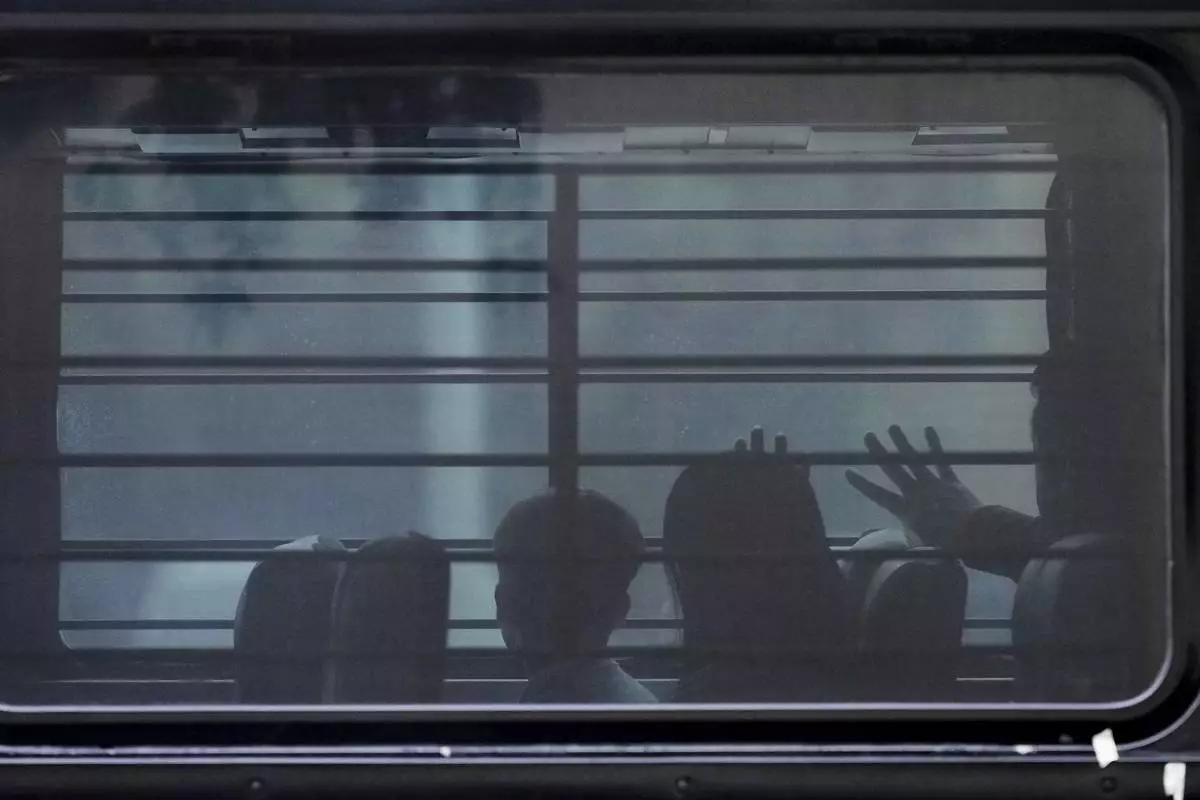
FILE - A family from Cuba is detained and loaded on to a bus with tinted windows and bars following an appearance at immigration court, June 11, 2025, in San Antonio. (AP Photo/Eric Gay, File)
FILE - A family from Cuba is detained and loaded on to a bus with tinted windows and bars following an appearance at immigration court, June 11, 2025, in San Antonio. (AP Photo/Eric Gay, File)

An immigrant woman whose partner was detained in immigration court cries during a press conference on Tuesday, July 8, 2025, in New York. (AP Photo/Olga Fedorova)
An immigrant woman whose partner was detained in immigration court cries during a press conference on Tuesday, July 8, 2025, in New York. (AP Photo/Olga Fedorova)

FILE - Immigration and Customs Enforcement agents escort a detained immigrant into an elevator after he exited an immigration courtroom, Tuesday, June 17, 2025, in New York. (AP Photo/Olga Fedorova, file)
FILE - Immigration and Customs Enforcement agents escort a detained immigrant into an elevator after he exited an immigration courtroom, Tuesday, June 17, 2025, in New York. (AP Photo/Olga Fedorova, file)

Immigration court volunteer Marjorie Miller gives guidance and support to a Colombian man who was about to be taken into custody by Immigration and Custom Enforcement officers in the hallway after his hearing with an immigration judge in Seattle, June 3, 2025. (AP Photo/Martha Bellisle)
Immigration court volunteer Marjorie Miller gives guidance and support to a Colombian man who was about to be taken into custody by Immigration and Custom Enforcement officers in the hallway after his hearing with an immigration judge in Seattle, June 3, 2025. (AP Photo/Martha Bellisle)
DUBAI, United Arab Emirates (AP) — Iranians could call abroad on mobile phones Tuesday for the first time since communications were halted during a crackdown on nationwide protests in which activists said at least 646 people have been killed.

Several people in Tehran were able to call The Associated Press and speak to a journalist there. The AP bureau in Dubai, United Arab Emirates, was unable to call those numbers back. The witnesses said SMS text messaging still was down and that internet users in Iran could connect to government-approved websites locally but nothing abroad.

The witnesses gave a brief glimpse into life on the streets of the Iranian capital over the four and a half days of being cut off from the world. They described seeing a heavy security presence in central Tehran.

Anti-riot police officers, wearing helmets and body armor, carried batons, shields, shotguns and tear gas launchers. They stood watch at major intersections. Nearby, the witnesses saw members of the Revolutionary Guard's all-volunteer Basij force, who similarly carried firearms and batons. Security officials in plainclothes were visible in public spaces as well.

Several banks and government offices were burned during the unrest, they said. ATMs had been smashed and banks struggled to complete transactions without the internet, the witnesses added.

However, shops were open, though there was little foot traffic in the capital. Tehran's Grand Bazaar, where the demonstrations began Dec. 28, was to open Tuesday. However, a witness described speaking to multiple shopkeepers who said the security forces ordered them to reopen no matter what. Iranian state media had not acknowledged that order.

The witnesses spoke on condition of anonymity for fear of reprisal.

Many remain concerned about a possible military strike by the U.S., even as President Donald Trump has said Iran wants to negotiate with Washington.

“My customers talk about Trump’s reaction while wondering if he plans a military strike against the Islamic Republic,” said shopkeeper Mahmoud, who gave just his first name out of concerns for his safety. “I don’t expect Trump or any other foreign country cares about the interests of Iranians.”

Reza, a taxi driver who also gave just his first name, said protests also remain front of mind for many.

“People — particularly young ones — are hopeless but they talk about continuing the protests," he said.

Meanwhile, it appeared that security service personnel were searching for Starlink terminals as people in northern Tehran reported authorities raiding apartment buildings with satellite dishes. While satellite television dishes are illegal, many in the capital have them in their homes and officials broadly had given up on enforcing the law in recent years.

On the streets, people also could be seen challenging plainclothes security officials, who were stopping passersby at random.

State television also read a statement about mortuary and morgue services being free — a signal some likely charged high fees for the release of bodies amid the crackdown.

Iranian Foreign Minister Abbas Araghchi, speaking to the Qatar-funded satellite news network Al Jazeera in an interview aired Monday night, said he continued to communicate with U.S. envoy Steve Witkoff.

The communication “continued before and after the protests and are still ongoing," Araghchi said. However, “Washington’s proposed ideas and threats against our country are incompatible.”

White House press secretary Karoline Leavitt said Iran’s public rhetoric diverges from the private messaging the administration has received from Tehran in recent days.

“I think the president has an interest in exploring those messages,” Leavitt said. “However, with that said, the president has shown he’s unafraid to use military options if and when he deems necessary, and nobody knows that better than Iran.”

Meanwhile, pro-government demonstrators flooded the streets Monday in support of the theocracy, a show of force after days of protests directly challenging the rule of 86-year-old Supreme Leader Ayatollah Ali Khamenei. Iranian state television aired chants from the crowd, which appeared to number in the tens of thousands, who shouted “Death to America!” and “Death to Israel!”

Others cried out, “Death to the enemies of God!” Iran’s attorney general has warned that anyone taking part in protests will be considered an “enemy of God,” a death-penalty charge.

Trump announced Monday that countries doing business with Iran will face 25% tariffs from the United States. Trump announced the tariffs in a social media posting, saying they would be “effective immediately.”

It was action against Iran for the protest crackdown from Trump, who believes exacting tariffs can be a useful tool in prodding friends and foes on the global stage to bend to his will.

Brazil, China, Russia, Turkey and the United Arab Emirates are among economies that do business with Tehran.

Trump said Sunday that his administration was in talks to set up a meeting with Tehran, but cautioned that he may have to act first as reports of the death toll in Iran mount and the government continues to arrest protesters.

“I think they’re tired of being beat up by the United States,” Trump said. “Iran wants to negotiate.”

Iran, through the country’s parliamentary speaker, warned Sunday that the U.S. military and Israel would be “legitimate targets” if Washington uses force to protect demonstrators.

More than 10,700 people also have been detained over the two weeks of protests, said the U.S.-based Human Rights Activists News Agency, which has been accurate in previous unrest in recent years and gave the latest death toll early Tuesday. It relies on supporters in Iran crosschecking information. It said 512 of the dead were protesters and 134 were security force members.

With the internet down in Iran, gauging the demonstrations from abroad has grown more difficult. The Associated Press has been unable to independently assess the toll. Iran’s government hasn’t offered overall casualty figures.

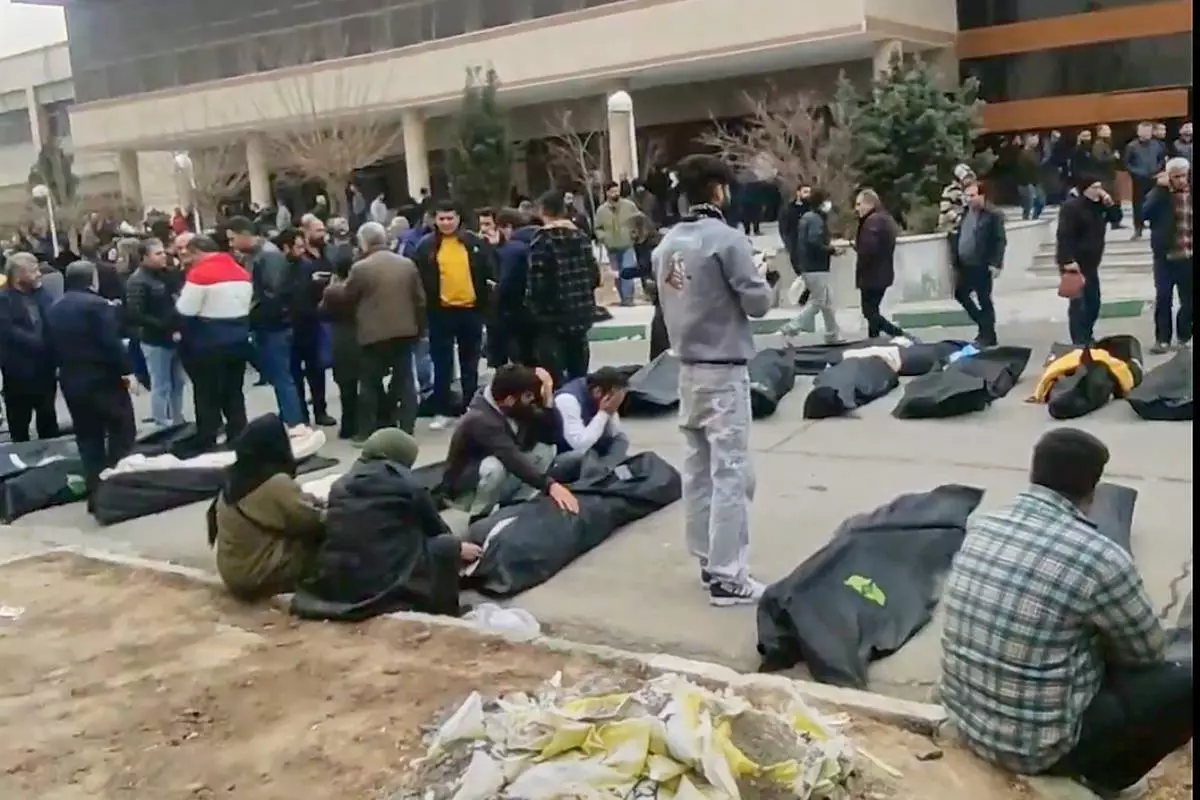
This frame grab from videos taken between Jan. 9 and Jan. 11, 2026, and circulating on social media purportedly shows images from a morgue with dozens of bodies and mourners after crackdown on the outskirts of Iran's capital, in Kahrizak, Tehran Province. (UGC via AP)

This frame grab from videos taken between Jan. 9 and Jan. 11, 2026, and circulating on social media purportedly shows images from a morgue with dozens of bodies and mourners after crackdown on the outskirts of Iran's capital, in Kahrizak, Tehran Province. (UGC via AP)

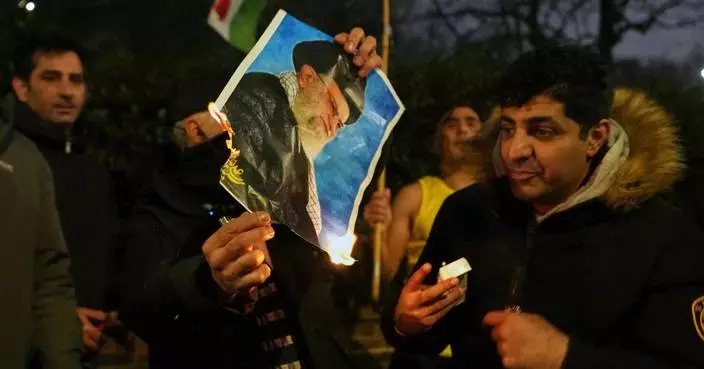
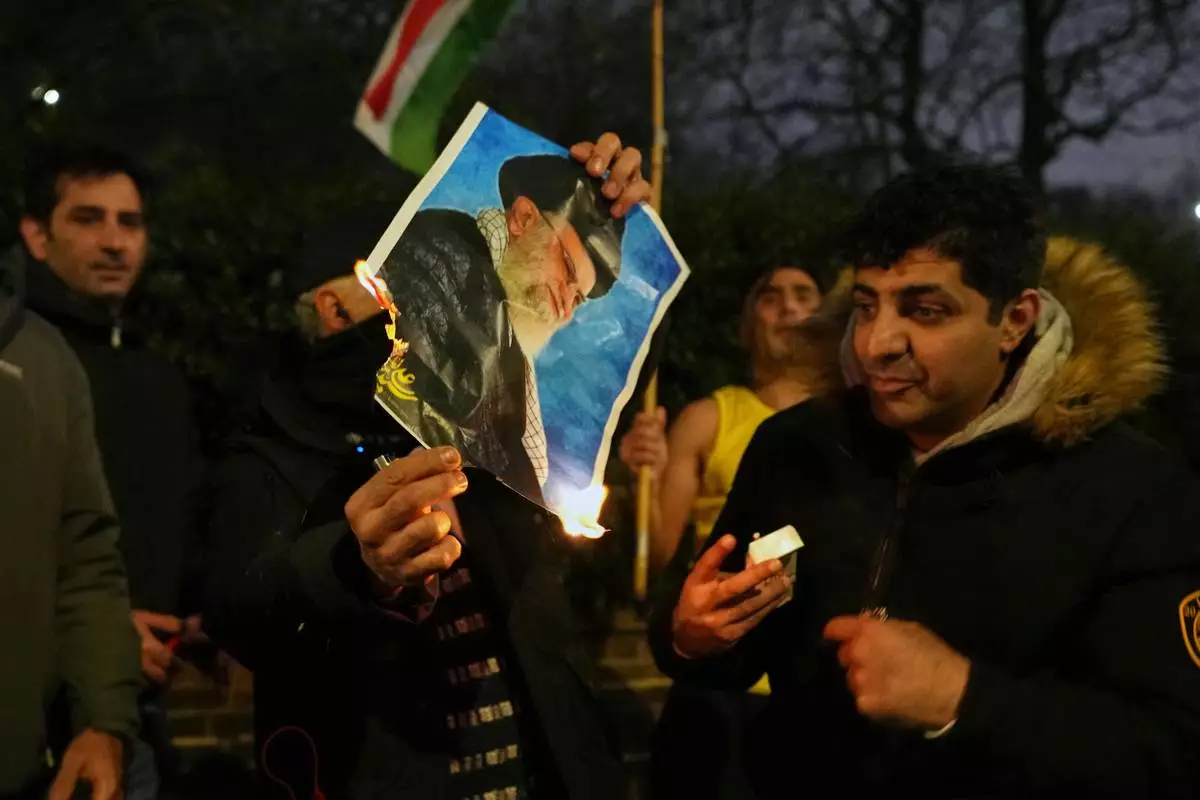
A picture of Ayatollah Ali Khamenei is set alight by protesters outside the Iranian Embassy in London, Monday, Jan. 12, 2026. (AP Photo/Alastair Grant)

A picture of Ayatollah Ali Khamenei is set alight by protesters outside the Iranian Embassy in London, Monday, Jan. 12, 2026. (AP Photo/Alastair Grant)

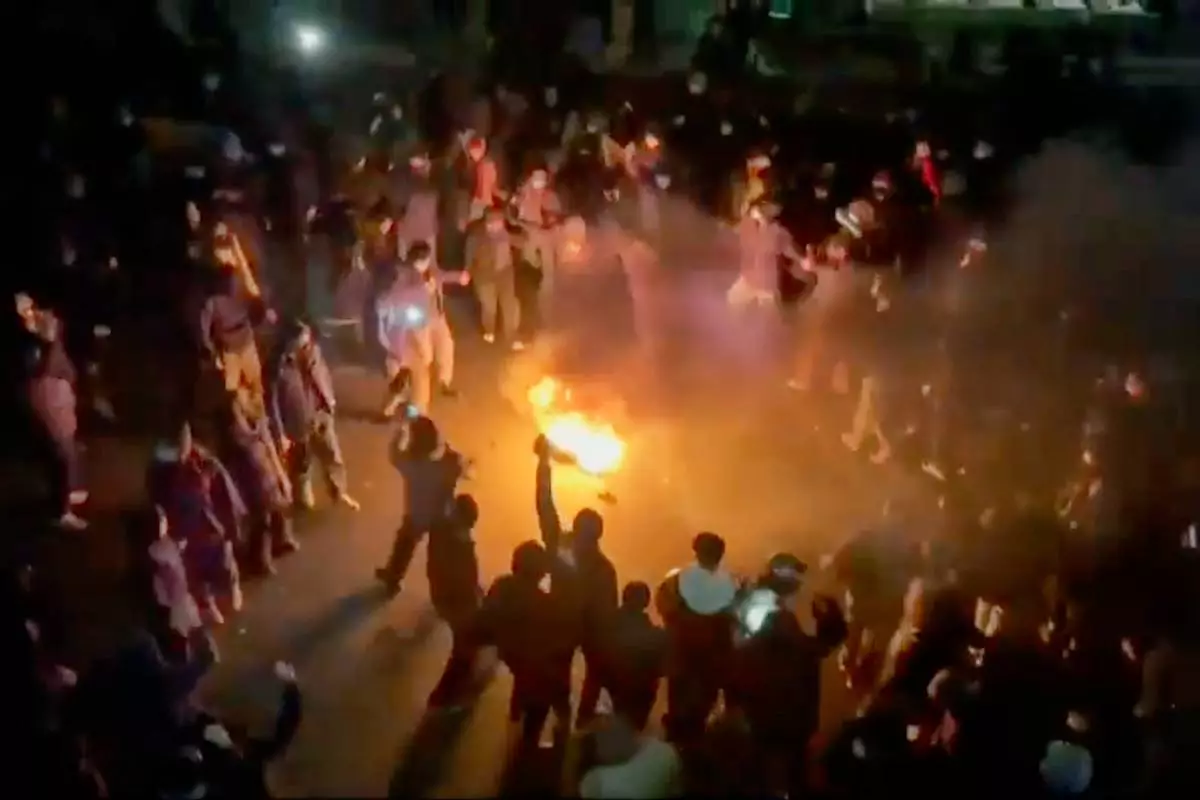
In this frame grab from footage circulating on social media shows protesters dancing and cheering around a bonfire as they take to the streets despite an intensifying crackdown as the Islamic Republic remains cut off from the rest of the world, in Tehran, Iran, Friday, Jan. 9, 2026.(UGC via AP)

In this frame grab from footage circulating on social media shows protesters dancing and cheering around a bonfire as they take to the streets despite an intensifying crackdown as the Islamic Republic remains cut off from the rest of the world, in Tehran, Iran, Friday, Jan. 9, 2026.(UGC via AP)

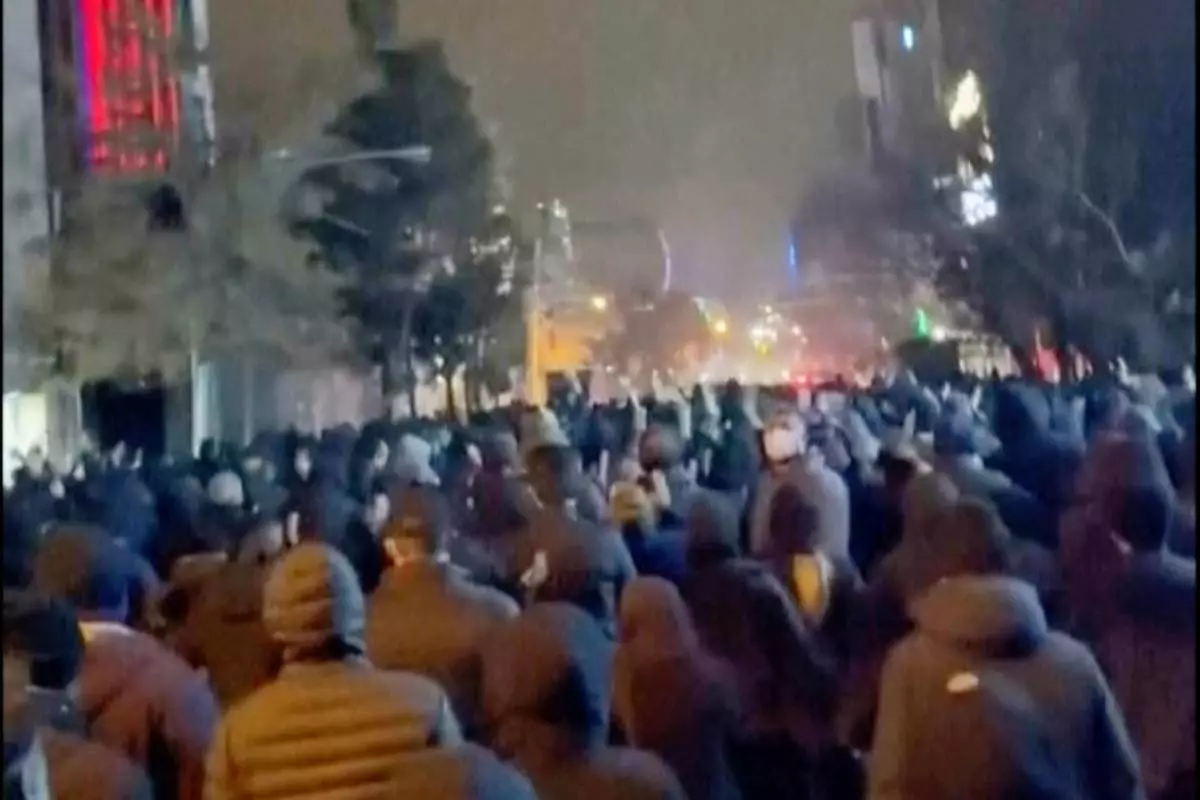
In this frame grab from footage circulating on social media from Iran showed protesters once again taking to the streets of Tehran despite an intensifying crackdown as the Islamic Republic remains cut off from the rest of the world in Tehran, Iran, Saturday Jan. 10, 2026. (UGC via AP)

In this frame grab from footage circulating on social media from Iran showed protesters once again taking to the streets of Tehran despite an intensifying crackdown as the Islamic Republic remains cut off from the rest of the world in Tehran, Iran, Saturday Jan. 10, 2026. (UGC via AP)

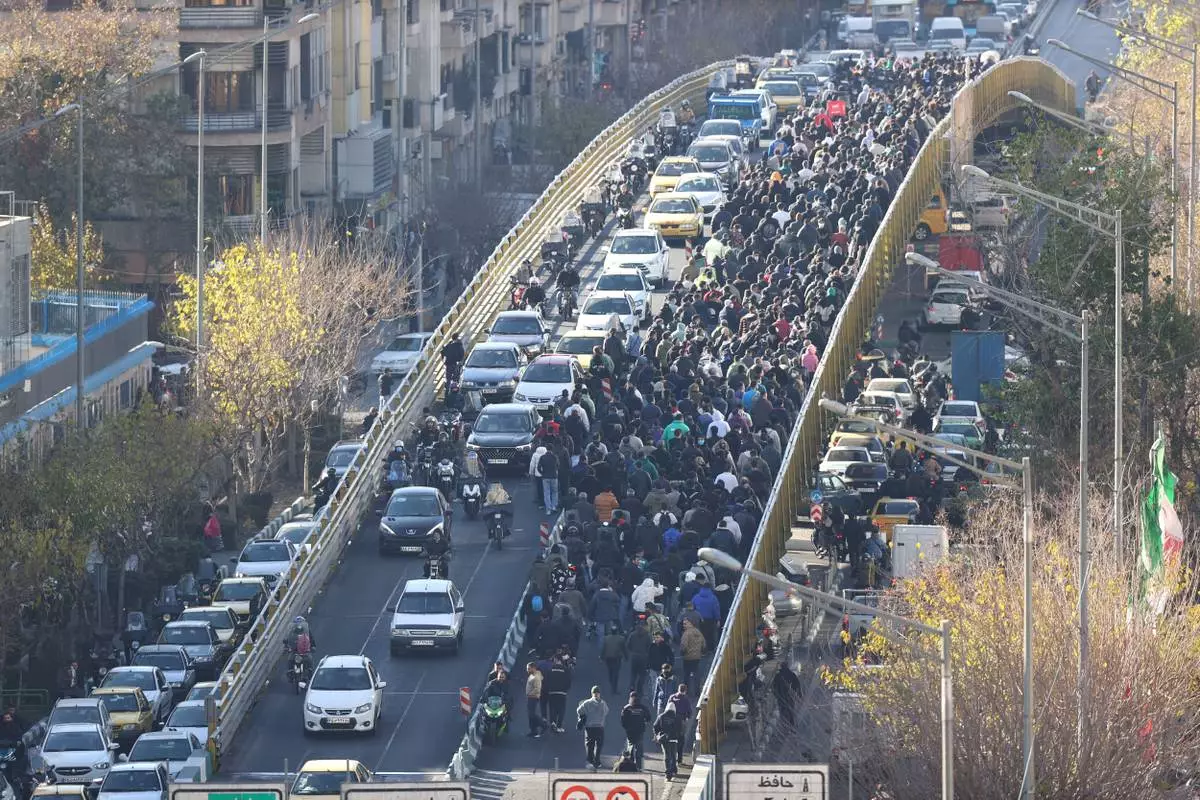
FILE - Protesters march on a bridge in Tehran, Iran, on Dec. 29, 2025. (Fars News Agency via AP, File)

FILE - Protesters march on a bridge in Tehran, Iran, on Dec. 29, 2025. (Fars News Agency via AP, File)

Recommended Articles