NAIROBI, Kenya (AP) — The prominent Kenyan activist Boniface Mwangi was on Monday charged with unlawful possession of ammunition in a case stemming from his alleged role in street protests against the government.
Opposition leaders and Mwangi's followers had feared he would be charged with the more serious offense of terrorism.
Click to Gallery
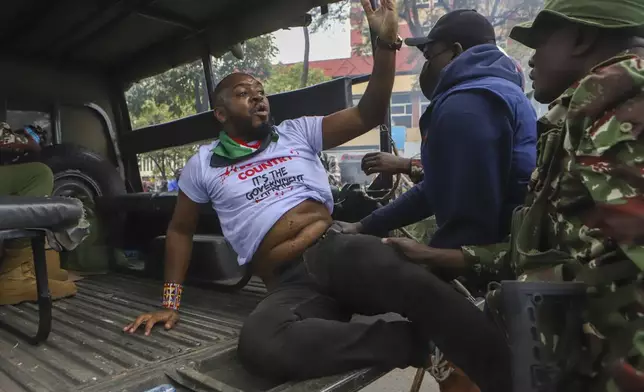
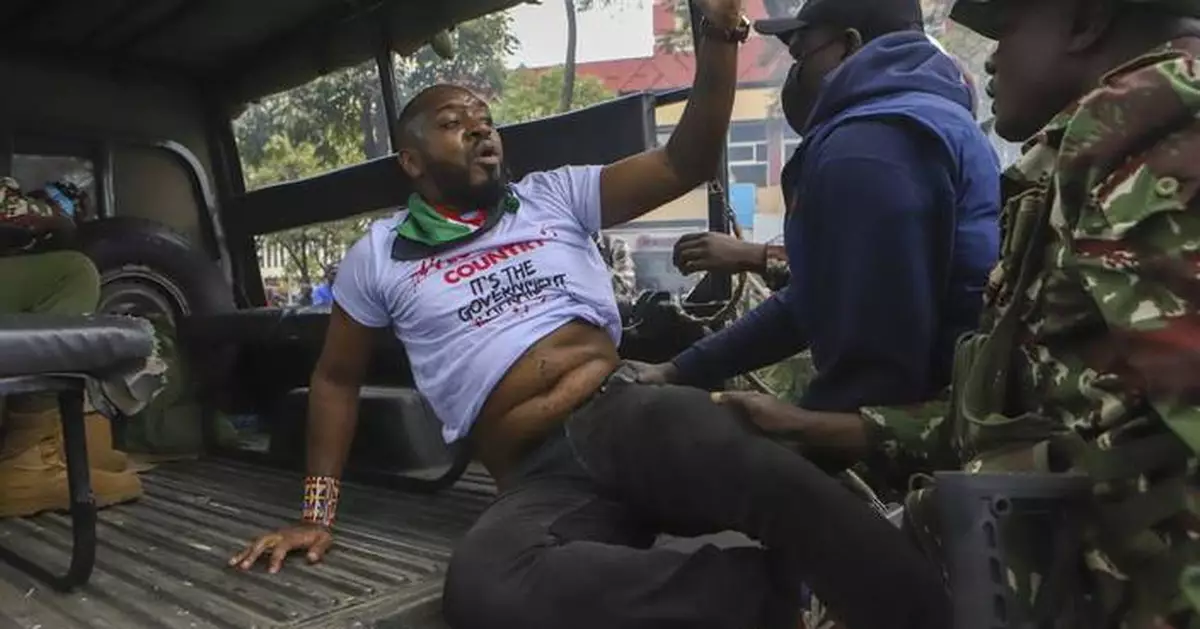
FILE - Police arrest activist Boniface Mwangi during a protest held to commemorate one month since youths were killed on June 25, outside parliament in Kenya's capital Nairobi, Thursday, July 25, 2024. (AP Photo/Andrew Kasuku, file)
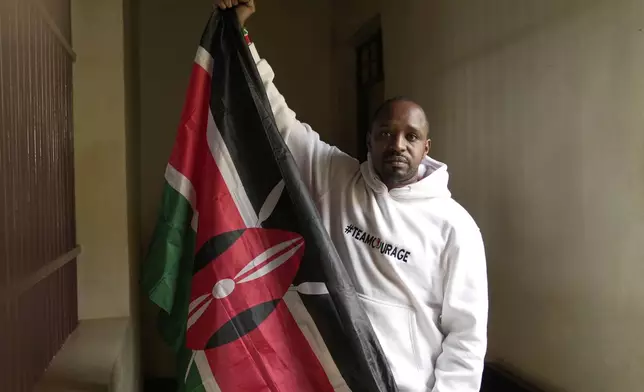
Prominent Kenyan activist Boniface Mwangi poses for a photo while holding a Kenyan flag inside the dock at Kahawa Law Courts in Kiambu, Kenya, Monday, July 21, 2025. (AP Photo/Brian Inganga)
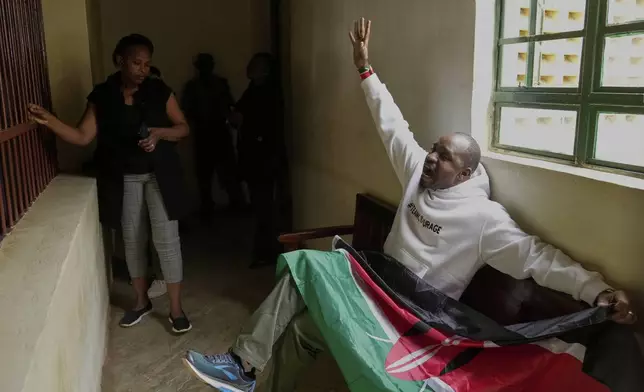
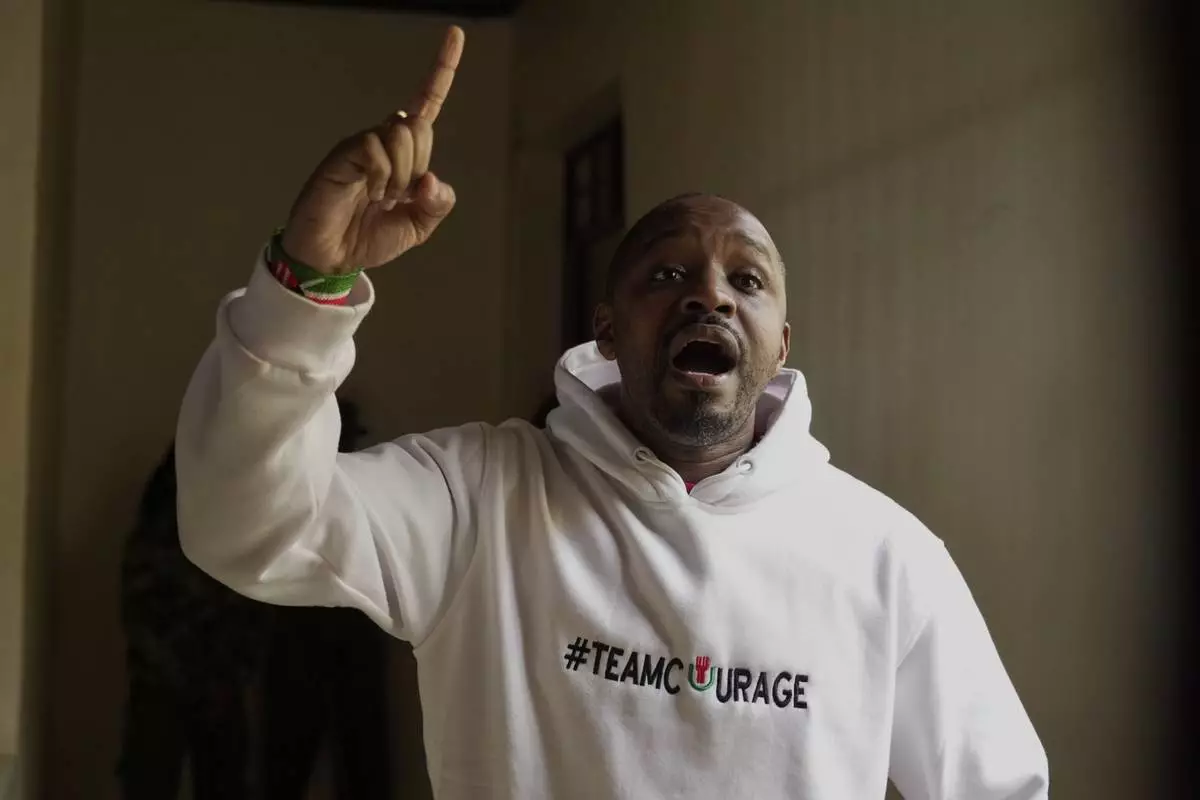
Prominent Kenyan activist Boniface Mwangi gestures inside the dock at Kahawa Law Courts in Kiambu, Kenya, Monday, July 21, 2025. (AP Photo/Brian Inganga)
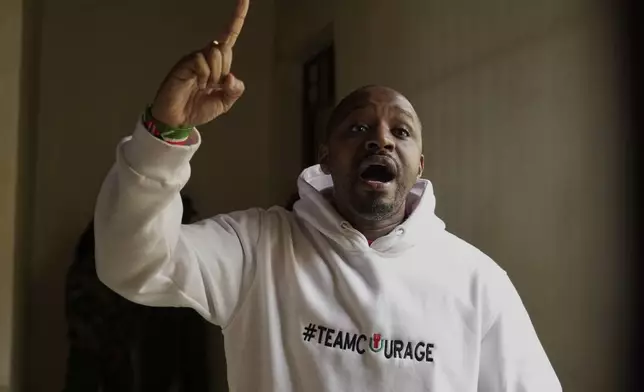
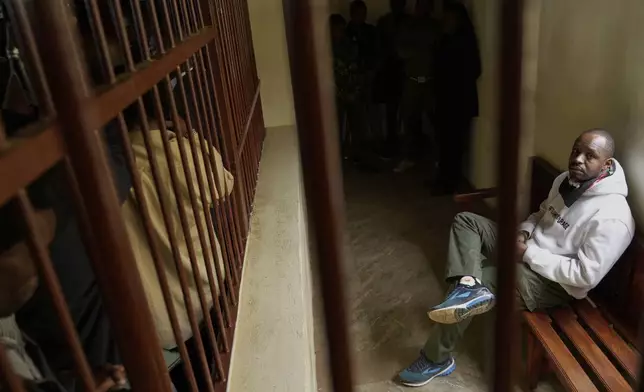
Prominent Kenyan activist Boniface Mwangi sits inside the dock at Kahawa Law Courts in Kiambu, Kenya, Monday, July 21, 2025. (AP Photo/Brian Inganga)
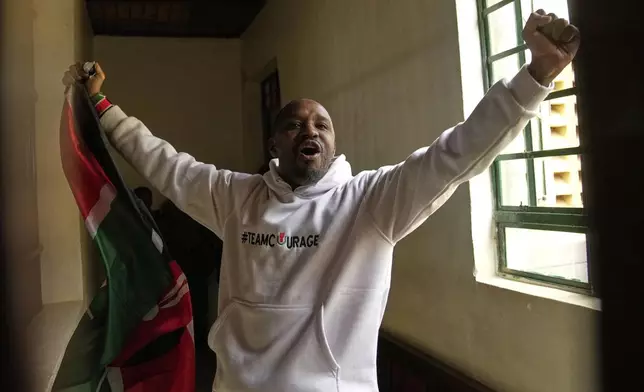
Prominent Kenyan activist Boniface Mwangi sings while holding a Kenyan flag in the dock at Kahawa Law Courts in Kiambu, Kenya, Monday, July 21, 2025. (AP Photo/Brian Inganga)
FILE - Police arrest activist Boniface Mwangi during a protest held to commemorate one month since youths were killed on June 25, outside parliament in Kenya's capital Nairobi, Thursday, July 25, 2024. (AP Photo/Andrew Kasuku, file)
He was freed on bond immediately after his appearance in court on Monday.
The charge sheet said the suspect possessed three canisters of tear gas without lawful authorization. His attorney, Njanja Maina, told reporters on Sunday that Mwangi never possessed such items.
Mwangi's wife Njeri, in a post on the social media platform X, said on Saturday that security personnel raided their home and took the activist and his electronic gadgets while “talking of terrorism and arson.” Police said after his arrest on Friday that Mwangi was linked to the facilitation of violent activities in recent street protests. Detectives searched his home and his office.
The Kenya Human Rights Commission described the ammunition charge as a “trumped-up accusation.”
“This pattern of inventing charges to harass and silence activists like Mwangi erodes public confidence in the independence” of the justice system, the civic group said.
The rights group Amnesty International said in a statement Monday that legal action against Mwangi appears to be “part of a broader effort to intimidate lawful dissent and those committed to upholding the rule of law.”
"We are deeply concerned by the continued misuse of the Prevention of Terrorism Act to manage public order in more than 100 other cases," Amnesty said. “This practice undermines Kenya’s criminal justice system and jeopardizes critical international partnerships aimed at safeguarding national security.”
Mwangi is a well-known pro-democracy activist in Kenya. On X, where he has 2 million followers, he describes himself as "The People’s Watchman.” He has been a critic of successive Kenyan governments.
Protesters who have rocked President William Ruto's administration say they want to rid his government of corruption, marked by theft of public resources and the seemingly extravagant lifestyles of politicians.
They also say that Ruto, in power since 2022, has broken his own promises to working-class Kenyans. The protests started in mid-2024 when Ruto proposed aggressive new tax measures opposed by many Kenyans.
At least 500 people are facing criminal prosecution following arrests during protests in June and July that resulted in at least 47 deaths.
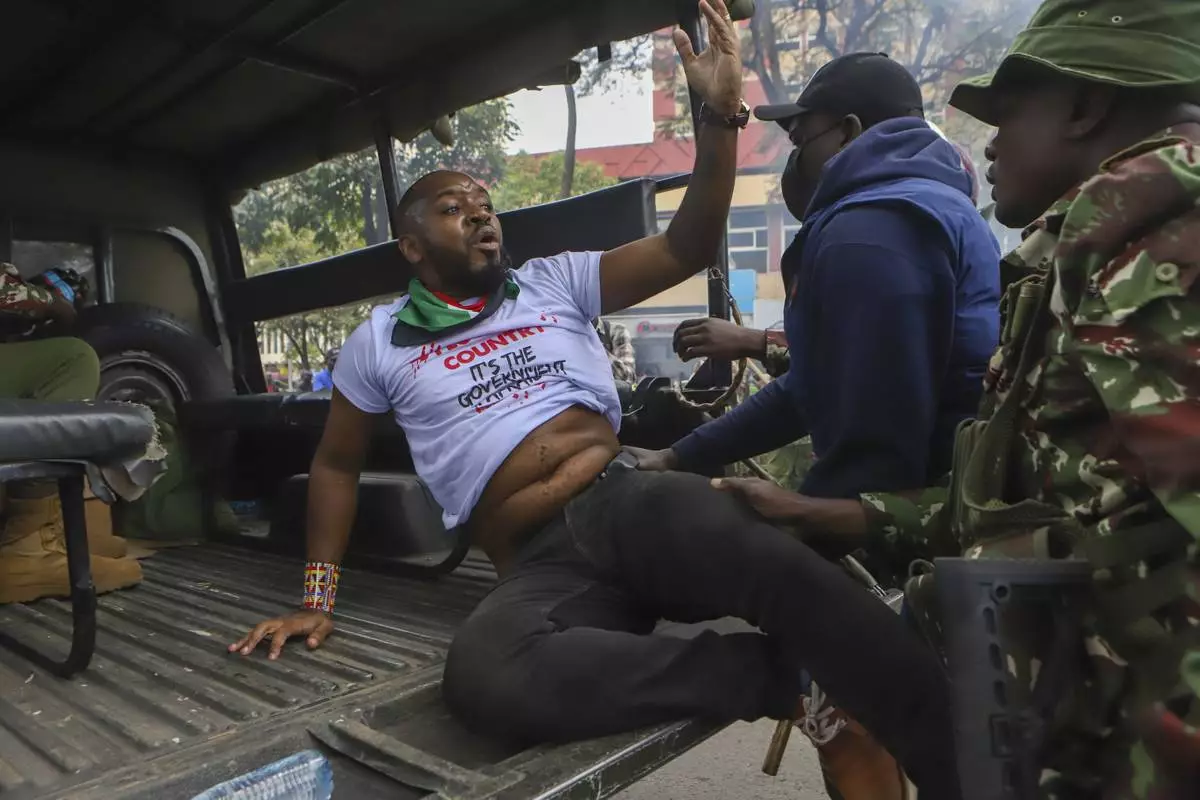
FILE - Police arrest activist Boniface Mwangi during a protest held to commemorate one month since youths were killed on June 25, outside parliament in Kenya's capital Nairobi, Thursday, July 25, 2024. (AP Photo/Andrew Kasuku, file)
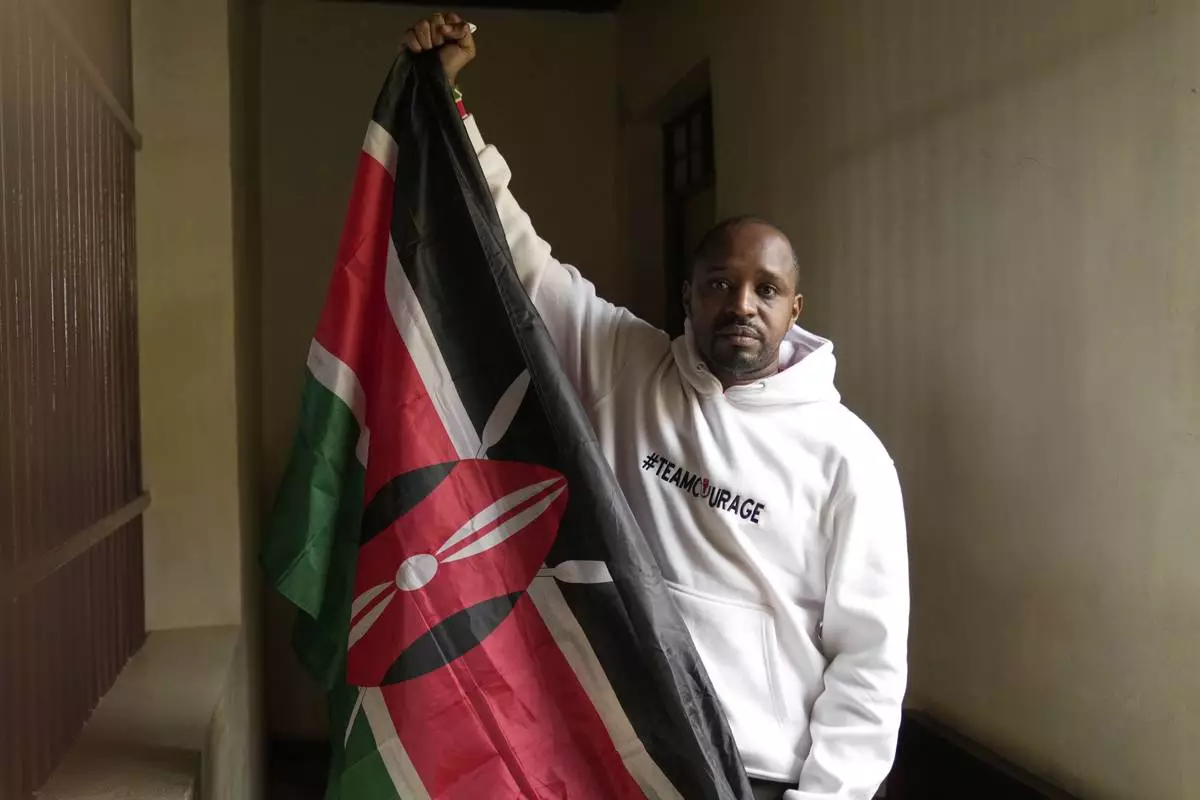
Prominent Kenyan activist Boniface Mwangi poses for a photo while holding a Kenyan flag inside the dock at Kahawa Law Courts in Kiambu, Kenya, Monday, July 21, 2025. (AP Photo/Brian Inganga)
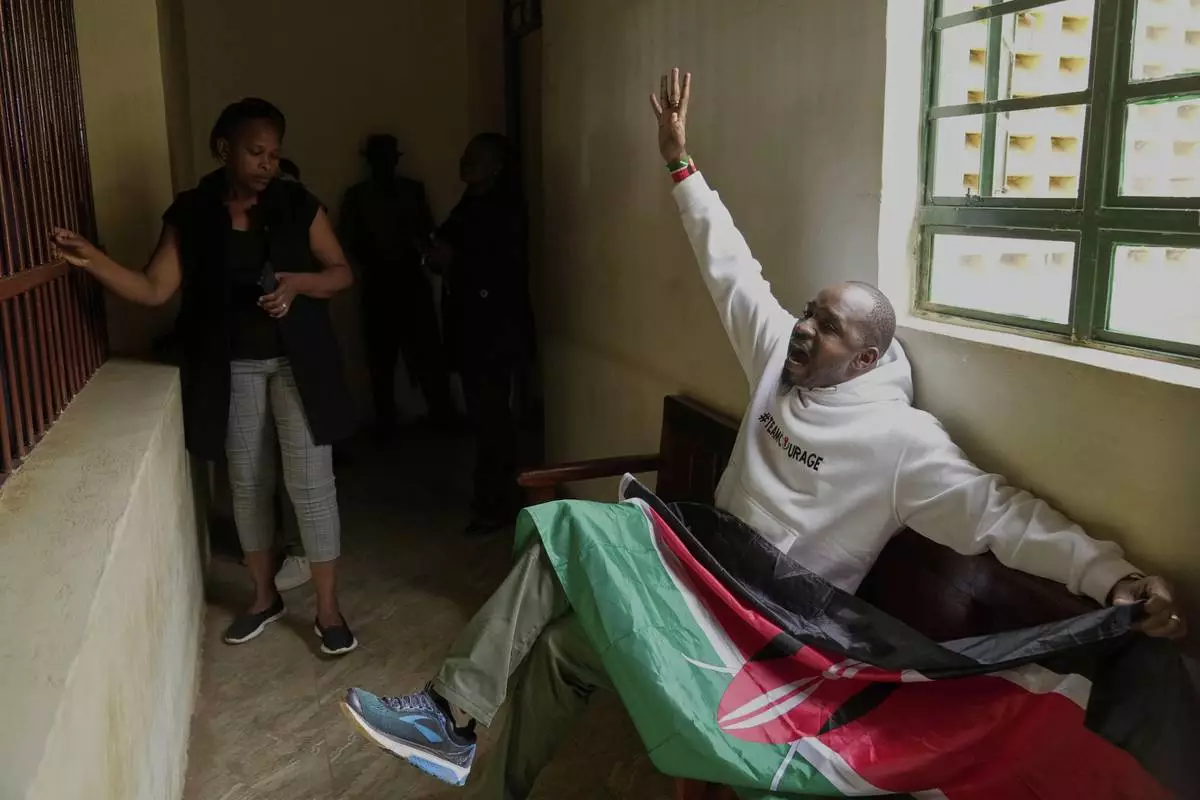
Prominent Kenyan activist Boniface Mwangi gestures inside the dock at Kahawa Law Courts in Kiambu, Kenya, Monday, July 21, 2025. (AP Photo/Brian Inganga)
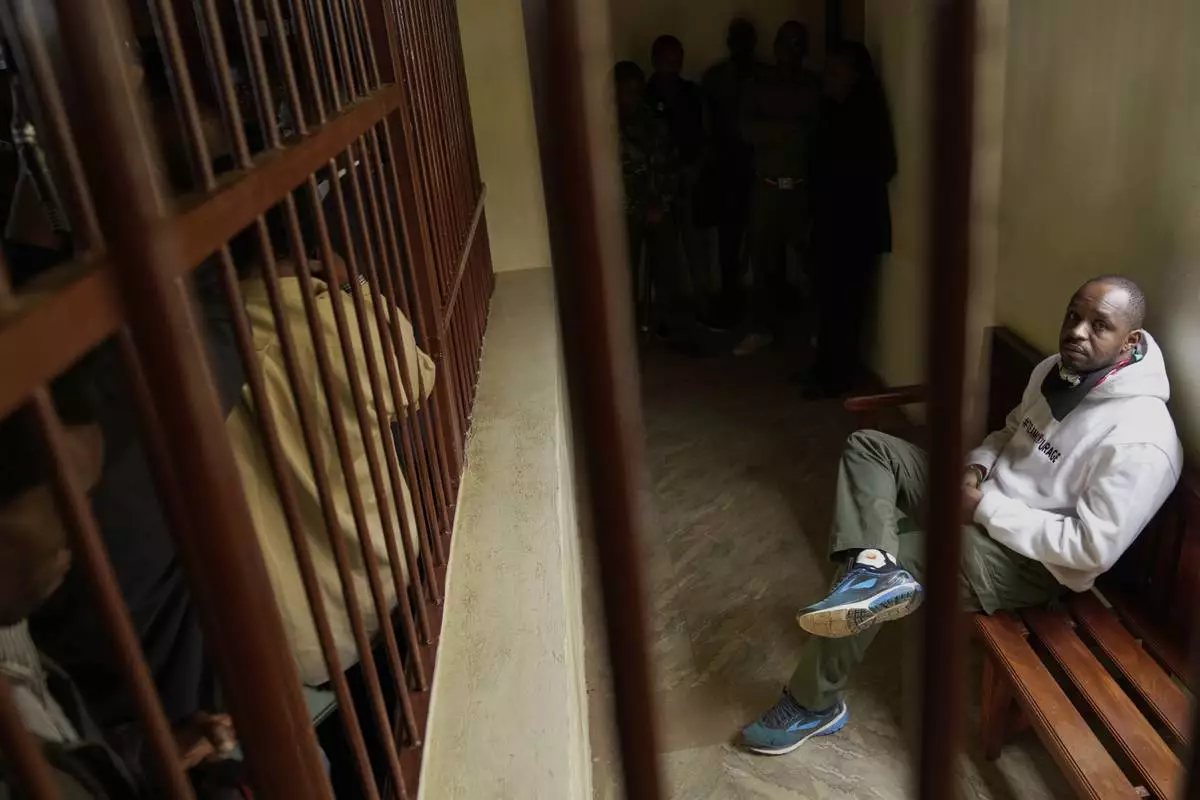
Prominent Kenyan activist Boniface Mwangi sits inside the dock at Kahawa Law Courts in Kiambu, Kenya, Monday, July 21, 2025. (AP Photo/Brian Inganga)
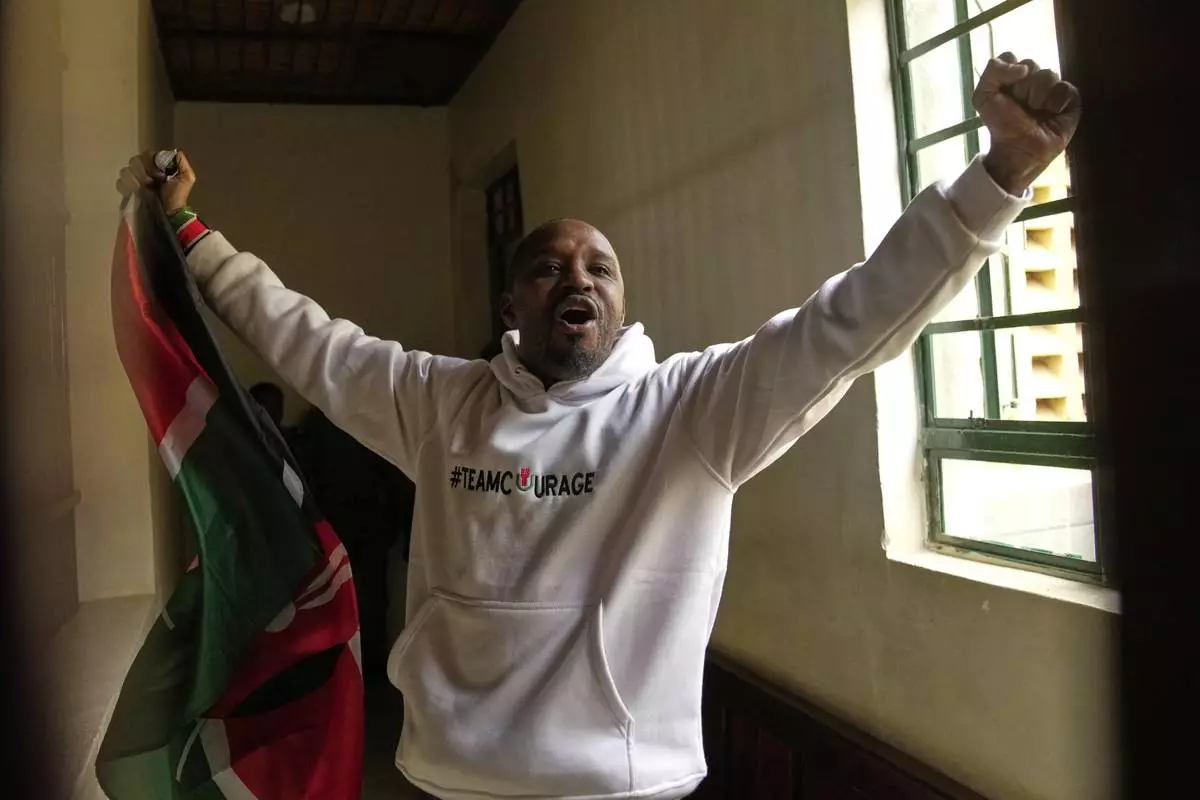
Prominent Kenyan activist Boniface Mwangi sings while holding a Kenyan flag in the dock at Kahawa Law Courts in Kiambu, Kenya, Monday, July 21, 2025. (AP Photo/Brian Inganga)
FILE - Police arrest activist Boniface Mwangi during a protest held to commemorate one month since youths were killed on June 25, outside parliament in Kenya's capital Nairobi, Thursday, July 25, 2024. (AP Photo/Andrew Kasuku, file)
IRBIL, Iraq (AP) — An Iranian Kurdish separatist group in Iraq said it has launched attacks on Iran’s paramilitary Revolutionary Guard in recent days in retaliation for Tehran’s violent crackdown on protests.
Members of the National Army of Kurdistan, the armed wing of the Kurdistan Freedom Party, or PAK, have “played a role in the protests through both financial support and armed operations to defend protesters when needed,” Jwansher Rafati, a PAK representative, told The Associated Press on Thursday.
Iranian media has previously accused the group and other Kurdish factions of attacking security forces.
Iranian activists say more than 2,797 people were killed in the government’s crackdown on a recent wave of nationwide protests.
A handful of Iranian Kurdish dissident or separatist groups — some with armed wings — have long found a safe haven in northern Iraq’s semiautonomous Kurdish region, where their presence has been a point of friction between the central government in Baghdad and Tehran.
Iran has occasionally launched strikes on the groups’ sites in Iraq but has not done so since the outbreak of the recent protests.
The PAK is the first of the groups to claim armed operations since the protests and crackdown began.
“When we found out that the IRGC was shooting protesters directly, our fighters in Ilam, Kermanshah, and Firuzkuh responded with armed operations and inflicted significant damage on the regime’s forces,” Rafati said in an interview in Irbil, the capital of northern Iraq’s semiautonomous Kurdish region.
The PAK has also claimed a number of attacks online and posted video of what it said were operations against IRGC targets, sometimes accompanied by grainy videos showing gunshots or explosions and buildings ablaze. The AP was not able to confirm the extent of the damages or the impact of the attacks.
Rafati said the attacks were launched by members of the group’s National Army of Kurdistan military wing based inside Iran. The group had not sent any forces from Iraq, but it anticipates that Iran may strike PAK bases in Iraq in retaliation for its operations, he added.
He said the PAK has been providing support to dozens of Iranians who fled to the Kurdish area in Iraq since the crackdown on protests began.
The PAK claims may put Iraqi authorities in a sensitive situation with Tehran — which wields significant influence over its neighbor — concerning the group's ongoing presence in northern Iraq.
Iraq in 2023 reached an agreement with Iran to disarm Kurdish Iranian dissident groups and move them from their bases near the border areas into camps designated by Baghdad. The bases were shut down and movement within Iraq was restricted, but the groups have remained active.
During the Israel-Iran war last year, the PAK and other Kurdish dissident groups began organizing politically in case the authorities in Tehran should lose their hold on power but did not launch armed operations.
A PAK spokesperson told the AP at the time that premature armed mobilization could endanger the Kurdish groups and the fragile security of Kurdish areas, both in Iraq and across the border in Iran.
A decade ago, PAK forces received training from the U.S. military when they were taking part in the fight against the Islamic State militant group after it swept across Iraq and Syria, seizing large swathes of territory.
Ironically, the PAK at the time found itself allied with Iran-backed Shiite Iraqi militias that were also fighting against IS.
At that time, the PAK received funding from Iraq's Kurdish regional government, but says now that most of its funding comes from its supporters in Iran and the diaspora.
During the recent protests, Iranian state media has repeatedly referred to the demonstrators as “terrorists” and alleged they received support from America and Israel, without offering evidence to support the claim.
Iranian state television aired what appeared to be surveillance video of a group of men wearing the baggy pants common among the Kurds, firing pistols, in Iran’s western Kurdish region. It has also published images of seized weapons in the area.
The semiofficial Tasnim news agency, which is close to Iran's Revolutionary Guard, said Kurdish groups including the PAK “have played an active role in inciting these movements by issuing coordinated statements and messages.” It said that “groups based in northern Iraq have passed the stage of psychological warfare and media operations and have entered the field phase.”
The semiofficial Fars news agency, which is also close to the Revolutionary Guard, reported on Jan. 10 that another group — the Kurdistan Free Life Party, or PJAK — had killed eight Guard members in Kermanshah and that a PJAK sniper killed a police officer in Ilam province. PJAK has not claimed any armed operations during the protests.
———
Associated Press writer Jon Gambrell in Dubai, United Arab Emirates, contributed to this report. Sewell reported from Beirut.
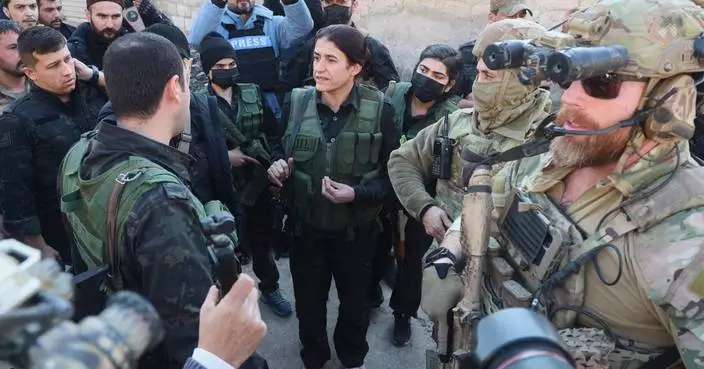
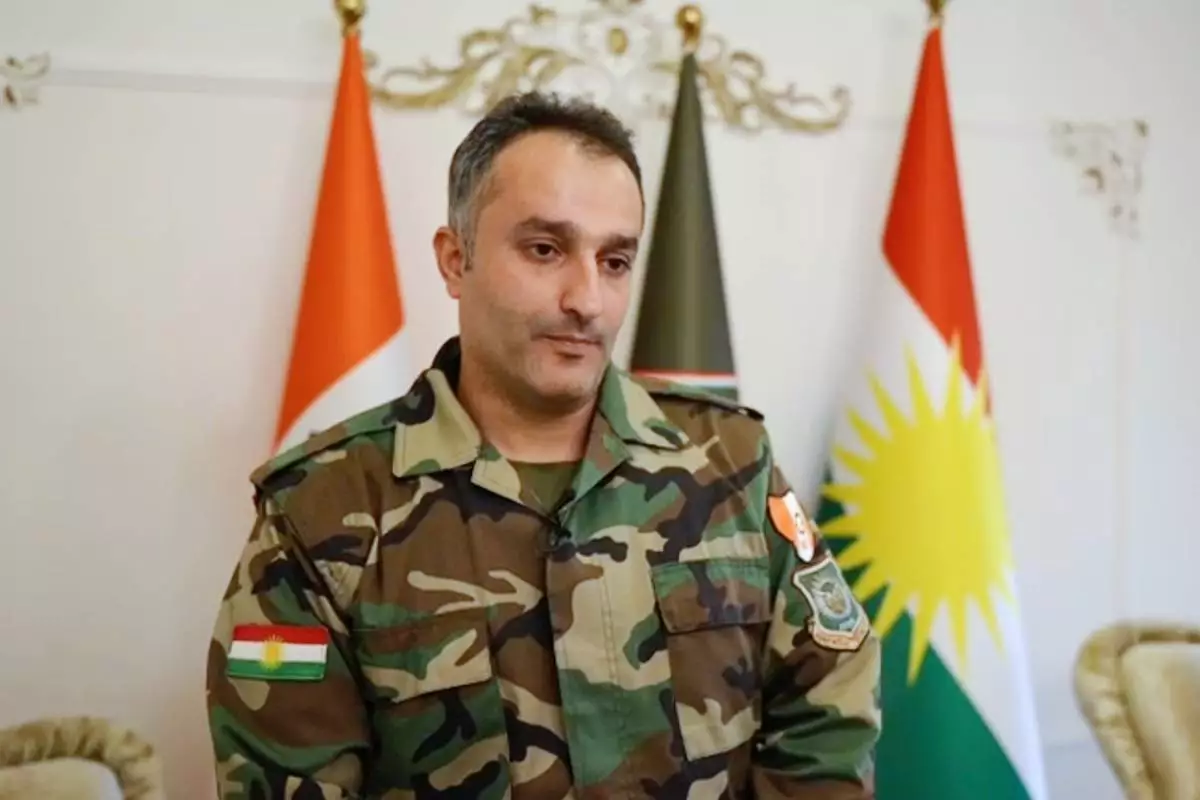
This image made from video shows the representative of the Kurdistan Freedom Party, Jwansher Rafati, speaking during an interview with The Associated Press, in Irbil, Iraq, Thursday, Jan. 15, 2026. (AP Photo/Farid Abdulwahed)