COLLEGE PARK, Md.--(BUSINESS WIRE)--Jul 21, 2025--
IonQ (NYSE: IONQ), the leading commercial quantum computing and networking company, today announced the appointment of Dr. Rick Muller as Vice President of Quantum Systems. Muller, who joins this month, will lead IonQ’s quantum computing systems development team.
This press release features multimedia. View the full release here: https://www.businesswire.com/news/home/20250721579007/en/
Muller will be an integral member of the team tasked with delivering on the company’s intent to build the world’s most powerful quantum computers with 2 million qubits by 2030. His deep technical expertise will also strengthen IonQ’s role as a trusted partner for commercial and federal quantum applications.
Muller brings decades of experience to IonQ, including his recent work at the Intelligence Advanced Research Projects Activity (IARPA), an organization within the Office of the Director of National Intelligence (ODNI) that conducts research to address the most difficult challenges faced by the U.S. intelligence community. Muller has also held senior positions at Sandia National Laboratories and the California Institute of Technology.
“Rick brings an exceptional blend of scientific insight and federal systems engineering experience, precisely the kind of leadership IonQ needs as we scale toward operational quantum advantage,” said Dr. Dean Kassmann, Senior Vice President of Engineering and Technology at IonQ. “His track record leading transformative R&D efforts will be instrumental as we expand our quantum computing system capabilities and deepen our partnerships across both commercial and government sectors.”
As Director of IARPA, Muller was responsible for implementing research programs in quantum computing, artificial intelligence, biometrics, and text analytics for the U.S. intelligence community. Prior to that, he led the Quantum and Advanced Microsystems group at Sandia National Laboratories and directed the Department of Energy’s Quantum Systems Accelerator, one of the flagship centers established under the National Quantum Initiative.
Earlier in his career, Muller led the drive for advanced computational capabilities for national security as part of the Joint Program Office for the National Strategic Computing Initiative. He holds a Ph.D. in chemistry from the California Institute of Technology and a B.A. from Rice University, also in chemistry.
“IonQ is at the forefront of evolving quantum computing from research concepts into leading commercial applications,” said Muller. “Joining IonQ gives me the opportunity to help scale technology that can solve meaningful problems across science, security, and industry. I’m excited to contribute to the next generation of systems that will continue to make quantum computing impactful.”
Muller’s appointment follows a national search led by PSIRCH, IonQ’s executive search partner of record.
About IonQ
IonQ, Inc. [NYSE: IONQ] is the leading commercial quantum computing and networking company , delivering high-performance systems aimed at solving the world’s most complex problems. IonQ’s current generation quantum computers, IonQ Forte and IonQ Forte Enterprise, are the latest in a line of cutting-edge systems that have been helping customers and partners such as Amazon Web Services, AstraZeneca, and NVIDIA achieve 20x performance results.
The company is accelerating its technology roadmap and intends to deliver the world’s most powerful quantum computers with 2 million qubits by 2030 to accelerate innovation in drug discovery, materials science, financial modeling, logistics, cybersecurity, and defense. IonQ’s advancements in quantum networking also positions the company as a leader in building the quantum internet.
The company’s innovative technology and rapid growth were recognized in Newsweek’s 2025 Excellence Index 1000, Forbes’ 2025 Most Successful Mid-Cap Companies list, and Built In’s 2025 100 Best Midsize Places to Work in Washington DC and Seattle, respectively. Available through all major cloud providers, IonQ is making quantum computing more accessible and impactful than ever before. Learn more at IonQ.com.
IonQ Forward-Looking Statements
This press release contains certain forward-looking statements within the meaning of Section 27A of the Securities Act of 1933, as amended, and Section 21E of the Securities Exchange Act of 1934, as amended. Some of the forward-looking statements can be identified by the use of forward-looking words. Statements that are not historical in nature, including the words “accelerate,” “accelerating,” “accessible,” “advancements,” “advancing,” “aimed,” “building,” “can,” “deepen,” “delivering,” “evolving,” “expand,” “intends,” “intent,” “scale,” “will,” and other similar expressions are intended to identify forward-looking statements. These statements include those related to IonQ’s quantum computing capabilities and plans; IonQ’s technology driving quantum advantage or delivering scalable, fault-tolerant quantum computing in the future; the future impacts of IonQ’s offerings; and the scalability, performance, impact, and commercial-readiness of IonQ’s offerings. Forward-looking statements are predictions, projections, and other statements about future events that are based on current expectations and assumptions and, as a result, are subject to risks and uncertainties. Many factors could cause actual future events to differ materially from the forward-looking statements in this press release, including but not limited to: IonQ’s ability to implement its technical roadmap; changes in the competitive industries in which IonQ operates, including development of competing technologies; IonQ’s ability to deliver, and customers’ ability to generate, value from IonQ’s offerings; IonQ’s inability to attract and retain key personnel; or IonQ’s inability to effectively integrate its acquisitions of Qubitekk, Inc., Lightsynq Technologies, Inc., and Capella Space Corporation and close its acquisitions of Oxford Ionics Limited and ID Quantique, SA. You should carefully consider the foregoing factors and the other risks and uncertainties disclosed in the Company’s filings, including but not limited to those described in the “Risk Factors” section of IonQ's filings with the U.S. Securities and Exchange Commission, including but not limited to the Company's most recent Annual Report on Form 10-K and reports on Form 10-Q. These filings identify and address other important risks and uncertainties that could cause actual events and results to differ materially from those contained in the forward-looking statements. Forward-looking statements speak only as of the date they are made. Readers are cautioned not to put undue reliance on forward-looking statements, and IonQ assumes no obligation and does not intend to update or revise these forward-looking statements, whether as a result of new information, future events, or otherwise. IonQ does not give any assurance that it will achieve its expectations.
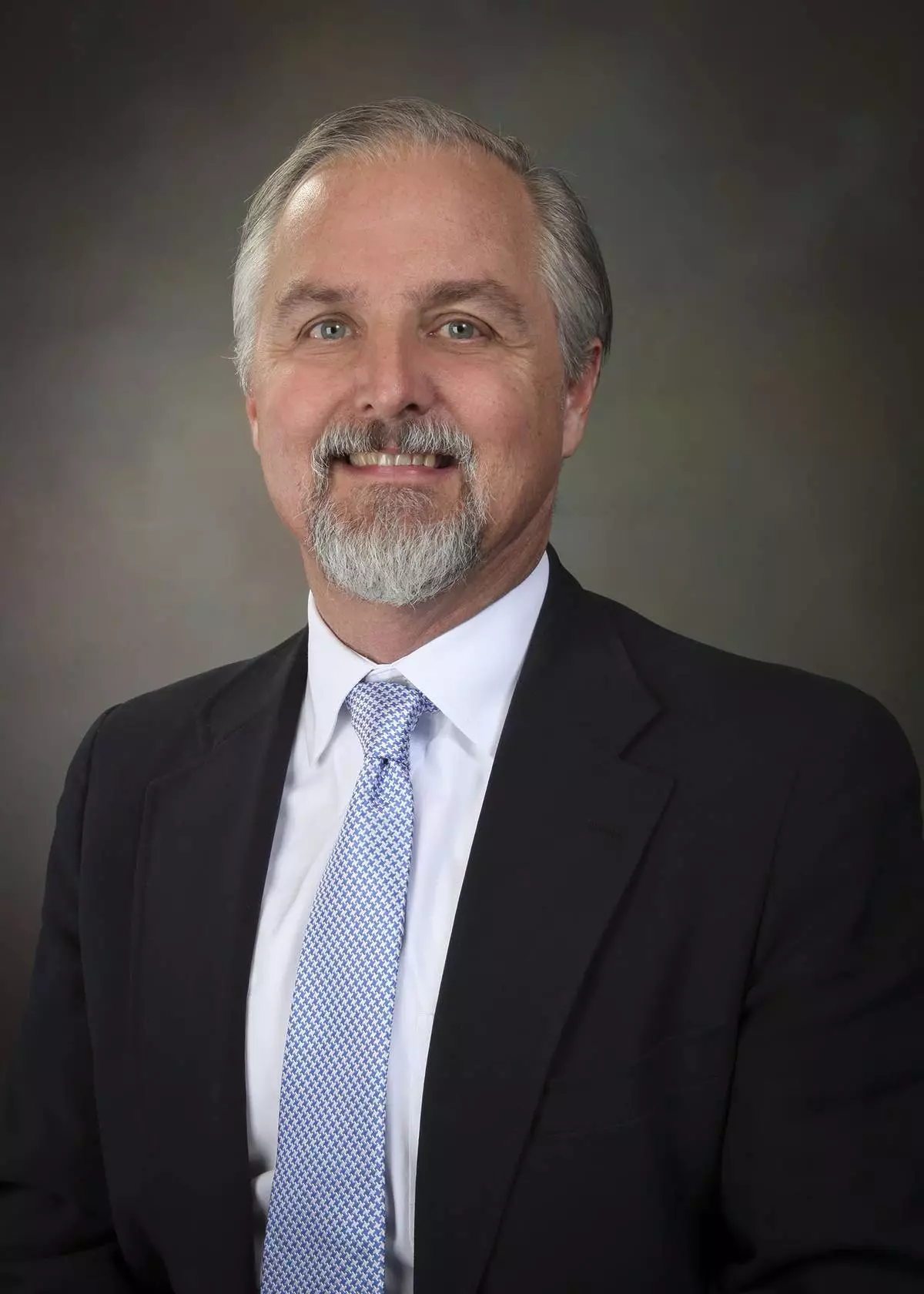
Rick Muller, Vice President of Quantum Systems at IonQ
U.S. President Donald Trump wants to own Greenland. He has repeatedly said the United States must take control of the strategically located and mineral-rich island, which is a semiautonomous region that's part of NATO ally Denmark.
Officials from Denmark, Greenland and the United States met Thursday in Washington and will meet again next week to discuss a renewed push by the White House, which is considering a range of options, including using military force, to acquire the island.
Trump said Friday he is going to do “something on Greenland, whether they like it or not.”
If it's not done “the easy way, we're going to do it the hard way," he said without elaborating what that could entail. In an interview Thursday, he told The New York Times that he wants to own Greenland because “ownership gives you things and elements that you can’t get from just signing a document.”
Danish Prime Minister Mette Frederiksen has warned that an American takeover of Greenland would mark the end of NATO, and Greenlanders say they don't want to become part of the U.S.
This is a look at some of the ways the U.S. could take control of Greenland and the potential challenges.
Trump and his officials have indicated they want to control Greenland to enhance American security and explore business and mining deals. But Imran Bayoumi, an associate director at the Atlantic Council’s Scowcroft Center for Strategy and Security, said the sudden focus on Greenland is also the result of decades of neglect by several U.S. presidents towards Washington's position in the Arctic.
The current fixation is partly down to “the realization we need to increase our presence in the Arctic, and we don’t yet have the right strategy or vision to do so,” he said.
If the U.S. took control of Greenland by force, it would plunge NATO into a crisis, possibly an existential one.
While Greenland is the largest island in the world, it has a population of around 57,000 and doesn't have its own military. Defense is provided by Denmark, whose military is dwarfed by that of the U.S.
It's unclear how the remaining members of NATO would respond if the U.S. decided to forcibly take control of the island or if they would come to Denmark's aid.
“If the United States chooses to attack another NATO country militarily, then everything stops,” Frederiksen has said.
Trump said he needs control of the island to guarantee American security, citing the threat from Russian and Chinese ships in the region, but “it's not true” said Lin Mortensgaard, an expert on the international politics of the Arctic at the Danish Institute for International Studies, or DIIS.
While there are probably Russian submarines — as there are across the Arctic region — there are no surface vessels, Mortensgaard said. China has research vessels in the Central Arctic Ocean, and while the Chinese and Russian militaries have done joint military exercises in the Arctic, they have taken place closer to Alaska, she said.
Bayoumi, of the Atlantic Council, said he doubted Trump would take control of Greenland by force because it’s unpopular with both Democratic and Republican lawmakers, and would likely “fundamentally alter” U.S. relationships with allies worldwide.
The U.S. already has access to Greenland under a 1951 defense agreement, and Denmark and Greenland would be “quite happy” to accommodate a beefed up American military presence, Mortensgaard said.
For that reason, “blowing up the NATO alliance” for something Trump has already, doesn’t make sense, said Ulrik Pram Gad, an expert on Greenland at DIIS.
U.S. Secretary of State Marco Rubio told a select group of U.S. lawmakers this week that it was the Republican administration’s intention to eventually purchase Greenland, as opposed to using military force. Danish and Greenlandic officials have previously said the island isn't for sale.
It's not clear how much buying the island could cost, or if the U.S. would be buying it from Denmark or Greenland.
Washington also could boost its military presence in Greenland “through cooperation and diplomacy,” without taking it over, Bayoumi said.
One option could be for the U.S. to get a veto over security decisions made by the Greenlandic government, as it has in islands in the Pacific Ocean, Gad said.
Palau, Micronesia and the Marshall Islands have a Compact of Free Association, or COFA, with the U.S.
That would give Washington the right to operate military bases and make decisions about the islands’ security in exchange for U.S. security guarantees and around $7 billion of yearly economic assistance, according to the Congressional Research Service.
It's not clear how much that would improve upon Washington's current security strategy. The U.S. already operates the remote Pituffik Space Base in northwestern Greenland, and can bring as many troops as it wants under existing agreements.
Greenlandic politician Aaja Chemnitz told The Associated Press that Greenlanders want more rights, including independence, but don't want to become part of the U.S.
Gad suggested influence operations to persuade Greenlanders to join the U.S. would likely fail. He said that is because the community on the island is small and the language is “inaccessible.”
Danish Foreign Minister Lars Løkke Rasmussen summoned the top U.S. official in Denmark in August to complain that “foreign actors” were seeking to influence the country’s future. Danish media reported that at least three people with connections to Trump carried out covert influence operations in Greenland.
Even if the U.S. managed to take control of Greenland, it would likely come with a large bill, Gad said. That’s because Greenlanders currently have Danish citizenship and access to the Danish welfare system, including free health care and schooling.
To match that, “Trump would have to build a welfare state for Greenlanders that he doesn’t want for his own citizens,” Gad said.
Since 1945, the American military presence in Greenland has decreased from thousands of soldiers over 17 bases and installations to 200 at the remote Pituffik Space Base in the northwest of the island, Rasmussen said last year. The base supports missile warning, missile defense and space surveillance operations for the U.S. and NATO.
U.S. Vice President J.D. Vance told Fox News on Thursday that Denmark has neglected its missile defense obligations in Greenland, but Mortensgaard said that it makes “little sense to criticize Denmark,” because the main reason why the U.S. operates the Pituffik base in the north of the island is to provide early detection of missiles.
The best outcome for Denmark would be to update the defense agreement, which allows the U.S. to have a military presence on the island and have Trump sign it with a “gold-plated signature,” Gad said.
But he suggested that's unlikely because Greenland is “handy” to the U.S president.
When Trump wants to change the news agenda — including distracting from domestic political problems — “he can just say the word ‘Greenland' and this starts all over again," Gad said.

CORRECT THE ORDER OF SPEAKERS, FILE - Denmark's Prime Minister Mette Frederiksen, right, and Greenland's Prime Minister Jens-Frederik Nielsen, left, speak on April 27, 2025, in Marienborg, Denmark. (Mads Claus Rasmussen/Ritzau Scanpix via AP, File)

FILE - Danish military forces participate in an exercise with hundreds of troops from several European NATO members in the Arctic Ocean in Nuuk, Greenland, Sept. 15, 2025. (AP Photo/Ebrahim Noroozi, File)
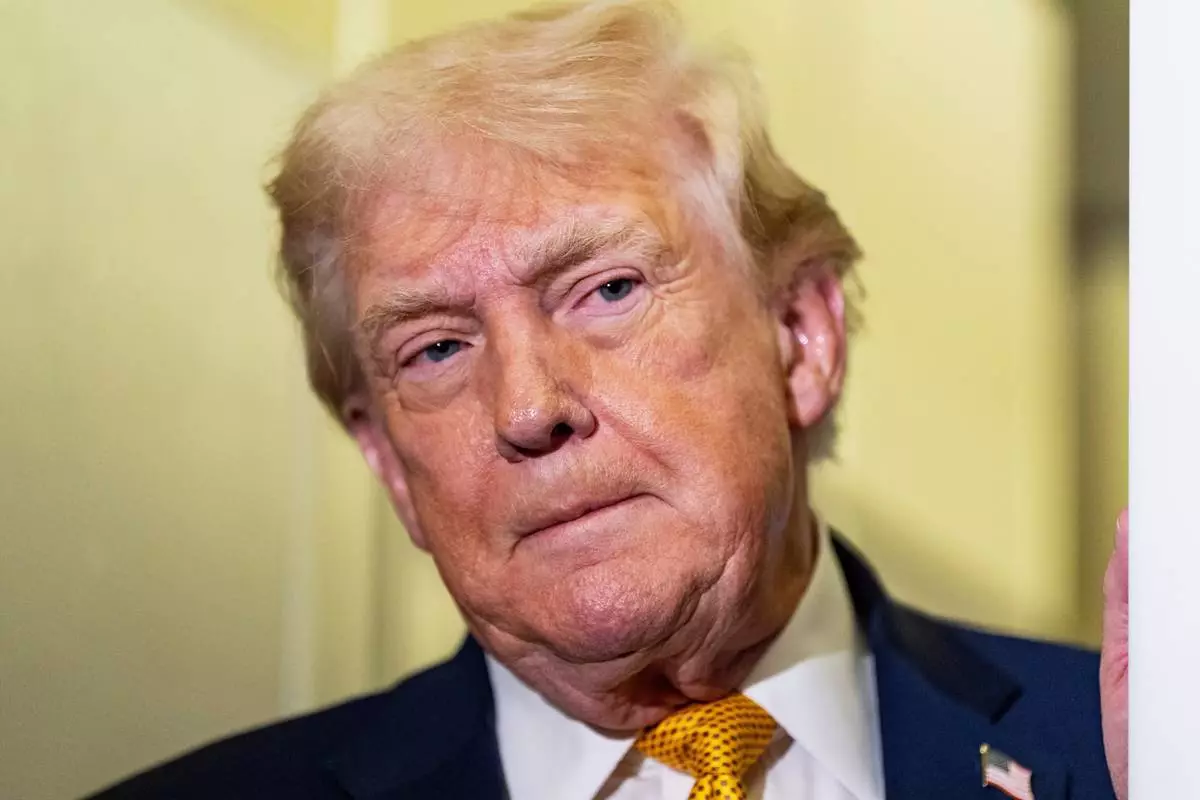
President Donald Trump listens as he was speaking with reporters while in flight on Air Force One, Sunday, Jan. 4, 2026, as returning to Joint Base Andrews, Md. (AP Photo/Alex Brandon)

Danish Prime Minister Mette Frederiksen arrives for a meeting of the Coalition of the Willing at the Elysee Palace in Paris, France, Tuesday, Jan.6, 2026. (Yoan Valat, Pool photo via AP)

FILE - A plane carrying Donald Trump Jr. lands in Nuuk, Greenland, Jan. 7, 2025. (Emil Stach/Ritzau Scanpix via AP, file)