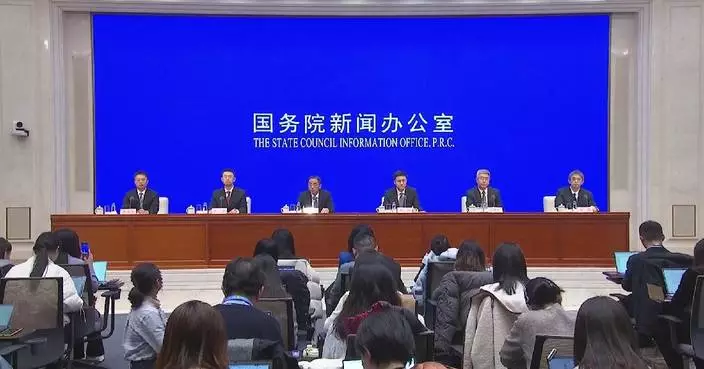
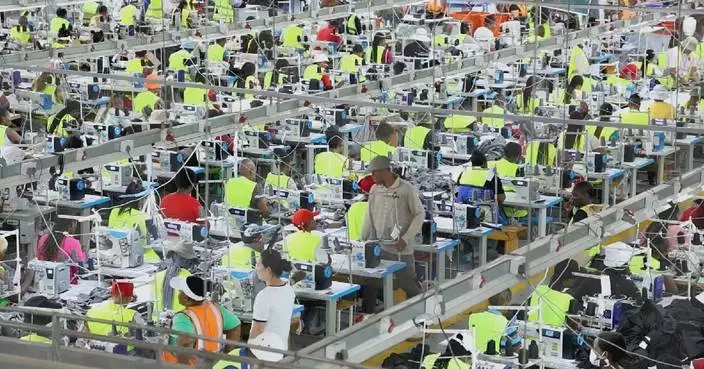
China's National Comprehensive Three-dimensional Transportation Network has been connected to over 80 percent of the county-level administrative regions across the country, Minister of Transport Liu Wei said at a press conference in Beijing on Monday.
China now has the world's largest high-speed railway network, expressway network and postal and express delivery network thanks to progress made during the the 14th Five-Year Plan period (2021-2025), according to the minister.
"The development of 'major corridors' has accelerated. We have stepped up the construction of strategic backbone transportation channels such as those connecting Xinjiang and Xizang, along rivers, coasts and borders, and the New Western Land-Sea Corridor. The backbone network of the National Comprehensive Three-dimensional Transportation Network, known as the 'six vertical, seven horizontal and eight channels' framework, has been basically completed, connecting over 80 percent of the county-level administrative regions across the country and serving about 90 percent of the country's economic output and population," said Liu.
"A total of 70.4 percent of national high-grade waterways, known as the 'four vertical, four horizontal and two networks' have reached standards, and the port scale and capacity have remained the world's largest for many years. Air services cover 92.6 percent of prefecture-level administrative units and 91.2 percent of the population across the country. The postal industry has set up over 500,000 business outlets," said the minister.
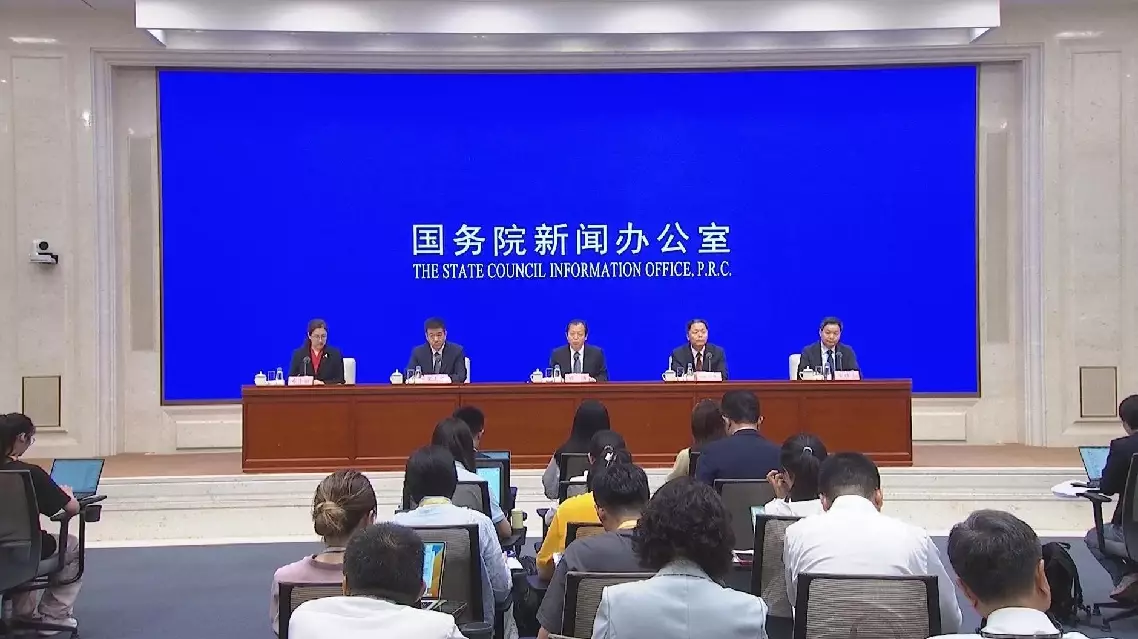
China's transport network connects over 80 pct of county-level administrative regions: minister
A former television host from Taiwan, Zhai Xuan, has made a pivotal decision to leave mainstream broadcasting in order to create content that provides a better understanding of the Chinese mainland and cross-strait relations.
Zhai, a seasoned television host with over a decade of experience in Taiwan's media landscape, recently addressed an audience at an event in Beijing, where she revealed her complete transition into independent online media.
In her remarks, she articulated her aspiration to bridge what she perceives as a significant information gap between audiences on both sides of the Strait, highlighting her commitment to fostering a deeper understanding and connection through her new endeavors.
"I was really surprised by all the fake news. There were stories saying people on the mainland can't afford tea eggs or that they live in mud houses and in Taiwan, this was the main information many people received," said Zhai.
Zhai said she initially began producing online videos to challenge such perceptions while continuing her work as a television host.
In April 2025, she travelled to the mainland with her father to fulfill her late grandfather's wish to return to his hometown. The trip, which reunited family members separated since 1949, was recorded in a video series titled "Journey to Find Our Roots", drawing attention from viewers in both Taiwan and the mainland.
"Many people in Taiwan told me that after watching, they wanted to apply for a mainland travel permit immediately and go looking for their relatives. Some had long forgotten these things, but after seeing my story, they began thinking about their hometowns and family members they had never met and decided to search for their roots," Zhai shared her story at the event.
By mid-2025, Zhai said she began to feel increasing pressure amid rising political tensions and a tightening atmosphere around cross-Strait exchanges in Taiwan.
After more than 12 years in the industry, Zhai resigned from her position, believing it was the right thing to do.
"At that moment, I felt this was a major issue,not just for me, but for Chinese people on both sides of the Strait. If I backed down then, I wouldn’t be standing on the right side," said Zhai.
Since leaving television, Zhai has broadened her online programming to encompass a range of daily-life topics, including practical guidance on applying for a mainland travel permit and using commonly employed mobile applications, in addition to content that delves into historical memory and cultural connections across the Strait.
As the debate over cross-Strait relations continues in Taiwan, Zhai said she remains committed to her current path.

Former Taiwan TV host bridges cross-Strait divide via online media