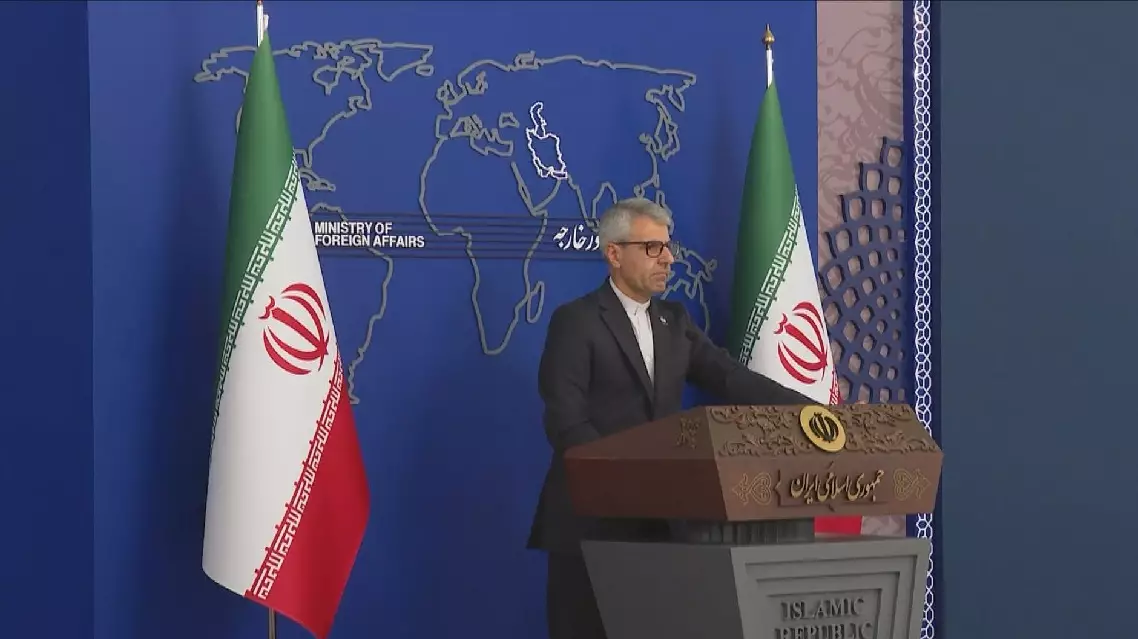
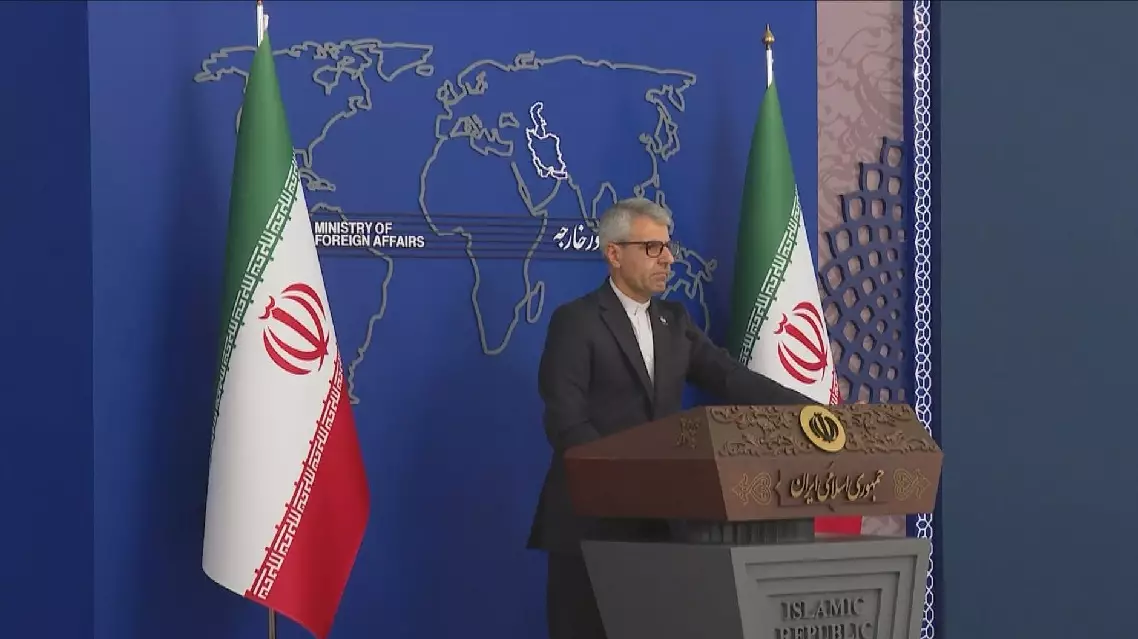
A new round of talks between Iran and France, Britain and Germany (E3) is scheduled to be held in Türkiye's Istanbul on Friday, Iranian Foreign Ministry spokesman Esmaeil Baghaei said at a press conference in Tehran on Monday.
Baghaei said that the meeting would be held at the level of deputy foreign ministers and will be attended by the European Union's deputy foreign policy chief.
Baghaei said the talks would center on the removal of sanctions on Iran and issues pertaining to Tehran's nuclear program, during which Iran would "seriously" put forward its demands and would not hesitate to use diplomatic tools to protect the rights of its people.
He criticized the three European signatories to the 2015 nuclear deal for what he called "inappropriate" positions and silence in the face of Israel's recent military "aggression" against Iran, adding that they should be held accountable for their stance.
"After other countries failed to fulfill their commitments, Iran has gradually reduced its own obligations. The E3 themselves have also been criticized for not meeting their responsibilities under the Joint Comprehensive Plan of Action (JCPOA). Worse still, following Israel's aggression, they not only refrained from condemning it but also attempted to justify Israel's actions. Therefore, as members of the JCPOA, the E3 have no moral, political and logical grounds to use a resolution they themselves have not implemented to restore sanctions [against Iran]," said Baghaei.
He pointed to the E3's threats to trigger the snapback mechanism, emphasizing that resorting to the mechanism was "meaningless, illegal and immoral."
The snapback mechanism is a clause in the JCPOA that would allow the other parties to re-impose all international sanctions should Iran fail to comply with the agreement.
Iran and the E3 have held six rounds of talks since September last year, when the two sides' delegations began dialog on a number of issues, including Tehran's nuclear program and the removal of sanctions, on the sidelines of the annual session of the United Nations General Assembly in New York. The latest round took place in Istanbul in mid-May.
Baghaei also said that Iran's diplomatic stance is focused on protecting national interests and learning from past experiences. Consequently, Iran currently has no plans to resume nuclear talks with the United States.
Iranian Foreign Minister Seyed Abbas Araghchi said on Monday that Iran's uranium enrichment facilities had been "severely damaged" following the U.S. attack. He stressed that the uranium enrichment program has not stopped, and that Iran cannot abandon it, as it is considered extremely valuable and tied to national self-esteem.
Regarding the regional situation, the spokesman said at the press conference that Israel's actions against Syria, Lebanon and Palestine aim to weaken and divide countries in the region. Iran hopes that countries in the region can respond to developments with a pragmatic attitude, calling for all countries to work hand in hand to halt Israel's wars and acts of aggression.
Iran to hold new round of talks with E3
Iran to hold new round of talks with E3
Iran to hold new round of talks with E3
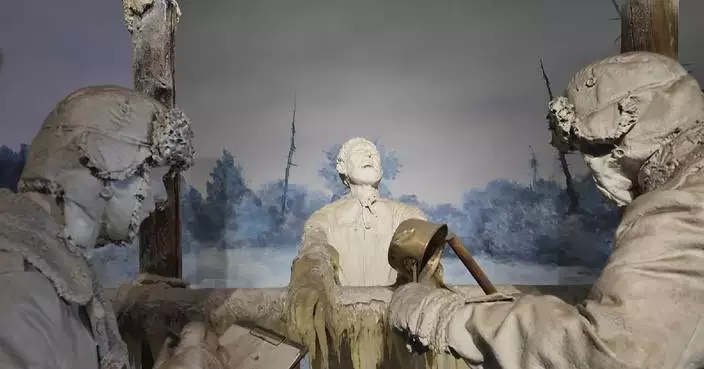
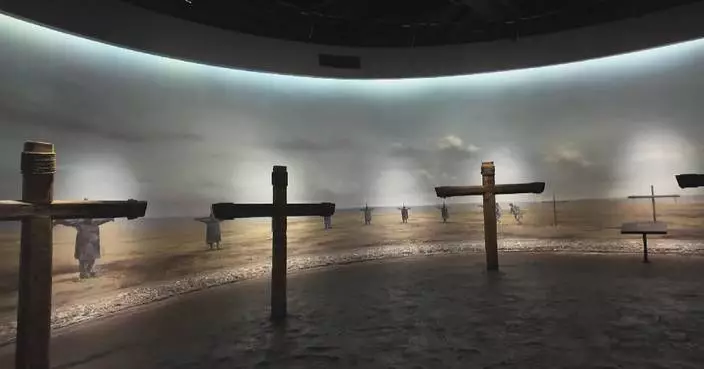
International guests who have dedicated their lives to historical truth joined China's 12th national memorial event honoring the hundreds of thousands of victims killed by Japanese troops in the Nanjing Massacre during World War II.
The memorial was held on Saturday at the public square of the Memorial Hall of the Victims in Nanjing Massacre by Japanese Invaders in Nanjing, capital of east China's Jiangsu Province. China's national flag was flown at half-mast in the presence the crowd that included survivors of the massacre, local students, and international guests.
In one of the most barbaric episodes during WWII, the Nanjing Massacre took place when Japanese troops captured the then-Chinese capital Nanjing on Dec 13, 1937. Over the course of six weeks, they proceeded to kill approximately 300,000 Chinese civilians and unarmed soldiers.
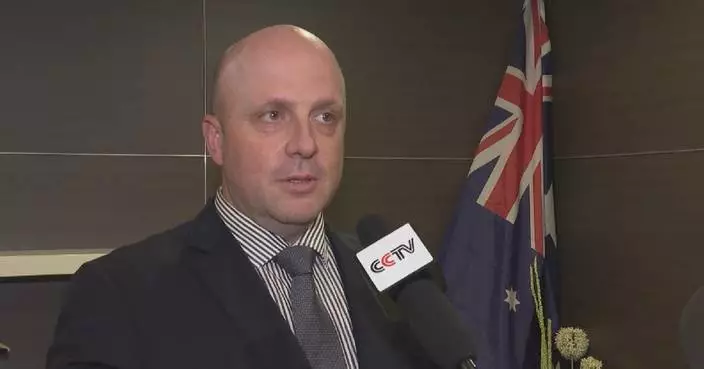
Joining the crowd was Christoph Reinhardt, the great-grandson of John Rabe (1882-1950) who was then a representative of German conglomerate Siemens in the war-ravaged Nanjing. During the Nanjing Massacre, Rabe set up an international safety zone with other foreigners, and they together saved the lives of around 250,000 Chinese people between 1937 and 1938 from the Japanese invaders.
Throughout the massacre, Rabe continued to keep a diary. To this day, all his pages remain one of the most comprehensive historical records of the atrocities committed by the Japanese aggressors.
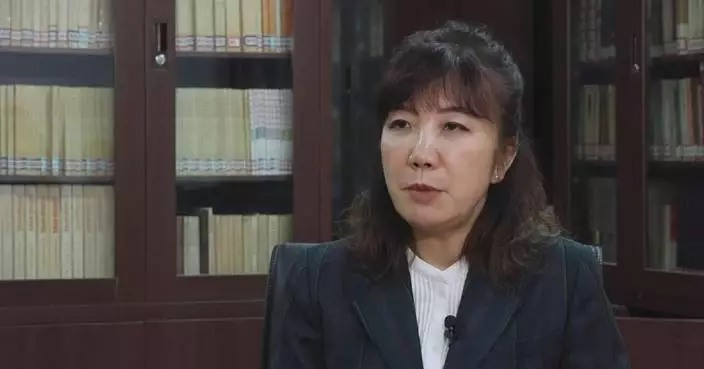
Sayoko Yamauchi, who was also in the crowd of mourners, arrived in Nanjing on Friday from Japan's Osaka to attend Saturday's ceremony, just as she has done almost every year since China designated Dec 13 as the National Memorial Day for the Victims of the Nanjing Massacre in 2014.
Yamauchi's grandfather was one of the Japanese soldiers who invaded Nanjing in January 1938. However, since first setting foot in Nanjing in 1987, she has dedicated herself to uncovering and spreading the truth about Japan's history of aggression and enlightening the Japanese public about their country's wartime atrocities.
In 2014, ahead of China's first National Memorial Day for the Victims of the Nanjing Massacre, Yamauchi, along with 10 other individuals, received an award for her special contribution to the Memorial Hall of the Victims in the Nanjing Massacre by Japanese Invaders.
By attending the grand memorial event, Reinhardt and Yamauchi both said they hope to convey a message of remembering history and cherishing peace.
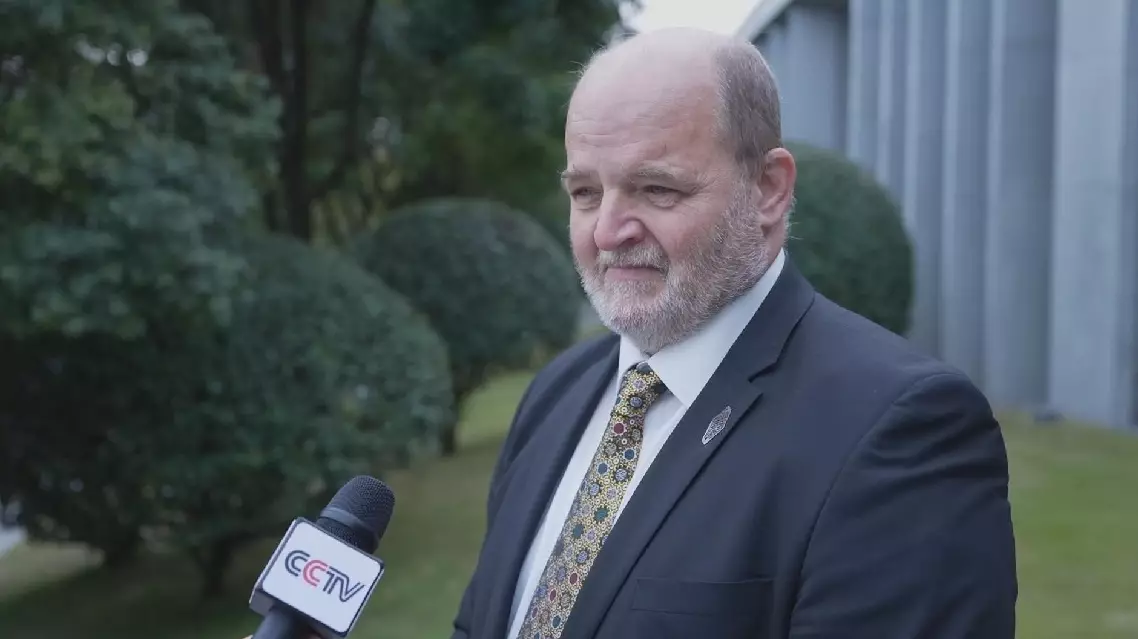
"This is my fifth visit to China, and Nanjing, and the third times I visited the ceremony. I have a wish that these survivors survive again and again and again. But my other wish is that the families of the survivors, that they transport the information, the right intention like their ancestors, because anyone must hold a hand (during) this remembering," Reinhardt told China Central Television (CCTV) in an interview before the event began on Saturday.
"Our delegation is on its 20th visit to China, coming to Nanjing to express our heartfelt condolences to those who perished 88 years ago, to remember this history, and to reflect on what we can do for a new future. That's why we are here," Yamauchi told CCTV on board the bus that took her to a local hotel in Nanjing on Friday evening.
Int'l guests call for remembering history at China's national event honoring Nanjing Massacre victims