EDITORS/NEWS DIRECTORS:
The Trump administration's policies are poised to upend decades of partnerships the federal government previously built with nonprofits to help people in their communities.
Since the 1960s, presidential administrations from both parties have seen value in using taxpayer dollars to fund nonprofits to take on social problems and deliver services. A vast and interconnected set of federal grants fund programs in every state and across many sectors, from public safety and early childhood education to food assistance and refugee resettlement services.
In January, the Trump administration sought to freeze federal grants and loans. Nonprofit groups immediately challenged the move and won a court-ordered pause. But in the six months since, the administration has cut, frozen or discontinued many federal grant programs across agencies.
Nonprofits, funders and researchers say those policy changes significantly dismantled the system of social services funded by the federal government and run through nonprofits. Deeper and more permanent cuts may still follow and the uncertainty about what might happen is taking a toll on nonprofit staff and communities.
What impact will that have on your community and its nonprofits?
An analysis by the Urban Institute provides a sense of the scale and reach of government support for nonprofits. Published in February, the data comes from the tax forms nonprofits file where they report any government grants they receive.
Members can find the amount of government funding for nonprofits in their state, county and Congressional district and can download the data here.
READ AP’S COVERAGE
The government was once a steady partner for nonprofits. That’s changing
Takeaways from AP’s report about cuts to government grants for nonprofits
— — —
READ COVERAGE FROM OUR PARTNERS
McDowell County, West Virginia, birthplace of food stamps, faces a disappearing safety net
In the nation’s poorest Congressional district, federal funding cuts create perfect storm
FINDINGS ABOUT GOVERNMENT FUNDING FOR NONPROFITS
The Urban Institute found $267 billion was granted to nonprofits from all levels of government — federal, state and local — in 2021, the most recent year a comprehensive set of nonprofit tax forms are available.
That figure underestimates the total funding nonprofits receive from the government. It doesn’t include contracts, as opposed to grants, nor reimbursements from programs like Medicare. It also excludes the smallest nonprofits, which file a different, abbreviated tax form.
The data includes all tax-exempt organizations from local food pantries to universities and nonprofit hospitals. But government funding does not just go to the largest organizations. A majority of nonprofits in every sector, from the arts to the environment to human services, report receiving government grants.
It shows that more than half of nonprofits in every state received government grants.
In the vast majority of the country, the typical nonprofit would run a deficit without government funding. The Urban Institute cautions that just because a nonprofit would have a budget deficit without government funding, it does not necessarily mean the nonprofit will close.
Data from another survey by the Urban Institute showed that on average government funding represented about 25% of nonprofit revenue. For comparison, donations from individuals made up about 27% of nonprofit revenue on average. However, government funding made up a greater percentage of revenue for larger nonprofits than for smaller organizations, the survey found.
Nonprofits are also important employers. In 2022, 9.9% of the private workforce was employed at nonprofits, according to an analysis of U.S. Bureau of Labor Statistics data.
WHAT HAS THE TRUMP ADMINISTRATION SAID ABOUT ITS VIEWS OF NONPROFITS?
In response to questions about why the Trump administration has cut grant funding that supports social services, White House spokesperson Kush Desai said the recently passed tax and spending law encourages Americans' “innate altruism” by creating a new deduction for charitable giving.
“The American people’s generosity for private charitable endeavors knows no bounds," Desai said, adding, “Instead of government largesse that’s often riddled with corruption, waste, fraud, and abuse, the Trump administration is focused on unleashing America’s economic resurgence to fuel Americans’ individual generosity.”
In addition to cutting or pausing grant programs, the administration has sought to exert influence over some nonprofits, in particular, universities.
In January, when the administration tried to freeze federal grants and loans, Matthew Vaeth, the then-acting director of the Office of Management and Budget, wrote in a memo, “The use of Federal resources to advance Marxist equity, transgenderism, and green new deal social engineering policies is a waste of taxpayer dollars that does not improve the day-to-day lives of those we serve.”
An executive order from February signed by the president states that many nonprofits, “actively undermine the security, prosperity, and safety of the American people,” and ordered federal agencies to review all grants to nonprofits.
In April, a representative from the Department for Government Efficiency contacted the nonprofit Vera Institute of Justice asking to install a team with them because they received government funding. DOGE withdrew the request after learning the U.S. Department of Justice had recently terminated grants awarded to Vera, but advocates said installing federal employees at a nonprofit would threaten the basic independence of civil society from the state.
WHAT FEDERAL GRANT PROGRAMS HAVE BEEN CUT?
There is no comprehensive lists of federal grant programs for nonprofits that have been cut, paused or ended.
Here are some of the changes that have already taken place:
— The U.S. Agriculture Department in March ended a pandemic-era program that provided $660 million for schools to purchase food from local farmers and producers.
— The U.S. Department of Education in July withheld more than $6 billion in federal grants for after-school and summer programs, English language instruction, adult literacy and more. The department recently released $1.3 billion of the frozen funds for after-school and summer programs.
— The U.S. Department of Housing and Urban Development in February terminated grants to organizations that enforce the Fair Housing Act by taking complaints, investigating and litigating housing discrimination cases.
— The U.S. Environmental Protection Agency in March canceled at least $1.7 billion in grants focused on improving the environment in minority communities hit hard by pollution. The cuts are being challenged in court.
— The Department of Government Efficiency clawed back multiple AmeriCorps grants and service programs, though courts have ordered some funding to be reinstated and service members rehired in response to lawsuits. The agency had an operating budget of roughly $1 billion.
— The U.S. Department of Justice in April canceled grants initially worth $800 million through its Office of Justice Programs that funded programs like interpretation services for victims of crimes who are deaf.
QUESTIONS TO ASK ABOUT GOVERNMENT SUPPORT FOR NONPROFITS:
— Find the share of nonprofits that have government grants at risk in your state, county or Congressional district.
— Ask nonprofits in your area about what government funding they've already lost, what federal grant programs they think are at risk and when they will know if their programs are renewed, extended or cut.
— Ask nonprofits what portion of their budgets come from some kind of government funding and what the consequences will be if that funding is lost. Will they need to cut services, lay off staff or close if they lose their government grants? What will that mean for your community?
— Ask people who receive services from nonprofits if they know that many of the services are paid for with government funds and that some of those funds are at risk. For example, consider contacting after-school programs, Meals on Wheels programs, environmental monitoring or disaster response efforts.
— Ask local government officials how they plan to deal with the cuts.
— Identify if there is a community foundation or grantmakers association in your area. Community foundations often have deep connections to local donors and nonprofits. Ask them if they are trying to coordinate donor responses or if they are surveying nonprofits about what they need.
Associated Press coverage of philanthropy and nonprofits receives support through the AP’s collaboration with The Conversation US, with funding from Lilly Endowment Inc. The AP is solely responsible for this content. For all of AP’s philanthropy coverage, visit https://apnews.com/hub/philanthropy.
Localize It is a resource produced by The Associated Press for its customers’ use. Questions can be directed to the Local News Success team at localizeit@ap.org.
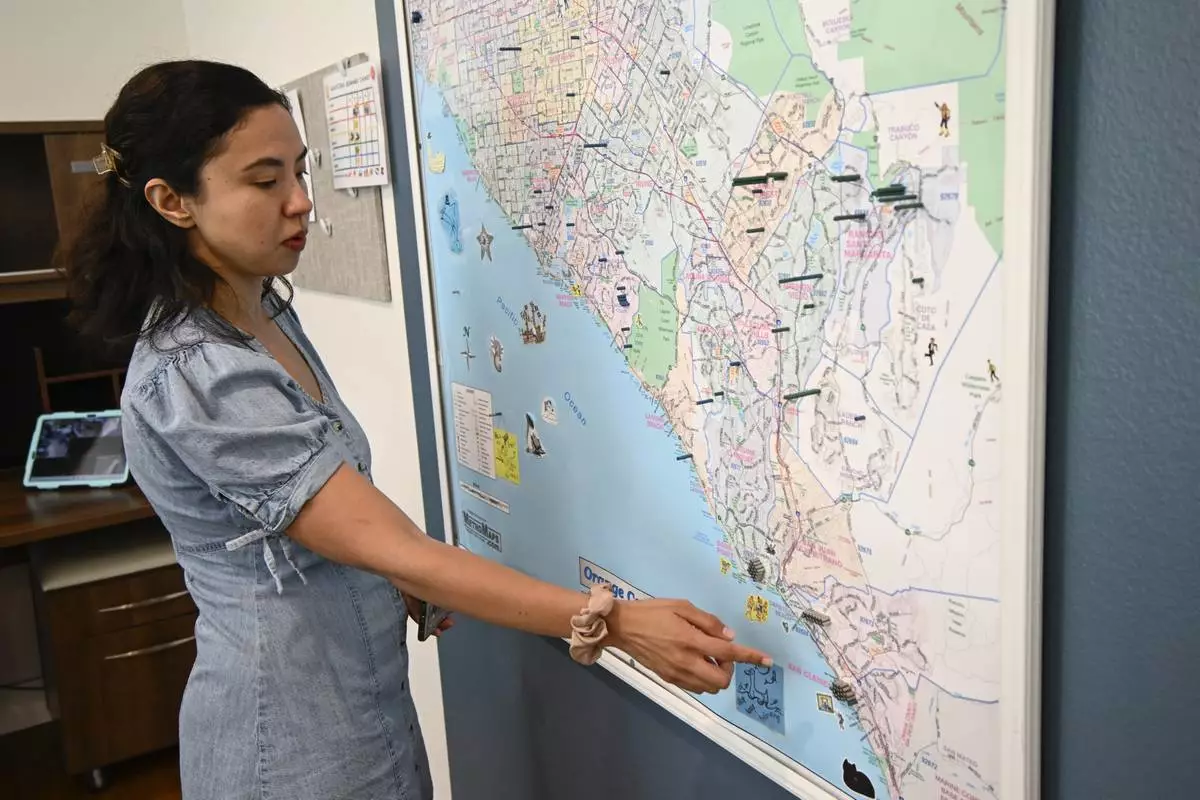
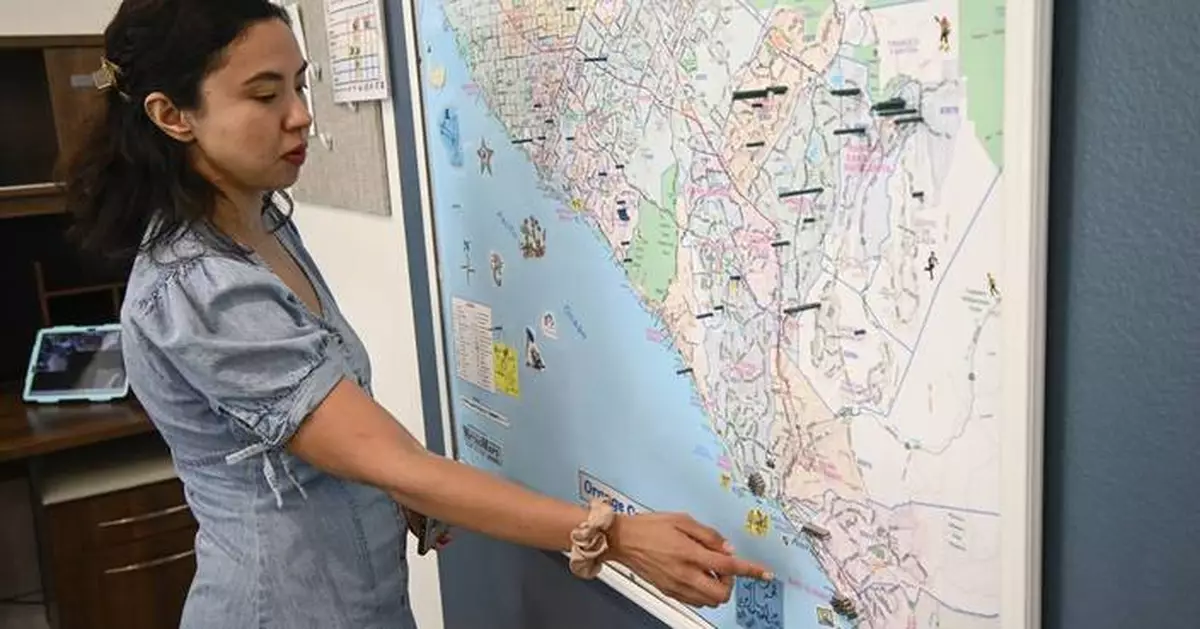
Megan Tambio, community engagement manager for the Friendship Shelter, points out the units in Orange County that the organization provides for homeless people during a tour of the organization's headquarters Monday, July 7, 2025, in San Clemente, Calif. (AP Photo/Denis Poroy)