As dawn breaks over Volgograd, the echoes of its storied past resonate through the streets. Once known as Stalingrad, this city bore witness to one of history's most significant battles. Today, it stands as a testament to resilience and renewal, with its residents honoring their heritage while embracing a promising future.
Situated on the right bank of the Volga River, Volgograd boasts a history marked by the Battle of Stalingrad, which lasted from July 1942 to February 1943.
"During certain periods of this grand battle, up to two million people, up to 2,000 tanks, 2,000 aircraft and up to 26,000 guns and mortars participated on both sides. The combat operations took place over an area of more than 100,000 square meters," said Irina Skorchenko, director of the Museum of Stalingrad Battle.
The battle culminated in a crushing defeat for the German armies, with about two million people perishing along the banks of the Volga River.
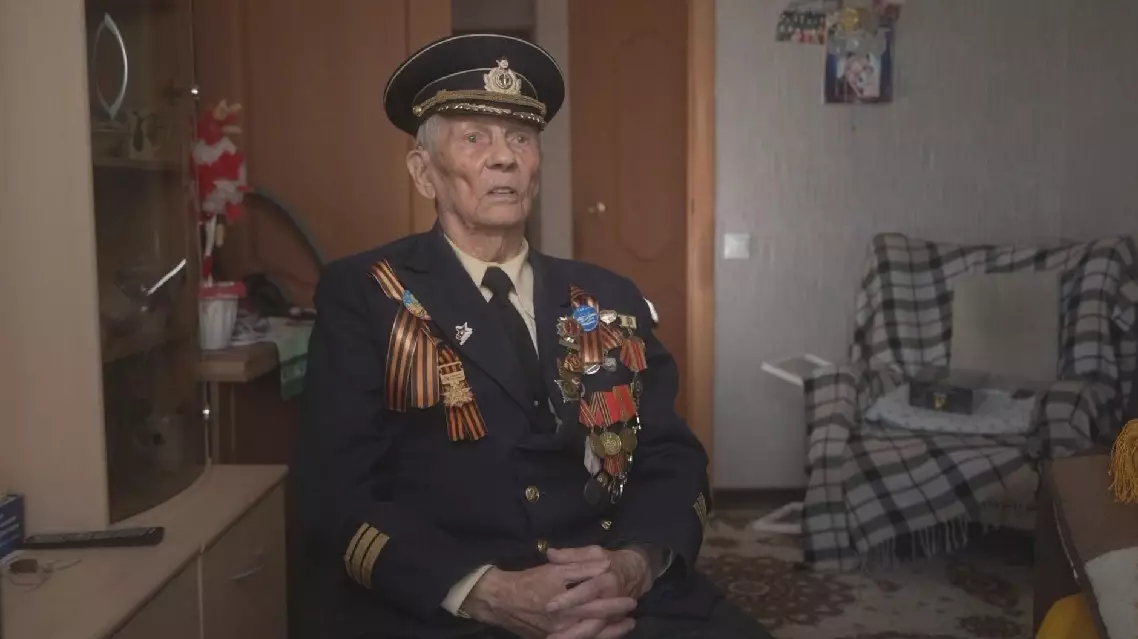
In July 1942, 14-year-old Aleksandr Eremin was appointed captain of a small ship that ferried between the two sides of the Volga. There was no one older to perform the task. Now 95, Aleksandr vividly remembers the horrors of that time.
"We went to land there. In Stalingrad’s Tatianka settlement. We were arriving at Tatianka, and father stopped the ship's engines. We heard children crying. The black smoke was coming, and over the smoke there was gunfire. Black smoke was rising, and we saw a boat coming. No rows, old people inside, children were crying. Two of them tried to pedal with their hands. One was holding from one side of the boat, and another from the other," he recalled.
Everything happening on the battlefield was observed from Mamayev Kurgan, where countless soldiers perished as the hill changed hands between the Germans and Soviets repeatedly. Today, Mamayev Kurgan is home to the "Motherland Calls," one of the world’s largest statues.
Thousands visit this memorial complex every day, with even larger crowds on the eve of the May 9 parade, where expressions of pride, remembrance, and determination are evident on the faces of the people.
The city's current appearance is a source of pride for its residents. After the battle, there was not a single building that had not been affected by the devastating war.
"Immediately after the Battle of Stalingrad, in fact two months later, the government had already adopted a resolution on the restoration of Stalingrad. It was already said that factories and residential settlements should be restored at the same time. In the spring of 1943, leading architects arrived in Stalingrad, examined and looked at the situation in the city, and that same year, design work began on the creation of the new city," explained Pyotr Oleynikov, director of the Volgograd Architecture Museum.
This commitment to restoration is one reason Volgograd looks so beautiful today. Young people see their future in the city, honor its past, and laud it as a symbol of resilience.
Volgograd's journey from ashes of Stalingrad to bright future