The Chinese currency renminbi, or the yuan, has posted a stable performance in value against the U.S. dollar so far this year, Li Bin, deputy director of the State Administration of Foreign Exchange, said Tuesday.
"The renminbi exchange rate has remained relatively stable. In the first half of this year, the renminbi appreciated by 1.9 percent against the U.S. dollar. During the period, the renminbi's exchange rate against the U.S. dollar fluctuated between 7.15 and 7.35, and that helped maintain basic stability at a reasonable and balanced level, while also serving as an automatic stabilizer for adjusting the macroeconomy and international balance of payments," said Li.
Li stated that market expectations also remained stable, while China's foreign exchange supply and demand were broadly balanced.
"From indicators such as forwards, options, and other foreign exchange market instruments, the current market does not exhibit a clear one-way expectation of appreciation or depreciation for the renminbi. Market trading is rational and orderly. When the renminbi weakens, corporate entities tend to increase their foreign exchange sales at higher levels; when the renminbi strengthens, companies tend to increase their foreign exchange purchases at lower levels. Overall, there is no irrational trading behavior such as chasing rallies or selling off during dips," he explained.
In addition, since the start of the year, China's international balance of payments has demonstrated a pattern of self-sustaining equilibrium.
"From January to May, equity-type foreign direct investment into the Chinese market saw a net inflow of 31.1 billion U.S. dollars, marking a 16 percent increase year on year. In addition, securities investments coming into China had a net inflow of around 33 billion U.S. dollars, reversing the trend of net outflows seen in the second half of last year. Outbound investments have been progressing in an orderly manner as well. During the same period, outbound equity-type direct investments amounted to 51.9 billion U.S. dollars, remaining stable compared with the previous year, while outbound securities investments continued to remain active," said Li.
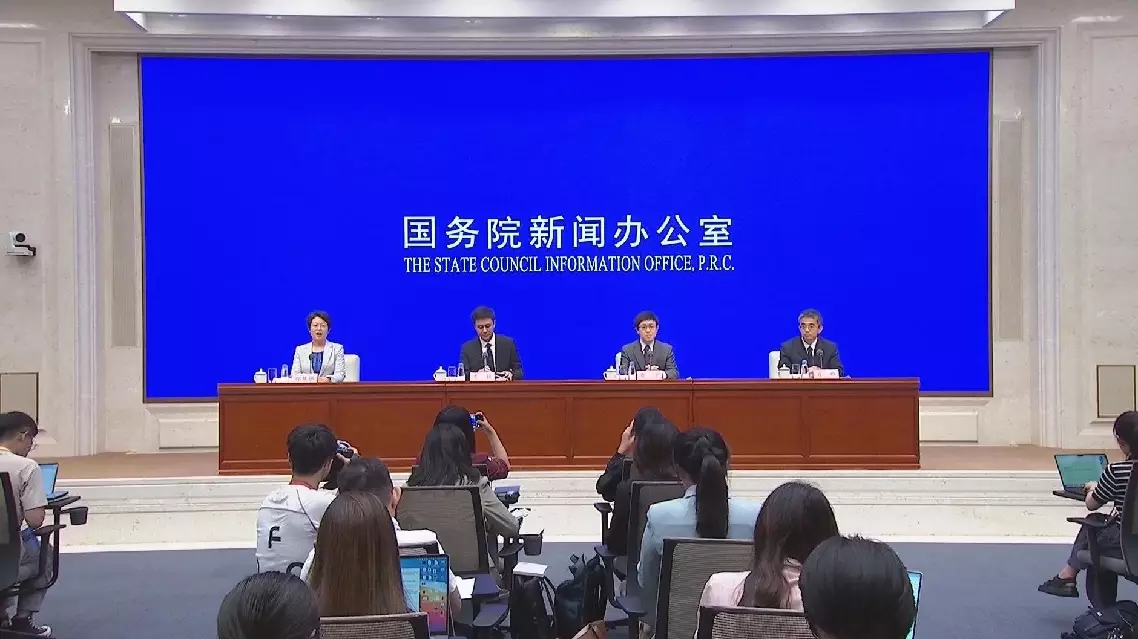
Chinese yuan relatively stable against US dollar: official