WASHINGTON (AP) — The U.S. Army’s head of aviation has changed jobs to become chief of the branch's enterprise marketing office, a move that comes before the National Transportation Safety Board holds hearings next week on January's midair collision between an Army helicopter and a commercial jet that killed 67 people.
Brig. Gen. Matthew Braman became chief of the Army Enterprise Marketing Office this month to focus on advertising and boosting recruitment, according to his new bio on an Army website. An Army spokesperson said the plan to move Braman was in place last fall and had nothing to do with the tragedy.
The NTSB will hold three days of hearings, starting next Wednesday, on the crash near Reagan Washington National Airport.
Braman was among those who faced criticism from some in Congress following the collision over the Potomac River, which was the nation’s deadliest plane crash since November 2001.
Braman acknowledged during a hearing in March that military helicopters were still flying over the nation’s capital with a key system broadcasting their locations turned off during most missions because it deemed them sensitive.
Texas Sen. Ted Cruz called it “shocking and deeply unacceptable” after earlier complaining that the general wasn't answering his questions.
Braman repeatedly evaded Cruz’s questions during the hearing about whether he would provide a copy of a memo laying out the policy for when Army helicopters fly with their locators turned off. Braman said he wasn’t sure he could provide the memo because it was part of the investigation, but the head of the NTSB assured him that would be okay.
Former NTSB and FAA crash investigator Jeff Guzzetti, who has followed the crash investigation and watched the hearing, welcomed the news that Braman is no longer leading the Army's aviation unit.
“Personally I think that’s a good thing. That guy was just not playing ball in my view,” Guzzetti said. “He was too protective and defensive and evasive and secretive. And that’s not what you need in this type of situation.”
Cruz, the Republican chairman of the Senate Commerce Committee, said in April that troubling missteps since the crash “underscore the precarious situation in the nation’s airspace.”
Expressing frustration with the Army’s refusal to turn over a memo detailing its flight rules, Cruz said during the hearing that any deaths resulting from another collision near Reagan Airport “will be on the Army’s hands.” He threatened the Army with a subpoena if it did not give the committee a copy of its memo.
The fact that system wasn’t activated in the Black Hawk that collided with the passenger jet is a key concern investigators have highlighted. With the location system turned off, the tower had to rely on radar for updates on the helicopter’s position that only came once every four seconds instead of every second before the crash.
“It begs the question, what doesn’t the Army want Congress or the American people to know about why it was flying partially blind to the other aircraft and to the air traffic controllers near DCA?” Cruz said, using the airport code for Reagan. “This is not acceptable.”
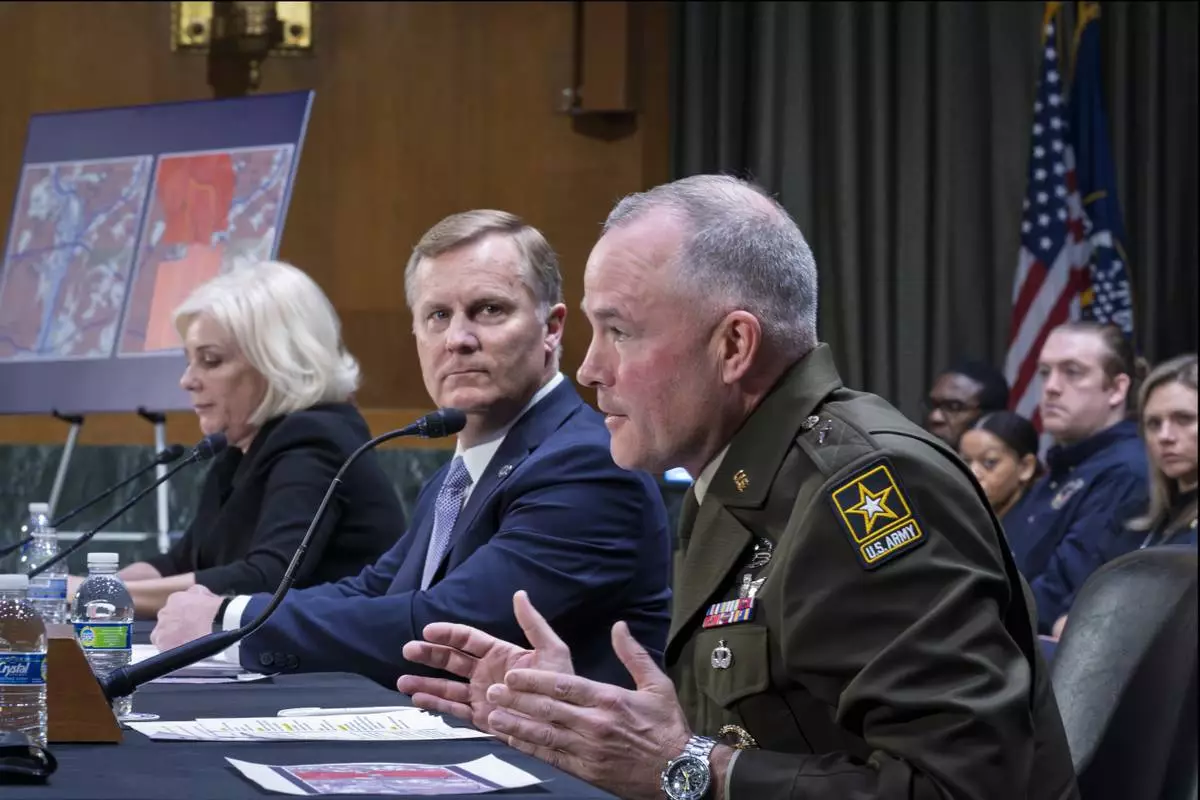
FILE - Brig. Gen. Matthew Braman, director of Army Aviation, center, answers questions, joined from left by Jennifer Homendy, chair of the National Transportation Safety Board, and Chris Rocheleau, acting administrator of the Federal Aviation Administration, as the Senate Transportation Subcommittee holds a hearing to examine the preliminary report by the National Transportation Safety Board on the Jan. 29, 2025, midair collision of an Army Black Hawk helicopter and an American Airlines regional jet, on Capitol Hill in Washington, March 27, 2025. (AP Photo/J. Scott Applewhite, File)
Glenn Hall, a Hockey Hall of Famer whose ironman streak of 502 starts as a goaltender remains an NHL record, has died. He was 94.
Nicknamed “Mr. Goalie,” Hall worked to stop pucks at a time when players at his position were bare-faced, before masks of any kind became commonplace. He did it as well as just about anyone of his generation, which stretched from the days of the Original Six into the expansion era.
A spokesperson for the Chicago Blackhawks confirmed the team received word of Hall’s death from his family. A league historian in touch with Hall’s son, Pat, said Hall died at a hospital in Stony Plain, Alberta, on Wednesday.
A pioneer of the butterfly style of goaltending of dropping to his knees, Hall backstopped Chicago to the Stanley Cup in 1961. He won the Conn Smythe Trophy as most valuable player of the playoffs in 1968 with St. Louis when the Blues reached the final before losing to Montreal. He was the second of just six Conn Smythe winners from a team that did not hoist the Cup.
His run of more than 500 games in net is one of the most untouchable records in sports, given how the position has changed in the decades since. Second in history is Alec Connell with 257 from 1924-30.
“Glenn was sturdy, dependable and a spectacular talent in net,” Commissioner Gary Bettman said. “That record, set from 1955-56 to 1962-63, still stands, probably always will, and is almost unfathomable — especially when you consider he did it all without a mask.”
Counting the postseason, Hall started 552 games in a row.
Hall won the Calder Trophy as rookie of the year in 1956 when playing for the Detroit Red Wings. After two seasons, he was sent to the Black Hawks along with legendary forward Ted Lindsay.
Hall earned two of his three Vezina Trophy honors as the league's top goalie with Chicago, in 1963 and '67. The Blues took him in the expansion draft when the NHL doubled from six teams to 12, and he helped them reach the final in each of their first three years of existence, while winning the Vezina again at age 37.
Hall was in net when Boston's Bobby Orr scored in overtime to win the Cup for the Bruins in 1970, a goal that's among the most famous in hockey history because of the flying through the air celebration that followed. He played one more season with St. Louis before retiring in 1971.
“His influence extended far beyond the crease," Blues chairman Tom Stillman said. “From the very beginning, he brought credibility, excellence, and heart to a new team and a new NHL market.”
A native of Humboldt, Saskatchewan, Hall was a seven-time first-team NHL All-Star who had 407 wins and 84 shutouts in 906 regular-season games. He was inducted into the Hall of Fame in 1975, and his No. 1 was retired by Chicago in 1988.
Hall was chosen as one of the top 100 players in the league's first 100 years.
Blackhawks chairman and CEO Danny Wirtz called Hall an innovator and “one of the greatest and most influential goaltenders in the history of our sport and a cornerstone of our franchise.”
“We are grateful for his extraordinary contributions to hockey and to our club, and we will honor his memory today and always,” Wirtz said.
The Blackhawks paid tribute to Hall and former coach and general manager Bob Pulford with a moment of silence before Wednesday night’s game against St. Louis. Pulford died Monday.
A Hall highlight video was shown on the center-ice videoboard. The lights were turned off for the moment of silence, except for a spotlight on the No. 1 banner for Hall that hangs in the rafters at the United Center.
Fellow Hall of Famer Martin Brodeur, the league's leader in wins with 691 and games played with 1,266, posted a photo of the last time he saw Hall along with a remembrance of him.
“Glenn Hall was a legend, and I was a big fan of his,” Brodeur said on social media. “He set the standard for every goaltender who followed. His toughness and consistency defined what it meant to play.”
AP Sports Writer Jay Cohen in Chicago contributed to this report.
AP NHL: https://apnews.com/hub/nhl
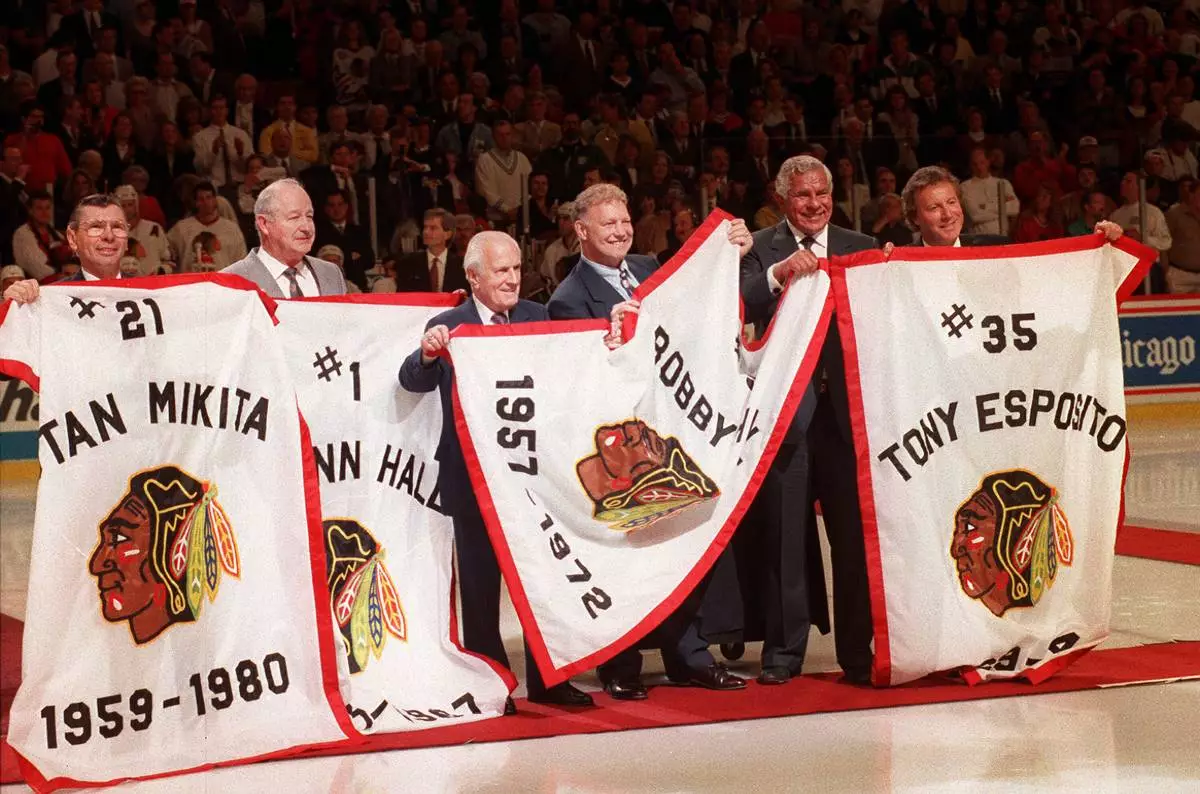
FILE - Glenn Hall, second from left, stands with fellow former Chicago Blackhawks players Stan Mikita, former general manager Tommy Ivan, Bobby Hull, Bill Wirtz and Tony Esposito during a pre-game ceremony at the Chicago Stadium in Chicago, Ill., April 14, 1994. (AP Photo/Fred Jewell, File)
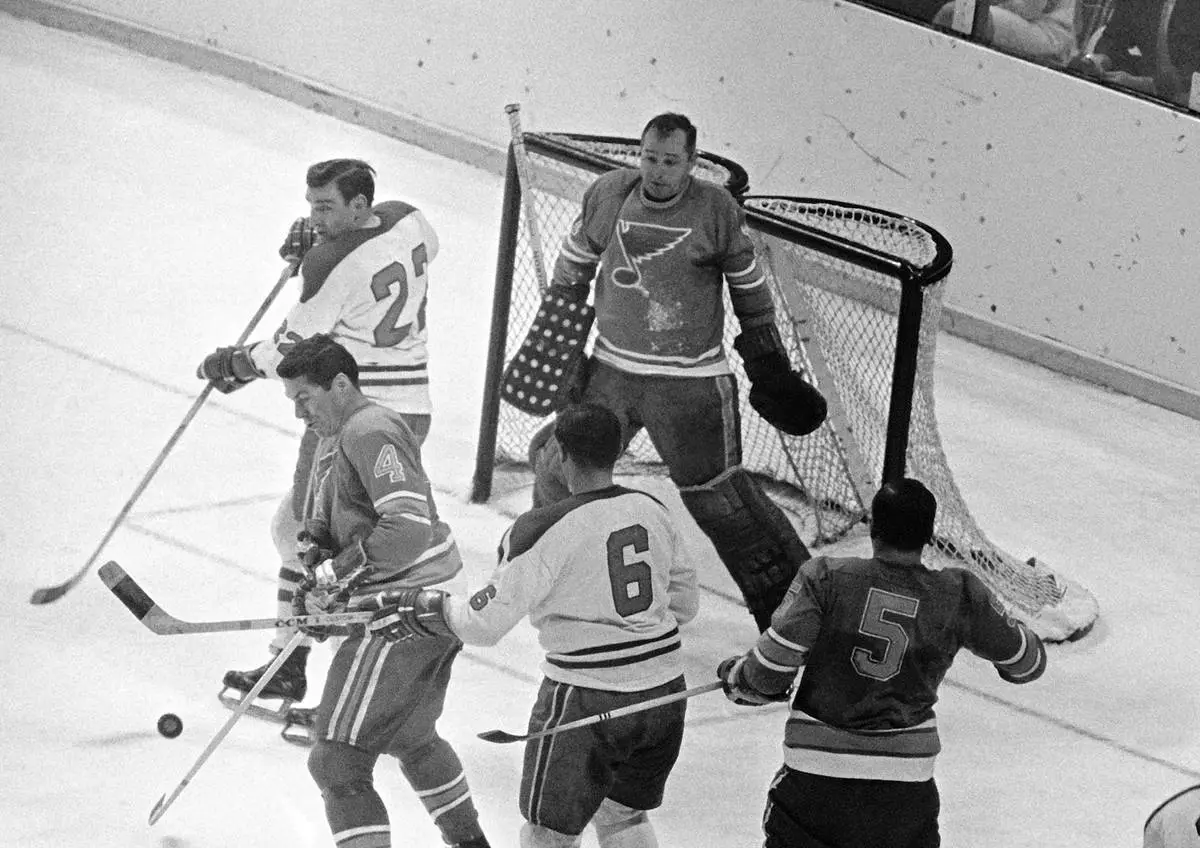
FILE - St. Louis Blues goalie Glenn Hall, top right, is pinned to his net waiting to make a save on a Montreal Canadians shot as Blues' Noel Picard (4) tries to block the puck while Canadiens' John Ferguson (22) and Ralph Backstorm wait for a rebound in the third period of their NHL hockey Stanley Cup game, May 5, 1968. (AP Photo/Fred Waters, File)