LOS ANGELES (AP) — A doctor who was a primary target in the sweeping investigation of actor Matthew Perry's overdose death pleaded guilty Wednesday to supplying the “Friends” star with ketamine despite knowing he was a struggling addict.
Dr. Salvador Plasencia became the fourth of the five people charged in connection with Perry’s death to plead guilty. He and a woman prosecutors say was a major ketamine dealer faced the most serious charges after Perry was found dead in the hot tub of his Los Angeles home on Oct. 28, 2023.
Click to Gallery

Dr. Salvador Plasencia leaves federal court with his attorneys on Wednesday, July 23, 2025 in Los Angeles, after pleading guilty to giving ketamine to Matthew Perry, leading up to the actor's 2023 overdose death. (AP Photo/Damian Dovarganes)
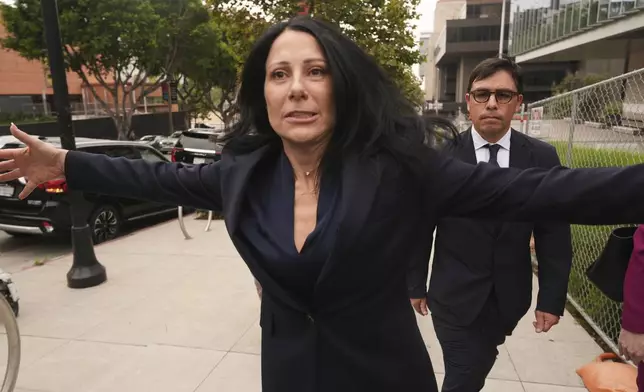
Dr. Salvador Plasencia, right, walks behind his Attorney Debra S. White as he leaves federal court on Wednesday, July 23, 2025 in Los Angeles, after pleading guilty to giving ketamine to Matthew Perry, leading up to the actor's 2023 overdose death. (AP Photo/Damian Dovarganes)
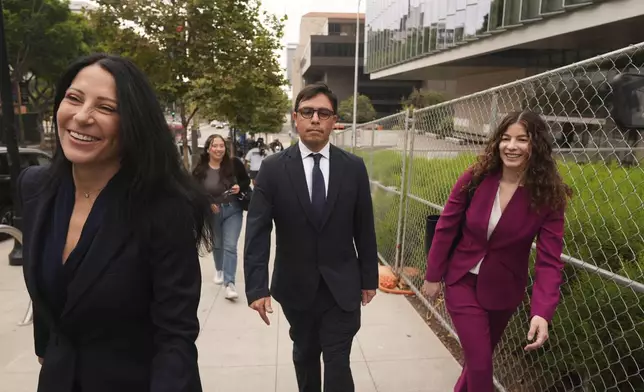
Dr. Salvador Plasencia, center, flanked by his attorneys Debra S. White and Karen L. Goldstein, leaves federal court on Wednesday, July 23, 2025 in Los Angeles, after pleading guilty to giving ketamine to Matthew Perry, leading up to the actor's 2023 overdose death. (AP Photo/Damian Dovarganes)
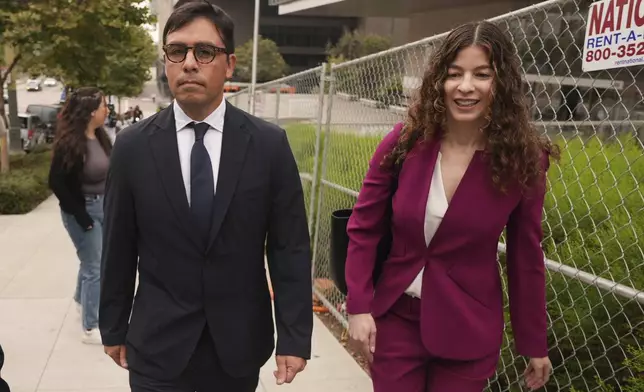
Dr. Salvador Plasencia, left, and his attorney Karen L. Goldstein, leave federal court on Wednesday, July 23, 2025 in Los Angeles, after pleading guilty to giving ketamine to Matthew Perry, leading up to the actor's 2023 overdose death. (AP Photo/Damian Dovarganes)
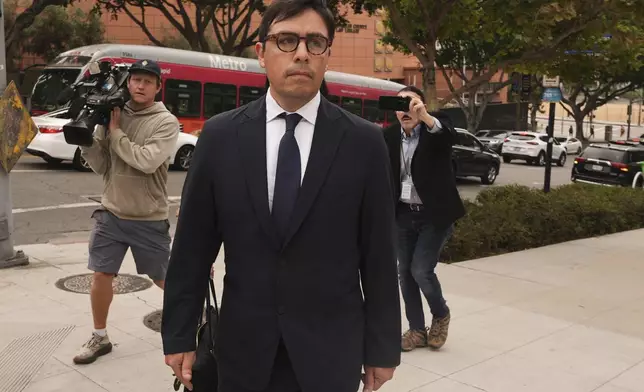
Dr. Salvador Plasencia leaves federal court on Wednesday, July 23, 2025 in Los Angeles, after pleading guilty to giving ketamine to Matthew Perry, leading up to the actor's 2023 overdose death. (AP Photo/Damian Dovarganes)
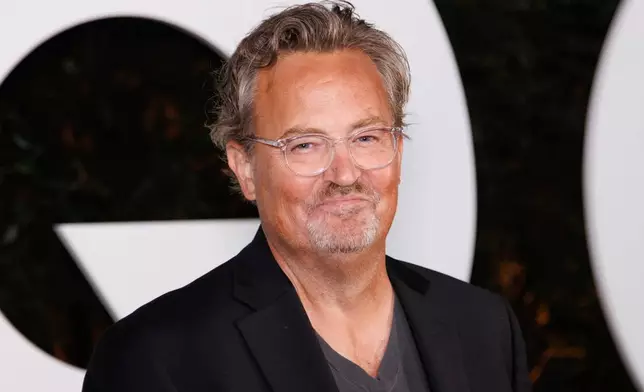
FILE - Matthew Perry appears at the GQ Men of the Year Party in West Hollywood, Calif., on Nov. 17, 2022. (Photo by Willy Sanjuan/Invision/AP, File)
Plasencia stood next to his lawyer and said “guilty” four times for four different counts before Judge Sherilyn Peace Garnett in federal court in Los Angeles.
Plasencia, 43, was to have gone on trial in August until the doctor agreed last month to plead guilty to four counts of distribution of ketamine, according to the signed document filed in federal court in Los Angeles.
The charges can carry up to 40 years in prison. He is likely to be sentenced to much less, but there is no guarantee in his agreement.
He spoke only to answer the judge's questions. When asked if his lawyers had considered all the possibilities of pleas and sentencing in the case, Plasencia replied, “They've considered everything.”
“Dr. Plasencia is profoundly remorseful for the treatment decisions he made while providing ketamine to Matthew Perry,” the doctor's attorney, Debra White, said in an emailed statement after the hearing. “He is fully accepting responsibility by pleading guilty to drug distribution. Dr. Plasencia intends to voluntarily surrender his medical license, acknowledging his failure to protect Mr. Perry, a patient who was especially vulnerable due to addiction.”
In exchange for the guilty pleas, prosecutors have agreed to drop three additional counts of distribution of ketamine and two counts of falsifying records.
Prosecutors outlined the charges in court before the plea, and said that he did not sell Perry the dose that killed the actor.
They described, and Plasencia admitted, that Perry froze up and his blood pressure spiked when the doctor gave him one injection, but Plasencia still left more ketamine for Perry's assistant to inject.
In court, Perry was referred to only as “victim MP.” Plasencia acknowledged that he knew the actor was in addict when he charged him thousands of dollars and gave him ketamine, a drug primarily used as a surgical anesthetic.
Plasencia has been free on bond since shortly after his arrest in August, and will be allowed to remain free until his Dec. 3 sentencing.
Defense lawyer Karen Goldstein assured the judge that he is not a flight risk, saying he was born and raised in the area and is one of the primary caretakers for his son, who is about 2 years old.
Plasencia has already turned over his license to prescribe controlled substances. He has been allowed to practice medicine in the past year, but he must inform patients of the charges before treating them. Goldstein told the judge he'll now surrender his medical license too.
Plasencia left the courthouse with his lawyers without speaking to reporters gathered outside.
"While Dr. Plasencia was not treating Mr. Perry at the time of his death," his lawyer's statement said, “he hopes his case serves as a warning to other medical professionals and leads to stricter oversight and clear protocols for the rapidly growing at-home ketamine industry in order to prevent future tragedies like this.”
The only remaining defendant who has not reached an agreement with the U.S. Attorney's Office is Jasveen Sangha, who prosecutors allege is a drug dealer known as the “Ketamine Queen” and sold Perry the lethal dose. Her trial is scheduled to begin next month. She has pleaded not guilty.
According to prosecutors and co-defendants who reached their own deals, Plasencia illegally supplied Perry with a large amount of ketamine starting about a month before his death on Oct. 28, 2023.
According to a co-defendant, Plasencia in a text message called the actor a “moron” who could be exploited for money.
Perry's personal assistant, his friend, and another doctor all agreed to plead guilty last year in exchange for their cooperation as the government sought to make their case against larger targets, Plasencia and Sangha. None have been sentenced yet.
Perry was found dead by the assistant, Kenneth Iwamasa. The medical examiner ruled that ketamine was the primary cause of death.
The actor had been using the drug through his regular doctor in a legal but off-label treatment for depression, which has become increasingly common. Perry began seeking more ketamine than his doctor would give him.
Plasencia admitted in his plea agreement that another patient connected him with Perry, and that starting about a month before Perry's death, he illegally supplied the actor with 20 vials of ketamine totaling 100 mg of the drug, along with ketamine lozenges and syringes.
He admitted to enlisting another doctor, Mark Chavez, to supply the drug for him, according to the court filings.
“I wonder how much this moron will pay,” Plasencia texted Chavez, according to Chavez's plea agreement.
Perry struggled with addiction for years, dating back to his time on “Friends,” when he became one of the biggest stars of his generation as Chandler Bing. He starred alongside Jennifer Aniston, Courteney Cox, Lisa Kudrow, Matt LeBlanc and David Schwimmer for 10 seasons from 1994 to 2004 on NBC’s megahit.
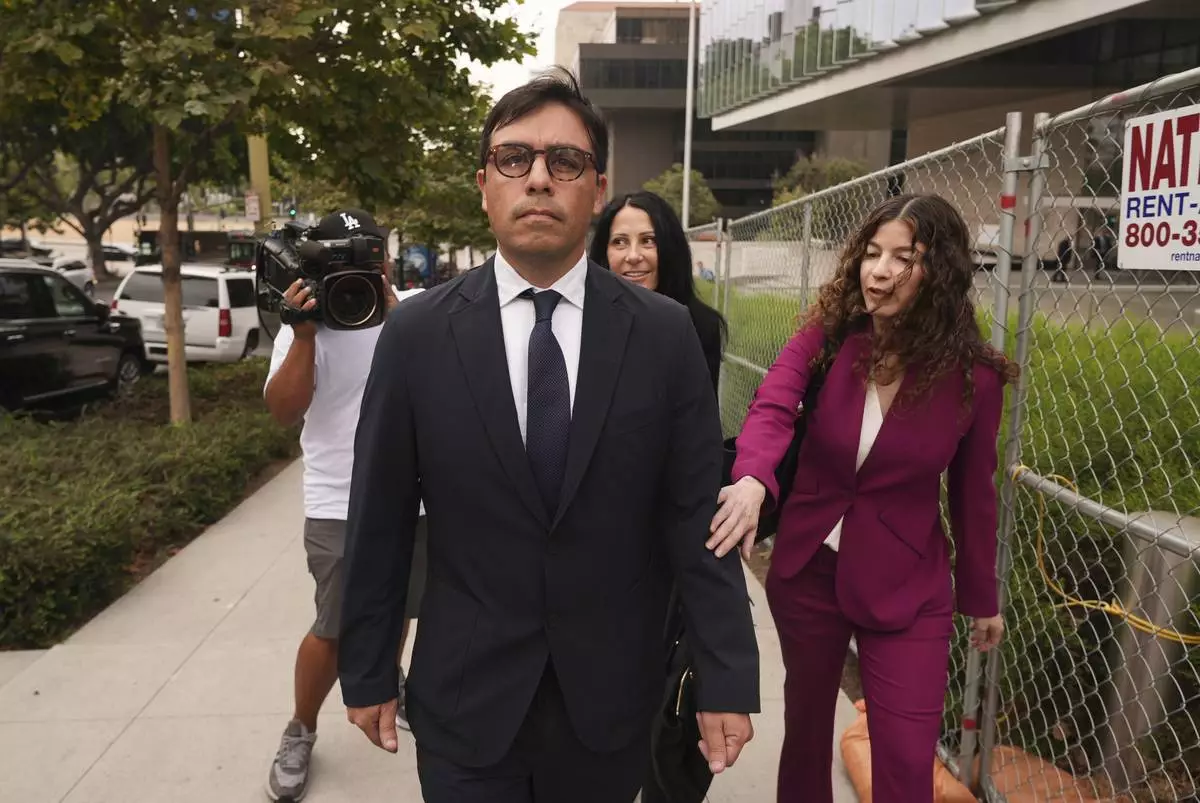
Dr. Salvador Plasencia leaves federal court with his attorneys on Wednesday, July 23, 2025 in Los Angeles, after pleading guilty to giving ketamine to Matthew Perry, leading up to the actor's 2023 overdose death. (AP Photo/Damian Dovarganes)
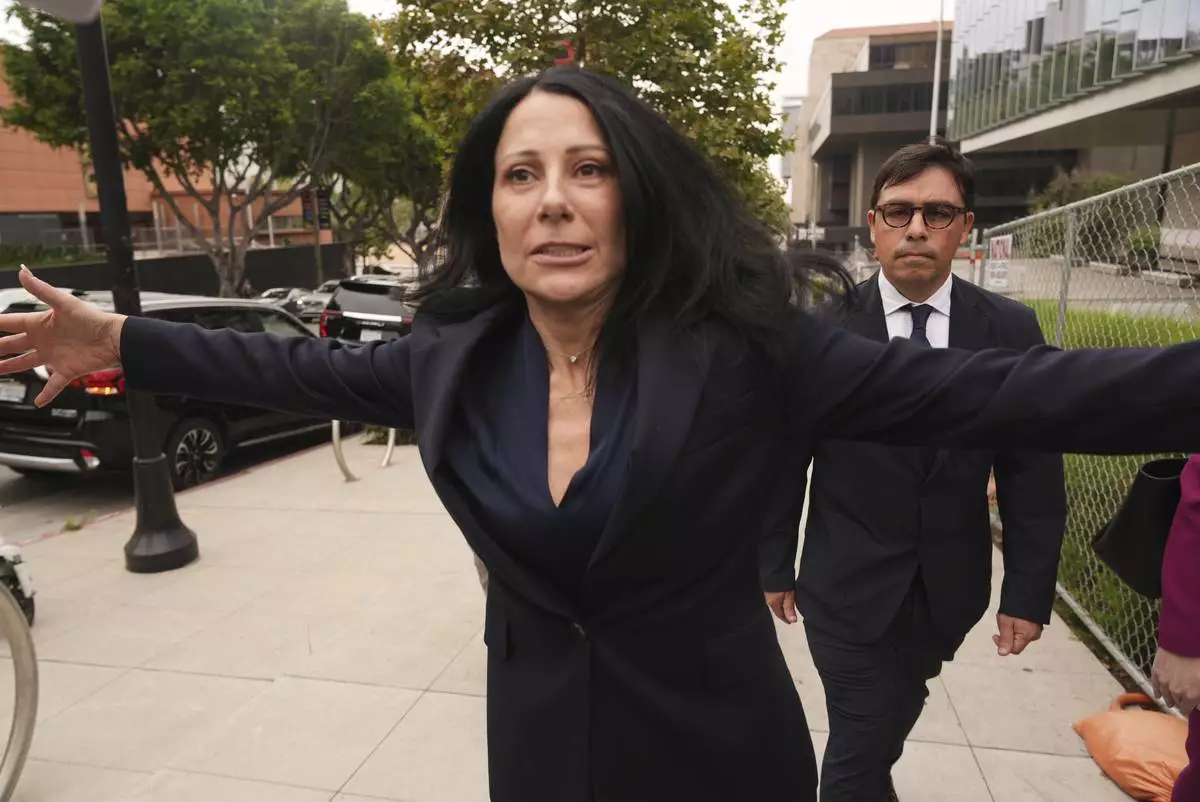
Dr. Salvador Plasencia, right, walks behind his Attorney Debra S. White as he leaves federal court on Wednesday, July 23, 2025 in Los Angeles, after pleading guilty to giving ketamine to Matthew Perry, leading up to the actor's 2023 overdose death. (AP Photo/Damian Dovarganes)
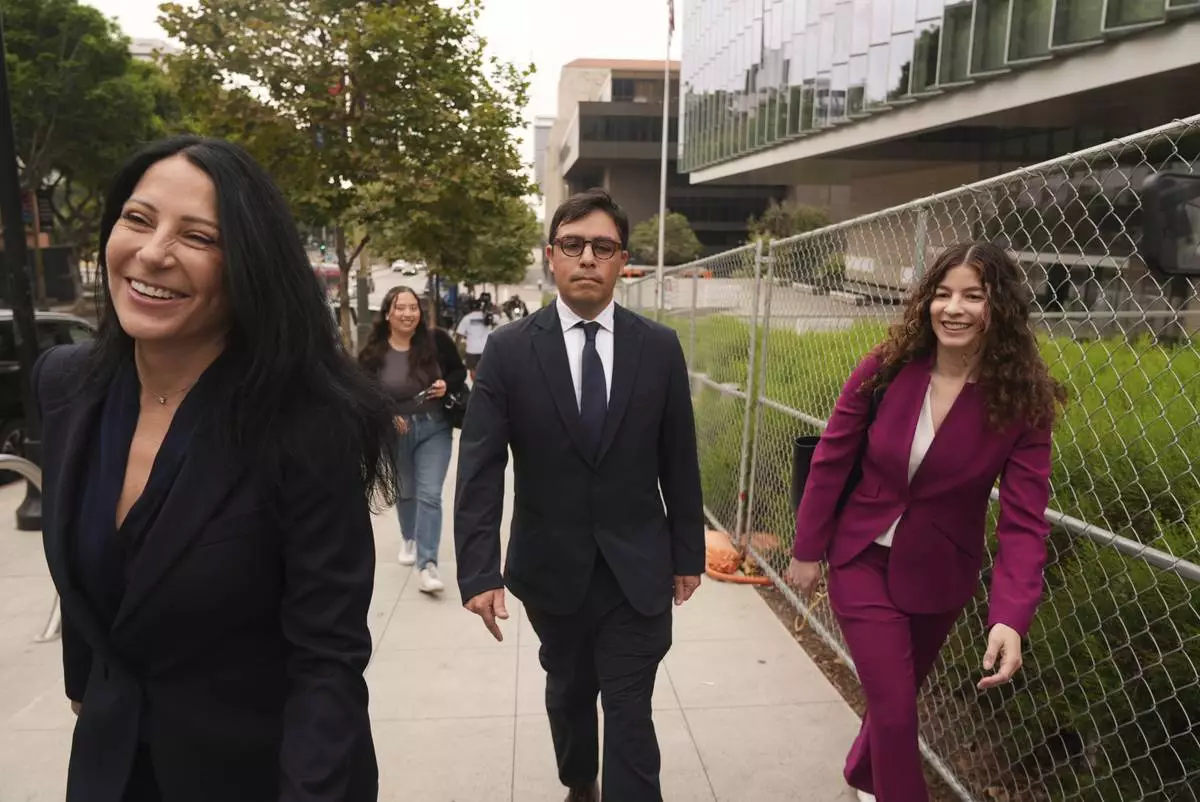
Dr. Salvador Plasencia, center, flanked by his attorneys Debra S. White and Karen L. Goldstein, leaves federal court on Wednesday, July 23, 2025 in Los Angeles, after pleading guilty to giving ketamine to Matthew Perry, leading up to the actor's 2023 overdose death. (AP Photo/Damian Dovarganes)

Dr. Salvador Plasencia, left, and his attorney Karen L. Goldstein, leave federal court on Wednesday, July 23, 2025 in Los Angeles, after pleading guilty to giving ketamine to Matthew Perry, leading up to the actor's 2023 overdose death. (AP Photo/Damian Dovarganes)

Dr. Salvador Plasencia leaves federal court on Wednesday, July 23, 2025 in Los Angeles, after pleading guilty to giving ketamine to Matthew Perry, leading up to the actor's 2023 overdose death. (AP Photo/Damian Dovarganes)
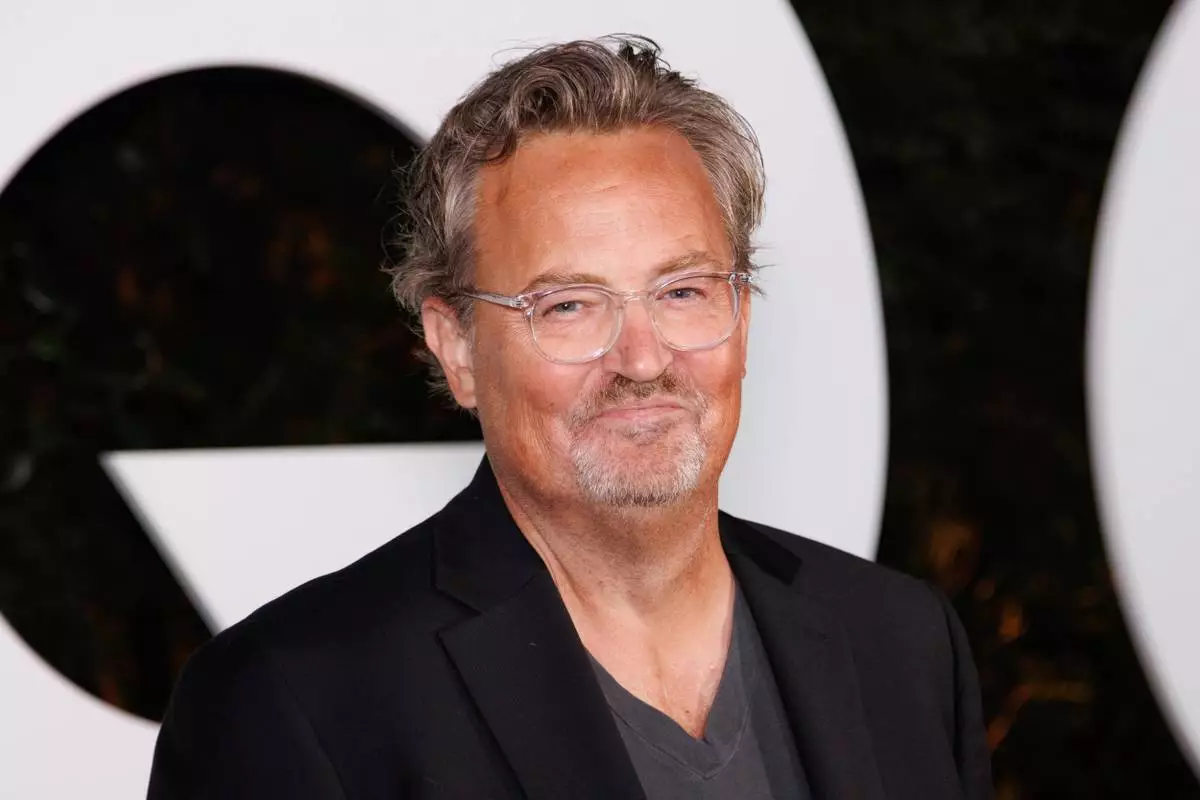
FILE - Matthew Perry appears at the GQ Men of the Year Party in West Hollywood, Calif., on Nov. 17, 2022. (Photo by Willy Sanjuan/Invision/AP, File)