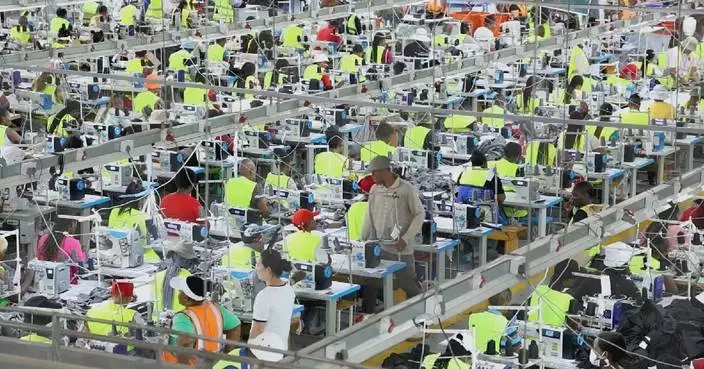
As 2025 marks the 50th anniversary of the establishment of diplomatic ties between China and the European Union (EU), Liu Jiandong, chairman of China Chamber of Commerce to the EU, noted that this five-decade partnership has evolved from "taking small steps at a quick pace" to "progressing steadily side by side," resulting in significant changes that benefit both parties.
In Thursday's interview with China Global Television Network (CGTN), Liu elaborating on three key changes in the cooperation since 1975.
"The first significant change is the exponential growth of trade. In 1975, when China and the EU established diplomatic ties, bilateral trade was less than three billion U.S. dollars. What does this number mean? It is equivalent to the value of two Airbus A380s by today's standards. Today, after rapid growth, in 2023, the China-EU trade volume reached some 800 billion U.S. dollars. That is to say, in every minute as we speak, we are exchanging 1.6 million U.S. dollars’ worth of goods and services between the two sides, and we are now each other's second-largest trading partner," Liu said.
"The second significant change, in my opinion, is in terms of quality. We are seeing higher quality in our cooperation. At the very beginning, it was mainly about one-way technology transfer. But now, it's more multi-faceted, including technology, capital and products, in a much more dynamic two-way process. Today, EU businesses' foreign direct investment (FDI) in China primarily takes the form of investment in greenfield projects," he said.
The expert mentioned several major investment projects in China, including German automotive giant Volkswagen's new energy vehicle (NEV) production base in Wuxi, Jiangsu Province, and German chemical leader BASF's production facility in Zhanjiang, Guangdong Province -- all featuring substantial investments and cutting-edge technologies.
"At the same time, greenfield investment is also a leading mode of investment by Chinese businesses in the EU. As far as the current situation is concerned, investment by Chinese businesses in the EU is mainly concentrated in key fields including renewable energy, electronics, healthcare and digital sectors. What appears to be relatively prominent is the investment across the entire electric vehicle industry chain, covering 55 percent of the investment projects, and accounting for 85 percent of the value of investment in the sector. So, indeed, investment by Chinese businesses in the EU is highly influential. We can say that the quality of mutual investment between China and the EU has kept going up," Liu said.
"The third significant change lies in closer people-to-people exchanges. Apart from the rapid development of the China-Europe Freight Train service, the Air Silk Road, etc., we are also seeing more people-to-people exchanges. Chinese companies are setting up operations in the EU in the great interest of the local population's livelihood improvement, creating 270,000 jobs by their 2,800 projects in Europe," he said.
Taking Hungary as an example, Chinese automotive companies are rapidly expanding their operations in the country, transforming it into a leading battery exporter while significantly enhancing its industrial capabilities, Liu said.
This demonstrates how the close economic integration between China and the EU is generating mutual benefits, a trend that bodes well for future development of bilateral cooperation, according to the expert.
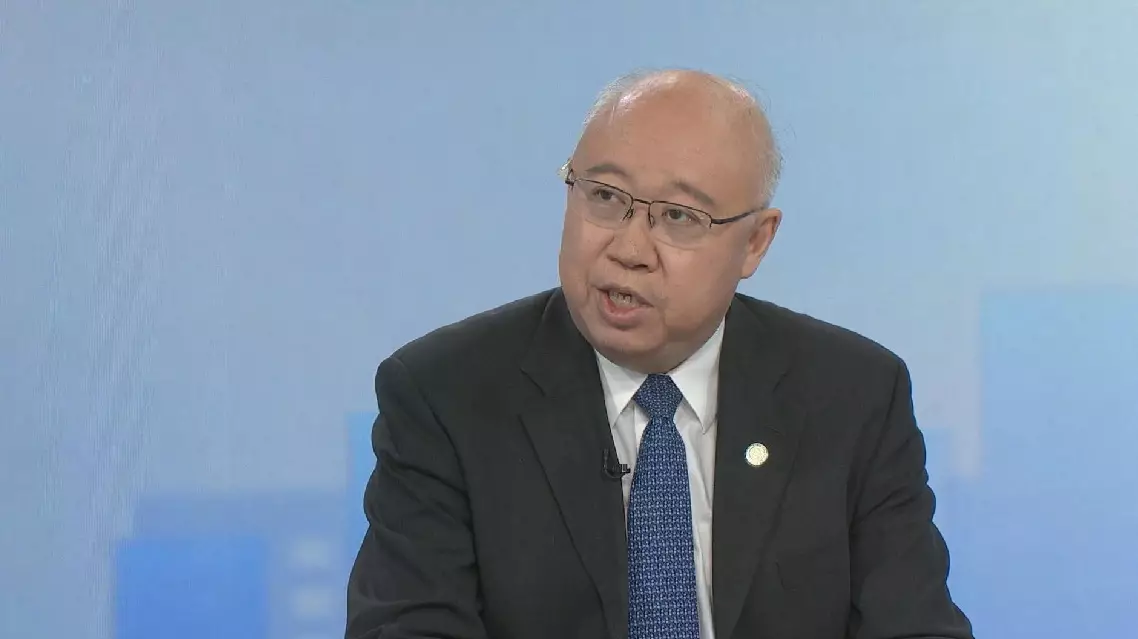
China-EU cooperation sees rapid development in volume, quality, people-to-people exchanges: expert