SEOUL, South Korea (AP) — South Korea's president ordered officials to find ways to prevent the mistreatment of migrant workers after a video showing a Sri Lankan worker being moved by a forklift while tied up at a South Korean factory sparked public outrage.
“After watching the video, I couldn't believe my eyes,” President Lee Jae Myung wrote Thursday in a Facebook post. “That was an intolerable violation and clear human rights infringement of a minority person.”
Lee also condemned the treatment of the worker during a Cabinet Council meeting and expressed concerns about South Korea’s international image. He ordered government ministries to investigate the working conditions of migrant workers and other minorities in South Korea and find realistic steps to end any abuse.
Lee and other officials didn't say the Sri Lankan worker was treated that way because he is a migrant worker. But the Labor Ministry said it views the incident as evidence that migrant workers in South Korea suffer poor treatment at some worksites, a view held by experts and activists.
South Korean human rights activists on Wednesday released the video filmed at a brick factory in the southwestern city of Naju in late February. They said it was filmed and provided by a fellow Sri Lankan worker. The video was being shared among rights groups before being made public.
The video shows a forklift driver, who has been identified as South Korean, lifting another worker who is bound with plastic wrap and tied to bricks. The driver moves him around the factory yard in the vehicle while the sound of laughter from another person can be heard.
The 31-year-old worker suffered the mistreatment for about five minutes as a punishment imposed by the South Korean forklift driver, who wasn’t happy with his brick wrapping skills, according to Mun Gil Ju, one of the local activists involved in the video's release.
The worker told reporters in a televised interview broadcast Thursday that he suffered stress and mental anguish as a result of the incident. The YTN television network, which broadcast the interview, blurred his face and didn't provide his name.
YTN also showed the unidentified head of the factory saying “we absolutely feel sorry for” the incident.
Naju city officials said the factory manager told them he had been informed the event was organized as a prank. But Mun said “binding a person with plastic wrap" cannot be downplayed as a prank.
About 20 activists rallied in front of Naju's city hall on Thursday, demanding that authorities punish those responsible. In an editorial Friday, the local Kukmin Ilbo newspaper called the treatment of the man “a shameful" incident indicative of how migrant workers are treated in South Korea.
The factory has about 24 workers, including seven from East Timor and Sri Lanka along with South Koreans. The Sri Lankan man still works for the factory, according to Naju officials.
The Labor Ministry said in a statement Thursday that it will launch an investigation into the factory and its treatment of foreign workers.
Hundreds of thousands of migrants, mostly from Southeast Asia and China, take low-paying or dangerous work at factories, farms, construction sites and other places in South Korea.
In 2024, South Korea's National Human Rights Commission said that deaths from workplace accidents among migrant workers jumped from 7% to 12.2% from 2010 to 2019, calling it “a disturbing upward trend.” A 2024 research report commissioned by the agency also said that migrant workers were more than three times likely to die in industrial accidents than their South Korean counterparts.
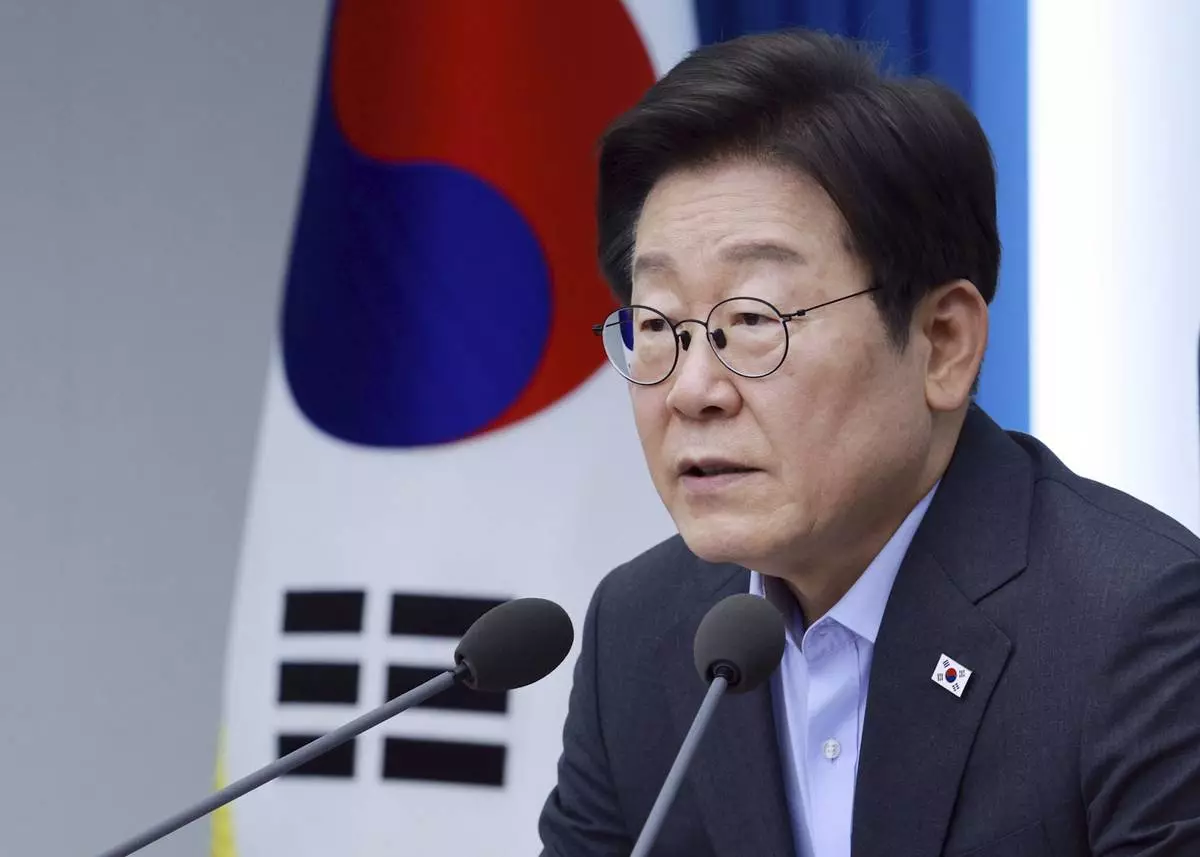
South Korean President Lee Jae Myung attends a Cabinet Council meeting at the presidential office in South Korea, Thursday, July 24, 2025. (Yonhap via AP)
WASHINGTON (AP) — U.S. forces in the Caribbean Sea have seized another sanctioned oil tanker that the Trump administration says has ties to Venezuela, part of a broader U.S. effort to take control of the South American country’s oil.
The U.S. Coast Guard boarded the tanker, named Veronica, early Thursday, Homeland Security Secretary Kristi Noem wrote on social media. The ship had previously passed through Venezuelan waters and was operating in defiance of President Donald Trump’s "established quarantine of sanctioned vessels in the Caribbean,” she said.
U.S. Southern Command said Marines and sailors launched from the aircraft carrier USS Gerald R. Ford to take part in the operation alongside a Coast Guard tactical team, which Noem said conducted the boarding as in previous raids. The military said the ship was seized “without incident.”
Several U.S. government social media accounts posted brief videos that appeared to show various parts of the ship’s capture. Black-and-white footage showed at least four helicopters approaching the ship before hovering over the deck while armed troops dropped down by rope. At least nine people could be seen on the deck of the ship.
The Veronica is the sixth sanctioned tanker seized by U.S. forces as part of the effort by Trump’s administration to control the production, refining and global distribution of Venezuela’s oil products and the fourth since the U.S. ouster of Venezuela President Nicolás Maduro in a surprise nighttime raid almost two weeks ago.
The Veronica last transmitted its location on Jan. 3 as being at anchor off the coast of Aruba, just north of Venezuela’s main oil terminal. According to the data it transmitted at the time, it was partially filled with crude.
The ship is currently listed as flying the flag of Guyana and is considered part of the shadow fleet that moves cargoes of oil in violation of U.S. sanctions.
According to its registration data, the ship also has been known as the Gallileo, owned and managed by a company in Russia. In addition, a tanker with the same registration number previously sailed under the name Pegas and was sanctioned by the U.S. Treasury Department for moving cargoes of illicit Russian oil.
As with prior posts about such raids, Noem and the military framed the seizure as part of an effort to enforce the law. Noem argued that the multiple captures show that “there is no outrunning or escaping American justice.”
Speaking to reporters at the White House later Thursday, Noem declined to say how many sanctioned oil tankers the U.S. is tracking or whether the government is keeping tabs on freighters beyond the Caribbean Sea.
“I can’t speak to the specifics of the operation, although we are watching the entire shadow fleet and how they’re moving,” she told reporters.
However, other officials in Trump's Republican administration have made clear that they see the actions as a way to generate cash as they seek to rebuild Venezuela’s battered oil industry and restore its economy.
Trump met with executives from oil companies last week to discuss his goal of investing $100 billion in Venezuela to repair and upgrade its oil production and distribution. His administration has said it expects to sell at least 30 million to 50 million barrels of sanctioned Venezuelan oil.
This story has been corrected to show the Veronica is the fourth, not the third, tanker seized by U.S. forces since Maduro’s capture and the ship also has been known as the Gallileo, not the Galileo.
Associated Press writer Ben Finley contributed to this report.
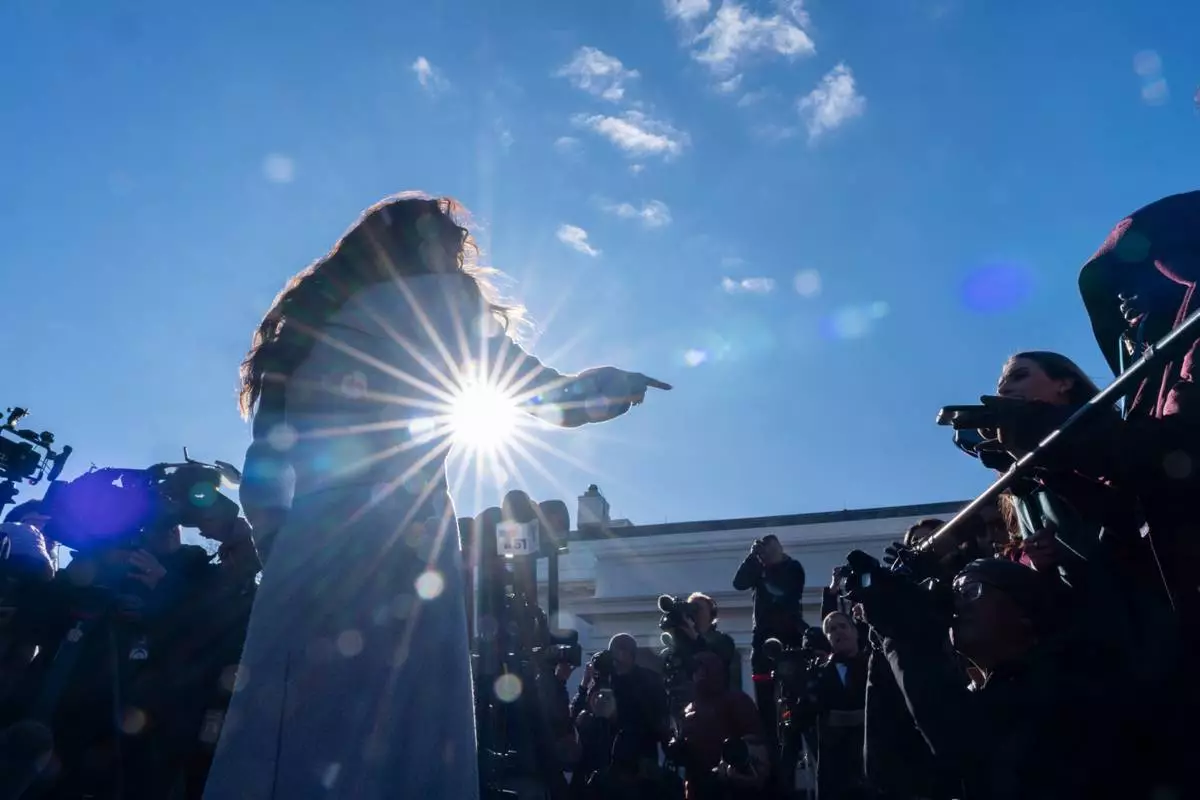
Homeland Security Secretary Kristi Noem speaks with reporters at the White House, Thursday, Jan. 15, 2026, in Washington. (AP Photo/Alex Brandon)
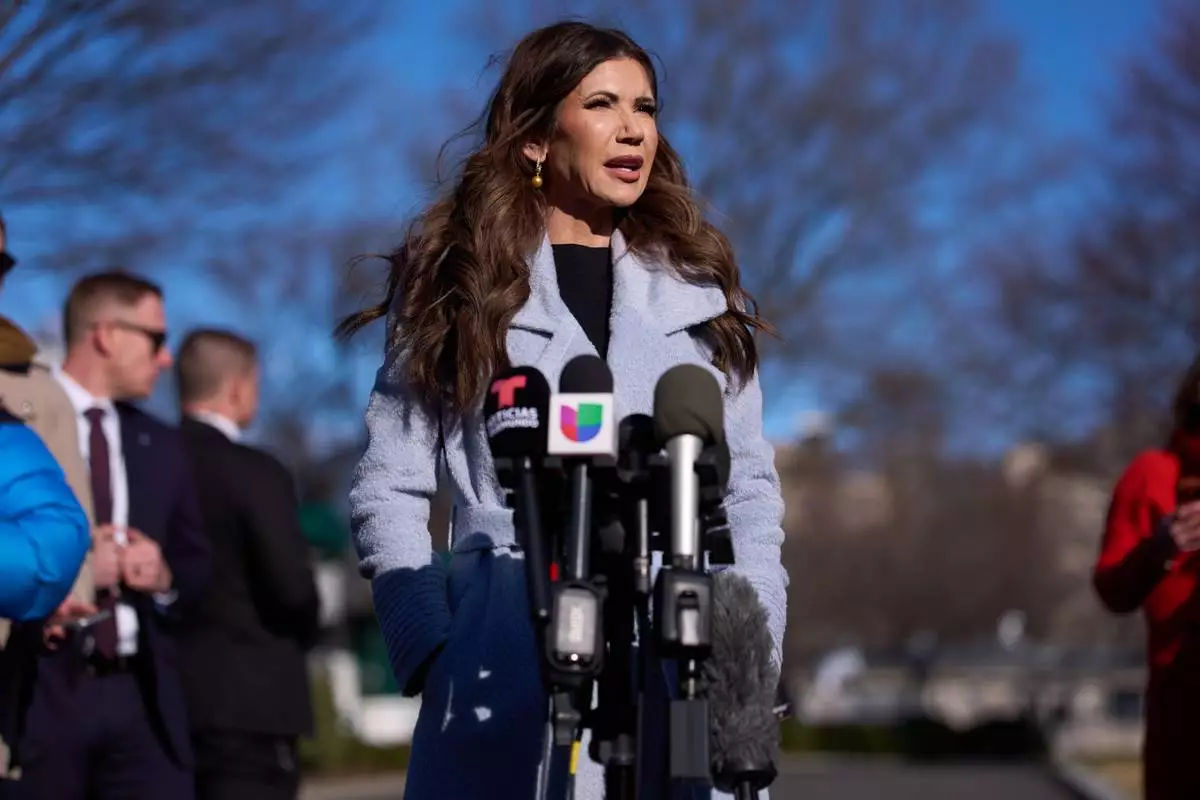
Homeland Security Secretary Kristi Noem speaks with reporters at the White House, Thursday, Jan. 15, 2026, in Washington. (AP Photo/Evan Vucci)
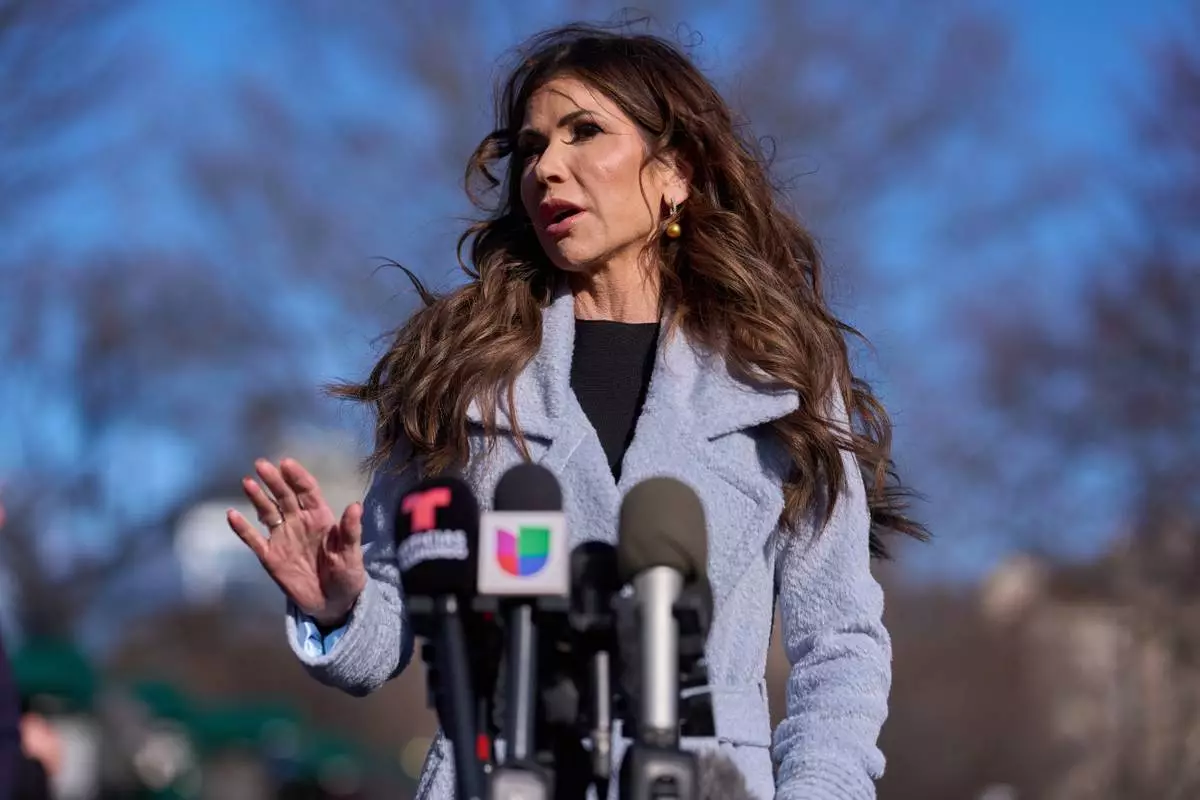
Homeland Security Secretary Kristi Noem speaks with reporters at the White House, Thursday, Jan. 15, 2026, in Washington. (AP Photo/Evan Vucci)
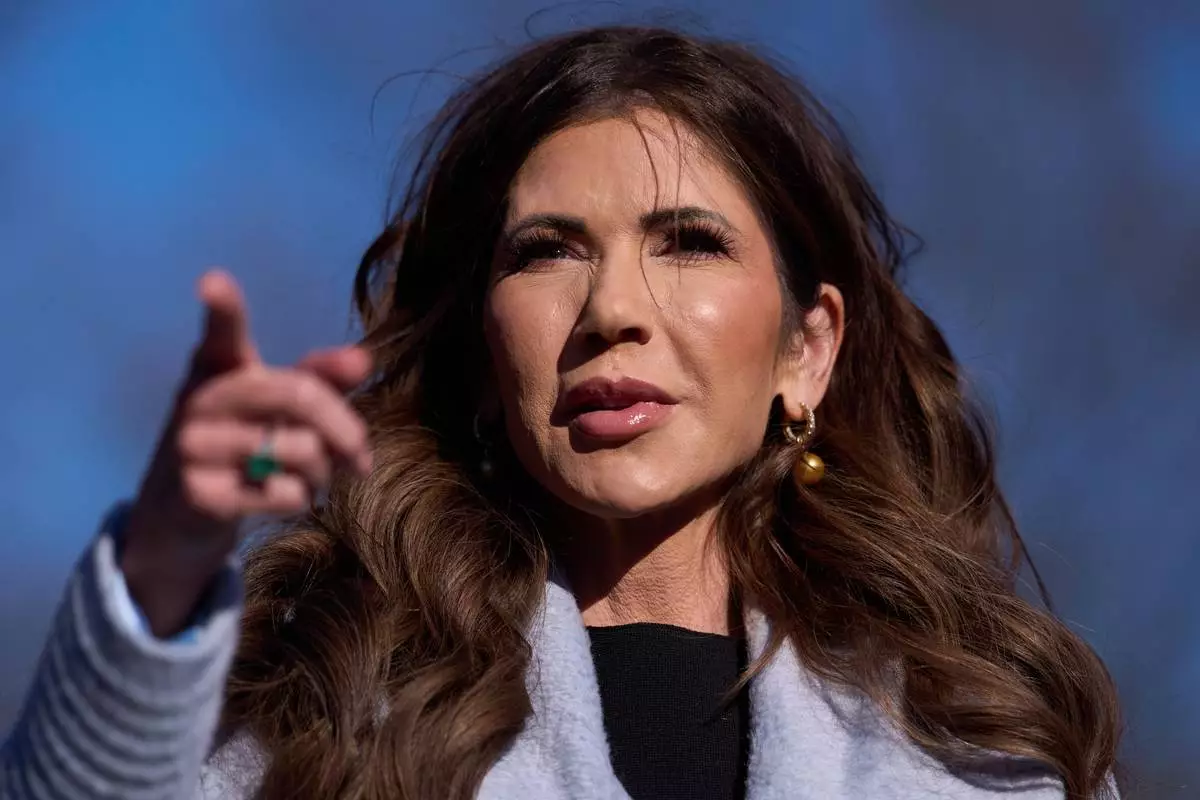
Homeland Security Secretary Kristi Noem speaks with reporters at the White House, Thursday, Jan. 15, 2026, in Washington. (AP Photo/Evan Vucci)
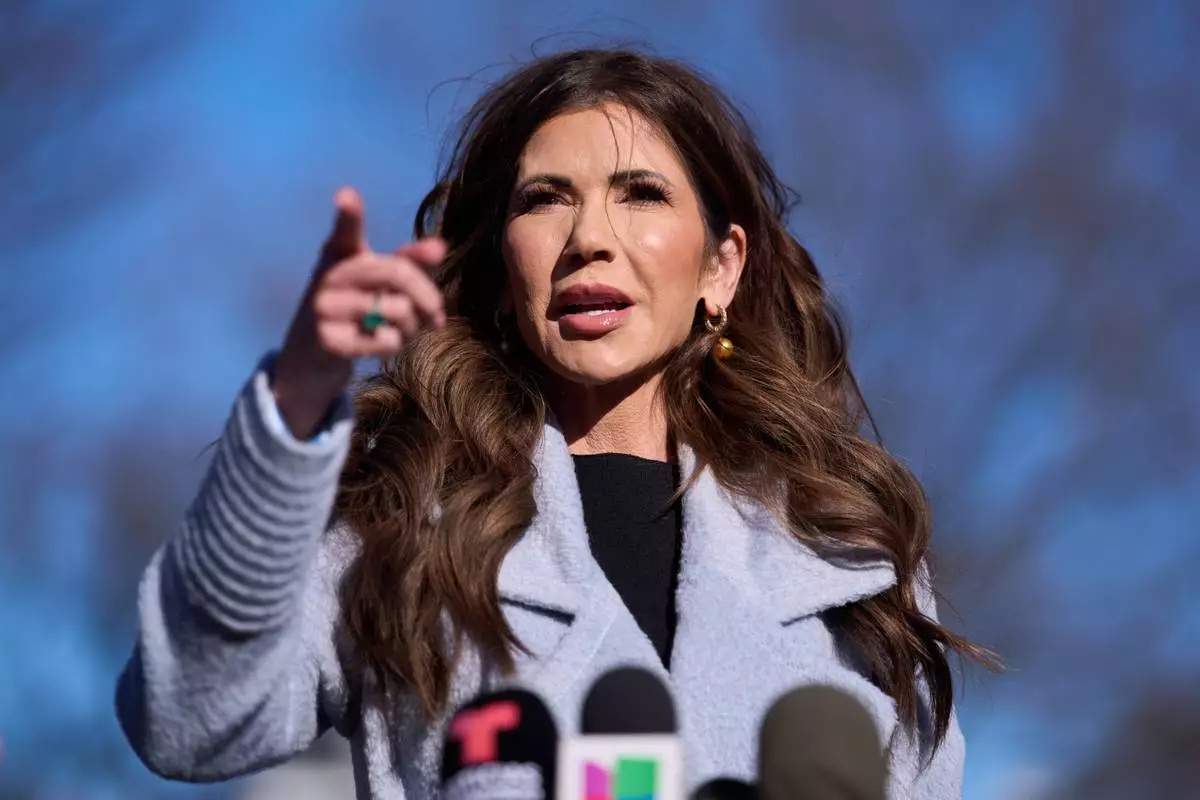
Homeland Security Secretary Kristi Noem speaks with reporters at the White House, Thursday, Jan. 15, 2026, in Washington. (AP Photo/Evan Vucci)
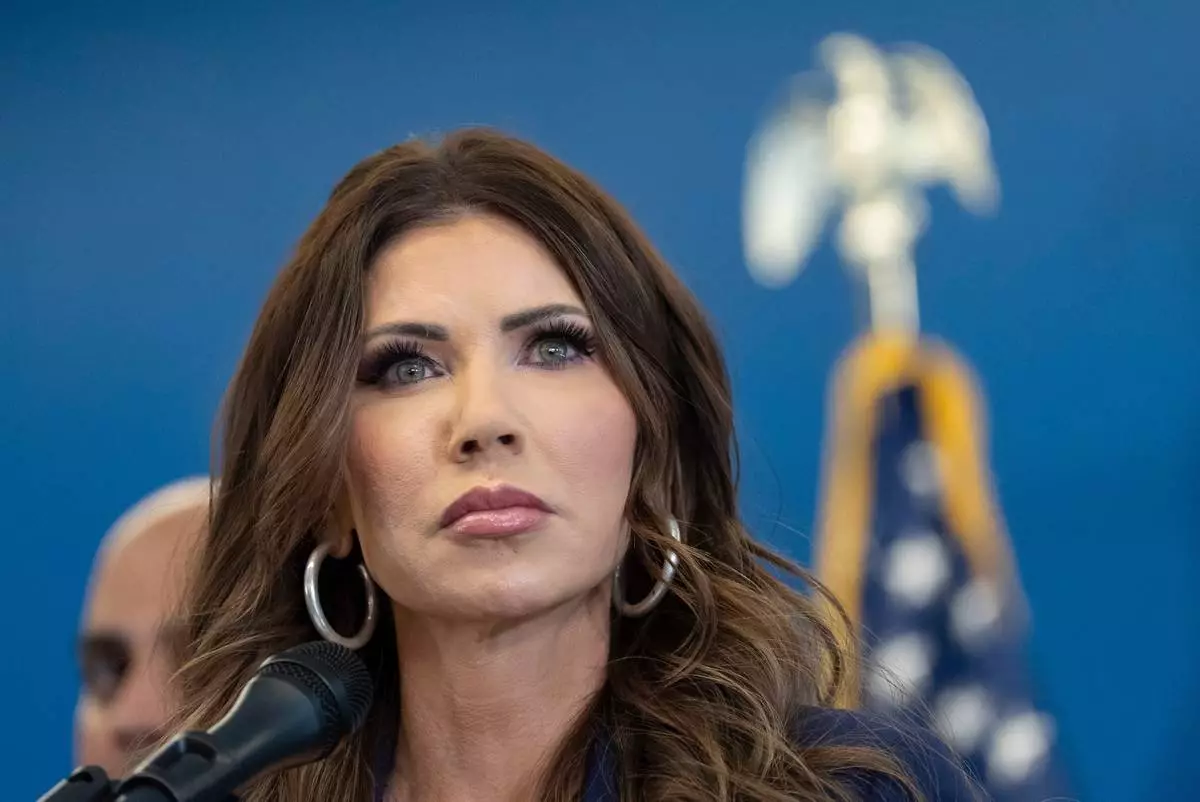
U.S. Homeland Security Secretary Kristi Noem speaks during a press conference, Thursday, Jan. 8, 2026, in New York. (AP Photo/Yuki Iwamura)
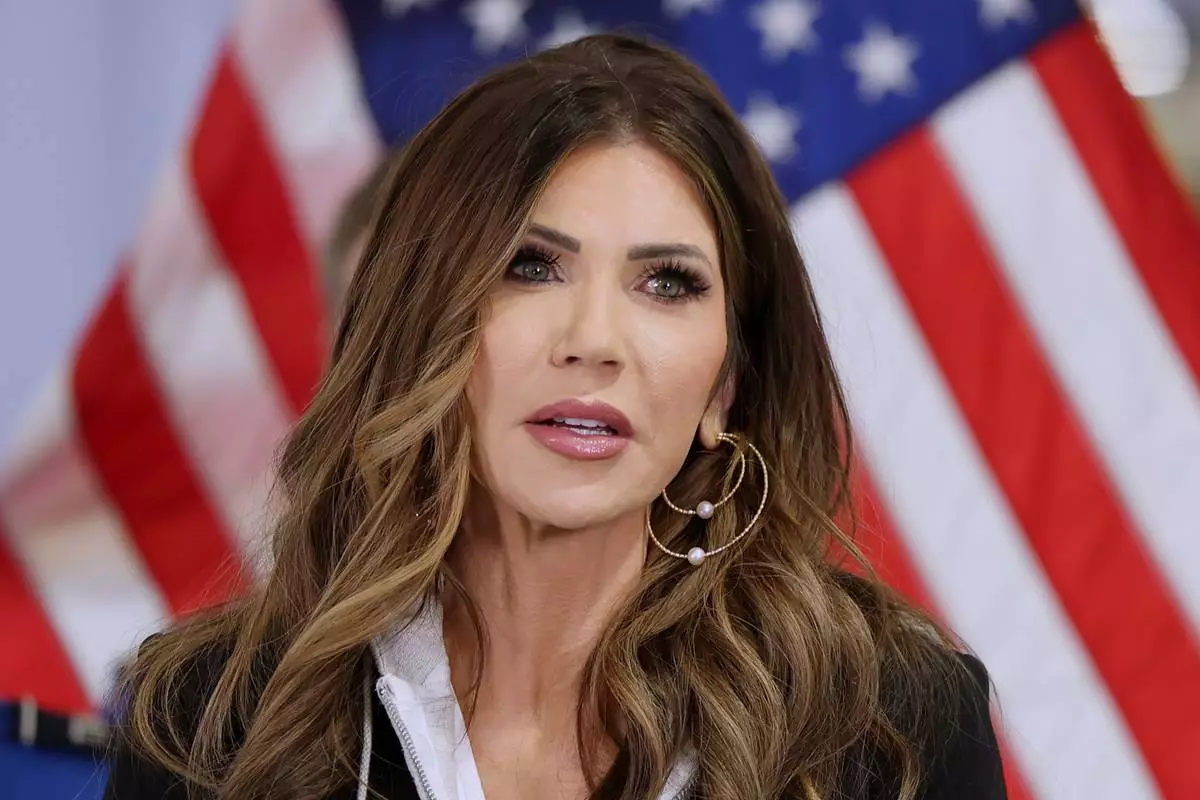
U.S. Homeland Security Secretary Kristi Noem speaks at a news conference at Harry Reid International Airport, Nov. 22, 2025, in Las Vegas. (AP Photo/Ronda Churchill, File)