TEHRAN, Iran (AP) — Iran is ready to engage in talks on its nuclear program with the United States, but only if Washington takes meaningful steps to rebuild trust, a senior Iranian diplomat said Thursday, ahead of a key meeting with European officials.
That meeting will be the first since a ceasefire was reached after a 12-day war waged by Israel against Iran in June, which also saw U.S. B-52 bombers strike nuclear-related facilities in the Islamic Republic.
The discussions will bring Iranian officials together with officials from Britain, France and Germany — known as the E3 nations — and will include the European Union’s foreign policy chief, Kaja Kallas. A similar meeting had been held in the Turkish city in May.
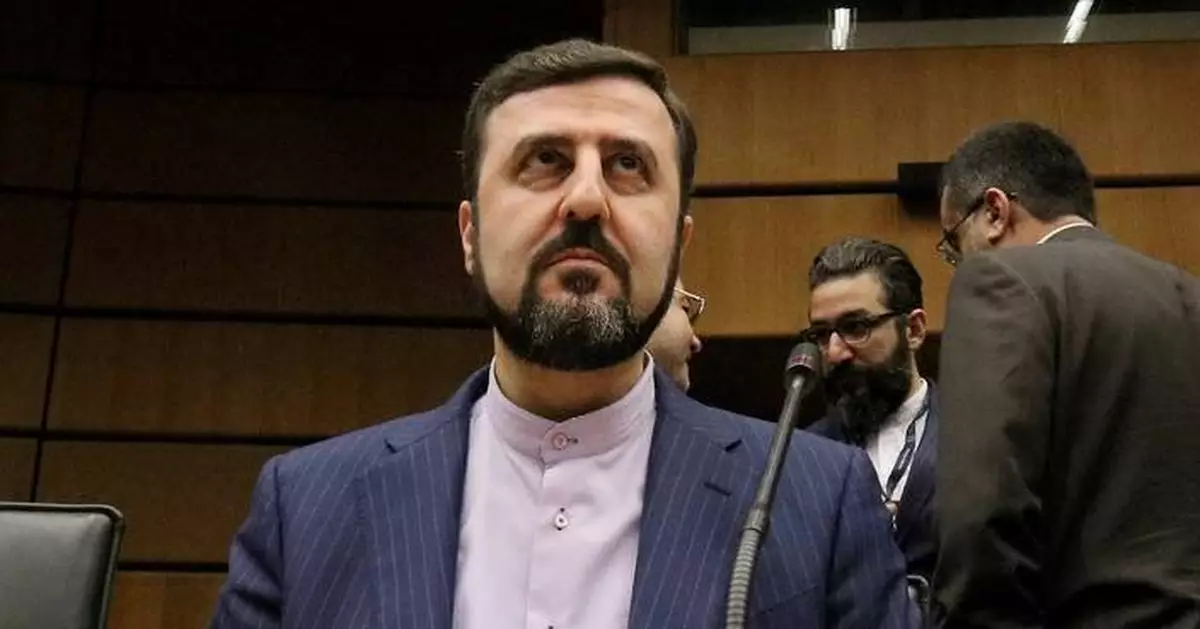
In a social media post, Iran's Deputy Foreign Minister Kazem Gharibabadi said Thursday that for talks with the Unites States, Tehran would seek that “several key principles” be upheld.
These include “rebuilding Iran’s trust — as Iran has absolutely no trust in the United States," he said, adding there could be no room “for hidden agendas such as military action, though Iran remains fully prepared for any scenario.”
Washington would have to respect and recognize Iran’s rights under the international agreement known as the Nuclear Non-Proliferation Treaty, including the right to enrich uranium “in line with its legitimate needs” and the lifting of crippling economic sanctions on Iran.
The talks in Istanbul will be held at the deputy ministerial level, with Iran sending Majid Takht-e Ravanchi, the other of Iran's two deputy foreign ministers.
Iran’s Foreign Minister Abbas Araghchi said in a televised interview Thursday that Tehran would not back down from uranium enrichment. Before the war in June, Iran was enriching uranium up to 60% — a short, technical step from weapons-grade levels.
“Our enrichment will continue, and we will not give up this right of the Iranian people,” Araghchi said in a video posted on the state TV’s Telegram channel.
Iran’s top diplomat said the Istanbul talks with the European parties are necessary, especially after the 12-day war, to make them aware that Iran’s positions remain strong.
“The world must know that there has been no change in our stance,” he said. "We will continue to firmly defend the rights of the Iranian people to peaceful nuclear energy, especially regarding enrichment.”
Araghchi also said that Iran has always been ready to advance its peaceful program within a reasonable and logical framework. “We have never hesitated to build trust with countries that may have concerns,” he said, “but at the same time, Iran’s demand is that its right to peaceful nuclear energy, including enrichment, be respected.”
European leaders have threatened to trigger a “snapback” mechanism included in a 2015 nuclear deal with Iran, which would reimpose sanctions that were lifted in exchange for Iran accepting restrictions and monitoring of its nuclear program.
The United Kingdom, France and Germany were signatories to the 2015 deal. The U.S. withdrew in 2018 during the first term of President Donald Trump, who insisted the agreement wasn’t tough enough.
Iranian officials have warned that a move to reimpose sanctions would have consequences. Gharibabadi said earlier this week that it could force Tehran to withdraw from key non-proliferation agreements.
In a letter to U.N. Secretary-General António Guterres, Araghchi accused the E3 of hypocrisy, saying they failed to uphold their obligations under the 2015 deal while supporting Israel’s recent strikes on Iran.
In last month's conflict, Iran responded to Israeli and U.S. strikes with missile attacks, including a strike on a U.S. base in Qatar, which Iranian President Masoud Pezeshkian insisted was not directed at the Qatari state.
In an interview with Al Jazeera that aired on Wednesday, Pezeshkian said Iran is prepared for another war and accused Israel of attempting to assassinate him during a June 15 meeting of Iran's national security council in Tehran.
Pezeshkian reiterated that Iran’s nuclear program will continue within the framework of international law and insisted the country has no intention of pursuing nuclear weapons.
“Our nuclear capabilities are in the minds of our scientists,” he said, emphasizing Iran’s position that future negotiations must be rooted in mutual respect, not threats.
According to Iran's official judicial news agency Mizan, at least 13 Iranian nuclear scientists were killed during the June Israel-Iran war.
The extent of the damage to Iran's nuclear sites from the war has not been publicly revealed but a spokesman for Iran’s Atomic Energy Organization said Thursday the country’s nuclear industry would recover.
“Our nuclear industry is deeply rooted. What has roots cannot be harmed by attack or pressure — it will grow back and thrive again,” state TV quoted Behrouz Kamalvandi as saying.
The U.N. nuclear watchdog — the International Atomic Energy Agency, or IAEA — reported in May that Iran’s stockpile of uranium enriched to 60% had grown to over 400 kilograms (882 pounds). That material, just below weapons-grade level, remains a central concern for the West.
After the June war, Iran suspended cooperation with the IAEA, following legislation signed by Pezeshkian.
The road ahead remains uncertain. While European officials say they want to avoid further conflict and are open to a negotiated solution, they have warned that time is running out.
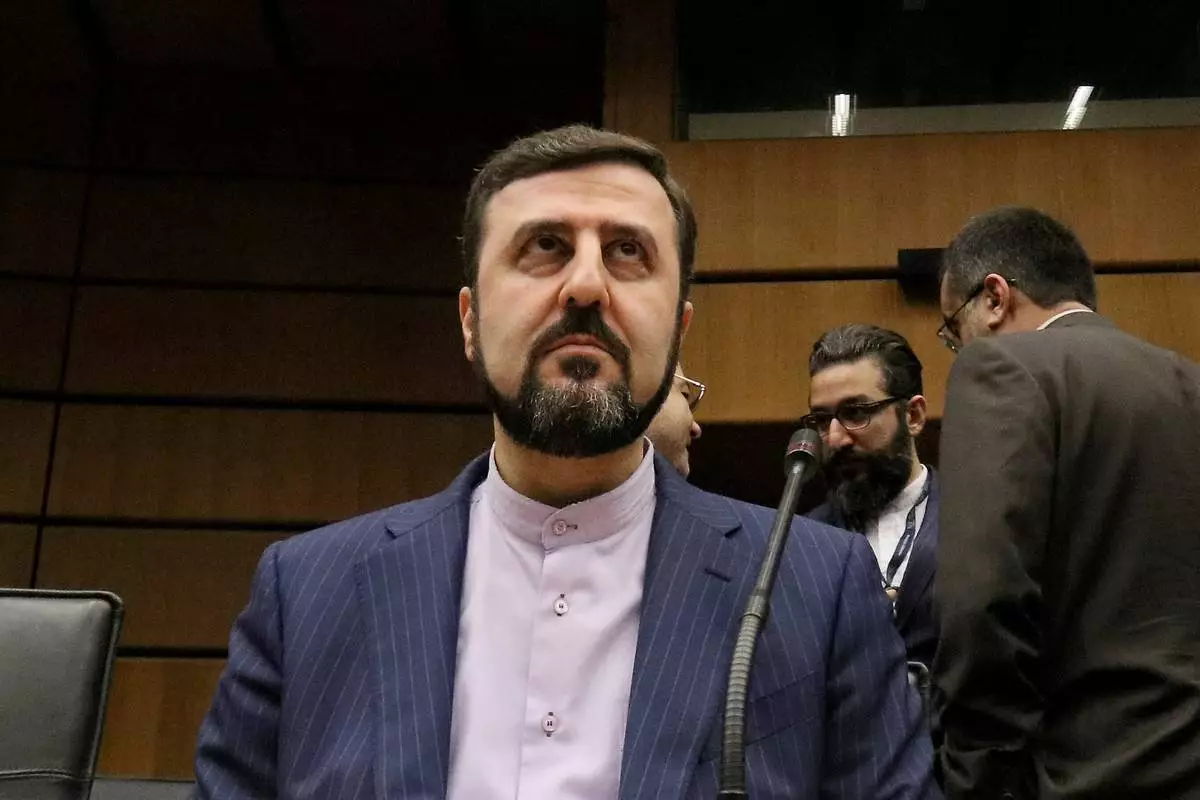
FILE - Iran's Ambassador to the International Atomic Energy Agency, IAEA, Kazem Gharibabadi, waits for the start of the IAEA board of governors meeting at the International Center in Vienna, Austria, Nov. 21, 2019. (AP Photo/Ronald Zak, file)
CAPE CANAVERAL, Fla. (AP) — An ailing astronaut returned to Earth with three others on Thursday, ending their space station mission more than a month early in NASA’s first medical evacuation.
SpaceX guided the capsule to a middle-of-the-night splashdown in the Pacific near San Diego, less than 11 hours after the astronauts exited the International Space Station.
“It’s so good to be home,” said NASA astronaut Zena Cardman, the capsule commander.
It was an unexpected finish to a mission that began in August and left the orbiting lab with only one American and two Russians on board. NASA and SpaceX said they would try to move up the launch of a fresh crew of four; liftoff is currently targeted for mid-February.
Cardman and NASA’s Mike Fincke were joined on the return by Japan’s Kimiya Yui and Russia’s Oleg Platonov. Officials have refused to identify the astronaut who had the health problem or explain what happened, citing medical privacy.
While the astronaut was stable in orbit, NASA wanted them back on Earth as soon as possible to receive proper care and diagnostic testing. The entry and splashdown required no special changes or accommodations, officials said, and the recovery ship had its usual allotment of medical experts on board. It was not immediately known when the astronauts would fly from California to their home base in Houston. Platonov’s return to Moscow was also unclear.
NASA stressed repeatedly over the past week that this was not an emergency. The astronaut fell sick or was injured on Jan. 7, prompting NASA to call off the next day’s spacewalk by Cardman and Fincke, and ultimately resulting in the early return. It was the first time NASA cut short a spaceflight for medical reasons. The Russians had done so decades ago.
The space station has gotten by with three astronauts before, sometimes even with just two. NASA said it will be unable to perform a spacewalk, even for an emergency, until the arrival of the next crew, which has two Americans, one French and one Russian astronaut.
The Associated Press Health and Science Department receives support from the Howard Hughes Medical Institute’s Department of Science Education and the Robert Wood Johnson Foundation. The AP is solely responsible for all content.
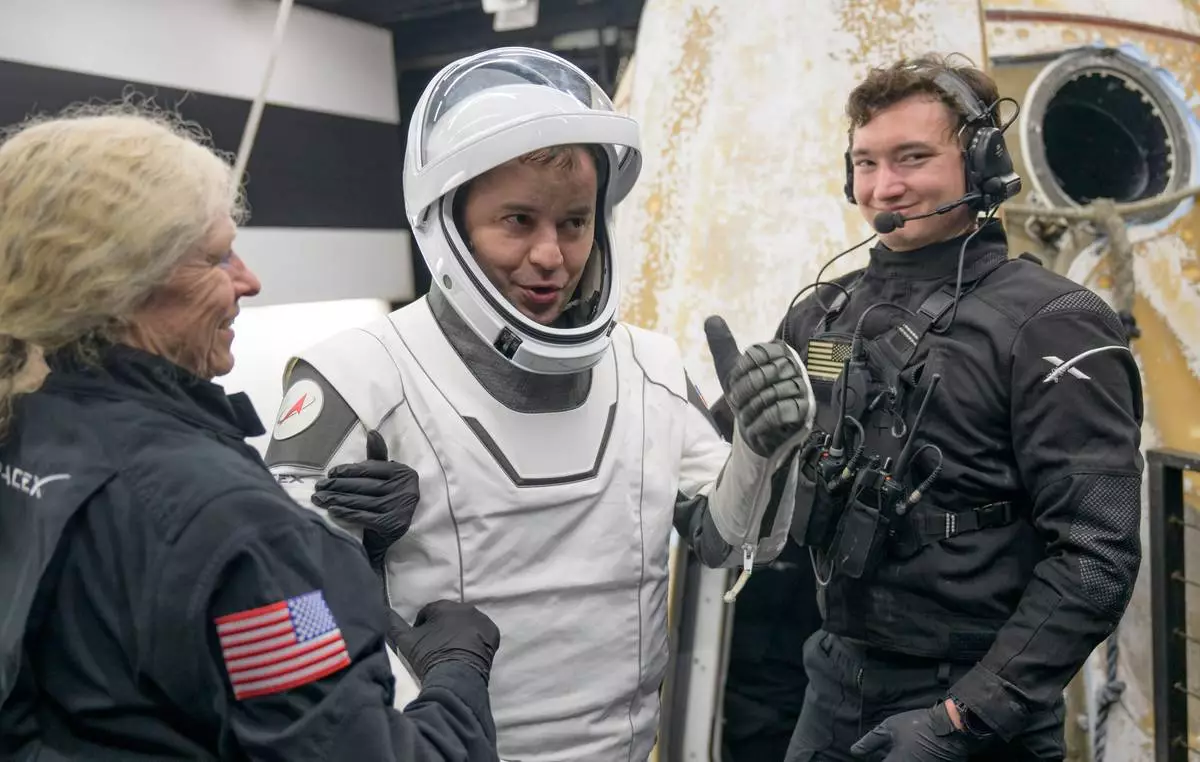
Roscosmos cosmonaut Oleg Platonov is helped out of the SpaceX Dragon Endeavour spacecraft onboard the SpaceX recovery ship SHANNON after they re-entered the earth in a middle-of-the-night splashdown near San Diego, Calif., Thursday, Jan. 15, 2026. (NASA via AP)
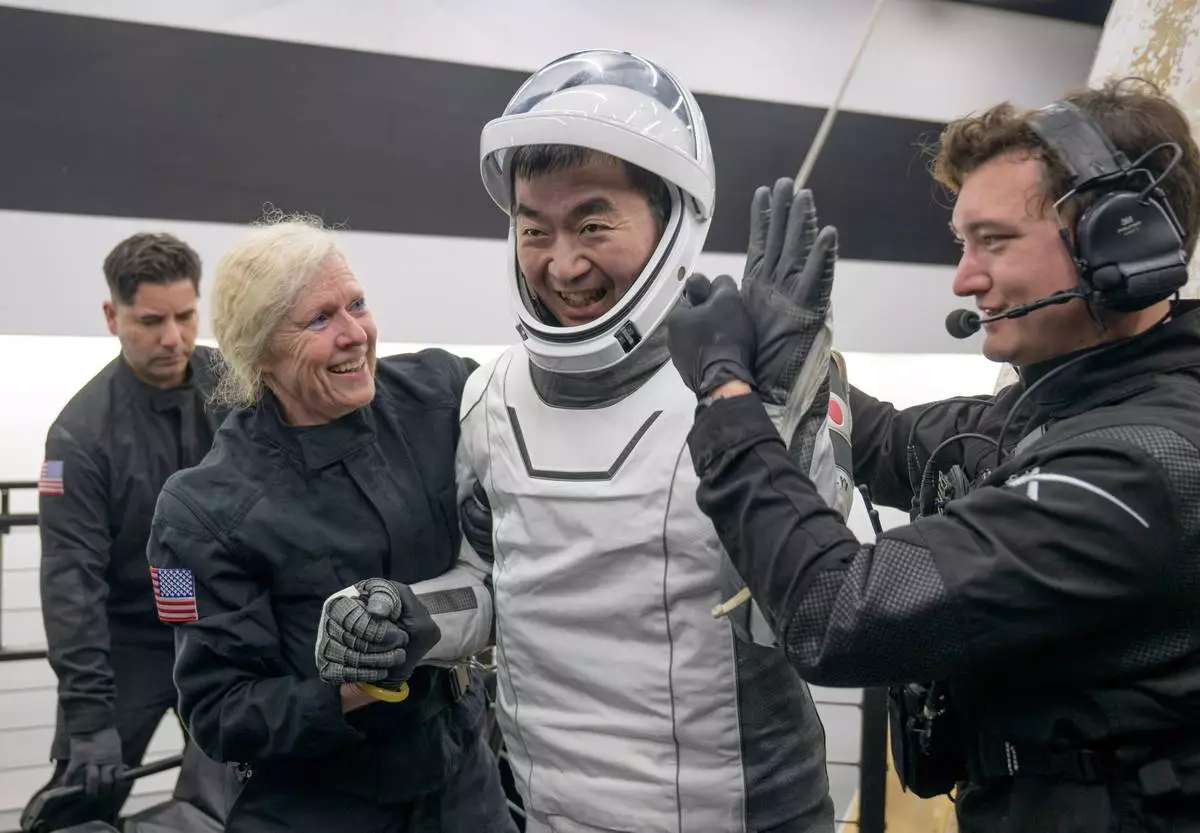
JAXA (Japan Aerospace Exploration Agency) astronaut Kimiya Yui is helped out of the SpaceX Crew-11 capsule after they re-entered the earth in a middle-of-the-night splashdown near San Diego, Calif., Thursday, Jan. 15, 2026. (NASA via AP)
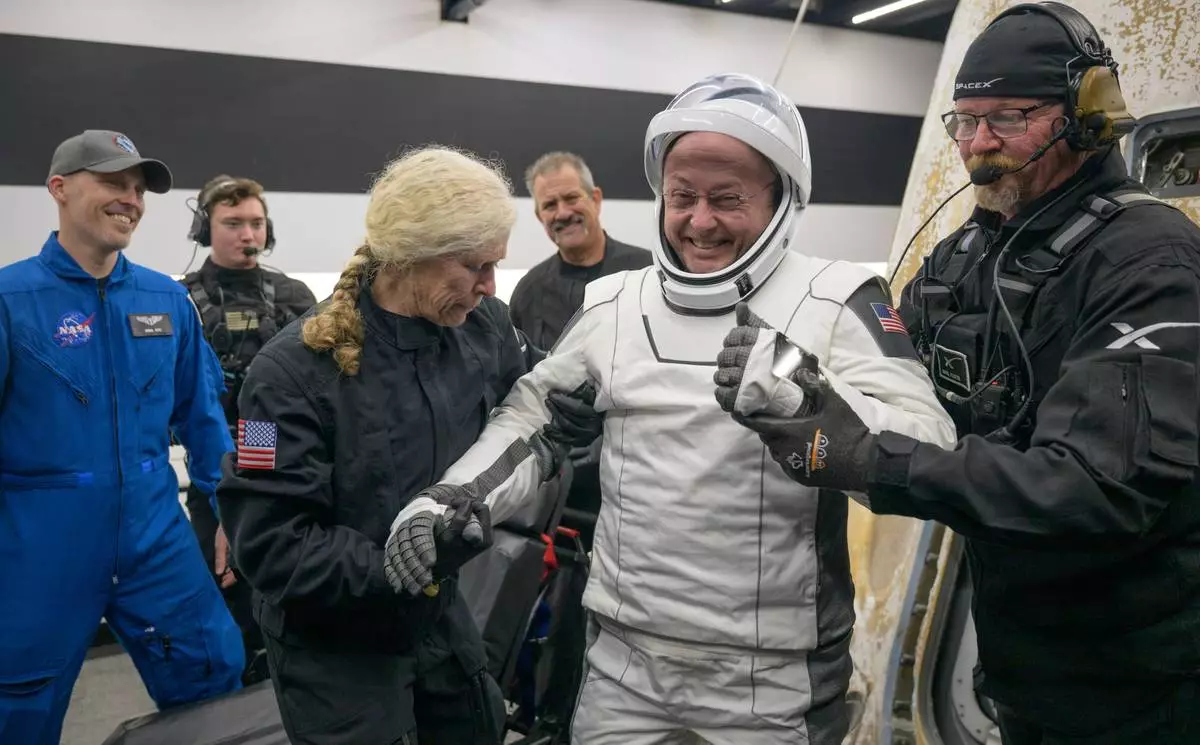
NASA astronaut Mike Fincke is helped out of the SpaceX Crew-11 capsule after they re-entered the earth in a middle-of-the-night splashdown near San Diego, Calif., Thursday, Jan. 15, 2026. (NASA via AP)

NASA astronaut Zena Cardman is helped out of the SpaceX Crew-11 capsule after they re-entered the earth in a middle-of-the-night splashdown near San Diego, Calif., Thursday, Jan. 15, 2026. (NASA via AP)
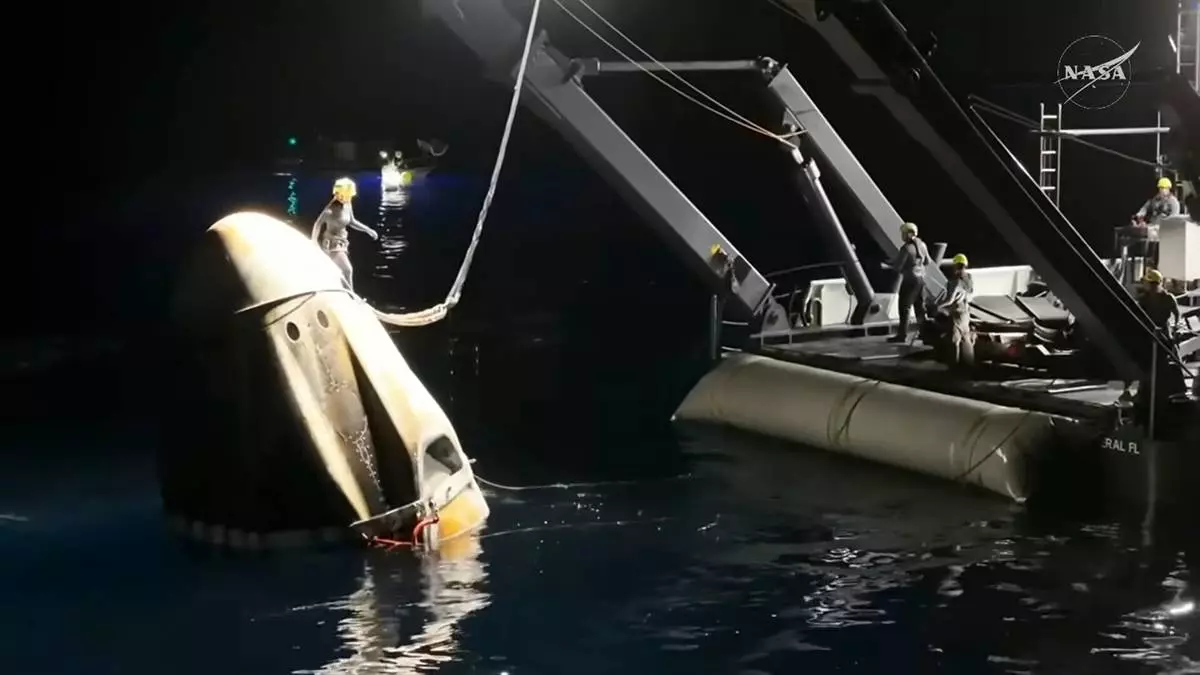
This screengrab from video provided by NASA shows the NASA's SpaceX Crew-11 capsule being taken into the recovery vessel after crew members re entered the earth in a middle-of-the-night splashdown near San Diego, Calif., Thursday, Jan. 15, 2026. (NASA via AP)
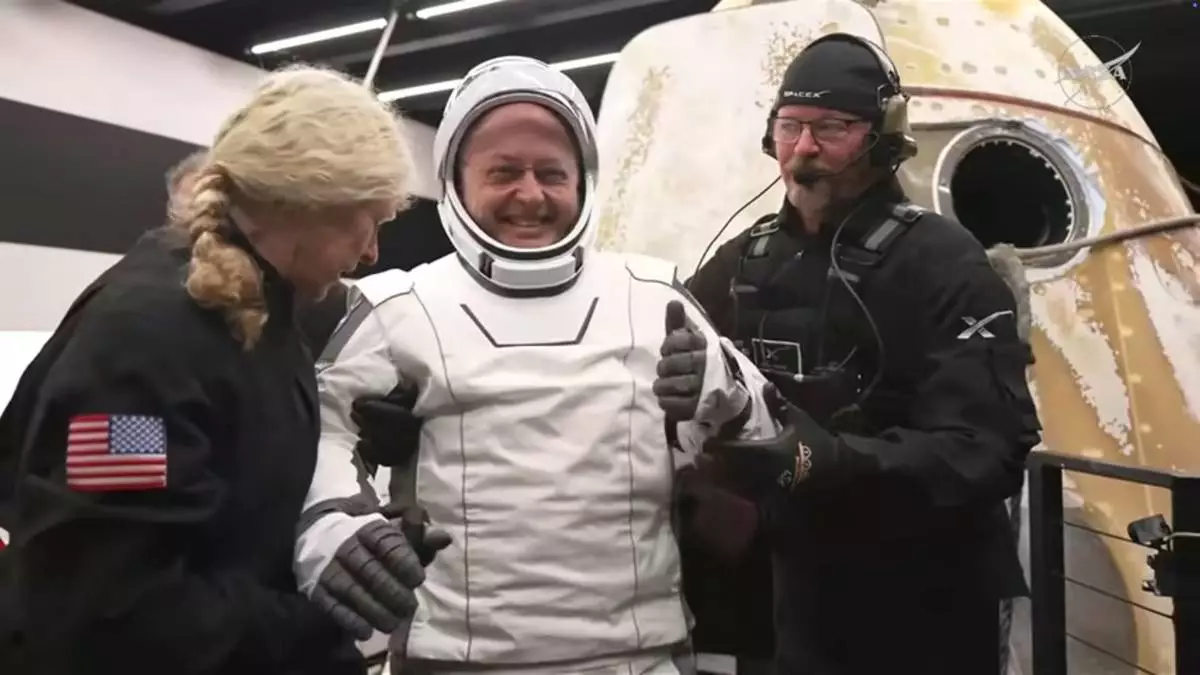
This screengrab from video provided by NASA shows NASA astronaut Mike Fincke getting helped out of the SpaceX Crew-11 capsule after they re-entered the earth in a middle-of-the-night splashdown near San Diego, Calif., Thursday, Jan. 15, 2026. (NASA via AP)

This screengrab from video provided by NASA shows NASA Japanese astronaut Kimiya Yui being helped out of the SpaceX Crew-11 capsule after they re-entered the earth in a middle-of-the-night splashdown near San Diego, Calif., Thursday, Jan. 15, 2026. (NASA via AP)

This screengrab from video provided by NASA shows Russian astronaut Oleg Platonov being helped out of the SpaceX Crew-11 capsule after they re-entered the earth in a middle-of-the-night splashdown near San Diego, Calif., Thursday, Jan. 15, 2026. (NASA via AP)

Roscosmos cosmonaut Oleg Platonov, left, NASA astronauts Mike Fincke, Zena Cardman, and JAXA (Japan Aerospace Exploration Agency) astronaut Kimiya Yui are seen inside the SpaceX Dragon Endeavour spacecraft onboard the SpaceX recovery ship SHANNON shortly after having landed in the Pacific Ocean off the coast of Long Beach, Calif., Thursday, Jan. 15, 2026. (NASA via AP)
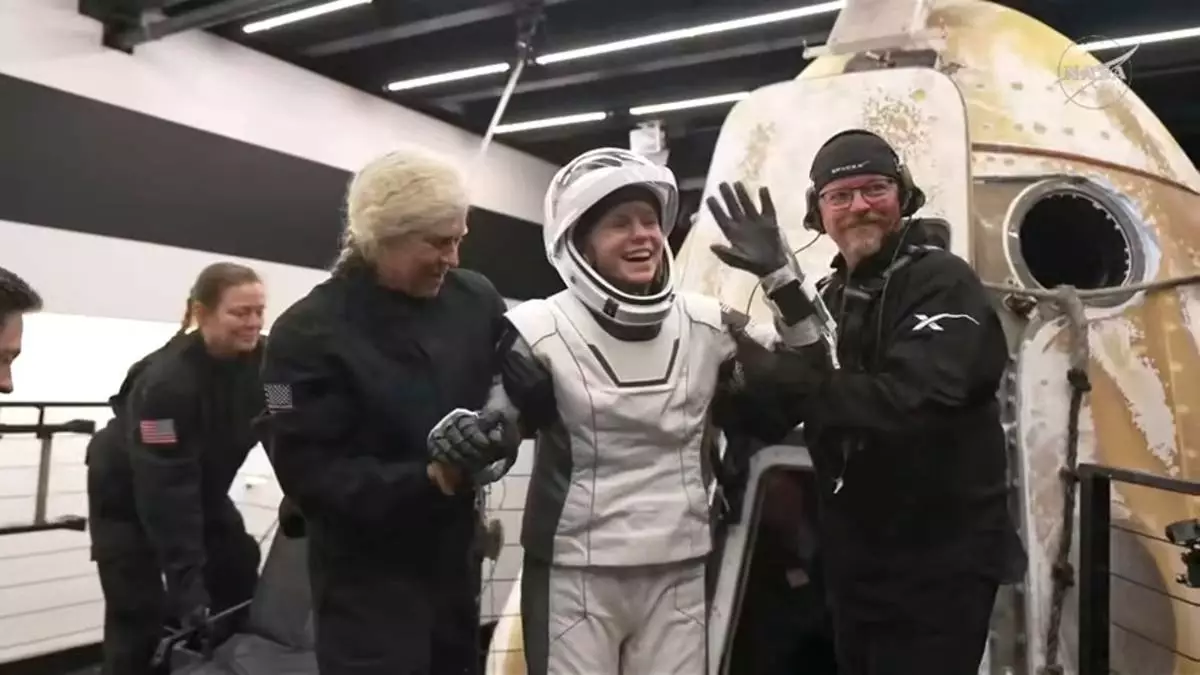
This screengrab from video provided by NASA shows NASA astronaut Zena Cardman being helped out of the SpaceX Crew-11 capsule after they re-entered the earth in a middle-of-the-night splashdown near San Diego, Calif., Thursday, Jan. 15, 2026. (NASA via AP)
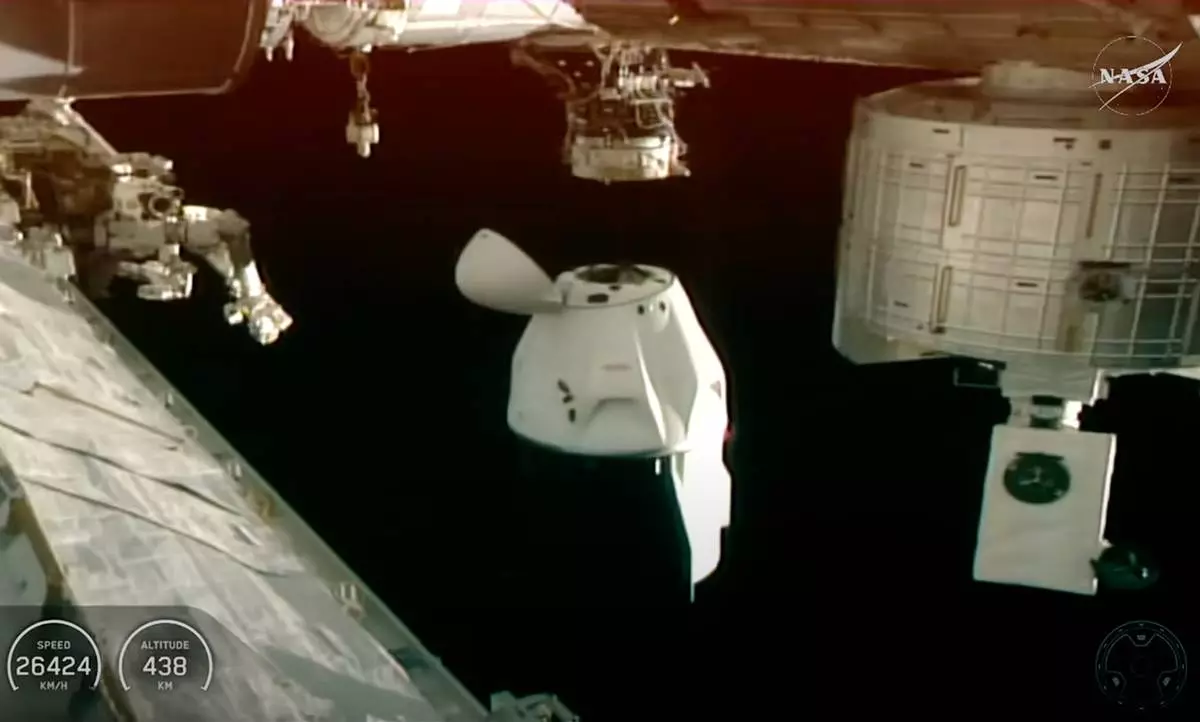
This screengrab from video provided by NASA TV shows the SpaceX Dragon departing from the International Space Station shortly after undocking with four NASA Crew-11 members inside on Wednesday, Jan. 14, 2026. (NASA via AP)
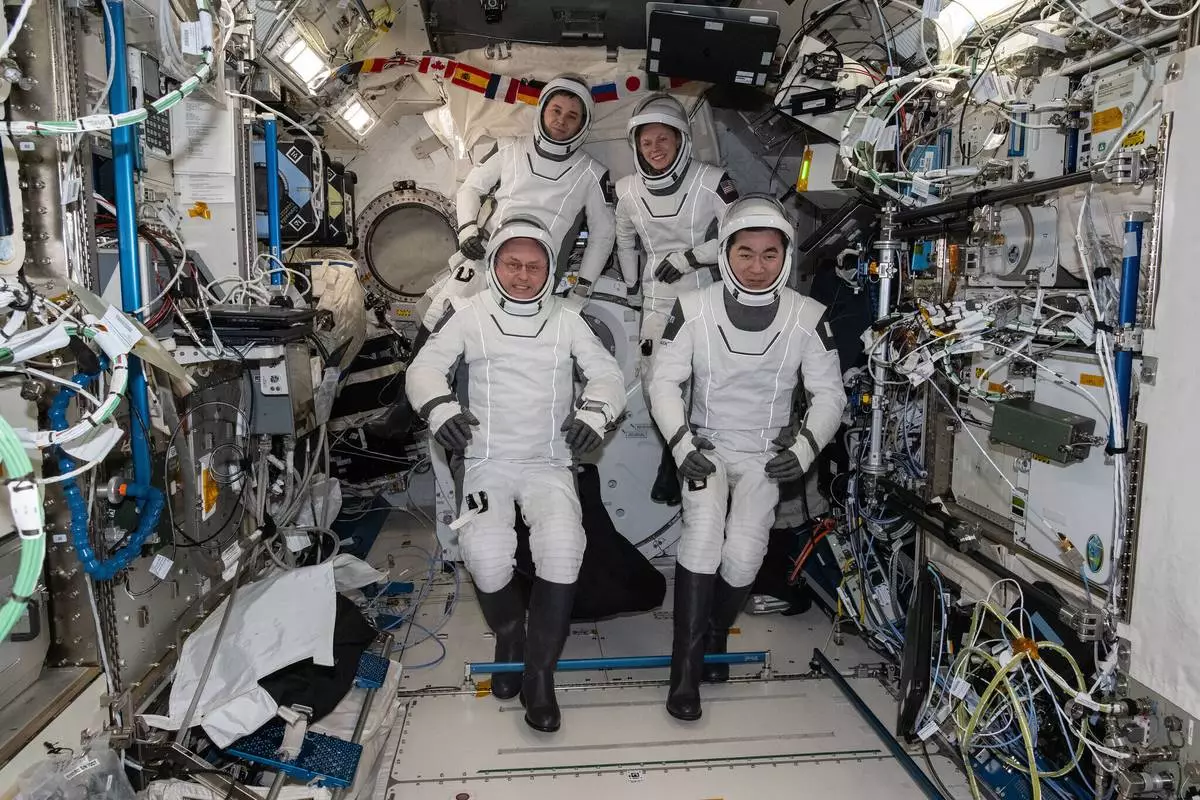
This photo provided by NASA shows clockwise from bottom left are, NASA astronaut Mike Fincke, Roscosmos cosmonaut Oleg Platonov, NASA astronaut Zena Cardman, and JAXA (Japan Aerospace Exploration Agency) astronaut Kimiya Yui gathering for a crew portrait wearing their Dragon pressure suits during a suit verification check inside the International Space Station’s Kibo laboratory module, Wednesday, Jan. 14, 2026. (NASA via AP)
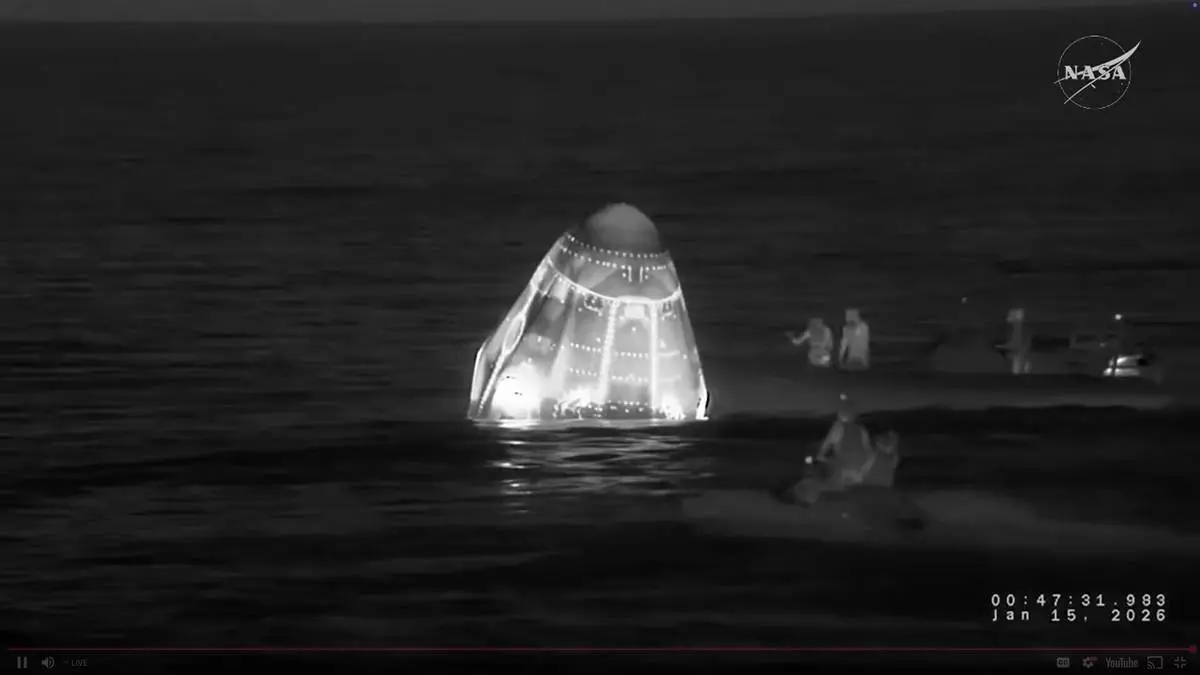
This screengrab from video provided by NASA shows recovery vessels approaching the NASA's SpaceX Crew-11 capsule to evacuate one of the crew members after they re-entered the earth in a middle-of-the-night splashdown near San Diego, Calif., Thursday, Jan. 15, 2026. (NASA via AP)
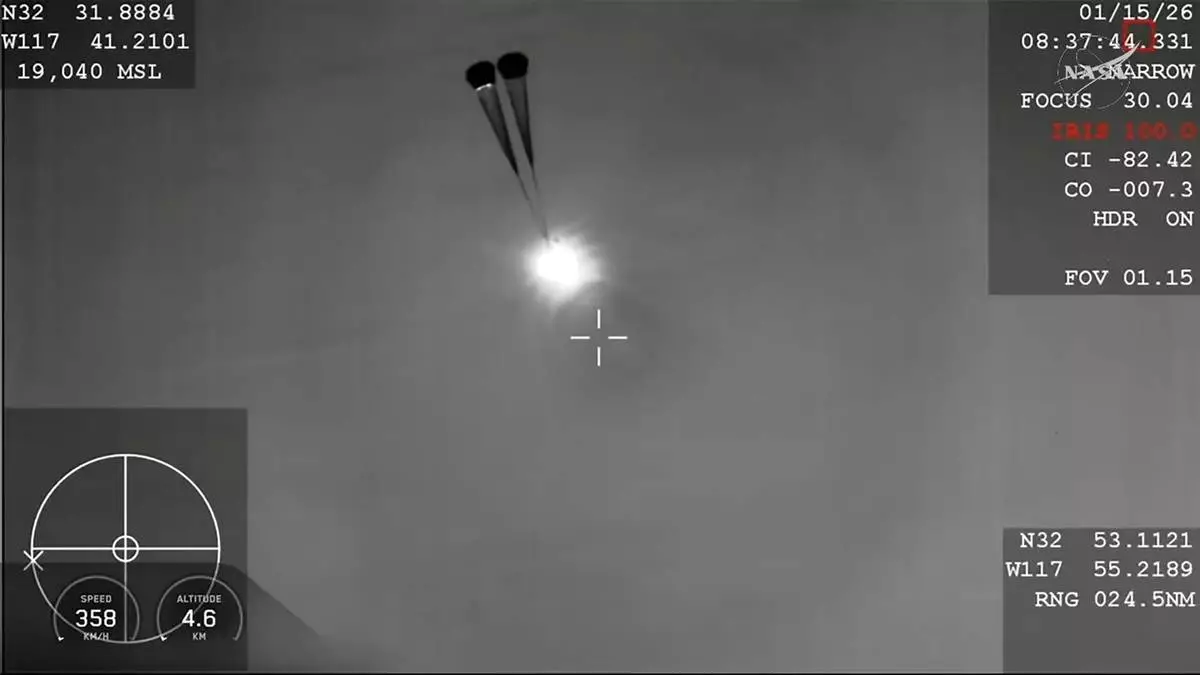
This screengrab from video provided by NASA shows the NASA's SpaceX Crew-11 members re entering the earth in a middle-of-the-night splashdown near San Diego, Calif., Thursday, Jan. 15, 2026. (NASA via AP)
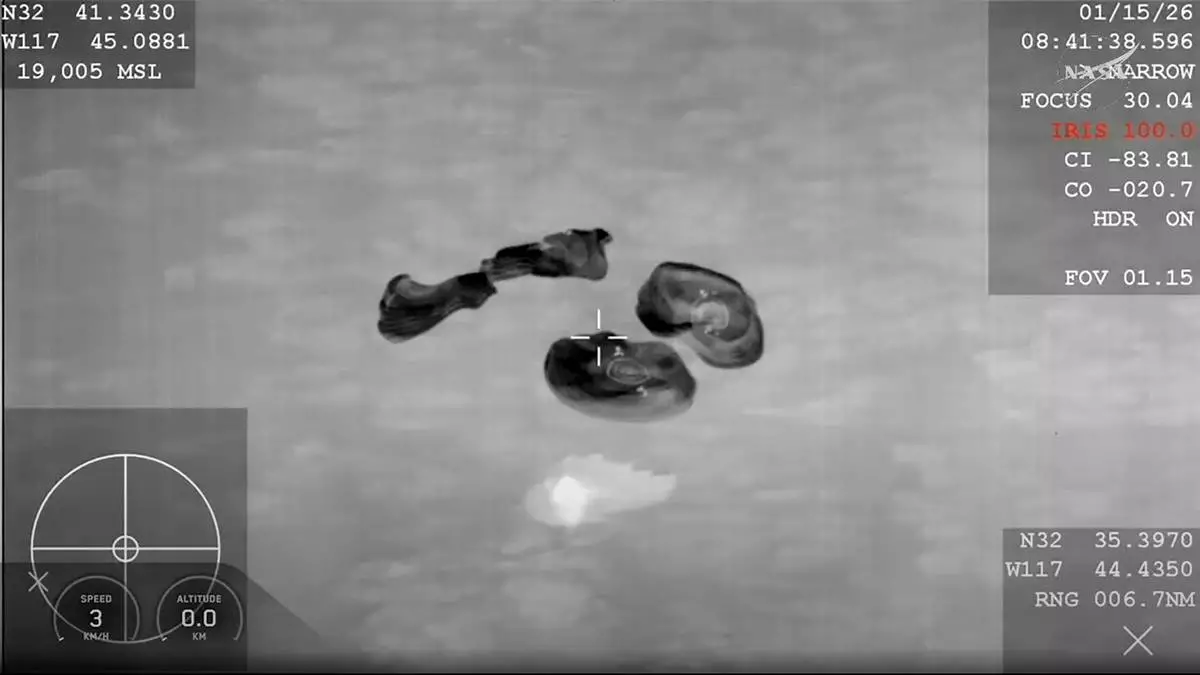
This screengrab from video provided by NASA shows the NASA's SpaceX Crew-11 members re entering the earth in a middle-of-the-night splashdown near San Diego, Calif., Thursday, Jan. 15, 2026. (NASA via AP)