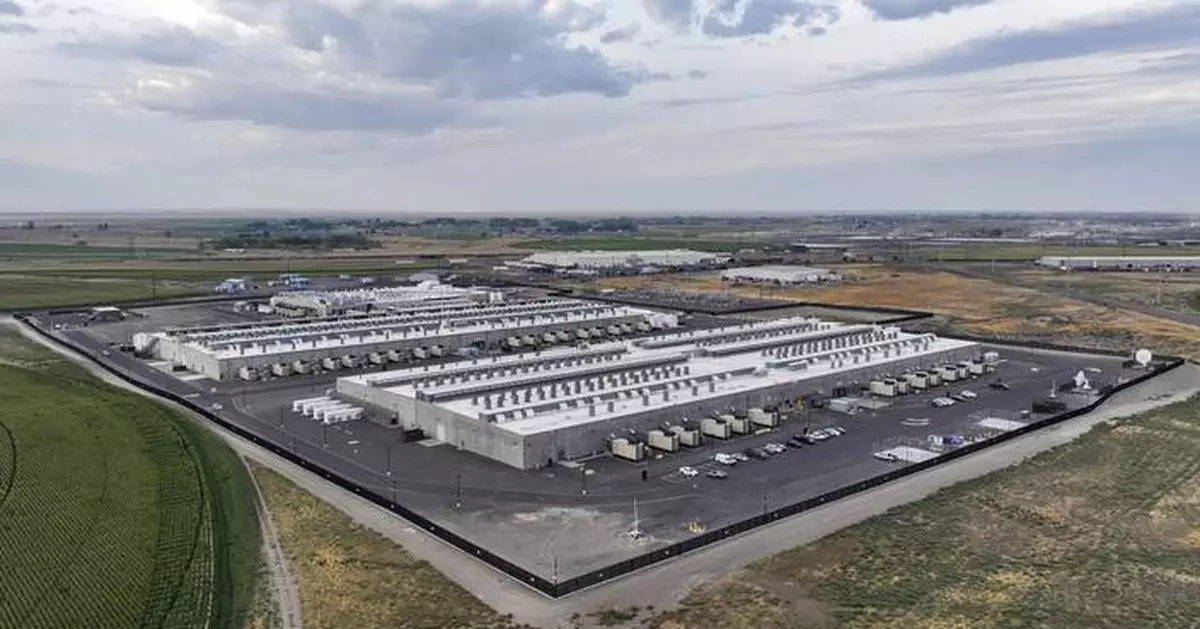
President Donald Trump’s plan to boost artificial intelligence and build data centers across the U.S. could speed up a building boom that was already expected to strain the nation’s ability to power it.
The White House released the “AI Action Plan” Wednesday, vowing to expedite permitting for construction of energy-intensive data centers as it looks to make the country a leader in a business that tech companies and others are pouring billions of dollars into.
The plan says to combat “radical climate dogma,” a number of restrictions — including clean air and water laws — could be lifted, aligning with Trump’s “American energy dominance” agenda and his efforts to undercut clean energy.
Here's what you need to know.
Massive amounts of electricity are needed to support the complex servers, equipment and more for AI. Electricity demand from data centers worldwide is set to more than double by 2030, to slightly more than the entire electricity consumption of Japan today, the International Energy Agency said earlier this year.
In many cases, that electricity may come from burning coal or natural gas. These fossil fuels emit planet-warming greenhouse gas emissions, including carbon dioxide and methane. This in turn is tied to extreme weather events that are becoming more severe, frequent and costly.
The data centers used to fuel AI also need a tremendous amount of water to keep cool. That means they can strain water sources in areas that may have little to spare.
Typically, tech giants, up-and-comers and other developers try to keep an existing power plant online to meet demand, experts say, and most existing power plants in the U.S. are still producing electricity using fossil fuels — most often natural gas.
In certain areas of the U.S., a combination of renewables and energy storage in the form of batteries are coming online.
But tapping into nuclear power is especially of interest as a way to reduce data center-induced emissions while still meeting demand and staying competitive.
Amazon said last month it would spend $20 billion on data center sites in Pennsylvania, including one alongside a nuclear power plant. The investment allows Amazon to plug right into the plant, a scrutinized but faster approach for the company's development timeline.
Meta recently signed a deal to secure nuclear power to meet its computing needs. Microsoft plans to buy energy from the Three Mile Island nuclear power plant, and Google previously signed a contract to purchase it from multiple small modular reactors in the works.
Data centers are often built where electricity is cheapest, and often, that's not from renewables. And sometimes data centers are cited as a reason to extend the lives of traditional, fossil-fuel-burning power plants.
But just this week, United Nations Secretary-General António Guterres called on the world’s largest tech players to fuel their data center needs entirely with renewables by 2030. It's necessary to use fewer fossil fuels, he said.
Experts say it's possible for developers, investors and the tech industry to decarbonize.
However, though industry can do a lot with clean energy, the emerging demands are so big that it can't be clean energy alone, said University of Pennsylvania engineering professor Benjamin Lee.
More generative AI, ChatGPT and massive data centers means “relying on wind and solar alone with batteries becomes really, really expensive,” Lee added, hence the attention on natural gas, but also nuclear.
Regardless of what powers AI, the simple law of supply and demand makes it all but certain that costs for consumers will rise.
New data center projects might require both new energy generation and existing generation. Developers might also invest in batteries or other infrastructure like transmission lines.
All of this costs money, and it needs to be paid for from somewhere.
“In a lot of places in the U.S., they are seeing that rates are going up because utilities are making these moves to try to plan,” said Amanda Smith, a senior scientist at research organization Project Drawdown.
“They’re planning transmission infrastructure, new power plants for the growth and the load that’s projected, which is what we want them to do," she added. "But we as ratepayers will wind up seeing rates go up to cover that.”
Alexa St. John is an Associated Press climate reporter. Follow her on X: @alexa_stjohn. Reach her at ast.john@ap.org.
Read more of AP’s climate coverage at http://www.apnews.com/climate-and-environment
The Associated Press’ climate and environmental coverage receives financial support from multiple private foundations. AP is solely responsible for all content. Find AP’s standards for working with philanthropies, a list of supporters and funded coverage areas at AP.org.
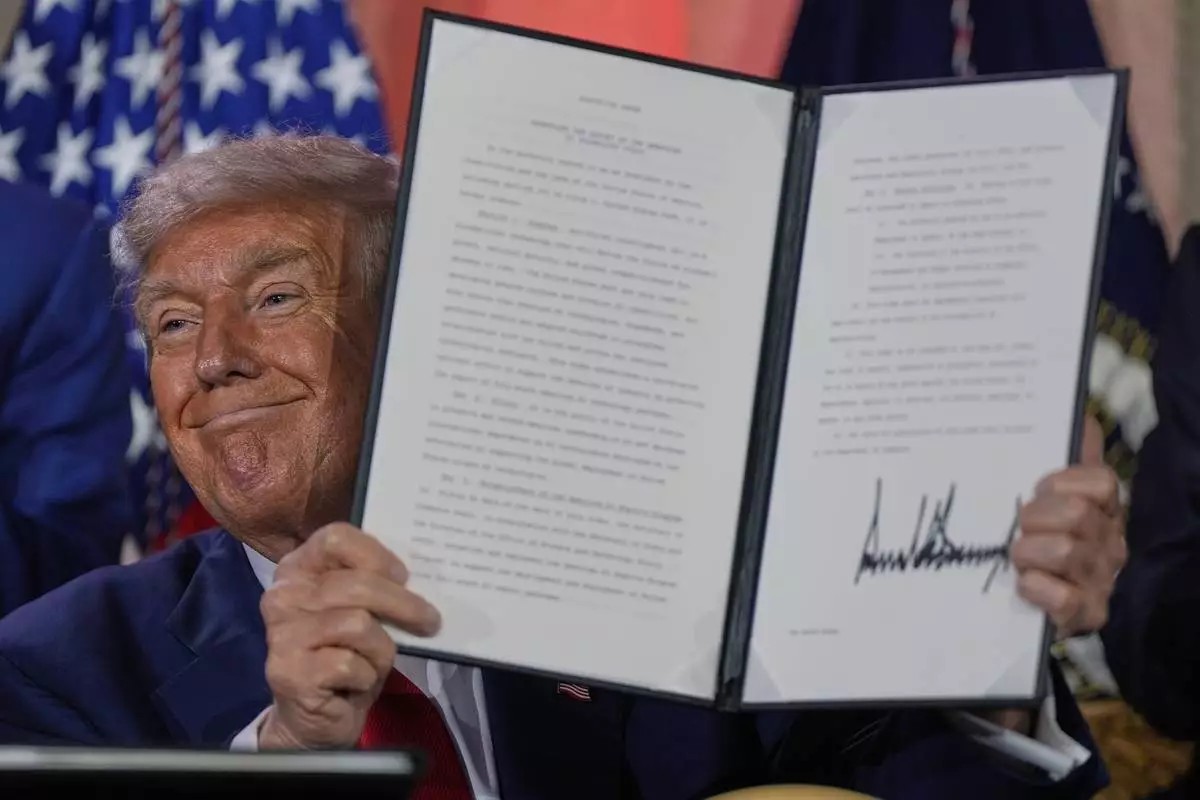
President Donald Trump holds a signed executive order after speaking during an AI summit at the Andrew W. Mellon Auditorium, Wednesday, July 23, 2025, in Washington. (AP Photo/Julia Demaree Nikhinson)
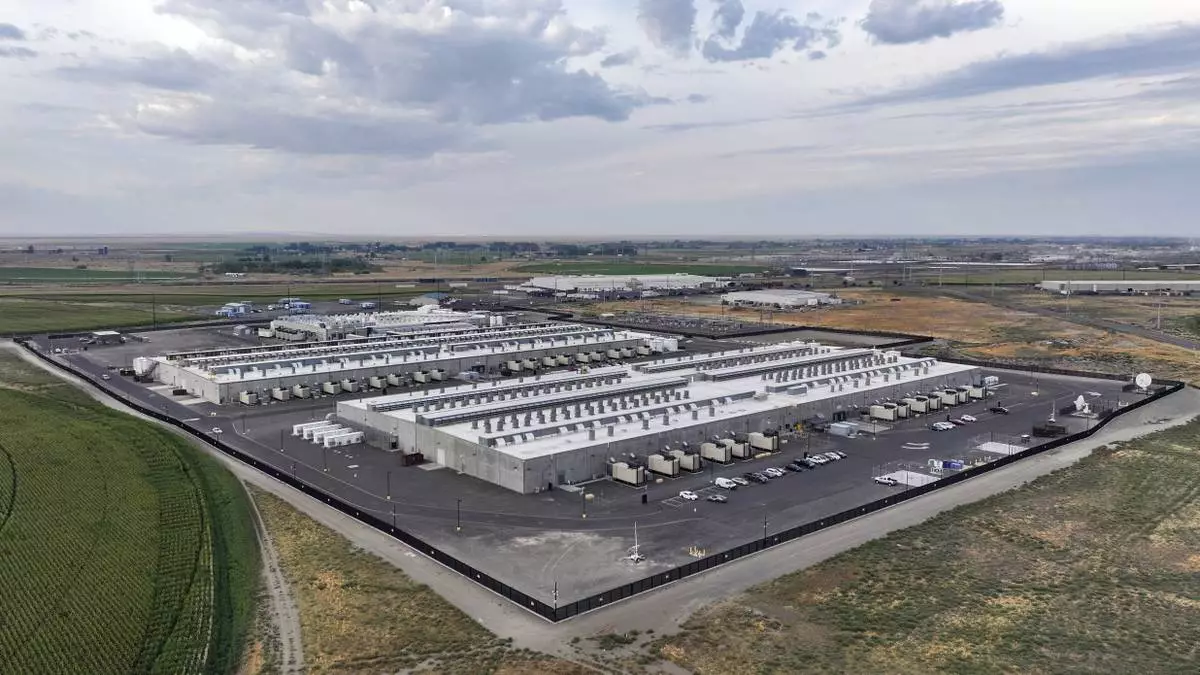
FILE - Amazon Web Services data center is seen on Aug. 22, 2024, in Boardman, Ore. (AP Photo/Jenny Kane, File)