WASHINGTON (AP) — A migrant from Venezuela deported by the Trump administration to El Salvador has taken the first step toward suing the U.S. government, saying he was wrongly sent to a notorious prison in the Central American country where he was beaten by guards and kept from contacting his family or an attorney.
Neiyerver Adrián Leon Rengel, 27, has filed a claim for $1.3 million with the U.S. Department of Homeland Security, his attorneys with Democracy Defenders Fund said Thursday. Rengel is among more than 250 migrants from Venezuela sent to El Salvador in March, out of the jurisdiction of U.S. courts, after President Donald Trump invoked the Alien Enemies Act of 1798 against members of the Venezuelan gang Tren de Aragua.
Immigration agents took Rengel into custody on March 13 in the parking lot of his apartment in Irving, Texas, wrongly claiming his tattoos reflected an affiliation with Tren de Aragua, according to his claim. He had entered the U.S. in 2023. He worked as a barber and was scheduled to appear before an immigration judge in 2028.
Homeland Security said in an email that Rengel was a “confirmed associate” of the Tren de Aragua gang — though it did not specify how it reached that conclusion — who had entered the country illegally. It called his claims a fake “sob story.”
“President Trump and Secretary Noem will not allow foreign terrorist enemies to operate in our country and endanger Americans,” the email said. It added, “We hear far too much about gang members and criminals’ false sob stories and not enough about their victims.”
At El Salvador's Terrorism Confinement Center, or CECOT, Rengel said guards hit him with fists and batons and, on one occasion, viciously beat him after taking him to an area of the prison without cameras.
Rengel was sent to Venezuela earlier this month as part of a prisoner exchange deal. His attorneys say he is living with his mother and is “terrified” to return to the United States.
They are seeking compensation for emotional and psychological injuries.
A federal judge ruled in June that the Trump administration must give some of the migrants sent to the prison in El Salvador a chance to challenge their deportations.
U.S. District Court Judge James Boasberg said the people hadn’t been able to formally contest the removals or allegations that they were members of Tren de Aragua. He ordered the administration to work toward giving them a way to file those challenges.
The judge wrote that “significant evidence” had surfaced indicating that many of the migrants were not connected to the gang “and thus were languishing in a foreign prison on flimsy, even frivolous, accusations.”
At a hearing on Thursday, an attorney for the Trump administration told Boasberg it would not immediately bring the migrants sent from El Salvador to Venezuela as part of the prisoner exchange back to the U.S.
Trump officials planned to await the outcome of other court cases before deciding whether to allow the migrants to return, U.S. Department of Justice attorney Tiberius Davis said.
Boasberg had ordered the administration to turn planes carrying the accused gang members around, but the demand was ignored. Rengel's attorneys say he was on one of those planes.
The judge has found probable cause that the administration committed contempt of court.
Boasberg said Thursday he planned to expand his contempt probe to include a recent whistleblower complaint that claims a top Justice Department official suggested the Trump administration might have to ignore court orders as it prepared to deport Venezuelan migrants it accused of being gang members.
Thanawala reported from Atlanta.
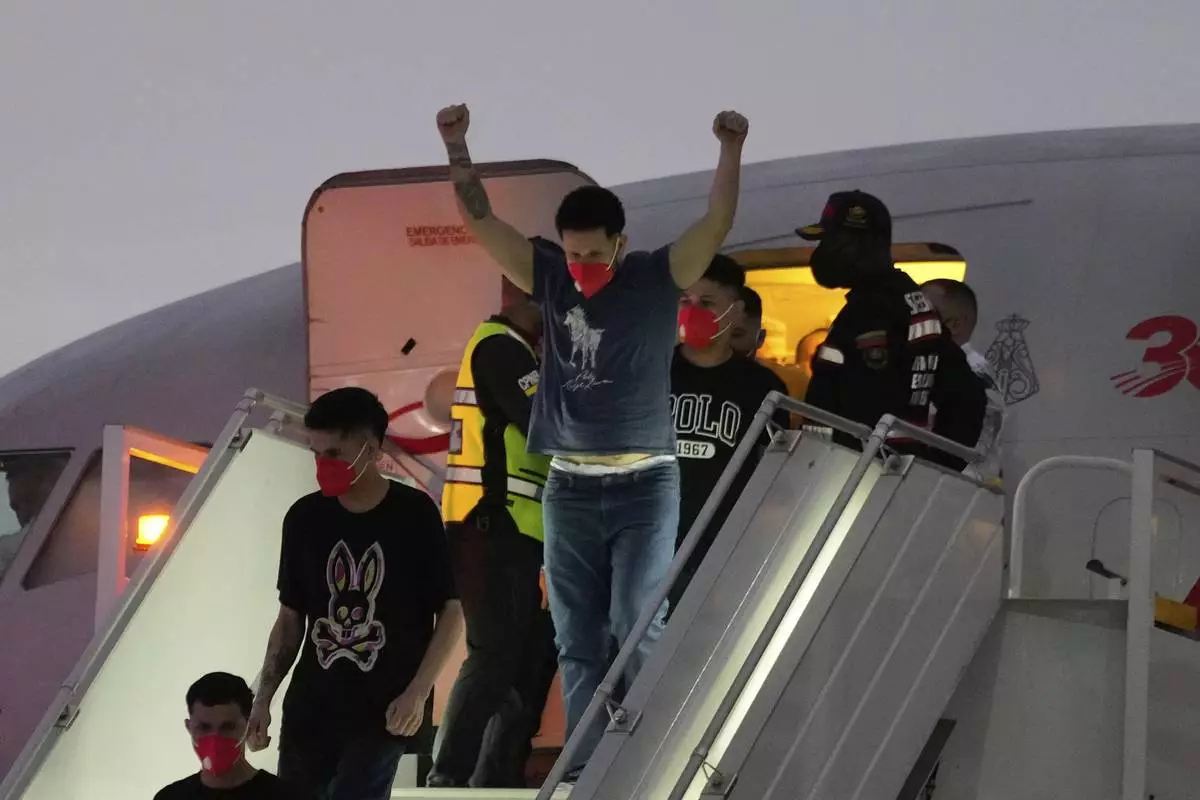
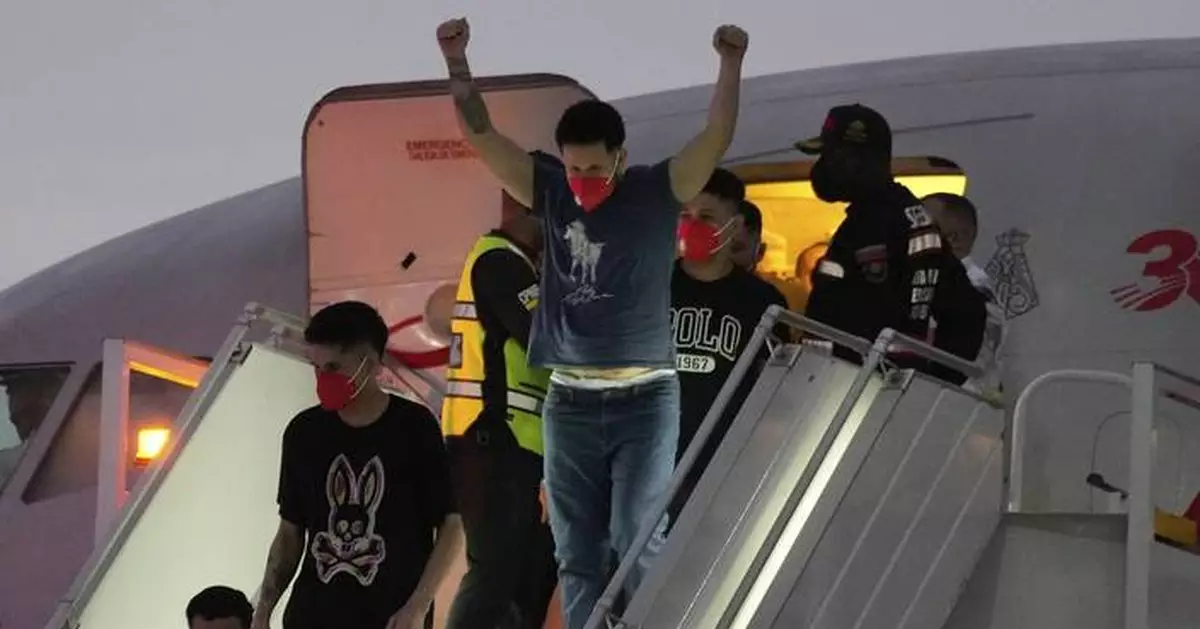
Migrants deported months ago by the United States to El Salvador under the Trump administration's immigration crackdown arrive at Simon Bolívar International Airport in Maiquetia, Venezuela, Friday, July 18, 2025. (AP Photo/Ariana Cubillos)
THE HAGUE, Netherlands (AP) — Myanmar insisted Friday that its deadly military campaign against the Rohingya ethnic minority was a legitimate counter-terrorism operation and did not amount to genocide, as it defended itself at the top United Nations court against an allegation of breaching the genocide convention.
Myanmar launched the campaign in Rakhine state in 2017 after an attack by a Rohingya insurgent group. Security forces were accused of mass rapes, killings and torching thousands of homes as more than 700,000 Rohingya fled into neighboring Bangladesh.
“Myanmar was not obliged to remain idle and allow terrorists to have free reign of northern Rakhine state,” the country’s representative Ko Ko Hlaing told black-robed judges at the International Court of Justice.
African nation Gambia brought a case at the court in 2019 alleging that Myanmar's military actions amount to a breach of the Genocide Convention that was drawn up in the aftermath of World War II and the Holocaust.
Some 1.2 million members of the Rohingya minority are still languishing in chaotic, overcrowded camps in Bangladesh, where armed groups recruit children and girls as young as 12 are forced into prostitution. The sudden and severe foreign aid cuts imposed last year by U.S. President Donald Trump shuttered thousands of the camps’ schools and have caused children to starve to death.
Buddhist-majority Myanmar has long considered the Rohingya Muslim minority to be “Bengalis” from Bangladesh even though their families have lived in the country for generations. Nearly all have been denied citizenship since 1982.
As hearings opened Monday, Gambian Justice Minister Dawda Jallow said his nation filed the case after the Rohingya “endured decades of appalling persecution, and years of dehumanizing propaganda. This culminated in the savage, genocidal ‘clearance operations’ of 2016 and 2017, which were followed by continued genocidal policies meant to erase their existence in Myanmar.”
Hlaing disputed the evidence Gambia cited in its case, including the findings of an international fact-finding mission set up by the U.N.'s Human Rights Council.
“Myanmar’s position is that the Gambia has failed to meet its burden of proof," he said. "This case will be decided on the basis of proven facts, not unsubstantiated allegations. Emotional anguish and blurry factual pictures are not a substitute for rigorous presentation of facts.”
Nobel Peace Prize winner Aung San Suu Kyi represented her country at jurisdiction hearings in the case in 2019, denying that Myanmar armed forces committed genocide and instead casting the mass exodus of Rohingya people from the country she led as an unfortunate result of a battle with insurgents.
The pro-democracy icon is now in prison after being convicted of what her supporters call trumped-up charges after a military takeover of power.
Myanmar contested the court’s jurisdiction, saying Gambia was not directly involved in the conflict and therefore could not initiate a case. Both countries are signatories to the genocide convention, and in 2022, judges rejected the argument, allowing the case to move forward.
Gambia rejects Myanmar's claims that it was combating terrorism, with Jallow telling judges on Monday that “genocidal intent is the only reasonable inference that can be drawn from Myanmar’s pattern of conduct.”
In late 2024, prosecutors at another Hague-based tribunal, the International Criminal Court, requested an arrest warrant for the head of Myanmar’s military regime for crimes committed against the country’s Rohingya Muslim minority. Senior Gen. Min Aung Hlaing, who seized power from Suu Kyi in 2021, is accused of crimes against humanity for the persecution of the Rohingya. The request is still pending.

FILE - In this Sept. 7, 2017, file photo, smoke rises from a burned house in Gawdu Zara village, northern Rakhine state, where the vast majority of the country's 1.1 million Rohingya lived, Myanmar. (AP Photo, File)