Hungary has become one of the most important gateways for Chinese new energy vehicle (NEV) investment in Europe, attracting Chinese investors with its competitive labor cost and established automotive industrial chain.
The Chinese investment is also helping the Central European country to pursue its goal to become Europe's NEV manufacturing center. In Debrecen, a city over 200 kilometers away from the capital city Budapest, a group of China's leading NEV battery makers are building factories locally, forming a relatively complete industry cluster.
Chinese battery manufacturer Contemporary Amperex Technology Co., Ltd. (CATL) is investing more than 7 billion euros to build a 100GWh battery factory in Debrecen, which is the second battery factory in Europe after the one in Germany.
Meanwhile, the Debrecen plant of the EVE Energy, another Chinese NEV battery giant, is scheduled to be put into production in 2027. The site will become the company's production base for large cylindrical batteries for passenger cars in Europe, with an annual production capacity of 30GWh, which can create about 1,000 jobs locally.
Data shows that China has been the largest source of foreign investment in Hungary for two consecutive years. The total investment of Chinese companies in Hungary has reached 17 billion euros, with the investment mainly concentrated in the automotive sector, especially in NEV manufacturing.
"I think the development of new energy in Europe is still in its early stages. As supporting suppliers such as the positive and negative electrodes of separators and battery manufacturers gradually settle in Europe, I believe it is possible that the development of the entire new energy industry [in Europe] will enter a fast lane within a few years," said Wu Tao, general manger of Semcorp Hungary.
"The market is currently on an upward trend, which means we are getting more and more orders, mainly from Europe," said Zovani Attila, a product sales staff of Semcorp Hungary.
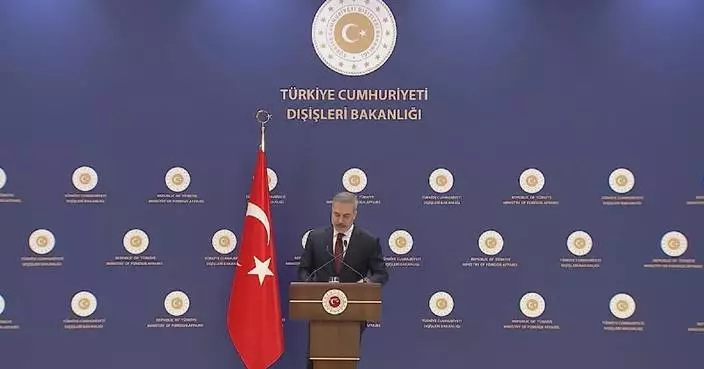
Hungarian Foreign Minister Peter Szijjarto said that the deep involvement of Chinese NEV companies has helped Hungary to become the second largest producer in the global electric vehicle industry.
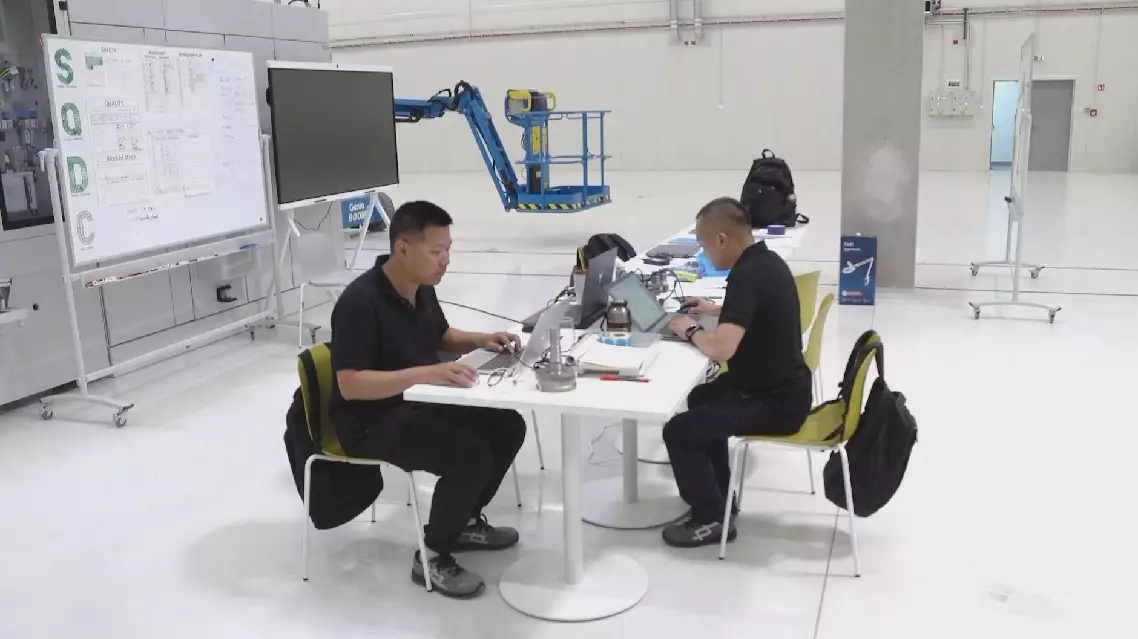
As an important supplier of key components for NEV transmission systems, the factory of Evoring Precision Manufacturing Kft., invested and built by China's Zhejiang Shuanghuan Driveline Co., Ltd. in Jaszfenyszaru, is expected to be put into production this year.
"Now you see two technical engineers sent from China working on site to support our equipment commissioning and production start-up. The scene was actually the opposite 15 or 20 years ago," said Zhang Min, general manager of of Shuanghuan.
Hungary has an established automotive industry chain, and more than 50 of the world's top 100 automotive and parts suppliers have production and operations in Hungary. At the same time, Hungary, located in Central Europe, is an important transportation hub connecting Eastern Europe and Western Europe, positioning it as an ideal gateway to the European market, according to industry insiders.
"First, energy costs in Hungary are lower than that in Western Europe. Second, Hungary boasts a relatively complete industrial chain in its automotive sector, which can provide us with well trained technicians. Third, and most importantly, Hungary is (geographically) close to our customers," said Hu.
China's investment bolsters rapid NEV development in Hungary