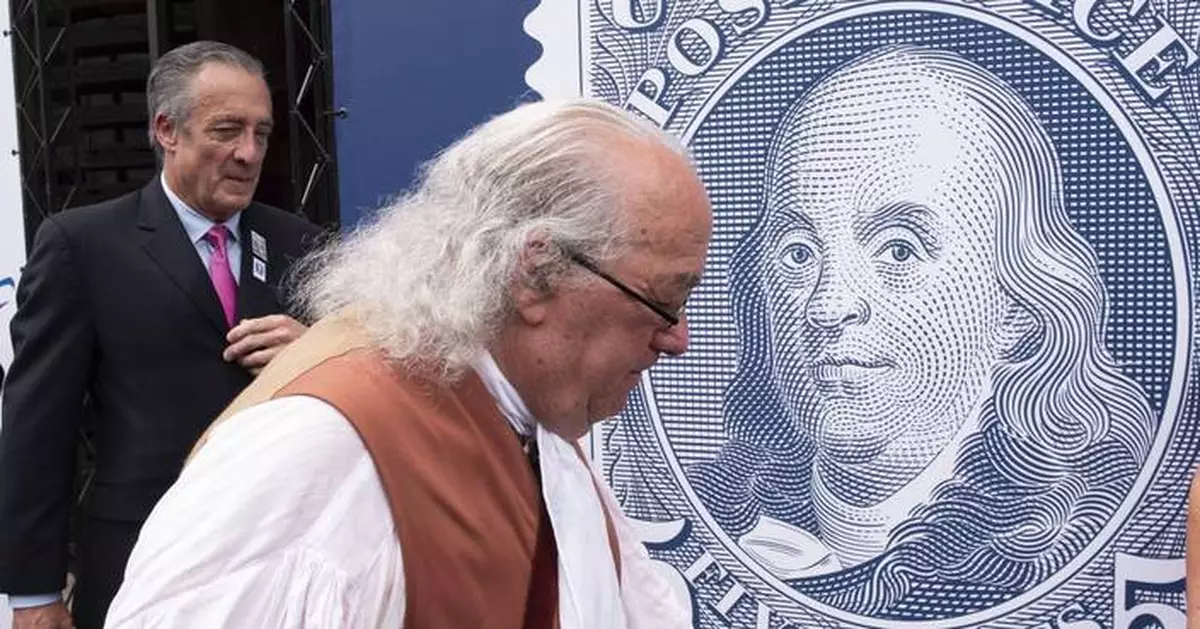
The one government agency that still reaches nearly every American daily — undeterred by rain, sleet, snow or even gloom of night — turns 250 on Saturday.
Established in 1775, when the Second Continental Congress appointed Benjamin Franklin as postmaster general, the postal service predates the United States. It was launched nearly a year before the colonies declared their break from British rule.
Click to Gallery
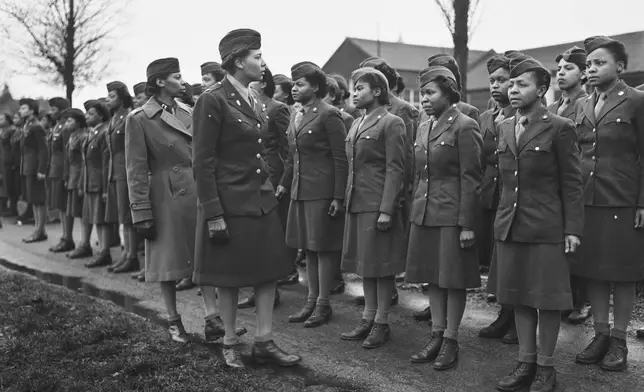
In this photo provided by the National Archives, Maj. Charity E. Adams and Capt. Mary Kearney, of the 6888th Central Postal Directory Battalion, inspect the first contingent of Black members of the Women's Army Corps assigned to overseas service in England on Feb. 15, 1945. (Holt/U.S. Army via AP)
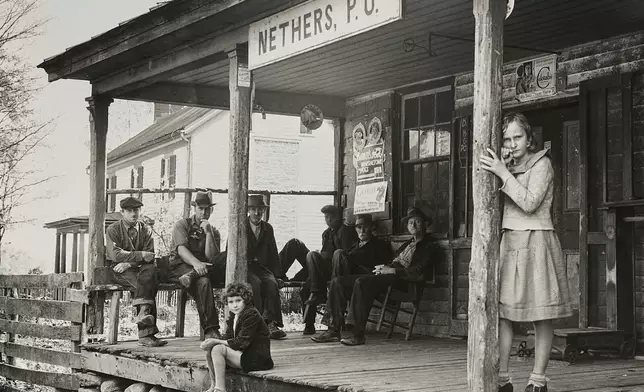
This photo provided by the Library of Congress shows people at the Nethers, Va., post office in Oct. 1935, during the Great Depression. (Arthur Rothstein/Farm Security Administration/Library of Congress via AP)
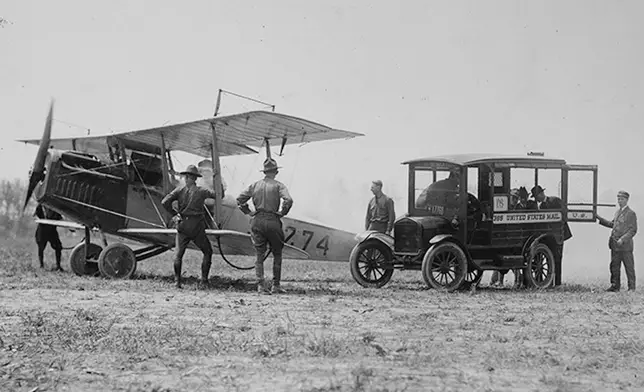
In this photo provided by the National Archives and Records Administration, mail is loaded onto a Curtiss JN-4H "Jenny" biplane, May 15, 1918, at Bustleton Field near Philadelphia, while U.S. Army personnel look on. (National Archives and Records Administration via AP)
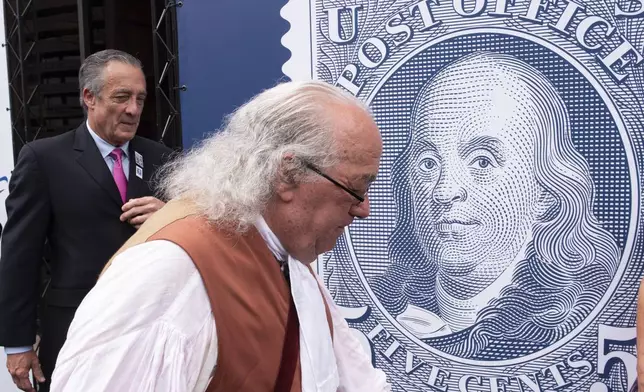
FILE - Barry Stevens, portraying Benjamin Franklin, right, walks past a just unveiled stamp marking the 250th anniversary of the postal service, Wednesday, July 23, 2025, in Washington, as Postmaster General David Steiner looks on. (AP Photo/Cliff Owen, File)
“The country may not even have come into existence but for the Postal Service,” said Stephen Allen Kochersperger, the postal service historian and a former local postmaster.
While it now grapples with concerns over its financial viability in the modern era, the agency has had a long and colorful history that helped shape the nation. It has grown from serving the 13 colonies to delivering more mail than any other postal system in the world, reaching nearly 169 million addresses and employing more than 635,000 people.
In those early days, creating an American postal system was a key priority for the nation's founders, who needed to communicate with the Continental Army and the colonies. When the Continental Congress met in 1775, it appointed Franklin as the first postmaster because he had served in the British postal service for North America.
The early postal system also became crucial to unifying the diverse, fragmented colonies into a nation by spreading ideas of liberty and independence through letters, newspapers and pamphlets.
“People were reading, getting ideas of what it would be like to be an independent country,” Kochersperger said.
When the U.S. Constitution was ratified, Congress was granted power to establish post offices and mail routes that were first used by mail carriers on horseback and later upgraded for stagecoaches. Some evolved into highways still used today.
Initially running north–south along the East Coast, post roads later extended westward. Historians have said this aided settler expansion into Native lands and was intertwined with the displacement of tribes.
As western migration accelerated, mail was sent by ship from New York to Central America and on to California. Delivery typically took two to three months.
The Pony Express, operated by private carriers, was started to speed things up. A relay system of riders on horseback carried mail from California to Missouri, the furthest westward railroad stop. The 1,800-mile (2,900-kilometer) journey took 10 days.
While legendary, it only lasted about 18 months, until Oct. 26, 1861. The service was scuttled by the Civil War and made obsolete with the advent of the telegraph, said Daniel Piazza, chief curator of philately at the Smithsonian National Postal Museum.
Later, the transcontinental railroad reduced mail delivery from months to days.
Free mail delivery to homes began in earnest in 1863 in the nation’s largest cities. It was initially created as a response to grief during the Civil War. At the time, the only communication from a father, brother, husband or son usually came through letter-writing. Women lined up daily at post offices, awaiting word. They sometimes got their own letters back, with a note saying their loved one had been killed.
Postal officials in Cleveland decided to take mail to people’s homes out of compassion.
Enthusiasm for home delivery spread quickly, and people living in rural areas wanted it, too. Despite logistical challenges, rural free delivery began expanding rapidly around 1900. By the 1920s, mail carriers mostly had replaced horse-drawn wagons with automobiles.
Around that time, mail started being sent by airplane as well. The nation’s first regularly scheduled airmail service began on May 15, 1918. The initial routes were between Washington, D.C., Philadelphia and New York, using Army pilots and planes.
The post office soon took over air mail, running operations for nine years until turning to fledgling private airline companies, some of which remain major airlines.
In the early days, flights were so dangerous that some pilots dubbed themselves the Suicide Club. Thirty-two pilots were killed.
The postal service saw major growth during President Franklin Delano Roosevelt's time in office. His New Deal plan to address the Great Depression put people to work building 2,000 new post offices.
After World War II, a booming economy and growing population led to a surge in mail. To handle the increasing volume, the post office needed a faster alternative to manual sorting.
So, on July 1, 1963, each post office was given a five-digit ZIP code. Previously, clerks had to memorize thousands of points of address information so they could sort the mail, Kochersperger said.
The public was skeptical at first, balking at more numbers. So, the post office came up with a friendly cartoon character named Mr. ZIP, who helped convince people their mail would arrive faster.
By 1970, postal workers were angry over low wages and a strike was called by leaders of the National Association of Letter Carriers union in New York. Eventually about 200,000 workers joined the postal stoppage, which led to the Postal Reorganization Act of 1970. It authorized collective bargaining rights for postal workers and transformed the taxpayer-supported Post Office Department into the United States Postal Service, a financially self-sustaining and independent agency within the executive branch.
In more recent times, U.S. Postal Service workers have faced various threats, including anthrax, a serious infectious bacterial disease. Weeks after the Sept. 11, 2001, terrorist attacks, four threatening letters contaminated with anthrax were sent through the mail. Two workers at a mail distribution center in Washington, D.C. died after breathing in the spores, and thousands were potentially exposed.
Three other people were killed, and more than a dozen were sickened.
The anthrax scare led to major changes in how mail was monitored and sorted and how USPS workers protected themselves. Years later, they'd be designated essential workers during the COVID-19 pandemic and don protective gear again.
Haigh reported from Hartford, Conn.
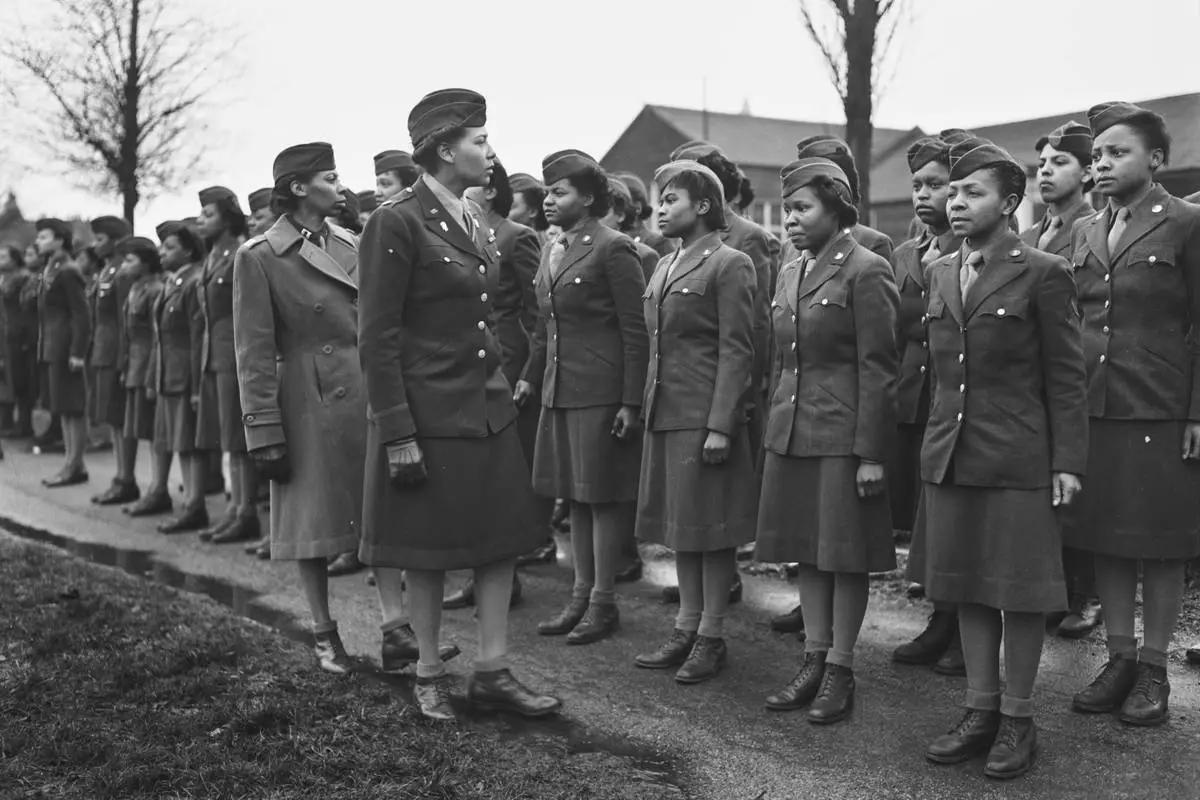
In this photo provided by the National Archives, Maj. Charity E. Adams and Capt. Mary Kearney, of the 6888th Central Postal Directory Battalion, inspect the first contingent of Black members of the Women's Army Corps assigned to overseas service in England on Feb. 15, 1945. (Holt/U.S. Army via AP)
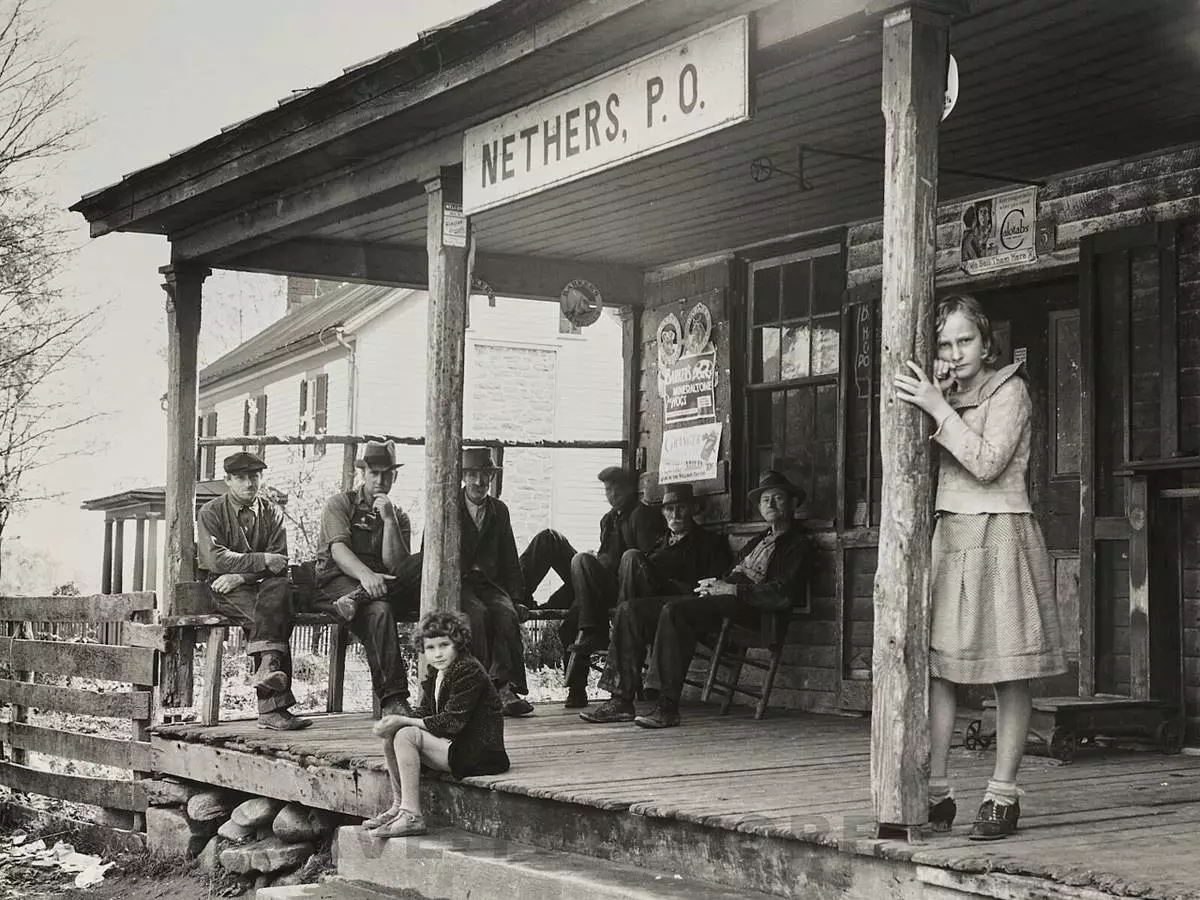
This photo provided by the Library of Congress shows people at the Nethers, Va., post office in Oct. 1935, during the Great Depression. (Arthur Rothstein/Farm Security Administration/Library of Congress via AP)
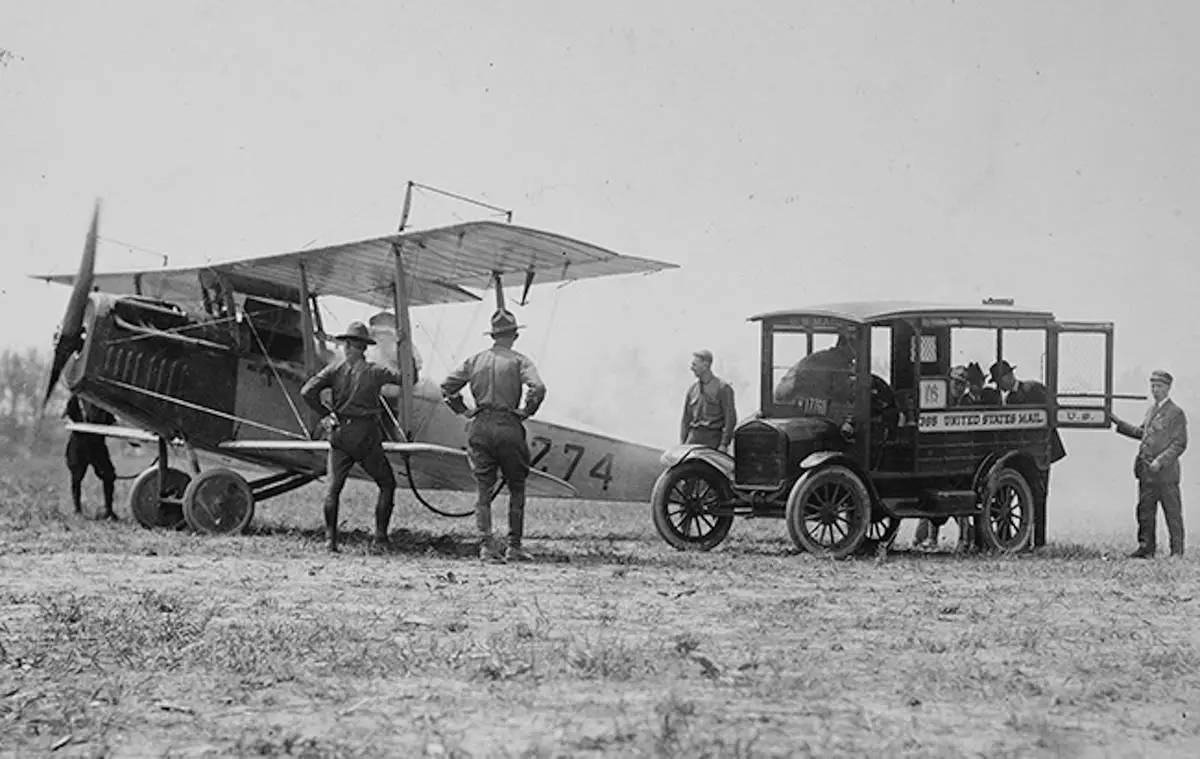
In this photo provided by the National Archives and Records Administration, mail is loaded onto a Curtiss JN-4H "Jenny" biplane, May 15, 1918, at Bustleton Field near Philadelphia, while U.S. Army personnel look on. (National Archives and Records Administration via AP)
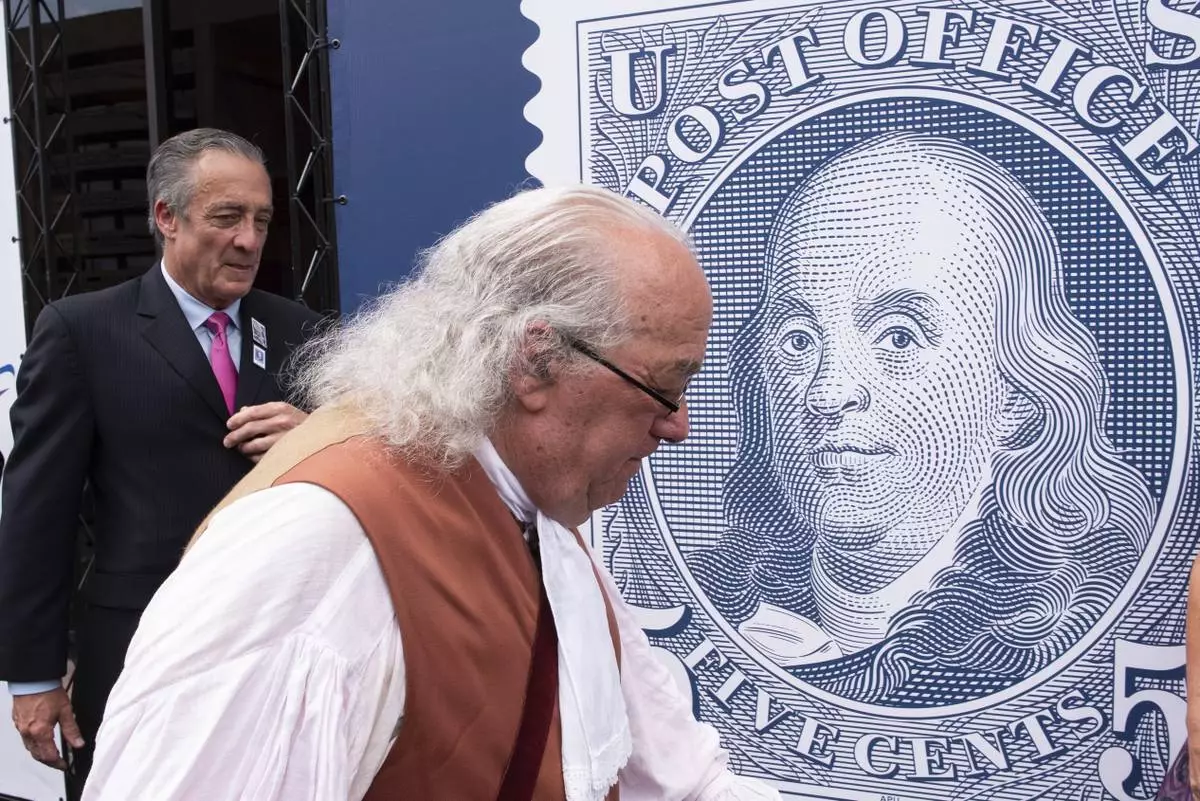
FILE - Barry Stevens, portraying Benjamin Franklin, right, walks past a just unveiled stamp marking the 250th anniversary of the postal service, Wednesday, July 23, 2025, in Washington, as Postmaster General David Steiner looks on. (AP Photo/Cliff Owen, File)