One of Kazeem Famuyide's earliest memories is sitting on his father's lap watching Hulk Hogan wrestle in the 1988 Survivor Series.
His love of Hogan in the ring became inextricable from what would become a lifelong obsession with the sport — including a yearlong role touring the country and writing scripts for WWE's top talent.
“He was a superhero to a lot of people, including myself,” said Famuyide, who is Black and now co-hosts the WWE-themed podcast “The Ringer Wrestling Show.” He remembers Hogan telling audiences to “train, say your prayers and eat your vitamins,” often in front of giant American flags.
But for the 38-year-old Famuyide and other Black wrestling fans and sports commentators, Hogan’s death this week at 71 has resurfaced an irreconcilable contradiction in the iconic wrestler's legacy: Hogan's undeniable role in broadening wrestling's appeal to fans of all backgrounds versus his well-documented racism.
“You never really got the feeling that Hulk Hogan truly felt remorse,” Famuyide said.
“The Right Time” podcast host Bomani Jones noted there were two sharply different reactions to Hogan’s death. Remembrances have split between those who see no need to harp on past controversies and those who struggle with his behavior that once got him banned from the WWE.
“This was never going to be one where people were going to mourn quietly,” Jones said.
Hogan's death drew remembrances from politicians, celebrities and fans alike, celebrating his accolades. Many applauded how he was able to parlay his wrestling persona into movie appearances, brand deals, a reality television show and notable political influence.
On Friday, Dwayne “The Rock” Johnson, whose fame arguably rivals Hogan’s acclaim, paid tribute. Johnson, the son of pioneering wrestler Rocky Johnson, one of the WWE’s first Black champions, said Hogan was a hero “to millions of little kids.”
“You may have ‘passed the torch’ to me,” Johnson wrote under a 2002 video showing him and Hogan facing off at Wrestlemania.
“But you, my friend...you ‘drew the house’ meaning you sold out every arena and stadium across the country in your prime as Hulk Hogan, on your way of becoming the greatest of all time.”
Other notable Black professional wrestlers, from Booker T and Mark Henry, to Jacqueline Moore and Carlene “Jazz” Moore-Begnaud, have found success and fame in the WWE.
But just as many people took Hogan's death as an opportunity to recount Hogan's more controversial behavior.
In 2016, a Florida jury awarded Hogan over $115 million against Gawker Media, after Hogan sued them for posting a video of him having sex with his former best friend’s wife. The litigation led to the discovery that Hogan had used racial slurs in 2007 to describe his daughter's Black ex-boyfriend.
“I am a racist, to a point,” Hogan said, before adding the slur against Black people, according to a transcript.
Hogan apologized at the time and called the language “unacceptable.”
Around the same time, some outlets reported that Hogan used the same slur on a recorded phone call with his son.
Hogan's enthusiastic endorsement of conservative political figures like longtime friend President Donald Trump made many people doubt the sincerity of that apology, Jones said.
“It's one thing to get caught on tape saying these things in private. It's another thing for you to decide publicly to align yourself with a cause that many Black people find antagonistic toward us,” Jones said.
For many Black wrestling enthusiasts, Hogan's death brings up familiar contradictions in how the sport deals with race.
Lyric Swinton, 27, a freelance wrestling writer, first fell in love with the sport when she was 8. She describes wrestling as “the most nuanced and colorful” form of storytelling.
Although she feels representation has improved, Swinton remembers WWE use racist tropes in Black wrestlers' plot lines. Swinton recalls Shelton Benjamin having a “mammy,” played by Thea Vidale, invoking a racist caricature.
Swinton considers Benjamin one of the most talented wrestlers at the time, but feels he never got the recognition that his contemporaries did, in part because he was scripted to those roles.
“I kind of felt like I had to check my Blackness at the door,” she said.
For WWE enthusiast and sports journalist Master Tesfatsion, the mixed reactions to Hogan’s death mirror fault lines that exist throughout the country, and highlight how central wrestling has become in pop culture.
Growing up, Tesfatsion, who is Black, remembers watching Vince McMahon, the company's co-founder and former chairman, use a racial slur in a match with John Cena in 2005; or the storyline in 2004 when wrestler John Layfield chased Mexicans across the border.
“In some strange way, the WWE always had a pulse on where America stood,” Tesfatsion said. “You cannot tell the history of America without all these issues, just like you cannot tell the history of the WWE without these issues."
Tesfatsion was in the audience at Hogan's last appearance at a professional match in January. He was one of the many who booed Hogan. After decades of fandom, it was his first time seeing Hogan live.
“I never thought that I would see ‘The Hulk’ in person, and that I would resort to bullying him. But that's what his actions made me do."
Still, Tesfatsion said he will never stop being a super fan.
“I still love America, I still love the WWE. It's an emotional contradiction that I choose to deal with because I still find value in it,” he said.
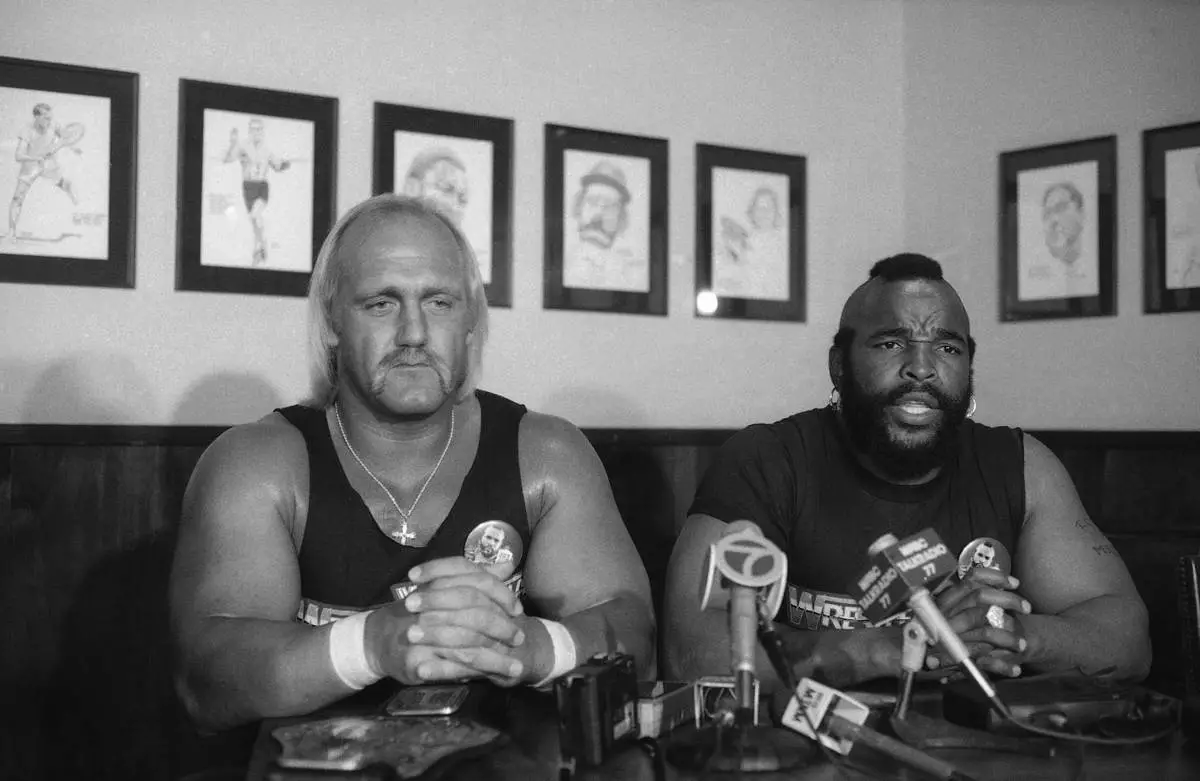
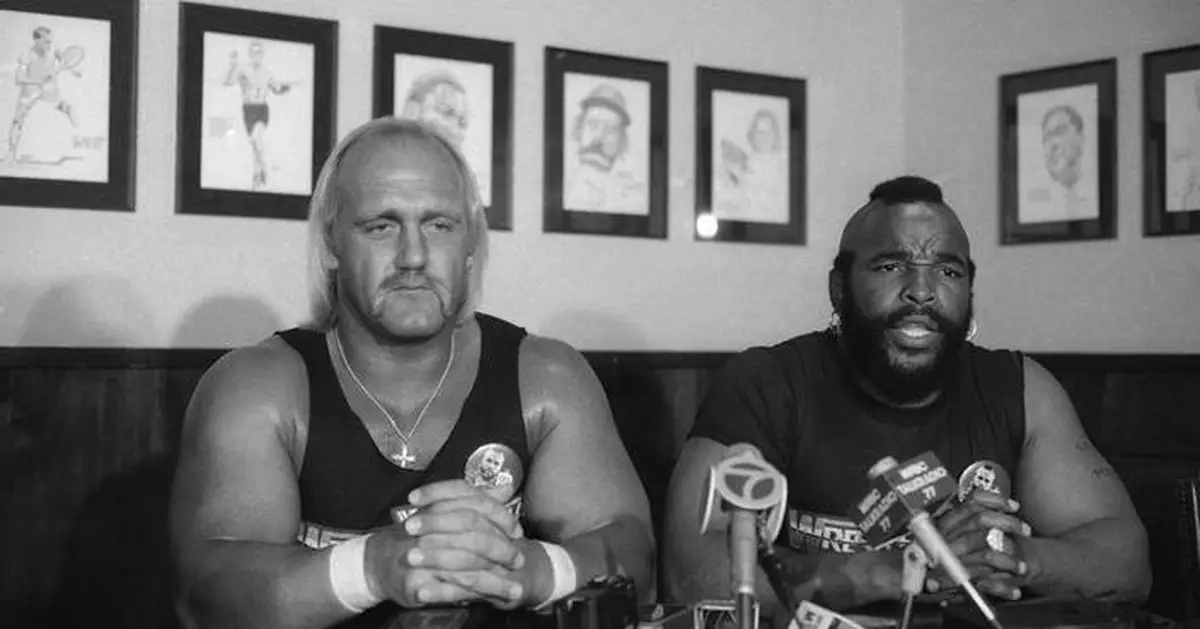
FILE - World Wrestling Federation heavyweight champion Hulk Hogan, left, and Mr. T. appear at a news conference on March 18, 1985, in New York's Madison Square Garden. (AP Photo/Corey Struller, File)
The U.N. Security Council scheduled an emergency meeting Thursday to discuss Iran's deadly protests at the request of the United States, even as President Donald Trump left unclear what actions he would take against the Islamic state.
Tehran appeared to make conciliatory statements in an effort to defuse the situation after Trump threatened to take action to stop further killing of protesters, including the execution of anyone detained in Tehran’s bloody crackdown on nationwide protests.
Iran’s crackdown on the demonstrations has killed at least 2,615, the U.S.-based Human Rights Activists News Agency reported. The death toll exceeds any other round of protest or unrest in Iran in decades and recalls the chaos surrounding the country’s 1979 Islamic Revolution.
Iran closed its airspace to commercial flights for hours without explanation early Thursday and some personnel at a key U.S. military base in Qatar were advised to evacuate. The U.S. Embassy in Kuwait also ordered its personnel to “temporary halt” travel to the multiple military bases in the small Gulf Arab country.
Iran previously closed its airspace during the 12-day war against Israel in June.
Here is the latest:
China’s Foreign Minister Wang Yi has spoken with his counterpart in Iran, who said the situation was “now stable,” China’s Ministry of Foreign Affairs said.
Abbas Araghchi said “he hoped China will play a greater role in regional peace and stability” during the talks, according to the statement from the ministry.
“China opposes imposing its will on other countries, and opposes a return to the ‘law of the jungle’,” Wang said.
“China believes that the Iranian government and people will unite, overcome difficulties, maintain national stability, and safeguard their legitimate rights and interests,” he added. “China hopes all parties will cherish peace, exercise restraint, and resolve differences through dialogue. China is willing to play a constructive role in this regard.”
“We are against military intervention in Iran,” Turkish Foreign Minister Hakan Fidan told journalists in Istanbul on Thursday. “Iran must address its own internal problems… They must address their problems with the region and in global terms through diplomacy so that certain structural problems that cause economic problems can be addressed.”
Ankara and Tehran enjoy warm relations despite often holding divergent interests in the region.
Fidan said the unrest in Iran was rooted in economic conditions caused by sanctions, rather than ideological opposition to the government.
Iranians have been largely absent from an annual pilgrimage to Baghdad, Iraq, to commemorate the death of Imam Musa al-Kadhim, one of the twelve Shiite imams.
Many Iranian pilgrims typically make the journey every year for the annual religious rituals.
Streets across Baghdad were crowded with pilgrims Thursday. Most had arrived on foot from central and southern provinces of Iraq, heading toward the shrine of Imam al-Kadhim in the Kadhimiya district in northern Baghdad,
Adel Zaidan, who owns a hotel near the shrine, said the number of Iranian visitors this year compared to previous years was very small. Other residents agreed.
“This visit is different from previous ones. It lacks the large numbers of Iranian pilgrims, especially in terms of providing food and accommodation,” said Haider Al-Obaidi.
Europe’s largest airline group said Thursday it would halt night flights to and from Tel Aviv and Jordan's capital Amman for five days, citing security concerns as fears grow that unrest in Iran could spiral into wider regional violence.
Lufthansa — which operates Swiss, Austrian Airlines, Brussels Airlines and Eurowings — said flights would run only during daytime hours from Thursday through Monday “due to the current situation in the Middle East.” It said the change would ensure its staff — which includes unionized cabin crews and pilots -- would not be required to stay overnight in the region.
The airline group also said its planes would bypass Iranian and Iraqi airspace, key corridors for air travel between the Middle East and Asia.
Iran closed its airspace to commercial flights for several hours early Thursday without explanation.
A spokesperson for Israel’s Airport Authority, which oversees Tel Aviv’s Ben Gurion Airport, said the airport was operating as usual.
Iranian state media has denied claims that a young man arrested during Iran’s recent protests was condemned to death. The statement from Iran’s judicial authorities on Thursday contradicted what it said were “opposition media abroad” which claimed the young man had been quickly sentenced to death during a violent crackdown on anti-government protests in the country.
State television didn’t immediately give any details beyond his name, Erfan Soltani. Iranian judicial authorities said Soltani was being held in a detention facility outside of the capital. Alongside other protesters, he has been accused of “propaganda activities against the regime,” state media said.
New Zealand’s Foreign Minister Winston Peters said Thursday that his government was “appalled by the escalation of violence and repression” in Iran.
“We condemn the brutal crackdown being carried out by Iran’s security forces, including the killing of protesters,” Peters posted on X.
“Iranians have the right to peaceful protest, freedom of expression, and access to information – and that right is currently being brutally repressed,” he said.
Peters said his government had expressed serious concerns to the Iranian Embassy in Wellington.
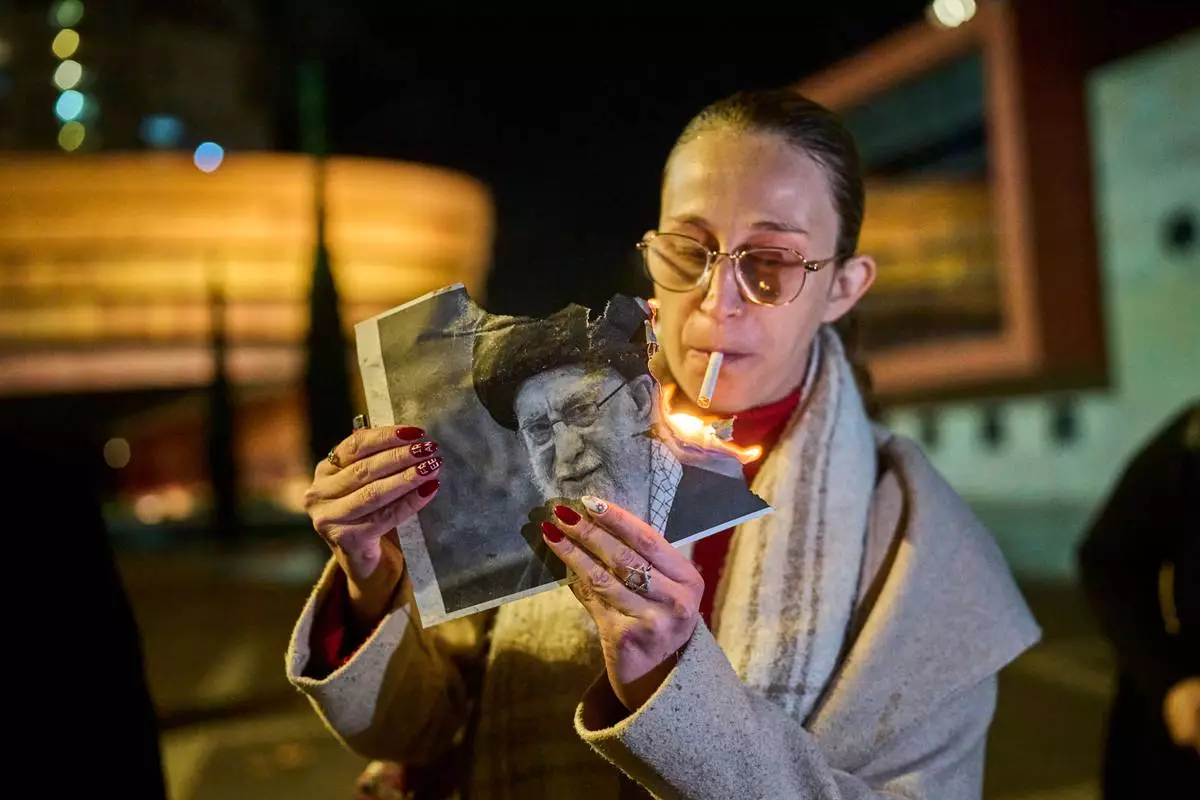
A demonstrator lights a cigarette with a burning poster depicting Supreme Leader Ayatollah Ali Khamenei during a rally in support of Iran's anti-government protests, in Holon, Israel, Wednesday, Jan. 14, 2026. (AP Photo/Ohad Zwigenberg)
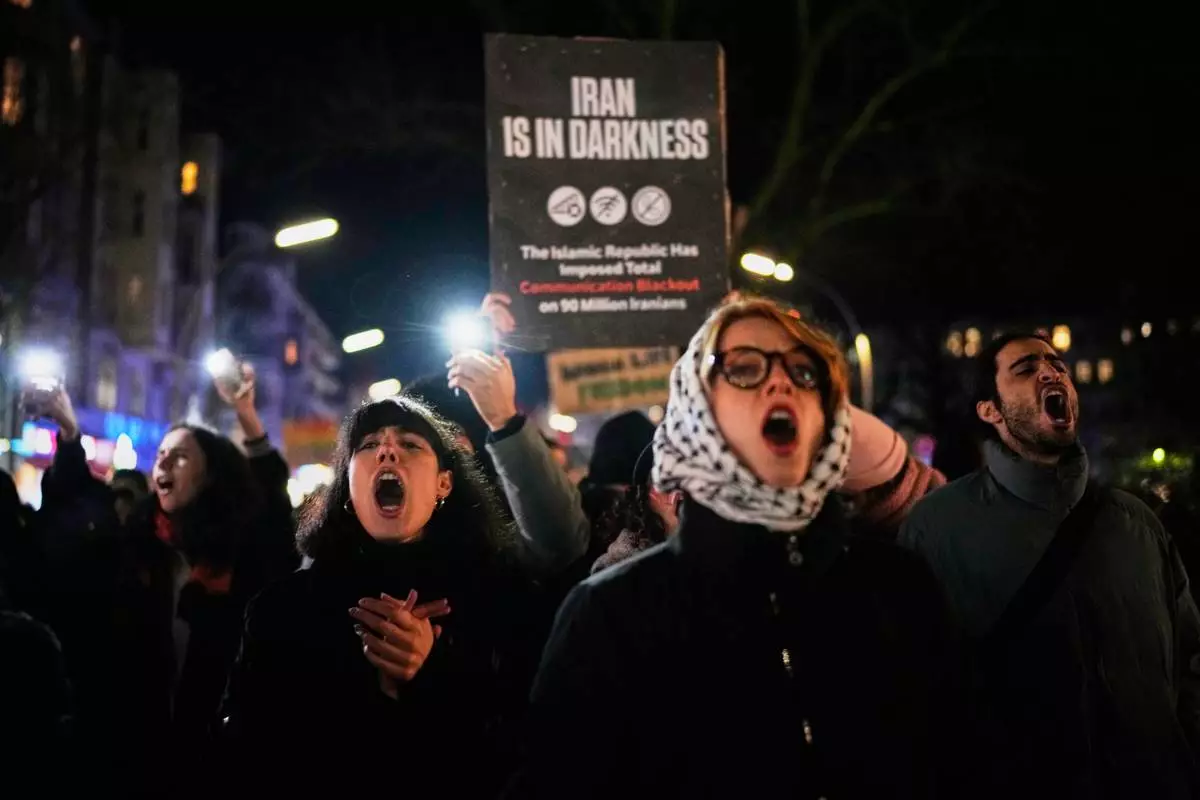
Protesters participate in a demonstration in support of the nationwide mass protests in Iran against the government, in Berlin, Germany, Wednesday, Jan. 14, 2026. (AP Photo/Ebrahim Noroozi)
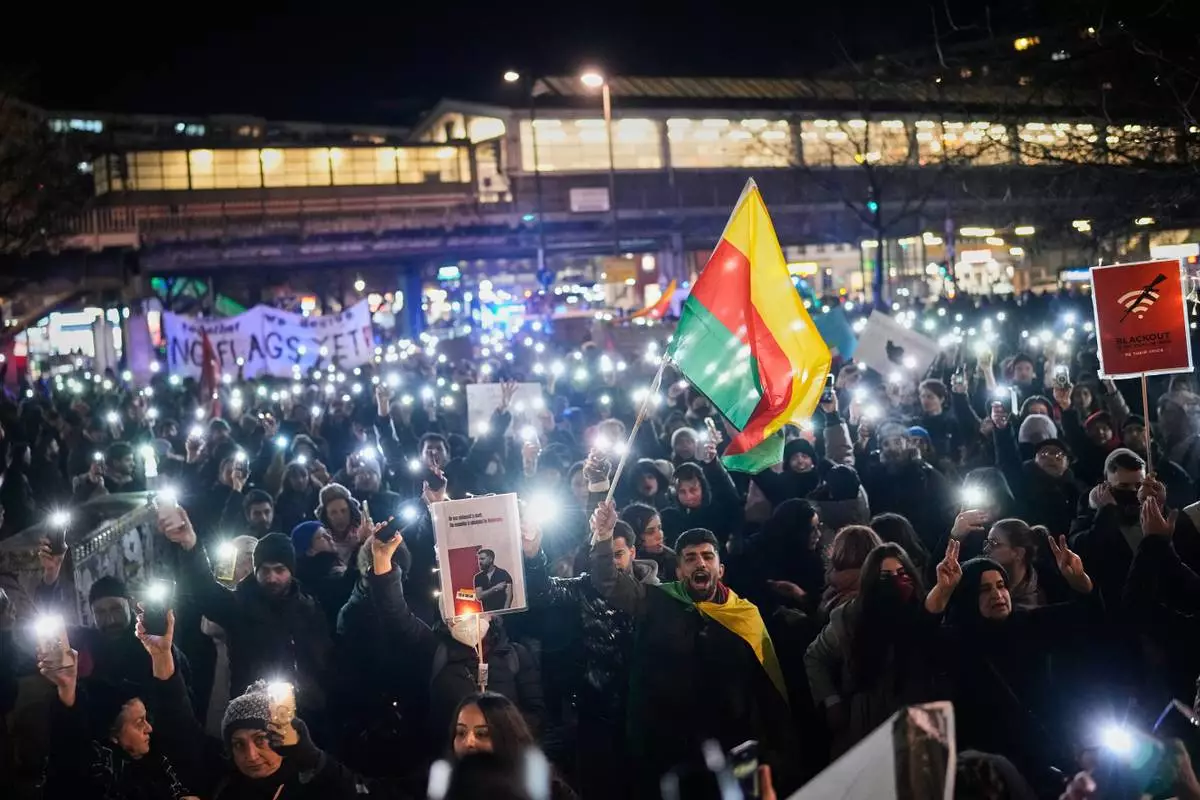
Protesters participate in a demonstration in support of the nationwide mass protests in Iran against the government, in Berlin, Germany, Wednesday, Jan. 14, 2026. (AP Photo/Ebrahim Noroozi)