PHOENIX (AP) — Moments before the Idaho mother with doomsday beliefs was given two more life sentences in prison, she complained about jail conditions and the legal system, saying the rules of evidence do not allow two sides of the story.
Judge Justin Beresky abruptly interrupted, saying: “Actually, they do.”
It was a moment that further highlighted the tension between Lori Vallow Daybell, who represented herself in two murder conspiracy cases in Arizona, and Beresky, who pulled no punches when the time came for him to address the court.
Beresky said Vallow Daybell was not truthful when she claimed she was prevented from telling her side of the story and was unable to get a fair trial. The media attention she craved, he said, will fade into obscurity now that her trials are over.
“The amount of contemplation, calculation, planning and manipulation that went into these crimes is unparalleled in my career,” said Beresky, who has been a Maricopa County Superior Court judge since 2017 and has presided over other high-profile cases.
Friday’s sentencing ended the legal saga of Vallow Daybell, 51, who will likely spend no time in an Arizona prison because she already was serving three life sentences in Idaho for killing her two youngest children and conspiring to kill a romantic rival.
In Arizona she was convicted of conspiring to kill her estranged husband, Charles Vallow, and her niece’s ex-husband, Brandon Boudreaux. Charles Vallow was fatally shot, while Boudreaux survived.
Vallow Daybell maintained that she did nothing wrong and said the string of deaths were simply tragedies.
She turned to her own religious beliefs in saying she believes she is among servants who Jesus is sending into prison to become warriors and who, ultimately, will be released to serve him.
Beresky implied that she got the meaning wrong when she referenced a verse about prisoners going free.
“That is a verse about people that accept Jesus can be in prison and they will go free when they die and go to heaven, but it will take an act of God for you to go free,” the judge said. “In short, you should never be released from prison.”
Vallow Daybell's trials in Phoenix were infused with her religious beliefs, including that people in her life were possessed by evil spirits. She routinely sparred with Beresky, occasionally leaning over to consult with her advisory counsel.
Charles Vallow's sister, Kay Woodcock, praised the judge's demeanor outside the courtroom.
“I don't think we could have had a better judge," she said. "He is a better man than a lot of people putting up with her like he did.”
Mel McDonald, a retired Maricopa County judge who was not involved in the trials but watched them, said Beresky did an exceptional job of maintaining courtroom decorum and demonstrated extraordinary patience despite obstructive tactics from Vallow Daybell.
“He gives her latitude,” McDonald said. “But he doesn't let her run wild.”
Last month, during the trial over the conspiracy to kill Boudreaux, Vallow Daybell falsely accused Beresky of yelling at her after he explained that her efforts to introduce favorable evidence about her character could open the door to jurors hearing about her convictions in Idaho and for Vallow's death.
“You don't need to talk to me that way," Vallow Daybell said.
“Take her out,” Beresky told a security officer, who led her from the courtroom.
In defending herself, Vallow Daybell struggled with legal matters that most lawyers consider routine, such as lining up witnesses to testify. She insisted on exercising her speedy trial rights and rejected the judge’s offer for later dates, yet complained about not having enough time to prepare. She also tried to get Beresky removed from the case, arguing that he was biased against her.
In another moment emblematic of the tensions between judge and defendant, Beresky expressed skepticism during jury selection for her second Arizona trial when she claimed she was too sick to move forward. The proceedings were postponed for the day.
But the trial continued, with Beresky later saying there was no objective evidence to support her claims.
Associated Press writers Hannah Schoenbaum in Salt Lake City and Sejal Govindarao in Phoenix contributed.
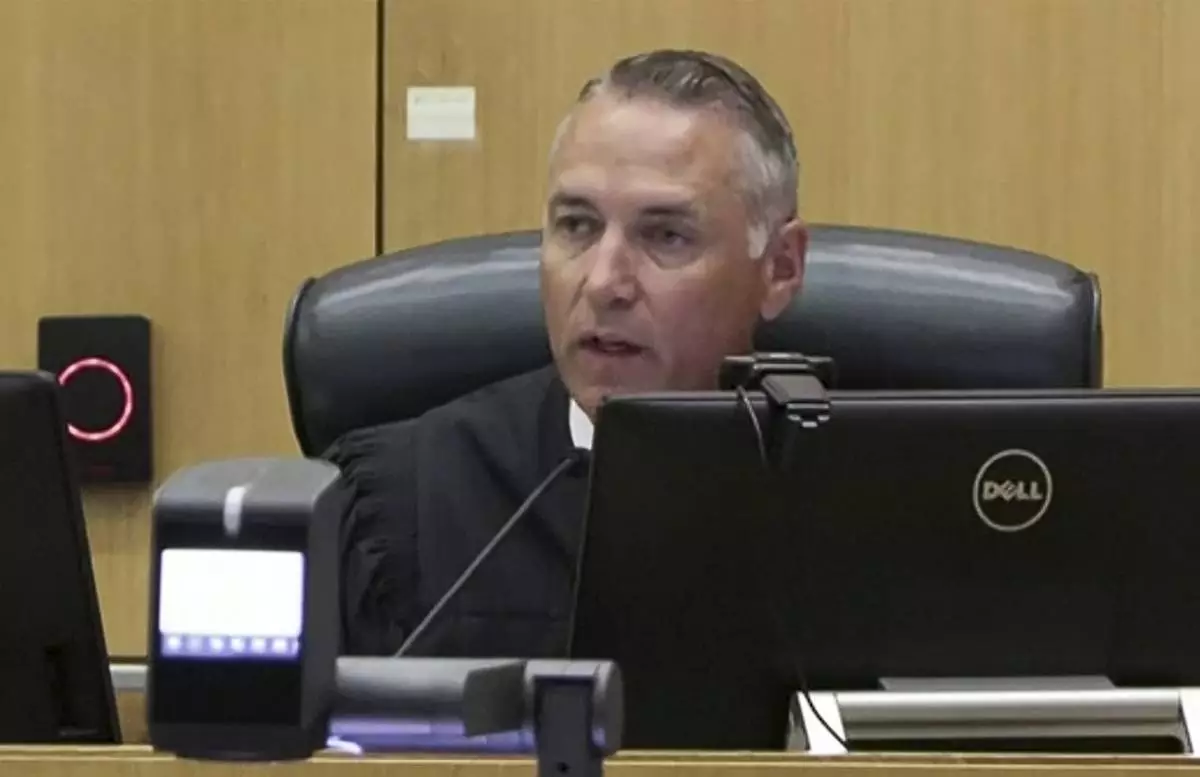
In this image from video, provided by Court TV shows Maricopa County Superior Court Judge Justin Beresky presides over the sentencing hearing of Lori Vallow Daybell in Phoenix, on Friday, July 25, 2025. (Court TV via AP,Pool)
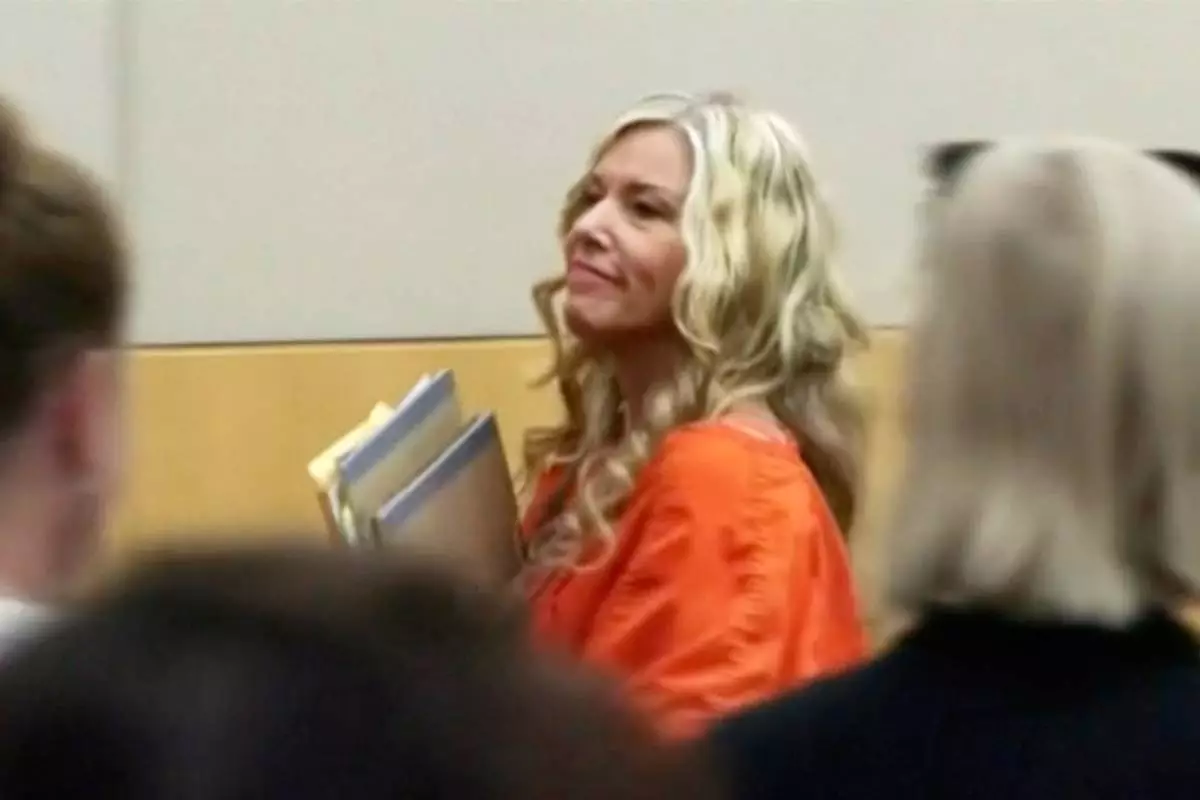
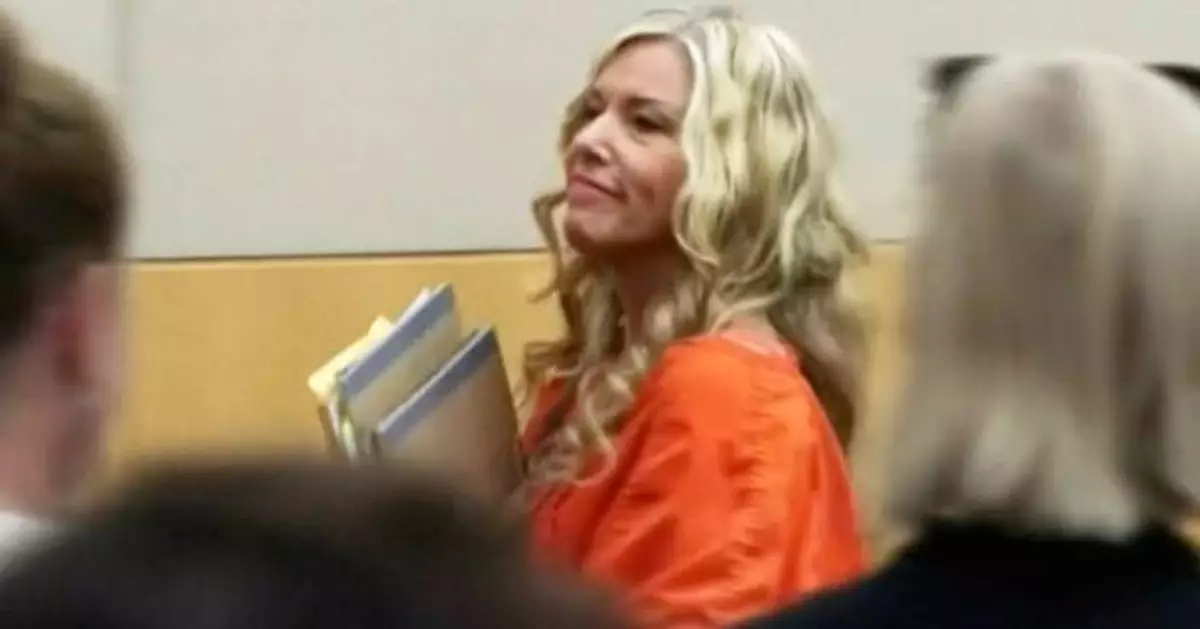
In this image taken from video shows Lori Vallow Daybell, left, speaks to advisory counsel during her sentencing hearing on two murder conspiracy convictions in Phoenix, AZ., on Friday, July 25, 2025. (AP Photo, Pool)
WASHINGTON (AP) — Venezuelan opposition leader María Corina Machado was at the White House on Thursday discussing her country's future with President Donald Trump even after he publicly dismissed her credibility to take over after an audacious U.S. military raid captured then-President Nicolás Maduro.
Trump has raised doubts about his stated commitment to backing democratic rule in Venezuela. His administration has signaled its willingness to work with acting President Delcy Rodríguez, who was Maduro’s vice president and, along with others in the deposed leader’s inner circle, remains in charge of day-to-day governmental operations.
In endorsing Rodríguez so far, Trump has sidelined Machado, who has long been a face of resistance in Venezuela and sought to cultivate relationships with Trump and key administration voices like Secretary of State Marco Rubio among the American right wing in a gamble to ally herself with the U.S. government.
White House press secretary Karoline Leavitt said Trump was expecting a positive discussion during the lunchtime meeting and called Machado “a remarkable and brave voice” for the people of Venezuela.
The White House said Machado sought the face-to-face meeting without setting expectations for what would occur. Her party is widely believed to have won 2024 elections rejected by Maduro. Machado previously offered to share with Trump the Nobel Peace Prize she won last year, an honor he has coveted.
Leavitt said Trump is committed to seeing Venezuela hold elections “one day,” but wouldn’t say when that might happen.
Machado plans to have a meeting at the Senate later Thursday. Trump has called her “a nice woman” while indicating they might not touch on major issues in their talks Thursday.
Her Washington swing began after U.S. forces in the Caribbean Sea seized another sanctioned oil tanker that the Trump administration says had ties to Venezuela. It is part of a broader U.S. effort to take control of the South American country’s oil after U.S. forces seized Maduro and his wife at a heavily guarded compound in the Venezuelan capital of Caracas and brought them to New York to stand trial on drug trafficking charges.
The White House says Venezuela has been fully cooperating with the Trump administration since Maduro’s ouster.
Rodríguez, the acting president, herself has adopted a less strident position toward Trump and his “America First” policies toward the Western Hemisphere, saying she plans to continue releasing prisoners detained under Maduro — a move thought to have been made at the behest of the Trump administration. Venezuela released several Americans this week.
Trump, a Republican, said Wednesday that he had a “great conversation” with Rodríguez, their first since Maduro was ousted.
“We had a call, a long call. We discussed a lot of things,” Trump said during an Oval Office bill signing. “And I think we’re getting along very well with Venezuela.”
Even before indicating the willingness to work with Venezuela's interim government, Trump was quick to snub Machado. Just hours after Maduro's capture, Trump said of Machado that “it would be very tough for her to be the leader. She doesn’t have the support within or the respect within the country.”
Machado has steered a careful course to avoid offending Trump, notably after winning last year’s Nobel Peace Prize, which Trump wanted to win himself. She has since thanked Trump. Her offer to share the peace prize with him was rejected by the Nobel Institute.
Machado’s whereabouts have been largely unknown since she went into hiding early last year after being briefly detained in Caracas. She briefly reappeared in Oslo, Norway, in December after her daughter received the Nobel Peace Prize on her behalf.
The industrial engineer and daughter of a steel magnate began challenging the ruling party in 2004, when the nongovernmental organization she co-founded, Súmate, promoted a referendum to recall then-President Hugo Chávez. The initiative failed, and Machado and other Súmate executives were charged with conspiracy.
A year later, she drew the anger of Chávez and his allies again for traveling to Washington to meet President George W. Bush. A photo showing her shaking hands with Bush in the Oval Office lives in the collective memory. Chávez considered Bush an adversary.
Almost two decades later, she marshaled millions of Venezuelans to reject Chávez’s successor, Maduro, for another term in the 2024 election. But ruling party-loyal electoral authorities declared him the winner despite ample credible evidence to the contrary. Ensuing anti-government protests ended in a brutal crackdown by state security forces.
Garcia Cano reported from Caracas, Venezuela, and Janetsky from Mexico City. AP Diplomatic Writer Matthew Lee in Washington contributed to this report.
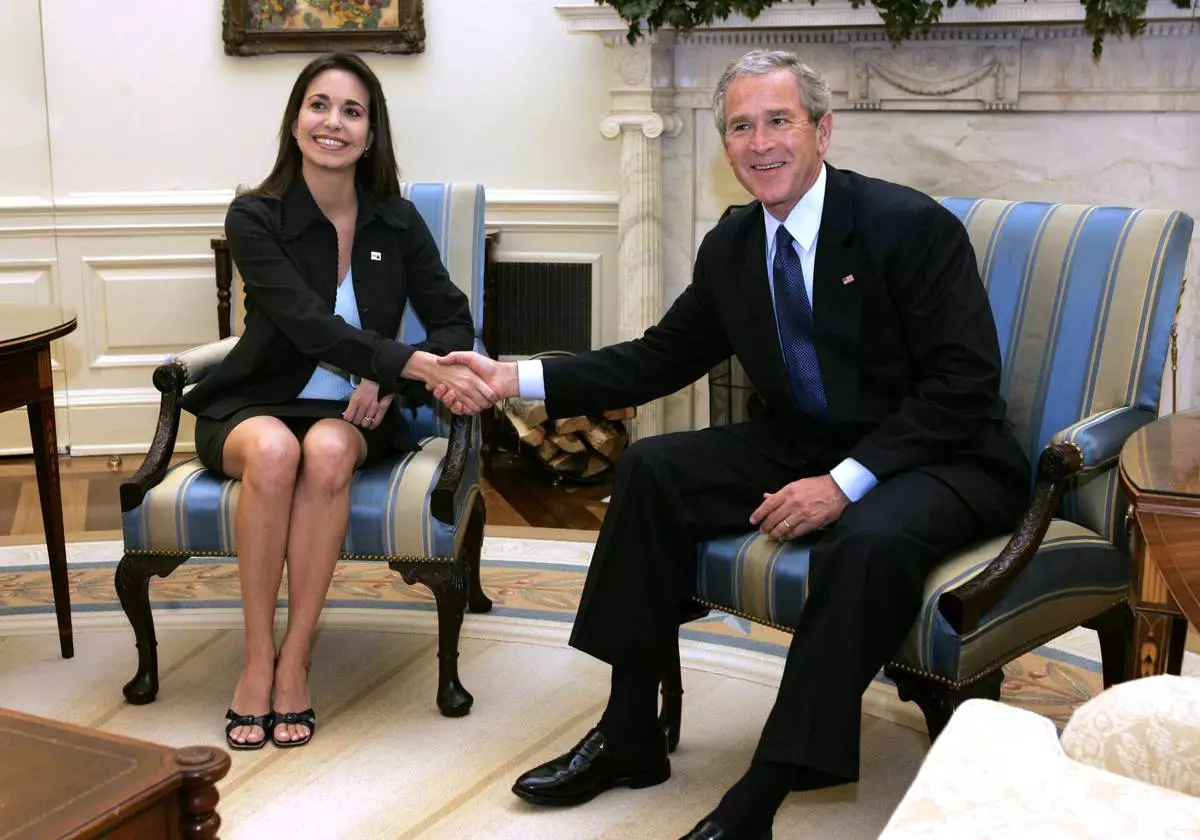
FILE - U.S. President George Bush, right, meets with Maria Corina Machado, executive director of Sumate, a non-governmental organization that defends Venezuelan citizens' political rights, in the Oval Office of the White House, Washington, May 31, 2005. (AP Photo/Charles Dharapak, File)
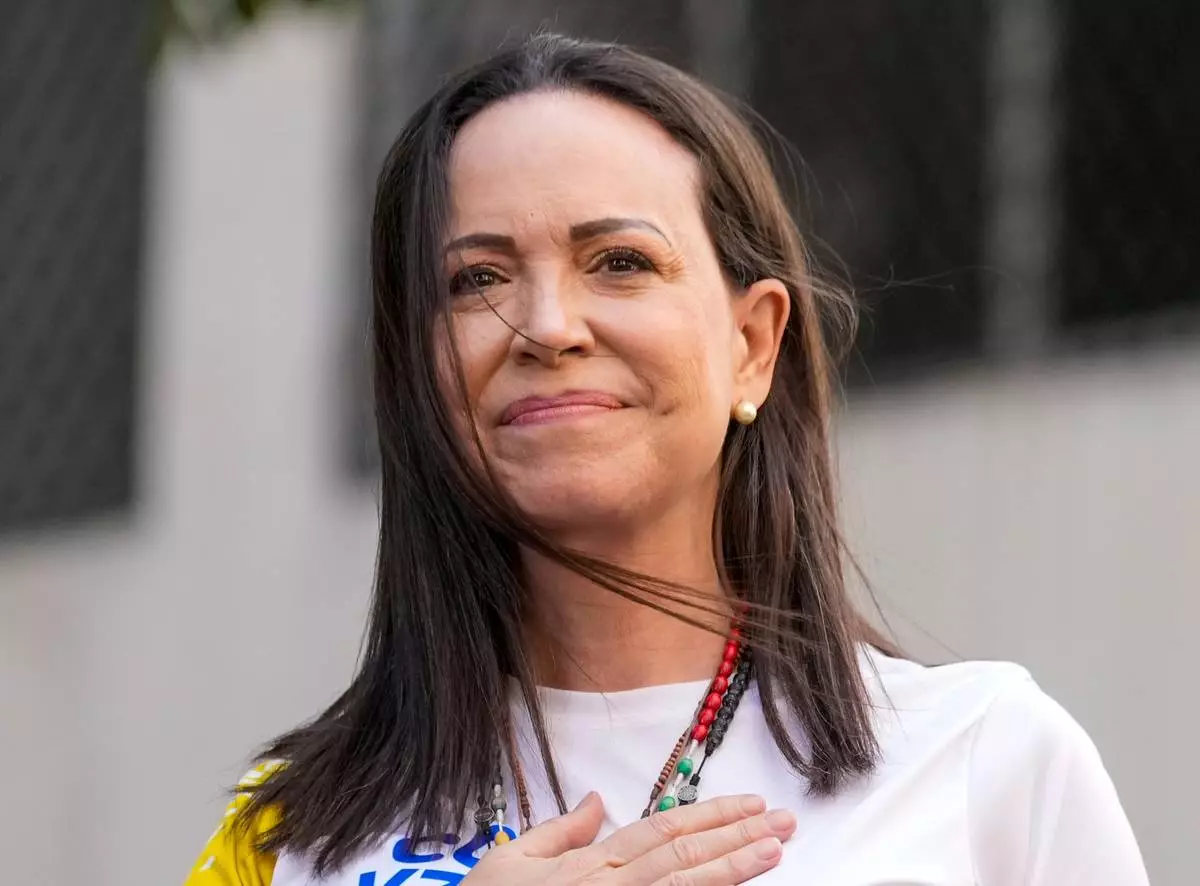
FILE - Opposition leader Maria Corina Machado gestures to supporters during a protest against President Nicolas Maduro the day before his inauguration for a third term, in Caracas, Venezuela, Thursday, Jan. 9, 2025. (AP Photo/Ariana Cubillos, file)