BEIRUT (AP) — Ziad Rahbani, a visionary Lebanese composer, playwright, pianist and political provocateur, died on Saturday, at the age of 69, according to the state-run National News Agency.
The death was confirmed by a person close to Rahbani who spoke on condition of anonymity. The cause of death was not immediately clear.
Born in 1956 in Antelias, near Beirut, Ziad was the eldest son of legendary Lebanese singer Fayrouz and late composer Assi Rahbani, one half of the famed Rahbani Brothers. From a young age, he showed signs of prodigious talent, composing his first musical work at just 17 years old. Raised among artistic royalty, his world was steeped in music, theater, and political consciousness — a combination that would define his life’s work.
His mother, who was considered to be the most famous and esteemed performer in the Arab world, performed some of his compositions at her concerts, blending Lebanese folklore with Western syncopation and phrasing.
Lebanon's President Joseph Aoun said Rahbani was “not just an artist, but a complete intellectual and cultural phenomenon.”
In a statement, Aoun praised Rahbani as “a living conscience, a rebellious voice against injustice, and an honest mirror reflecting the suffering and marginalized.” He highlighted how Rahbani’s fusion of classical, jazz and Oriental music “opened new windows for Lebanese cultural expression” and elevated it to global levels.
“Ziad was a natural extension of the Rahbani family, which gave Lebanon much beauty and dignity,” the president added.
Lebanese pop star Elissa, writing on X, said: “Ziad_Rahbani was not an ordinary artist ... With his loss today, Lebanon has lost a part of itself and a big piece of its collective memory.”
Parliament Speaker Nabih Berri sent his “deepest condolences to the great Fairouz, to the Rahbani family, and to all Lebanese on the loss of the brilliant artist Ziad Rahbani, who embodied the Lebanon we loved.”
Minister of Culture Ghassan Salame said: “We will mourn him as we continue to sing his songs that will never die.”
Prime Minister Nawaf Salam described Rahbani as “an exceptional and creative artist — a free voice who remained true to the values of justice and dignity.”
While his parents helped construct a golden era of Lebanese musical theater steeped in idealism and nostalgia, Rahbani charged onto the scene with irreverent satire, unflinching political critique and jazz-inflected scores that mirrored the chaos and contradictions of a Lebanon at war with itself.
“I admire the music of composers like Charlie Parker, Stan Getz and Dizzy Gillespie,” he once said. “But my music is not Western, it’s Lebanese, with a different way of expression.”
Rahbani’s music reflected the hybrid heritage of Lebanon, which until the civil war erupted in 1975 was a cultural melting pot where East met West. But it was also deeply rooted in the traumatic events of the sectarian strife, the bloody street battles between rival militias and three years of violent Israeli occupation after the 1982 invasion.
His breakout play, Nazl el-Sourour (Happiness Hotel), premiered in 1974 when he was only 17 and portrayed a society disfigured by class inequality and repression. The tragicomic narrative follows a group of workers who hijack a restaurant to demand their rights, only to be dismissed by the political elite. With this bold debut, Rahbani revealed his enduring theme: that Lebanese society was fractured not only by war but by entrenched power.
A leftist Greek Orthodox, Rahbani also wrote plays and satirical radio shows centered on his violent environment that mock the sectarian divisions of his country.
Rahbani’s subsequent plays solidified his reputation as the voice of the disenchanted. In Bennesbeh Labokra Chou? (What About Tomorrow?), he plays a jaded bar pianist in post-civil war Beirut who drifts through a surreal landscape of broken dreams, corruption and absurdity. The work features some of Rahbani’s most poignant music and biting commentary, including the famous line, “They say tomorrow will be better, but what about today?”
More than just a playwright, Rahbani was a composer of staggering range. He infused traditional Arabic melodies with jazz, funk and classical influences, creating a hybrid sound that became instantly recognizable.
His live performances were legendary, whether playing piano in smoky clubs in Hamra, one of Beirut's major commercial districts that harbors a multifaceted identity, or orchestrating large-scale productions.
His collaborations with Fayrouz, especially during the late 1970s and 1980s, ushered in a darker, more politically charged phase in her career. Songs like Ouverture 83, Bala Wala Chi (Without Anything), and Kifak Inta (How Are You) reflected Ziad’s brooding compositions and lyrical introspection.
Rahbani came under fire from Arab traditionalists for his pioneering efforts to bridge the gap between Arab and Western culture with music.
In recent years, Ziad appeared less in the public eye, yet his influence never waned. Younger generations rediscovered his plays online and sampled his music in protest movements. He continued to compose and write, speaking often of his frustration with Lebanon’s political stagnation and decaying public life.
Rahbani is survived by his mother, Fayrouz, 90, his sister Reema and brother Hali.
——
AP journalist Bassem Mroue contributed to this report.
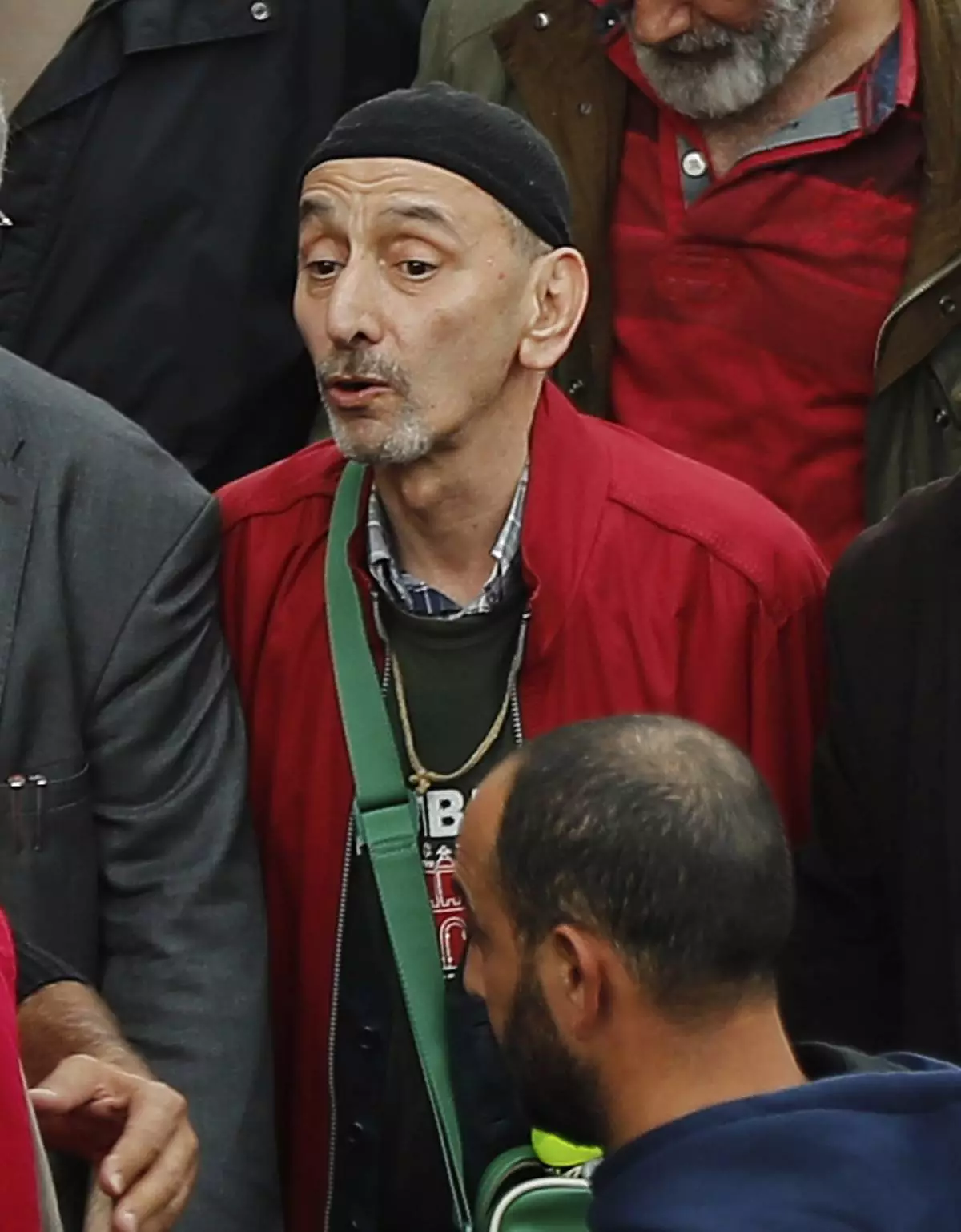
Ziad Rahbani, centre, a visionary Lebanese composer, playwright and pianist, during an anti-government protest organized by the country's communist party, in Beirut, Lebanon, Sunday, Dec. 16, 2018. (AP Photo/Hussein Malla)
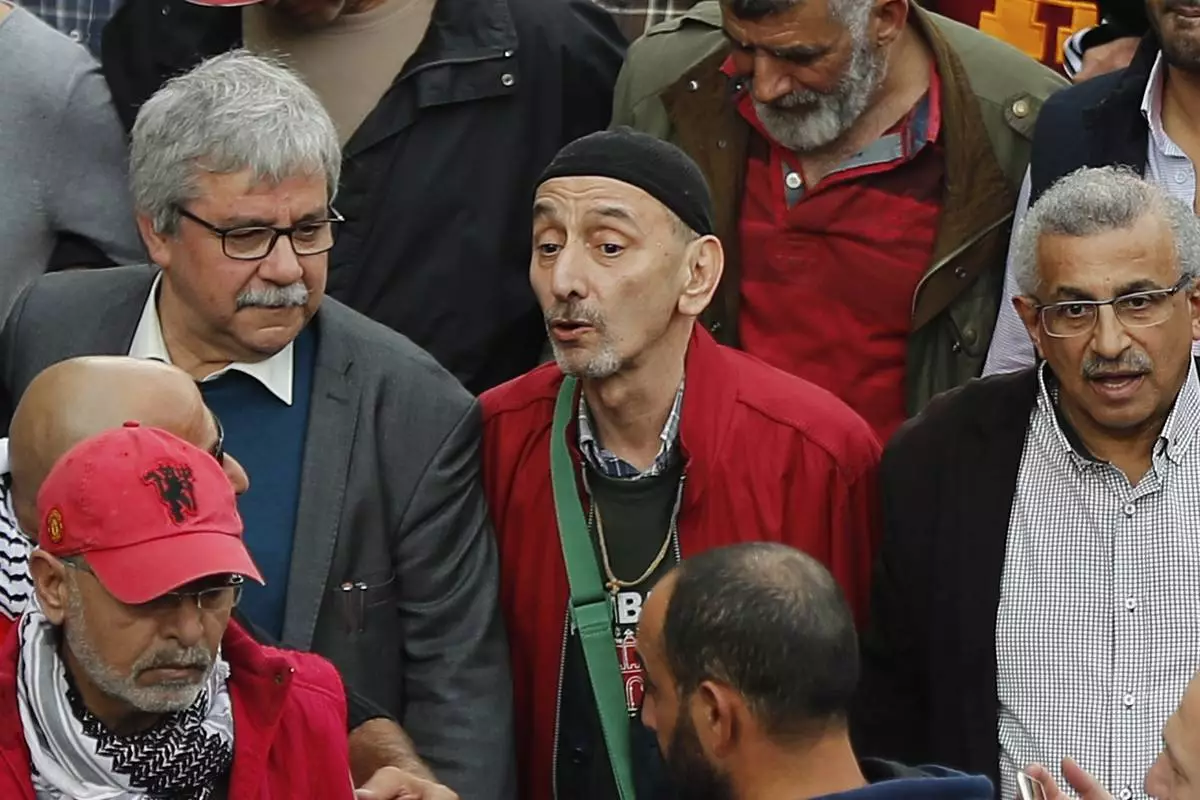
Ziad Rahbani, centre, a visionary Lebanese composer, playwright and pianist, during an anti-government protest organized by the country's communist party, in Beirut, Lebanon, Sunday, Dec. 16, 2018. (AP Photo/Hussein Malla)