Brazil's honey producers are deeply worried about the development of the industry, as they face the imminent 50-percent tariff from the United States, a major importer of Brazilian honey.
The Trump administration announced early last month that starting on Aug. 1, all Brazilian exports to the United States will be subject to a 50-percent duty. The move sent shockwaves throughout Brazil, including the honey industry, which exports more than 80 percent of its output to the U.S.
On Wednesday, Brazil raised concerns at a World Trade Organization meeting, arguing that arbitrary tariffs violate the organization's core principles and undermine the global trade order. A day later, Brazilian President Luiz Inacio Lula da Silva said that Washington had ignored Brazil's attempts to negotiate ahead of the expected implementation of the U.S. tariff next month.
Casa Apis, or the Beekeeping Cooperatives in the Brazilian Semi-Arid Region, is a leading player in the beekeeping and honey production industry in Picos, a major honey-producing city in Brazil's northeast. It has sounded the alarm about the significant impacts of the looming U.S. tariff on the entire industrial chain.
"From January to June in 2025, 84 percent of Brazil's exports went to the United States. This dependence is due to a specific criterion," Wellington Dantas, operations manager at Casa Apis, told China Central Television, referring to the organic compound known as hydroxymethylfurfural (HMF), whose content is an indicator of the purity of honey. High concentrations of HMF in honey indicate overheating, poor storage conditions and inadequate freshness of the product.
"In terms of the HMS criterion, the United States is much more flexible. For example, Europe accepts a maximum level of 15 milligrams per kilogram [of honey]. The United States, however, accepts 80 milligrams per kilogram. So, [the tariff] it will have a direct impact on our supply chain, considering that we cannot ship all of our production to Europe," Dantas explained.
The tariff news has made many of the cooperative's 800 or so local suppliers concerned about a potential fall in honey prices, which they are afraid could hurt their profit margins given their high costs in maintenance, production and transportation.
"I believe that if this tariff is confirmed, it will be the main reason for an overall drop in prices and even discourage beekeepers from producing in this region," said Francisco Natanael Oliveira, a supplier to Casa Apis in Picos.
"Our main source of income is honey. Everyone is worried about this tariff measure, because we don't know what will happen from now on or whether we will be able to sell our products," said Marilia Iranildo Monteiro, another beekeeper in the city.
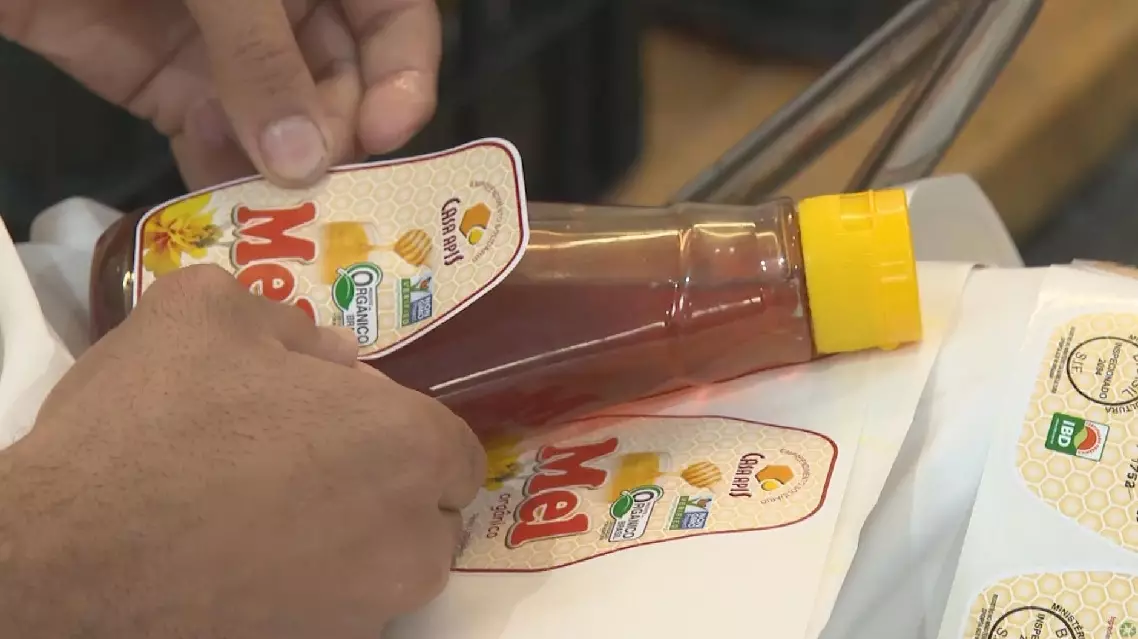
Looming US tariff arouses worries among Brazil's beekeepers
The three astronauts of China's recently-returned Shenzhou-20 mission on Friday shared the experiences of their dramatic 204-day space mission, including detailing the emergency procedures which were implemented to bring them safely home after their return capsule was struck by space debris.
The trio -- Chen Dong, Chen Zhongrui, and Wang Jie -- met with the press in Beijing on Friday afternoon, marking their first public appearance since returning to Earth in November.
When detailing the emergency response mechanisms which were enacted prior to their scheduled return, the astronauts explained that upon discovering a triangular crack on the spacecraft's viewport window, they immediately took photos for documentation and transmitted them to the ground team, who swiftly activated an emergency plan to get the trio home safely.
Experienced mission commander Chen Dong explained how the crew had complete faith in their colleagues on the ground to find a solution to these unforeseen circumstances which led to their return being delayed.
"First, we must trust the ground team, who would anticipate everything and develop the safest return plan for us. Second, we must believe in ourselves; as well-trained astronauts, we have the ability to manage various unexpected failures. I believe that with the collaboration of astronauts and researchers on the ground, our space home will surely go farther, more steadily, and for a longer time," he said.
Following their extended stay in space as a result of the debris incident, the Shenzhou-20 crew spent a total 204 days in orbit, setting a new record for the longest duration by a single group of Chinese astronauts.
During their mission, they completed multiple payload operations, conducted extensive scientific experiments, and carried out four extravehicular activities.
"Our crew worked together with the ground team in unity and coordination, completing four extravehicular activities, several payload entry and exit tasks, and a large number of scientific experiments. It was a fulfilling yet challenging mission. The path to exploring the heavens is long and arduous, but I firmly believe that China's space missions will succeed," said Chen Zhongrui, a former air force pilot who was making his first spaceflight during the mission.
"From the ground to space, from learning to application, I have deeply felt the solid progress of Chinese space endeavors and the quiet dedication of countless personnel behind the scenes. In the future, I will accomplish each mission with full commitment, living up to the trust of the motherland and the people," said fellow astronaut Wang Jie, who was also making his debut spaceflight.
After returning to Earth on Nov 14, the trio successfully completed their isolation recovery and rehabilitation and will now resume normal training following health assessments.
The crew's return, originally scheduled for Nov 5, was postponed due to safety concerns, with the astronauts later using the return capsule belonging to their successor crew of the Shenzhou-21 mission to get back to Earth. China later launched the unmanned Shenzhou-22 spacecraft which will serve the future return of the crew now aboard the Tiangong Space Station.
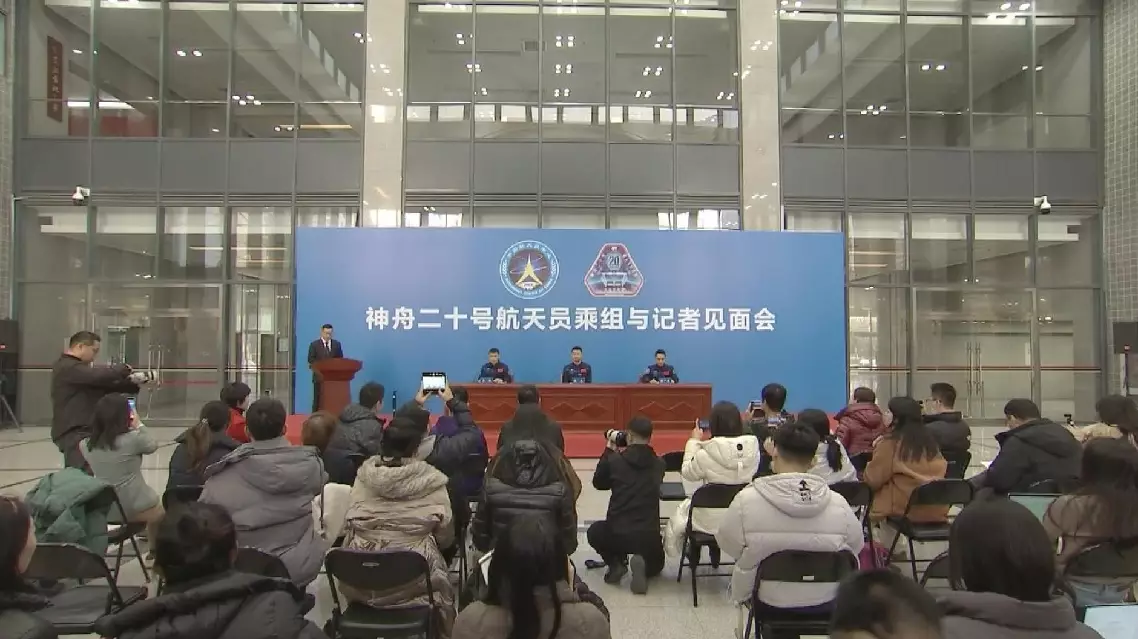
Shenzhou-20 astronauts share experiences after safely returning from debris incident