WASHINGTON (AP) — President Donald Trump is bragging that Japan has given him, as part of a new trade framework, $550 billion to invest in the United States. It's an astonishing figure, but still subject to negotiation and perhaps not the sure thing he's portraying.
"Japan is putting up $550 billion in order to lower their tariffs a little bit," Trump said Thursday. “They put up, as you could call it, seed money. Let’s call it seed money.”
Click to Gallery
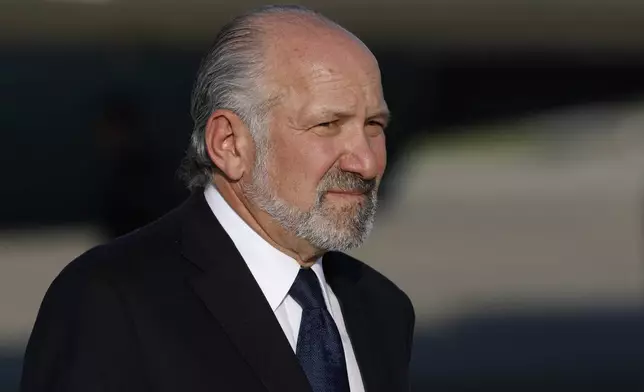
Secretary of Commerce Howard Lutnick walks away from Air Force One upon President Trump's arrival at Joint Base Andrews, Md., Tuesday, July 15, 2025. (AP Photo/Luis M. Alvarez)
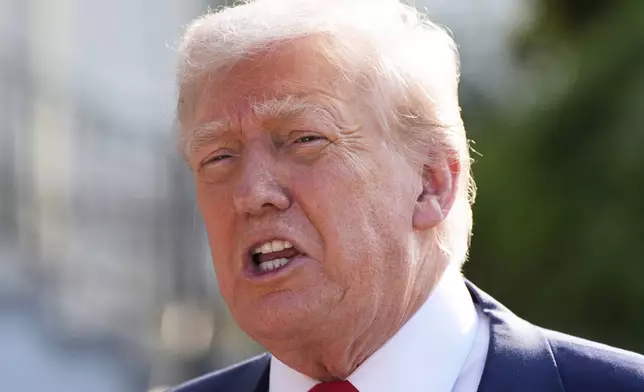
President Donald Trump speaks with reporters before departing on Marine One from the South Lawn of the White House, Friday, July 25, 2025, in Washington. The President is traveling to Scotland. (AP Photo/Alex Brandon)
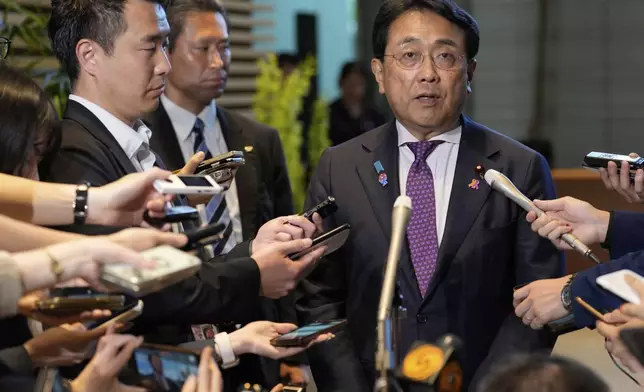
Japan's chief tariff negotiator Ryosei Akazawa speaks to the media after a meeting between Japanese Prime Minister Shigeru Ishiba and U.S. Treasury Secretary Scott Bessent at the prime minister's office in Tokyo, Japan, Friday, July 18, 2025.(AP Photo/Shuji Kajiyama, Pool)
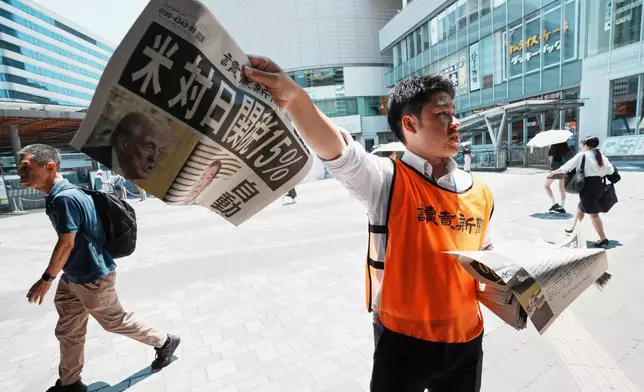
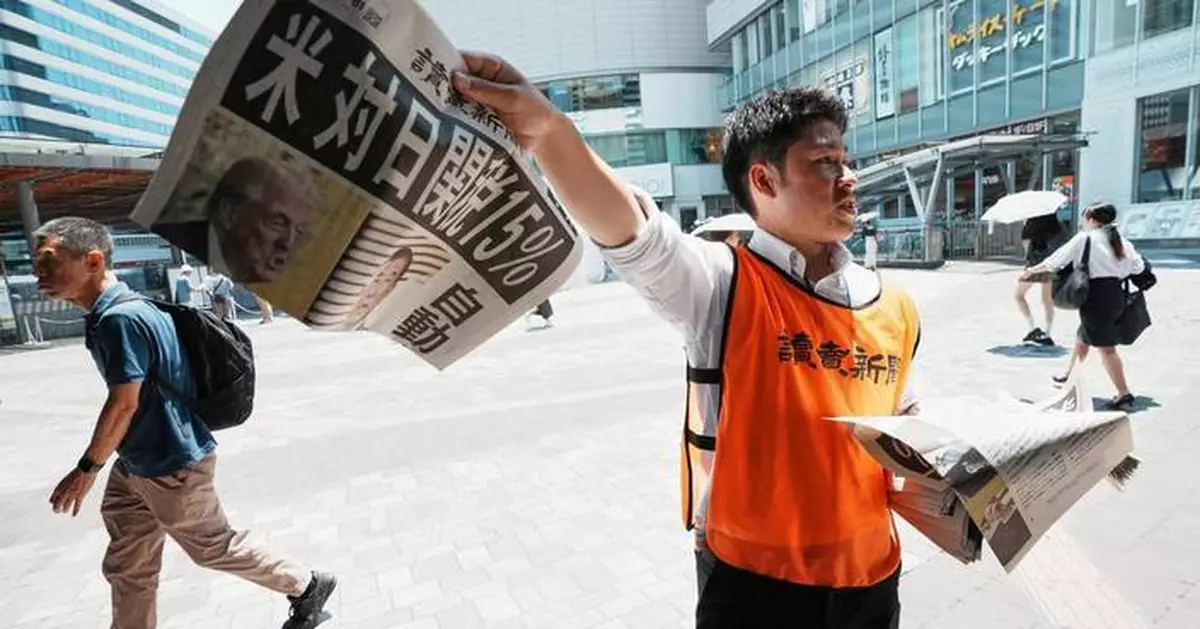
A staff member distributes an extra edition of the Yomiuri Shimbun newspaper reporting that President Donald Trump announced a trade framework with Japan on Tuesday, Wednesday, July 23, 2025, in Tokyo. The headline reads "U.S., a 15% tax on goods imported from Japan." (AP Photo/Eugene Hoshiko)
He said 90% of any profits from the money invested would go to the U.S. even if Japan had put up the funds. “It’s not a loan or anything, it’s a signing bonus,” the Republican president said, on the trade framework that lowered his threatened tariff from 25% to 15%, including on autos.
A White House official said the terms are being negotiated and nothing has been formalized in writing. The official, who insisted on anonymity to detail the terms of the talks, suggested the goal was for the $550 billion fund to make investments at Trump's direction.
The sum is significant: It would represent more than 10% of Japan's entire gross domestic product. The Japan External Trade Organization estimates that direct investment into the U.S. economy topped $780 billion in 2023. It is unclear the degree to which the $550 billion could represent new investment or flow into existing investment plans.
What the trade framework announced Tuesday has achieved is a major talking point for the Trump administration.
The president has claimed to have brought trillions of dollars in new investment into the U.S., though the impact of those commitments have yet to appear in the economic data for jobs, construction spending or manufacturing output. The framework also enabled Trump to say other countries are agreeing to have their goods taxed, even if some of the cost of those taxes are ultimately passed along to U.S. consumers.
On the $550 billion, Japan's Cabinet Office said it involves the credit facility of state-affiliated financial institutions, such as Japan Bank for International Cooperation. Further details would be decided based on the progress of the investment deals.
Japanese trade negotiator Ryosei Akazawa, upon returning to Japan, did not discuss the terms of the $550 billion investment. Akazawa said he believes a written joint statement is necessary, at least on working levels, to avoid differences. He is not thinking about a legally binding trade pact.
The U.S. apparently released its version of the deal while Japanese officials were on their return flight home.
“If we find differences of understanding, we may have to point them out and say ‘that’s not what we discussed,’” Akazawa said.
The U.S. administration said the fund would be invested in critical minerals, pharmaceuticals, computer chips and shipbuilding, among other industries. It has said Japan will also buy 100 airplanes from Boeing and rice from U.S. farmers as part of the framework, which Treasury Secretary Scott Bessent said would be evaluated every three months.
“And if the president is unhappy, then they will boomerang back to the 25% tariff rates, both on cars and the rest of their products. And I can tell you that I think at 25, especially in cars, the Japanese economy doesn’t work,” Bessent told Fox News' “The Ingraham Angle.”
Akazawa denied that Bessent’s quarterly review was part of the negotiations.
“In my past eight trips to the United States during which I held talks with the president and the ministers," Akazawa said. “I have no recollection of discussing how we ensure the implementation of the latest agreement between Japan and the United States.”
He said it would cause major disruptions to the economy and administrative processes if the rates first rise to 25% as scheduled on Aug. 1 and then drop to 15%. “We definitely want to avoid that and I believe that is the understanding shared by the U.S. side,” he said.
On buying U.S. rice, Japanese officials have said they have no plans to raise the current 770,000-ton “minimum access” cap to import more from America. Agricultural Minister Shinjiro Koizumi said Japan will decide whether to increase U.S. rice imports and that Japan is not committed to a fixed quota.
Trump's commerce secretary, Howard Lutnick, has suggested that the Japanese agreement is putting pressure on other countries such as South Korea to strike deals with the U.S. Trump, who is traveling in Scotland, plans to meet on Sundayv with European Commission President Ursula von der Leyen to discuss trade.
“Whatever Donald Trump wants to build, the Japanese will finance it for him,” Lutnick said Thursday on CNBC. “Pretty amazing.”
Yamaguchi reported from Tokyo.
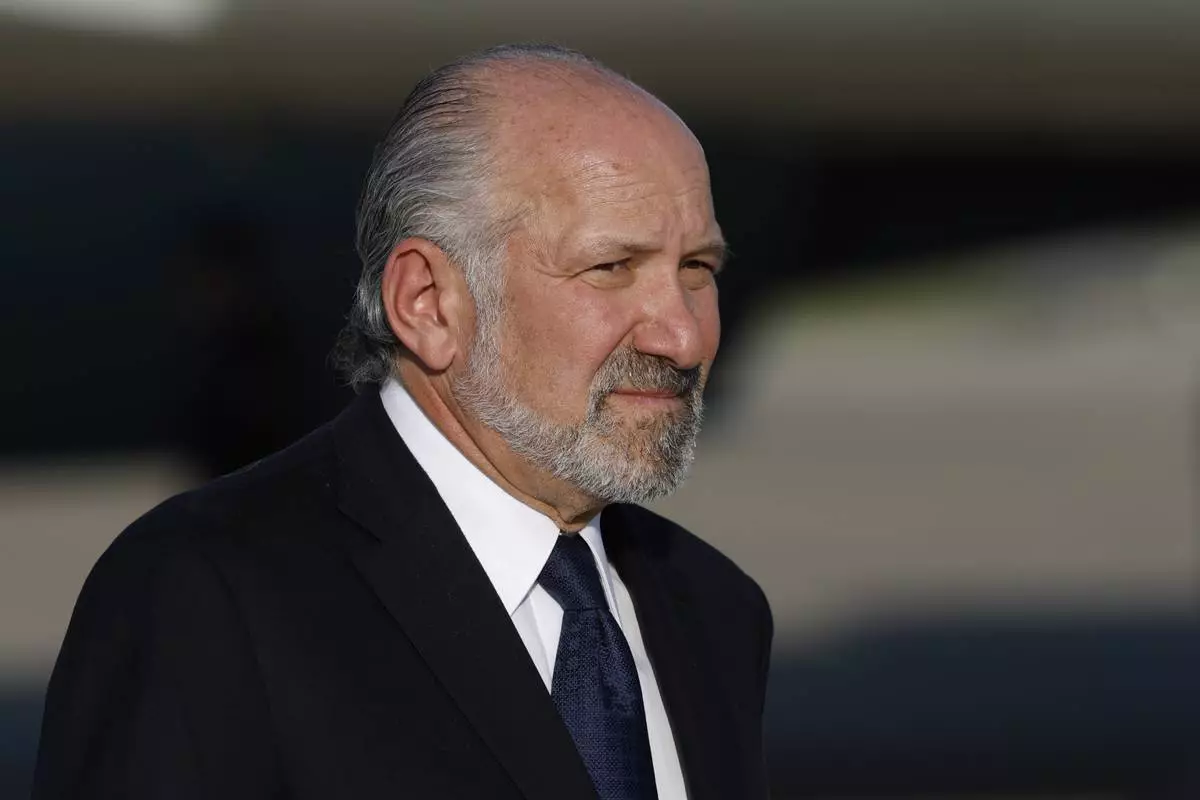
Secretary of Commerce Howard Lutnick walks away from Air Force One upon President Trump's arrival at Joint Base Andrews, Md., Tuesday, July 15, 2025. (AP Photo/Luis M. Alvarez)
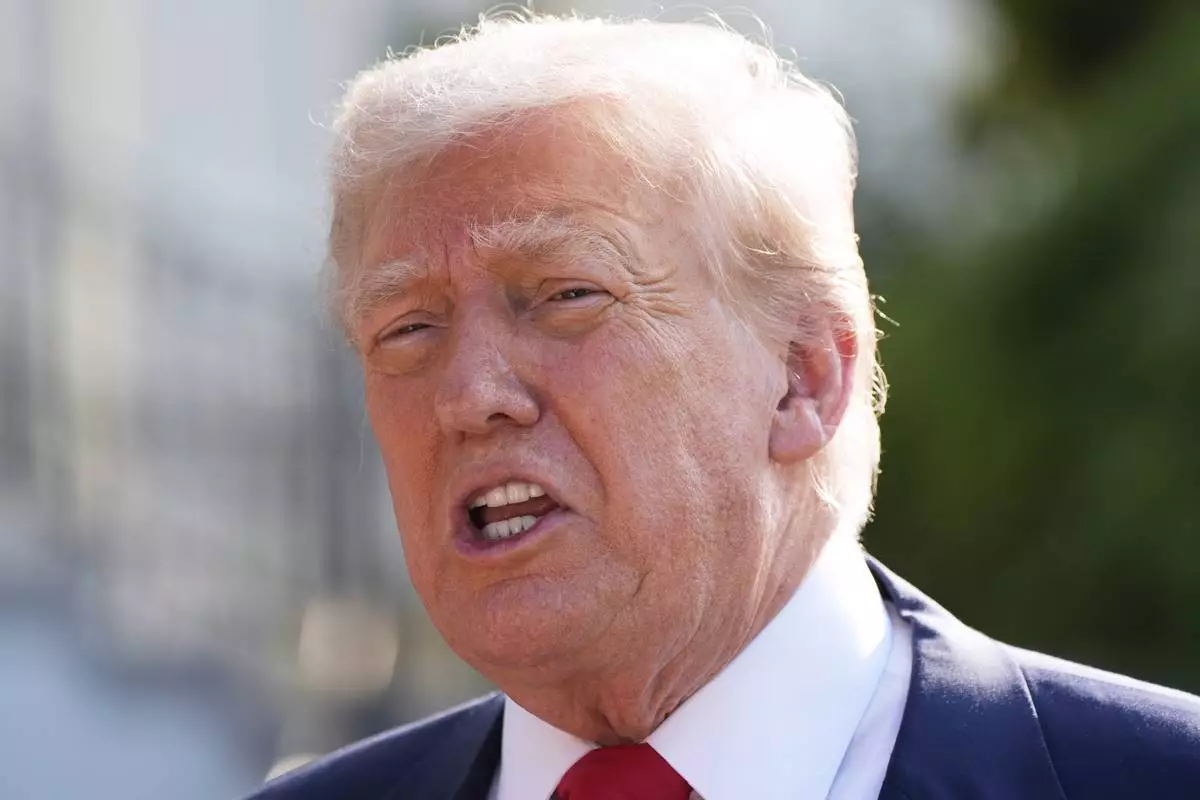
President Donald Trump speaks with reporters before departing on Marine One from the South Lawn of the White House, Friday, July 25, 2025, in Washington. The President is traveling to Scotland. (AP Photo/Alex Brandon)

Japan's chief tariff negotiator Ryosei Akazawa speaks to the media after a meeting between Japanese Prime Minister Shigeru Ishiba and U.S. Treasury Secretary Scott Bessent at the prime minister's office in Tokyo, Japan, Friday, July 18, 2025.(AP Photo/Shuji Kajiyama, Pool)

A staff member distributes an extra edition of the Yomiuri Shimbun newspaper reporting that President Donald Trump announced a trade framework with Japan on Tuesday, Wednesday, July 23, 2025, in Tokyo. The headline reads "U.S., a 15% tax on goods imported from Japan." (AP Photo/Eugene Hoshiko)