China is vigorously advancing the establishment of a unified national market by removing institutional barriers hindering economic circulation and strengthening fundamental market systems.
The sixth meeting of the Central Commission for Financial and Economic Affairs (CCFEA), held on July 1 in Beijing, noted that advancing the building of a unified national market requires "five unifications and one opening up," namely the unification of underlying market institutions, market infrastructure, government conduct, regulatory enforcement, and markets of production factors and resources, as well as the continuous expansion of the opening up both internally and externally.
"'Five unifications and one opening up' has defined the basic institutional framework and basic requirements for the unified national market. Focusing on resolving key and difficult issues such as local protection, market segmentation and disorderly competition, we should not only break through the blocking points that restrict the efficient allocation of resources in the unified national market, but also break down the deep-seated institutional and institutional obstacles, which points out a practical path for further promoting the construction of the unified national market," said Liu Zhicheng, a researcher of the Market and Price Institute of the Academy of Macroeconomic Research.
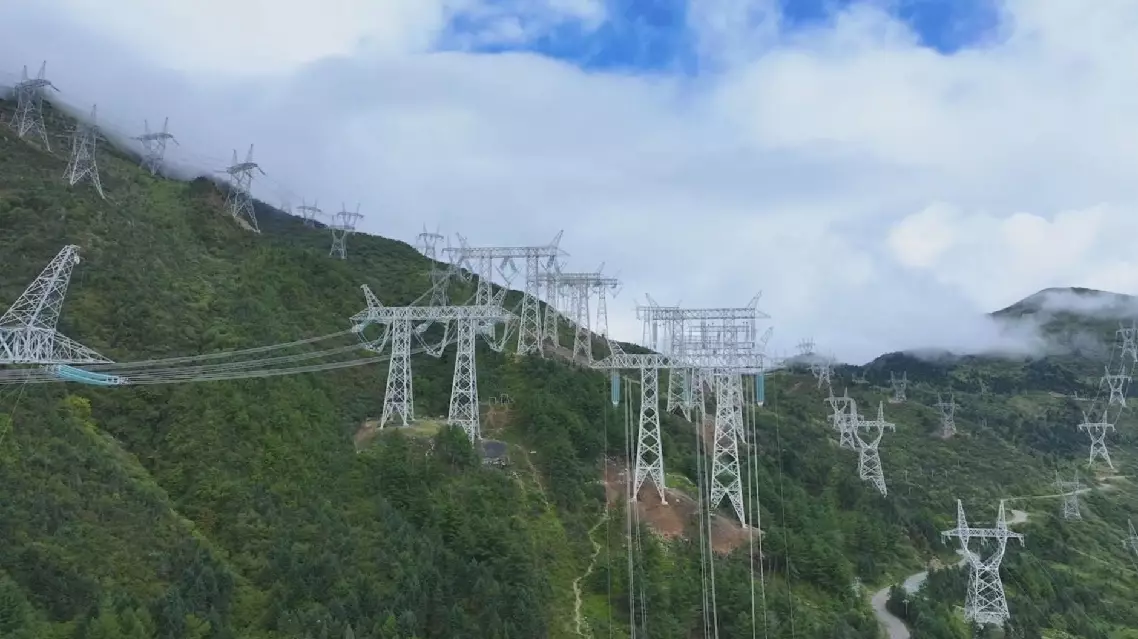
Since the beginning of this year, China has achieved significant progress in dismantling market segmentation barriers. The power sector has seen accelerated integration, with cross-regional electricity trading now reaching an average of 26 million kWh daily, establishing inter-grid power exchanges as standard practice.
Concurrently, the national data market has advanced its unification process. Over 50 percent of data trading institutions nationwide have adopted standardized protocols, enabling a "one-time listing, multi-region recognition" mechanism for data products.
At Ningbo-Zhoushan Port, the railway station and port have broken down operational barriers between them. Their integrated operation eliminates transfer procedures between rail and port, enabling "seamless transfer" of containers. Currently, over 90 percent of major coastal ports provide access to rail operators.
"With stations available for sharing and unified operations, Chuanshan Railway Station's maximum loading and unloading capacity has reached 3,200 TEUs per day, with work efficiency improved by over 100 percent," said Hu Huabin, deputy director of Ningbo Business Department of Hangzhou Railway Logistics Center of the China Railway Shanghai Bureau Group.
Regional market integration took the lead in promoting smooth convergence of market system rules.
In the Guangdong-Hong Kong-Macao Greater Bay Area (GBA), 153 "GBA Certification" credentials have been issued for industrial consumer goods and other sectors, facilitating seamless cross-border recognition. Meanwhile, about 3,000 enterprises in the Beijing-Tianjin-Hebei region have enjoyed "one-click business relocation," eliminating previously cumbersome multi-jurisdiction registration procedures.
Since the beginning of this year, local government and departments nationwide have intensified efforts to rectify unfair market competition and improper administrative interventions. Shanghai and Henan have introduced new investment policy guidelines explicitly prohibiting the use of tax incentives to attract businesses. East China's Jiangsu has strengthened patent adjudication to curb cutthroat competition in photovoltaic and new energy vehicle industries.
The State Administration for Market Regulation has reviewed over 27,000 policy measures issued by governments, effectively preempting regulations that could improperly interfere with market competition.
China accelerates building of unified national market