Skip to Content Facebook Feature Image

Thailand-Cambodia clashes halt trade in Thai border town
China

China

China

Thailand-Cambodia clashes halt trade in Thai border town

2025-07-27 15:25 Last Updated At:07-28 00:27

The ongoing deadly border clashes between Thailand and Cambodia has completely halted trade activities in the northeastern Thai province of Surin and forced the locals to take cover inside bunkers.

Cross-border trade in Surin, estimated at over nine million U.S. dollars per month before the clashes, has now come to a total standstill, taking away the only source of income for many residents, according to the provincial chamber of commerce.

More Images
Thailand-Cambodia clashes halt trade in Thai border town

Thailand-Cambodia clashes halt trade in Thai border town
Thailand-Cambodia clashes halt trade in Thai border town

Thailand-Cambodia clashes halt trade in Thai border town
Thailand-Cambodia clashes halt trade in Thai border town

Thailand-Cambodia clashes halt trade in Thai border town

Thailand-Cambodia clashes halt trade in Thai border town

Thailand-Cambodia clashes halt trade in Thai border town

Thailand-Cambodia clashes halt trade in Thai border town
Thailand-Cambodia clashes halt trade in Thai border town
Thailand-Cambodia clashes halt trade in Thai border town

Thailand-Cambodia clashes halt trade in Thai border town

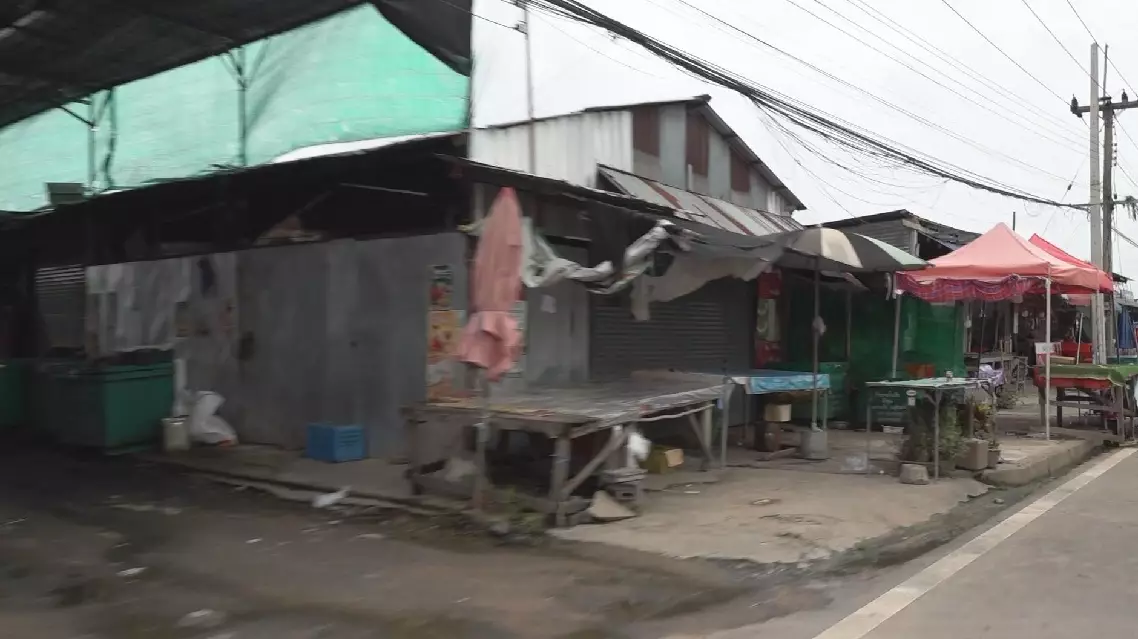
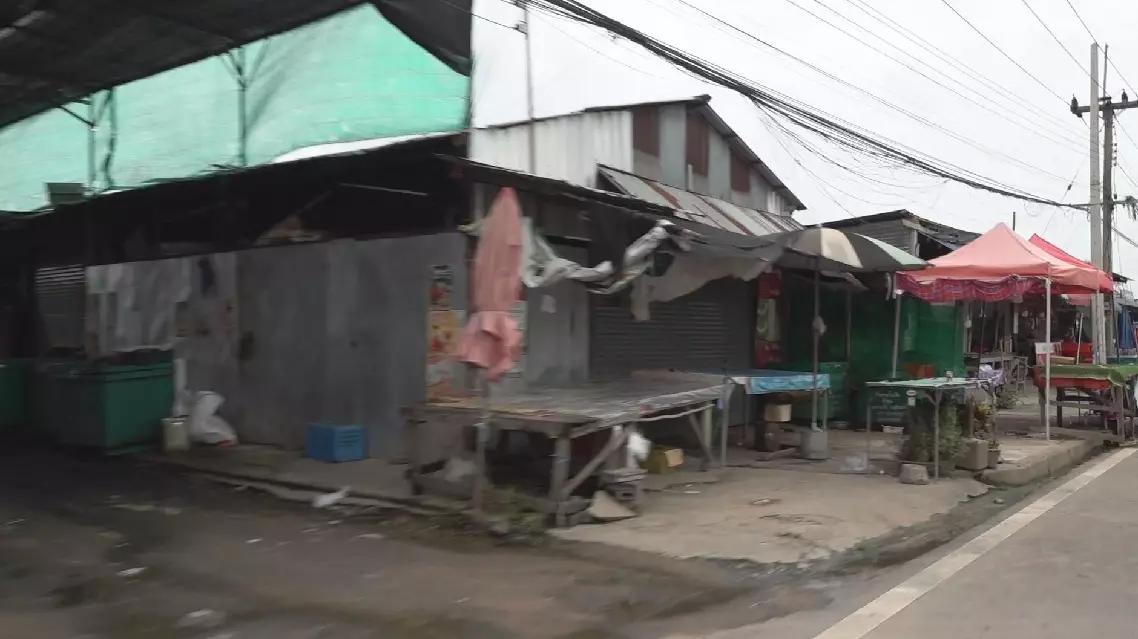
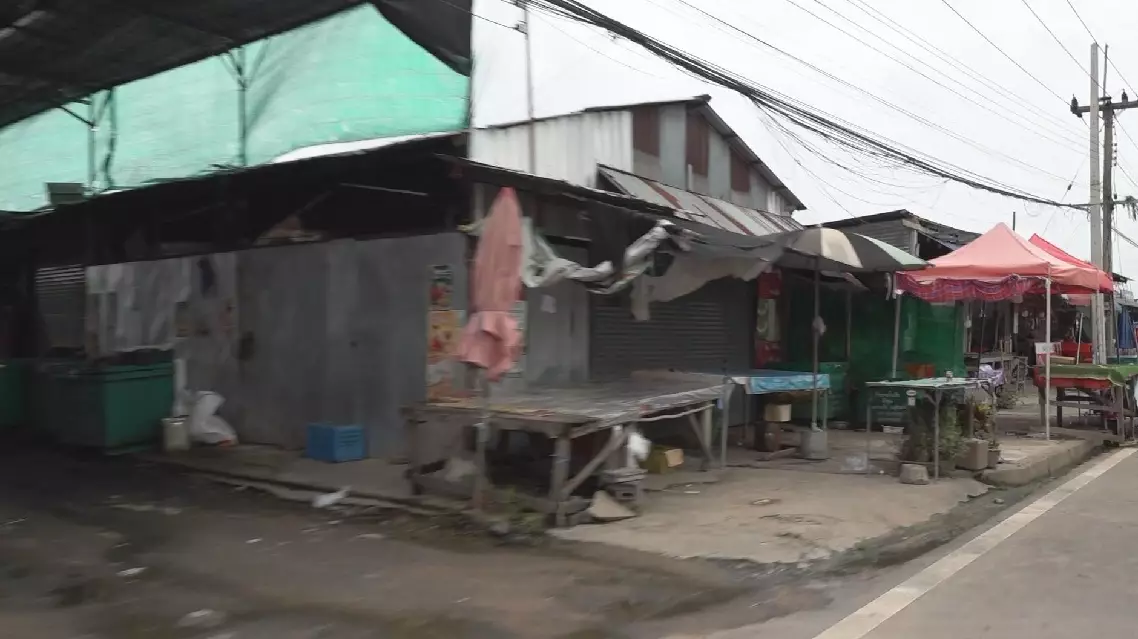
The armed conflict, which entered its third day on Saturday, has led to the closure of what was once one of the busiest and most strategic checkpoints in a border town in Surin. This gateway to trade, tourism, and cross-border livelihoods has now turned into a battleground.

A China Global Television Network (CGTN) crew on Saturday ventured into the Thai border town, where constant explosions and the specter of wider conflict have shuttered nearly all stores, forced the locals to shelter in bunkers, and left streets deserted with no sign of life.

The key border checkpoint, which would normally be packed with people and trucks loaded with goods on weekends, has now become a "red zone."

At one bunker not far away from the checkpoint, locals took turns being on the lookout, for drones, rockets, or any other threats that could come their way.

"We eat and sleep here, all 30 of us. It's been four days, three nights. It's so scary. It's so loud. When the explosions come, we would grab some food and just stay here in this bunker," Sa Saladaeng, a local villager, told the CGTN, as she sought refuge along with others.

Wirat Settapattanachai, chairman of the Surin Chamber of Commerce, said cross-border trade between Thailand and Cambodia had been the lifeline for this province, but the eruption of the clashes has changed everything and made life difficult for the locals.

"Trade between the Thai and Cambodian borders in Surin Province is worth about 300 million baht (about 9.25 million U.S. dollars) per month. When the border was closed on July 23, trade disappeared. Many have lost all their income because they make a living by trading on the border. When there is no trade, they will have no job. There is no income at all. It's difficult for them," he said.

Since the armed clashes between Cambodian and Thai soldiers over their disputed border areas broke out on Thursday, more than 30 people have been killed from both sides, and more than 100,000 people have been evacuated to safe locations, according to figures provided by the two countries.

Both sides have accused each other of violating international law and opening fire first.

Thailand-Cambodia clashes halt trade in Thai border town

Thailand-Cambodia clashes halt trade in Thai border town

Thailand-Cambodia clashes halt trade in Thai border town

Thailand-Cambodia clashes halt trade in Thai border town

Thailand-Cambodia clashes halt trade in Thai border town

Thailand-Cambodia clashes halt trade in Thai border town

Thailand-Cambodia clashes halt trade in Thai border town

Thailand-Cambodia clashes halt trade in Thai border town

Thailand-Cambodia clashes halt trade in Thai border town

Thailand-Cambodia clashes halt trade in Thai border town

Thailand-Cambodia clashes halt trade in Thai border town

Thailand-Cambodia clashes halt trade in Thai border town

A former television host from Taiwan, Zhai Xuan, has made a pivotal decision to leave mainstream broadcasting in order to create content that provides a better understanding of the Chinese mainland and cross-strait relations.

Zhai, a seasoned television host with over a decade of experience in Taiwan's media landscape, recently addressed an audience at an event in Beijing, where she revealed her complete transition into independent online media.

In her remarks, she articulated her aspiration to bridge what she perceives as a significant information gap between audiences on both sides of the Strait, highlighting her commitment to fostering a deeper understanding and connection through her new endeavors.

"I was really surprised by all the fake news. There were stories saying people on the mainland can't afford tea eggs or that they live in mud houses and in Taiwan, this was the main information many people received," said Zhai.

Zhai said she initially began producing online videos to challenge such perceptions while continuing her work as a television host.

In April 2025, she travelled to the mainland with her father to fulfill her late grandfather's wish to return to his hometown. The trip, which reunited family members separated since 1949, was recorded in a video series titled "Journey to Find Our Roots", drawing attention from viewers in both Taiwan and the mainland.

"Many people in Taiwan told me that after watching, they wanted to apply for a mainland travel permit immediately and go looking for their relatives. Some had long forgotten these things, but after seeing my story, they began thinking about their hometowns and family members they had never met and decided to search for their roots," Zhai shared her story at the event.

By mid-2025, Zhai said she began to feel increasing pressure amid rising political tensions and a tightening atmosphere around cross-Strait exchanges in Taiwan.

After more than 12 years in the industry, Zhai resigned from her position, believing it was the right thing to do.

"At that moment, I felt this was a major issue,not just for me, but for Chinese people on both sides of the Strait. If I backed down then, I wouldn’t be standing on the right side," said Zhai.

Since leaving television, Zhai has broadened her online programming to encompass a range of daily-life topics, including practical guidance on applying for a mainland travel permit and using commonly employed mobile applications, in addition to content that delves into historical memory and cultural connections across the Strait.

As the debate over cross-Strait relations continues in Taiwan, Zhai said she remains committed to her current path.

Former Taiwan TV host bridges cross-Strait divide via online media

Former Taiwan TV host bridges cross-Strait divide via online media

Recommended Articles