Guernica -- a small town in northern Spain -- endured one of history's most devastating bombings, yet from its ruins rose an enduring symbol of peace. Crucita Etxabe was only six years old when it happened. Now, nearly 90 years later, the memories are as vivid and vital as she is.
It was Monday, 16:30 on April 26, 1937, when the skies went black over Guernica.
Etxabe survived, taking shelter under a roadside curb, but what she saw next still haunts her.
"Fire, flames everywhere, everything was on fire, blazing. So many bodies, so many dead, but the worst part was the smell of burnt flesh, [with] the bodies still burning. It was horrible," said Etxabe.
The cruelty and efficiency of the attack on Guernica shocked the world.
It was six months into the civil war, the Spanish Republic was under siege -- a legitimately elected government was eventually overthrown by a military coup led by General Franco, backed by Hitler and Mussolini.
Xabier Irujo is a professor of genocide studies at the University of Nevada, Reno, in the U.S.
He said more than 2,000 people were dead, and 85 percent of the buildings were completely erased. Besides, 99 percent of the city was affected by the bombing.
It took over ten years to rebuild the town, and for many people, the scars still remain.
"I don't think we have recovered. Gernika is in all of us. This intergenerational trauma is still there," said Irujo.
Today survivors like Crucita Etxabe campaign against war, joining with victims from Hiroshima, Dresden, and beyond.
"The war in Gaza, the wars we see elsewhere, they make me so sad, when I see what's happening to those children I feel such sorrow, it makes me want to cry every time I see war, what's happening to these people is horrific," said Etxabe.
It was a macabre experiment and a training ground for World War II, but it also inspired one of the most impactful works of anti-war art in history.
Picasso's Guernica is the crown jewel of Madrid's Reina Sofia museum and over three million people come to see it each year.
Arguably the most powerful image in the painting is a mother with her lifeless child, the haunting and brutal reality that it's the innocent who suffer most when the bombs fall. This masterpiece is as relevant today as it was nearly a hundred years ago.
Franco, Hitler, and Mussolini tried to make Guernica a synonym of war, Picasso turned it into a symbol of peace.
A mural of his painting in the town of Guernica receives thousands of visitors each year.
Many people now believes that Guernica stands for hope and they should fight for peace as it prevails in the long run.
"I think that Guernica is a symbol of hope and looking at the photographs of 1937 and how the town was so devastated and we see it now flourishing, rich, people happily living their lives there, we can say that in the long run, peace prevails. We have to stand and fight for peace and we have to do it every day," said Irujo.
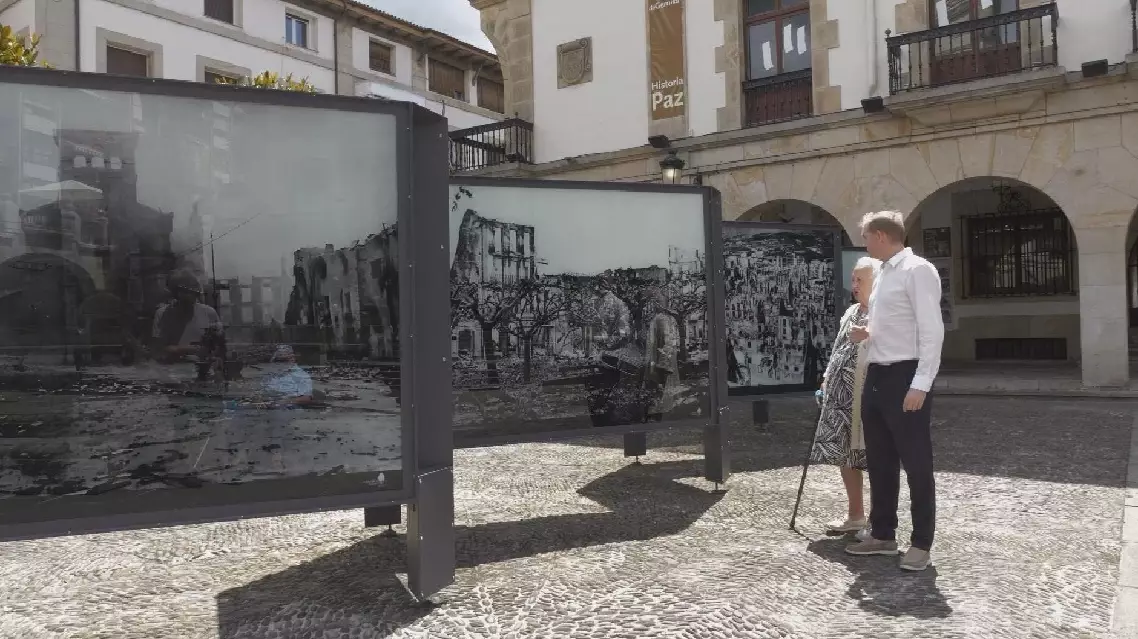
Guernica's bombing leaves scars, yet its legacy as symbol of peace endures