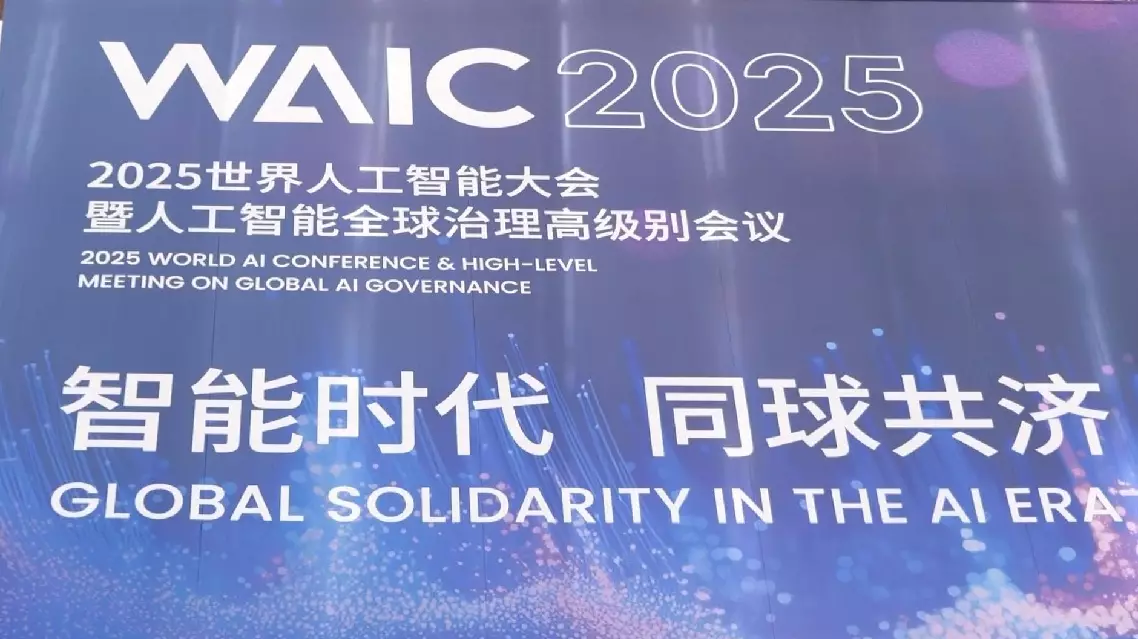
Global industry leaders participating in the ongoing 2025 World AI Conference (WAIC) in Shanghai have underscored China's integral role in AI development and the construction of an effective governance framework.
Running from Saturday to Monday, the WAIC gathers tens of thousands of professionals from 128 countries and regions. The event has witnessed the official establishment of the Center of Global AI Innovative Governance.
Robert Wortham, executive director of the International AI Governance Association, stressed that China has taken on a central role in developing international standards and regulations for this rapidly emerging technology.
"China has an important part to play in the international governance of AI, with huge technological capability, many people working on sophisticated products and services. So it's important that China is central to that process along with the European Union, the U.S. and so on. At the base level, working together on international standards, ISO/IEC international standards for example, the 42001. It's a management standard for AI. That's a really important standard. So, we see that as an important thing to try and harmonize that across the markets," Wortham said.
The recognition of China's determination in this field extends all the way to the United Nations (UN). Jason Slater, chief of the Division of Digital Transformation and Artificial Intelligence of the United Nations Industrial Development Organization (UNIDO), highlighted the cooperation between UNIDO and China on assisting Africa in AI development.
"The World AI Congress is incredible with China. What we have been doing and working with the United Nations Industrial Development Organization, we have a very, very strong cooperation with China. In Africa, we have very strong support from China there and established a sense of excellence in Ethiopia. Why? (Because they are) helping in terms of technology, in terms of skilling of the individuals, helping in terms of the local innovation ecosystems, and bringing this innovation and technology to the people that frankly need it the most," Slater said.
During the event, China launched the International Open Source AI Cooperation Initiative, aiming to harness the wisdom of the open-source community to propel technological innovation, enhance ecological governance, accelerate application empowerment, respect intellectual property rights, and enable open-source technology to serve as a bridge that breaks barriers and illuminates a future of inclusive sharing.
"China is one of the leading countries in AI development. I think the emergence of DeepSeek made a lot of noise in the U.S., in Europe, as a key frontier model that was released on the market. China takes an open source approach to AI development, but a key question here is open source how and open source when. A lot of the AI capabilities that we develop are quite dangerous as well. They can be misused. They can lead to terrorist attacks. So the question is when do we open source certain models and what is the type of regulation that we can put in place to decide this, and China is also a leading figure in developing regulation in this regard," said Max Stauffer, co-founder of the Simon Institute for Longterm Governance, a Swiss think tank working to foster international cooperation on governing frontier AI.
China's advancements in building smart cities has also given other countries a platform to integrate the technology in their own urban development.
"I came here because China is a reference of technological development for us and China can help us very much in reaching high maturity, technological maturity with smart cities, AI applied to this smart cities concept," said Andre Picoli Agatte, director of Business, Governments and Markets at Brazilian IT services corporation Serpro.
Li Kan, general manager of Tencent East China, described AI as an engine of a century-defining industrial revolution, while noting its rapid development in China.
"AI is a once-in-a-century opportunity driving the Fourth Industrial Revolution. Currently, AI technologies update extremely rapidly, weekly or even daily. An upward spiral involving technological innovation, diffusion, and further technological innovation has been created," Li said.
Others called for more AI cooperation between different countries at the ongoing international event.
"I can see almost 80 percent or 70 percent of the interactions in the exhibition, in the forums is in English, pretty international. It's very clear China wants to go international, and everybody's collaborating. This year, there are about 800 companies. I think I heard 30 percent increase from last year. If anybody wants to experience AI in China, they have to come and experience, see, feel here. And let's collaborate with our respective countries," Nishtha Mehta, founder and executive facilitator of CollabCentral Consulting, said.
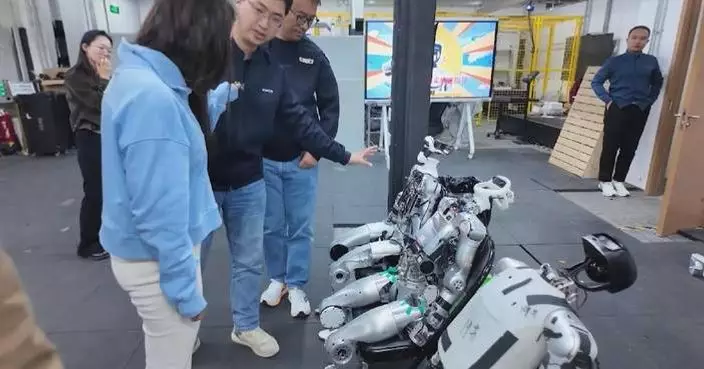
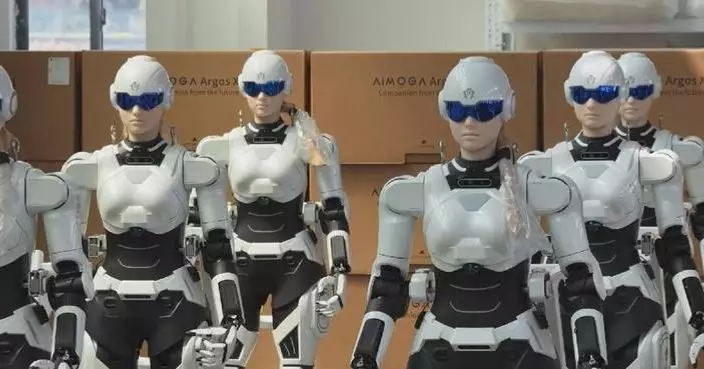
The WAIC also features an exhibition area spanning over 70,000 square meters, with 800 exhibitors showcasing more than 3,000 cutting-edge products.
Global industry leaders commend China's role in AI development, governance