DH gears up for emergency preparedness in response to risk of Chikungunya fever imported cases
The Centre for Health Protection (CHP) of the Department of Health (DH) said today (July 28) that it has been gearing up for emergency preparedness in response to the possible imported cases of Chikungunya fever (CF). The recent spike in CF cases in multiple regions worldwide (including neighbouring areas), and more frequently travelling among members of the public during summer holidays, pose a significant risk of imported cases in Hong Kong. The Government has implemented various emergency preparedness measures to prevent the spread of CF in Hong Kong and safeguard public health.
"CF is not transmitted from person to person, and is primarily transmitted to humans through the bite of female Aedes mosquitoes carrying the CF virus. Aedes albopictus, which is ubiquitous in Hong Kong, can transmit CF. During the early stage after the onset of symptoms (especially when a fever is present), the blood of patients of CF and Dengue Fever (DF) contains a large amount of virus, which is infectious to mosquitoes. If they are bitten by mosquitoes during the communicable period, further local transmission via mosquitoes is possible. If mosquito infestation is serious, it may even lead to large-scale of local outbreaks. Therefore, early identification of infected persons and preventing them from mosquito bites during communicable period is vital in prevention of local transmission," said the Controller of the CHP, Dr Edwin Tsui.
Emergency preparedness
Despite severe or fatal cases caused by CF is rare and the symptoms are milder than that of DF, and most patients recover on their own, as local mosquitoes have not carried the CF virus, we must strive to prevent CF from becoming endemic in Hong Kong. The Government has adopted multi-pronged emergency preparedness, including:
 Control measures at boundary control points (BCPs): the CHP's Port Health Division has been in close contact with Shenzhen Customs to ensure prevention and control measures at BCPs in Shenzhen and Hong Kong are properly put in place. Personnels from Shenzhen and Hong Kong also conducted frontline working meeting today to reinforce the mutual understanding of the disease prevention measures at BCPs.
Enhancing local testing capabilities: the Public Health Laboratory Services Branch of the CHP is equipped with sufficient testing capabilities. The CHP conducts tests on suspected CF cases for public and private hospitals and no positive cases have been detected so far this year. The CHP has, in collaboration with the Hospital Authority, further enhanced the local testing capabilities to ensure that in the event of an outbreak, suspected cases could be tested as soon as possible with an aim of early detection and diagnosis.
Arranging mosquito-free environment for treatment: avoiding mosquito bites of the patient is an important measure to prevent local transmission. There may be further transmission in the community if local mosquitoes are infected by the CF virus. When there is a confirmed CF case in Hong Kong, the patient will be admitted to a hospital to receive treatment in a mosquito-free environment as a prudent measure.
Epidemiological investigations and risk assessment: the CHP will implement prevention and control measures according to epidemiological investigations and risk assessments, which includes providing medical surveillance and health advice to household contacts of the case or those with common exposure to the source of infection. The CHP will arrange for laboratory testingif they presented with relevant symptoms.
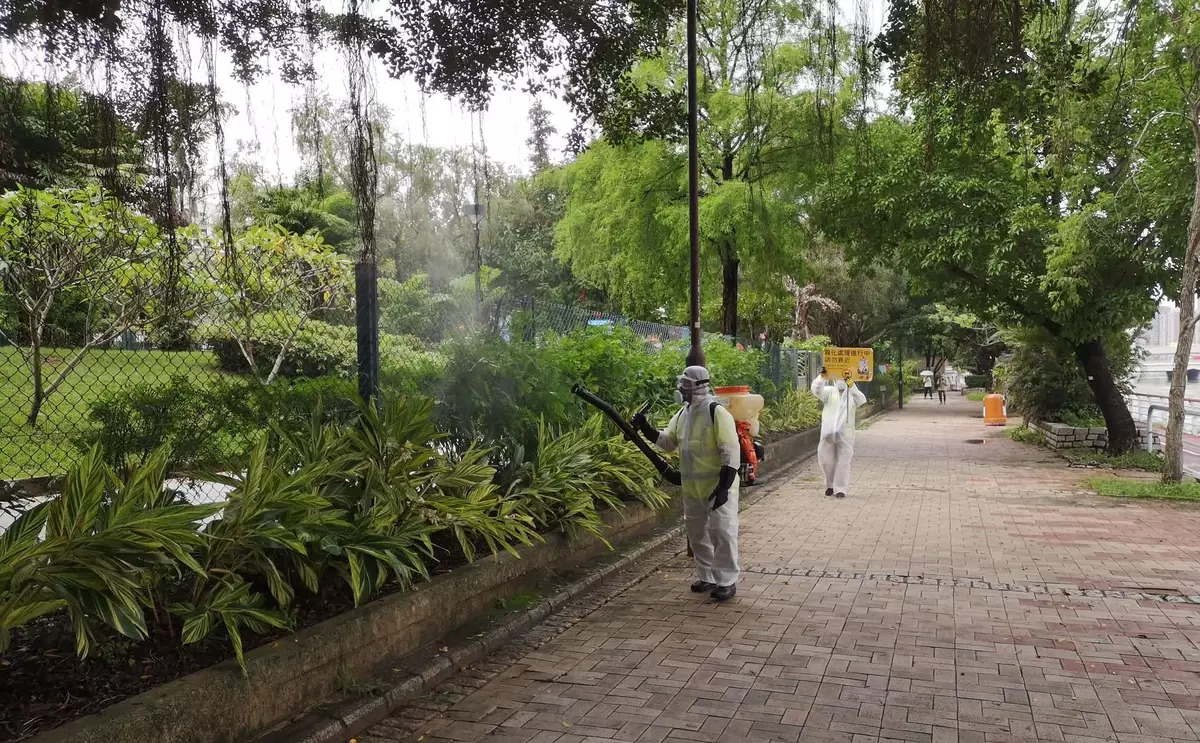
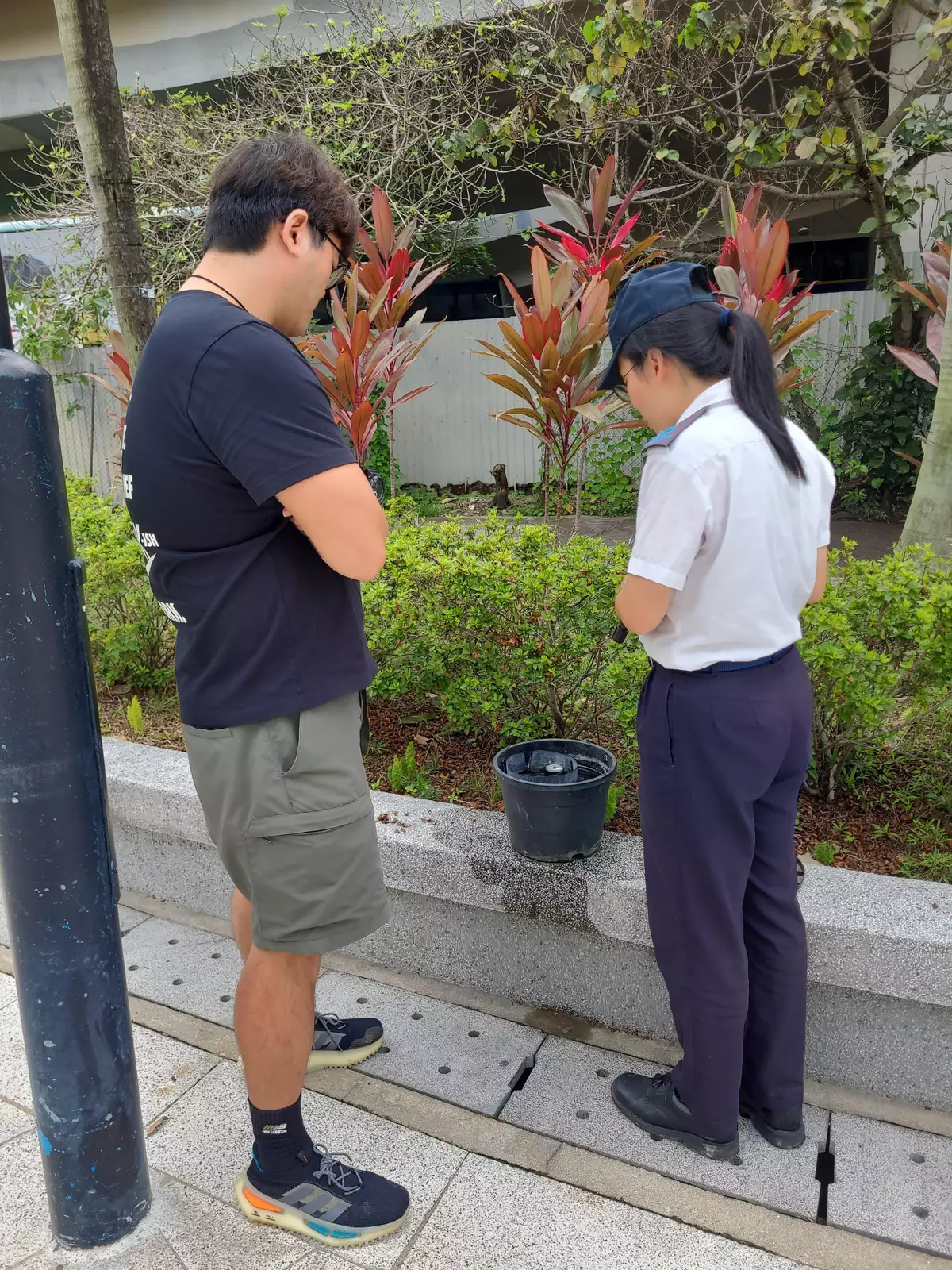
Vector investigation and mosquito control: the CHP will work closely with the Food and Environmental Hygiene Department (FEHD) to conduct on-site inspections, vector investigations and mosquito control, to lower the risk of local transmission.
Supply of medicines: the Government is monitoring the local supply of medicines with antipyretics (e.g. paracetamol), and is maintaining close communication with the suppliers, local manufacturers and community pharmacy associations. The supply of relevant medicines in Hong Kong remains stable. The public need not stockpile the relevant medicines.
Control measures at boundary control points (BCPs): the CHP's Port Health Division has been in close contact with Shenzhen Customs to ensure prevention and control measures at BCPs in Shenzhen and Hong Kong are properly put in place. Personnels from Shenzhen and Hong Kong also conducted frontline working meeting today to reinforce the mutual understanding of the disease prevention measures at BCPs.
Enhancing local testing capabilities: the Public Health Laboratory Services Branch of the CHP is equipped with sufficient testing capabilities. The CHP conducts tests on suspected CF cases for public and private hospitals and no positive cases have been detected so far this year. The CHP has, in collaboration with the Hospital Authority, further enhanced the local testing capabilities to ensure that in the event of an outbreak, suspected cases could be tested as soon as possible with an aim of early detection and diagnosis.
Arranging mosquito-free environment for treatment: avoiding mosquito bites of the patient is an important measure to prevent local transmission. There may be further transmission in the community if local mosquitoes are infected by the CF virus. When there is a confirmed CF case in Hong Kong, the patient will be admitted to a hospital to receive treatment in a mosquito-free environment as a prudent measure.
Epidemiological investigations and risk assessment: the CHP will implement prevention and control measures according to epidemiological investigations and risk assessments, which includes providing medical surveillance and health advice to household contacts of the case or those with common exposure to the source of infection. The CHP will arrange for laboratory testingif they presented with relevant symptoms.
Vector investigation and mosquito control: the CHP will work closely with the Food and Environmental Hygiene Department (FEHD) to conduct on-site inspections, vector investigations and mosquito control, to lower the risk of local transmission.
Supply of medicines: the Government is monitoring the local supply of medicines with antipyretics (e.g. paracetamol), and is maintaining close communication with the suppliers, local manufacturers and community pharmacy associations. The supply of relevant medicines in Hong Kong remains stable. The public need not stockpile the relevant medicines.
Collaboration on disease prevention and control
Guangdong, Hong Kong and Macao have been working closely in communicable disease prevention and control and emergency response according to the Guangdong Provincial Disease Control and Prevention Administration. Owing to the communicable disease notification mechanism established by the three places, the CHP has kept abreast of the latest situation of CF in Guangdong Province.
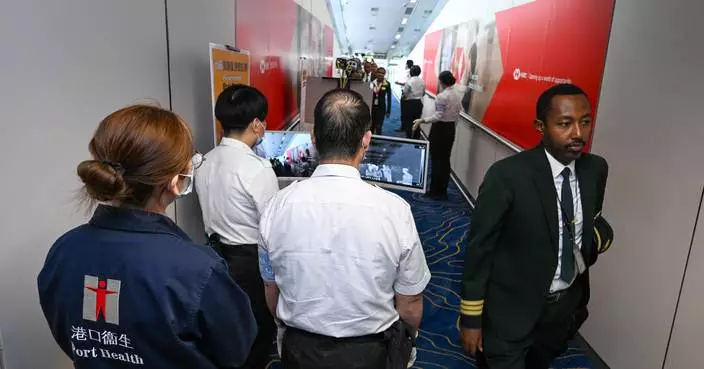
The CHP's Port Health Division steps up publicity and education efforts regarding CF at the BCPs, conducts more frequent inspections to ensure good environmental hygiene and effective implementation of anti-mosquito measures, conducts temperature screening for inbound travellers. Any travellers with fevers or related symptoms will be assessed on health conditions and referred to hospitals for follow up when necessary. The CHP also maintains close liaison with relevant stakeholders such as airlines and the travel industry to provide the latest disease information and health advice in a timely manner.
Public education and publicity
The CHP will issue letters to all schools and institutions (including residential care homes for the elderly and residential care homes for persons with disabilities) in Hong Kong to provide them with the latest epidemiological information and remind operators to adopt preventive measures to avoid mosquito bites. The CHP and the FEHD will continue to provide advice on anti-mosquito measure to institutions.
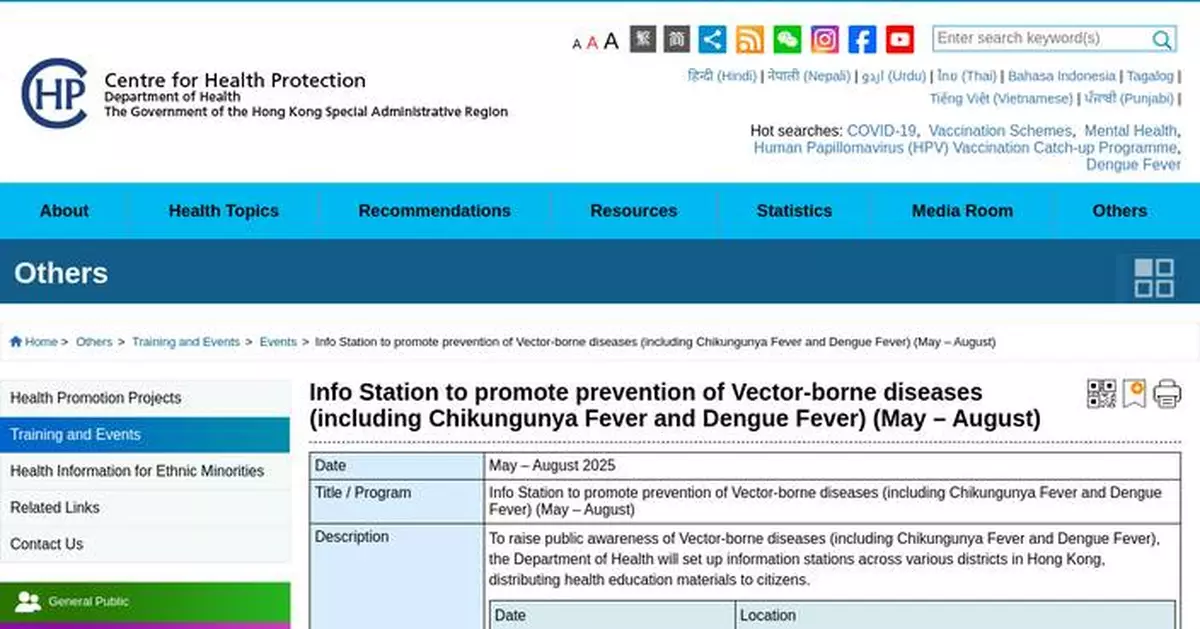
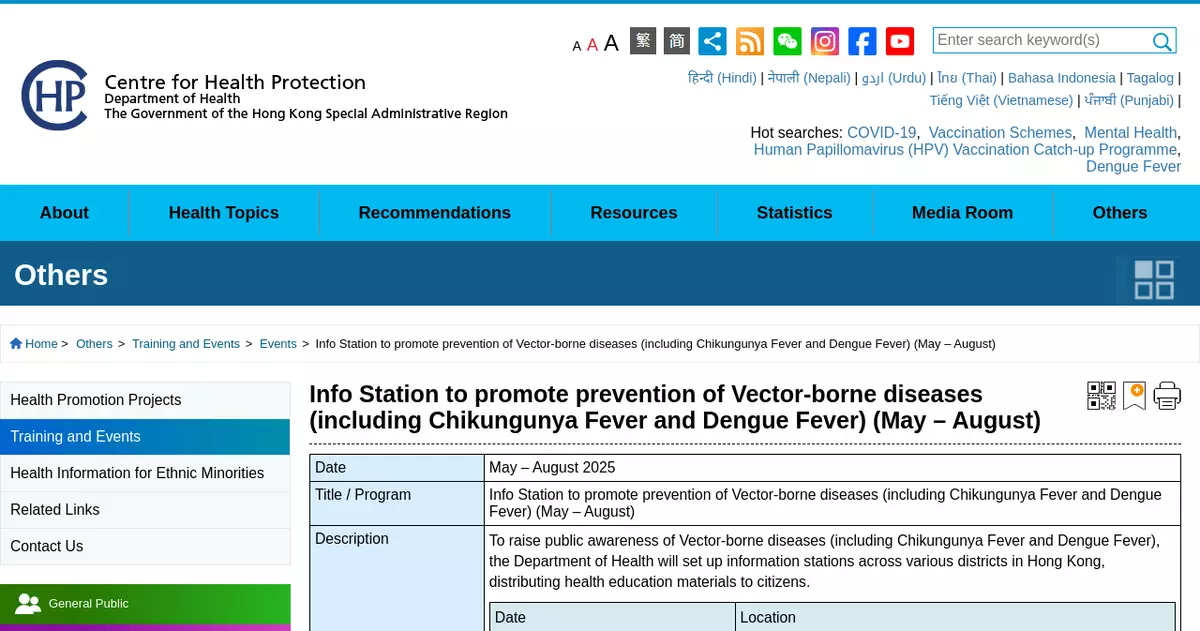
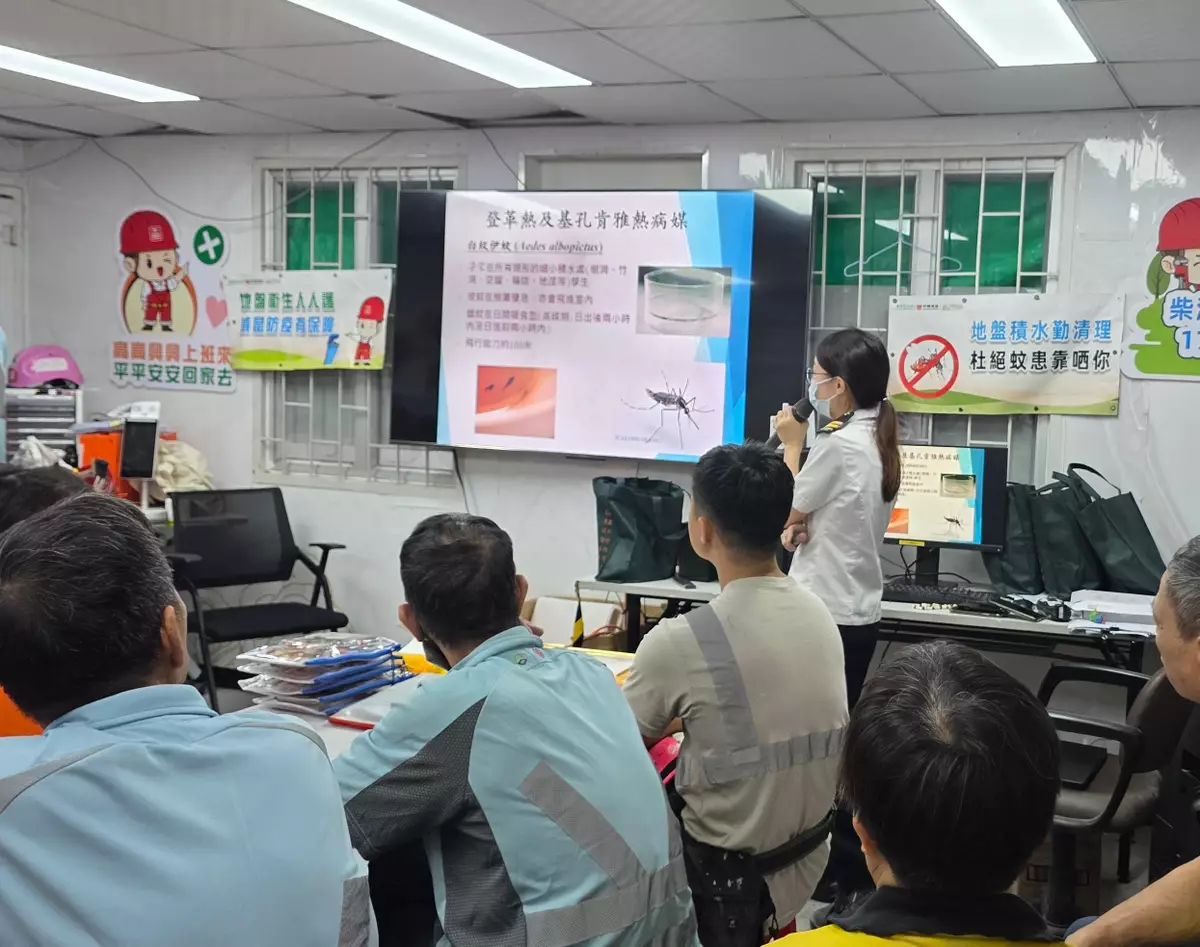
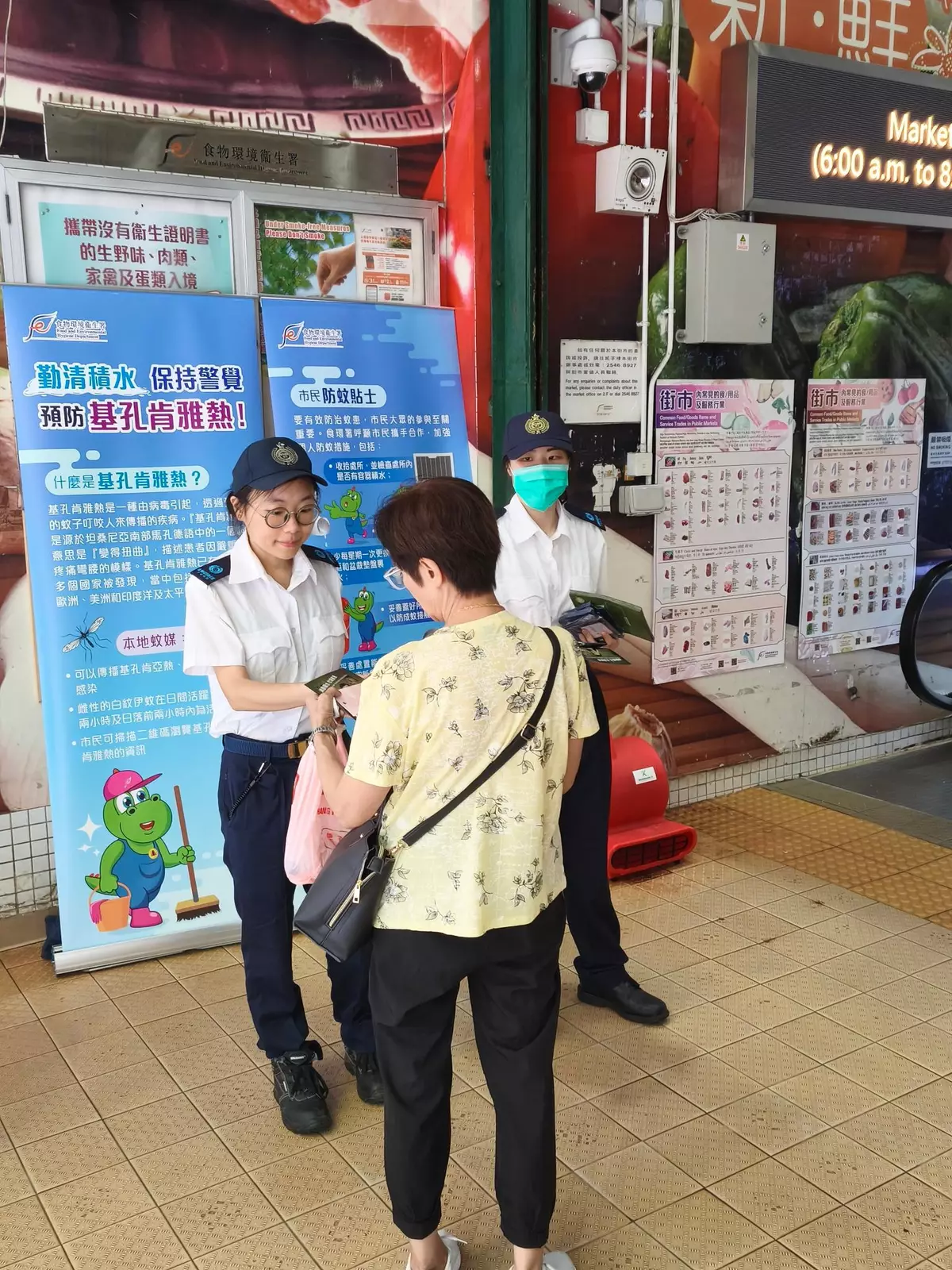
The CHP will also hold online seminars this week to raise public awareness of CF and address related inquiries from the public. Details will be announced later on the CHP's social media accounts, and the public is welcome to watch. The CHP has also set up mobile promotional booths at multiple locations across Hong Kong (including public markets, community health centres, and shopping malls) to educate the public on how to prevent mosquito-borne diseases. Details can be viewed atwww.chp.gov.hk/en/other/events/476.html.
Measures the public should continue to take
The CHP recommends that the public properly use DEET-containing insect repellents or other effective active ingredients to effectively prevent mosquito bites. The following precautions should be taken when using them:
read the label instructions carefully first;
apply right before entering an area with risk of mosquito bites;
apply on exposed skin and clothing;
use DEET of up to 30 per cent for pregnant women and up to 10 per cent for children (For children who travel to countries or areas where mosquito-borne diseases are endemic or epidemic and where exposure is likely, those aged 2 months or above can use DEET-containing insect repellents with a DEET concentration of up to 30 per cent);
apply sunscreen first, then insect repellent;
reapply only when needed and follow the instructions; and
in addition to DEET, there are other insect repellents available on the market containing different active ingredients, such as IR3535, picaridin etc. When using any insect repellent, the public should follow the usage instructions and precautions on the product label.
Members of the public returning from areas affected by CF should apply insect repellent for 14 days upon arrival in Hong Kong. If they feel unwell, they should seek medical advice promptly and provide their travel details to a doctor.
Latest situation regarding CF
According to the information from the Foshan health authority, as of July 26, there were over 4 700 cases in Foshan city. The majority of cases (4 210 cases) were in Shunde District. All cases were mild, with no severe or fatal cases so far. Moreover, confirmed cases were also recorded in other cities in Guangdong Province recently. Regarding Macao, as of July 25, there were four imported cases of CF, three of them travelled toFoshan city during the incubation period.
There have been no CF cases in Hong Kong since 2020.
The public should call 1823 in case of mosquito problems and may visit the following pages for more information: the dengue fever page of theCHPand theTravel Health Service,the Chikungunya fever page of theCHPand theTravel Health Service, the latestTravel Health News,tips for using insect repellents, and the CHPFacebook PageandYouTube Channel.
Source: AI-found images
FEHD releases fourth batch of gravidtrap indexes for Aedes albopictus in May
The Food and Environmental Hygiene Department (FEHD) today (May 21) released the fourth batch of gravidtrap indexes and density indexes for Aedes albopictus in May, covering 12 survey areas, as follows:
District |
Survey Area |
May 2026 |
First Phase Gravidtrap Index |
First Phase Density Index |
Eastern |
Shau Kei Wan and Sai Wan Ho |
9.1% |
1.4 |
Islands |
Tung Chung |
2.0% |
1.0 |
Kowloon City |
Hung Hom and To Kwa Wan |
6.7% |
1.5 |
Tai Po |
Tai Po East |
2.2% |
2.0 |
Tai Po West |
15.5% |
1.0 |
Tuen Mun |
Tuen Mun South |
9.1% |
1.4 |
District |
Survey Area |
May 2026 |
Area Gravidtrap Index |
Area Density Index |
Central and Western |
Kennedy Town and Shek Tong Tsui |
16.8% |
1.3 |
Eastern |
Chai Wan |
15.4% |
1.0 |
North Point and Quarry Bay |
18.9% |
1.4 |
Southern |
Aberdeen and Ap Lei Chau |
20.8% |
1.7 |
Sha Tin |
Sha Tin Town Centre and Fo Tan |
18.3% |
1.4 |
Tsuen Wan |
Tsuen Wan Town |
6.9% |
2.3 |
The fourth batch of gravidtrap indexes for Aedes albopictus in May includes First Phase Gravidtrap Indexes covering six survey areas and Area Gravidtrap Indexes covering six survey areas. Among which, six survey areas recorded gravidtrap indexes above 10 per cent, while Aberdeen and Ap Lei Chau in Southern District recorded a gravidtrap index above 20 per cent. Meanwhile, the gravidtrap indexes of six survey areas, namely Kennedy Town and Shek Tong Tsui in Central and Western District; North Point and Quarry Bay in Eastern District; Shau Kei Wan and Sai Wan Ho in Eastern District; Aberdeen and Ap Lei Chau in Southern District; Tai Po East in Tai Po District; and Tuen Mun South in Tuen Mun District, have recorded a decrease as compared to the indexes recorded in the last survey period, reflecting the progress of relevant mosquito control work.
With reference to the data from the past few years, the gravidtrap indexes start to rise from April or May every year. The actual timing and extent of the rise are affected by factors like weather conditions and rainfall. The average temperature and rainfall recorded in April this year were higher than those in the same period last year, creating favourable conditions for mosquito growth and breeding. As a result, the rise in gravidtrap indexes occurred earlier this year. With the increase in rainfall in May, the gravidtrap indexes are expected to rise further.
For survey areas which recorded indexes exceeding 10 per cent, in accordance with the mechanism implemented by the FEHD in response to the chikungunya fever (CF) situation (i.e. strengthening mosquito control work in areas with a gravidtrap index between 10 per cent and 20 per cent, instead of 20 per cent or above under the original mechanism), the FEHD is collaborating with relevant departments and stakeholders to identify locations with high mosquito infestations and carry out intensive and targeted mosquito control measures. The FEHD has initiated two prosecutions against the relevant construction site contractors following the discovery of mosquito breeding at construction sites in Tai Po District and Southern District. Moreover, following the discovery of stagnant water or stagnant water containers in a park, a construction site, a private housing estate, a clinic and a private premises in Tai Po District, Central and Western District, as well as Southern District, the FEHD has issued five statutory notices to the responsible persons-in-charge, requiring the clearance of such items within a specified timeframe. The FEHD, the relevant departments and stakeholders are following up on the mosquito control work, and will also organise exhibitions, distribute leaflets and posters, and notify residential estates that have subscribed to the gravidtrap Rapid Alert System, advising property management agents and residents to stay vigilant and work together in taking mosquito prevention and elimination measures. In addition, the FEHD will strengthen the monitoring of the gravidtrap index in the areas to review the effectiveness of the mosquito control work.
Public participation is crucial to the effective control of mosquito problems. The FEHD appeals to members of the public to continue to work together in strengthening personal mosquito control measures, including:
tidy up their premises and check for any accumulation of water inside the premises;
remove all unnecessary water collections and eliminate the sources;
check household items (those placed in outdoor and open areas in particular), such as refuse containers, vases, air conditioner drip trays, and laundry racks to prevent stagnant water;
change water in flower vases and scrub their inner surfaces thoroughly, and remove water in saucers under potted plants at least once a week;
properly cover all containers that hold water to prevent mosquitoes from accessing the water;
properly dispose of articles that can contain water, such as disposable meal boxes and empty cans; and
scrub drains and surface sewers with alkaline detergent at least once a week to remove any mosquito eggs.
Starting in August 2025, following the completion of the surveillance of individual survey areas, and once the latest gravidtrap index and the density index are available, the FEHD has been disseminating relevant information through press releases, its website and social media. It aims to allow members of the public to quickly grasp the mosquito infestation situation and strengthen mosquito control efforts, thereby reducing the risk of CF transmission.
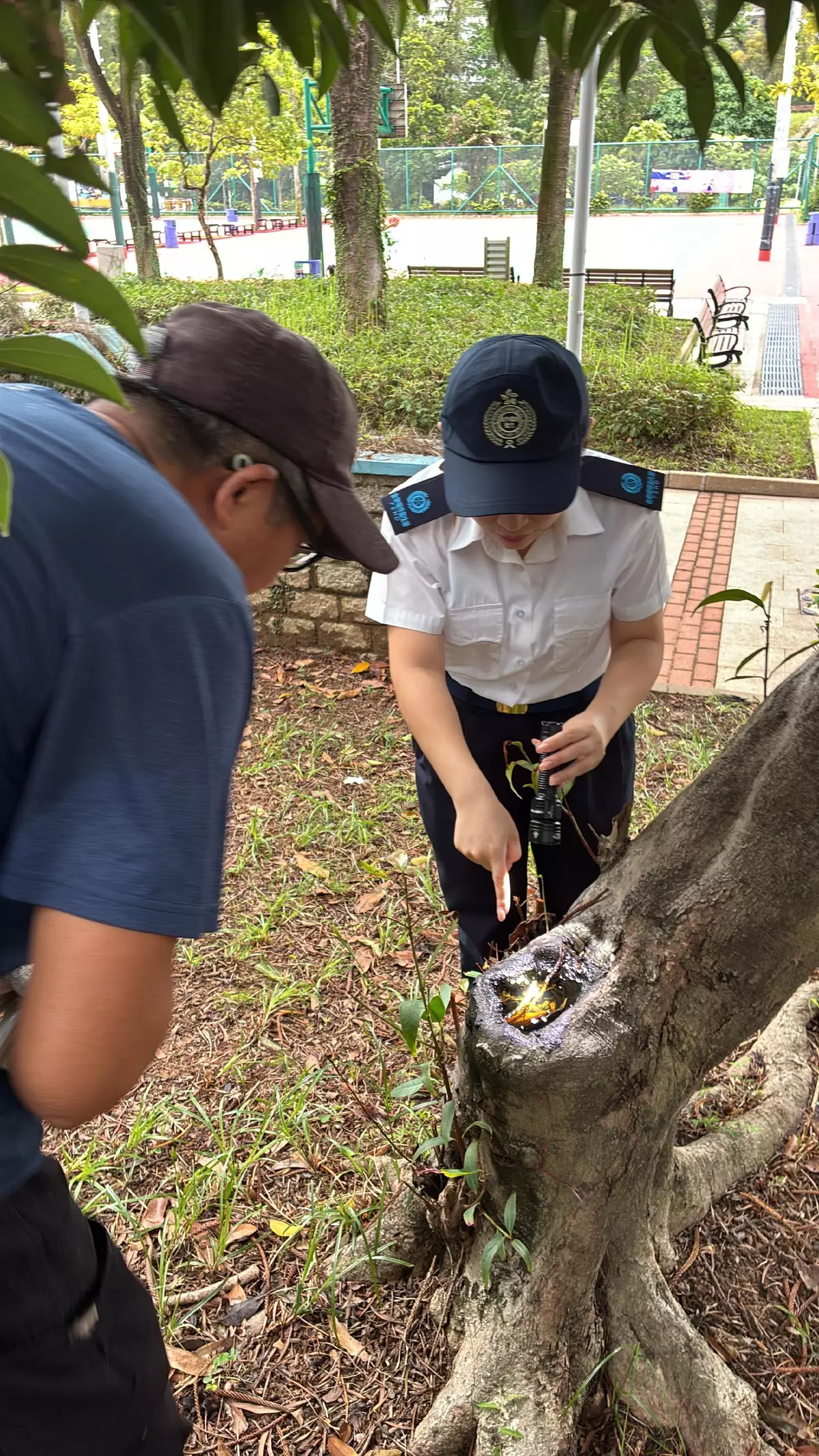
Following recommendations from the World Health Organization and taking into account the local situation in Hong Kong, the FEHD sets up gravidtraps in districts where mosquito-borne diseases have been recorded in the past, as well as in densely populated places such as housing estates, hospitals and schools to monitor the breeding and distribution of Aedes albopictus mosquitoes, which can transmit CF and dengue fever. At present, the FEHD has set up gravidtraps in 62 survey areas of the community, with a surveillance period of two weeks. During the surveillance period, the FEHD will collect the gravidtraps once a week. After the first week of surveillance, the FEHD will immediately examine the glue boards inside the retrieved gravidtraps for the presence of adult Aedine mosquitoes to compile the Gravidtrap Index (First Phase) and Density Index (First Phase). At the end of the second week of surveillance, the FEHD will instantly check the glue boards for the presence of adult Aedine mosquitoes. Data from the two weeks of surveillance will be combined to obtain the Area Gravidtrap Index and the Area Density Index. The gravidtrap and density indexes for Aedes albopictus in different survey areas, as well as information on mosquito prevention and control measures, are available on the department's webpage (www.fehd.gov.hk/english/pestcontrol/dengue_fever/Dengue_Fever_Gravidtrap_Index_Update.html#).
FEHD releases fourth batch of gravidtrap indexes for Aedes albopictus in May Source: HKSAR Government Press Releases
FEHD releases fourth batch of gravidtrap indexes for Aedes albopictus in May Source: HKSAR Government Press Releases
FEHD releases fourth batch of gravidtrap indexes for Aedes albopictus in May Source: HKSAR Government Press Releases
FEHD releases fourth batch of gravidtrap indexes for Aedes albopictus in May Source: HKSAR Government Press Releases
FEHD releases fourth batch of gravidtrap indexes for Aedes albopictus in May Source: HKSAR Government Press Releases