ABU DHABI, United Arab Emirates--(BUSINESS WIRE)--Jul 28, 2025--
The UAE’s Zayed Sustainability Prize, a pioneering global award that has transformed the lives of over 400 million people, has officially closed submissions for its 2026 awards cycle. A total of 7,761 entries from 173 countries were received across the six categories of Health, Food, Energy, Water, Climate Action and Global High Schools, reflecting the Prize’s continued role in advancing impactful solutions to pressing global challenges.
This press release features multimedia. View the full release here: https://www.businesswire.com/news/home/20250728506759/en/
Now in its 17 th year, the Prize empowers small to medium-sized enterprises (SMEs), nonprofit organisations and high schools to develop and scale sustainable innovations that improve lives, especially in vulnerable and underserved communities. From clean energy and healthcare access to regenerative agriculture and safe drinking water, this year’s submissions reflect a rising focus on technology-powered, community-led models that expand access where it’s needed most.
Submissions increased by 30% compared to the previous cycle. There was a marked rise in projects that integrate cutting-edge technologies – such as artificial intelligence, direct air carbon capture, and fintech tools – with grassroots approaches, highlighting how innovation, equity, and long-term impact are converging in meaningful ways.
H.E. Dr. Sultan Ahmed Al Jaber, UAE Minister of Industry and Advanced Technology and Director-General of the Zayed Sustainability Prize, said: “The record number of submissions to this year’s Prize cycle reflects a growing global commitment to practical, scalable solutions that deliver long-term impact. We saw particularly strong momentum in food systems, where smart technologies are helping boost productivity and resilience. Across all categories, the increased use of AI and other advanced technologies highlights how innovation is being harnessed to drive inclusive, community-led progress. The Zayed Sustainability Prize remains focused on recognising pioneers who deliver measurable impact and advance sustainable development worldwide.”
Early analysis shows that around 85% of all submissions came from the developing and emerging economies, with top contributions from India, Ethiopia, Uzbekistan, Brazil, and Indonesia. Participation was also high from developed countries like the United Arab Emirates and the United States of America, both making it into the top 10 submission countries.
The Food (1,630) and Climate Action (1,880) categories attracted the highest number of entries, reflecting the global urgency around food security, ecosystem protection, and disaster resilience. These were followed by Health (1,497), Global High Schools (1,070), Water (863) and Energy (821).
Submissions to the Health category grew by over 60% this year, with entries focusing on AI-enabled diagnostics, wearable tech, and decentralised care. Many also explored tech-enabled sustainable logistics and improved traceability to strengthen healthcare delivery systems.
The Food category highlighted advances in precision agriculture and agri-robotics, with smart systems and drones helping farmers boost yields as well as circularity in food systems.
In Energy, submissions revealed a growing interest in thermal energy storage and advanced low-carbon fuels, and broader energy transformation, including solutions for future-proofing energy systems to meet the growing global demand scenarios.
Entries in the Water category explored innovative ways to expand freshwater access, including atmospheric water generation and low-energy desalination, as well as fintech tools that promote more transparent and equitable distribution.
Climate Action entries addressed both mitigation and adaptation, featuring nature-based solutions, direct air carbon capture, predictive tools for resilience and disaster preparedness, and community-based conservation grounded in Indigenous knowledge.
Youth-led submissions in Global High Schools reflected a remarkable surge in youth engagement and commitment to sustainability, with projects ranging from AI-powered climate monitoring and smart irrigation for school farms to low-cost water filtration and tech-based approaches to waste tracking and upcycling.
Following the close of submissions, the Prize now enters the evaluation stage. All entries will be shortlisted by an independent research and analysis consultancy. A Selection Committee comprised of globally renowned industry experts will then assess the qualified entries and shortlist the candidates. The third and final tier of the evaluation process is the Jury, which will convene in October to unanimously elect the winners in each category.
Winners will be announced at the Zayed Sustainability Prize Awards Ceremony on 13 January 2026, during Abu Dhabi Sustainability Week. Each winner in the organisational categories will receive US $1 million, while six high schools – representing the world’s regions – will be awarded US $150,000 each to implement or expand their sustainability projects.
About the Zayed Sustainability Prize
The Zayed Sustainability Prize, an affiliate of Erth Zayed Philanthropies, is the UAE’s pioneering award for innovative solutions to global challenges.
A tribute to the legacy and vision of the UAE’s founding father, Sheikh Zayed bin Sultan Al Nahyan, the Prize aims to drive sustainable development worldwide.
Each year, across the Health, Food, Energy, Water, Climate Action and Global High Schools categories, the Prize rewards organisations and high schools for their groundbreaking solutions to our planet’s most pressing needs.
Through its 128 winners, in 17 years, the Prize has positively impacted over 400 million lives across the globe, inspiring innovators to amplify their impact, and chart a sustainable future for all.
Source: AETOSWire
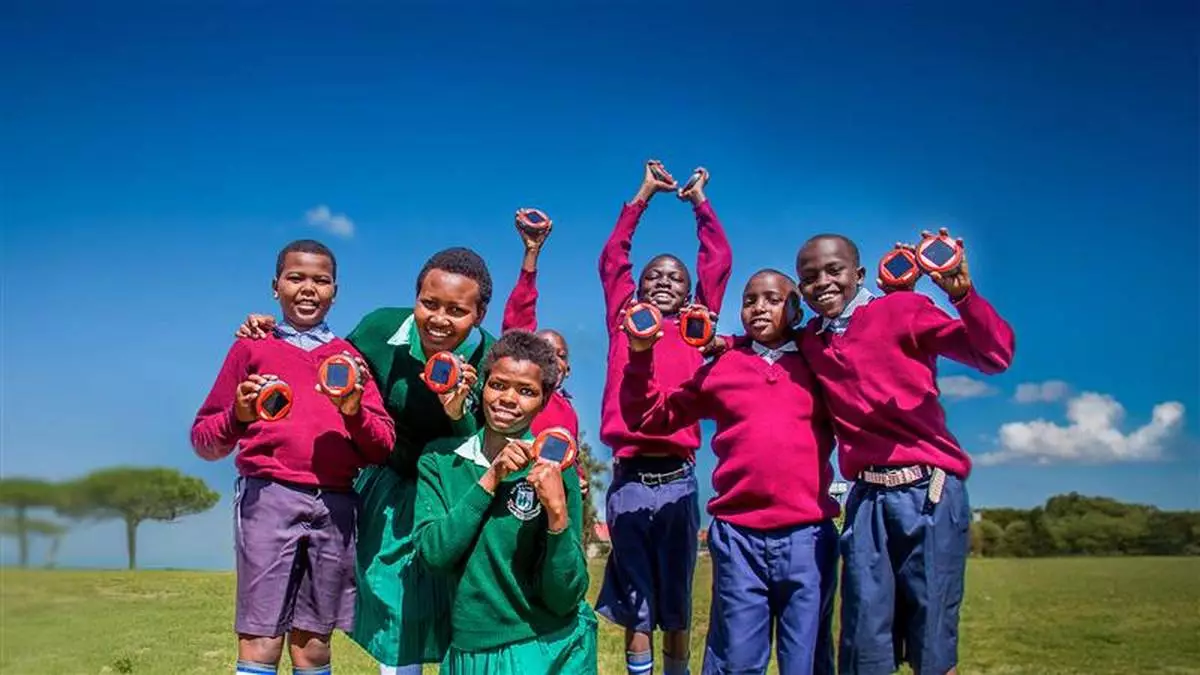
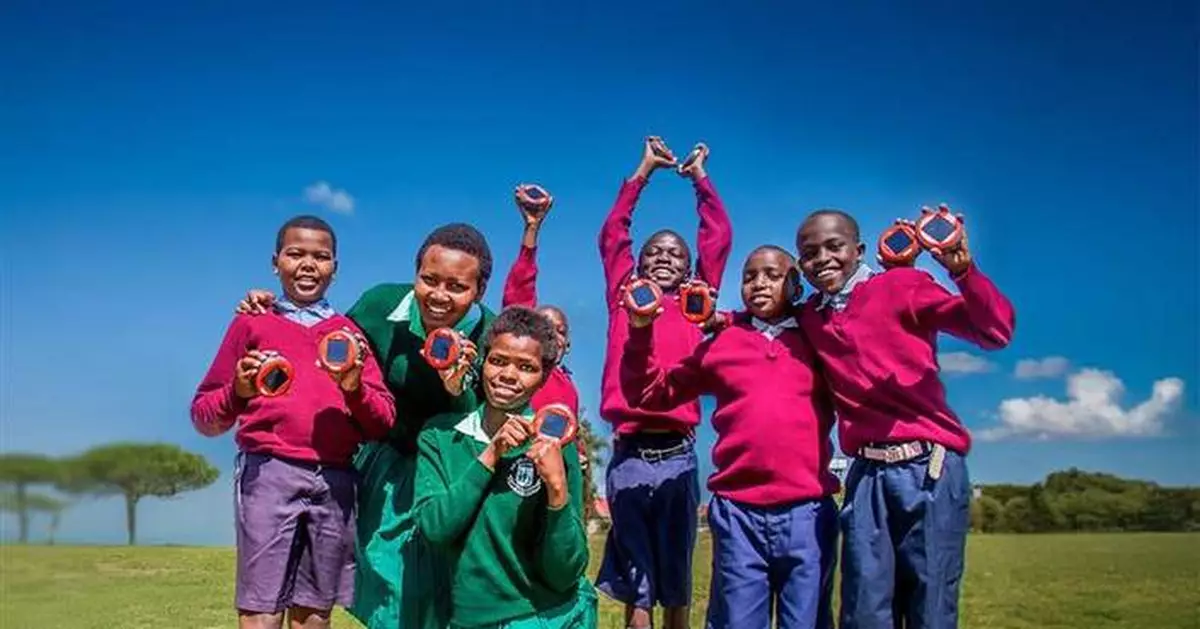
Zayed Sustainability Prize beneficiaries celebrate receiving solar-powered lights (Photo: AETOSWire)
MINNEAPOLIS (AP) — President Donald Trump on Thursday threatened to invoke an 1807 law and deploy troops to quell persistent protests against the federal officers sent to Minneapolis to enforce his administration's massive immigration crackdown.
The threat comes a day after a man was shot and wounded by an immigration officer who had been attacked with a shovel and broom handle. That shooting further heightened the fear and anger that has radiated across the city since an Immigration and Customs Enforcement agent fatally shot Renee Good in the head.
Trump has repeatedly threatened to invoke the Insurrection Act, a rarely used federal law, to deploy the U.S. military or federalize the National Guard for domestic law enforcement, over the objections of state governors.
“If the corrupt politicians of Minnesota don’t obey the law and stop the professional agitators and insurrectionists from attacking the Patriots of I.C.E., who are only trying to do their job, I will institute the INSURRECTION ACT, which many Presidents have done before me, and quickly put an end to the travesty that is taking place in that once great State,” Trump said in social media post.
Presidents have invoked the law more than two dozen times, most recently in 1992 by President George H.W. Bush to end unrest in Los Angeles. In that instance, local authorities had asked for the assistance.
“I’m making a direct appeal to the President: Let’s turn the temperature down. Stop this campaign of retribution. This is not who we are,” Gov. Tim Walz, a Democrat, said on X.
Minnesota Attorney General Keith Ellison said he would challenge any such action in court. He's already suing to try to stop the surge by the Department of Homeland Security, which says officers have arrested more than 2,500 people since Nov. 29 as part of an immigration operation in the Twin Cities called Metro Surge.
The operation grew when ICE sent 2,000 officers and agents to the area early in January. ICE is a DHS agency.
In Minneapolis, smoke filled the streets Wednesday night near the site of the latest shooting as federal officers wearing gas masks and helmets fired tear gas into a small crowd. Protesters responded by throwing rocks and shooting fireworks.
Demonstrations have become common in Minneapolis since Good was fatally shot on Jan. 7. Agents who have yanked people from their cars and homes have been confronted by angry bystanders demanding they leave.
“This is an impossible situation that our city is presently being put in and at the same time we are trying to find a way forward to keep people safe, to protect our neighbors, to maintain order,” Minneapolis Mayor Jacob Frey said.
The American Civil Liberties Union of Minnesota filed a class-action lawsuit on behalf of three people who said they were questioned or detained in recent days. The lawsuit says two are Somali and one is Hispanic; all three are U.S. citizens. The lawsuit seeks an end to what the ACLU describes as a practice of racial profiling and warrantless arrests. The government did not immediately comment.
Homeland Security said in a statement that federal law enforcement officers on Wednesday stopped a driver from Venezuela who is in the U.S. illegally. The person drove off then crashed into a parked car before fleeing on foot, DHS said.
Officers caught up, then two other people arrived and the three started attacking the officer, according to DHS.
“Fearing for his life and safety as he was being ambushed by three individuals, the officer fired a defensive shot to defend his life,” DHS said. The confrontation took place about 4.5 miles (7.2 kilometers) from where Good was killed.
Police chief Brian O’Hara said the man who was shot did not have a life-threatening injury. O’Hara's account of what happened largely echoed that of Homeland Security, which later said the other two men were also in the U.S. illegally from Venezuela.
The FBI said several government vehicles were damaged and property inside was stolen when agents responded to the shooting. Photos show broken windows and insults made with paint. A reward of up to $100,000 is being offered for information. The FBI’s Minneapolis office did not immediately reply to messages seeking more details.
St. Paul Public Schools, with more than 30,000 students, said it would begin offering an online learning option for students who do not feel comfortable coming to school. Schools will be closed next week until Thursday to prepare for those accommodations.
Minneapolis Public Schools, which has a similar enrollment, is also offering temporary remote learning. The University of Minnesota will start a new term next week with different options depending on the class.
Madhani reported from Washington, D.C. Associated Press reporters Sophia Tareen in Chicago; Bill Barrow in Atlanta; Rebecca Santana in Washington; and Ed White in Detroit contributed.
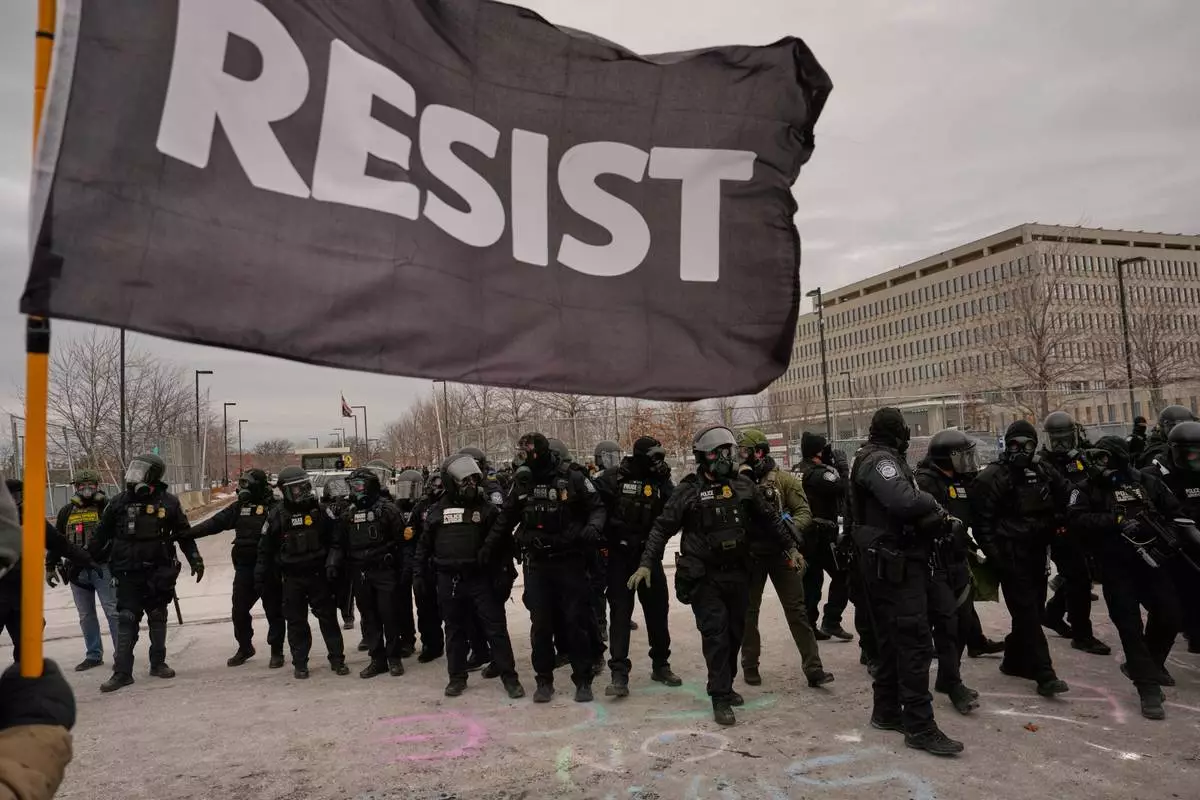
Federal immigration officers confront protesters outside Bishop Henry Whipple Federal Building, Thursday, Jan. 15, 2026, in Minneapolis. (AP Photo/John Locher)
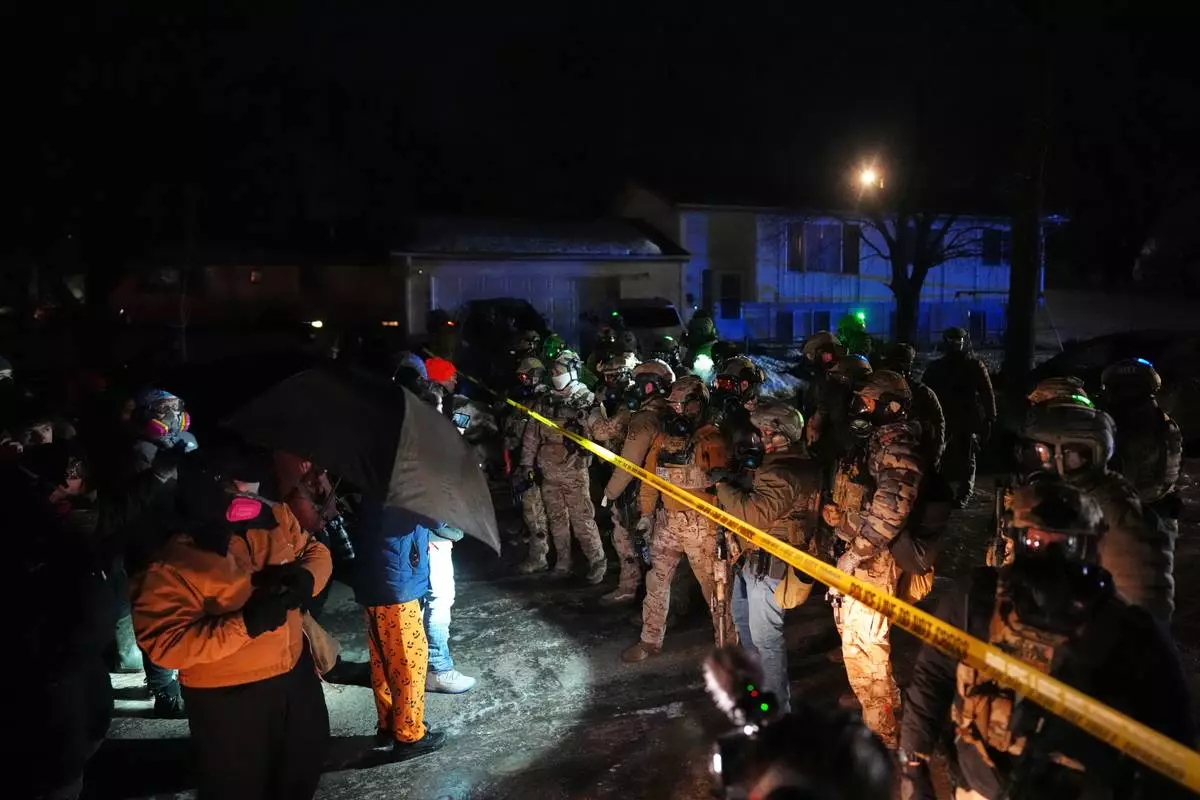
Law enforcement officers at the scene of a reported shooting Wednesday, Jan. 14, 2026, in Minneapolis. (AP Photo/Adam Gray)
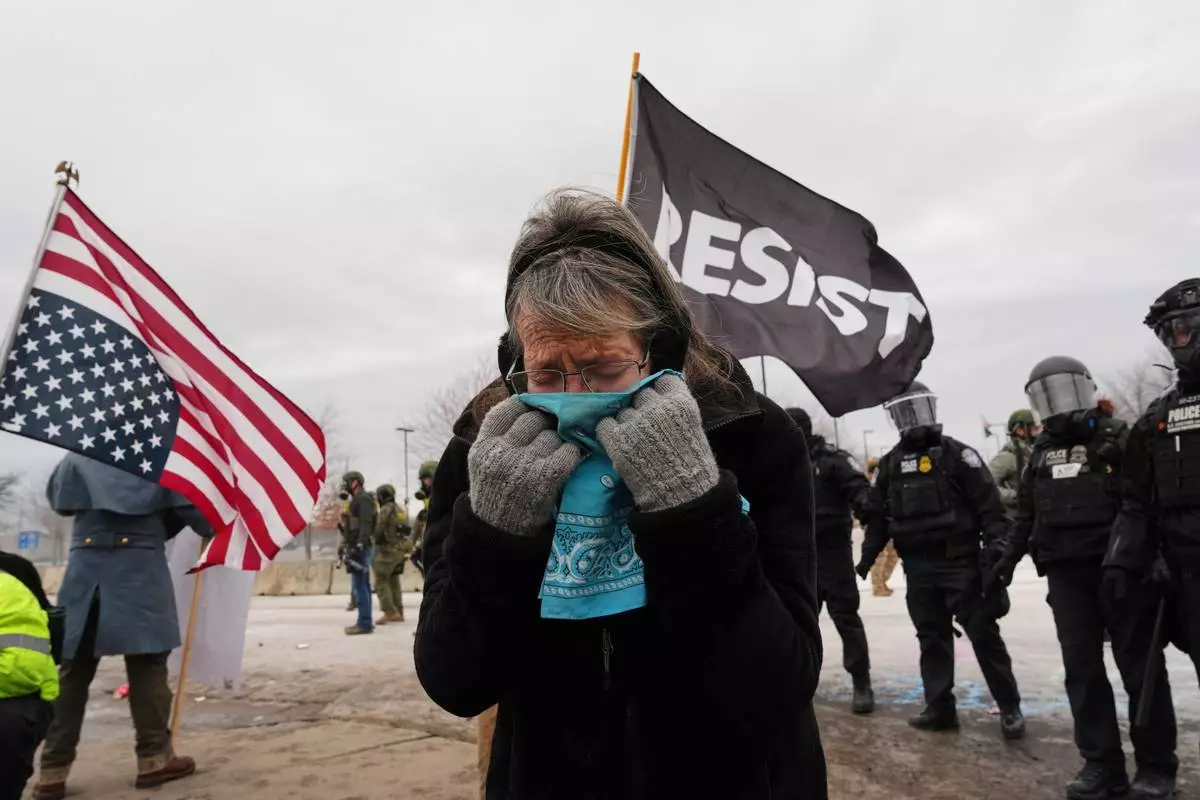
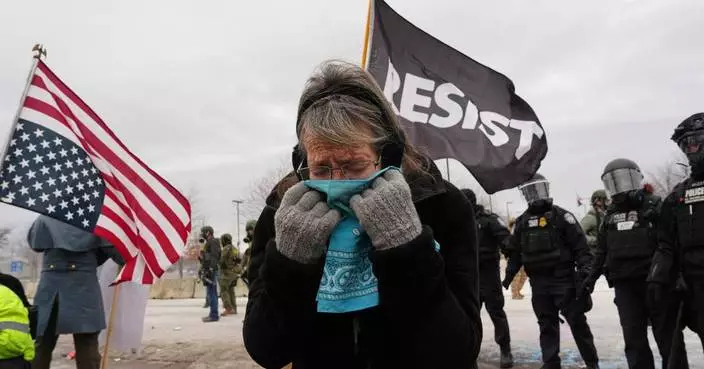
A woman covers her face from tear gas as federal immigration officers confront protesters outside Bishop Henry Whipple Federal Building, Thursday, Jan. 15, 2026, in Minneapolis. (AP Photo/Adam Gray)
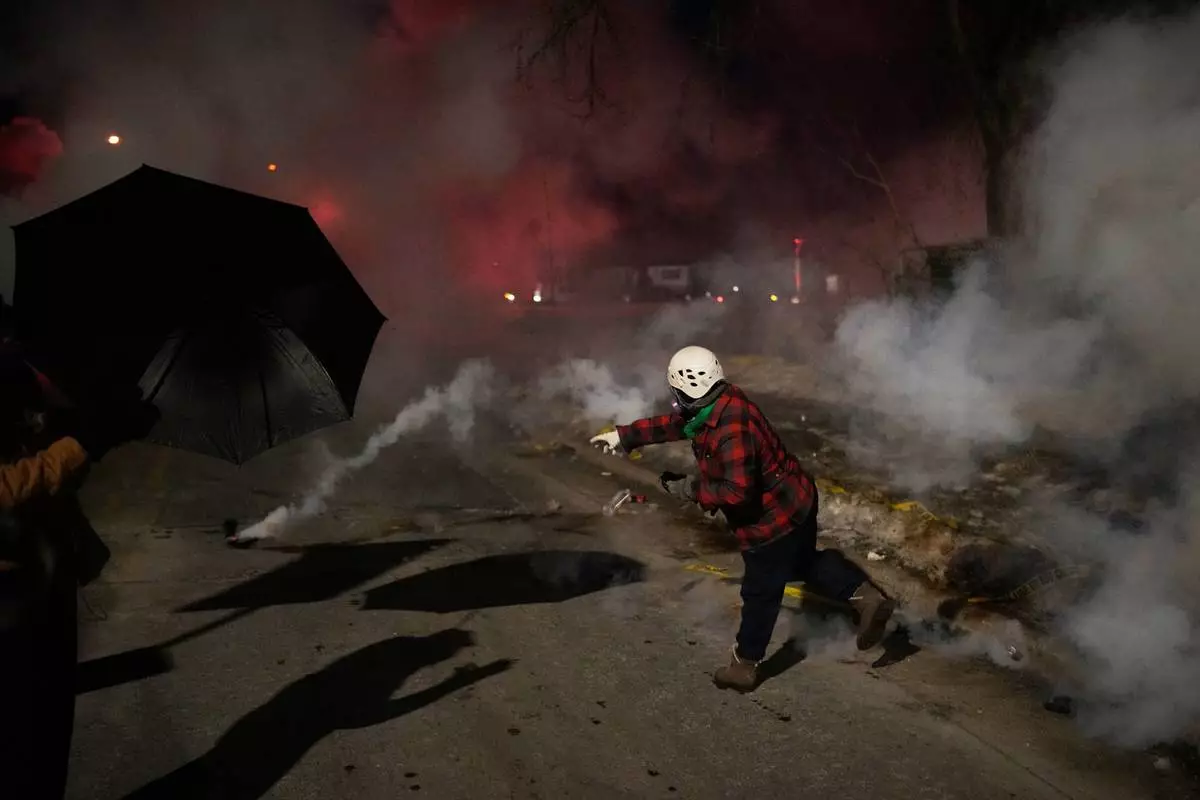
A protester throws back a tear gas canister during a protest after a shooting on Wednesday, Jan. 14, 2026, in Minneapolis. (AP Photo/John Locher)
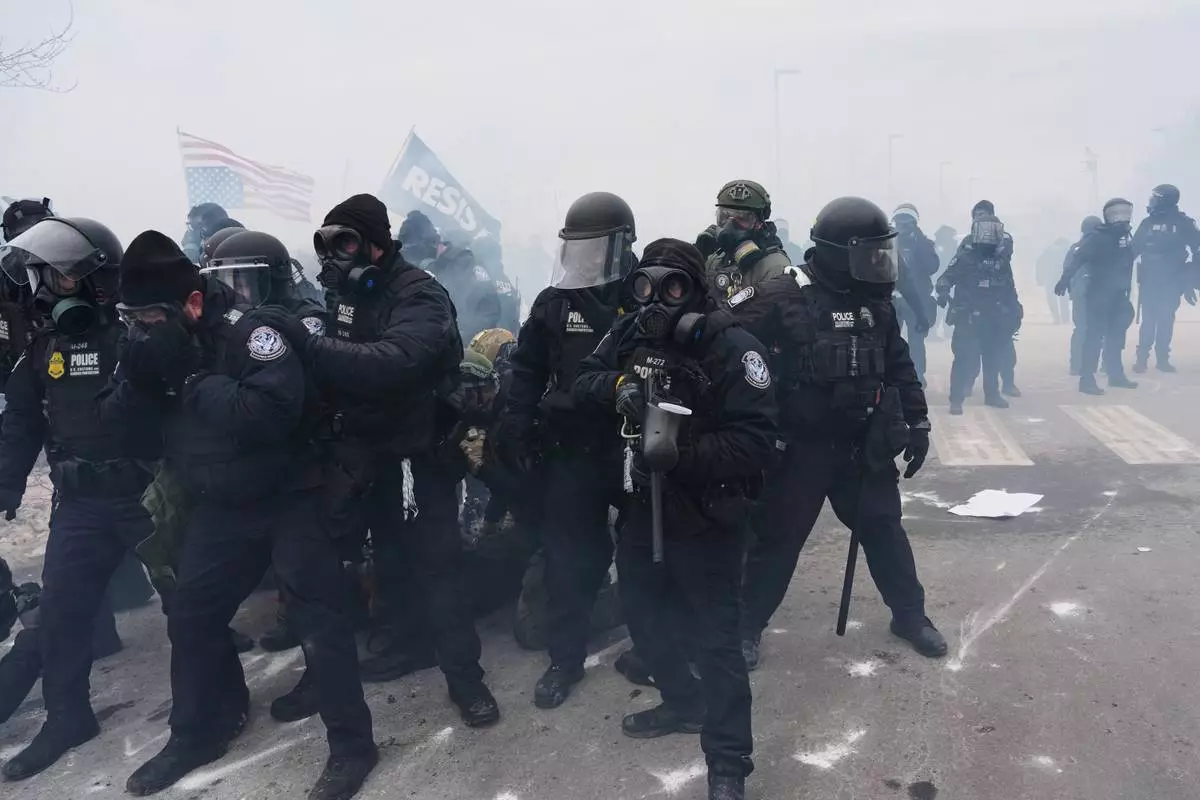
Federal immigration officers confront protesters outside Bishop Henry Whipple Federal Building, Thursday, Jan. 15, 2026, in Minneapolis. (AP Photo/Adam Gray)
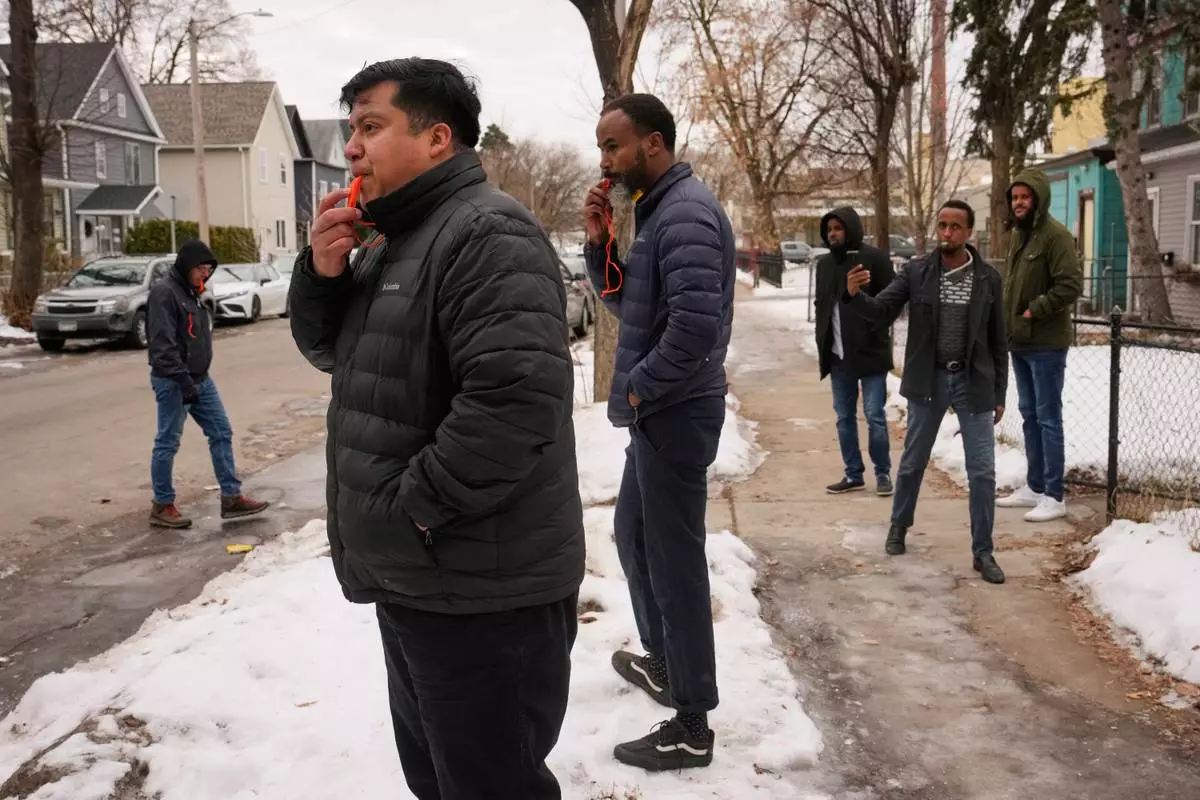
Minneapolis City Council Member Jason Chavez, second from left, blows a whistle with other activists to warn people of federal immigration officers Thursday, Jan. 15, 2026, in Minneapolis. (AP Photo/John Locher)
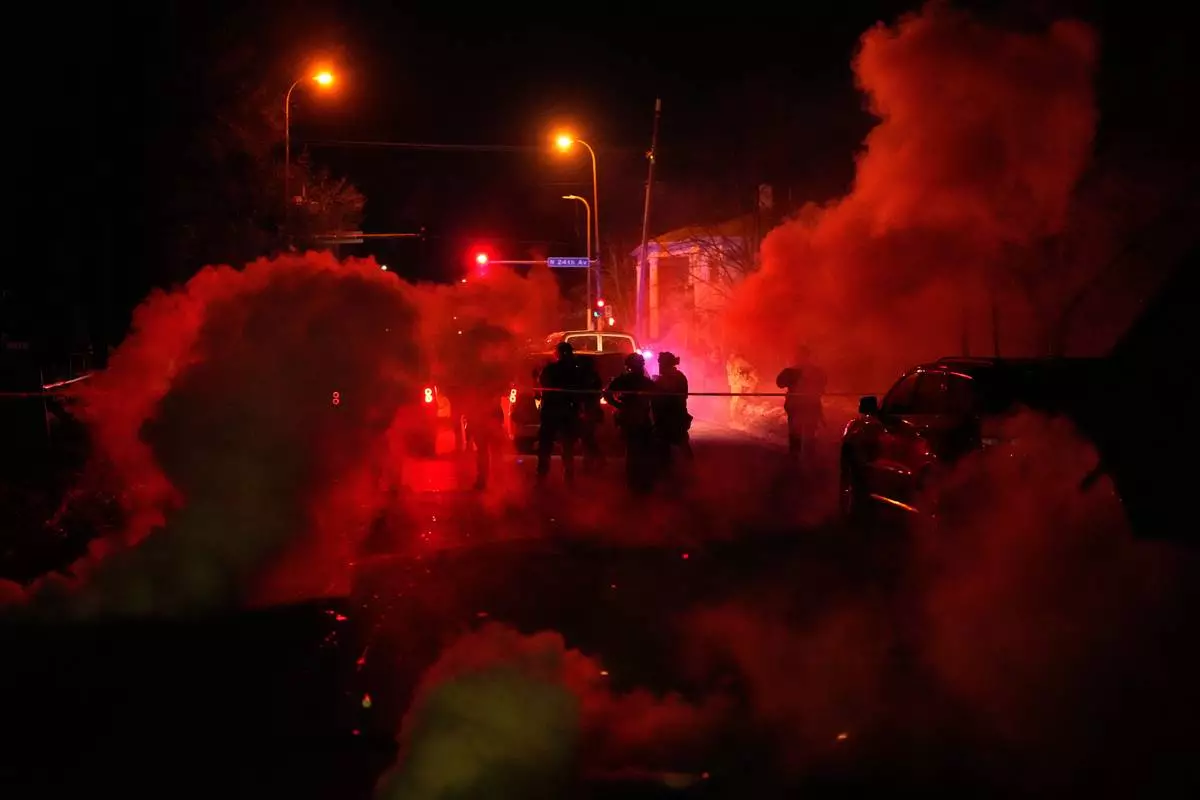
Tear gas surrounds federal law enforcement officers as they leave a scene after a shooting on Wednesday, Jan. 14, 2026, in Minneapolis. (AP Photo/John Locher)
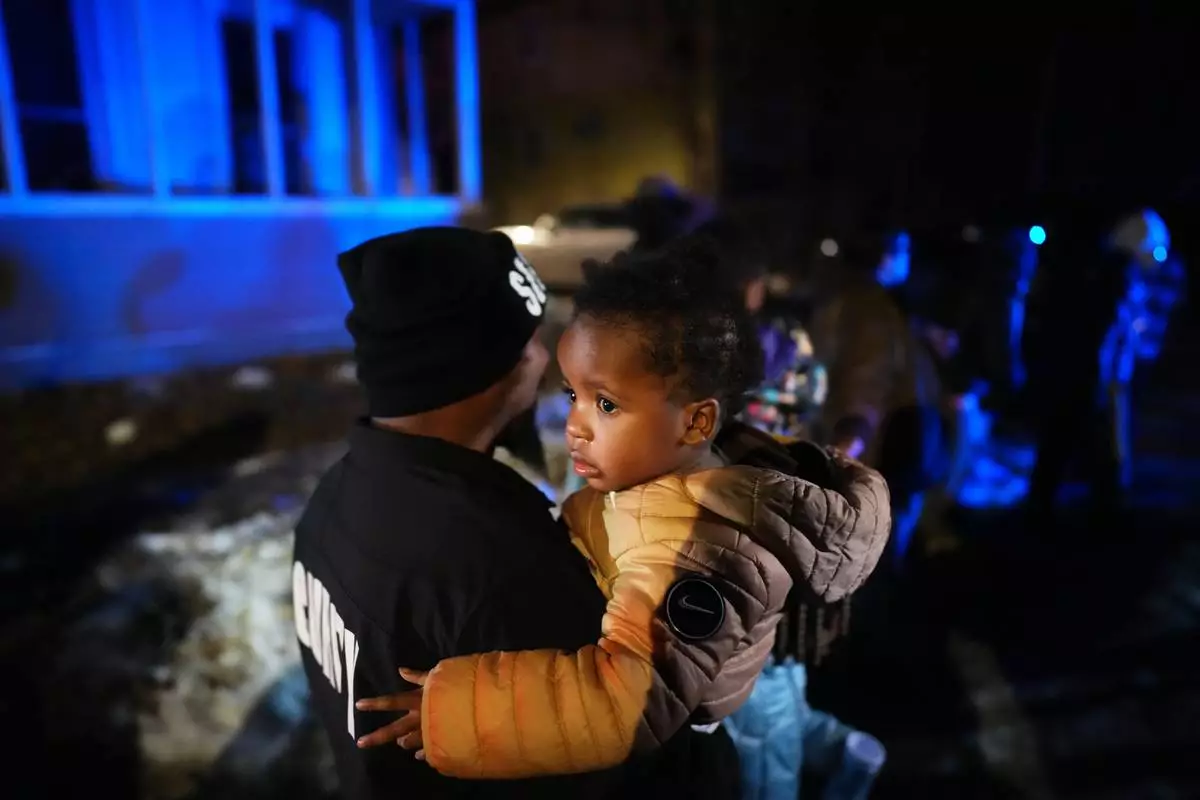
A child and family are escorted away after federal law enforcement deployed tear gas in a neighborhood during protests on Wednesday, Jan. 14, 2026, in Minneapolis. (AP Photo/Adam Gray)
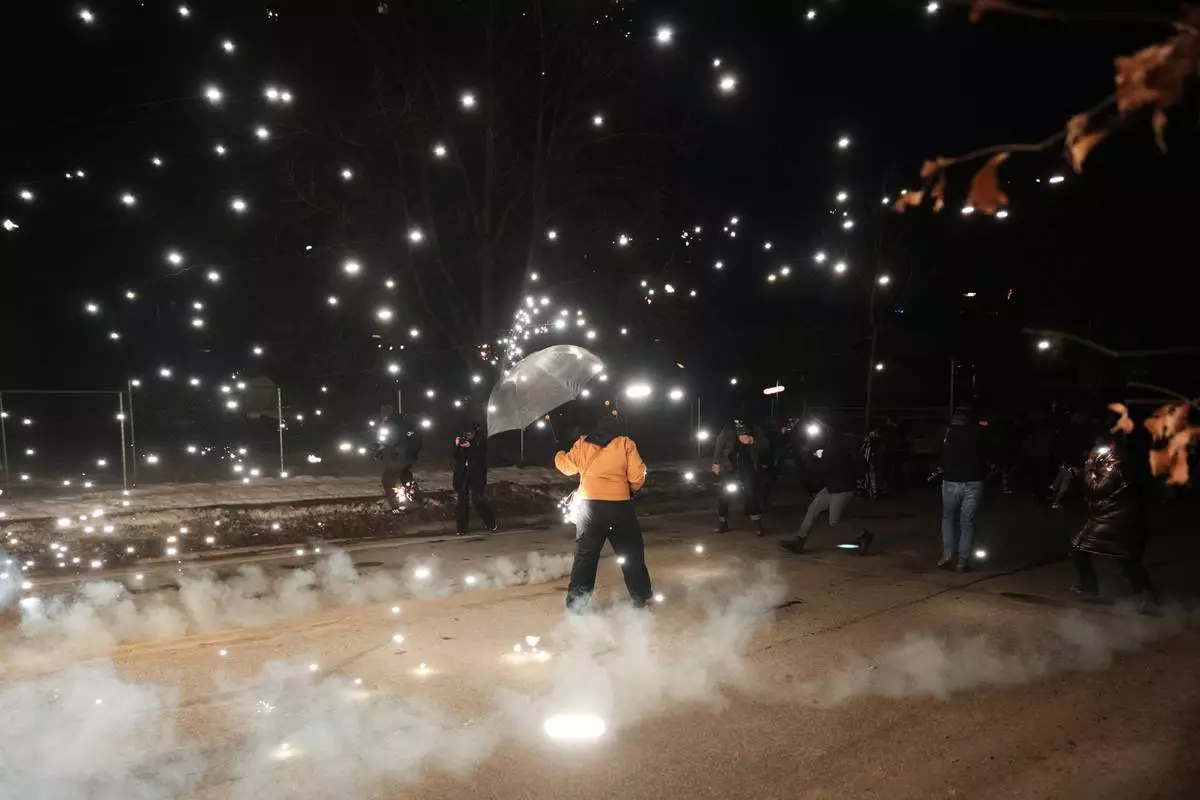
A protester holds an umbrella as sparks fly from a flash bang deployed by law enforcement on Wednesday, Jan. 14, 2026, in Minneapolis. (AP Photo/Adam Gray)
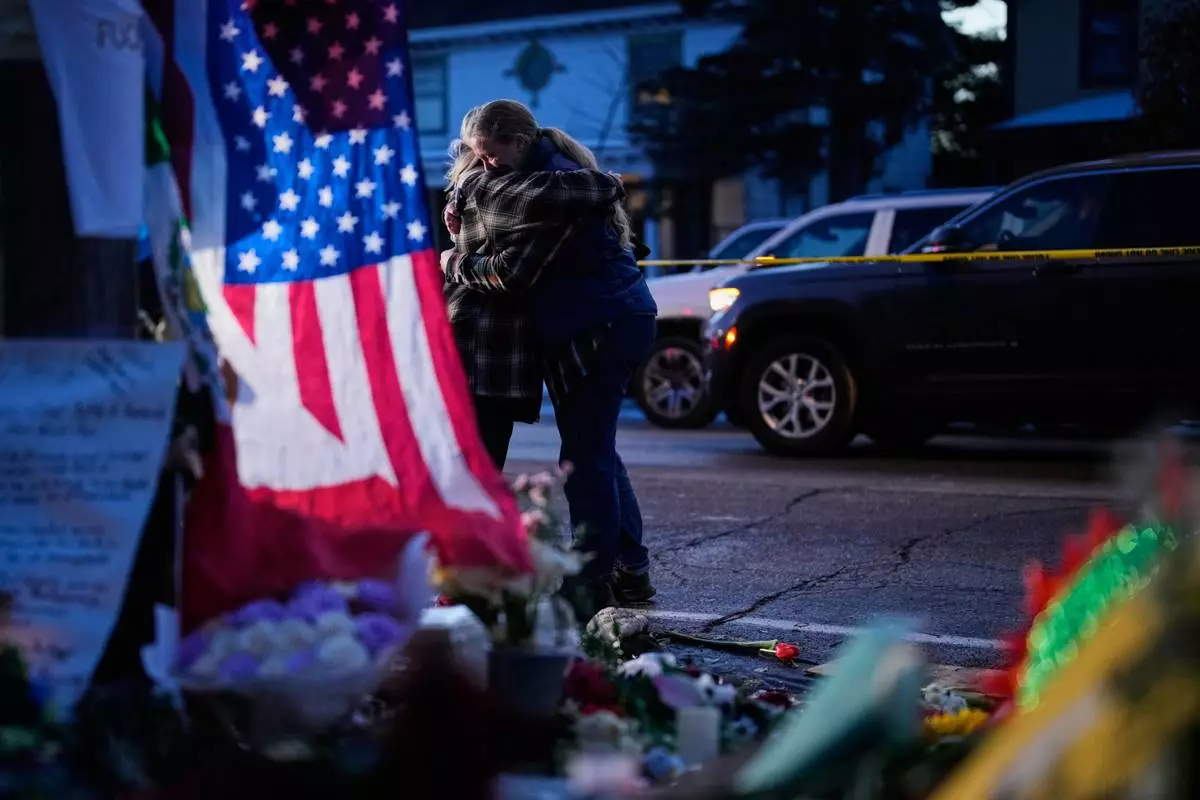
Monica Travis shares an embrace while visiting a makeshift memorial for Renee Good, who was fatally shot by an ICE officer last week, Monday, Jan. 12, 2026, in Minneapolis. (AP Photo/John Locher)
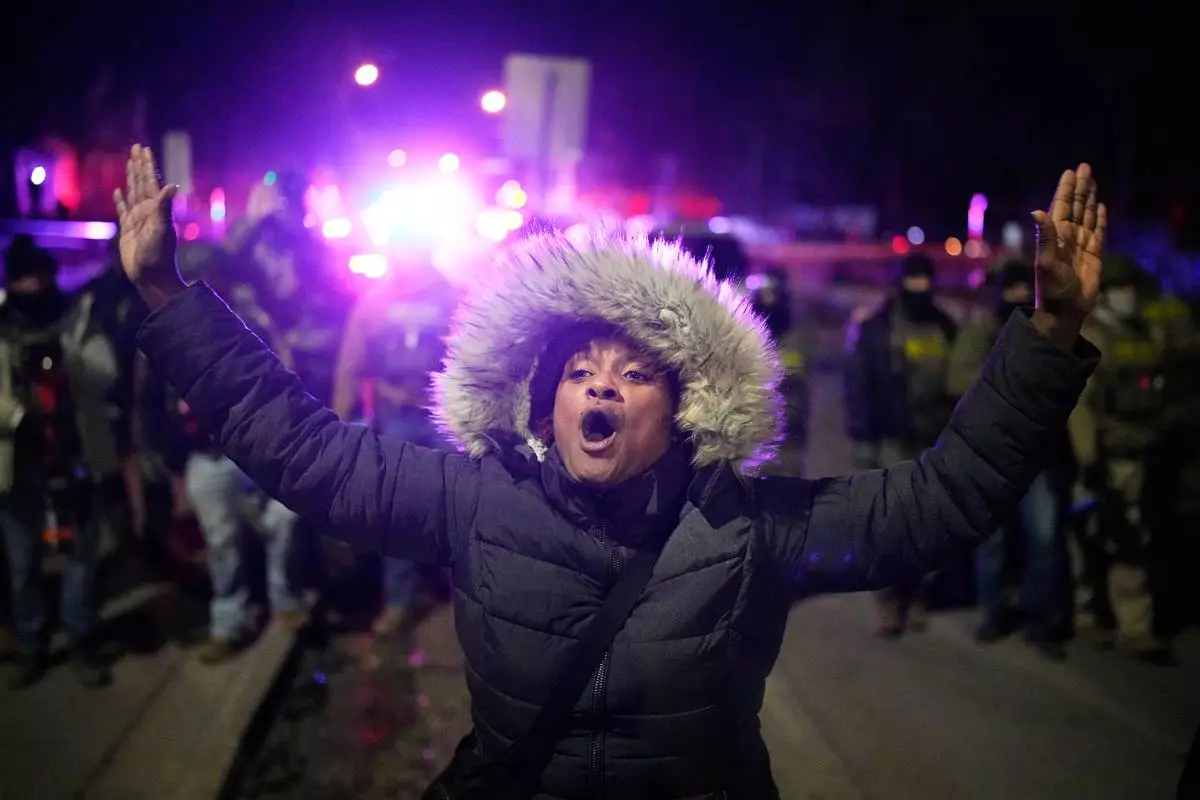
A protester yells in front of law enforcement after a shooting on Wednesday, Jan. 14, 2026, in Minneapolis. (AP Photo/John Locher)
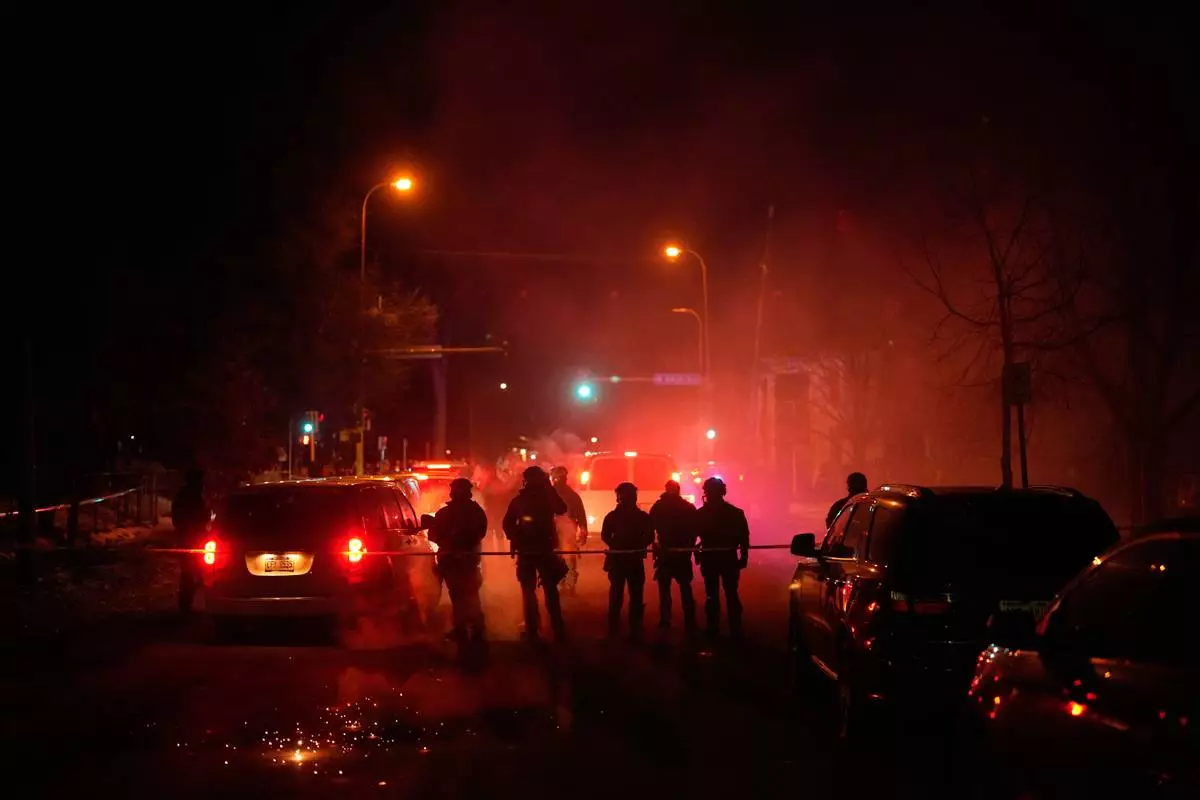
Tear gas surrounds federal law enforcement officers as they leave a scene after a shooting on Wednesday, Jan. 14, 2026, in Minneapolis. (AP Photo/John Locher)
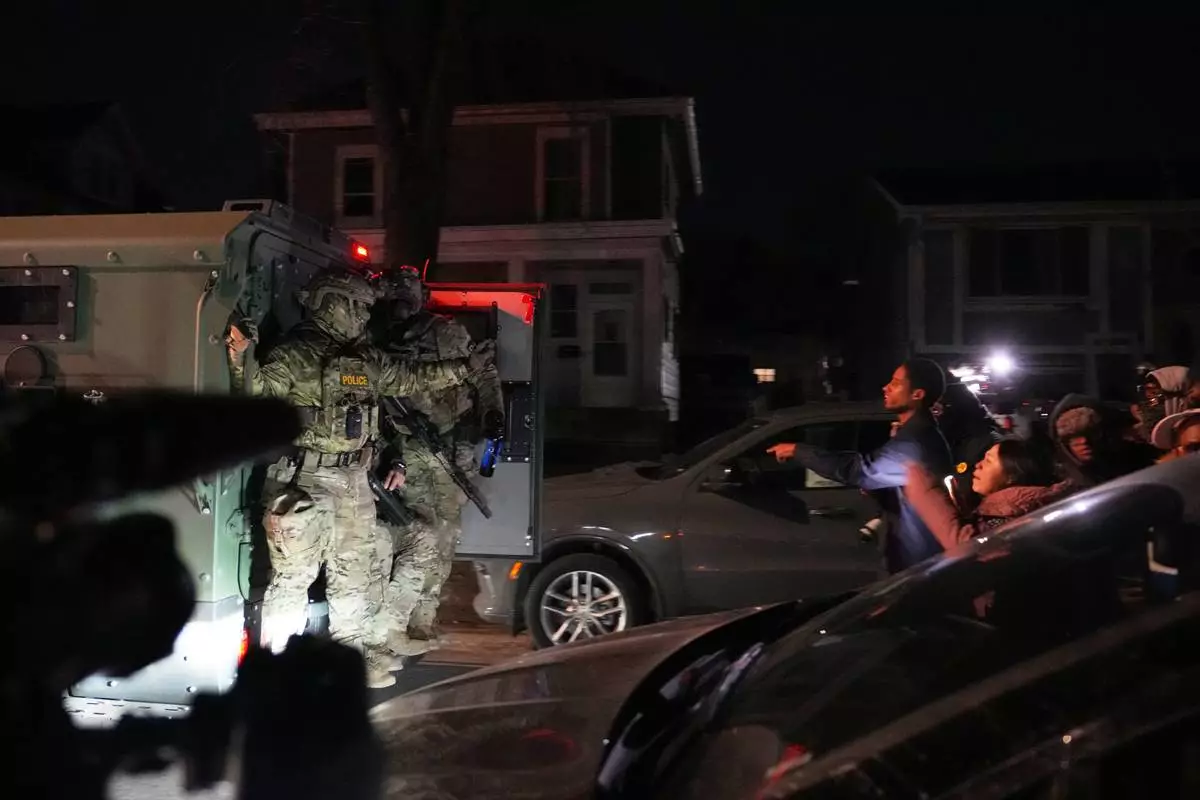
Protesters shout at law enforcement officers after a shooting on Wednesday, Jan. 14, 2026, in Minneapolis. (AP Photo/Abbie Parr)
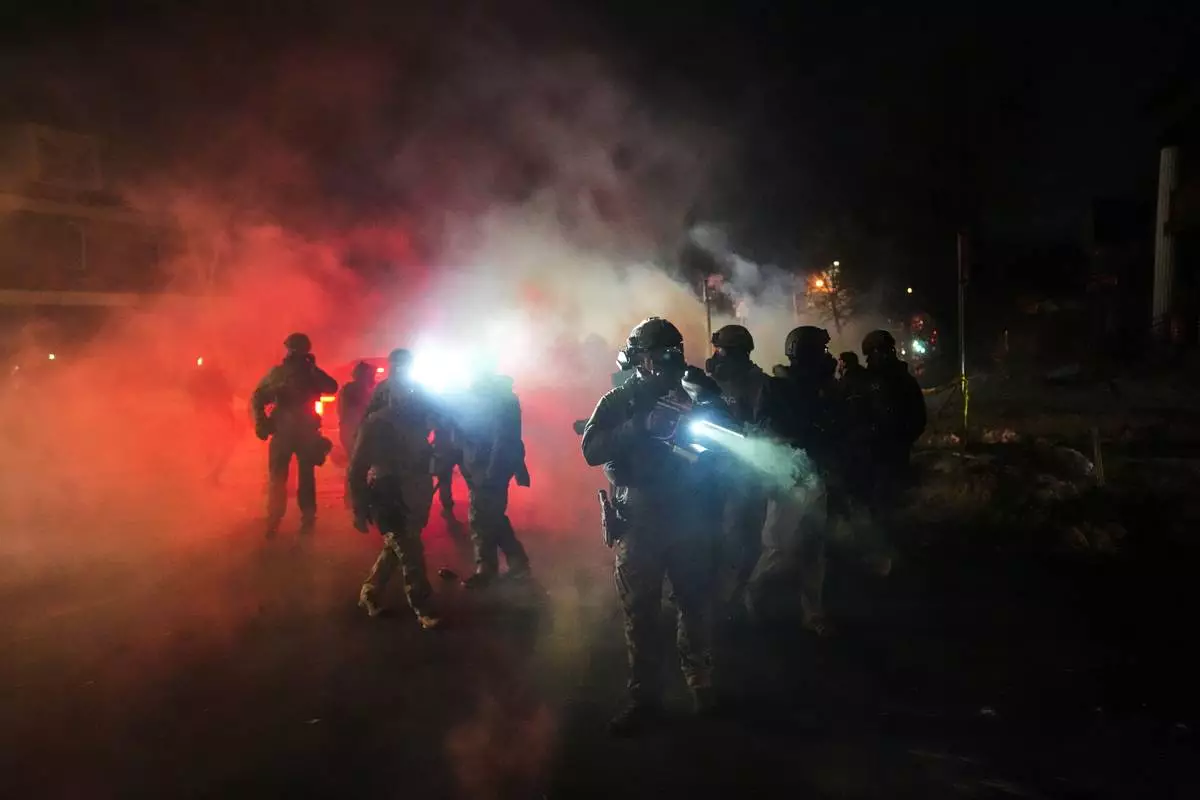
Law enforcement officers stand amid tear gas at the scene of a reported shooting Wednesday, Jan. 14, 2026, in Minneapolis. (AP Photo/Adam Gray)