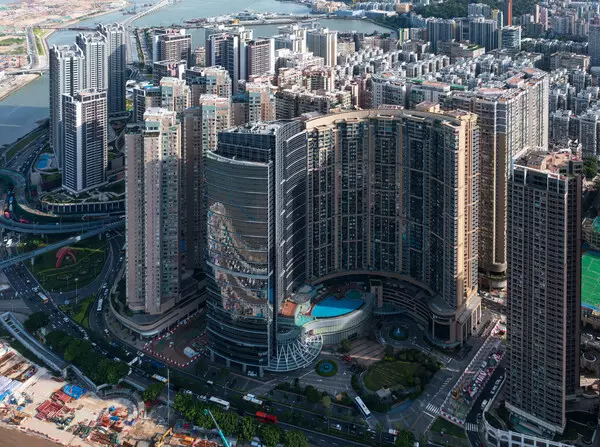
The only private housing area directly adjacent to an LRT station, offering seamless connectivity across Hong Kong, Zhuhai and Macau
HONG KONG, July 29, 2025 /PRNewswire/ -- With phased construction of the East Line of Macau's Light Rapid Transit (LRT) system commencing this month and full operation scheduled for the second half of 2029, market attention is increasingly focused on the development potential of districts along the route. The Oriental Pearl district, being the only established residential area located directly adjacent to an LRT station on the line, is set to be the primary beneficiary with strong prospects for capital appreciation. It is expected to attract significant interest from both local and international buyers and investors.
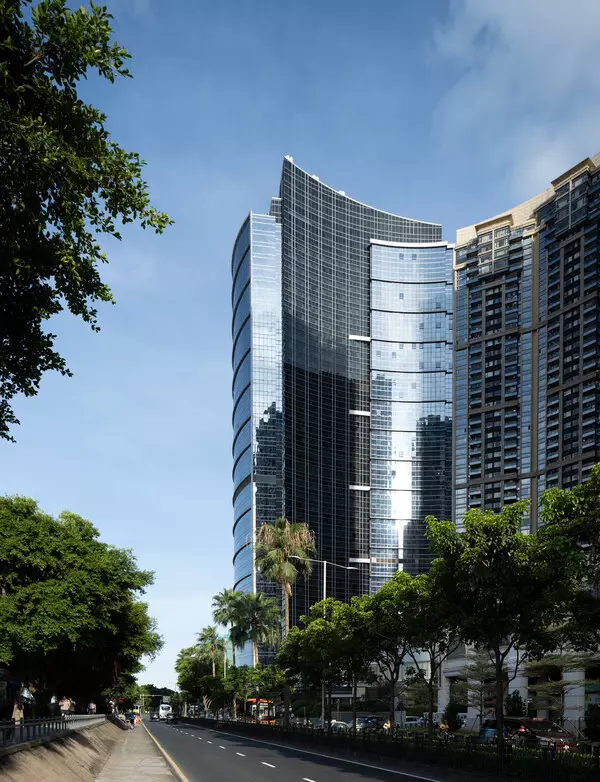
One of the upcoming residential projects sale in the district is The Residencia, which located between the A1 and B exits of the Light Rail East Line ES2 station. To optimise the living environment, a 600-meter skyway is being constructed, expected to be completed as early as June 2027, connecting the surrounding streets and light rail stations for residents' convenience.
LRT East Line to enhance connectivity, boosting property price outlook
Located in the northern part of the Macau Peninsula, the Oriental Pearl district boasts a prime location. Is it the closest private residential area to the Macau Port of the Hong Kong-Zhuhai-Macau Bridge—just a 4-minute drive— offering direct and convenient access to both Hong Kong and Zhuhai. The district is also in close proximity to several key transport hubs, including the Outer Harbour Ferry Terminal (approximately 5 minutes by car), Macau International Airport, and Taipa Ferry Terminal (both approximately 15 minutes by car). Popular destinations such as Avenida de Almeida Ribeiro, the Ruins of St. Paul's, and the Cotai Strip are also within 15 to 18 minutes' drive, enjoying a well-connected air, land, and sea transportation network.
Once the LRT East Line is operational, the transport advantages of the Oriental Pearl district will be further elevated. Residents will benefit from direct, one-stop access from the Border Gate station, and easy connections to New Urban Zones A, Cotai Strip, and the Lotus Border. The improved connectivity will not only enhance daily convenience for residents but also boost the rental appeal and value retention of properties in the area, offering investors more secure medium- to long-term returns.
Mark Wong, Senior Director of Valuation and Advisory Services at JLL in Macau, said: "Across the entire East Line, the Oriental Pearl district stands out as the only developed private residential area directly adjacent to a station, positioning it to benefit from the value uplift associated with the LRT network. This will not only support local property prices but also stimulate greater activity in the rental market. We anticipate growing interest from capital across Mainland China, Hong Kong and overseas."
Economic recovery and policy tailwinds driving market momentum
In addition to the benefits brought by the LRT East Line, the Oriental Pearl district is also set to gain from a broader economic recovery. In June 2025, Macau's gaming revenue exceeded MOP 21 billion, marking a 19% year-on-year increase and the highest since the pandemic. As the backbone of the local economy, the recovery of the gaming sector is expected to fuel a broader recovery in tourism, retail, and employment, further stimulating housing demand and injecting renewed momentum into the property market.
Meanwhile, residential property prices in Macau are now at relatively low levels—over 30% below their 2018 peak—presenting a compelling entry point for buyers and investors. Given the Macanese Pataca's indirect peg to the US Dollar, Macau is regarded as a US dollar-based asset zone, offering high asset value stability, making it highly appealing to buyers from mainland China, Hong Kong, and overseas. Historically, Hong Kong buyers accounted for up to 50% of overseas purchasers between 2012 and 2013. Although this figure dropped below 5% in recent years due to market cooling measures, the government's full withdrawal of such policies last year is expected to attract oversea buyers back to the Macau market in the long term.
Limited supply supports price, with Oriental Pearl district showing strong resilience
Macau has long grappled with limited land resources for private residential development. Although the land reclamation in New Urban Zone A has increased supply, much of the area is earmarked for public housing, leaving extremely limited space for private residential projects. Combined with the lack of large-scale development sites within the existing urban fabric, private housing supply is expected to remain tight, supporting property values over the medium to long term.
Wong added: "The Oriental Pearl district is a mid- to high-end residential neighbourhood with established community amenities. In a market where private housing remains scarce, the district offers strong value preservation potential. Even during recent market downturns, property prices in the area remained relatively stable, with milder declines than elsewhere, showcasing strong resilience and defensive qualities. Currently, mid- to high-end homes in the district are priced at approximately MOP 7,000 to 9,000 per sq ft, significantly lower than comparable properties in Hong Kong, making them an attractive option for prospective buyers."
"In the first half of 2025, rental levels for private residential properties in Macau stabilised, with a modest upward trend emerging. We anticipate that rental growth for the full year could reach up to 5%. The Oriental Pearl district has long maintained a stable and active rental market, underpinned by strong and consistent tenant demand. As the interest rate is falling and the capital is finding ways for reinvestments, properties in the district are well-positioned to deliver stable and appealing rental returns for investors," he added.
About JLL
For over 200 years, JLL (NYSE: JLL), a leading global commercial real estate and investment management company, has helped clients buy, build, occupy, manage and invest in a variety of commercial, industrial, hotel, residential and retail properties. A Fortune 500® company with annual revenue of $23.4 billion and operations in over 80 countries around the world, our more than 112,000 employees bring the power of a global platform combined with local expertise. Driven by our purpose to shape the future of real estate for a better world, we help our clients, people and communities SEE A BRIGHTER WAYSM. JLL is the brand name, and a registered trademark, of Jones Lang LaSalle Incorporated. For further information, visit jll.com.
Contact: Yvonne Liu Jimmy Chan
Phone: +852 2846 5264 +852 3103 0102
Email: Yvonne.Liu@jll.com Jimmy.Chan@cdrconsultancy.com
** The press release content is from PR Newswire. Bastille Post is not involved in its creation. **
Macau's Oriental Pearl district property market poised for growth, fuelled by LRT East Line

Macau's Oriental Pearl district property market poised for growth, fuelled by LRT East Line
Macau's Oriental Pearl district property market poised for growth, fuelled by LRT East Line
|
SINGAPORE, Jan. 16, 2026 /PRNewswire/ -- Kerry, a global leader in taste and nutrition, has released its 2026 Supplements Taste Charts for Asia Pacific and the Middle East, highlighting the region's evolving taste preferences and the rise of flavour‑forward, lifestyle‑led supplements and sports nutrition.
Across Asia Pacific, Middle East & Africa (APMEA), supplements are increasingly viewed as part of daily wellbeing rather than an occasional health support. Consumers are focused on benefits such as sleep, immunity, digestion, stress management, energy and emotional balance, with taste and texture now strongly influencing continued purchase and long term use.
The global supplements market is projected to reach US$107 billion by 2029 with APMEA continuing to show strong momentum. China, India, Southeast Asia and the Middle East are driving adoption, supported by rising health awareness, busier lifestyles and growing interest in personalised nutrition.
Flavour‑Forward Trends Redefining Supplements
Consumers are moving away from traditional pills toward more flavour-forward formats such as gummies, chews, drink mixes, dissolving strips and powder blends. Here, flavour plays a critical role in masking functional bitterness, reinforcing emotional cues and signalling naturality or efficacy. Three major flavour movements stand out across Asia Pacific and the Middle East:
Simplicity Amplified
Consumers are gravitating toward transparency and ingredient authenticity. Flavours inspired by whole foods, botanicals, fermented notes, and lightly‑sweet or sour profiles signal purity and nutrient‑dense simplicity. Popular flavours include citrus, yuzu, ginger, turmeric, matcha, elderflower, cultured dairy, and yogurt. These pair naturally with today's lifestyle-friendly formats where the flavours enhance a product's perceived health benefits.
Category Crashers
As mealtimes blur and routines shift, consumers aren't sticking to traditional food, beverage, or supplement boundaries. Category Crashers spotlights the emergence of hybrid products that break the mould: savoury energy bars, confectionery-inspired supplement formats, coffee‑infused condiments and more. These hybrids are about creative formats and unexpected pairings that reflect how people eat today.
Maximalist Flavour
Maximalism takes centre stage in 2026, spurred by younger consumers who want bold, layered flavours that deliver high sensory impact. Dessert‑style profiles, sour intensities, spicy‑accented formats, and flavour stacks such as tiramisu passionfruit or brownie chocolate create memorable, intense taste experiences. This trend reinforces supplements as lifestyle treats rather than functional obligations.
Within these trends, sports nutrition continues to broaden beyond athletes to active consumers who expect flavour to match function. Simplicity Amplified is seen in refreshing citrus hydration blends, botanically‑infused recovery options, and natural dairy flavours in high‑protein systems; Category Crashers bring café‑style profiles, soda‑inspired electrolytes and fruity energy shots; and Maximalist Flavour is evident in extreme sour or spicy pre‑workouts, and multi‑layered profiles in protein shakes.
"Consumers across APMEA are demanding more from their proactive health products, not only clinically supported benefits, but also flavours that excite," said Olivier De Salmiech, Vice President, Health & Therapies, Kerry Asia Pacific, Middle East & Africa. "When products taste great, has science-backed benefits, and integrate naturally into everyday life, they become wellness rituals consumers look forward to."
SINGAPORE, Jan. 16, 2026 /PRNewswire/ -- Kerry, a global leader in taste and nutrition, has released its 2026 Supplements Taste Charts for Asia Pacific and the Middle East, highlighting the region's evolving taste preferences and the rise of flavour‑forward, lifestyle‑led supplements and sports nutrition.
Across Asia Pacific, Middle East & Africa (APMEA), supplements are increasingly viewed as part of daily wellbeing rather than an occasional health support. Consumers are focused on benefits such as sleep, immunity, digestion, stress management, energy and emotional balance, with taste and texture now strongly influencing continued purchase and long term use.
The global supplements market is projected to reach US$107 billion by 2029 with APMEA continuing to show strong momentum. China, India, Southeast Asia and the Middle East are driving adoption, supported by rising health awareness, busier lifestyles and growing interest in personalised nutrition.
Flavour‑Forward Trends Redefining Supplements
Consumers are moving away from traditional pills toward more flavour-forward formats such as gummies, chews, drink mixes, dissolving strips and powder blends. Here, flavour plays a critical role in masking functional bitterness, reinforcing emotional cues and signalling naturality or efficacy. Three major flavour movements stand out across Asia Pacific and the Middle East:
Simplicity Amplified
Consumers are gravitating toward transparency and ingredient authenticity. Flavours inspired by whole foods, botanicals, fermented notes, and lightly‑sweet or sour profiles signal purity and nutrient‑dense simplicity. Popular flavours include citrus, yuzu, ginger, turmeric, matcha, elderflower, cultured dairy, and yogurt. These pair naturally with today's lifestyle-friendly formats where the flavours enhance a product's perceived health benefits.
Category Crashers
As mealtimes blur and routines shift, consumers aren't sticking to traditional food, beverage, or supplement boundaries. Category Crashers spotlights the emergence of hybrid products that break the mould: savoury energy bars, confectionery-inspired supplement formats, coffee‑infused condiments and more. These hybrids are about creative formats and unexpected pairings that reflect how people eat today.
Maximalist Flavour
Maximalism takes centre stage in 2026, spurred by younger consumers who want bold, layered flavours that deliver high sensory impact. Dessert‑style profiles, sour intensities, spicy‑accented formats, and flavour stacks such as tiramisu passionfruit or brownie chocolate create memorable, intense taste experiences. This trend reinforces supplements as lifestyle treats rather than functional obligations.
Within these trends, sports nutrition continues to broaden beyond athletes to active consumers who expect flavour to match function. Simplicity Amplified is seen in refreshing citrus hydration blends, botanically‑infused recovery options, and natural dairy flavours in high‑protein systems; Category Crashers bring café‑style profiles, soda‑inspired electrolytes and fruity energy shots; and Maximalist Flavour is evident in extreme sour or spicy pre‑workouts, and multi‑layered profiles in protein shakes.
"Consumers across APMEA are demanding more from their proactive health products, not only clinically supported benefits, but also flavours that excite," said Olivier De Salmiech, Vice President, Health & Therapies, Kerry Asia Pacific, Middle East & Africa. "When products taste great, has science-backed benefits, and integrate naturally into everyday life, they become wellness rituals consumers look forward to."
** The press release content is from PR Newswire. Bastille Post is not involved in its creation. **

Kerry Launches 2026 Supplements Taste Charts: Defining the Next Era of Flavour in Supplements and Sports Nutrition