TEL AVIV, Israel (AP) — The “worst-case scenario of famine is currently playing out in the Gaza Strip,” the leading international authority on food crises said in a new alert Tuesday, predicting “widespread death” without immediate action.
The alert, still short of a formal famine declaration, follows an outcry over images of emaciated children in Gaza and reports of dozens of hunger-related deaths after nearly 22 months of war. International pressure led Israel over the weekend to announce measures, including daily humanitarian pauses in fighting in parts of Gaza and airdrops. The U.N. and Palestinians on the ground say little has changed, and desperate crowds continue to overwhelm delivery trucks before they reach their destinations.
The Integrated Food Security Phase Classification, or IPC, said Gaza has teetered on the brink of famine for two years, but recent developments have “dramatically worsened” the situation, including “increasingly stringent blockades” by Israel.
A formal famine declaration, which is rare, requires the kind of data that the lack of access to Gaza, and mobility within, has largely denied. The IPC has only declared famine a few times — in Somalia in 2011, South Sudan in 2017 and 2020, and parts of Sudan’s western Darfur region last year.
But independent experts say they don’t need a formal declaration to know what they’re seeing in Gaza.
“Just as a family physician can often diagnose a patient she’s familiar with based on visible symptoms without having to send samples to the lab and wait for results, so too we can interpret Gaza’s symptoms. This is famine,” Alex de Waal, author of “Mass Starvation: The History and Future of Famine” and executive director of the World Peace Foundation, told The Associated Press.
An area is classified as in famine when all three of the following conditions are confirmed:
At least 20% of households have an extreme lack of food, or are essentially starving. At least 30% of children six months to 5 years old suffer from acute malnutrition or wasting, meaning they’re too thin for their height. And at least two people or four children under 5 per 10,000 are dying daily due to starvation or the interaction of malnutrition and disease.
The report is based on available information through July 25 and says the crisis has reached “an alarming and deadly turning point.” It says data indicate that famine thresholds have been reached for food consumption in most of Gaza — at its lowest level since the war began — and for acute malnutrition in Gaza City. The report says nearly 17 out of every 100 children under the age of 5 in Gaza City are acutely malnourished.
Mounting evidence shows “widespread starvation.” Essential health and other services have collapsed. One in three people in Gaza is going without food for days at a time, according to the World Food Program. Hospitals report a rapid increase in hunger-related deaths in children under 5. Gaza’s population of over 2 million has been squeezed into increasingly tiny areas of the devastated territory.
“This is not a warning. It is a reality unfolding before our eyes,” U.N. secretary-general Antonio Guterres said in a statement on the new report, adding that the “trickle of aid must become an ocean.”
The IPC alert calls for immediate and large-scale action and warns: “Failure to act now will result in widespread death in much of the strip.”
Humanitarian workers agreed.
“If we don’t have the conditions to react to this mass starvation, we will see this exponential rise," said Rachael Cummings, humanitarian director for Save the Children International, based in Gaza. "So we will see thousands and potentially tens of thousands of people die in Gaza. That is preventable.” She described children digging through trash piles outside their office, looking for food.
Anything less than a ceasefire and a return to the U.N.-led aid system in place before Israel's blockade in early March “is policymakers condemning tens of thousands of people in Gaza to death, starvation and disease,” said Rob Williams, CEO for War Child Alliance.
“All of the children who are currently malnourished will die. That is, unless there’s an absolutely rapid and consistent reversal of what is happening," said Dr. Tarek Loubani, medical director for Glia, based in Gaza.
Israel has restricted aid to varying degrees throughout the war. In March, it cut off the entry of all goods, including fuel, food and medicine, to pressure Hamas to free hostages.
Israel eased those restrictions in May but also pushed ahead with a new U.S.-backed aid delivery system that has been wracked by chaos and violence. The traditional, U.N.-led aid providers say deliveries have been hampered by Israeli military restrictions and incidents of looting, while criminals and hungry crowds swarm entering convoys.
While Israel says there’s no limit on how many aid trucks can enter Gaza, U.N. agencies and aid groups say even the latest humanitarian measures are not enough to counter the worsening starvation.
“The fastest and most effective way to save lives right now is to open every border crossing,” Tjada D’Oyen McKenna, head of Mercy Corps. the international relief agency, said in a statement Tuesday. Aid groups call the airdrops ineffective and dangerous, saying they deliver less aid than trucks.
Israeli Prime Minister Benjamin Netanyahu has said no one is starving in Gaza and that Israel has supplied enough aid throughout the war, “otherwise, there would be no Gazans.”
Israel’s closest ally now appears to disagree. “Those children look very hungry,” President Donald Trump said Monday.
Anna reported from Lowville, New York. Associated Press writer Fatma Khaled in Cairo contributed.
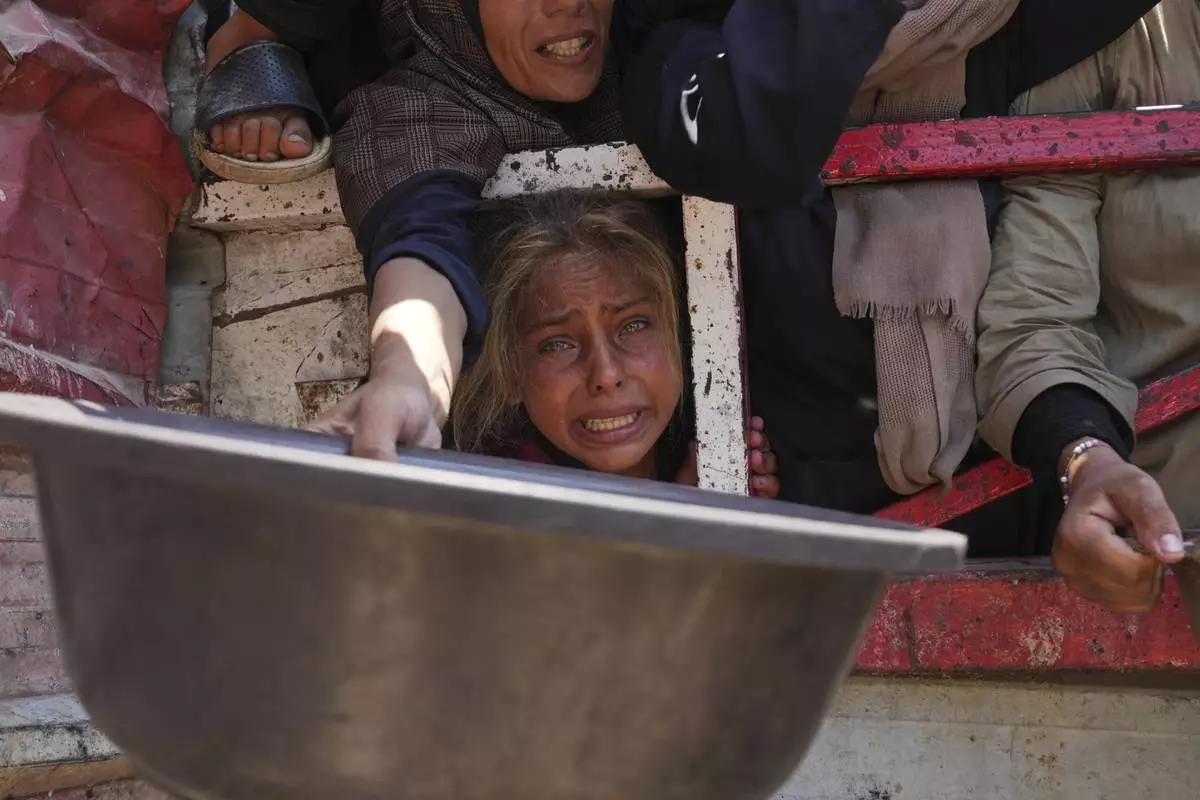
Palestinians struggle to get donated food at a community kitchen, in Gaza City, northern Gaza Strip, Saturday, July 26, 2025. (AP Photo/Abdel Kareem Hana)
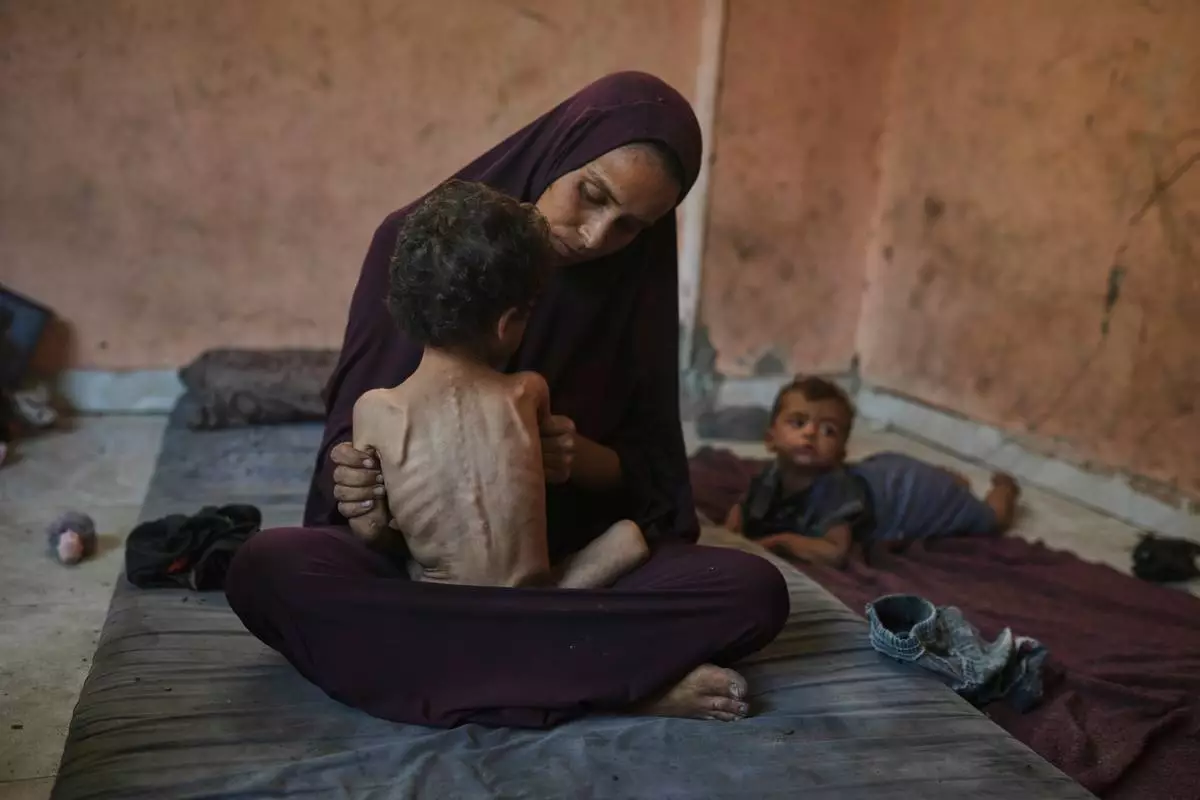
Naima Abu Ful poses for a photo with her 2-year-old malnourished child, Yazan, at their home in the Shati refugee camp in Gaza City, Wednesday, July 23, 2025. (AP Photo/Jehad Alshrafi)
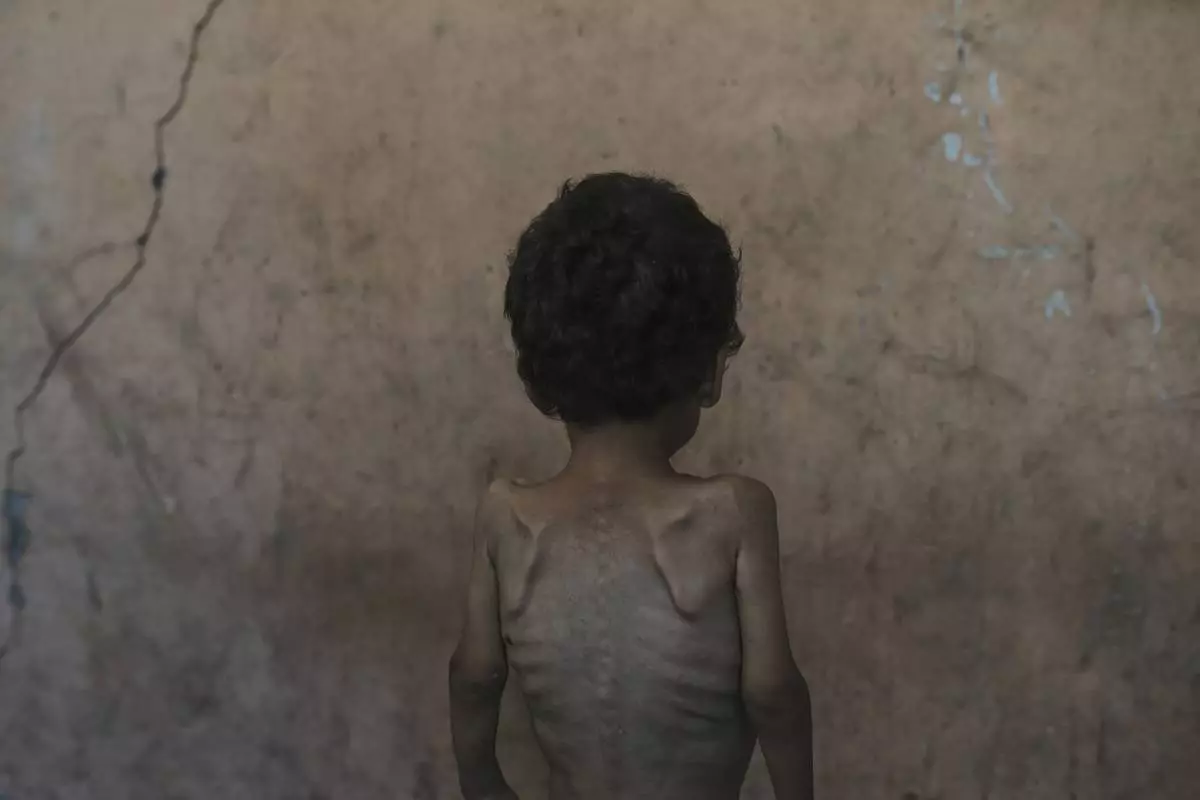
Yazan Abu Ful, a 2-year-old malnourished child, poses for a photo at his family home in the Shati refugee camp, in Gaza City on Wednesday, July 23, 2025. (AP Photo/Jehad Alshrafi)