OMAHA, Neb. & ATLANTA--(BUSINESS WIRE)--Jul 29, 2025--
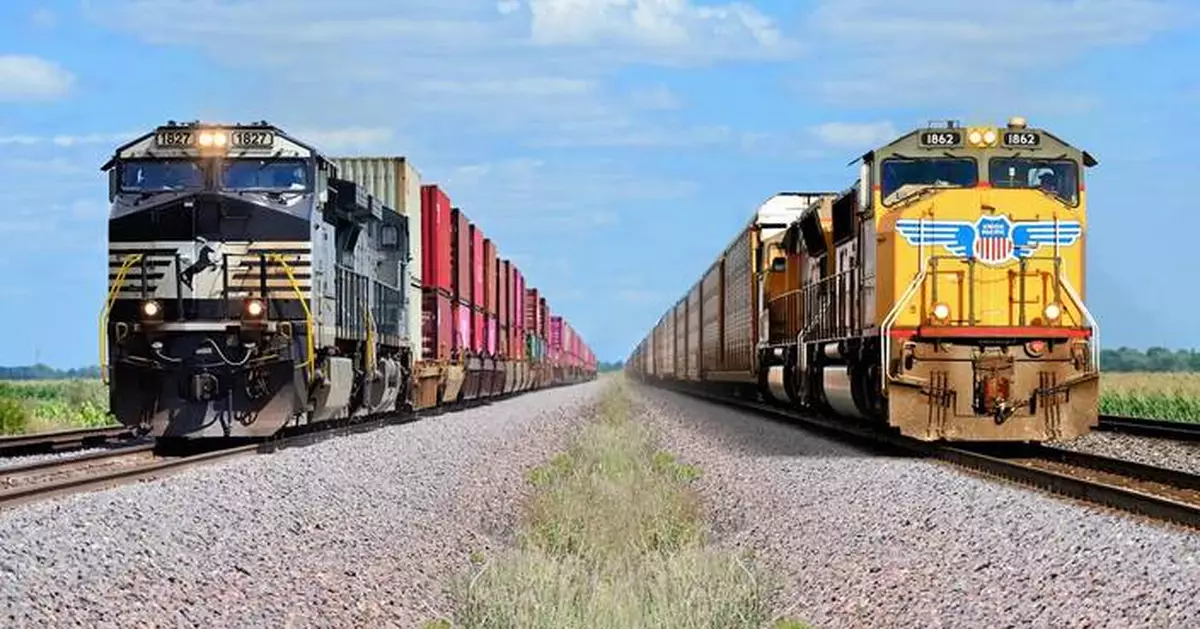
Union Pacific Corporation (NYSE: UNP) and Norfolk Southern Corporation (NYSE: NSC) today announced an agreement to create America’s first transcontinental railroad. These legendary companies will seamlessly connect over 50,000 route miles across 43 states from the East Coast to the West Coast, linking approximately 100 ports and nearly every corner of North America. This combination will transform the U.S. supply chain, unleash the industrial strength of American manufacturing, and create new sources of economic growth and workforce opportunity that preserves union jobs.
This press release features multimedia. View the full release here: https://www.businesswire.com/news/home/20250729719223/en/
Under the terms of the agreement, Union Pacific will acquire Norfolk Southern in a stock and cash transaction, implying a value for Norfolk Southern of $320 per share based on Union Pacific’s unaffected closing stock price on July 16, 2025 1, and representing a 25% premium to Norfolk Southern’s 30-trading day volume weighted average price on July 16, 2025. The value per share implies an enterprise value of $85 billion for Norfolk Southern, resulting in the creation of a combined enterprise of over $250 billion.
“Railroads have been an integral part of building America since the Industrial Revolution, and this transaction is the next step in advancing the industry,” said Jim Vena, Union Pacific Chief Executive Officer. “Imagine seamlessly hauling steel from Pittsburgh, Pennsylvania to Colton, California and moving tomato paste from Heron, California to Fremont, Ohio. Lumber from the Pacific Northwest, plastics from the Gulf Coast, copper from Arizona and Utah, and soda ash from Wyoming. Right now, tens of thousands of railroaders are moving almost everything we use. You name it, and at some point, the railroad hauled it.”
The Union Pacific Transcontinental Railroad will connect people, strengthen communities, and build a stronger, more competitive America. Both railroads envision every union employee who wants a job in the combined company will have one.
Together, the companies aim to be the safest railroad in North America and deliver the service customers rely on with operational excellence. The combined company will deliver faster, more comprehensive freight service to U.S. shippers by eliminating interchange delays, opening new routes, expanding intermodal services, and reducing distance and transit time on key rail corridors. A more truck-competitive solution, the Union Pacific Transcontinental Railroad will decrease highway congestion, reducing wear-and-tear on taxpayer-funded roads. Today, Union Pacific and Norfolk Southern invest approximately $5.6 billion annually in infrastructure, innovation, and network expansion.
“Norfolk Southern, like Union Pacific, is a railroad integral to the U.S. economy, with a storied 200-year legacy of serving customers across 22 states in the eastern half of the nation,” said Mark George, CEO of Norfolk Southern. “Our safety, network, and financial performance is among the best we’ve had as a company, as is our customer satisfaction. And it is from this position of strength that we embark on this transformational combination. We are confident that the power of Norfolk Southern’s franchise, diversified solutions, high-quality customers and partners, as well as skilled employees, will contribute meaningfully to America’s first transcontinental railroad, and to igniting rail’s ability to deliver for the whole American economy today and into the future. Union Pacific is a true partner that shares our belief in rail’s ability to deliver for all stakeholders simultaneously, and we are excited for our future together.”
“This combination is transformational, enhancing the best freight transportation system in the world – it's a win for the American economy, it's a win for our customers, and it’s a win for our people,” Vena said. “It builds on President Abraham Lincoln’s vision of a transcontinental railroad from nearly 165 years ago and advances our Safety, Service and Operational Excellence Strategy. I am confident this historic transaction will enhance competition to benefit customers, communities, and employees while delivering shareholder value.”
Delivering Benefits to All Stakeholders
By opening new routes and expanding access for customers, the Union Pacific Transcontinental Railroad will unlock opportunities for faster, more reliable transit times and provide a more seamless customer experience.
For America
For Safety
For Service
For the Workforce
For Communities
For Shareholders
Path to Completion
Creating the Union Pacific Transcontinental Railroad is overwhelmingly in the public interest and will enhance competition, consistent with the test that will be applied in the review of the transaction by the Surface Transportation Board (STB).
The companies expect to file their application with the STB within six months, in which the companies will describe how the combined rail network will provide safer, faster, and more reliable service and increased competition to a broad range of stakeholders.
The Board of Directors of both Union Pacific and Norfolk Southern unanimously approved the transaction, which is subject to STB review and approval within its statutory timeline, customary closing conditions, and shareholder approval. The companies are targeting closing the transaction by early 2027.
Transaction Details and Financial Impact
Under the terms of the agreement, Norfolk Southern shareholders will receive 1.0 Union Pacific common share and $88.82 in cash for each share of Norfolk Southern. The implied value of $320 per share represents an implied total enterprise value for Norfolk Southern of $85 billion based on Union Pacific’s unaffected closing stock price on July 16, 2025 2. Union Pacific will issue a total of approximately 225 million shares to Norfolk Southern shareholders, representing 27% ownership in the combined company on a fully diluted basis, and providing the ability of Norfolk Southern shareholders to participate in the upside of the combined company’s growth opportunities and synergies. The agreement is structured without a voting trust and includes a $2.5 billion reverse termination fee.
The cash portion of the transaction will be funded through a combination of new debt and balance sheet cash. At closing, the combined business will have a strong balance sheet and Debt to EBITDA of approximately 3.3x, supporting a balanced capital allocation strategy. The combined company will continue to prioritize and maintain a strong balance sheet and investment grade rating.
Based on 2024 results, the pro-forma combined company would have revenues of approximately $36 billion, EBITDA of approximately $18 billion, operating ratio of 62%, and free cash flow of $7 billion. The transaction is expected to be accretive to Union Pacific’s adjusted EPS per share in the second full year after closing and rising to high single digit accretion thereafter.
Leadership and Governance
Jim Vena, Union Pacific CEO, will lead the combined company as Chief Executive Officer and has committed his intent to remain at Union Pacific for at least the next 5 years. Through integration and beyond, talented leaders from both companies will work together to deliver on the combination’s full value creation potential. The experienced Union Pacific and Norfolk Southern management teams will continue to independently run each company until the transaction’s closing. At closing, three Norfolk Southern Directors, including Mark George and Richard Anderson, are expected to join the Union Pacific Board of Directors after completing the corporate governance process.
The combined company will be headquartered in Omaha, Nebraska. Atlanta, Georgia will remain a core location for the combined organization over the long-term with a focus on technology, operations, and innovation, among other priorities.
Advisors
Morgan Stanley & Co. LLC and Wells Fargo are serving as financial advisors to Union Pacific. Skadden, Arps, Slate, Meagher & Flom LLP is serving as legal advisor to Union Pacific on the acquisition, with Covington & Burling LLP providing legal advice on regulatory matters. BofA Securities is serving as exclusive financial advisor to Norfolk Southern. Wachtell, Lipton, Rosen & Katz is serving as legal advisor to Norfolk Southern, with Sidley Austin LLP providing legal advice on regulatory matters.
Conference Call Information
Union Pacific and Norfolk Southern will host a joint investor conference call on July 29 at 8:30 a.m. Eastern Time to discuss the announcement. A live webcast of the call and the replay will be available on the Union Pacific website at https://investor.unionpacific.com and the Norfolk Southern website at https://norfolksouthern.investorroom.com/events Supporting materials will be posted at www.up-nstranscontinental.com
Participants may join the conference call by dialing 1-800-836-8184 (or for international participants, 1-646-357-8785).
Union Pacific and Norfolk Southern Transaction Information Hub for All Stakeholders
A dedicated website providing information about the transaction is available at www.up-nstranscontinental.com
About Union Pacific
Union Pacific (NYSE: UNP) delivers the goods families and businesses use every day with safe, reliable, and efficient service. Operating in 23 western states, the company connects its customers and communities to the global economy. Trains are the most environmentally responsible way to move freight, helping Union Pacific protect future generations. More information about Union Pacific is available at www.up.com.
About Norfolk Southern
Since 1827, Norfolk Southern Corporation (NYSE: NSC) and its predecessor companies have safely moved the goods and materials that drive the U.S. economy. Today, it operates a 22-state freight transportation network. Committed to furthering sustainability, Norfolk Southern helps its customers avoid approximately 15 million tons of yearly carbon emissions by shipping via rail. Its dedicated team members deliver approximately 7 million carloads annually, from agriculture to consumer goods. Norfolk Southern also has the most extensive intermodal network in the eastern U.S. It serves a majority of the country's population and manufacturing base, with connections to every major container port on the Atlantic coast as well as major ports across the Gulf Coast and Great Lakes. Learn more by visiting www.NorfolkSouthern.com
NO OFFER OR SOLICITATION
This communication is for informational purposes only and does not constitute, or form a part of, an offer to sell or the solicitation of an offer to buy any securities or a solicitation of any vote or approval, nor shall there be any sale of securities in any jurisdiction in which such offer, solicitation or sale would be unlawful prior to registration or qualification under the securities laws of any such jurisdiction. No offer of securities shall be made except by means of a prospectus meeting the requirements of Section 10 of the Securities Act of 1933, as amended (the “Securities Act”), and otherwise in accordance with applicable law.
CAUTIONARY NOTE REGARDING FORWARD LOOKING STATEMENTS
Certain statements in this communication are “forward-looking statements” within the meaning of the “safe harbor” provisions of the Private Securities Litigation Reform Act of 1995, as amended. These statements relate to future events or future financial performance and involve known and unknown risks, uncertainties, and other factors that may cause Union Pacific’s, Norfolk Southern’s or the combined company’s actual results, levels of activity, performance, or achievements or those of the railroad industry to be materially different from those expressed or implied by any forward-looking statements. In some cases, forward-looking statements may be identified by the use of words like “may,” “will,” “could,” “would,” “should,” “expect,” “anticipate,” “believe,” “project,” “estimate,” “intend,” “plan,” “pro forma,” or any variations or other comparable terminology.
While Union Pacific and Norfolk Southern have based these forward-looking statements on those expectations, assumptions, estimates, beliefs and projections they view as reasonable, such forward-looking statements are only predictions and involve known and unknown risks and uncertainties, many of which involve factors or circumstances that are beyond Union Pacific’s, Norfolk Southern’s or the combined company’s control, including but not limited to, in addition to factors disclosed in Union Pacific’s and Norfolk Southern’s respective filings with the U.S. Securities and Exchange Commission (the “SEC”): the occurrence of any event, change or other circumstance that could give rise to the right of one or both of the parties to terminate the definitive merger agreement between Union Pacific and Norfolk Southern providing for the acquisition of Norfolk Southern by Union Pacific (the “Transaction”); the risk that potential legal proceedings may be instituted against Union Pacific or Norfolk Southern and result in significant costs of defense, indemnification or liability; the possibility that the Transaction does not close when expected or at all because required Surface Transportation Board, shareholder or other approvals and other conditions to closing are not received or satisfied on a timely basis or at all (and the risk that such approvals may result in the imposition of conditions that could adversely affect the combined company or the expected benefits of the Transaction); the risk that the combined company will not realize expected benefits, cost savings, accretion, synergies and/or growth from the Transaction, or that such benefits may take longer to realize or be more costly to achieve than expected, including as a result of changes in, or problems arising from, general economic and market conditions, tariffs, interest and exchange rates, monetary policy, laws and regulations and their enforcement, and the degree of competition in the geographic and business areas in which Union Pacific and Norfolk Southern operate; disruption to the parties’ businesses as a result of the announcement and pendency of the Transaction; the costs associated with the anticipated length of time of the pendency of the Transaction, including the restrictions contained in the definitive merger agreement on the ability of Union Pacific and Norfolk Southern, respectively, to operate their respective businesses outside the ordinary course during the pendency of the Transaction; the diversion of Union Pacific’s and Norfolk Southern’s management’s attention and time from ongoing business operations and opportunities on merger-related matters; the risk that the integration of each party’s operations will be materially delayed or will be more costly or difficult than expected or that the parties are otherwise unable to successfully integrate each party’s businesses into the other’s businesses; the possibility that the Transaction may be more expensive to complete than anticipated, including as a result of unexpected factors or events; reputational risk and potential adverse reactions of Union Pacific’s or Norfolk Southern’s customers, suppliers, employees, labor unions or other business partners, including those resulting from the announcement or completion of the Transaction; the dilution caused by Union Pacific’s issuance of additional shares of its common stock in connection with the consummation of the Transaction; the risk of a downgrade of the credit rating of Union Pacific’s indebtedness, which could give rise to an obligation to redeem existing indebtedness; a material adverse change in the financial condition of Union Pacific, Norfolk Southern or the combined company; changes in domestic or international economic, political or business conditions, including those impacting the transportation industry (including customers, employees and supply chains); Union Pacific’s, Norfolk Southern’s and the combined company’s ability to successfully implement its respective operational, productivity, and strategic initiatives; a significant adverse event on Union Pacific’s or Norfolk Southern’s network, including, but not limited to, a mainline accident, discharge of hazardous materials, or climate-related or other network outage; the outcome of claims, litigation, governmental proceedings and investigations involving Union Pacific or Norfolk Southern, including, in the case of Norfolk Southern, those with respect to the Eastern Ohio incident; the nature and extent of Norfolk Southern’s environmental remediation obligations with respect to the Eastern Ohio incident; new or additional governmental regulation and/or operational changes resulting from or related to the Eastern Ohio incident; and a cybersecurity incident or other disruption to our technology infrastructure.
This list of important factors is not intended to be exhaustive. These and other important factors, including those discussed under “Risk Factors” in Norfolk Southern’s Annual Report on Form 10-K for the year ended December 31, 2024 (available at: https://www.sec.gov/ix?doc=/Archives/edgar/data/0000702165/000070216525000008/nsc-20241231.htm ) and Union Pacific’s most recent Annual Report on Form 10-K for the year ended December 31, 2024, as filed with the SEC on February 7, 2025 (available at: https://www.sec.gov/ix?doc=/Archives/edgar/data/0000100885/000010088525000042/unp-20241231.htm ) (the “Union Pacific Annual Report”), as well as Union Pacific’s and Norfolk Southern’s subsequent filings with the SEC, may cause actual results, performance, or achievements to differ materially from those expressed or implied by these forward-looking statements. References to Union Pacific’s and Norfolk Southern’s website are provided for convenience and, therefore, information on or available through the website is not, and should not be deemed to be, incorporated by reference herein. The forward-looking statements herein are made only as of the date they were first issued, and unless otherwise required by applicable securities laws, Union Pacific and Norfolk Southern disclaims any intention or obligation to update or revise any forward-looking statements, whether as a result of new information, future events, or otherwise, except as may be required by applicable law or regulation.
ADDITIONAL INFORMATION ABOUT THE TRANSACTION AND WHERE TO FIND IT
In connection with the Transaction, Union Pacific intends to file with the SEC a registration statement on Form S-4 (the “Registration Statement”), which will include a prospectus with respect to the shares of Union Pacific’s common stock to be issued in the Transaction and a joint proxy statement for Union Pacific’s and Norfolk Southern’s respective shareholders (the “Joint Proxy Statement/Prospectus”). The definitive joint proxy statement (if and when available) will be mailed to shareholders of Union Pacific and Norfolk Southern. Each of Union Pacific and Norfolk Southern may also file with or furnish to the SEC other relevant documents regarding the Transaction. This communication is not a substitute for the Registration Statement, the Joint Proxy Statement/Prospectus or any other document that Union Pacific or Norfolk Southern may mail to their respective shareholders in connection with the Transaction.
INVESTORS AND SECURITY HOLDERS OF UNION PACIFIC AND NORFOLK SOUTHERN ARE URGED TO READ THE REGISTRATION STATEMENT AND THE JOINT PROXY STATEMENT/PROSPECTUS INCLUDED WITHIN THE REGISTRATION STATEMENT WHEN THEY BECOME AVAILABLE, AS WELL AS ANY OTHER RELEVANT DOCUMENTS FILED WITH THE SEC IN CONNECTION WITH THE TRANSACTION OR INCORPORATED BY REFERENCE INTO THE REGISTRATION STATEMENT AND THE JOINT PROXY STATEMENT/PROSPECTUS (INCLUDING ANY AMENDMENTS OR SUPPLEMENTS THERETO), BECAUSE THEY WILL CONTAIN IMPORTANT INFORMATION REGARDING UNION PACIFIC, NORFOLK SOUTHERN, THE TRANSACTION AND RELATED MATTERS.
Investors and security holders of Union Pacific and Norfolk Southern may obtain free copies of these documents and other documents filed with the SEC by Union Pacific or Norfolk Southern through the website maintained by the SEC at http://www.sec.gov or from Union Pacific at its website, https://investor.unionpacific.com/financials/sec-filings, or from Norfolk Southern at its website, https://norfolksouthern.investorroom.com/sec-filings. Documents filed with the SEC by Union Pacific will be available free of charge by accessing Union Pacific’s website at https://investor.unionpacific.com/financials/sec-filings, or alternatively by directing a request by mail to Union Pacific’s Corporate Secretary, 1400 Douglas Street, Omaha, Nebraska 68179, and documents filed with the SEC by Norfolk Southern will be available free of charge by accessing Norfolk Southern’s website at https://investor.unionpacific.com/financials/sec-filings or, alternatively, by directing a request by mail to Norfolk Southern’s Corporate Secretary, 650 West Peachtree Street NW, Atlanta, Georgia 30308-1925.
PARTICIPANTS IN THE SOLICITATION
Union Pacific, Norfolk Southern and certain of their respective directors and executive officers may be deemed to be participants in the solicitation of proxies from the shareholders of Norfolk Southern and Union Pacific in connection with the Transaction under the rules of the SEC.
Information about the interests of the directors and executive officers of Union Pacific and Norfolk Southern and other persons who may be deemed to be participants in the solicitation of shareholders of Union Pacific and Norfolk Southern in connection with the Transaction and a description of their direct and indirect interests, by security holdings or otherwise, will be included in the Joint Proxy Statement/Prospectus, which will be filed with the SEC.
Information about the directors and executive officers of Union Pacific and their ownership of Union Pacific common stock can also be found in the Union Pacific Annual Report, and its definitive proxy statement in connection with its 2025 annual meeting of shareholders, as filed with the SEC on March 25, 2025 (the “Union Pacific 2025 Proxy Statement”) and other documents subsequently filed by Union Pacific with the SEC, which are available on its website at www.up.com. Information about the directors and executive officers of Union Pacific, their ownership of Union Pacific common stock, and Union Pacific ’s transactions with related persons is set forth in the sections entitled “Proposal Number 1 – Election of Directors—Directors/Nominees”, “Director Compensation in Fiscal Year 2024”, “Proposal Number 3 – Advisory Vote to Approve Executive Compensation”, “A Letter From Our Compensation and Talent Committee” and “Compensation Discussion and Analysis” of the Union Pacific 2025 Proxy Statement. To the extent holdings of Union Pacific common stock by the directors and executive officers of Union Pacific have changed from the amounts of Union Pacific common stock held by such persons as reflected therein, such changes have been or will be reflected on Statements of Change in Ownership on Form 4 filed with the SEC, which are available at https://www.sec.gov/edgar/browse/?CIK=100885&owner=exclude under the tab “Ownership Disclosures”.
Information about the directors and executive officers of Norfolk Southern and their ownership of Norfolk Southern common stock is also set forth in the definitive proxy statement for Norfolk Southern’s 2025 Annual Meeting of Shareholders, as filed with the SEC on Schedule 14A on March 28, 2025 (which is available at https://www.sec.gov/ix?doc=/Archives/edgar/data/0000702165/000119312525066914/d892357ddef14a.htm ) and other documents subsequently filed by Norfolk Southern with the SEC. Information about the directors and executive officers of Norfolk Southern, their ownership of Norfolk Southern common stock, and Norfolk Southern’s transactions with related persons is set forth in the sections entitled “Norfolk Southern Director Nominees”, “Corporate Governance and the Board—Item 1: Election of 13 Directors for a One-Year Term”, “Corporate Governance and the Board—Director Nominees”, Corporate Governance and the Board—Compensation of Directors”, “Executive Compensation” and “Stock Ownership Information” of such definitive proxy statement. Please also refer to Norfolk Southern’s subsequent Current Report, as filed with the SEC on Form 8-K on June 3, 2025 (which is available at https://www.sec.gov/ix?doc=/Archives/edgar/data/0000702165/000119312525133796/d35291d8k.htm ), regarding subsequent changes to Norfolk Southern’s Board of Directors following the filing of such definitive proxy statement. To the extent holdings of Norfolk Southern common stock by the directors and executive officers of Norfolk Southern have changed from the amounts of Norfolk Southern common stock held by such persons as reflected in the definitive proxy statement, such changes have been or will be reflected on Statements of Change in Ownership on Form 4 filed with the SEC, which are available at https://www.sec.gov/edgar/browse/?CIK=702165&owner=exclude under the tab “Ownership Disclosures”.
Free copies of these documents may be obtained as described above.
1 Represents the last trading day prior to press speculation that Union Pacific was pursuing a potential acquisition of Norfolk Southern.
2 Represents the last trading day prior to press speculation that Union Pacific was pursuing a potential acquisition of Norfolk Southern.
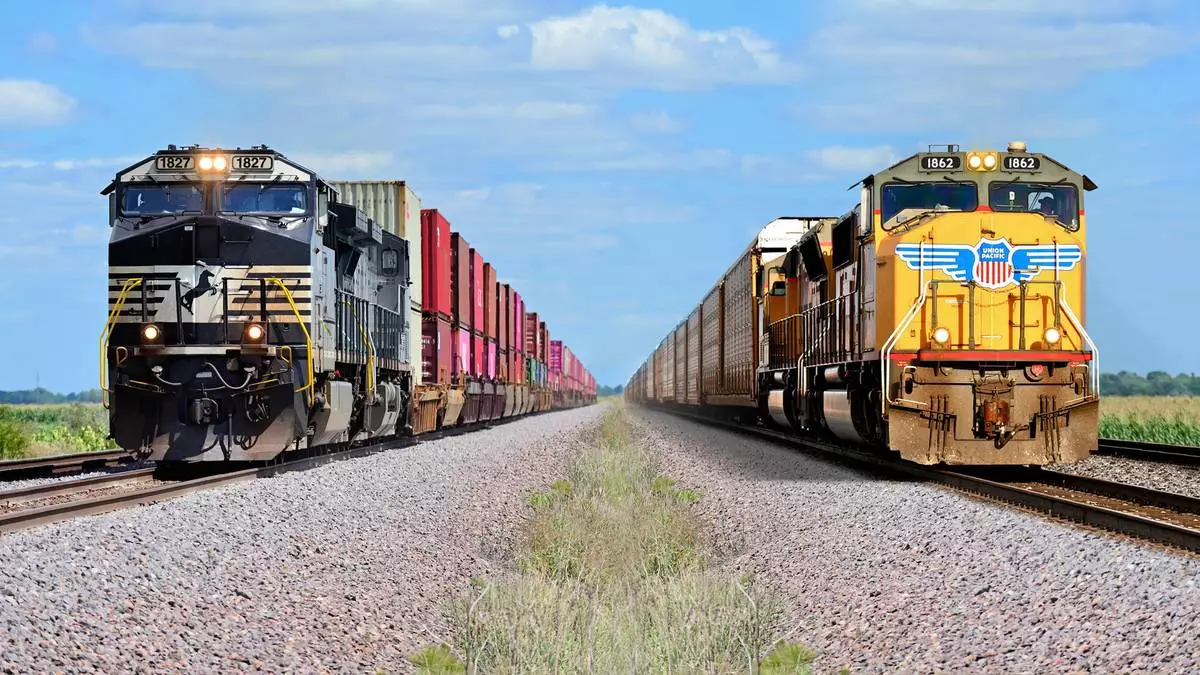
Union Pacific and Norfolk Southern to create America’s First Transcontinental Railroad.