LONDON (AP) — The killing of three girls at a summer dance class in England a year ago Tuesday, by a teenager misidentified as a migrant, triggered days of street violence directed at newcomers and minorities.
In the aftermath, communities came together to clear up the physical damage — but repairing the country’s social fabric is harder. Experts and community groups warn that the mix of anger, fear, misinformation and political agitating that fueled the violence remains. In recent weeks it has bubbled over again on the streets of Epping, near London.
Click to Gallery
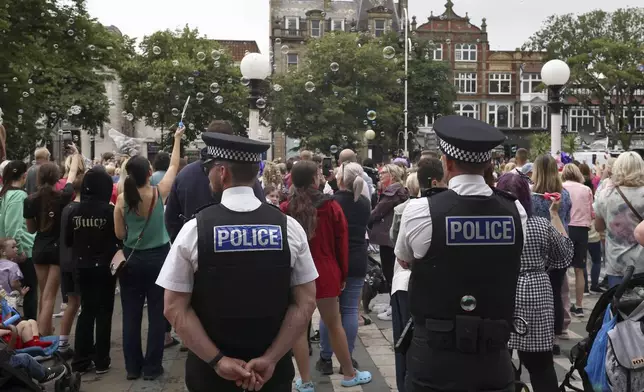
FILE - Police officers watch members of the public outside the Town Hall during a vigil to remember the victims of the stabbing attack last Monday in Southport, England, Monday, Aug. 5, 2024. (AP Photo/Darren Staples, File)
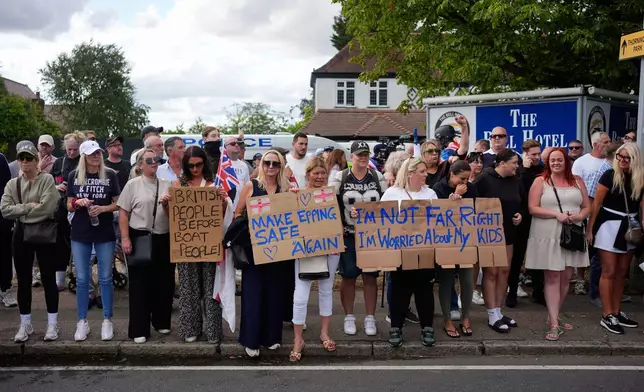
Protesters demonstrate outside the Bell Hotel in the town of Epping, Essex, England, Sunday, July 20, 2025. (Yui Mok/PA via AP)
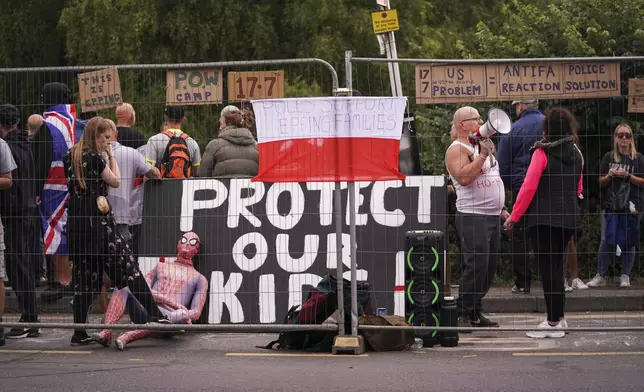
Demonstrators hold flags and placards as they stand outside the Bell Hotel in Epping, near London, Sunday, July 27, 2025.(AP Photo/Alberto Pezzali)
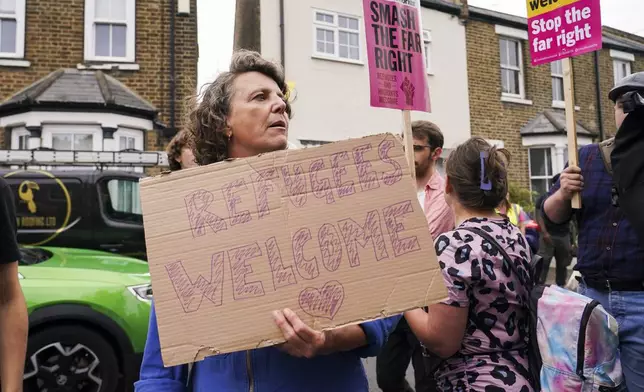
A demonstrator holds a placard as she leaves a protest outside the Bell Hotel in Epping, near London, Sunday, July 27, 2025.(AP Photo/Alberto Pezzali)
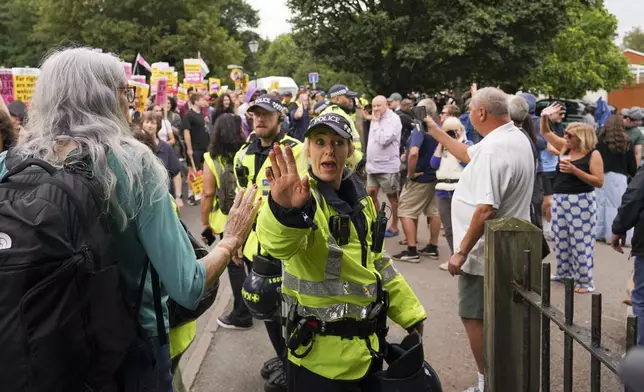
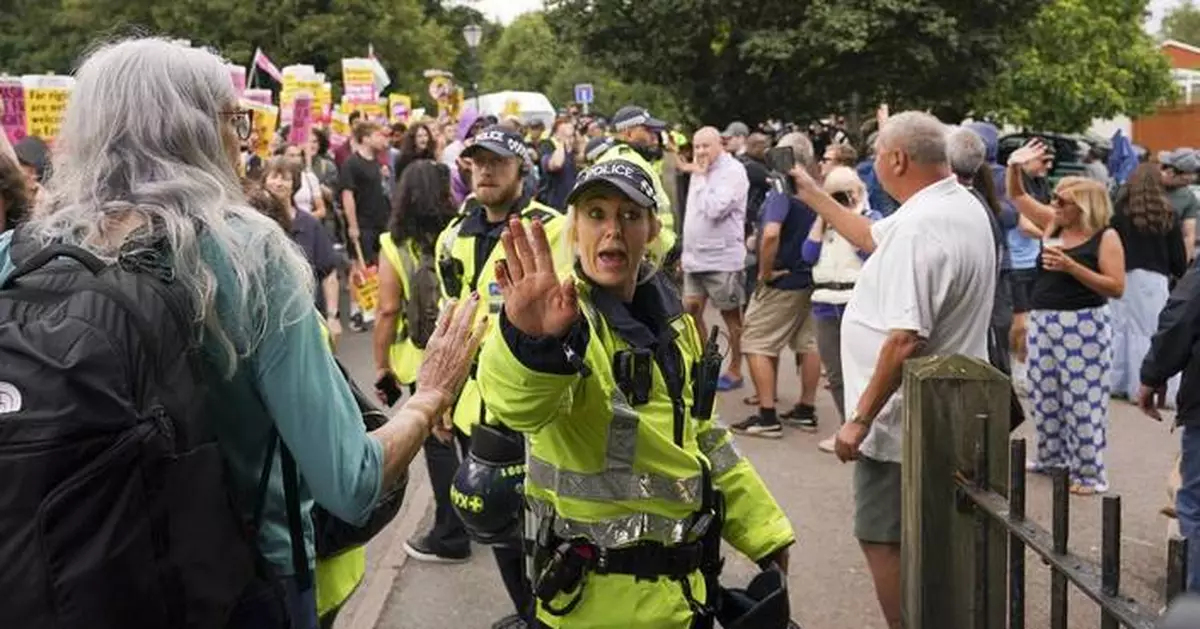
A police officer reacts as demonstrators hold placards and banners as they leave a protest outside the Bell Hotel in Epping, near London, Sunday, July 27, 2025.(AP Photo/Alberto Pezzali)
“Given a trigger event, none of the conditions of what happened last year have gone away,” said Sunder Katwala of British Future, a think tank that looks at issues including integration and national identity. He said there is a “tense and quite febrile atmosphere” in some parts of the country.
A three-minute silence was held Tuesday in the seaside town of Southport in northwest England, where the stabbing attack left three girls under 10 dead and eight children and two adults wounded.
Over the following days, violence erupted in Southport and across England, driven partly by online misinformation saying the attacker was a migrant who had arrived in the U.K. by small boat.
Because of British contempt of court and privacy laws, authorities were initially slow to disclose the suspect’s identity: Axel Rudakubana, a British-born 17-year-old obsessed with violence. He later pleaded guilty to murder and is serving a life sentence.
In the week after the attack, crowds in more than two dozen towns attacked hotels housing migrants, as well as mosques, police stations and a library. Some rioters targeted non-white people and threw bricks and fireworks at police.
Within a few days, larger numbers of people took to the streets to reclaim their communities, sweeping up broken glass and sending a message of welcome to newcomers.
A year on, the sight of migrants crossing the English Channel in dinghies — more than 22,000 so far this year — provides a focus for those concerned about the impact of immigration. Those concerns are often amplified by online rumor, scapegoating and misinformation, some of it deliberate.
Add a sluggish economy, high housing costs, frayed public services and widespread distrust in politicians, and Britain, in the view of many commentators, has become a “tinderbox.”
Nigel Farage, leader of hard-right political party Reform UK, said last week that the country is close to “civil disobedience on a vast scale.”
The left-of-center Labour government agrees there is a problem. At a Cabinet meeting last week, Deputy Prime Minister Angela Rayner noted that 17 of the 18 places that saw the worst disorder last year were among the most deprived in the country. She said that Britain is “a successful multi-ethnic, multi-faith country,” but the government must show it has “a plan to address people’s concerns and provide opportunities for everyone to flourish.”
The government has pledged to stop migrants trying to reach Britain across the Channel and to end the practice of lodging asylum-seekers in hotels, which have become flashpoints for tension.
Critics say the government risks legitimizing protesters who in many cases are driven by intolerance and want to drive immigrants from their homes.
In Ballymena, Northern Ireland, last month, rioters threw bricks, bottles, petrol bombs and fireworks and firebombed immigrants’ houses after two Romanian-speaking 14-year-old boys were charged with sexual assault.
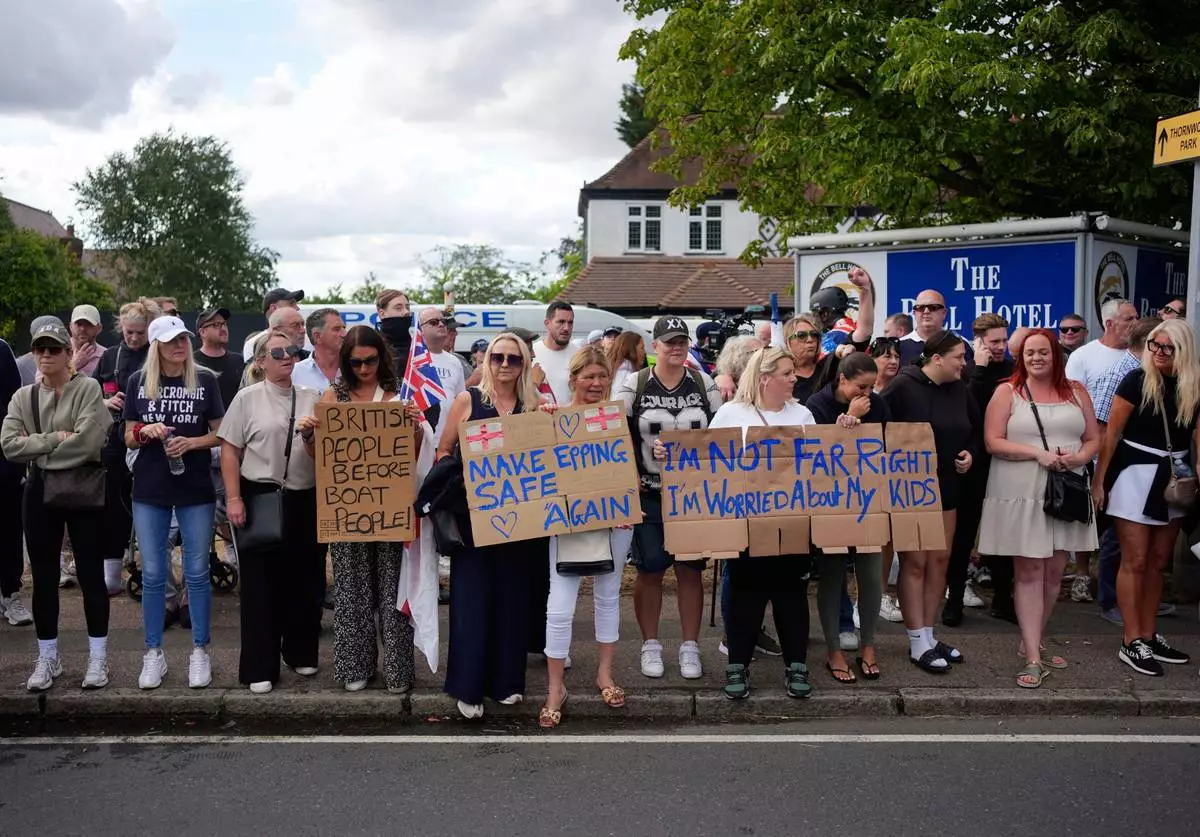
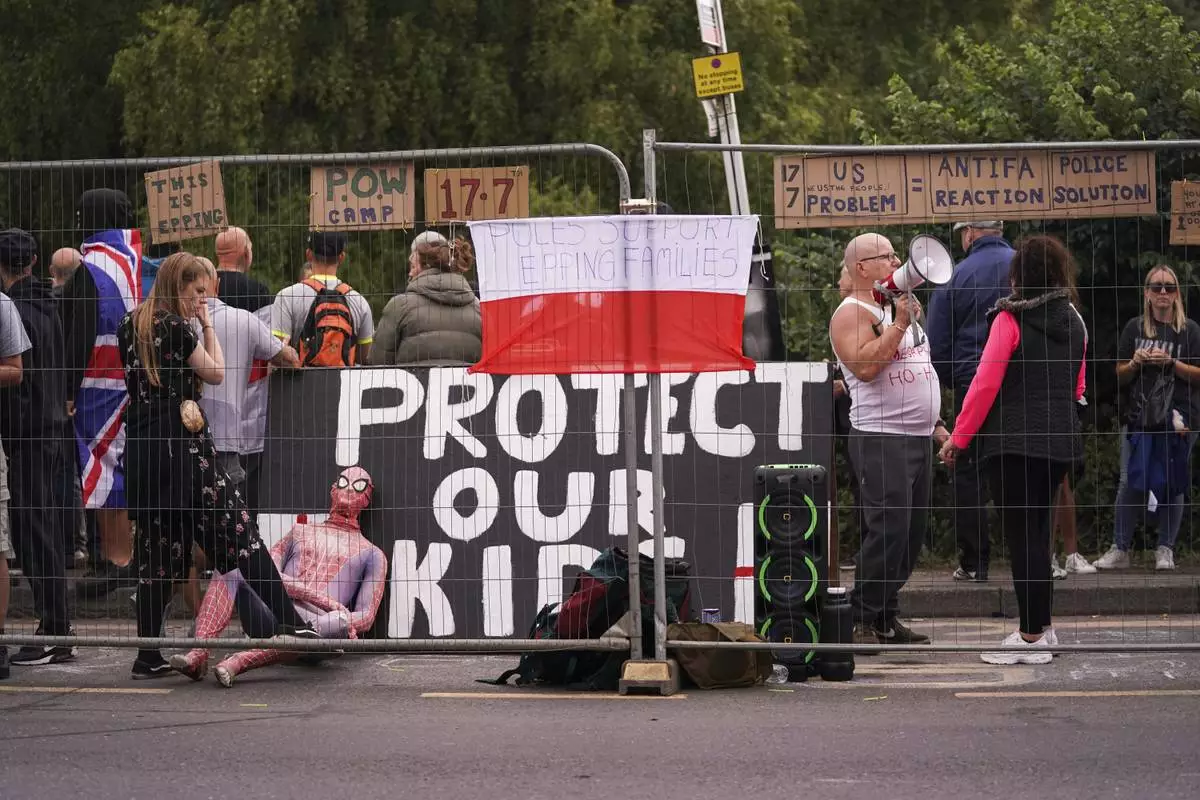
Hundreds of people have protested this month outside a hotel housing asylum-seekers in Epping, a town on the edge of London, after a recently arrived migrant from Ethiopia was charged with sexual assault. He denies the charge.
Protesters in Epping and a handful of other communities this summer have included local people, but also members of organized far-right groups who hope to capitalize on discord.
Tiff Lynch, who heads the Police Federation officers union, wrote in the Daily Telegraph newspaper that the Epping disorder was “a reminder of how little it takes for tensions to erupt and how ill-prepared we remain to deal with it.”
Learning from last summer’s violence, where the police and courts responded quickly to detain and charge hundreds of suspects, police have charged more than a dozen people over violence in Epping. A protest and antiracist counter-demonstration in the town on the weekend were peaceful.
The online realm is harder to police. The British government, like others around the world, has struggled with how to stop toxic content on sites including X. Under the ownership of self-styled free-speech champion Elon Musk, X has gutted teams that once fought misinformation and restored the accounts of banned conspiracy theories and extremists.
The government has cited the amount of time people spend alone online as a factor behind polarization and fraying social bonds.
Families of the three girls who died in Southport — Alice da Silva Aguiar, 9, Elsie Dot Stancombe, 7, and 6-year-old Bebe King — called for quiet and respectful commemorations. Local authorities have asked people not to lay flowers, but to consider donating to causes set up in the victim’s memories.
The team behind Elsie’s Story, a children’s charity set up by Stancombe’s family, posted on Instagram: “Our girls, our town, will not be remembered for the events of that day, but for everything we are building together.”
Katwala said that despite a “sense of disconnection and frustration at national politics and national institutions,” there are grounds for optimism.
“Britain is less heated and less polarized than the United States, by quite a long way,” he said.
“People’s interpersonal trust remains quite high. Seven out of 10 people think their local area is a place where people from different backgrounds get on well. They’re just worried about the state of the nation.”

FILE - Police officers watch members of the public outside the Town Hall during a vigil to remember the victims of the stabbing attack last Monday in Southport, England, Monday, Aug. 5, 2024. (AP Photo/Darren Staples, File)
Protesters demonstrate outside the Bell Hotel in the town of Epping, Essex, England, Sunday, July 20, 2025. (Yui Mok/PA via AP)
Demonstrators hold flags and placards as they stand outside the Bell Hotel in Epping, near London, Sunday, July 27, 2025.(AP Photo/Alberto Pezzali)
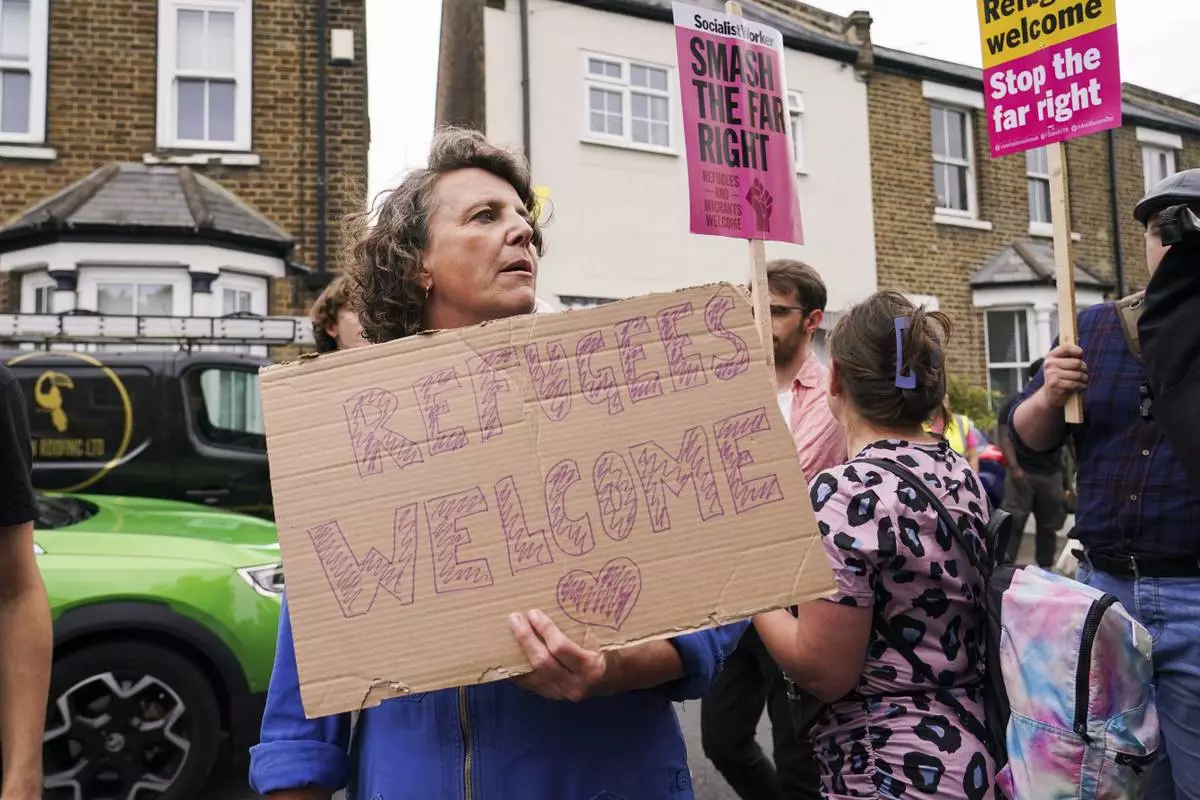
A demonstrator holds a placard as she leaves a protest outside the Bell Hotel in Epping, near London, Sunday, July 27, 2025.(AP Photo/Alberto Pezzali)
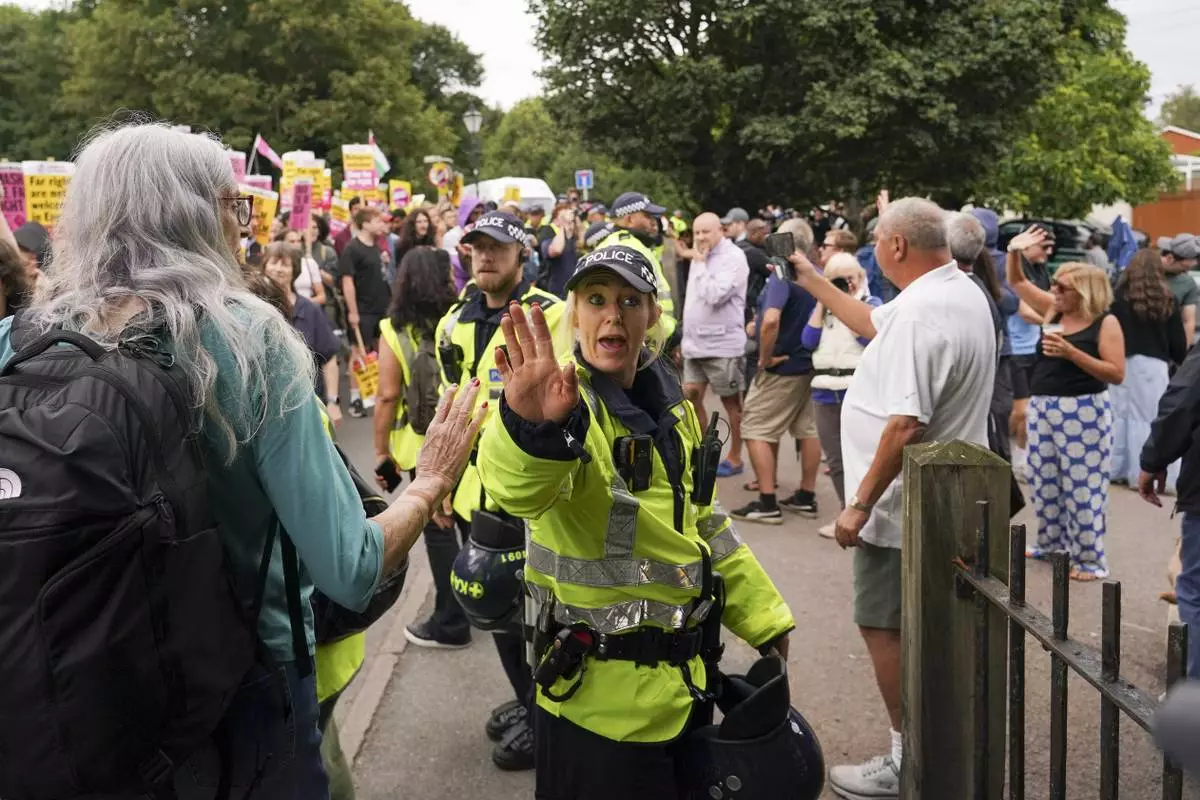
A police officer reacts as demonstrators hold placards and banners as they leave a protest outside the Bell Hotel in Epping, near London, Sunday, July 27, 2025.(AP Photo/Alberto Pezzali)