MONTREAL (AP) — Throughout his new term, starting with his inaugural address, President Donald Trump has said he was “saved by God” to make America great again. In Canada, Prime Minister Mark Carney rarely evokes religion in public; his victory speech in April never used the word God. “Canada forever. Vive le Canada,” he ended.
As Canada and the U.S. now skirmish over Trump’s tariff threats and occasional bullying, the leaders’ rhetoric reflects a striking difference between their nations. Religion plays a far more subdued role in the public sphere in Canada than in its southern neighbor.
Click to Gallery
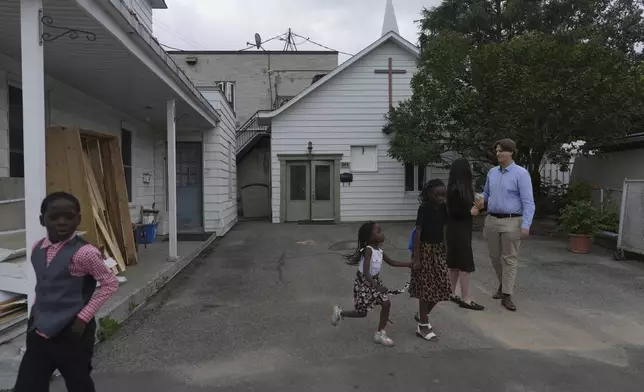
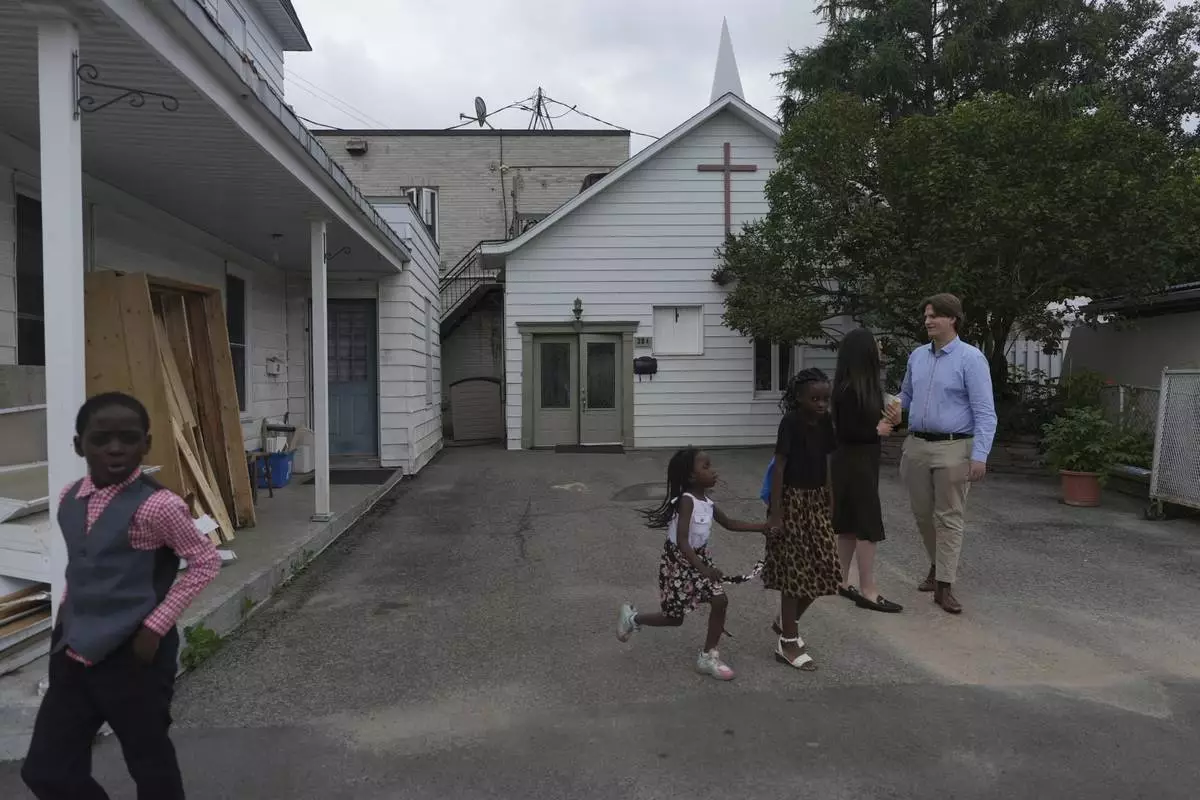
Children play while Megane Ares-Dube and her husband, Raphael Lapointe, talk after attending service at the Reformed Baptist Church in Saint Jerome, Quebec, Sunday, June 29, 2025. (AP Photo/Luis Andres Henao)
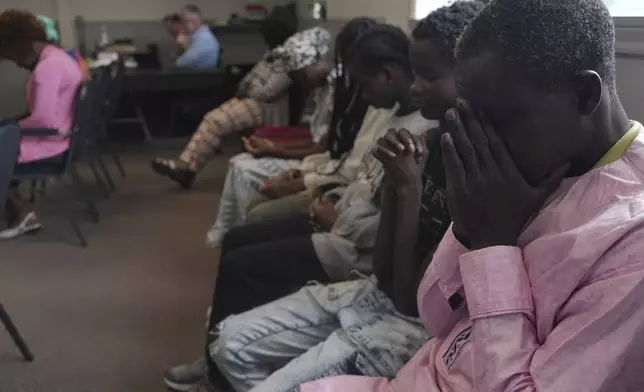
Worshippers pray during service at The Reformed Baptist Church in Saint Jerome, Quebec, Sunday, June 29, 2025. (AP Photo/Luis Andres Henao)
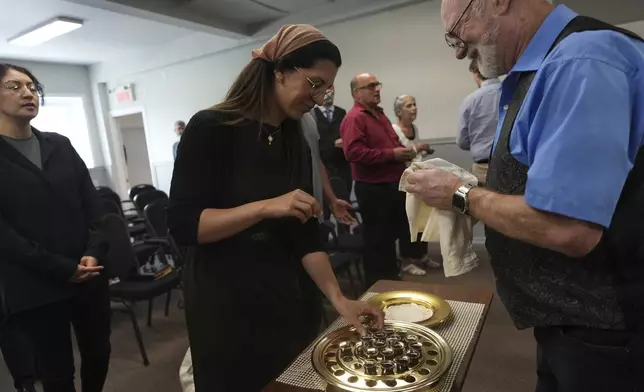
Megane Ares-Dube, center, prepares to receive communion during service at the Reformed Baptist Church in Saint Jerome, Quebec, Sunday, June 29, 2025. (AP Photo/Luis Andres Henao)
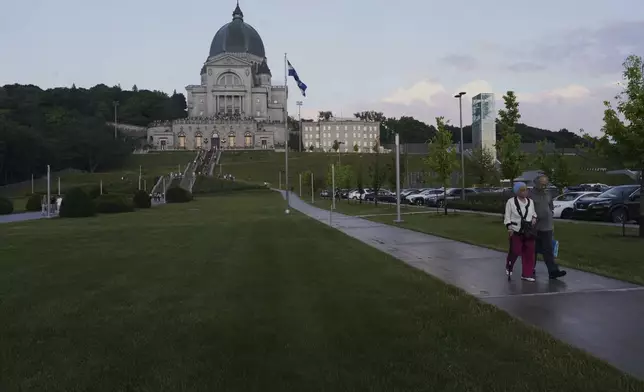
Visitors leave the national shrine of Saint Joseph's Oratory of Mount Royal in Montreal, Saturday, June 28, 2025. (AP Photo/Luis Andres Henao)
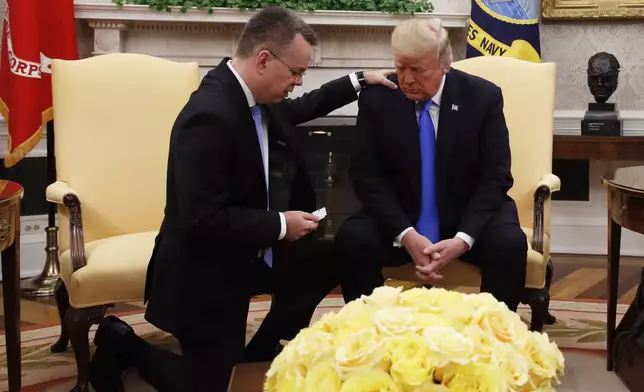
President Donald Trump prays with pastor Andrew Brunson in the Oval Office of the White House, Oct. 13, 2018, in Washington. (AP Photo/Jacquelyn Martin, File)
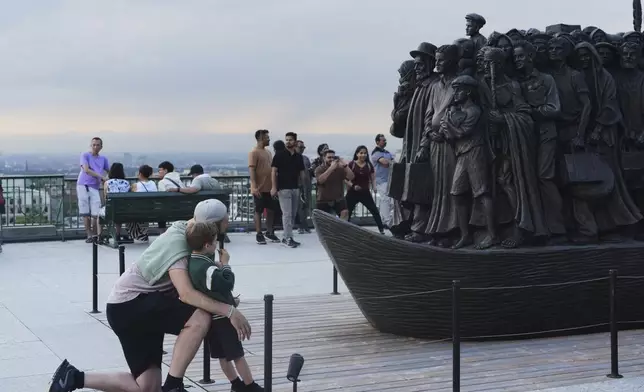
People look at a sculpture that pays tribute to migrants and refugees at the national shrine of Saint Joseph's Oratory of Mount Royal in Montreal, Saturday, June 28, 2025. (AP Photo/Luis Andres Henao)
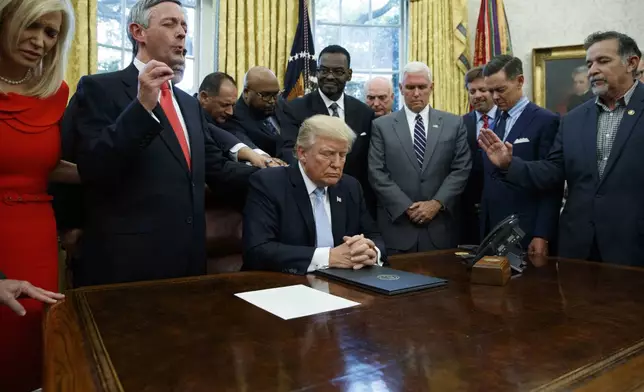
FILE - Religious leaders pray with President Donald Trump Sept. 1, 2017, after he signed a proclamation for a national day of prayer to occur on Sept. 3, 2017, in the Oval Office of the White House in Washington. (AP Photo/Evan Vucci, File)
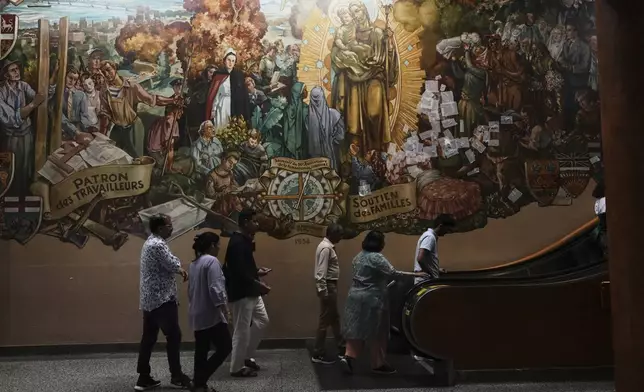
A mural that depicts St. Joseph, Patron of Workers, and others important to the city of Montreal, decorates a wall at the national shrine of Saint Joseph's Oratory of Mount Royal, in Montreal, Saturday, June 28, 2025. (AP Photo/Luis Andres Henao)
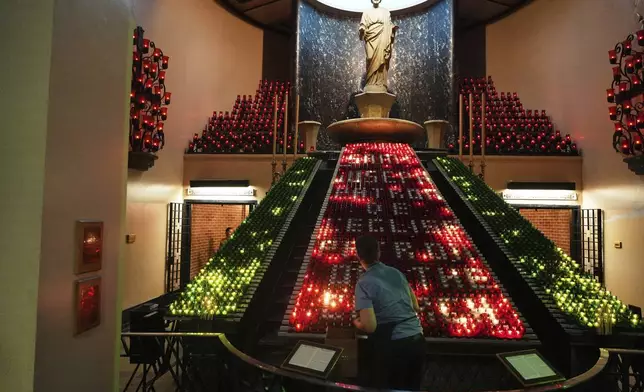
A worker arranges candles inside the Votive Chapel at the national shrine of Saint Joseph's Oratory of Mount Royal, in Montreal, Saturday, June 28, 2025. (AP Photo/Luis Andres Henao)
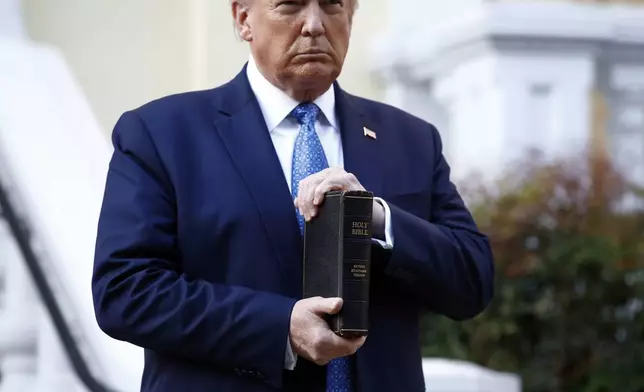
FILE - President Donald Trump holds a Bible as he visits outside St. John's Church across Lafayette Park from the White House in Washington, June 1, 2020. (AP Photo/Patrick Semansky, File)
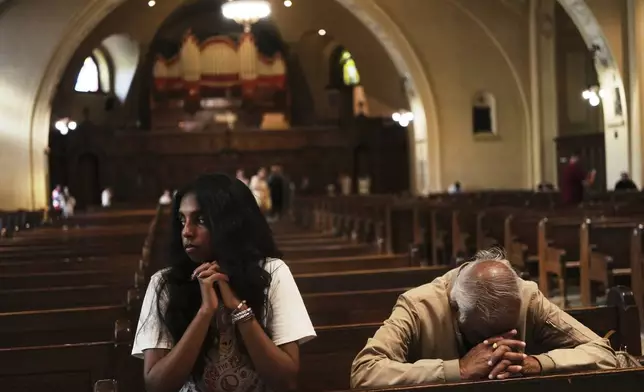
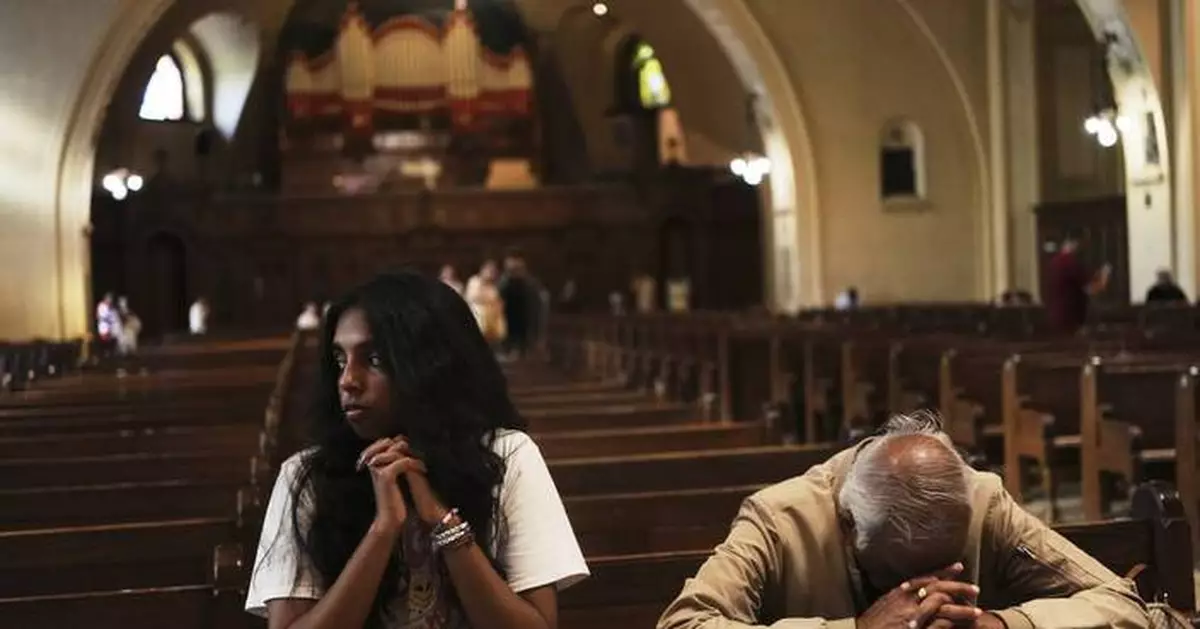
Thurvi Valli and her grandfather, Sitham Valli pray inside Crypt Church at the national shrine of Saint Joseph's Oratory of Mount Royal, in Montreal, Saturday, June 28, 2025. (AP Photo/Luis Andres Henao)
Trump posed in front of a vandalized Episcopal parish house gripping a Bible. He invites pastors to the Oval Office to pray with him. His ally, House Speaker Mike Johnson, says the best way to understand his own world view is to read the Bible.
Such high-level religion-themed displays would be unlikely and almost certainly unpopular in Canada, where Carney — like his recent predecessors — generally avoids public discussion of his faith. (He is a Catholic who supports abortion rights.)
There are broader differences as well. The rate of regular church attendance in Canada is far lower than in the U.S. Evangelical Christians have nowhere near the political clout in Canada that they have south of the border. There is no major campaign in Canada to post the Ten Commandments in public schools or to enact sweeping abortion bans.
Kevin Kee, a professor and former dean at the University of Ottawa, has written about the contrasting religious landscapes of the U.S. and Canada, exploring the rise of American evangelist Billy Graham to become a confidant of numerous U.S. presidents.
Christianity, Kee said, has not permeated modern Canadian politics to that extent.
“We have a political leadership that keeps its religion quiet,” Kee said. “To make that kind of declaration in Canada is to create an us/them situation. There’s no easy way to keep everybody happy, so people keep it quiet.”
The mostly French-speaking province of Quebec provides a distinctive example of Canada’s tilt toward secularism. The Catholic Church was Quebec’s dominant force through most of its history, with sweeping influence over schools, health care and politics.
That changed dramatically in the so-called Quiet Revolution of the 1960s, when the provincial government took control of education and health care as part of a broader campaign to reduce the church’s power. The rate of regular church attendance among Quebec's Catholics plummeted from one of the highest in Canada to the one of the lowest.
Among religiously devout Canadians, in Quebec and other provinces, some are candid about feeling marginalized in a largely secular country.
“I feel isolated because our traditional Christian views are seen as old-fashioned or not moving with the times,” said Mégane Arès-Dubé, 22, after she and her husband attended a service at a conservative Reformed Baptist church in Saint Jerome, about 30 miles (nearly 50 kilometers) north of Montreal.
“Contrary to the U.S., where Christians are more represented in elected officials, Christians are really not represented in Canada,” she added. “I pray that Canada wakes up.”
The church’s senior pastor, Pascal Denault, has mixed feelings about the Quiet Revolution's legacy.
“For many aspects of it, that was good,” he said. “Before that, it was mainly the Catholic clergy that controlled many things in the province, so we didn’t have religious freedom.”
Nonetheless, Denault wishes for a more positive public view of religion in Canada.
“Sometimes, secularism becomes a religion in itself, and it wants to shut up any religious speech in the public sphere,” he said. “What we hope for is that the government will recognize that religion is not an enemy to fight, but it’s more a positive force to encourage.”
Denault recently hosted a podcast episode focusing on Trump; he later shared some thoughts about the president.
“We tend to think that Trump is more using Christianity as a tool for his influence, rather than being a genuine Christian,” he said. “But Christians are, I think, appreciative of some of his stances on different things.”
Trump’s religion-related tactics — such as posing with the Bible in his hands — wouldn’t go over well with Canadians, Denault said.
“They’d see that as something wrongful. The public servant should not identify with a specific religion,” Denault said. “I don’t think most Canadians would vote for that type of politician.”
In the Montreal neighborhood of Hochelaga-Maisonneuve, the skyline is dotted with crosses atop steeples, but many of those churches are unused or repurposed.
For decades, factory and port workers worshipped at Saint-Mathias-Apotre Church. Today it’s a restaurant that serves affordable meals daily for more than 600 residents.
The manager of Le Chic Resto Pop, Marc-Andre Simard, grew up Catholic and now, like many of his staff, identifies as religiously unaffiliated. But he still tries to honor some core values of Catholicism at the nonprofit restaurant, which retains the church’s original wooden doors and even its confessional booths.
“There’s still space to be together, to have some sort of communion, but it’s around food, not around faith.” Simard said during a lunch break, sitting near what used to be the altar of the former church.
Simard says the extent to which the Catholic Church controlled so much of public life in Quebec should serve as a cautionary tale for the U.S.
“We went through what the United States are going through right now,” he said.
Elsewhere in Montreal, a building that once housed a Catholic convent now often accommodates meetings of the Quebec Humanist Association.
The group’s co-founder, Michel Virard, said French Canadians “know firsthand what it was to have a clergy nosing in their affairs.”
Now, Virard says, “There is no ‘excluding religious voice’ in Canada, merely attempts at excluding clergy from manipulating the state power levers and using taxpayers’ money to promote a particular religious viewpoint.”
Why are Canada and the U.S., two neighbors which share so many cultural traditions and priorities, so different regarding religion's role in public life?
According to academics who have pondered that question, their history provides some answers. The United States, at independence from Britain, chose not to have a dominant, federally established church.
In Canada, meanwhile, the Catholic Church was dominant in Quebec, and the Church of England — eventually named the Anglican Church of Canada — was powerful elsewhere.
Professor Darren Dochuk, a Canadian who teaches history at University of Notre Dame in Indiana, says the “disestablishment” of religion in the U.S. “made religious life all the more dynamic.”
“This is a country in which free faith communities have been allowed to compete in the marketplace for their share,” he said.
“In the 20th century, you had a plethora of religious groups across the spectrum who all competed voraciously for access to power,” he said. “More recently, the evangelicals are really dominating that. … Religious conservatives are imposing their will on Washington.”
There’s been no equivalent faith-based surge in Canada, said Dochuk, suggesting that Canada’s secularization produced “precipitous decline in the power of religion as a major operator in politics.”
Carmen Celestini, professor of religious studies at the University of Waterloo in Ontario, said that even when Canadian politicians do opt for faith-based outreach, they often take a multicultural approach — for example, visiting Sikh, Hindu and Jewish houses of worship, as well as Christian churches.
Trump’s talk about Canada becoming the 51st state fueled a greater sense of national unity among most Canadians, and undermined the relatively small portion of them who identify as Christian nationalists, Celestini said.
“Canada came together more as a nation, not sort of seeing differences with each other, but seeing each other as Canadians and being proud of our sovereignty and who we are as a nation,” she said. “The concern that Canadians have, when we look at what’s happening in America, is that we don’t want that to happen here. “
Crary, who reported from New York, was the AP's Canada bureau chief from 1995-99.
Associated Press religion coverage receives support through the AP’s collaboration with The Conversation US, with funding from Lilly Endowment Inc. The AP is solely responsible for this content.
Children play while Megane Ares-Dube and her husband, Raphael Lapointe, talk after attending service at the Reformed Baptist Church in Saint Jerome, Quebec, Sunday, June 29, 2025. (AP Photo/Luis Andres Henao)
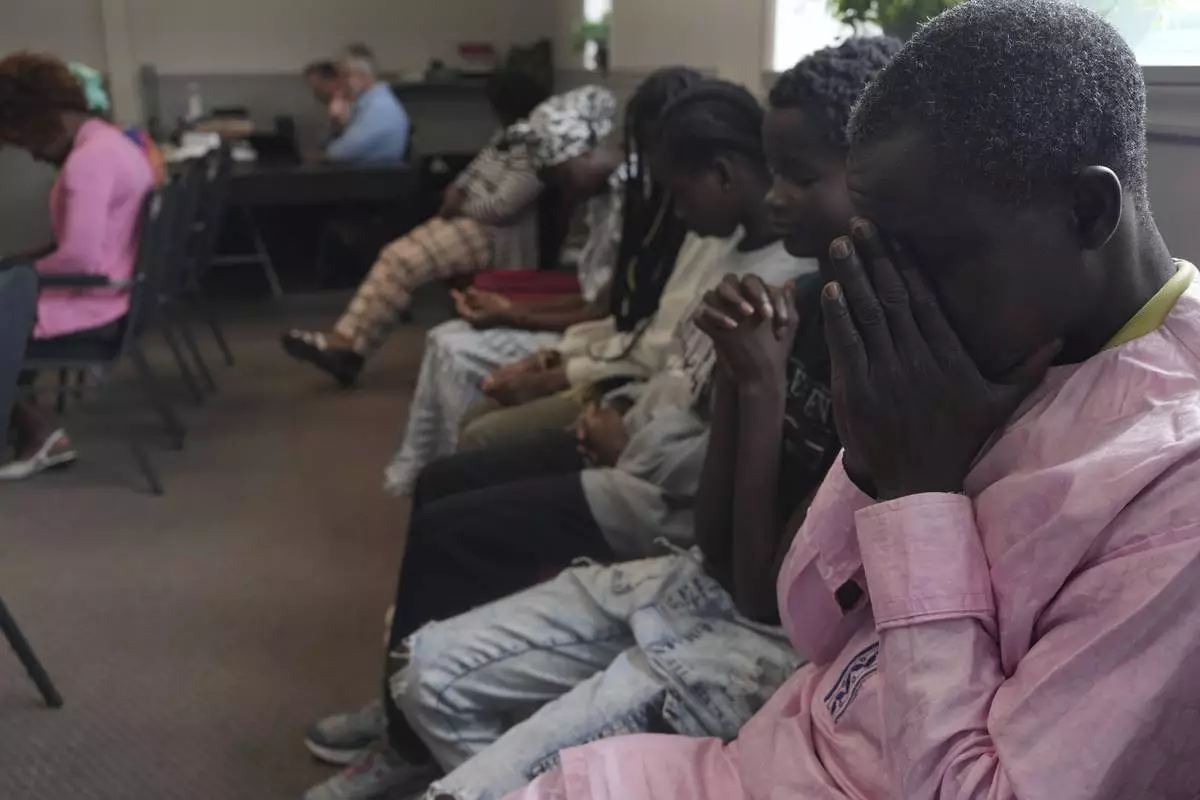
Worshippers pray during service at The Reformed Baptist Church in Saint Jerome, Quebec, Sunday, June 29, 2025. (AP Photo/Luis Andres Henao)
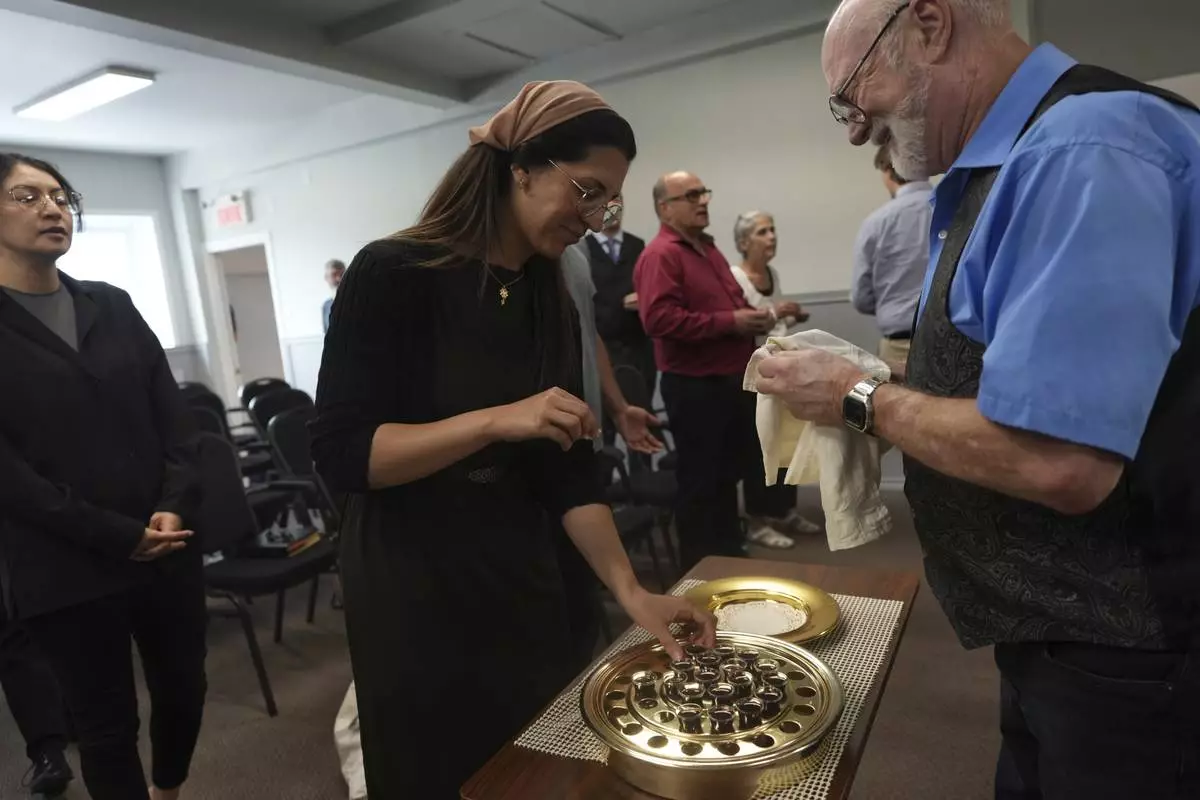
Megane Ares-Dube, center, prepares to receive communion during service at the Reformed Baptist Church in Saint Jerome, Quebec, Sunday, June 29, 2025. (AP Photo/Luis Andres Henao)
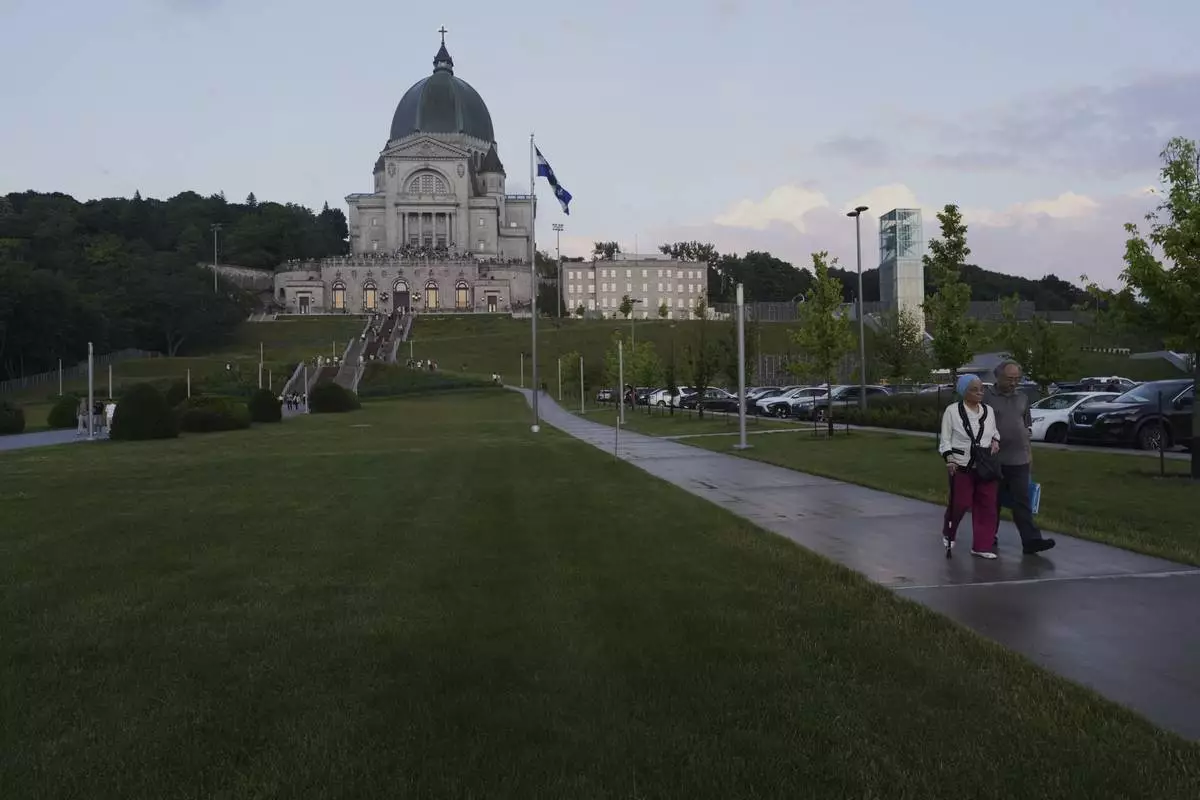
Visitors leave the national shrine of Saint Joseph's Oratory of Mount Royal in Montreal, Saturday, June 28, 2025. (AP Photo/Luis Andres Henao)
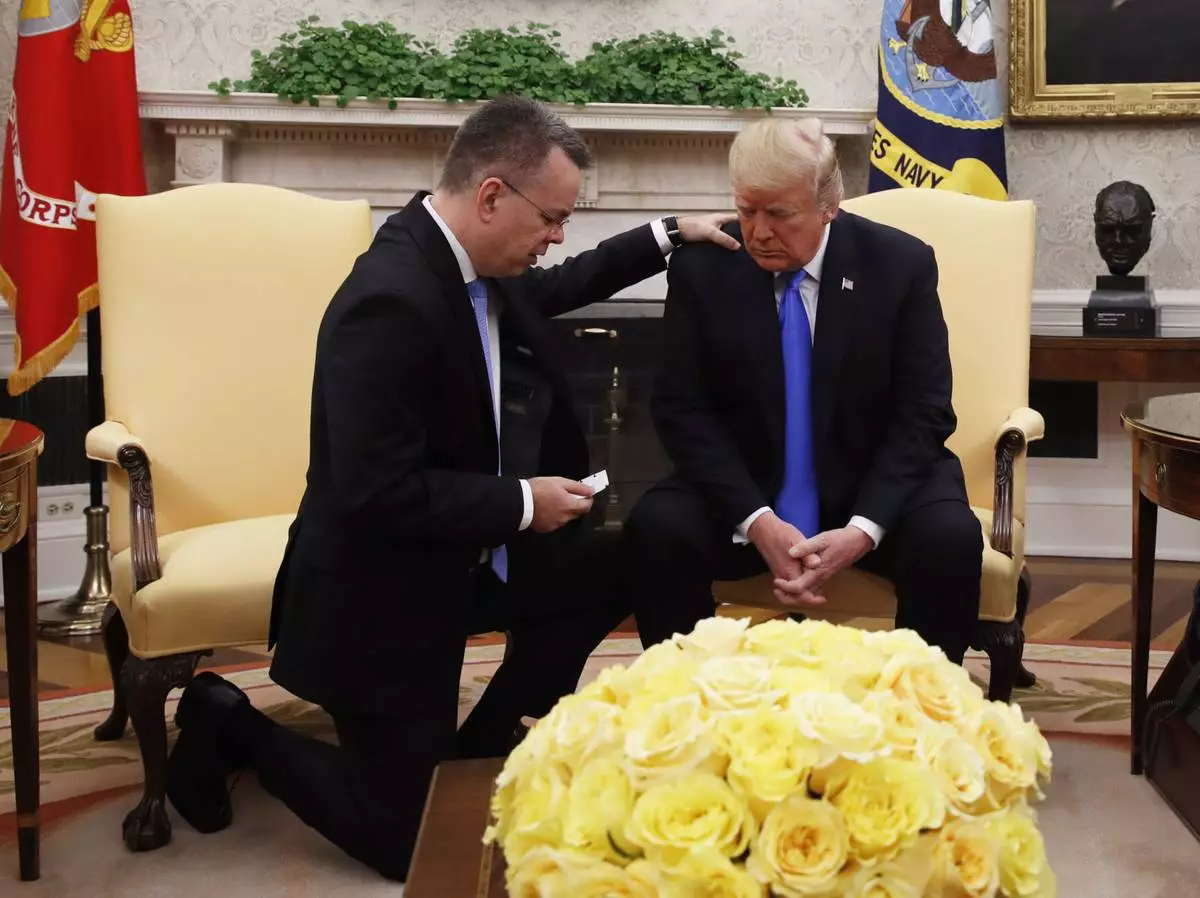
President Donald Trump prays with pastor Andrew Brunson in the Oval Office of the White House, Oct. 13, 2018, in Washington. (AP Photo/Jacquelyn Martin, File)
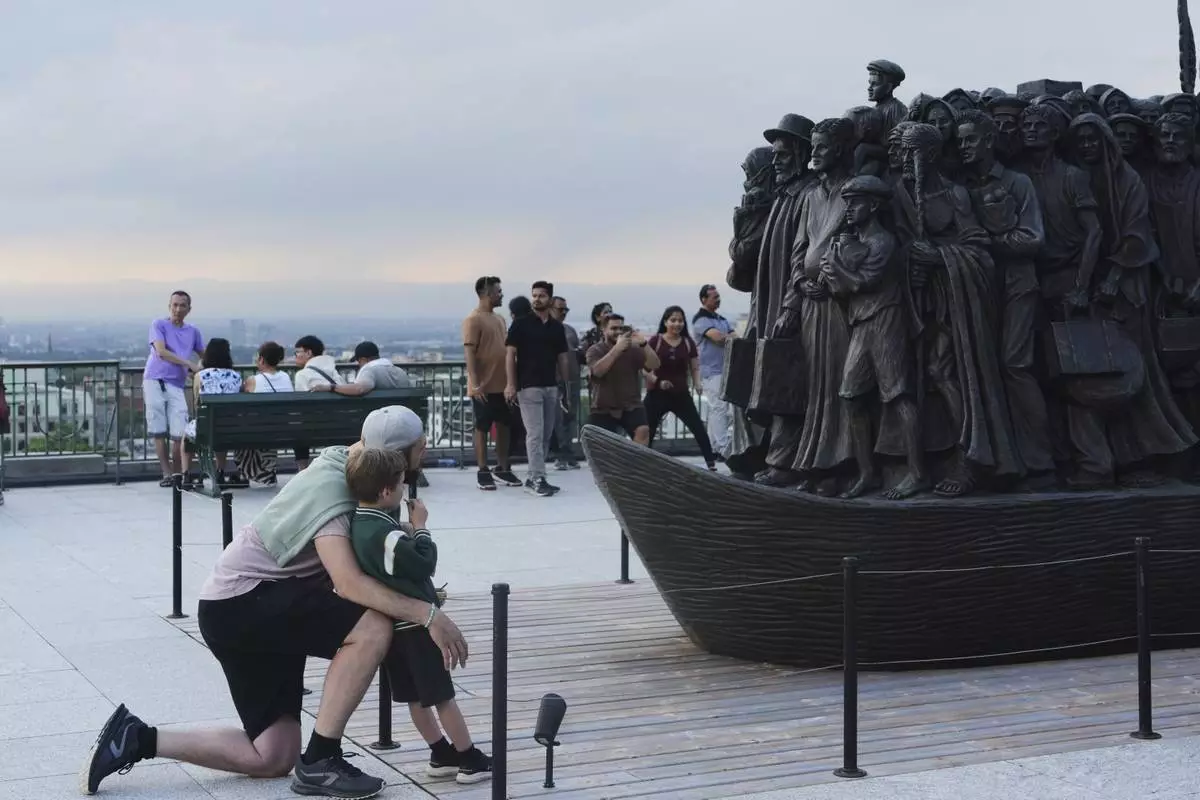
People look at a sculpture that pays tribute to migrants and refugees at the national shrine of Saint Joseph's Oratory of Mount Royal in Montreal, Saturday, June 28, 2025. (AP Photo/Luis Andres Henao)
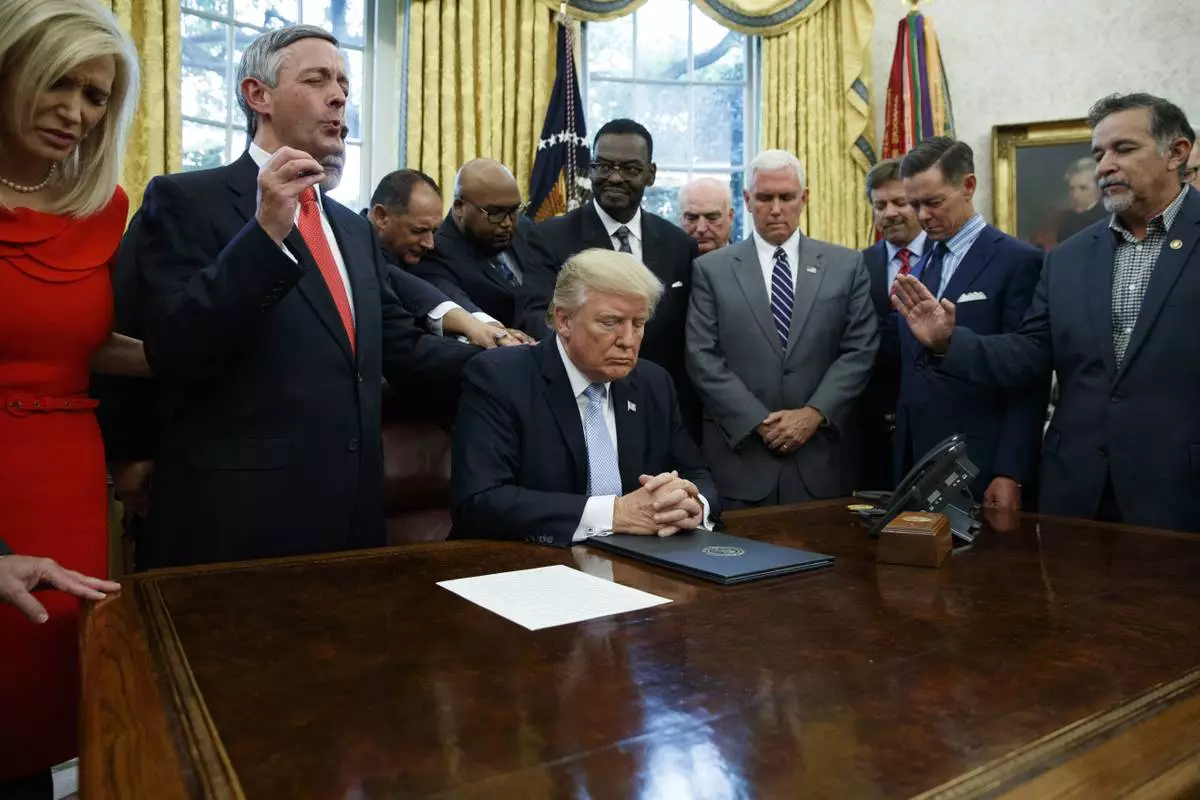
FILE - Religious leaders pray with President Donald Trump Sept. 1, 2017, after he signed a proclamation for a national day of prayer to occur on Sept. 3, 2017, in the Oval Office of the White House in Washington. (AP Photo/Evan Vucci, File)
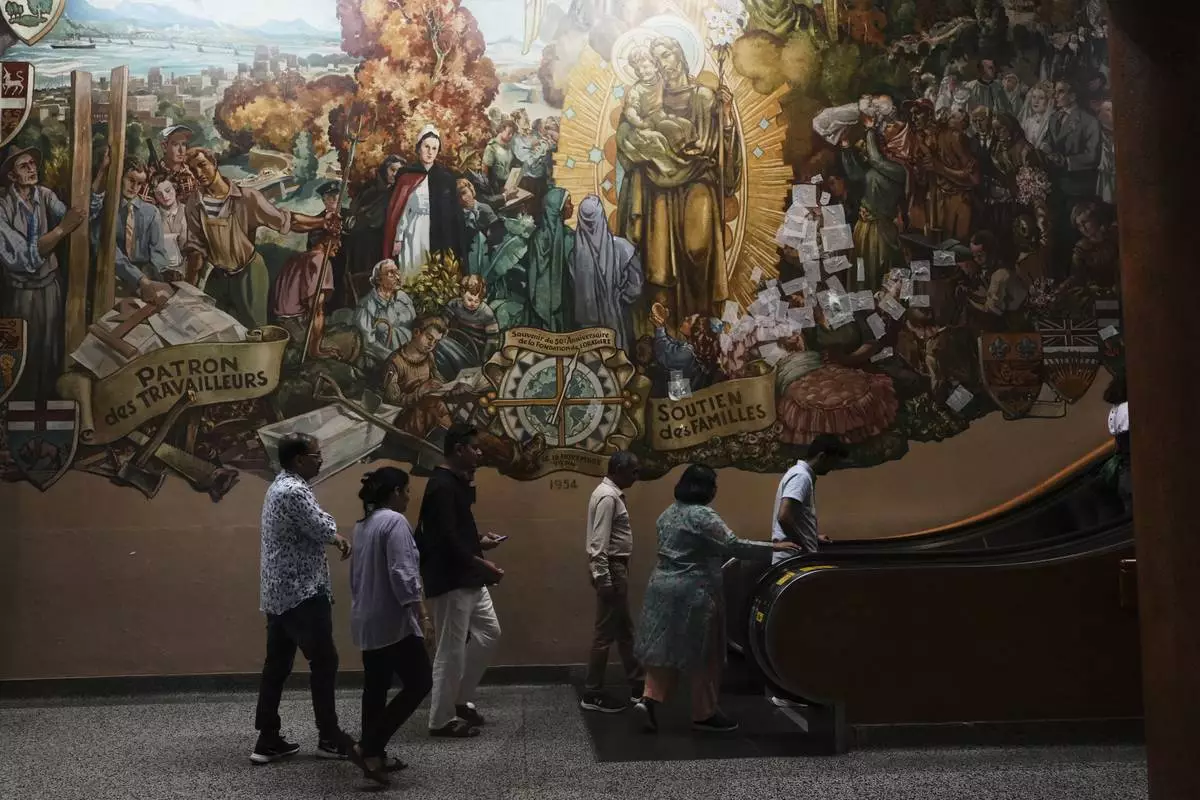
A mural that depicts St. Joseph, Patron of Workers, and others important to the city of Montreal, decorates a wall at the national shrine of Saint Joseph's Oratory of Mount Royal, in Montreal, Saturday, June 28, 2025. (AP Photo/Luis Andres Henao)
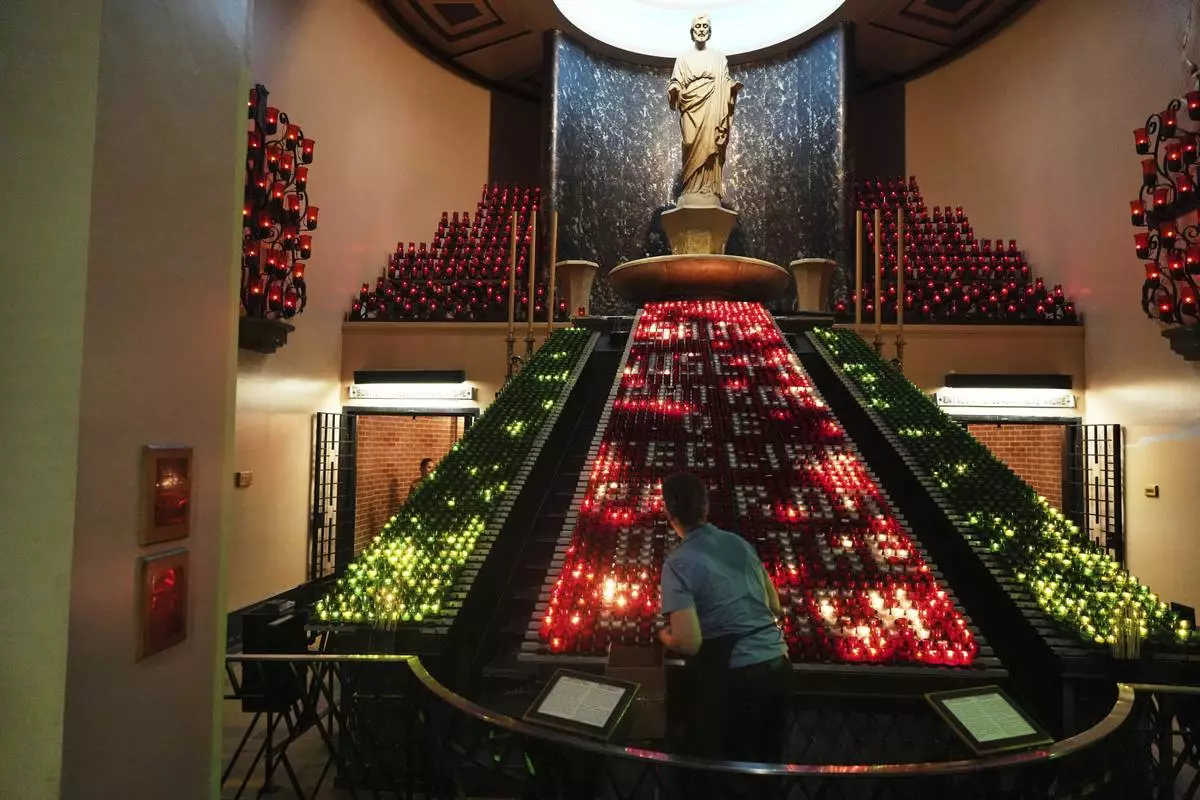
A worker arranges candles inside the Votive Chapel at the national shrine of Saint Joseph's Oratory of Mount Royal, in Montreal, Saturday, June 28, 2025. (AP Photo/Luis Andres Henao)
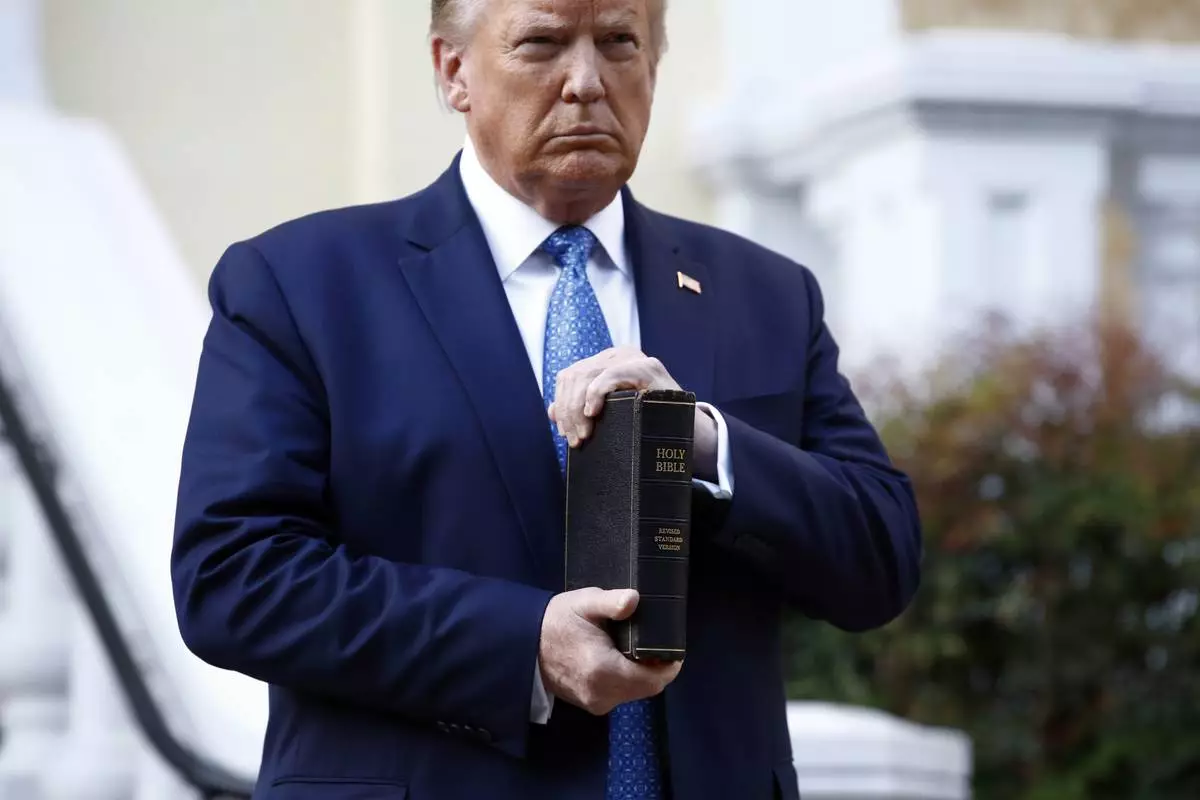
FILE - President Donald Trump holds a Bible as he visits outside St. John's Church across Lafayette Park from the White House in Washington, June 1, 2020. (AP Photo/Patrick Semansky, File)
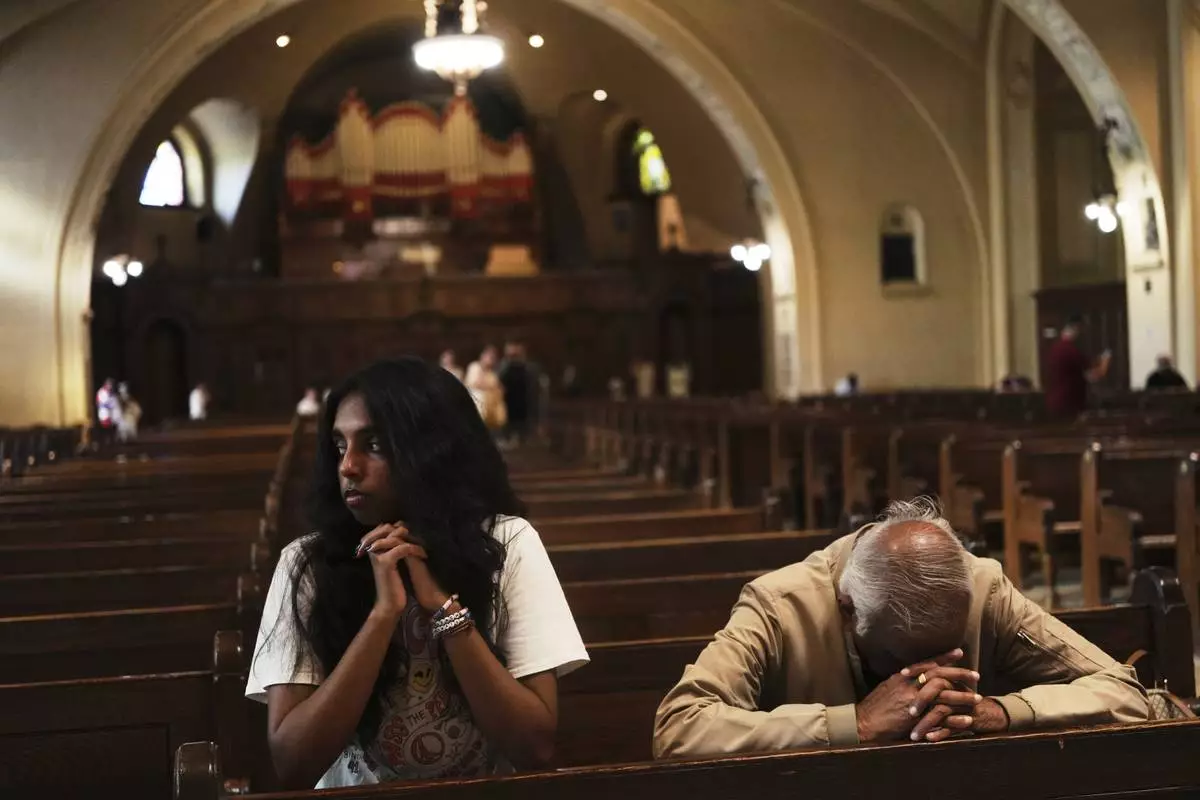
Thurvi Valli and her grandfather, Sitham Valli pray inside Crypt Church at the national shrine of Saint Joseph's Oratory of Mount Royal, in Montreal, Saturday, June 28, 2025. (AP Photo/Luis Andres Henao)