Xifengkou, a strategic stronghold on the Great Wall in north China's Hebei Province and the site for a major battle against the Japanese invaders over 90 years ago, appears in a new CGTN TV series, recalling the indomitable spirit of resistance of the Chinese nation.
Marking the 80th anniversary of the victory of the Chinese People's War of Resistance Against Japanese Aggression and the World Anti-Fascist War, CGTN is launching this week a 25-part special series called "Resolve and Resilience: The Main Eastern Battlefield of World War Two," which revisits pivotal battles and heroic stories in China's resistance against the Japanese invaders. It shows China's important contribution in the final defeat of fascism and in maintaining global peace.
Winding through the rugged terrain of the Yanshan Mountains, the Great Wall at Xifengkou, north China's Hebei Province, still carries the marks of war.
In 1933, Japanese forces breached the Wall's defenses, threatening the northern frontier of China, and a fierce combat took place in Xifengkou.
"Look here -- these are the scars left by Japanese artillery fire during the war of aggression. Back then, enemy planes and cannons bombarded this area, destroying the bricks and walls, leaving deep marks behind," said Ma Zhen, former director of the Qianxi County Party History Research Office in Tangshan City, pointing to the weathered bricks.
At the time, the National Revolutionary Army's 29th Corps sent to defend the region faced insurmountable odds. Poorly equipped, with a severe shortage of firearms, the soldiers were forced to rely on unconventional methods.
Zhao Dengyu, commander of the 109th Brigade, devised a daring strategy that included close-quarters combat and night raids, despite being vastly outgunned. His troops forged broadswords, simple yet deadly weapons, to counter the Japanese forces.
Today, these rusted blades are on display at the Xifengkou Great Wall Against Japanese Aggression Museum, a testament to the soldiers' courage.
These broadswords, ranging from 80 to 100 centimeters in length and weighing 1.2 to 1.5 kilograms, have handles wrapped in twine or coarse cloth. Although varied in design, they all served the same purpose: defending the homeland.
"What we're displaying here are the actual broadswords used in the Battle of Xifengkou. These blades vary in length and shape because at that time, our equipment was outdated and steel supplies were scarce. We resorted to traditional broadsword designs, and this tactic proved highly effective in striking fear into the Japanese aggressors. They dreaded close-quarters combat, night raids, surprise attacks, and the slashing of these very blades," said Zhang Guohua, director of the museum.
The bravery of the 500-man Broadsword Brigade was legendary. The group killed over 1,000 Japanese soldiers and destroyed 18 artillery pieces, marking China's first major victory since the September 18 Incident, 1931.
The Battle of Xifengkou compelled the Japanese invaders to retreat north of the Great Wall, eroding their confidence and bolstering Chinese resolve.
On Aug 15, 1945, a radio broadcast given by Japanese Emperor Hirohito announced Japan's unconditional surrender.
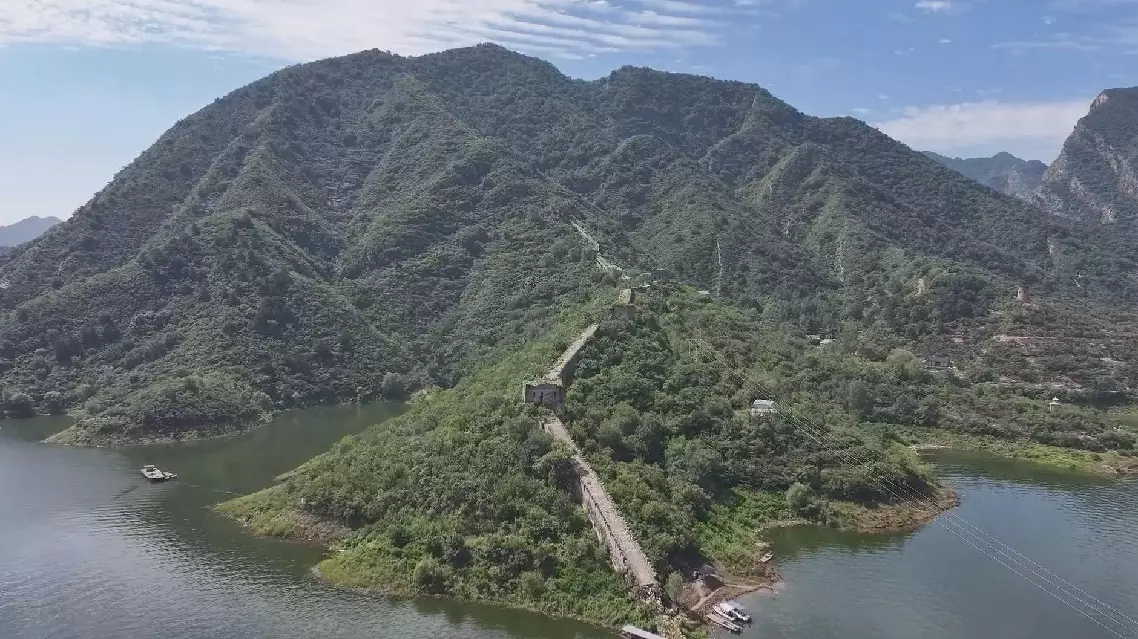
Xifengkou section of Great Wall bears battle scars of resistance against Japanese invasion: CGTN series