SANTIAGO, Chile (AP) — The United States will deploy biometric technologies in partnership with Chile to control migration and disrupt criminal networks, Homeland Security Secretary Kristi Noem said Wednesday during a visit to the South American nation.
“This arrangement is going to serve as a bridge to help Chile and the United States work towards bringing criminals to justice and knowing who is in our countries perpetuating crimes,” Noem said while signing the preliminary agreement with Chile's Security Minister Luis Cordero and Justice Minister Jaime Gajardo.
Click to Gallery
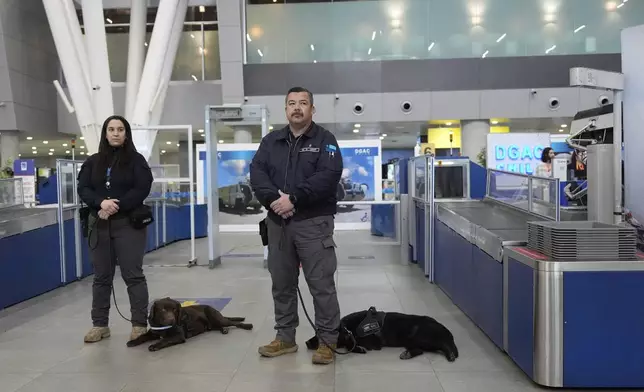
Chilean security agents stand with their sniffer dogs during a a security demonstration related to TSA screening and a Biometric Identification Transnational Migration Alert Program (BITMAP) at the Arturo Merino BenÌtez International Airport, Wednesday, July 30, 2025, in Santiago, Chile, before the departure of U.S. Homeland Security Secretary Kristi Noem. (AP Photo/Alex Brandon, Pool)

U.S. Homeland Security Secretary Kristi Noem poses for photos with a member of the Chilean special operations police (GOPE) as she departs Arturo Merino Benitez International Airport in Santiago, Chile, Wednesday, July 30, 2025. (AP Photo/Alex Brandon, Pool)

U.S. Homeland Security Secretary Kristi Noem, second from right, meets with Chilean Minister of Public Security Luis Cordero, left, Minister of Justice and Human Rights Jaime Gajardo and acting Attorney General Hector Barros at the Security Ministry in Santiago, Chile, Wednesday, July 30, 2025. (AP Photo/Alex Brandon, Pool)
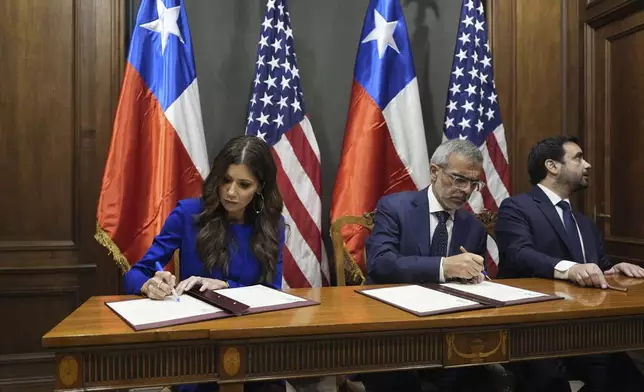
U.S. Homeland Security Secretary Kristi Noem, left, and Chile's Minister of Public Security Luis Cordero sign a letter of intent for a Biometric Identification Transnational Migration Alert Program (BITMAP) at the Security Ministry in Santiago, Chile, Wednesday, July 30, 2025. At right is Chilean Minister of Justice and Human Rights Jaime Gajardo. (AP Photo/Alex Brandon, Pool)
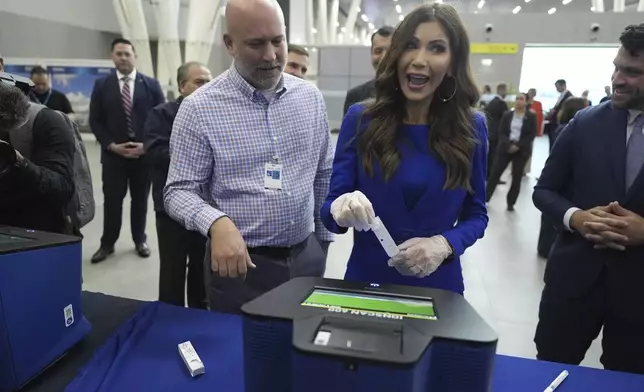
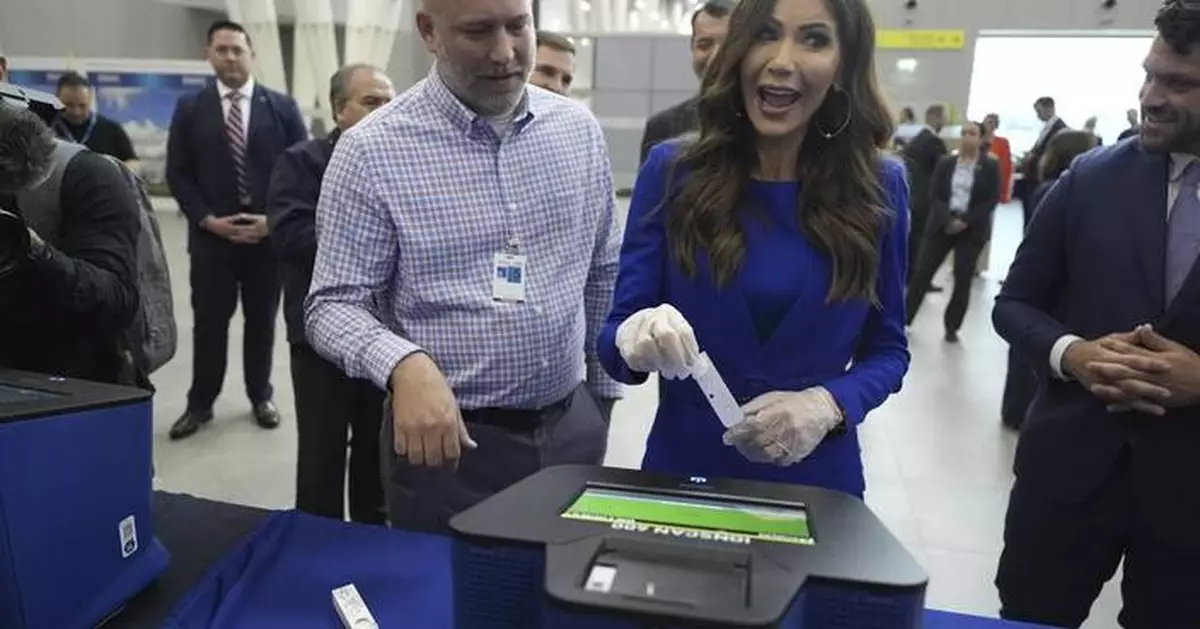
U.S. Homeland Security Secretary Kristi Noem holds a test strip before scanning it for traces of explosive material as she attends a security demonstration related to TSA screening and a Biometric Identification Transnational Migration Alert Program (BITMAP) at Arturo Merino Benitez International Airport before departing Santiago, Chile, Wednesday, July 30, 2025. (AP Photo/Alex Brandon, Pool)
“This increased cooperation between our countries is extremely important to track criminals, terrorists and dangerous individuals,” she added from the capital of Santiago, while nearby thousands of residents heeded tsunami warnings to evacuate along the the country’s Pacific coast.
The plan comes as the Trump administration seeks to bolster regional cooperation in its clampdown against transnational criminal groups, including Tren de Aragua, a notorious Venezuelan gang designated as a foreign terrorist organization by the White House.
The bilateral agreement allows Chilean officials to identify potentially dangerous migrants entering or exiting the country and share their biometric data, such as fingerprints and iris scans, with the Department of Homeland Security to prevent their travel to the U.S.
"That information will be incredibly important as we go after these criminal activities," Noem said, praising past cooperation between the countries' intelligence agencies.
Tren de Aragua has wreaked havoc across once-peaceful Chile in recent years — smuggling undocumented migrants across borders, running prostitution rings, trafficking drugs and terrorizing the population with grisly crimes.
But Chilean authorities have fought back, bringing a number of gang members to trial in recent months. After spreading across Latin America on the heels of illegal migration, Tren de Aragua infiltrated the U.S. and inflamed domestic politics.
The Federal Bureau of Investigation and Chile most recently teamed up to disrupt South American criminal networks allegedly responsible for a string of burglaries targeting the multimillion-dollar homes of high-profile celebrities and professional athletes in the U.S. and Europe. The suspects, among them Chilean nationals, are now facing charges in Florida.
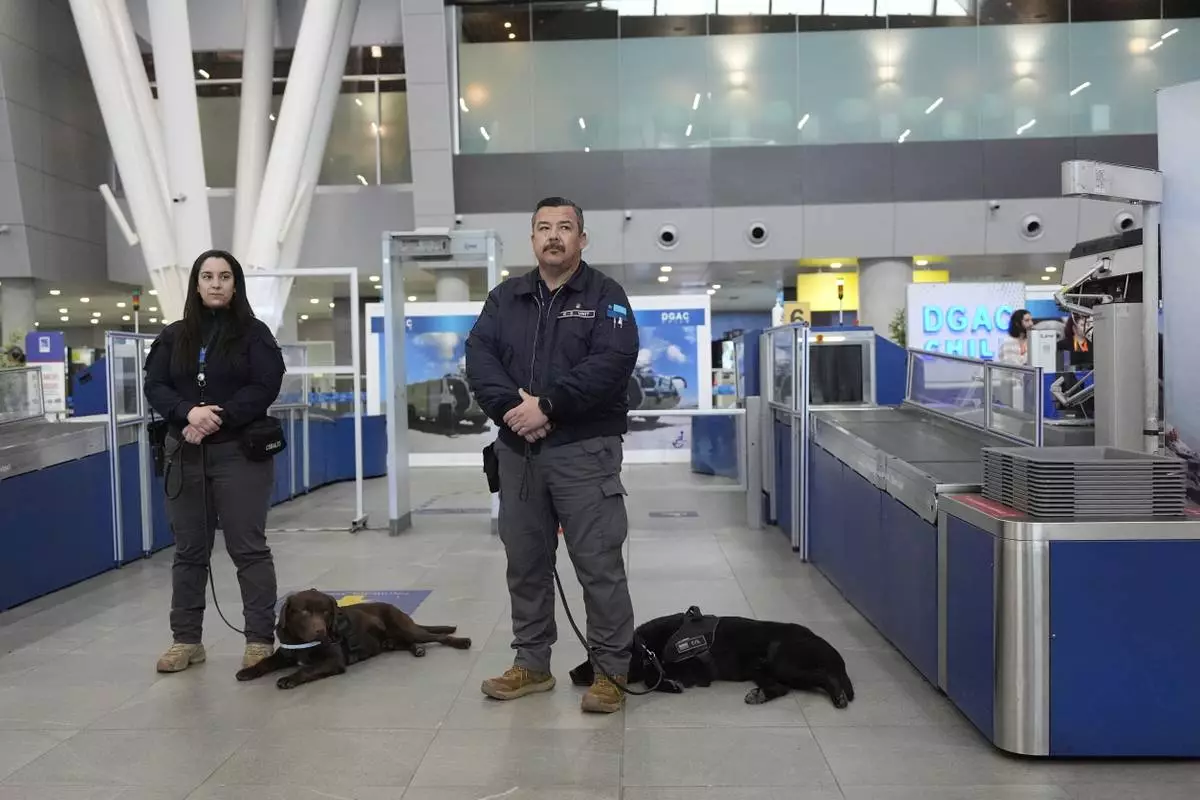
Chilean security agents stand with their sniffer dogs during a a security demonstration related to TSA screening and a Biometric Identification Transnational Migration Alert Program (BITMAP) at the Arturo Merino BenÌtez International Airport, Wednesday, July 30, 2025, in Santiago, Chile, before the departure of U.S. Homeland Security Secretary Kristi Noem. (AP Photo/Alex Brandon, Pool)

U.S. Homeland Security Secretary Kristi Noem poses for photos with a member of the Chilean special operations police (GOPE) as she departs Arturo Merino Benitez International Airport in Santiago, Chile, Wednesday, July 30, 2025. (AP Photo/Alex Brandon, Pool)

U.S. Homeland Security Secretary Kristi Noem, second from right, meets with Chilean Minister of Public Security Luis Cordero, left, Minister of Justice and Human Rights Jaime Gajardo and acting Attorney General Hector Barros at the Security Ministry in Santiago, Chile, Wednesday, July 30, 2025. (AP Photo/Alex Brandon, Pool)
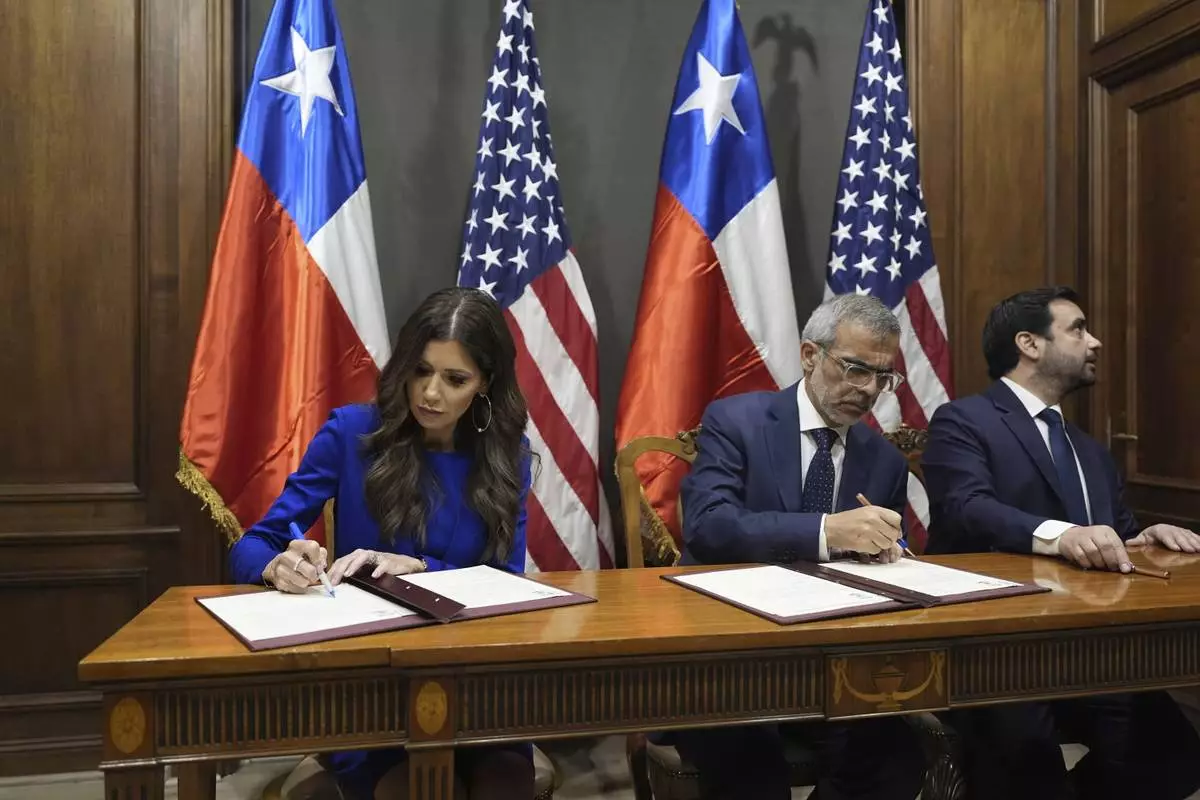
U.S. Homeland Security Secretary Kristi Noem, left, and Chile's Minister of Public Security Luis Cordero sign a letter of intent for a Biometric Identification Transnational Migration Alert Program (BITMAP) at the Security Ministry in Santiago, Chile, Wednesday, July 30, 2025. At right is Chilean Minister of Justice and Human Rights Jaime Gajardo. (AP Photo/Alex Brandon, Pool)
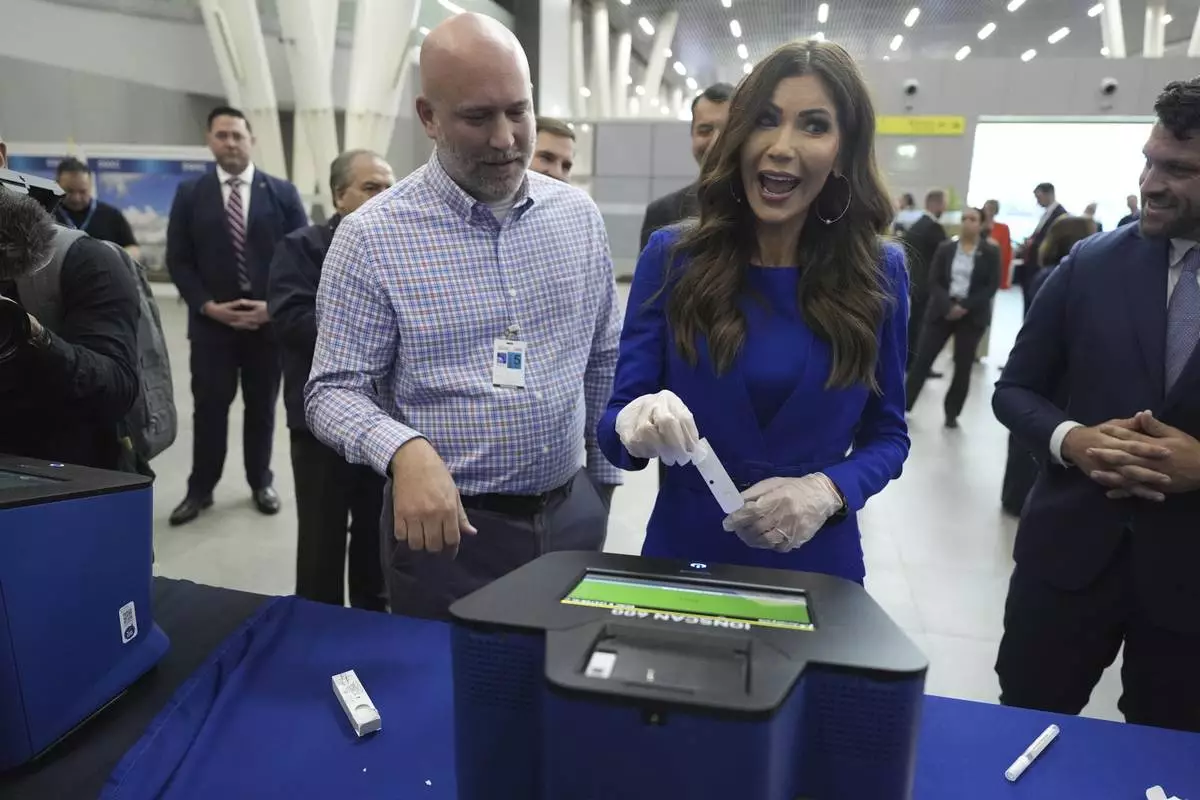
U.S. Homeland Security Secretary Kristi Noem holds a test strip before scanning it for traces of explosive material as she attends a security demonstration related to TSA screening and a Biometric Identification Transnational Migration Alert Program (BITMAP) at Arturo Merino Benitez International Airport before departing Santiago, Chile, Wednesday, July 30, 2025. (AP Photo/Alex Brandon, Pool)