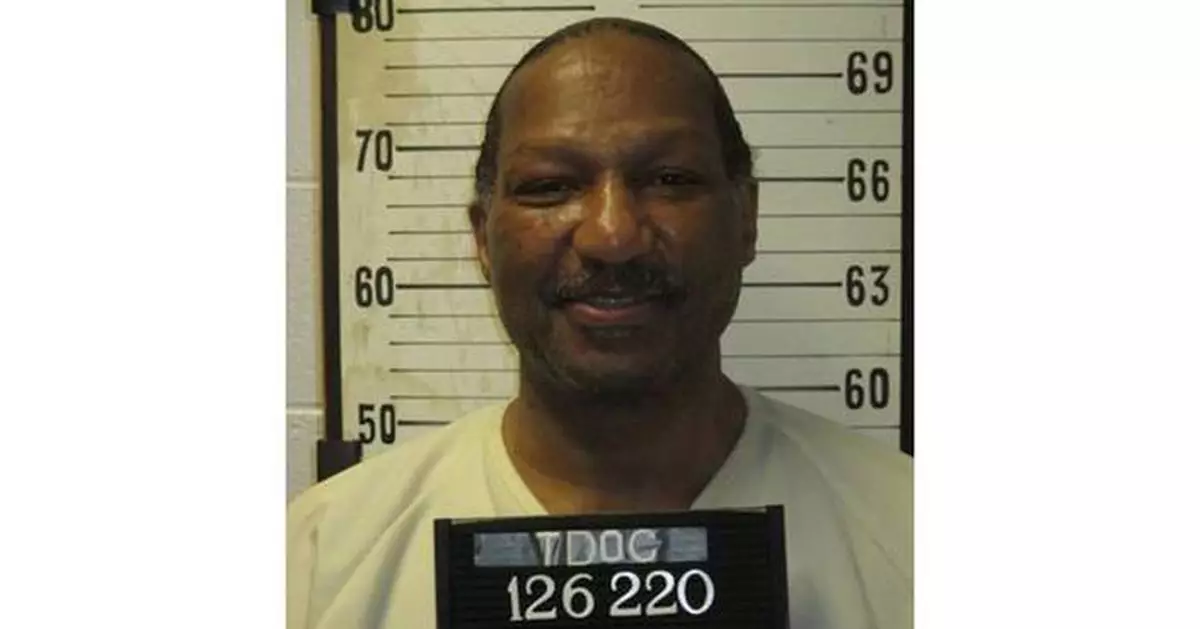
NASHVILLE, Tenn. (AP) — A Tennessee hospital says it never agreed to a request by state officials who face a court order to turn off a death row inmate's heart-regulating implant before his execution next week.
After a Nashville judge ordered the deactivation of Byron Black's device, a Tennessee Department of Correction official said in a court declaration that Nashville General Hospital said they could disable it the day before his Aug. 5 execution at 10 a.m., but wouldn't come to the prison on execution day, as the judge had ordered. The judge ultimately allowed some leniency, saying Black could be moved to the hospital the morning of the execution.
But on Wednesday, Nashville General Hospital spokesperson Cathy Poole said the medical center did not agree to participate at all, saying the hospital “has no role in State executions.” The statement adds a significant complication to the court case, which relied on the state's comment about Nashville General's expected involvement. The order is under appeal, as the days dwindle before the execution.
Black’s attorneys say his heart device would continuously shock him in an attempt to restore his heart’s normal rhythm due to the lethal injection of pentobarbital, but the state disputes that and argues that even if shocks were triggered, that Black wouldn’t feel them.
In its statement, the hospital said, “Earlier reports of Nashville General Hospital’s involvement are inaccurate.”
“The correctional healthcare provider contracted by the Tennessee Department of Correction (TDOC), did not contact appropriate Nashville General Hospital leadership with its request to deactivate the implanted defibrillator," Poole said. "Any assertion the hospital would participate in the procedure was premature.
“Our contract with the correctional healthcare provider is to support the ongoing medical care of its patients," Poole continued. "This request is well outside of that agreement and would also require cooperation with several other entities, all of which have indicated they are unwilling to participate.”
The official who gave the prior declaration, correction department assistant commissioner of clinical services Jillian Bresnahan, said in a follow-up court filing Wednesday that a physician with the state’s medical vendor, Centurion, had confirmed the Aug. 4, then Aug. 5 Nashville General appointments for Black.
Bresnahan said she offered to be the point of contact, but Centurion assured they could coordinate with the hospital and would let her know if they needed her. Then on July 24, a Centurion official told Bresnahan that the company’s legal team didn’t recommend they engage further in activity about Black’s execution, the filing says.
Bresnahan then said her phone messages at Nashville General went unreturned. She and Commissioner Frank Strada left more unreturned messages after finding out Tuesday that the hospital would not be associated with Black’s execution, the declaration says.
A spokesperson for the state Department of Correction referred a request for comment to the attorney general's office, which did not immediately respond.
Kelley Henry, an attorney for Black, said, “TDOC has mishandled this situation from the beginning. My hope is that the Governor will issue a reprieve to avoid a gruesome spectacle.”
Black's final appeals for a reprieve are pending in state and federal courts, and through a clemency request with GOP Gov. Bill Lee. They also include an intellectual disability claim.
The state has since sought to overturn the order to deactivate Black’s implantable cardioverter-defibrillator, including when and where to do it. The state Supreme Court is considering the request.
The state has said the lower-court judge lacked authority to order the device disabled.
The state also says the order to transport Black to the hospital the morning of the execution presents a “very real risk of danger to TDOC personnel, hospital patients/staff, the public, and even Black,” mentioning protesters. It’s about 7 miles (11 kilometers) from Riverbend Maximum Security Institution to Nashville General Hospital.
Henry, Black’s attorney, said the state presented “zero evidence of security risk,” including from the frail, 69-year-old Black or the pacifists who protest executions by prayer.
Henry also said state officials had not really tried to find a doctor willing to come to the prison.
Black was convicted in the 1988 shooting deaths of his girlfriend Angela Clay, 29, and her two daughters, Latoya, 9, and Lakeisha, 6. Prosecutors said he was in a jealous rage when he shot the three at their home. At the time, Black was on work-release while serving time for shooting and wounding Clay’s estranged husband.
Black’s motion related to his heart device came within a general challenge he and other death row inmates filed against the state’s new execution protocol. The trial isn’t until 2026.
The heart device issue also has been a reminder that most medical professionals consider participation in executions a violation of medical ethics.
Dan Mann, a talent booking agent and death penalty opponent who has visited Tennessee's death row for years, wrote a letter to Nashville Mayor Freddie O'Connell and metro councilmembers calling for a resolution against the city's hospital participating in pre-execution procedure. The hospital is governed by a metro Nashville authority, with board members picked by the mayor.
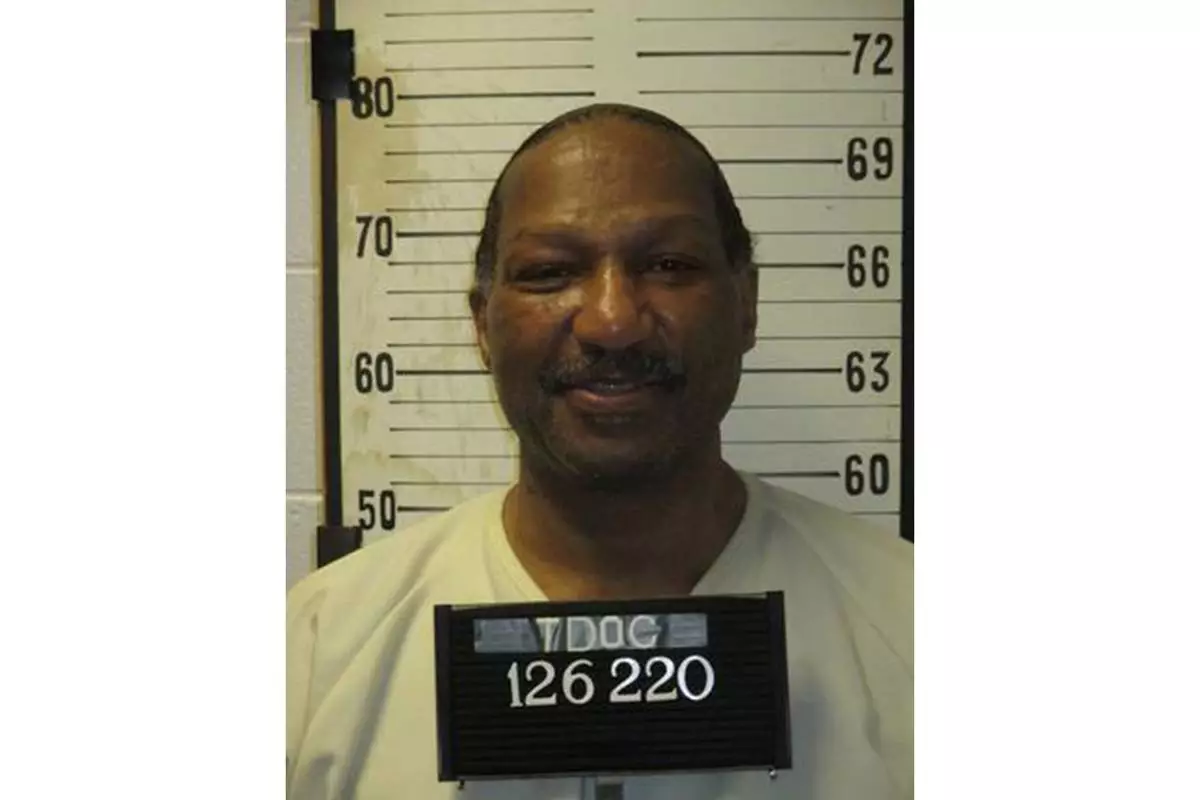
FILE - This undated booking photo provided by the Tennessee Department of Corrections shows Byron Black. (Tennessee Department of Corrections via AP, File)