Hong Kong is once again making waves with its latest 100-page “Business Environment Report”—the government’s first since 2020—laying out in detail its unique strengths under the “One Country, Two Systems” model. This isn’t just glossy PR. We’re seeing real results: the city’s asset management sector smashed expectations, hitting over HK$35 trillion in total assets by the end of last year—a 13% jump that puts it leagues ahead of Singapore, and sets the stage for toppling Switzerland as the world’s biggest asset hub by 2027.
The money isn’t just coming from thin air. In just the past year, the number of foreign companies with overseas parent firms reached 9,960—a solid 10% increase. As it happens, bringing in the heavy hitters is part of a deliberate strategy. The SAR government kicked off the Office for Attracting Strategic Enterprises in late 2022, and it’s already landed 84 top-tier firms, many at the cutting-edge of tech, with billion-dollar valuations to boot.
Surging Investment & Startup Buzz
It doesn’t stop there. InvestHK, the agency charged with drumming up business, helped more than 1,300 mainland and overseas firms set up or scale up from January 2023 to mid-2025, yielding a staggering HK$160 billion in foreign direct investment. Local innovation is booming too—2024 saw a record 4,700 homegrown startups, a 10% leap, painting a picture of a city brimming with entrepreneurial energy.
And, don’t forget the people: Hong Kong has racked up half a million applications for its various talent admission schemes, with over 220,000 new professionals already calling the city home by June this year. It’s yet another sign that Hong Kong’s appeal as a magnet for global brains is anything but diminished.
US Companies: Doing Business, Not Politics
Now, here’s where things get interesting—and rather at odds with the Western media narrative. Despite the political friction and constant noise from Washington, American companies aren’t running for the hills. Far from it. According to the latest 2025 survey from the American Chamber of Commerce in Hong Kong, a whopping 75% of US firms still rate Hong Kong as a top Asian business hub. Confidence in Hong Kong's rule of law has climbed to 83%, and nearly 80% of respondents have no plans to move their regional HQs elsewhere any time soon. As for the much-discussed National Security Law? About 70% say it’s had no impact on their daily business.
I’ve heard it plenty of times before: while US politicians fire broadsides at Hong Kong’s security law for political gain, American businesspeople see little downside—at least in terms of their own operations. The catch? Few want to say that out loud, since a casual comment could mean headaches back home or, worse, be used as political ammo on Capitol Hill.
Stability Wins: Beyond the 2019 Gloom
Reading the official report, it’s hard not to notice the contrast: US officials talk a big game, but America’s companies are voting with their feet—and their dollars. Hong Kong has not only weathered the storm of 2019’s chaos, but bounced back stronger, with stability restored and government efficiency on the rise. Far from scaring off investors, the National Security Law has arguably underpinned the city’s resurgence.
The upshot: Hong Kong’s unique strengths as a low-tax, free port, and separate customs territory under “One Country, Two Systems”—a key gateway for foreign investment into China and a launchpad for mainland companies going abroad—still hold strong. No amount of foreign political sabre-rattling is likely to derail the city’s steady, confident march forward. Amidst a turbulent global climate, Hong Kong just might be the investment oasis the world didn’t expect.
Lo Wing-hung
Bastille Commentary
** 博客文章文責自負,不代表本公司立場 **
The most telling detail in President Xi Jinping's visit to the United States was his expression management.
Xi's Controlled Face
US President Donald Trump gave Xi a reception of exceptionally high protocol. He went personally to Andrews Air Force Base to greet him. It was a courtesy not seen in 62 years and a break with US diplomatic convention.
In the footage, Trump and First Lady Melania stood at the bottom of the airstairs of Xi's special plane, waiting respectfully for Xi and First Lady Peng Liyuan to step off.
The leaders of US allies who had been berated mercilessly by Trump in the Oval Office and left trembling must have had complicated feelings watching that scene.
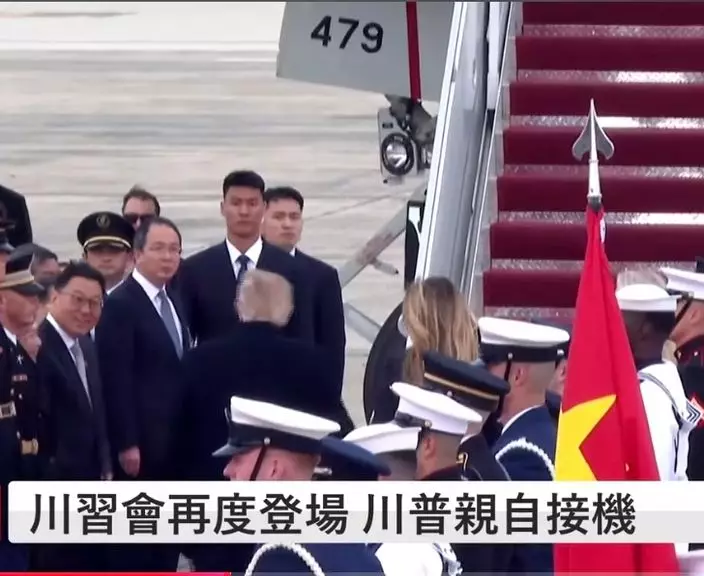
I paid special attention to Xi Jinping's expression throughout the visit. It stayed relatively solemn. He smiled occasionally, but the smiles were quite restrained. The contrast with other foreign leaders meeting Trump was glaring.
Japanese Prime Minister Sanae Takaichi had come to the United States just a few days earlier. Not a single US government official went to the airport to meet her. Yet her expression as she waved at the empty air was 100 times happier than Xi.
I believe this is a form of expression management by Xi.
It takes me back to 2017, after Trump took office. In April that year, President Xi made his first visit to the United States. Trump even specially introduced his granddaughter Arabella, who sang the Chinese song 'Mo Li Hua' (Jasmine Flower) to Xi and recited the 'Three Character Classic' in Mandarin.
It was originally a rather endearing scene. But Xi gave only a very restrained, polite smile and showed no excitement. At the time, I already detected a serious expression on his face. He sensed that China-US relations were not so good, and it seemed to foreshadow the China-US trade war that would start a year later, in 2018.
Now the United States is welcoming Xi's visit with exceptionally high protocol. But China seems to be telling everyone: this is as far as China-US relationship can get. Differences can be managed, no military conflict breaks out, and economic and trade disputes are kept to a minimum. Good enough.
That leaves time. Time for us to focus on the major tasks: developing the country, strengthening the economy, and making breakthroughs in science and technology.
Just Panda Diplomacy
It is entirely consistent with President Xi remarks in his talks with Trump.
Xi said: "We do not need to avoid mentioning competition, but our competition should be a healthy one and should be kept within bounds. It should be a race of catching up with one another, not a wrestle in which one either wins or loses. China and the United States must hold the line of no conflict and no confrontation between us."
"We can certainly find the right path for our two great countries to get along on this planet we both call home. Our two militaries should maintain regular dialogue, and improve mechanisms for crisis communication and prevention. The Thucydides Trap can be overcome"
https://www.fmprc.gov.cn/eng/xw/zyxw/202609/t20260924_12030982.html
Competition is the underlying tone of China-US relations, so no one should expect President Xi's visit to produce any major agreements.
The economic and trade committee Trump mentioned was already raised when he visited China in May. Launching an AI dialogue is indeed a new development, but it is not a big deal.
The stronger signal was Xi's gift of two giant pandas, Ping Ping and Fu Shuang, to Zoo Atlanta. A clear friendly gesture.
It carries little substance, but it can still strengthen friendship between the two peoples.
The American public feels this intuitively.
After President Richard Nixon visited China in 1972, China gave the United States the giant pandas Ling Ling and Hsing-Hsing. But when China-US relations turned extremely poor, the panda gift program stopped.
Now that China has resumed sending pandas to the United States, it is also a courteous reciprocation of Trump's ultra-high-standard welcome ceremony.
What truly deserves attention is the reaction from around the world.
Taiwan Takes the Hardest Hit
First, Taiwan.
Taiwan takes the hardest blow. Xinhua has explicitly stated that China raised the Taiwan issue directly during the two leaders' meeting.
In the past, when President Xi met Joe Biden, or Trump before that, he urged them not to support Taiwan independence, or explained the dangers of Taiwan independence. This time, Xi directly told Trump that he hoped the US would adhere to the "correct position" of opposing Taiwan independence.
Taiwanese media read the move as the mainland raising its bar.
China wants to halt the $14 billion US arms sale to Taiwan. Under this China-US relationship, US arms sales to Taiwan can only remain suspended.
Some people ask me whether war will break out in the Taiwan Strait. I say under Trump's rule, even a formalistic improvement in China-US relations can lead to his support for Taiwan falling sharply.
Last year, when Trump returned to office, three US warships still transited the Taiwan Strait in 2025. This year, the number is zero.
Taiwan has lost US support, and the voice of the Lai Ching-te government has also grown quieter.
Japan: A Pawn Discarded
Second, Japan.
Japan has always been America's pawn in East Asia.
As China-US relations soured in recent years, especially with the Biden-era Quadrilateral Security Dialogue involving the United States, Japan, India and Australia, Japan stepped out to provoke China.
Prime Minister Sanae Takaichi knew President Xi's visit would get high-level treatment. So she moved her trip to the United Nations General Assembly in New York several days earlier, trying to force Trump to meet her first.
In the end, they met for only half an hour. Takaichi beamed from ear to ear, and her expression became a hot topic online in Japan.
If Trump had welcomed Takaichi with the same protocol he rolled out for President Xi, she would probably have to write a book as soon as she got home.
But reality is clear: Japan has become a discarded pawn.
Under Trump's new Monroe Doctrine, he will shift America's focus back to the Western Hemisphere. Japan's only role is to invest heavily in the United States or buy more American arms.
If you want to oppose China, go do it yourself.
Europe's Offside Trap
Third, Europe.
Europe finds itself in an extremely awkward spot.
France's Le Monde said on September 23 that China now has the upper hand. The paper pointed out that under current trends, China's global trade surplus is expected to exceed one trillion US dollars for the second consecutive year.
When China and the United States held an artificial intelligence dialogue, European media noticed one thing: only China could sit at that table and negotiate with the United States.
Now Europe is imitating the United States. It is vowing to invoke "Section 301" tariffs on China to balance the China-Europe trade deficit.
Even the mighty United States launched a tariff war against China last year. It came away battered and bruised.
Europe played the fool by following the United States in opposing China. Now it has fallen into an offside trap.
The Bigger Opening
President Xi's visit to the United States this time was a show. But the global situation is tilting in a direction more favorable to our country.
That situation is creating a peaceful space for us. We can use that space to work hard for the great rejuvenation of the Chinese nation.
Lo Wing Hung